Thursday, December 25, 2025
Home Blog Page 266

IRGC kills, captures 6 terrorists in Sistan, Baluchestan prov.

Iran Police

According to a statement from the IRGC Ground Forces, the successful raid followed local tip-offs to the IRGC intelligence.
It adds citizens’ cooperation enabled security forces to locate the hideout of a terrorist group preparing attacks on public sites.

Authorities seized light and heavy weapons along with a significant cache of explosives.

The group, reportedly affiliated with hostile terrorist outfits, had been planning a series of attacks in high-traffic areas.

The IRGC has urged residents to remain alert and report any suspicious activity via national security hotlines.

Three killed in Red Sea in suspected attack by Yemen’s Houthis

The attack on the Greek-owned Eternity C late on Monday follows the Houthis claiming they attacked another vessel on Sunday in the Red Sea, a vital maritime trade route.

While the Houthis have not yet claimed the attack, the US Embassy in Yemen and the EU force blamed them for it.

“The Houthis are once again showing blatant disregard for human life, undermining freedom of navigation in the Red Sea,” the embassy, which has operated out of Saudi Arabia for nearly a decade due to Yemen’s wider war, said on Tuesday.

“The intentional murder of innocent mariners shows us all the Houthis’ true colors and will only further the Houthis’ isolation,” it added.

The Houthis say that are targeting Israel-linked ships as part of a campaign to pressure the Israeli military to end its onslauhgt on Gaza, which rights groups have described as a genocide.

After Sunday’s attack on a vessel called Magic Seas, the Houthis stated ships owned by companies with ties to Israel are a “legitimate target”.

“Our operations will continue to target the depth of the Israeli entity in occupied Palestine, as well as to prevent Israeli navigation in the Red and Arabian Seas and to disrupt the Umm al-Rashrash [Eilat] port, until the aggression against Gaza stops and the blockade is lifted,” the group announced in a statement.

The twin assaults mark a revival of attacks on ships in the Red Sea and potentially signal the start of a new armed campaign threatening the waterway, which had begun to see more traffic in recent weeks.

The EU, Israel’s largest trade partner, had condemned Sunday’s attack.

“It is the first such attack against a commercial vessel in 2025, a serious escalation endangering maritime security in a vital waterway for the region and the world,” the bloc said in a statement.

“These attacks directly threaten regional peace and stability, global commerce and freedom of navigation as a global public good. They can negatively impact the already dire humanitarian situation in Yemen. These attacks must stop,” it added.

The two Houthi attacks and a round of Israeli air strikes early on Monday targeting three Yemeni ports raised fears of a renewed campaign against shipping that could again draw in US and Western forces.

The administration of US President Donald Trump launched an intense bombing campaign in Yemen earlier this year, but Washington and the Houthis reached a ceasefire in May, with the Yemeni group agreeing to halt attacks against US ships.

The escalation comes as a possible ceasefire between Israel and Hamas hangs in the balance, and as Iran weighs whether to restart negotiations over its nuclear programme following its war with Israel in June.

Between November 2023 and January 2025, the Houthis targeted more than 100 merchant vessels with missiles and drones, sinking two of them and killing four sailors. Their campaign has greatly reduced the flow of trade through the Red Sea corridor, which typically sees $1 trillion of goods move through it annually.

Shipping through the Red Sea, while still lower than normal, has increased in recent weeks.

Iran nuclear programme ‘very delayed’ by strikes: France

Iran Nuclear Program

US President Donald Trump has insisted that Iran’s key nuclear facilities were “obliterated” in last month’s air strikes, angrily bashing assessments to the contrary, including, reportedly, by his own administration.

Asked how much the strikes had delayed Iran’s nuclear programme, Nicolas Lerner, head of the DGSE French spy agency, said: “Undeniably various months, certainly.”

“Our assessment today is that every stage of the process”, from enriching uranium to designing a nuclear warhead and mounting it on a missile, “was very seriously affected, very seriously damaged”, Lerner told French news channel LCI.

“The Iranian nuclear programme as we know it has been very, very delayed,” he continued.

He added that the assessment “nevertheless… needs to be fine-tuned”.

“No intelligence service in the world was capable in the hours after these strikes of making a perfect, full evaluation of what happened.”

The Pentagon has announced that the strikes delayed Iran’s nuclear programme by between one and two years, contradicting an initial classified US intelligence report that according to American media found the setback was only by a few months.

Lerner said it was important to remain “cautious”, notably over the unknown whereabouts of Iran’s highly enriched uranium stockpiles and the risk that Tehran could now pursue a nuclear programme in secret.

“There’s consensus on the fact that the material — the 450 kilogrammes (990 pounds) of enriched uranium — maybe a small part was destroyed, but that material remains in the hands of the regime,” he added.

Iran, which denies pursuing nuclear weapons, has suspended cooperation with the United Nations nuclear watchdog since the raids.

Lives of Gaza’s children ‘marked by war and destruction’: UN

Gaza War

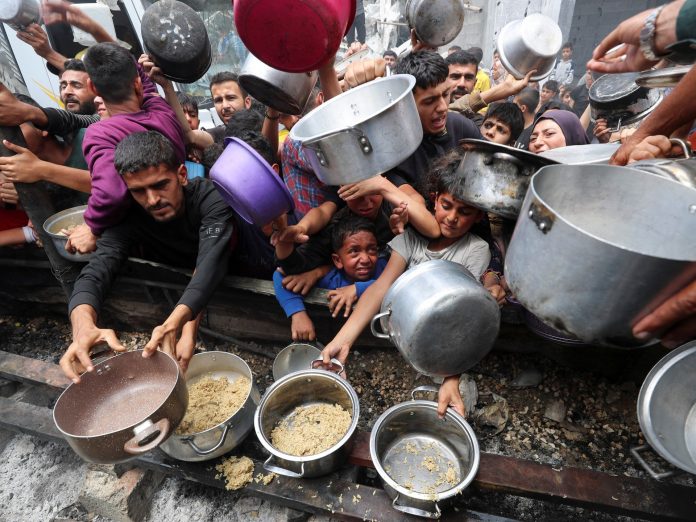
“Children make up half of the population in Gaza. Their lives are marked by war and destruction,” UNRWA said in a statement.

According to the refugee agency, Gaza’s children are deprived of education and sufficient amounts of food, and are forcibly displaced under Israel’s ongoing genocidal war.

The UN agency called for an immediate ceasefire “for Gaza’s children and a better future in the region.”

UN figures show that more than 658,000 children have been out of school in Gaza for nearly two years, and over 90% of educational facilities have been destroyed in Israeli attacks.

At least 66 children have starved to death in Gaza since October 2023 due to the Israeli siege on the enclave, Palestinian figures showed.

According to World Health Organization Director-General Tedros Adhanom Ghebreyesus, an estimated 112 children are being admitted to Gaza hospitals each day for malnutrition treatment.

Israel has kept Gaza’s main crossings largely closed since March 2, blocking hundreds of aid and supply trucks. UN agencies say Gaza requires at least 500 trucks daily to meet basic needs, but often fewer than 50 are allowed to enter.

The Israeli army has killed more than 57,500 Palestinians, most of them women and children, in Gaza since October 2023. The relentless bombardment has destroyed the enclave and led to food shortages and a spread of disease.

Last November, the International Criminal Court issued arrest warrants for Israeli Prime Minister Benjamin Netanyahu and his former Defense Minister Yoav Gallant for war crimes and crimes against humanity in Gaza.

Israel also faces a genocide case at the International Court of Justice for its war on the enclave.

At least 4 killed, 13 injured in Israeli attack in Lebanon

Lebanon War

A ministry statement said that one person was killed when an Israeli drone strike targeted a car in the town of Babliyeh in Sidon district of southern Lebanon.

Separately, another statement noted that three people were killed and 13 injured in an Israeli strike that targeted a vehicle near the northern Lebanese city of Tripoli.

The Israeli army claimed the strike targeted a senior figure from the Palestinian group Hamas, without providing further details.

Later, the army announced it “struck and eliminated Hamas member Mehran Mustafa Ba‘jur in the area of Tripoli in Lebanon,” alleging that he “advanced and directed numerous attacks against the IDF (army) and Israeli civilians.”

“Ba‘jur was one of Hamas’ key commanders in Lebanon, and as part of his role, he spent years establishing Hamas’ military capabilities in Lebanon,” the statement added.

There was no immediate comment from Hamas on the Israeli claim.

Cross-border warfare between Israel and the Hezbollah group in Lebanon escalated into a full-scale war in September 2024. Despite a November ceasefire, Israeli soldiers have conducted near-daily attacks in southern Lebanon, claiming to target Hezbollah’s activities.

Since then, Lebanese authorities have reported nearly 3,000 Israeli violations of the truce, including the deaths of at least 232 people and injuries to more than 530.

Under the ceasefire accord, Israel was supposed to fully withdraw from southern Lebanon by Jan. 26, but the deadline was extended to Feb. 18 after Tel Aviv refused to comply.

Israel still maintains a military presence at five border outposts.

US has only %25 of Patriot interceptors needed for military operations globally: Report

According to the report, deputy defence secretary Stephen Feinberg was so alarmed by the dwindling reserves that he ordered transfers to be halted while the Pentagon reviewed deliveries to US partners.

Middle East Eye was the first to reveal during the recent Israel-Iran conflict that US officials were concerned about the pace at which they were using interceptors to defend Israel from ballistic missile attacks.

A US official told MEE at the time that there were concerns a direct US strike on Iran could lead to bigger retaliation from the Islamic Republic, which would drain the US’s stockpile to a “horrendous” level.

The conflict between Israel and Iran culminated in limited US strikes on Iran’s Natanz, Fordow and Isfahan nuclear sites. Iran responded by informing the US via Qatar that it would fire 14 ballistic missiles at al-Udeid air base, southwest of Doha.

According to open-source defence analysts, the US was expected to fire two to four interceptors for each missile fired. The Guardian reported that the US fired close to 30 patriot interceptors, or PAC-3s, to down the Iranian barrage. Even this relatively low number exacerbated the stockpile shortages, according to the report.

Dan Caine, US Air Force general and chairman of the joint chiefs of staff, told The War Zone news site that the operation to defend al-Udeid from Iran’s symbolic attack was the “largest single Patriot engagement in US military history”.

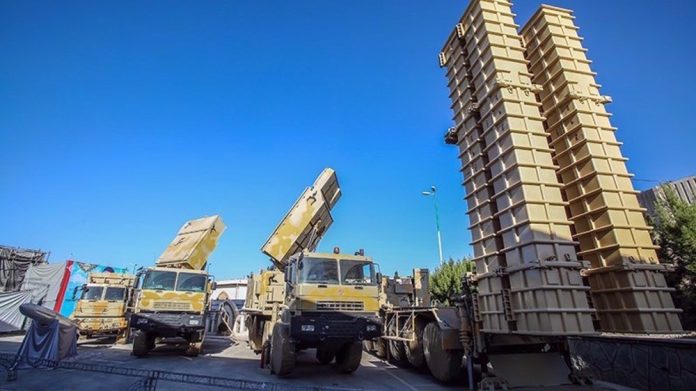
The relatively low numbers involved underscore just how precious a commodity Patriot missiles are, particularly at a time of increasing ballistic missile use in Eastern Europe and the Middle East.

In 2024, Lockheed Martin reported that it produced and delivered 500 interceptors, a 30 percent increase from the previous year.

In addition to firing Patriots during the conflict, the US joined in Israel’s defence, using at least one Terminal High-Altitude Area Defence antimissile battery in the region and ship-mounted SM-3 interceptors.

Roughly a week after the Israel-Iran conflict, the Donald Trump administration confirmed reports that it had suspended the delivery of air defence interceptors and other weapons to Ukraine as it faced massive Russian air strikes.

The shipments to Ukraine were halted when they were in Poland, The Wall Street Journal reported, and included Patriot air defence interceptors, air-to-air missiles, artillery rounds, Stinger surface-to-air missiles and Hellfire air-to-ground missiles.

The suspension of Hellfire missiles to Ukraine is notable because just days before Israel launched its surprise attack on Iran in June, the US delivered hundreds of Hellfire missiles to Israel. MEE exclusively reported on the delivery.

President Trump has reversed the decision to halt shipments, stating that the US would send additional defensive supplies to Ukraine. However, he did not provide details on the weapons systems or numbers.

Israel holds 10,800 Palestinian prisoners in its jails: Rights groups

Israeli Jail Prison

“This figure does not include Palestinians held in Israeli army-run camps,” read a joint statement by the Commission of Detainees Affairs, the Palestinian Prisoner Society, and Addameer Prisoner Support and Human Rights Association.

The figure is the highest since the second Palestinian Intifada against the Israeli occupation in 2000, the groups added.

The detainees include 50 women, 450 children, and 629 people held without trial or charge under Israel’s notorious policy of administrative detention, the statement read.

According to the Prisoners’ Media Office, the Israeli army arrested more than 17,000 Palestinians, including 545 women and 1,360 children, from Gaza since October 2023.

The Israeli army has killed more than 57,500 Palestinians, most of them women and children, in Gaza since October 2023. The relentless bombardment has destroyed the enclave and led to food shortages and a spread of disease.

Last November, the International Criminal Court issued arrest warrants for Israeli Prime Minister Benjamin Netanyahu and his former Defense Minister Yoav Gallant for war crimes and crimes against humanity in Gaza.

Israel also faces a genocide case at the International Court of Justice for its war on the enclave.

Kremlin allows foreigners to serve in Russian military

Russia Ukraine War
A billboard promoting contract army service with an image of a serviceman and the slogan reading "Serving Russia is a real job" sits in Saint Petersburg, Russia.

In an effort to expand Moscow’s military recruitment efforts, the Kremlin will also now allow qualified specialists who have reached the age limit to sign contracts with Russia’s Foreign Intelligence Service (SVR), Federal Security Service (FSB), or other state security agencies.

Until now, foreigners were allowed to serve in the Russian army only during states of emergency or under martial law, which Moscow has not declared despite its full-scale invasion of Ukraine three and a half years ago.

Putin’s partial mobilisation decree from September 2022, which triggered the exodus of over 261,000 Russians, remains in force.

As Moscow has recently intensified its summer offensive against Ukraine, allowing foreigners to serve in the army would strengthen the recruitment process in Russia while avoiding formal conscription.

At the end of March, the Kremlin announced its traditional spring conscription of 160,000 men — the largest call-up in 14 years.

In April the UK Ministry of Defence reported that Russia has recruited more than 1,500 foreign nationals to fight against Ukraine between April 2023 and May 2024.

According to the British intelligence update, the majority of foreign recruits came from South and East Asia, accounting for 771 individuals. They were followed by citizens from former Soviet republics (523) and African countries (72).

The UK Ministry of Defence suggested that the main factors motivating foreigners to sign military contracts are financial incentives and the possibility of obtaining Russian citizenship.

“Many foreign citizens are almost certainly recruited specifically through Moscow due to higher signing bonuses and the city’s relative international accessibility,” it added.

The intelligence update in April further indicated that Moscow was likely to continue enlisting foreign citizens over the medium term. This strategy is intended to offset battlefield losses without triggering a second wave of mobilisation.

According to the latest update from Ukraine’s General Staff, Russia has lost 1,028,610 troops in Ukraine — either killed or wounded — since the beginning of its full-scale invasion on 24 February 2022.

Kyiv’s daily updates indicate an average daily rate of around 1,000 casualties among Russian troops.

UK Defence Ministry analysts noted that while foreign recruitment by Moscow will persist, it is unlikely to significantly alter the composition of Russia’s military forces, given the scale of domestic enlistment efforts.

Iran’s deputy FM: strategic proposals raised in talks with U.S.; EU facing final chance

Nuclear Negotiations in Vienna

Khatibzadeh stressed that Iran is not a minor actor. “We are a nation of 90 million with a civilizational depth that cannot be compared to a militarized apartheid entity like Israel,” he said.

Rejecting claims that Iran’s response to recent attacks was weak, he said Iran’s decision to strike a U.S. base in Qatar — not via proxy, but directly — sent a calculated message of deterrence. “We know how to end aggression and are prepared for unpredictable responses if national security is threatened,” he added.

Khatibzadeh also warned that Europe now stands culturally and morally “exposed” and risks irrelevance in Iran diplomacy. “Europe may play its final strategic card. If mishandled, it will lose all leverage on Iran permanently,” he warned.

He reiterated that Iran remains committed to peaceful nuclear activities and is operating with full transparency under IAEA safeguards.

Veteran Iranian MP: IAEA chief is mercenary, should banned from entering Iran

IAEA Grossi

Alaeddin Boroujerdi, speaking to Fars News Agency, stated that “Grossi betrayed both the IAEA, which operates under the United Nations, and the Islamic Republic of Iran.”

Referring to the IAEA’s many previous reports confirming the peaceful nature of Iran’s nuclear program, he said: “Grossi submitted a false and suspicious report to the IAEA Board of Governors. Based on that report, the Board issued a resolution against Iran, which then gave the Zionist regime a pretext to launch its attack.”

Boroujerdi continued: “We must file a complaint against Grossi for the major lie he told, which led to this crisis in the region.”

He added: “Under the NPT, the IAEA is responsible for safeguarding Iran’s nuclear facilities. Yet Grossi, as the Director General, did not even condemn the Zionist and American strikes on Iran’s nuclear sites. We have no assurance that they will not attack our facilities again.”

The veteran MP reiterated the Islamic Republic’s firm opposition to the production of nuclear weapons, stressing: “We are committed both to the IAEA’s regulations and to the NPT, and this stance is further reinforced by the authoritative fatwa of the Supreme Leader banning nuclear weapons.”