Saturday, April 25, 2026
Home Blog Page 2657

Iran Urges Closer Transport Ties among ESCAP Member States

Speaking at the sixth session of ESCAP’s Committee on Transport held in the Thai capital of Bangkok, Iran’s delegate Hajjarzadeh highlighted the necessity of paying attention to the objectives of sustainable development in the transport sector.

Hajjarzadeh, who is the Iranian Ministry of Roads and Transportation’s representative to ESCAP, proposed several plans, namely the “establishment of a land link between Asia and Europe” and “policies to boost the sustenance of the global supply chain.”

He also introduced projects on the construction of highways and dry ports based on the country’s comprehensive transport plan as well as the test document for the logistics centres across the nation. It was then decided that Iran’s proposals to improve highway, rail and dry port networks be sent to the Secretariat of ESCAP to be reviewed.

Iran’s representative also presented a plan for a project on electronic exchanges and processes for the coordination of customs affairs with neighbouring countries. The plan is currently being implemented as a pilot scheme.

He also put forward plans to introduce an integrated framework agreed by all member states which would encompass all aspects of international trade and transport as well as other global moves.

He added all international corridors should be taken into account in order to enhance the sustenance of the supply chain, especially the corridors to the south of the Caspian Sea.

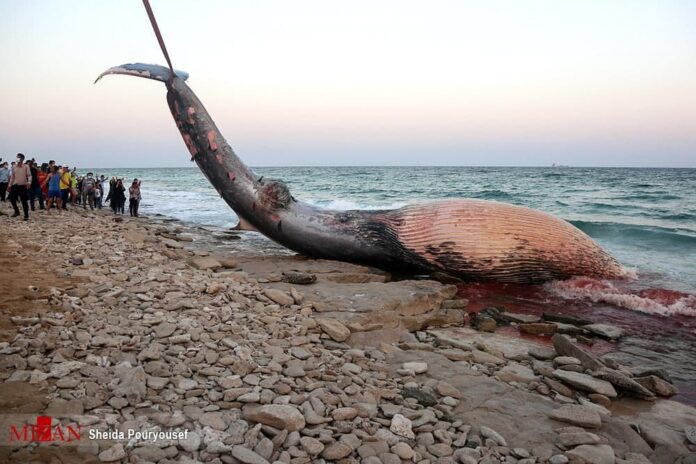
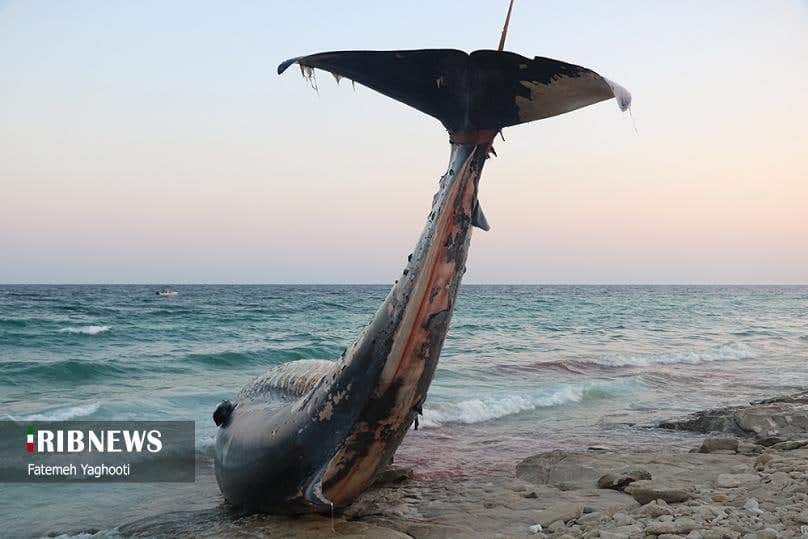
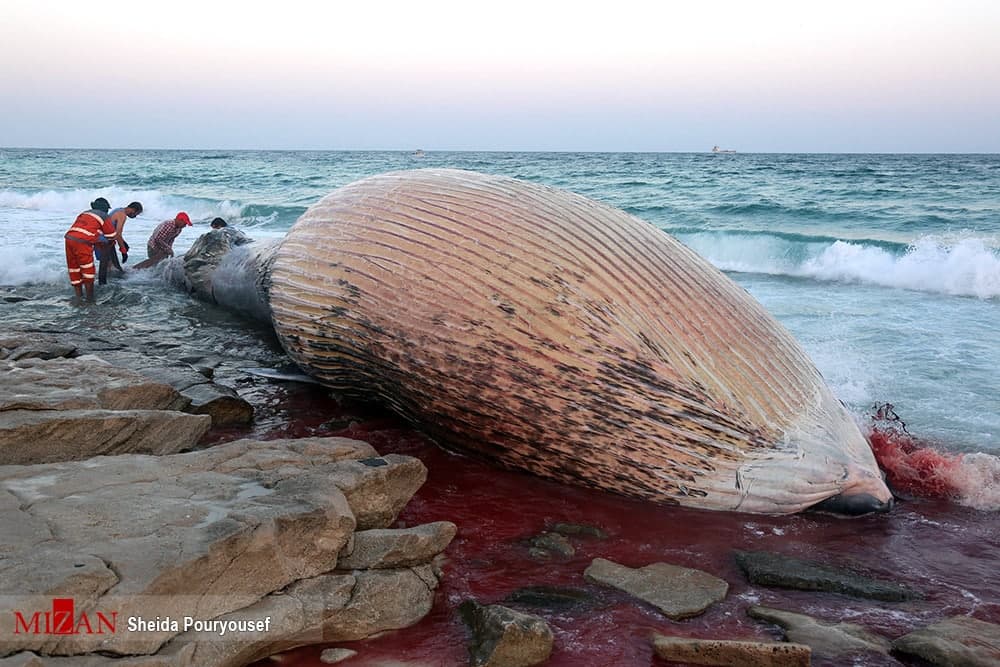
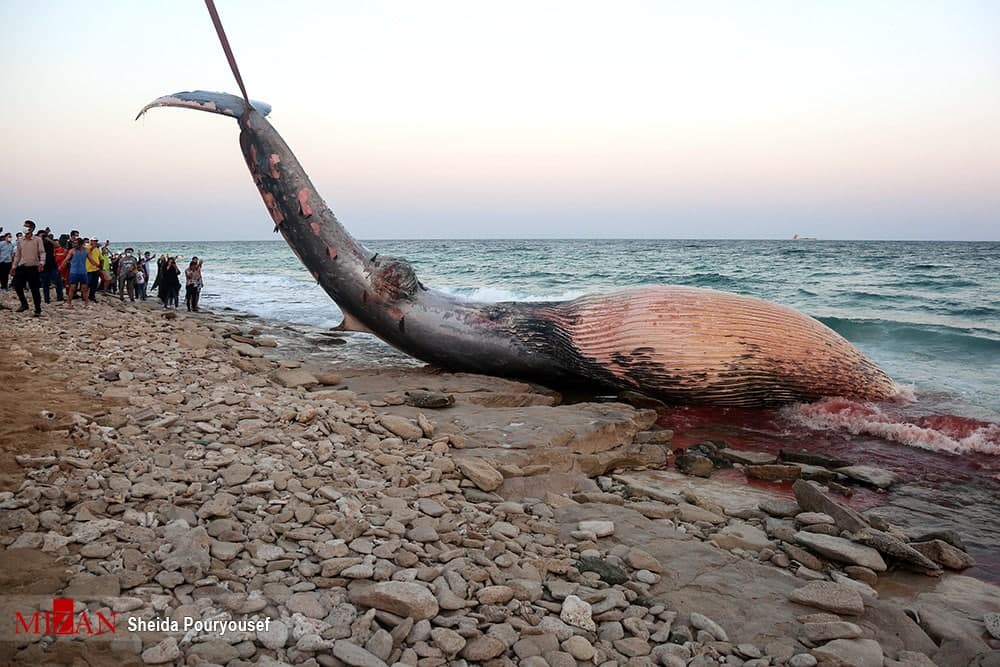
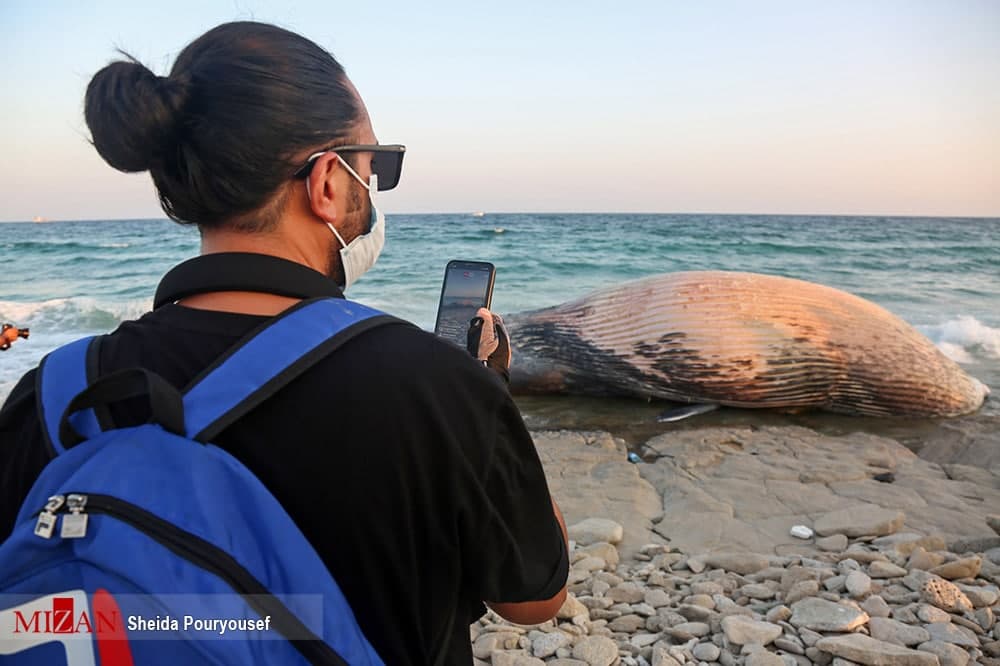
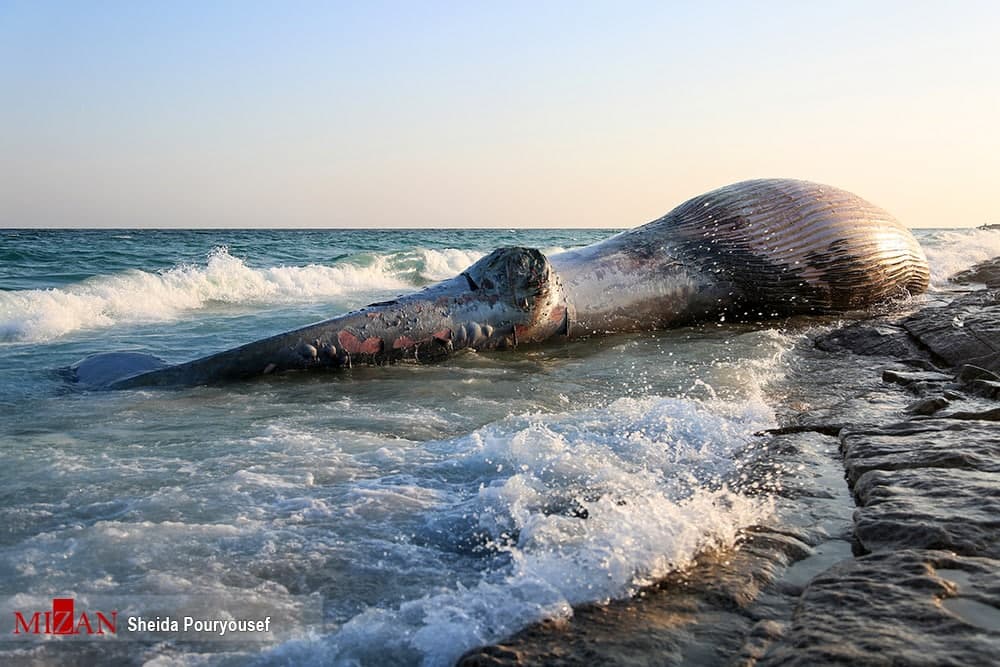
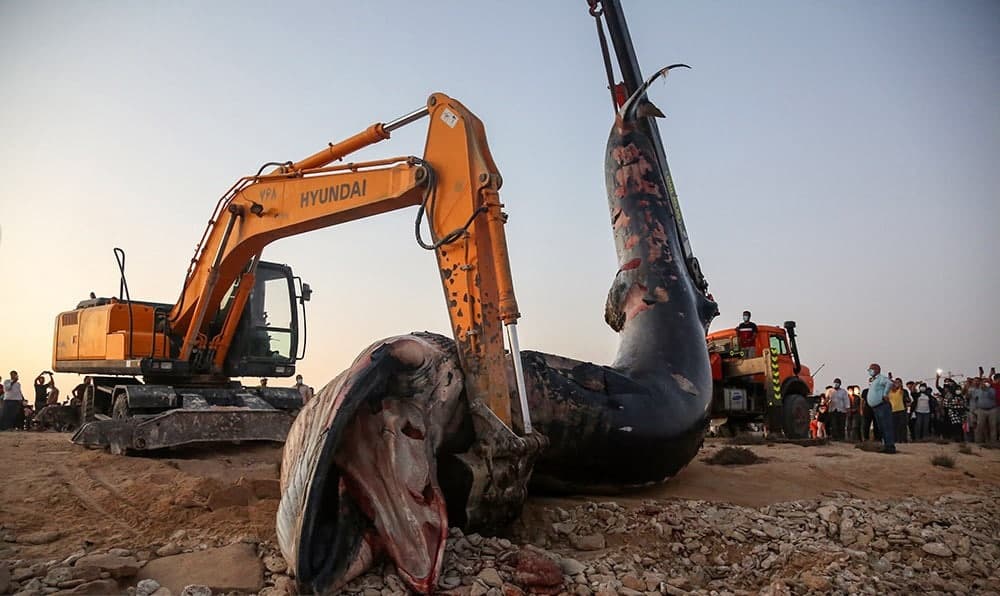
Dead Whale Washed Ashore on Iran’s Kish Island

Authorities say the skeleton of the whale will be taken to the marine life museum on the island in the future.

“Initial studies failed to shed light on the cause of the death of this whale,” said Maryam Mohammadi, the head of the Environment Office of Kish Island.

“Because around five days had passed since the Whale’s death, and no injury was observed on the corpse of the whale, and the carcass was decomposing, it was impossible to find the exact cause of death,” she noted.

The official underlined the 14.5-metre-long female whale is a Bryde’s whale, which is listed on Appendix II of the Convention on the Conservation of Migratory Species of Wild Animals.
This type of whale is estimated to weigh five tonnes.

Iran’s Foreign Minister to Attend 2020 Afghanistan Conference

Khatibzadeh said on Monday the Geneva conferences for Afghanistan are held once in every four years with a focus on the commitment of world countries to establishment of peace and stability in Afghanistan and its development.

66 countries and 32 international organizations are expected to attend this year’s conference, which will be held virtually because of the COVID-19 restrictions.

The quadrennial ministerial pledging conference is co-hosted by Afghanistan, Finland, and the United Nations, and will take place on November 23 and 24.

The conference is an important opportunity for Afghanistan and the international community to commit to common objectives for promoting sustainable development, prosperity and peace in the country, according to UNAMA.

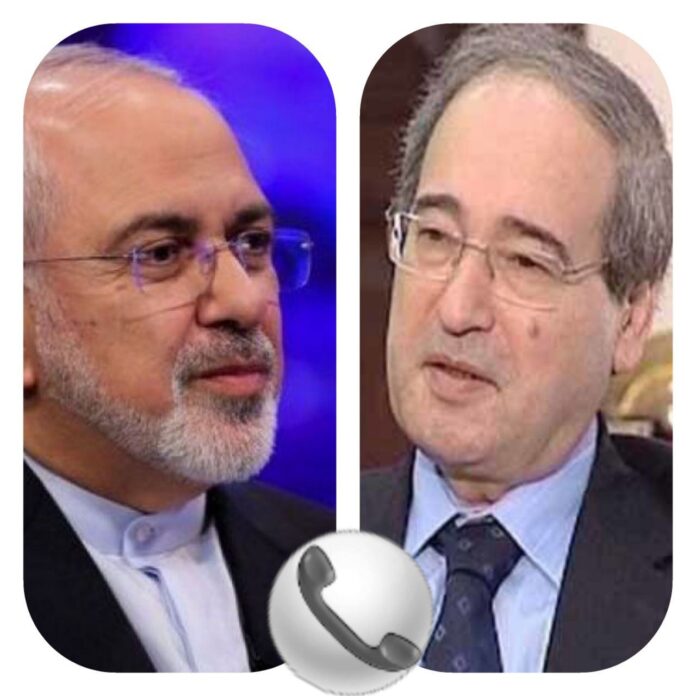
Iran FM Holds Talks with His New Syrian Counterpart

During the phone call, the Iranian top diplomat congratulated Mekdad on being appointed as the Foreign Minister of the Syrian Arab Republic.

He once again offered condolences on the demise of Walid al-Muallem, the former foreign minister of Syria, and underlined the continuation of strategic cooperation between Tehran and Damascus.

Iran’s Uranium Enrichment Work Enters New Phase: Envoy

Iran’s latest step under its commitments stipulated in the Iran nuclear deal, officially known as the Joint Comprehensive Plan of Action (JCPOA), was to inject the uranium hexafluoride (UF6) gas into IR-2M centrifuges, which was discussed at a seasonal meeting of the Board of Governors of the International Atomic Energy Agency (IAEA). 

Afterwards, the European Troika (France, Britain and Germany) once again issued a statement against Iran and accused Tehran of breaching the JCPOA.

Meanwhile, referring to the IAEA’s recent reports, US President Donald Trump called for an attack against Iran, an irrational demand which was met with opposition.

In an interview the Islamic Republic News Agency (IRNA), Gharibabadi has weighed on these developments as well as other relevant issues.

Highlights of the interview follow.

Europe’s Failure to Take Practical Action

Gharibabadi said Tehran adopts its positions on the IAEA and safeguards issues at the seasonal meetings of the IAEA’s Board of Directors based on three criteria: reports by the IAEA’s director general, the status of the implementation of the obligations of the other signatories to the nuclear deal, and countries’ stances at the Board meeting. 

“As the topic of discussions at the meeting is Iran, we generally elaborate on our stances as the last speaker, so that we would be able to show the necessary reaction to the issues brought up by countries present at the meeting,” he said.

At the meeting, Gharibabadi said, the three European countries expressed regret over the United States’ withdrawal from the JCPOA and the reimposition of sanctions against Iran.

“They also presented a long list of criticisms and concerns about Iran’s scaling down its JCPOA commitments, calling on Iran to return to the full implementation of its obligations,” Gharibabadi noted.

He said the serious challenges facing the JCPOA include Washington’s unilateral and illegal pullout from the deal, the reimpostion of sanctions and Europe’s inaction to compensate for this situation.

“This comes as Iran remained fully and effectively committed to all its obligations for one year after the US withdrew from the agreement,” he said.

Gharibabadi slammed the Europeans for simply expressing regret over Washington’s pullout but taking no action.

“And when it comes to Iran, they voice serious concern over Iran’s reciprocal measures which are in keeping with the IAEA’s provisions,” he noted.

Gharibabdi said the Europeans have, over the past two and a half years, failed to take any special action to make good on their obligations with regards to the lifting of sanctions and peaceful nuclear cooperation with Iran.

He said Iran needs to see the “effects of the lifting of sanctions in practice.”

“As for the Instrument in Support of Trade Exchanges (INSTEX), the Europeans know themselves that it was not an effective tool,” he noted.

“So, the Europeans as well as member states of the IAEA and its Board of Governors should be reminded of these realities, which is, of course, always being done at different levels and on different occasions,” he said.

Gharibabadi said if the Europeans want Iran to reverse its reciprocal moves, they should live up to their commitments under the JCPOA and work towards lifting sanctions.

Iran’s Uranium Enrichment Work

He said the injection of the uranium hexafluoride (UF6) gas is the last step the be taken before the start of the enrichment process and the separation of uranium 238 from uranium 235.

“Accordingly, in addition to first-generation centrifuges, a cascade of 174 new IR-2M centrifuges will be enriching uranium at Natanz nuclear facility,” he added.

“The three European countries had announced their stances on the development of new machines before,” he said.

“In response, we have kept telling them that Iran cannot return to the commitments that it has scaled down as long as it has not reaped the benefits of the JCPOA with the lifting of sanctions,” he said.

Gharibabdi said it is neither logical, nor practical for Iran to implement the JCPOA unilaterally and at its own cost.

Meanwhile, he underscored that Iran remains committed to the IAEA’s safeguards agreements.

“Even if commitments under the JCPOA and the Additional protocol, which is being implemented thereto and on a voluntary and temporary basis, are scaled down in certain cases, safeguards agreements are still complied with,” he said.

“In this special case, i.e., Iran’s injection of gas into centrifuges, the IAEA should be informed in advance as stipulated in the agency’s Comprehensive Safeguards Agreement,” he noted.

Trump’s Talk of Military Action

Gharibabadi touched upon media reports indicating Trump has suggested a possible military attack on Iranian nuclear facilities.

“Such issues are mostly psychological warfare,” he said.

“Iran does not welcome conflict and will not initiate any war, either. But Iran knows well how to defend itself and its interests,” he said.

“The US knows if it makes any wrong move, Iran will show a very strong reaction,” he said.

He noted some have kicked up a fuss, claiming that Iran’s uranium reserves are twelve times as much as what is allowed under the JCPOA.

“They are worried over this proliferation concern, as they put it,” he said.

“If the US was worried about Iran’s moves, why did its pull out of the JCPOA?” Gharibabadi asked rhetorically.

He made it clear the US cannot withdraw from the nuclear deal and, at the same time, expect Iran to remain committed to its obligations.

“Before the JCPOA was signed, Iran possessed around 36 times as much uranium as is allowed under the JCPOA, but it never deviated from its peaceful activities,” he said.

He noted the United States itself is in possession of thousands of nuclear warheads, has proliferated nukes, used nuclear weapons against innocent Japanese people, and is a supporter of the Israeli regime, which is not a signatory to the Nuclear Non-Proliferation Treaty (NPT) and has developed different types of weapons of mass destruction (WMDs).

Hence, he added, is really ludicrous that a country like the US expresses concern over the activities of Iran which remains fully committed to its obligations and whose non-diversion in its nuclear program has been corroborated by the IAEA’s reports.

 

Over 850,000 Iranians Contract Coronavirus: Ministry

In a press briefing on Sunday, Sima-Sadat Lari said the virus has also killed 475 patients since Saturday noon, increasing the overall death toll to 44,802.

She said so far 603,445 patients have recovered from the disease or been discharged from the hospital.

Lari went on to say that 5,796 patients are also in critical conditions caused by more severe infection.

The spokeswoman noted that 5,788,016 COVID-19 tests have been taken across the country so far.

She said the high-risk “red” zones include Tehran, Qom, Mazandaran, East Azarbaijan, Isfahan, Yazd, Ardabil, Khorasan Razavi, Khuzestan, Hamadan, West Azarbaijan, Bushehr, Chaharmahal and Bakhtiari, Kohgiluyeh and Boyer-Ahmad, Alborz, Lorestan, Markazi, Ilam, South Khorasan, Kermanshah, North Khorasan, Semnan, Gilan, Zanjan, Qazvin, Kurdistan, and Kerman provinces.
The “orange” and “yellow” zones also include Golestan, Hormozgan, Fars, and Sistan and Baluchestan provinces, she added.

A Look at Iranian Newspaper Front Pages on November 22

Iranian Newspapers

Iranian Newspapers

Aftab-e Yazd Newspaper:

1- Mystery of US Return to JCPOA

2- Afghanistan May Be Cut in Half

3- Pompeo’s Words Uttered by Biden’s Possible Pick for State Department

4- On Strategic Deal with Iran, China Probably Waiting for Next Gov’t

A Look at Iranian Newspaper Front Pages on November 22


Arman-e Melli Newspaper:

1- Last Blow to Trump: Pompeo to Run for President in 2024

A Look at Iranian Newspaper Front Pages on November 22


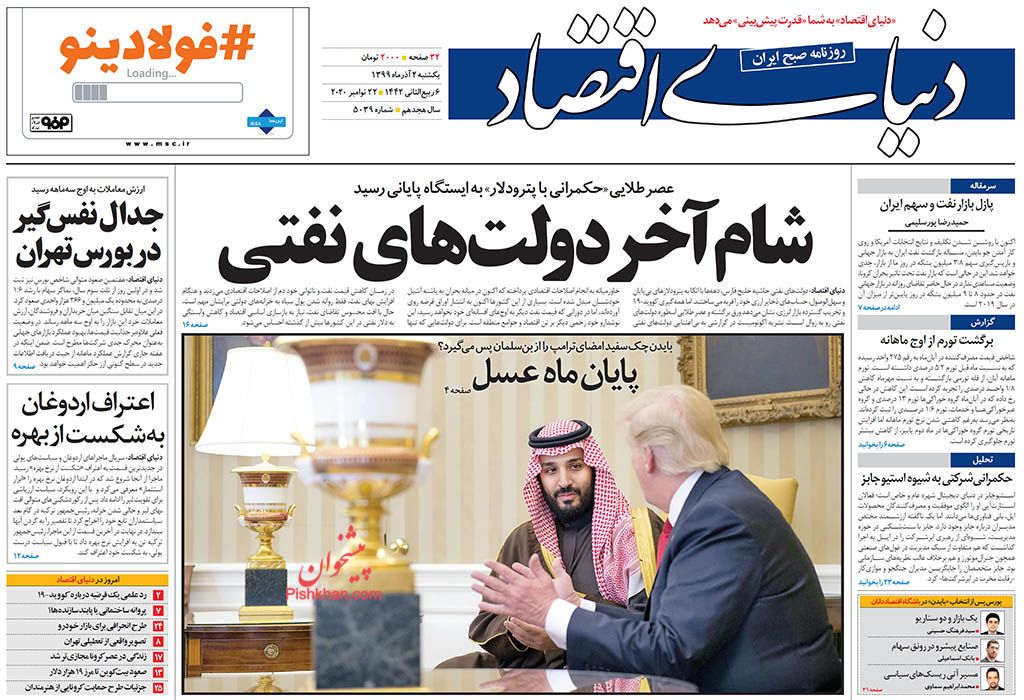
Donya-ye Eqtesad Newspaper:

1- End of Honeymoon

* Will Biden Take Back Trump’s Black Cheque from Bin Salman?

A Look at Iranian Newspaper Front Pages on November 22


Ebtekar Newspaper:

1- Controversies Surrounding Deputy Health Minister’s Resignation

* Why Did Malekzadeh Choose to Leave at Peak of Coronavirus?

2- Rouhani: Government to Provide Financial Aid for 30 Million Iranians

3- Borrell: It Won’t Be Easy to Revive JCPOA

4- China, US Moving Slowly Toward World War III

A Look at Iranian Newspaper Front Pages on November 22


Etemad Newspaper:

1- Infighting amid COVID-19 Outbreak: Deputy Health Minister Resigns

2- Mysterious Hands behind Kabul Rocket Attacks

A Look at Iranian Newspaper Front Pages on November 22


Ettela’at Newspaper:

1- Warning: 83 Percent of People Infected with COVID-19 in Family Gatherings

A Look at Iranian Newspaper Front Pages on November 22


Iran Newspaper:

1- Rouhani: If All People Observe Protocols We Won’t Have Even One Hour of Lockdown

2- Bloody Rocket Attack against Afghan Capital

A Look at Iranian Newspaper Front Pages on November 22


Javan Newspaper:

1- Biden Team’s Trump-Like Conditions for Returning to JCPOA

2- Rocket Attack against Kabul on Eve of US Withdrawal!

A Look at Iranian Newspaper Front Pages on November 22


Kayhan Newspaper:

1- Biden Says Sanction, Reformists Interpret It as Economic Reopening!

2- Questionable Resignation on Eve of Implementing Partial Lockdown

3- Trump Lawyer: Democrats’ Heads Must Be Cut Off!

A Look at Iranian Newspaper Front Pages on November 22


Khorasan Newspaper:

1- Biden Team Sets Preconditions Even Before Taking Office!

2- Controversial Fight in Frontline of COVID-19 Battle!

A Look at Iranian Newspaper Front Pages on November 22


Mardom Salari Newspaper:

1- G20 Summit Overshadowed by Saudi Human Rights Disasters

2- Concerns about Revival of JCPOA from Riyadh to Tel Aviv

A Look at Iranian Newspaper Front Pages on November 22


Shahrvand Newspaper:

1- Untimely Fight

* Deputy Health Minister Shocks Everyone by Resigning Overnight

A Look at Iranian Newspaper Front Pages on November 22


Shargh Newspaper:

1- Impacts of Coronavirus on 2021 Elections

2- Rouhani: Lockdown May Continue If We Don’t Get Desirable Result

3- Political Resignation at Health Ministry

A Look at Iranian Newspaper Front Pages on November 22

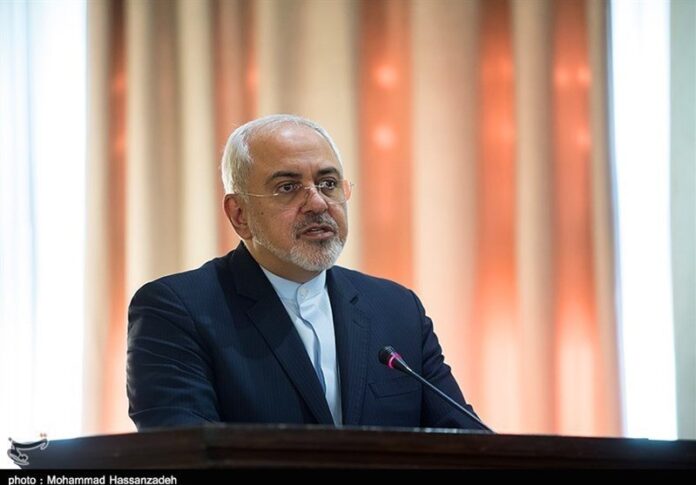
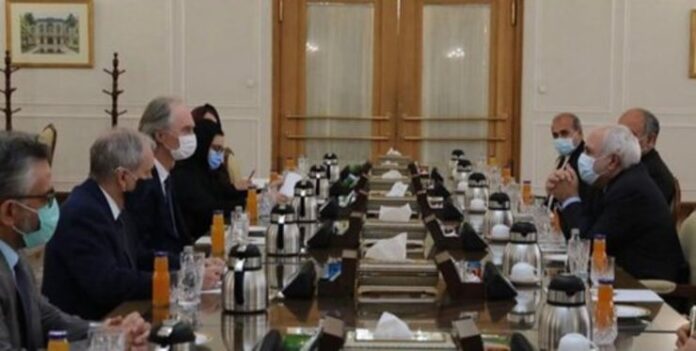
Iran’s Zarif, UN Envoy Discuss Syria Developments

In the Sunday meeting, the top Iranian diplomat touched upon attempts by certain countries to torpedo the trend of the political settlement of Syria issues.

“Good opportunities emerged in recent years to end the Syria crisis, but each time we saw some countries try to neutralize the attempts made and to ruin those chances,” said Zarif.

The Iranian foreign minister also highlighted the necessity of lifting cruel and unfair sanctions against the Syrian government and people, particularly amid the coronavirus outbreak.

Pedersen, in turn, presented a report on the latest status of the Syrian Constitutional Committee as well as his efforts for the committee to hold its next meeting.

Pederson referred to Iran-UN cooperation in resolving the decade-long Syria crisis, stressing the importance of Iran’s role in that trend.