Wednesday, April 29, 2026
Home Blog Page 265

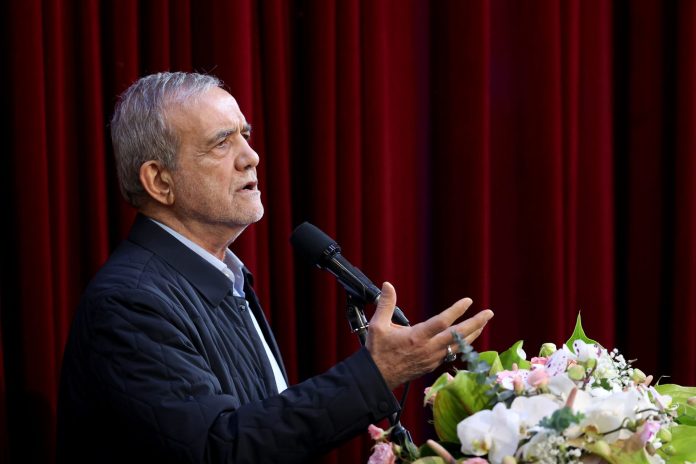
Iranian president emphasizes need for better management, education in Tehran

In a meeting of the Tehran Provincial Planning and Development Council on Saturday, he stressed that despite the challenges, Tehran holds immense potential and opportunities that must be harnessed effectively.

Pezeshkian criticized the current state of education, stating that poor teaching methods have led to a lack of attachment among youth to their homeland.

He noted that many graduates aspire to leave the country, which he attributed to inadequate educational systems.

“We must reform our schools and teaching methods to instill a sense of belonging and pride in our students,” he said.

The president also addressed the severe imbalance in resource distribution, particularly water scarcity, which he described as a looming crisis.

He warned that Tehran’s unsustainable development and overpopulation are exacerbating issues like land subsidence, with some areas sinking up to 36 centimeters annually.

Pezeshkian called for a halt to uncontrolled urban expansion and illegal construction, urging smarter city planning and innovative solutions.

He emphasized the role of universities, industries, and local councils in addressing the challenges, stating, “Tehran has the expertise and resources to solve its problems, but it requires collective will and action.”

US plans to dispatch upgraded long-range bombs to Ukraine: Reuters

The GLSDB, jointly developed by Boeing and SAAB AB, combines the GBU-39 Small Diameter Bomb with the M26 rocket motor, creating a weapon with a range of approximately 100 miles (161km).

The administration of former President Joe Biden sent an undisclosed number of GLSDBs to Kiev, but it has been months since Ukraine last used them against Russian forces after they proved ineffective last year, sources told Reuters.

Russia’s electronic warfare capabilities rendered precision-guided Western munitions – including GLSDB and GPS-guided Excalibur artillery shells – useless, the Wall Street Journal reported in July. With their guidance systems scrambled, some of these weapons were reportedly retired within weeks of being deployed.

Since then, Boeing has introduced several upgrades, including reinforced internal connections to enhance resistance to jamming. According to Reuters sources, at least 19 GLSDBs were test-fired in recent weeks to assess the effectiveness of the modifications. The US has stockpiled a significant number of these relatively inexpensive bombs in Europe and is “poised” to resume shipments to Kiev within days, the publication reported.

The potential replacement comes amid reports that Ukraine has depleted its stockpile of US-supplied Army Tactical Missile Systems (ATACMS), which have a longer range of 300km.

Kiev began using ATACMS missiles for strikes into internationally recognized Russian territory in autumn 2024, particularly targeting the border regions of Kursk, Bryansk, Belgorod, and Rostov. However, the stockpile was fully exhausted by late January, AP reported on Wednesday.

Moscow has warned the US and its allies against allowing long-range Ukrainian strikes, arguing that this makes NATO a direct participant in the conflict due to Kiev’s reliance on Western-supplied weapons.

In response to Ukraine’s first ATACMS strikes in November last year, Russia launched its new hypersonic Oreshnik intermediate-range ballistic missile at the Yuzhmash military-industrial facility in the Ukrainian city of Dnepr.

Iran’s former president Rouhani: Hardliners opposed buying S-300 anti-missiles 

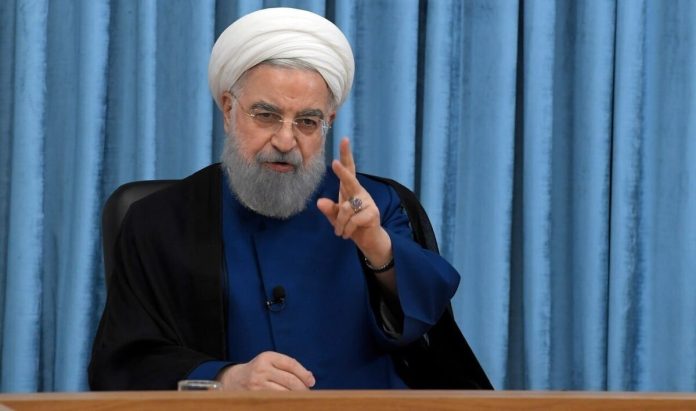
Rouhani cited as an example a decision by his administration to buy Russian-made S-300 anti-missile systems and “the hardliners’ opposition to such a move.”

He said in addition to Israel’s Prime Minister Benjamin Netanyahu who opposed Iran’s purchasing of the weaponry, Iranian hardliners inside the military pushed back against it and they argued that it was treasonous.

“Bibi’s priority during all his trips to Moscow and his meetings with (Russian President Vladimir) Putin was to scuttle the agreement,” he added, referring to Netanyahu’s nickname.

Rouhani refused to name the military officials who opposed the purchase of the missile shield from Russia.

He however noted that the pressures failed to scuttle the deal but put it off for seven years.

NATO head confirms Ukraine membership out of question

NATO Ukraine

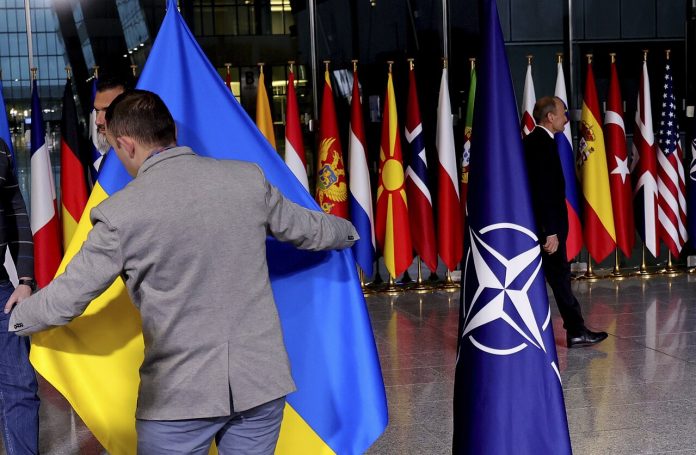
Speaking on Bloomberg TV on Friday following his meeting with US President Donald Trump, Rutte said any security guarantees for Kiev should be discussed after a peace deal or a ceasefire are in place.

Ukraine has long demanded a seat within NATO as a security guarantee for ending the conflict with Russia. Moscow, however, has cited Kiev’s NATO ambitions as being among the root causes of the conflict in the first place, and has called for Ukraine’s neutrality as a foundation for any settlement.

Asked by Bloomberg host Annmarie Hordern whether Trump indicated any intention to provide Kiev with security guarantees in his quest to end the conflict, Rutte deflected, saying that they would be needed to “keep a peace deal,” meaning it is premature to discuss them with no deal in place. He replied in the affirmative when the journalist specifically asked whether Trump had already taken the question of Ukraine joining NATO off the table.

Rutte added that Trump wants the “peace to be lasting and durable,” indicating that some other offers will be made to Ukraine to persuade it to agree to a ceasefire. However, he ruled out official NATO involvement in the process.

“There are many ways to [provide security guarantees]… But for NATO to be as NATO involved would be difficult. NATO will maybe always advise,” he stated.

“Before you get into too much detail in terms of how to maintain the peace, you first need to have the deal and it is a step-by-step approach,” Rutte noted, adding that he is optimistic that a deal could be in place this year.

Trump’s special envoy, Steve Witkoff, met Russian President Vladimir Putin on Thursday as part of the ongoing efforts to negotiate a resolution to the Ukraine conflict. Witkoff arrived in Moscow to convey more detailed information about this week’s US-Ukraine talks in Saudi Arabia, which ended with Kiev agreeing to a proposed 30-day ceasefire with Russia.

The exact details of the meeting between Putin and Witkoff have not been made public, but speaking at a press conference on Thursday, the Russian leader stated that he was ready to discuss Trump’s ceasefire proposal.

UN human rights rapporteur for Palestine granted Iran’s Dr. Taghi Ebtekar Award

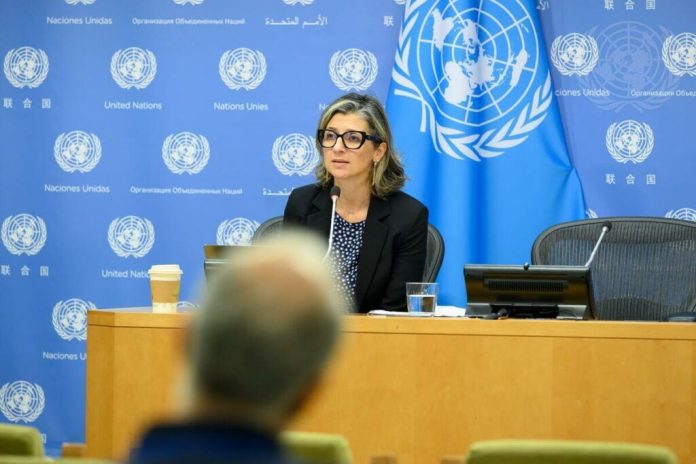
In an official letter, the center praised Albanese for her efforts in addressing the humanitarian crisis in Gaza and recognized her exceptional work in documenting and reporting on the atrocities committed in the region.

The award, named in honor of the late Iranian environmentalist Dr. Taghi Ebtekar, is presented annually to individuals whose work aligns with the values of peace, environmental sustainability, and human rights.

In the commendation letter, the founder and head of the center, Massoumeh Ebtekar, stated, “On the occasion of the 20th anniversary of the Dr. Taghi Ebtekar Award, our center has selected you as the international recipient of this award for 2025.”

The letter highlighted Albanese’s unwavering dedication, courage, and tireless efforts in exposing the injustices faced by the Palestinian people, particularly in Gaza.

The letter further emphasized that Albanese’s 2024 report, titled “Genocide for Colonial Destruction,” has set a clear standard for justice and peace in today’s world.

It described her commitment to combating racism and genocide as a “beacon of hope for humanity” during these challenging times.

Official: Iraq to continue importing electricity from Iran despite US restrictions

Electricity

Mostafa Rajabi emphasized that the existing contract remains in effect, and Iraq will uphold its commitments.

Rajabi clarified that Iran prioritizes domestic electricity supply, and exports to Iraq are conducted during off-peak hours in accordance with contractual obligations.

He also noted that discussions between the two nations have resulted in an agreement to settle Iraq’s overdue payments for electricity imports as soon as possible, with a portion already paid last month.

Regarding potential US pressure affecting electricity exports to Turkey and Russia, Rajabi stated that negotiations for electricity trade with the countries are ongoing and are expected to yield results in the near future.

He expressed optimism about expanding Iran’s electricity trade with regional partners, underscoring the importance of such collaborations for Iran’s energy sector.

While Iraq faces worsening power shortages, the US ended on Sunday sanctions waiver that allowed Iraq to buy electricity from Iran.

Iran, China, Russia hold trilateral meeting in Beijing, support diplomacy regarding Tehran nuclear issue

Chaired by China’s Vice Foreign Minister Ma Zhaoxu, the meeting included Iran’s Deputy Foreign Minister Kazem Gharibabadi and Russia’s Deputy Foreign Minister Sergey Ryabkov.

In a joint statement, they reaffirmed that diplomatic engagement and dialogue based on mutual respect are the only viable paths forward.

The parties also stressed the importance of addressing the root causes of the current situation and avoiding sanctions, pressure, and threats of force.

The statement highlighted the significance of UN Security Council Resolution 2231, which endorsed Iran’s nuclear deal – JCPOA- and urged relevant parties to avoid actions that could escalate tensions, creating space for diplomatic efforts.

China and Russia welcomed Iran’s reaffirmation that its nuclear program is exclusively peaceful and its commitment to the the Non-Proliferation Treaty (NPT) and the Comprehensive Safeguards Agreement.

They also supported Iran’s continued cooperation with the International Atomic Energy Agency (IAEA).

Iran and Russia praised China’s constructive role in hosting the meeting. The three nations agreed to maintain close consultations and strengthen cooperation in international organizations and multilateral frameworks, such as the Shanghai Cooperation Organization (SCO) and BRICS.

They also exchanged views on regional and international issues of mutual interest, pledging to enhance collaboration in these areas.

Ministry: US will Fail to Obstruct Iran Oil Sales Efforts

The Iranian Ministry of Petroleum

The Iranian Ministry of Petroleum’s report stated the sanctioning of Mohsen Paknejad due to his significant efforts to sell Iran’s oil is one of the latest measures under the so-called US “maximum pressure” policy. These sanctions have been imposed while less than seven months have passed since he assumed his ministerial role.

It added Paknejad has repeatedly emphasized in this short period that Iran’s oil exports will never be halted and that the US maximum pressure policy has failed. He has also affirmed that Iran has devised numerous strategies to circumvent sanctions and sell its oil in global markets.

The Ministry of Petroleum further noted in its report among the notable statements made by Minister Paknejad during this time is his assertion that “there is no problem in selling

Iran’s oil” and that “necessary measures have been taken to counter the sanctions.”
The report emphasized that the US maximum pressure campaign will not only fail to hinder Iran’s efforts but will instead make Minister Paknejad and his team more determined to continue their path.

It said over the past years, Iran has repeatedly demonstrated its ability to bypass sanctions and, through various methods, continues to sell its oil in international markets.

Columbia University expels, suspends and revokes degrees of several students

On Thursday, the university announced it was expelling, suspending and revoking the degrees of 22 students following last year’s Hamilton Hall protest, fulfilling one of the nine demands issued in a letter from the Trump administration to Columbia.

The University Judicial Board (UJB) – which has been overseeing disciplinary proceedings for pro-Palestinian protestors since the fall and issued the punishments – said it was issuing “multi-year suspension, temporary degree revocations, and expulsions related to the occupation of Hamilton Hall” on 30 April.

Previously, the UJB – an independent body of faculty, staff and students – had only suspended students. One of the demands made by the Trump administration is to eliminate the UJB and centralise discipline beneath the president’s office, giving them sole jurisdiction over punishing students.

A statement from the Columbia Palestine Solidarity Coalition alleged that co-chair of the Board of Trustees David Greenwald – who worked at Goldman Sachs for 20 years – “was revealed to have personally interfered in the disciplinary cases of these students”.

An estimated six students were expelled from Columbia University, according to student organisers. One of the students expelled and fired was Grant Miner, president of the Student Workers of Columbia (SWC) union.

According to the union, the expulsion occurred a day before contract negotiations were set to begin with the university on Friday. In a press release issued on Friday, they said: “Miner was expelled without any evidence after nearly a year of disciplinary proceedings.”

“The first bargaining session between SWC and Columbia begins Friday, where the Union will present demands to protect international and undocumented student workers.”

“Mahmoud Khalil, a UAW card signer, was detained by the US government last week, making Miner the second SWC member to be targeted. The Union is demanding protections for international and undocumented students, which would make it more difficult for Columbia to cave to federal pressure by aiding the Department of Homeland Security in abducting student workers,” they added.

At the time of publication, SWC announced Columbia had cancelled bargaining two hours before negotiations were due to take place.

On Thursday night local time, less than a week after immigration authorities detained Columbia student protest leader Mahmoud Khalil, Department of Homeland Security agents were back on the university’s campus to serve two search warrants.

The occurrence came to light after interim President Katrina Armstrong wrote an email to the university community late Thursday.

“I am writing heartbroken to inform you that we had federal agents from the Department of Homeland Security (DHS) in two University residences tonight. No one was arrested or detained. No items were removed, and no further action was taken.”

Armstrong added DHS served Columbia University with “two judicial search warrants signed by a federal magistrate judge authorizing DHS to enter non-public areas of the University and conduct searches of two student rooms.”

Armstrong wrote that the university was obligated to comply with the warrants, and that “University Public Safety was present at all times”.

In addition, the DHS issued a press release saying that federal Immigration and Customs Enforcement agents had arrested a second Columbia student – a Palestinian from the West Bank – for allegedly overstaying her student visa.

The Department announced she had participated in Pro-Palestine protests.

They also said they had cancelled the visa of an Indian doctoral student for “supporting Hamas”. The Indian student was said to have “self-deported”.

The presence of DHS agents on campus came hours after it was revealed that the Trump administration – through the Department of Education, the Department of Health and Human Services, and the General Services Administration – delivered a letter to Columbia with a list of actions it demanded the university take before it would consider reinstating $400m in grant funding it cut from the school.

This included placing the distinguished Middle East, South Asian, and African Studies department under an “academic receivership” for a minimum of five years and installing a new department chair. This would involve the university ceding control of the department and an outsider chair that could be appointed by the government to run it, potentially overseeing everything from curriculum design to the hiring and firing of faculty.

The Trump administration also demanded that Columbia discipline students involved in last year’s protest at Hamilton Hall, and centralising all disciplinary processes under the university’s president’s office, giving them the power to suspend or expel, and an appeals process only through the president.

The university is also being told to “Ban masks that are intended to conceal identity or intimidate others, with exceptions for religious and health reasons”, and requiring masked individuals to wear their school IDs outside their clothing.

The administration also wants Columbia to formalise a definition of antisemitism, referencing the controversial IHRA definition that Harvard University and New York University recently adopted.

The administration requested “immediate compliance”, upon which they “hope to open a conversation about immediate and long-term structural reforms” to return the institution “to its original mission of innovative research and academic excellence”.

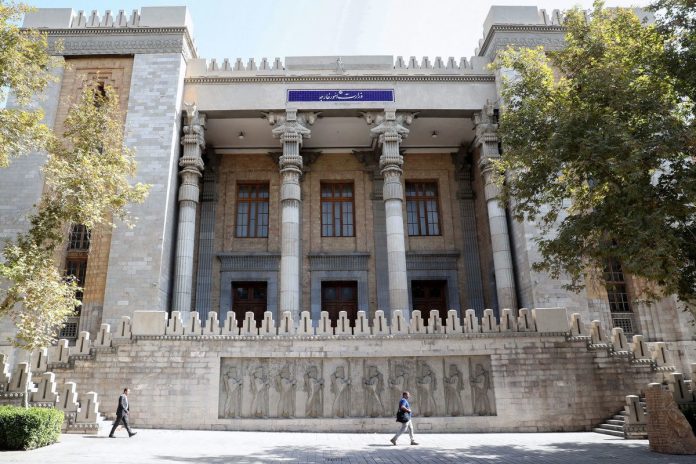
E3 envoys summoned to Iran Foreign Ministry over UN meeting

Iranian Foreign Ministry

During the summon, which was attended by the French and German ambassadors as well as the British chargé d’affaires (in the absence of the ambassador), the Iranian Foreign Ministry conveyed its strong objections to the irresponsible and provocative approach of these three countries and emphasized the following points:

• Iran’s peaceful nuclear program fully complies with its rights and obligations under the Non-Proliferation Treaty (NPT) and the Safeguards Agreement. Iran’s nuclear activities do not contradict the Joint Comprehensive Plan of Action (JCPOA)—a framework that established voluntary confidence-building measures by Iran in exchange for the lifting of illegal and unjust sanctions. Given the failure of the other parties to fulfill, their commitments, Iran retains the legitimate right, under the JCPOA, to partially or fully suspend its own obligations in response to such violations.

• The closed-door Security Council meeting on Iran’s nuclear program lacks any technical or legal justification and is a politically motivated and provocative move aligned with the unilateral and provocative policies of the United States.

• The decision of the three European countries to comply with the U.S. request for a Security Council session effectively aligns them with the very party that, in 2018, unilaterally and unlawfully withdrew from the JCPOA and grossly violated UN Security Council Resolution 2231, thereby triggering the subsequent deterioration of the agreement.

• Only days ago, the IAEA Board of Governors held a meeting in which countries expressed their views on Iran’s nuclear program. The convening of the Security Council meeting on Iran’s peaceful nuclear program is a form of destructive interference and a discrediting act against the technical mission of the Agency and jeopardizes the normal course of Iran-IAEA cooperation.

The ambassadors of the three European countries stated that they would relay Iran’s position to their respective capitals.