Monday, January 12, 2026
Home Blog Page 2648

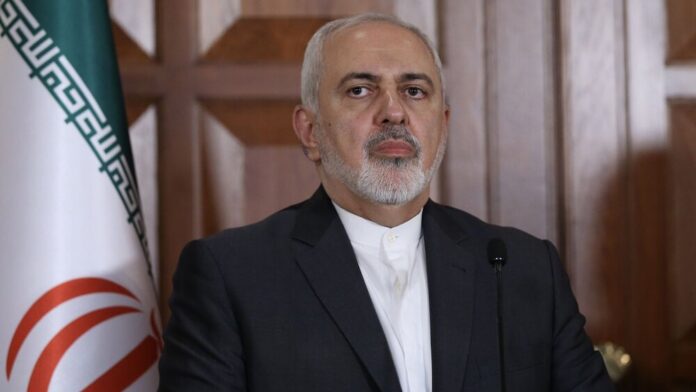
Zarif Says His Relationship with Biden Based on Mutual Respect

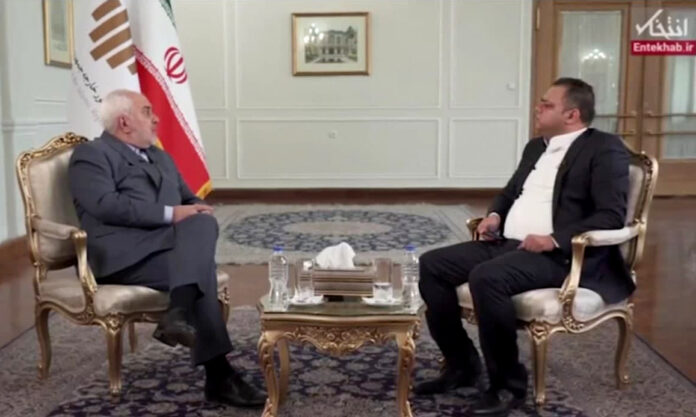
In an interview with the Entekhab news website, Mohammad Javad Zarif said Biden looks at foreign policy from a perspective different from that of outgoing President Donald Trump.

Zarif noted that his past relationship with Biden cannot be described as friendly; rather, it was only a professional relationship.

“The relationship between an Iranian agent and an American senator is not a friendly one and can be described as a work-related one,” he said.

“These relations cannot even be called personal and good; rather, they can be described as professional relations based on mutual respect,” Zarif added.

“When I was Iran’s representative to the UN, I had several meetings with Biden at a specialized level. Biden surely has a different view toward foreign policy from that of Trump,” said Zarif.

“Biden has had a role in the United States’ foreign policy arena since 1970 and is more familiar with foreign policy than Trump is, but this does not mean that his stances are acceptable. We should note that Biden’s positions reflect the US government’s approach anyway,” he said.

“Definitely, Biden acts in line with the United States’ national interests. But the key issue during the Trump era was that the White House had handed over foreign policy to Israel and [its prime minister Benjamin] Netanyahu. There is no doubt that Zionist pressure groups have had an effective role in the US foreign policy since the establishment of the Israeli regime. However, Trump hand handed over this significant arena to Netanyahu, who is an extremist figure in the Zionist regime, and to an extremist and radical circle which was actually run by the ISIS, Al-Nusra Front and all extremists in the region and across the world,” he said.

Zarif Says His Relationship with Biden Based on Mutual Respect“The US government will definitely have fundamental problems with the Islamic Republic of Iran during the Biden administration as did Obama. During Obama’s presidency, relations between Tehran and Washington were not friendly, either, and there were differences to some extent; however, part of unnecessary tensions between the two sides had subsided. But during Trump’s presidency, tensions between Iran and the US were at their highest in 40 years. It seems there is no need for this trend to continue,” said Zarif.

The top diplomat underlined that the issue of Tehran’s stance on the US should not turn into a partisan matter in Iran.

“I don’t see foreign policy as a partisan matter. In other words, foreign policy should be planned based on a non-partisan basis. But, unfortunately, this issue is ignored in our country by some parties. We should be seeking [to safeguard our] national interests, whether in the 12th administration (Hassan Rouhani’s second four-year term in office) or in the 13th administration,” he said.

“Negotiations between Iran and the US began in the 10th administration with the Supreme Leader’s blessing. The same people in the eleventh and twelfth administrations who were opposed to talks with the US had been opposed to negotiations in the tenth administration, too,” he said.

He urged Iranian political factions not to turn foreign policy into a partisan row as it will be to the detriment of Iran’s national interests.

Elsewhere in his remarks, Zarif described the Trump administration a “rogue” one which pulled out of numerous agreements, including the 2015 Iran nuclear deal known as the Joint Comprehensive Plan of Action (JCPOA).

Zarif said the JCPOA was a strong agreement which Washington tried to abuse.

He said the US government failed to fully abide by its commitments even during the Obama administration.

The Iranian foreign minister said the US keeps violating one of the fundamental principles of international law and the UN Charter, i.e., the principle of not resorting to force.

“For example, the US attacked Iraq,” he said.

Zarif said the United States has always had power in the outside world and has been able to exert force.

“But what was important was that we refused to succumb to Washington’s pressure,” he noted.

Even under Obama, said Zarif, the US was able to make the moves that it did during the Trump administration, but it didn’t.

Zarif Says His Relationship with Biden Based on Mutual Respect

Elsewhere in his remarks, Zarif touched upon the US presidential election.

“I feel two groups support Trump in Iran. One group is those who call themselves opponents of globalists and they feel they and Trump are like-minded, which is regrettable. Of course, Mr. Trump may be an isolationist, but he is definitely not an anti-globalism element,” said he top diplomat.

“In the foreign policy arena, Mr. Trump is an agent of Zionists and implements the policies of reactionary countries in the region,” he said.

“The analysis by all of us until six months ago suggested that Mr. Trump will be re-elected, … but the tables were turned,” he added.

Zarif criticized those who tied their victory in the upcoming Iranian presidential vote to the reelection of Trump.

“They said they would certainly win in the 2021 Iran presidential election if Trump won, but now this certainty has been questioned,” said Zarif.

“It would be bad for us to plan our elections based on developments outside Iran,” said the foreign minister.

“Another point is that they are supporting Trump, who has killed general Soleimani and has been involved in the murder of thousands of Iranians, who have lost their lives due to a lack of medicine, poverty and unsuitable social conditions. Trump has had a role in all of these cases. Even he himself had said that the US wanted to exert so much pressure on Iran that it would destroy Iran’s economy,” he said.

Zarif underlined it is not understandable why some people are backing a person who wanted to destroy the economy of their country.

Elsewhere in his remarks, Zarif touched upon Iran’s relations with other countries.

“At the same time that we have good relations with China and Russia, we should have good relations with Turkey and Europe as well,” he said.

Zarif said Russia and China have had key roles in Iran’s foreign policy.

“We should have a tension-free relationship with the US, too,” the top diplomat said.
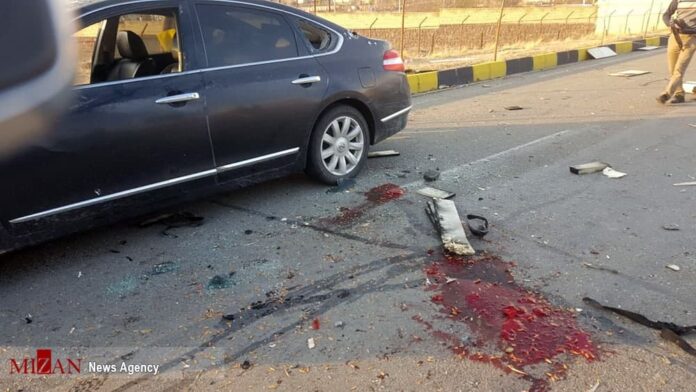
No Assassins Present at Scene of Iranian Scientist’s Slaying: New Report

The IRGC-affiliated Fars News Agency reports that it has found out about more details of the terrorist act.

Based on this report, the bullet-proof car carrying Fakhrizadeh and his wife accompanied by three bodyguard vehicles sets off on a journey from a town in northern Mazandaran province to the town of Absard in Damavand region to the east of the capital, Tehran.

A few kilometres left to the site of the incident, the leading bodyguard car leaves the motorcade to go and check the destination for safety.

At the same time, the sound of a few bullets hitting the car draws the attention of Fakhrizadeh and makes the car stop. He gets out of the car, believing the sound had been caused by the car hitting objects on the road or by the engine malfunctioning.

Follow the latest on the assassination of Mohsen Fakhrizadeh through this link.

Right then, several rounds were shot at Fakhrizadeh by a remote-controlled automatic machine gun from a Nissan pickup parked 150 metres from his car. Two bullets hits Fakhrizadeh on his side and one bullet in the back, causing his spinal cord to be severed.

Meanwhile, Fakhrizadeh’s lead bodyguard jumps in front of him to protect him, and is hit by several bullets. Moments later, the parked pickup truck explodes.

Wounded Fakhrizadeh is taken to a clinic and then medevacked to a hospital in Tehran, but, unfortunately, he succumbs to his wounds after a while.

It is noteworthy that based on the information received by Fars News Agency, the operation took around 3 minutes, and no human agents were present at the scene. The shots were fired by automatic weapons, and no one is hurt in the incident except Fakhrizadeh’s bodyguard, who is wounded.

An investigation to identify the owner of the Nissan pickup shows he had left the country on October 29, 2020.

Fakhrizadeh had been on the Israeli regime and terrorist group’s assassination list for nearly 3 decades. In recent years, several attempts on his life had been foiled.

Iraq, Azerbaijan Condemn Assassination of Iranian Scientist

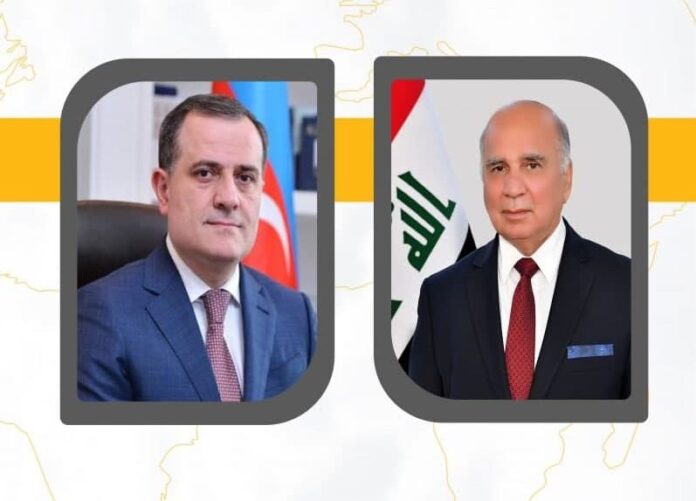
in a telephone conversation on Sunday, Minister of Foreign Affairs of the Republic of Azerbaijan Jeyhun Bayramov expressed sympathy with and offered his condolences to Iranian Foreign Minister Mohammad Javad Zarif over the martyrdom of Iranian nuclear and defence scientist Mohsen Fakhrizadeh in the recent terrorist assassination.

The senior Azeri diplomat also condemned the assassination as an inhumane action.

Zarif and Bayramov also discussed bilateral relations between Tehran and Baku and other issues of mutual interest.

Iraqi Minister of Foreign Affairs Fuad Mohammed Hussein also called Zarif to condemn the terrorist assassination that led to the martyrdom of Fakhrizadeh.

Hussein also offered the Iraqi government’s condolences to the Iranian people and government over the loss.

Follow the latest on the assassination of Mohsen Fakhrizadeh through this link.

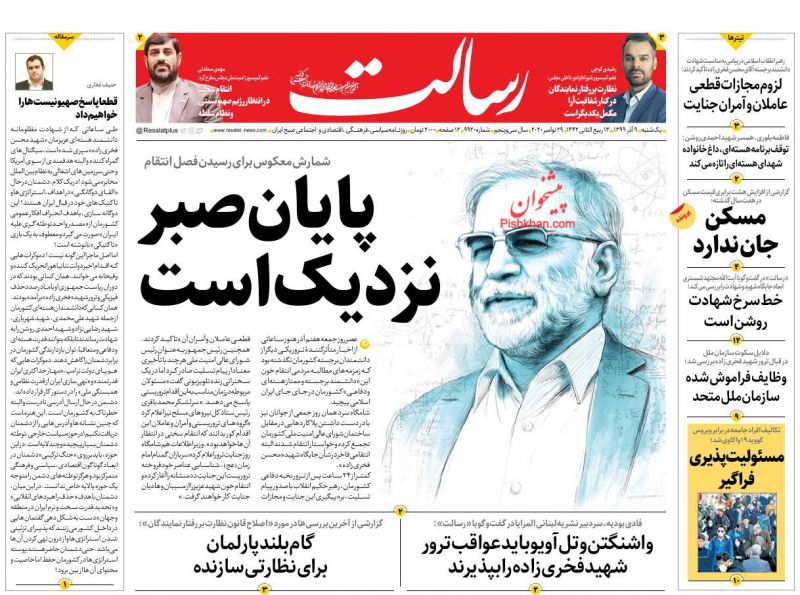
Newspapers Discuss Iran’s Response: Harsh Revenge or Strategic Patience?

Iranian Newspapers


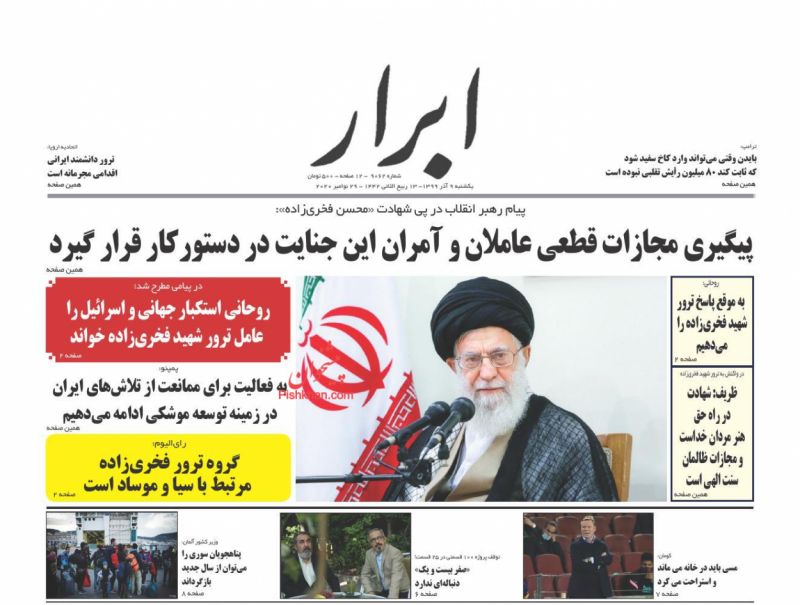
Abrar Newspaper:

1- Rouhani Blames Global Arrogance, Israel for Fakhrizadeh Assassination

2- Rai al-Youm: Fakhrizadeh Assassins Linked to CIA, Mossad

Newspapers Discuss Iran's Response: Harsh Revenge or Strategic Patience?


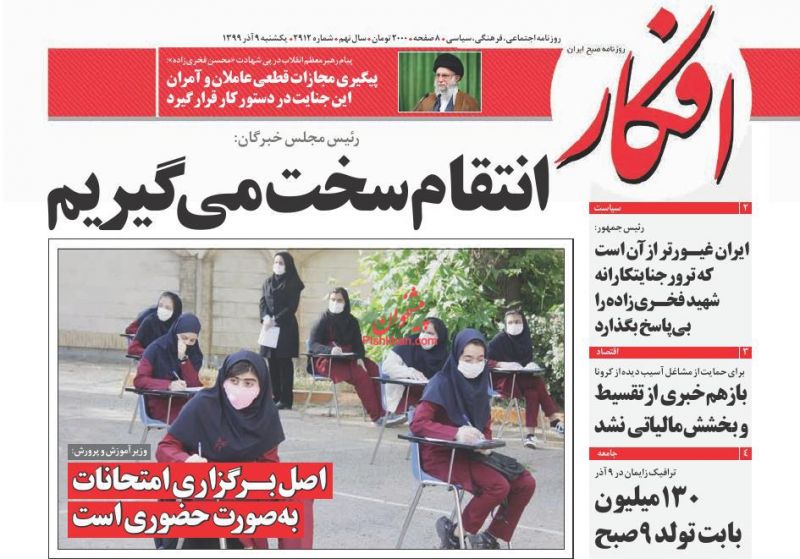
Afkar Newspaper:

1- Head of Assembly of Experts: Iran to Take Harsh Revenge

Newspapers Discuss Iran's Response: Harsh Revenge or Strategic Patience?


Aftab-e Yazd Newspaper:

1- Iran Leader Orders Punishment of Those Who Ordered, Executed Fakhrizadeh Assassination

2- International Legal Pursuit of Fakhrizadeh Assassination

Newspapers Discuss Iran's Response: Harsh Revenge or Strategic Patience?


Arman-e Melli Newspaper:

1- What Did Audiences Say about ‘Trap of Tension’?

2- Rouhani: Iran to Respond to Israel’s Warmongering

Newspapers Discuss Iran's Response: Harsh Revenge or Strategic Patience?


Ebtekar Newspaper:

1- Iran Leader Calls for Punishment of Those Behind Assassination

2- Widespread Reactions to Assassination of Fakhrizadeh: How Will Iran Respond?

* From Responding in Appropriate Time to National Solidarity

3- German Media Reveals US, Israel Role in Killing Iranian Scientist

Newspapers Discuss Iran's Response: Harsh Revenge or Strategic Patience?


Etemad Newspaper:

1- The Day After the Incident

* A Review of Assassination Operation and the Way Terrorists Arrived in Absard

2- Iran Unanimously Condemns Assassination, Calls It Blatant Violation of Int’l Law

Newspapers Discuss Iran's Response: Harsh Revenge or Strategic Patience?


Ettela’at Newspaper:

1- Definite Punishment of Perpetrators While Continuing His Scientific Work

Newspapers Discuss Iran's Response: Harsh Revenge or Strategic Patience?


Iran Newspaper:

1- Timely Response: Iran Unanimous against Killing of Fakhrizadeh

Newspapers Discuss Iran's Response: Harsh Revenge or Strategic Patience?


Javan Newspaper:

1- Leader Orders Punishment of Those Who Ordered, Executed Assassination

Newspapers Discuss Iran's Response: Harsh Revenge or Strategic Patience?


Jomhouri Eslami Newspaper:

1- Fakhrizadeh Family: His Path Will Be Continued

Newspapers Discuss Iran's Response: Harsh Revenge or Strategic Patience?


Kayhan Newspaper:

1- Assassination of Fakhrizadeh Won’t Stop His Unique Achievements

2- Europe’s Shamelessly Calls for Restraint against State Terrorism!

Newspapers Discuss Iran's Response: Harsh Revenge or Strategic Patience?


Mardom Salari Newspaper:

1- Netanyahu-Trump Joint Madness in Absard Terror

2- Fakhrizadeh Built Infrastructure of Iran’s Nuclear Defence in Best Way Possible: AEOI

3- Iran’s Envoy to London: Fakhrizadeh Killing Violation of Int’l Law

Newspapers Discuss Iran's Response: Harsh Revenge or Strategic Patience?


Resalat Newspaper:

1- Iran’s Patience Getting Over: Countdown for Revenge Season

Newspapers Discuss Iran's Response: Harsh Revenge or Strategic Patience?


Setareh Sobh Newspaper:

1- Wave of Condemnation and Protest against Killing Nuclear Scientist

Newspapers Discuss Iran's Response: Harsh Revenge or Strategic Patience?


Shahrvand Newspaper:

1- Revenge in Due Time, Continuing Path of Martyr

Newspapers Discuss Iran's Response: Harsh Revenge or Strategic Patience?


Shargh Newspaper:

1- Rouhani: We’ll Respond in Appropriate Time

2- Raisi: Fakhrizadeh and People Like Him ‘Heroes of Iran’s Progress’

3- EU Slams Assassination of Fakhrizadeh as ‘Criminal Act’

Newspapers Discuss Iran's Response: Harsh Revenge or Strategic Patience?


Sobh-e Emrooz Newspaper:

1- Harsh Revenge or Strategic Patience?
* How Will Iran Respond to Assassination of Nuclear Scientist?

Newspapers Discuss Iran's Response: Harsh Revenge or Strategic Patience?


Vatan-e Emrooz Newspaper:

1- Agenda: Punishment

Newspapers Discuss Iran's Response: Harsh Revenge or Strategic Patience?

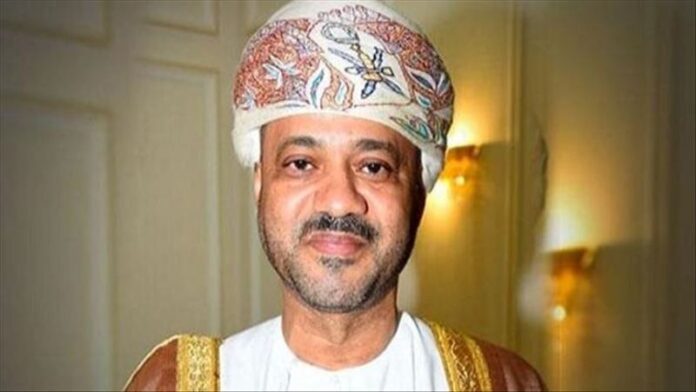
Omani FM Condemns Assassination of Fakhrizadeh

In a Sunday phone call with Foreign Minister Mohammad Javad Zarif, the Omani top diplomat expressed sympathy and offered condolences to the Iranian nation and government over the incident.

Albusaidi also condemned the terrorist act and said terrorism is rejected and unacceptable in any form.

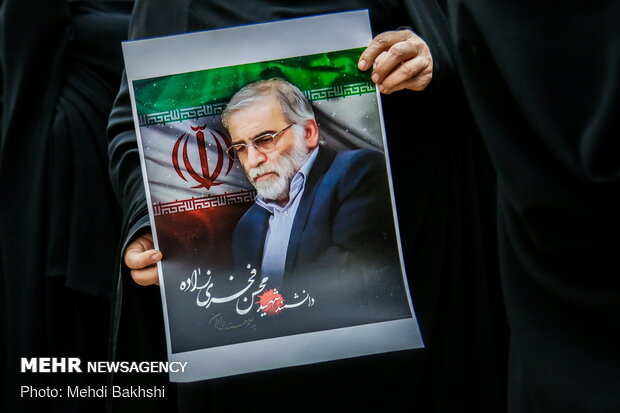
Fakhrizadeh, the head the Defense Ministry’s Organization of Defensive Innovation and Research, was targeted in a multi-pronged terrorist attack by a number of assailants in Absard city of Tehran Province’s Damavand County.

Iran Must Retaliate by Attacking Israel’s Haifa: Conservative Paper

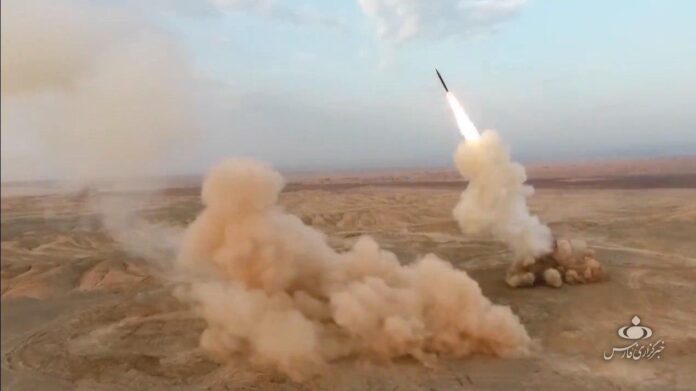
Camouflaged Missiles Fired from Underground during Iran War Games

In this editorial, political analyst Sa’dollah Zarei noted such a military strike would serve as a deterrent move against possible future terror acts.

“If Israel is proved to have had a role in the assassination of Mohsen Fakhrizadeh, and, of course, if all evidence suggests such involvement, we should deal such a blow to this regime that … it would remove from its agenda, forever, plans to attack Iranian troops or centres in any place,” he said.

“We have already announced, time and again, that if Israel makes a mistake, we will strike Haifa,” he noted.

Follow the latest on the assassination of Mohsen Fakhrizadeh through this link.

“Now, supposing that the Israeli regime’s role in the assassination is proved, we can carry out this threat, but not at a level similar to our missile attack on the American Ain al-Assad base in Iraq [in retaliation for assassination of General Qassem Soleimani in January]; … rather, the attack on the key port city of Haifa should be such that heavy human losses are also inflicted in addition to the destruction of facilities, so that our deterrence will reach ‘a point of certainty’,” he noted.

Zarei argued that the huge damage caused to Iran with the assassination of Fakhrizadeh shows the Ain al-Assad retaliation was just a slap in the enemy’s face, and while Iranian officials repeatedly vowed a revenge, they didn’t take any further action, emboldening Israel to do this.

“If Iran’s reaction is done vigilantly and precisely, it will definitely result in deterrence because the US and the Israeli regime and their agents are, by no means, prepared to take part in a war and military confrontation, this will, in the true sense of the word, put an end to war and terror in our region,” he said.

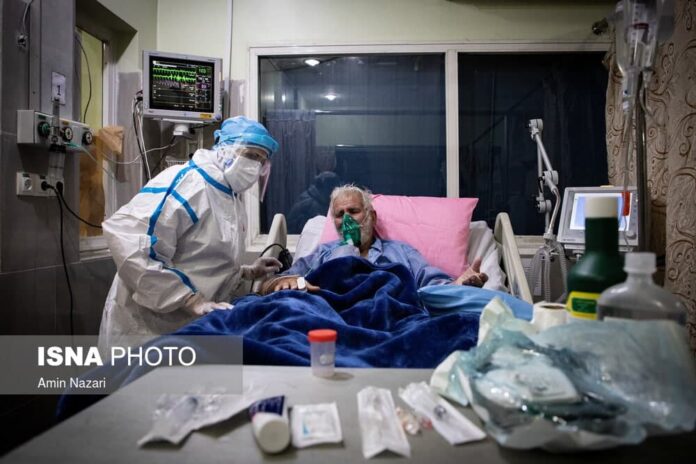
Iran’s COVID-19 Cases Near 950,000: Ministry

Over 800,000 Iranians Infected by Coronavirus

In a press briefing on Sunday, Sima-Sadat Lari said the virus has also killed 389 patients since Saturday noon, increasing the overall death toll to 47,875.

She said so far 658,292 patients have recovered from the disease or been discharged from the hospital.

Lari went on to say that 5,859 patients are also in critical conditions caused by more severe infection.

The spokeswoman noted that 6,081,952 COVID-19 tests have been taken across the country so far.

She said the high-risk “red” zones include Tehran, Qom, Mazandaran, East Azarbaijan, Isfahan, Yazd, Ardabil, Khorasan Razavi, Khuzestan, Hamadan, West Azarbaijan, Bushehr, Chaharmahal and Bakhtiari, Kohgiluyeh and Boyer-Ahmad, Alborz, Lorestan, Markazi, Ilam, South Khorasan, Kermanshah, North Khorasan, Semnan, Gilan, Zanjan, Qazvin, Kurdistan, and Kerman provinces.

The “orange” and “yellow” zones also include Golestan, Hormozgan, Fars, and Sistan and Baluchestan provinces, she added.

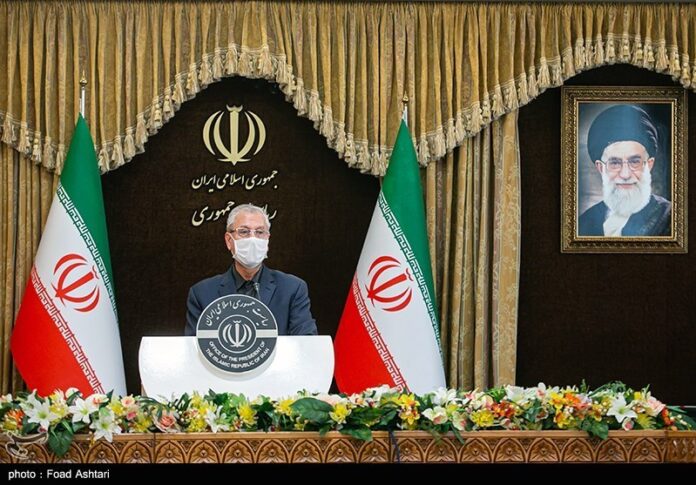
Fakhrizadeh‌ Killing Aimed at Impeding Iran’s National Progress: Spokesman

Iran Says US Change of Tack to Benefit Region, World

In a note, Ali Rabiei said Iran is no stranger to such terrorist acts as the country has long been the target of such acts of terror.

Following the 1979 Iran’s Islamic Revolution, he said, the country has, time and again, been hit by smart terrorist acts which targeted the masses as well as senior officials in a bid to cause panic, create the impression of insecurity and eliminate the “future of the Establishment.”

“In addition to above targets, these acts of terror have, in recent years, also been aimed at containing the nation’s scientific development and progress, defense power and geopolitical might,” he said.

“The assassination of Mohsen Fakhrizadeh, a prominent nuclear and defense scientist, following the assassination of several other nuclear scientists over the past ten years, and a few months after the slaying of general Qassem Soleimani, has more diverse objectives,” he added.
Rabiei said the act of terror was a “completely calculated and preplanned” move aimed at achieving the following goals.

1. disrupting the psychological calm of society, discouraging people from achieving victory and tackling the so-called “maximum pressure” policy

2. creating confusion in Iran’s strategy and forcing Iran to play in a field which the enemy has set up and pursues different scenarios in it.

3. disrupting security in the region and promoting the objective of Iranophobia and gaining concessions from owners of oil resources in the Middle East as well as advancing their objective of low-profile expansionism by breaking resistance in the region.

5. disturbing global security given the possible future changes in international policies if the post-Trump world seeks a new order and a global environment with less tension.

“The main losers of this scenario were the Israeli regime or some regional rulers, who went into action in a bid to block the path of righteousness and any opportunity where the Iranian nation could reclaim its rights,” he wrote.

He said the assassination of Iranian scientist Mohsen Fakhrizadeh seeks to create an insecure region and a chaotic world.

“The international atmosphere after the era of Trumpism will somehow benefit the Islamic Republic of Iran in the future,” said Rabiei.

He reiterated that the recent act of terror is aimed at creating a chaotic region, fueling grudges and disrupting global peace in the post-Trump era.

He said enemies are using the most savage methods and tools to assassinate key Iranian figures in a bid to take vengeance upon Iran for the failure of their “maximum pressure” policy and trigger social discontent, which, per se, shows Iran has been successful on its path to achieving its peaceful objectives.

“Trump had already acknowledged that Ira had not lost any negotiations,” he said.

According to the spokesman, Trump had also said that the US was not able to go to war with Iran, so it would resort to state terrorism.

“The assassination of general Qassem Soleimani and Mohsen Fakhrizadeh, who fell victim to state terrorism, is clear evidence of the weakness and embarrassment of the enemies that are losers and want to simply slow down Iran’s move on the path to development and power with the help of assassins through explosion and terror,” he said.

However, Rabiei said, the history of the Revolution in the past 40 years showed that enemies’ efforts are counterproductive.

“Such assassinations will not only not lead to social discord, but also serves to cement solidarity and unity in society by condemning terrorists and honouring martyrs,” he added.

“Now, who are terrorists after?” he asked.
Rabiei said sociological hypotheses suggest such acts of terror are aimed at “bringing about change” or “seriously affecting society.”

In other words, he explained, such terrorist acts aim to target key figures to affect the nation’s development and progress and achieve their final goal, i.e., influence the society psychologically.

He said the assassination of scientists such as Fakhrizadeh are not only aimed at killing an individual; rather, he added, it is aimed at disrupting national progress as a whole.

Rabiei finally called for vigilance to prevent further acts of terror in the future.

Follow the latest on the assassination of Mohsen Fakhrizadeh through this link.

Zarif Urges Europe to Abandon Double Standards on State Terrorism

In a tweet addressing German-speaking people, Mohammad Javad Zarif said there are traces of Tel Aviv’s involvement in the crime.

“Terrorists assassinated an eminent Iranian scientist,” he tweeted.

“Such a cowardly act which has serious signs of Israel’s involvement indicates the bellicosity of its perpetrators out of desperation,” he added.

He called on European states to denounce the assassination, which he dismissed as an act of “state terrorism.”

Follow the latest on the assassination of Mohsen Fakhrizadeh through this link.

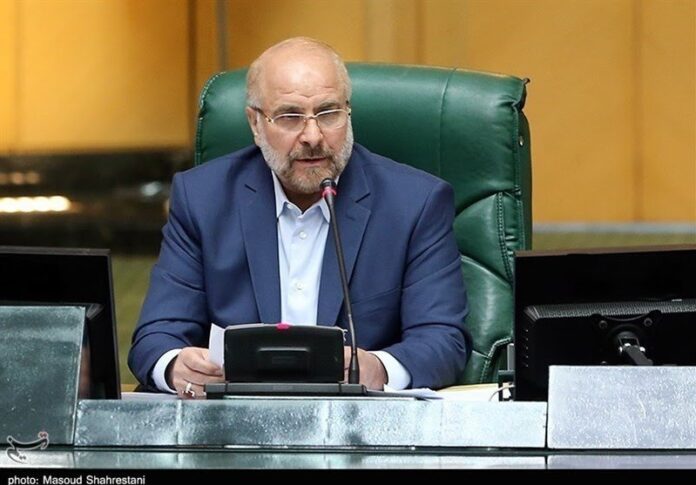
Iran’s Top Lawmaker Urges ‘Deterring’ Response to Fakhrizadeh Killing

Mohammad-Baqer Qalibaf said such a reaction would take vengeance upon the assassins.

“The criminal enemy will not regret its actions unless faced with strong reaction, which will both serve as a deterrent against the enemy’s possible future mistakes and take revenge on them for this recent crime,” he said.

“Accordingly, in addition to taking revenge, as a deterrent move, on the perpetrators and those ordering the assassination of Mohsen Fakhrizadeh, all relevant institutions and organizations have a duty to turn the threat of this tragic event into an opportunity to become stronger on different economic, security, defence and nuclear fronts,” he added.

“They should also avoid sending any signal suggesting weakness against, or trust in the US political system,” he said.

Follow the latest on the assassination of Mohsen Fakhrizadeh through this link.