Thursday, December 25, 2025
Home Blog Page 263

Trump ready to support new Russia sanctions bill: Politico

Putin Trump

If adopted, the “bone-crushing” legislation spearheaded by hawkish Senator Lindsey Graham would impose a 500% tariff on countries buying oil, gas, uranium, and other goods from Russia. Although the bill grants the president the power to exempt nations from the tariff for up to 180 days, Trump reportedly wants Congress to give him sole authority to decide on the sanctions.

“The administration is not going to be micromanaged by the Congress on the president’s foreign policy. The bill needs a waiver authority that is complete,” an official told Politico. The source added that otherwise, “conceptually there’s an openness” to signing the legislation.

Graham said on Tuesday that the Senate would soon vote on the draft. “The Senate bill has a presidential waiver to give President Trump maximum leverage,” he wrote on X. According to The New York Times, the vote could take place as soon as this month.

The push for tougher sanctions has gained momentum since Trump stepped up criticism of Russian President Vladimir Putin, as restarted negotiations between Moscow and Kiev have so far failed to produce a ceasefire.

Moscow has insisted that any lasting settlement must address the “root causes” of the conflict, including NATO’s eastward expansion and Ukraine’s aspirations to join the US-led alliance, which Russia views as a threat to its national security.

“We don’t need a pause, which the regime in Kiev and its foreign handlers would like to use to regroup their forces, continue mobilization, and strengthen their military potential,” Russian Foreign Minister Sergey Lavrov told Hungarian newspaper Magyar Nemzet on Monday.

Putin has demanded that Ukraine recognize Russia’s new borders and adopt permanent neutrality with a legally limited army.

Lavrov said this week that Moscow is working to arrange a third round of direct talks with Ukraine in Türkiye.

Tehran environmental authority denies presence of arsenic, cyanide in dust

According to Hassan Abbasnejad, Director General of Tehran’s Environment Department, thorough scientific assessments have found no credible evidence of these toxic substances in the region’s dust, soil, or water samples.
The allegations surfaced following a media report on Wednesday suggesting severe contamination in the area.

“Industrial activities in the Charmshahr Industrial Zone, including leather tanning, do not involve the use of high-risk materials such as arsenic or cyanide,” Abbasnejad clarified.

He noted that these chemicals are primarily used in specific mining or chemical industries, which are not present in the area.

While acknowledging the presence of hexavalent chromium in some industrial wastewater, Abbasnejad emphasized that its concentration and impact are not comparable to the alleged levels of arsenic or cyanide.

He also announced ongoing oversight programs, legal actions against polluters, and plans to upgrade wastewater treatment facilities. Additionally, a committee has been formed to restore the Band-e Ali Khan wetland, including efforts to secure environmental water rights.

Hamas agrees to release 10 Israeli hostages

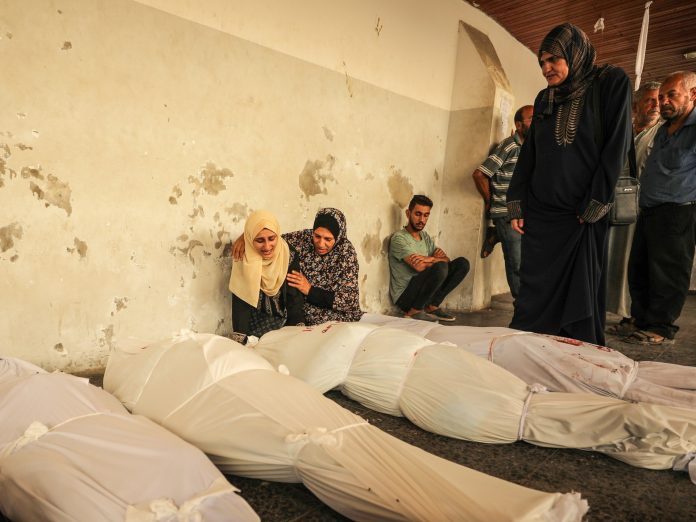
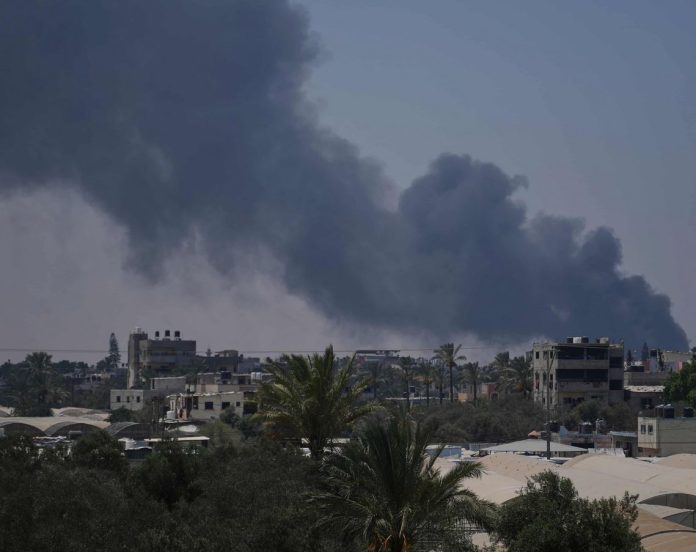
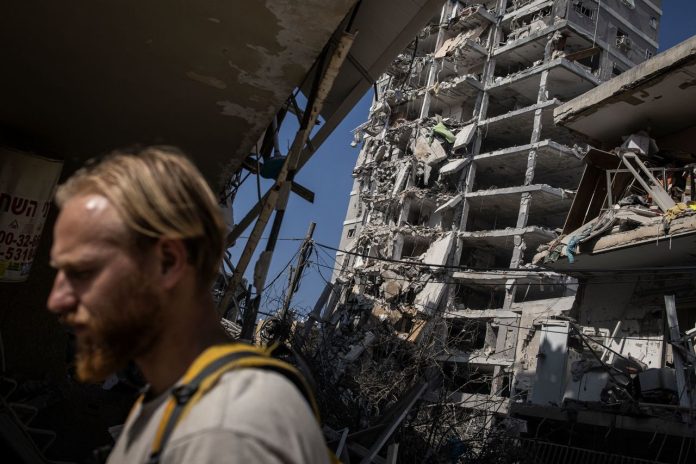
The comments on Wednesday came as Israeli forces killed dozens in Gaza, and United States President Donald Trump again expressed hope that a truce could be reached soon.

Hamas said the talks, spearheaded by key mediators Qatar and the US, have several sticking points, including the flow of desperately needed aid, withdrawal of Israeli forces from Gaza, and “genuine guarantees for a permanent ceasefire”.

Hamas official Taher al-Nunu stated that the group agreed to the latest truce proposal and “offered the necessary flexibility to protect our people, stop the crime of genocide, and allow the free and dignified entry and flow of aid to our people until we reach a complete end to the war”.

He added that the areas Israeli troops should withdraw to as part of the first phase of a ceasefire had to be drawn up in a way that does not affect Palestinian lives and “paves the way for the second phase of negotiations”.

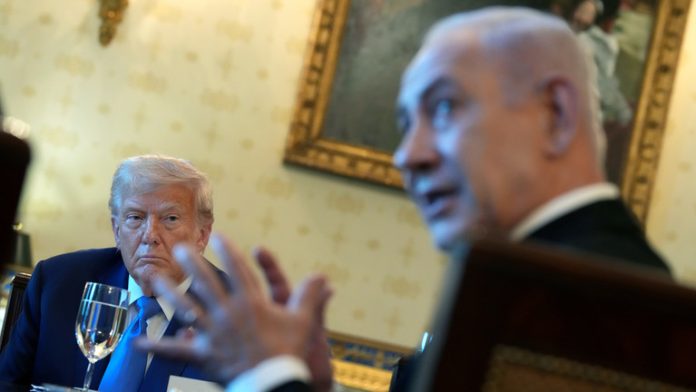
In Washington, DC, Trump, who has met Israeli Prime Minister Benjamin Netanyahu at the White House twice this week, said there is a “very good chance” of a ceasefire in Gaza, although his latest comments appear to reduce his expectations.

“I think we have a chance this week or next week. Not definitely. There’s nothing definite about war and Gaza and all the other places that we deal with so much,” he told reporters.

“But there’s a very good chance that we will have settlement, an agreement of some kind, this week and maybe next week if not,” he added.

Israel’s war in Gaza has killed over 57,000 Palestinians, according to the enclave’s health ministry. Most of Gaza’s population has been displaced by the war and nearly half a million people are facing famine within months, according to United Nations estimates.

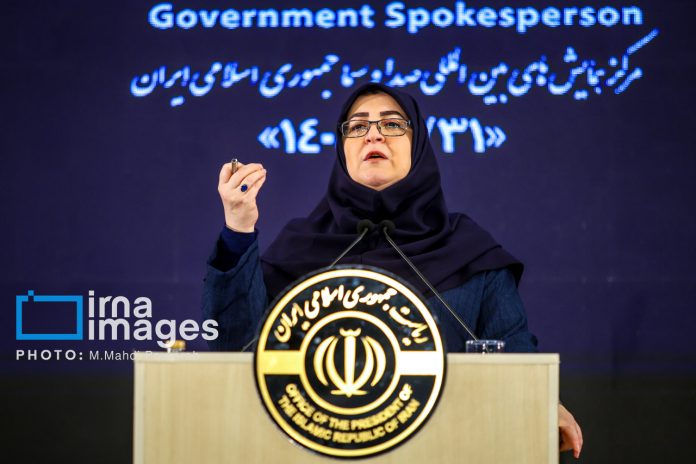
Tehran lawmakers criticize President Pezeshkian over remarks in US interview

The lawmakers accused the president of “undermining national unity” in the face of US hostility, stating that his comments on possible renewed negotiations with Washington and cooperation with the International Atomic Energy Agency (IAEA) “sent a message of weakness” following recent military strikes against Iran.

Referring to the 12-day conflict involving the US and Israel, the MPs argued that the Iranian public had achieved rare unity in opposing Western aggression, and the president’s statements risked undermining that consensus.

They also condemned President Pezeshkian’s attempt to distinguish between the US government and Israel, asserting that the two are inseparable in their actions against Iran.

The letter called on the president to adopt a firmer tone aligned with the leadership’s stance and to reject “poor advice” from close aides.

It criticized President Pezeshkian for not strongly supporting the religious decrees of senior clerics, particularly those defending sacred figures and the Leader Ayatollah Seyed Ali Khamenei.

The MPs said a firm stance would have conveyed a clear warning to Western audiences that any threat against the Iranian leadership would carry serious consequences.

US imposes new sanctions on facilitators of Iran’s oil exports

United States Department of the Treasury

The sanctions announced on the US Treasury Department’s website on Wednesday covered 22 companies in Hong Kong, the United Arab Emirates, and Turkey.

The Treasury claimed the companies have facilitated the sale of Iranian oil by being part of a “shadow banking” system run by the Islamic Revolution Guard Corps-Quds Force (IRGC-QF).

It added the companies receive payments from refineries buying Iranian oil and then move the funds to the accounts of other front companies controlled by the IRGC-QF.

Iran has repeatedly dismissed the significance of US sanctions on its oil exports. Recent estimates suggest the country has been selling oil at levels not seen since Washington imposed the sanctions in 2018 during the first term of the incumbent US President Donald Trump.

The sanctions announced on Wednesday by the Treasury’s Office of Foreign Assets Control (OFAC) are the first to come after Trump ordered airstrikes on three Iranian nuclear sites in the midst of an Israeli aggression on Iran that took place last month.

Iran responded to the attacks by targeting a major US military base in Qatar.

The sanctions mark a second such action by OFAC since February 4, when Trump signed a presidential memorandum restoring a campaign of maximum pressure on Iran.

OFAC, which blacklisted the IRGC-QF in 2007, announced sanctions on June 6 on more than 30 individuals and entities it said were related to Iran’s shadow banking infrastructure.

US imposes sanction on UN rapporteur following ‘economy of genocide’ report

The sanctions follow Albanese’s scathing report on 30 June in which she named over 60 companies, including major US technology firms like Google, Amazon and Microsoft, which she said were involved in “the transformation of Israel’s economy of occupation to an economy of genocide”.

The report called for the International Criminal Court and national judicial systems to pursue investigations and prosecutions of corporate executives and companies. It also called on United Nations member states to pursue sanctions and asset freezes.

“Today I am imposing sanctions on UN Human Rights Council Special Rapporteur Francesca Albanese for her illegitimate and shameful efforts to prompt @IntlCrimCourt action against US and Israeli officials, companies, and executives,” US Secretary of State Marco Rubio said in a statement on X on Wednesday.

“Albanese’s campaign of political and economic warfare against the United States and Israel will no longer be tolerated. We will always stand by our partners in their right to self-defense,” Rubio added.

The sanctions will freeze any assets Albanese has in the US and would likely restrict her ability to travel to the US.

Albanese is an Italian citizen. If the sanctions are fully enforced, they could also prohibit her from engaging in financial transactions within the European Union. US sanctions carry weight because the US can impose secondary sanctions on entities, such as banks or financial institutions, which conduct transactions with the sanctioned individual. Unlike Iran or North Korea, the EU is deeply wired into the US economy.

In a subsequent statement, Rubio said Albanese was engaging in “economic warfare” against the US.

Rubio added Albanese had written “threatening letters to dozens of entities worldwide, including major American companies across finance, technology, defense, energy, and hospitality, making extreme and unfounded accusations and recommending the ICC pursue investigations and prosecutions of these companies and their executives”.

In a forthcoming exclusive interview with Middle East Eye, Albanese slammed US and European companies that she said were profiting off of Israel’s war on Gaza.

“It’s not the Israelis [who] are getting rich out of the genocide, it is that there are corporations, and there is an oligarchy connected to the defence industry, including in Europe and in the US, getting rich out of the genocide,” she told MEE.

The report did not focus solely on US-domiciled companies but included Caterpillar, Airbnb, and Lockheed Martin. South Korea’s HD Hyundai, Sweden’s Volvo Group, France’s BNP Paribas and the UK’s Barclays were also listed.

The sanctions announcement coincides with Israeli Prime Minister Benjamin Netanyahu’s visit to Washington, DC this week. Rubio and Netanyahu met on Wednesday.

One US official who spoke with MEE after the sanctions were announced called the move “in keeping with the administration’s policies”, saying it had been expected.

Albanese has emerged as one of the most prominent UN officials to criticise Israel’s war on Gaza, which she has labelled a genocide against Palestinians. She has also levelled broadsides against the policies of US President Donald Trump, particularly his plan announced in early February to take over the Gaza Strip and forcibly displace Palestinians.

The US, earlier this month, requested that the UN remove Albanese from her post.

Saudi Arabia to allow foreign property ownership in two cities

Saudi Arabia

The long-awaited reform allows foreigners to buy property in specific areas in Riyadh and the Red Sea coastal city of Jeddah. Ownership in Mecca and Medina, the two holiest cities in Islam, is subject to special requirements.

The move prompted a rally in Saudi real estate stocks. Saudi Arabia’s Real Estate General Authority is expected to issue more specifics on the rules and implementation. The law is expected to take effect in January 2026.

Opening Saudi Arabia’s property market to foreign investment is a crucial part of the kingdom’s Vision 2030 plan, which places a strong emphasis on tourism, particularly along Saudi Arabia’s Red Sea coast.

Some projects have faced setbacks after years of high spending and slumping oil prices. The kingdom has already had to scale back the futuristic city of Neom. Instead of 1.5 million people living in the city by 2030, Saudi officials now anticipate fewer than 300,000 residents. Meanwhile, only 2.4km of the city will be completed by 2030.

Still, Saudi Arabia is undergoing a construction boom.

In 2024, the kingdom began construction of the Mukaab, a cube-shaped attraction in Riyadh, which is set to be the world’s largest structure. The building will be the main centrepiece of New Murabba, a major development project in downtown Riyadh.

The kingdom is also pressing ahead with Red Sea resorts, some of which, like the Ritz-Carlton Reserve, have already opened.

Saudi Arabia’s real estate and tourism goals are twofold, experts say.

The kingdom aims to encourage middle class and wealthy Saudis to spend their money at home rather than abroad.

However, by allowing foreign real estate ownership, Saudi Arabia is also seeking to tap a lucrative market alongside other Gulf states, such as Oman and Qatar, for vacation homes and second residences.

The UAE remains the leader in this space, with Dubai and even Abu Dhabi experiencing double-digit residential property price growth in recent years.

According to a report in June by real estate firm Frank Knight, Dubai residential home prices surged 19 percent in 2024. Demand for Dubai real estate remains highest among high-net-worth Saudi citizens, followed by UK citizens and East Asians.

Notably, the trading for homes priced at $10m and above in Dubai now matches London and New York City combined, Frank Knight announced.

Although western media has focused on Saudi Arabia’s efforts to push through liberalising social reforms to attract tourists, some research suggests there is also pent-up demand in corners of the global south, including among high-net-worth Muslim individuals.

A Frank Knight report in 2024 found that 79 percent of wealthy Muslim respondents wanted to make their residential property purchase in Mecca or Medina, with budgets above $4m.

US ignored report saying GHF was not fit to deliver aid in Gaza: CNN

Gaza War

The US Agency for International Development (USAID) in June wrote a 14-page confidential internal assessment criticising a request for funding submitted by the controversial Gaza Humanitarian Fund (GHF). GHF was seeking $30m of its $100m operating costs from the State Department.

According to the assessment, which was obtained by CNN, at least nine elements normally required to obtain government funding were not included in the application, such as insufficient planning information ensuring Palestinians would actually receive aid.

One criticism was that the overall plan lacked “basic details” regarding a scheme to give out powdered baby formula in a Gaza area where clean drinking water is not available.

“I do not concur with moving forward with GHF given operational and reputational risks and lack of oversight,” a USAID official said, concluding it would not be safe to move forward with the GHF organisation.

A source familiar with GHF’s application told CNN on the condition of anonymity that the paperwork was “abysmal” and “sorely lacking real content”.

Another source added USAID staff had expressed worries about working with GHF because they did not think the group could uphold the humanitarian principle of “do no harm”.

“GHF must explain how it will Do No Harm,” USAID stated, asking the organisation to supply safety, accountability and access details.

Despite the concerns, Secretary of State Marco Rubio and deputy administrator for policy and programmes at USAID, Jeremy Lewin, pressed ahead for expedited approval, two sources told CNN.

Another source noted that expedited approvals are typically reserved for trusted partners, and GHF would not likely have been funded under normal procedures.

After the confidential assessment was made, USAID CFO and deputy administrator for management and resources Kenneth Jackson recommended that Lewin “waive the various criteria given the humanitarian and political urgency of GHF’s operations” in an internal memo dated 24 June.

Both Lewin and Jackson oversaw cuts to USAID as part of Elon Musk’s Department of Government Efficiency.

Two days later, on 26 June, the State Department approved the funding, detailing the requirements needed for the funds, including some concerns raised by USAID.

The $30m funding award has not been disbursed yet and will be released in stages, provided that GHF meets key requirements.

A State Department official last week also suggested the US could provide further funding to GHF as long as it continues to operate “safely and securely and consistent with sort of the principles that we’ve laid out for them”.

In response to the report, the GHF said in a statement, “GHF has done what others could not: deliver free, nutritious, and secure emergency food aid directly to the people of Gaza without interference from Hamas”.

“In just over a month, we’ve delivered more than 66 million meals. We’re grateful to the Trump Administration for recognizing the impact of our work with a $30 million commitment to help expand our operations,” the organisation added.

The group announced that its “success stands in stark contrast to groups that have received US government funding for years – including the UN”.

The US and Israeli-backed GHF was established after Israel blocked humanitarian aid from entering Gaza for 11 weeks.

Criticisms of GHF in the assessment have been mirrored by international humanitarian aid groups who have a track record of safely and effectively delivering food and aid to Palestinians over decades, such as the United Nations relief and works agency for Palestine refugees, which was banned from operating by Israel.

The UN and major aid groups have refused to work with GHF, saying it serves Israeli military goals and violates basic humanitarian principles.

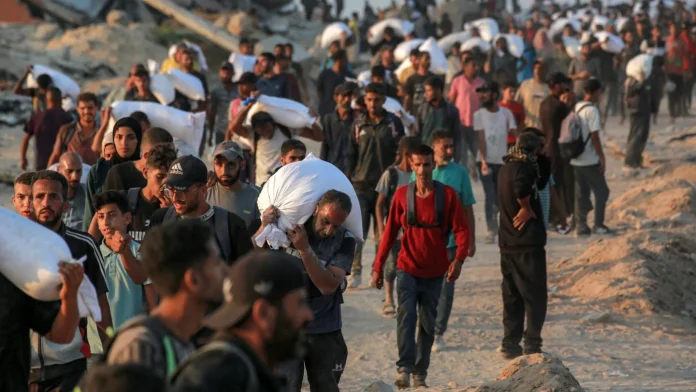
GHF’s scheme replaced 400 aid distribution points across the enclave with four militarised distribution sites in central and south Gaza, where millions have been forced to travel from other areas of the strip on foot and risk death in the hope of receiving aid since it started operating on 27 May.

The militarised sites involve US armed security contractors working with the Israeli military. Both American contractors and Israeli soldiers have reportedly killed at least 750 Palestinians seeking aid in the last six weeks it has been in operation.

Israeli troops have admitted to deliberately shooting and killing unarmed Palestinians waiting for aid in the Gaza Strip, following direct orders from their superiors.

More than 170 NGOs called for immediate action to end the “deadly” US and Israeli-backed GHF aid scheme on 1 July, and revert back to UN-led aid coordination mechanisms.

“Today, Palestinians in Gaza face an impossible choice: starve or risk being shot while trying desperately to reach food to feed their families,” the NGOs announced in a joint statement.

The signatories include Oxfam, Save the Children, Amnesty, Doctors Without Borders, and Action Aid.

GHF’s chairman, Johnnie Moore, a Christian evangelical leader aligned with US President Donald Trump, has denied that any Palestinians had been killed at its sites, telling journalists earlier this month that no violence had occurred.

“We have not had a single violent incident in our distribution sites. We haven’t had a violent incident in close proximity to our distribution sites,” he stated.

Half a million illegal Afghans deported from Iran

Amiri however noted that there are no legal grounds for deporting Afghan children without their parents.

“I have not seen any such case, and if it has happened; it is not legal and must be reported so we can investigate”, he said.

The MP also addressed complaints from Afghan tenants, noting that some Iranian landlords have delayed returning housing deposits.

“Repaying rent advances takes time, especially if landlords have already spent the money”, he said.

Authorities are reportedly seeking legal solutions to ensure tenants receive their deposits, possibly through power of attorney arrangements.

Sá Pinto: I’ve been waiting 3 years to return to Esteghlal FC

Speaking at his unveiling ceremony on Wednesday, Sá Pinto expressed his joy at being back in Iran, calling the country “beautiful” and Esteghlal “one of the few places that truly felt like home”.

“It wasn’t easy to come back, but thanks to the board members, it happened”, he said.

“The fans have shown incredible support and loyalty to me, the club, and the players.”

Sá Pinto acknowledged the difficult conditions in Iran but voiced hope for lasting peace.

“I came to finish the dream I couldn’t complete last time”, he added,.

The Portugese football coach further underlined the need for unity and for strengthening the team, saying, “If we stay united, we will win…and win everything”.