Monday, April 20, 2026
Home Blog Page 2628

UK Parliamentary Report Advocates Regime Change in Iran: Envoy

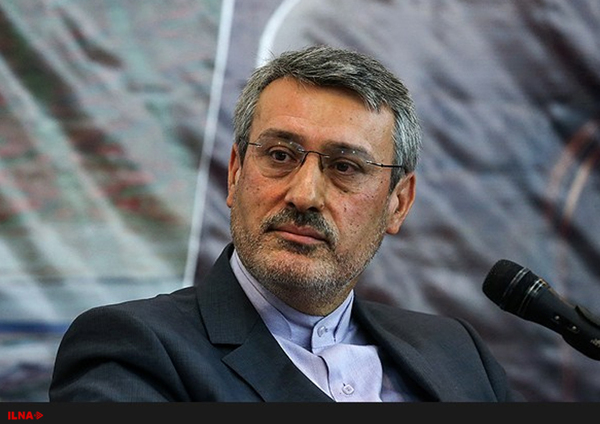
Hamid Baeidinejad

In a post on his Twitter account on Wednesday, Iranian Ambassador to the UK Hamid Baeidinejad denounced the report published by the UK Parliament’s Foreign Affairs Committee about Iran.

“We condemn in its strongest term a report issued on developments regarding Iran by a few UK MPs. This report is not more than advocating regime change through maximum pressure policy against Iran, while the main architect of this failed policy is driven out of the White House,” the Iranian ambassador noted, referring to the termination of Donald Trump’s tenure.

In two other posts in Persian language, Baeidinejad said the report published by the committee is not a measure approved or a conclusion endorsed by the UK Parliament.

The report is not going to turn into a parliamentary measure either, he added.

“This report has been provided within a very limited group with an absolutely hostile approach and on the basis of analyses and recommendations from the Zionists and Munafeqin (Mujahedin-e Khalq Organization terrorists) to make the last impacts on the future developments,” the envoy said.

The ambassador also slammed Chair of the UK Parliament’s Foreign Affairs Committee Tom Tugendhat, who has coordinated the preparation of the report, for working as the mouthpiece of the MKO and the hostile groups seeking to topple the Islamic Republic.

“This report has no legitimacy and value,” the envoy added, noting that the Iranian Embassy has sent an official note of protest to the UK Foreign, Commonwealth and Development Office and has strongly condemned the preparation of such report by a number of hardline British MPs.

The UK Parliament’s Foreign Affairs Committee has published a report entitled ‘No prosperity without justice: the UK’s relationship with Iran’. The report has called on the UK government to foster a long-term, international response to addresses what it called Iran’s wider destabilizing activities.
US Economic War Deprives Iran of $50 Billion in Assets: Spokesman

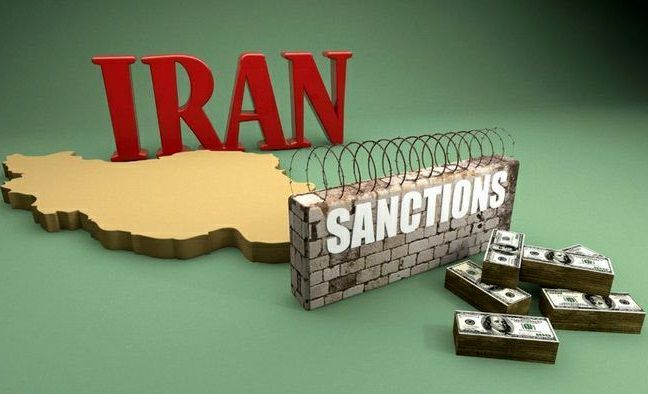
Speaking to reporters on the sidelines of a cabinet session, Ali Rabiei said the US economic war and sanctions imposed under the administration of Trump deprived Iran of $50 billion in cash and currency resources.

The sanctions even impeded the supply of basic material for medicine and the components for industrial production, limited Iran’s exports, hampered the transaction of money, and imposed difficulties on the livelihood of Iranian people, he deplored.

The spokesman said the Iranian administration managed to save the economy from collapse for three years, which resulted in the formation of ‘resistance economy’.

Nullification of the sanctions has become possible with or without Trump, Rabiei added, saying the administration of President Hassan Rouhani dedicated itself to confrontation with the negative impacts of the sanctions on the economy.

He further noted that the economic growth rate in the next Iranian year will not be any lower than 4 percent.

The Iranian economy has climbed out of depression as the gross domestic product (GDP) growth rate during the first six months of the current Iranian year (March 20 – September 21) has been positive with and without oil incomes, he added.

Citing reports from the Central Bank of Iran, the spokesperson said the economic growth in the oil sector has stood at 22.2 percent.

Although the repatriation of petrodollars has become difficult, the production of crude and oil products never came to a halt in Iran, he stressed.

He finally pointed to the severe impacts of the coronavirus pandemic on the service sector of the Iranian economy, adding that, however, the tertiary sector has experienced a +1.4 percent growth rate.

Expert predictions suggest that Iran’s economic growth rate will improve again in the fourth quarter of the current year, he concluded.

Iran Unveils Four New Cutting-Edge Products in Healthcare, Electronics

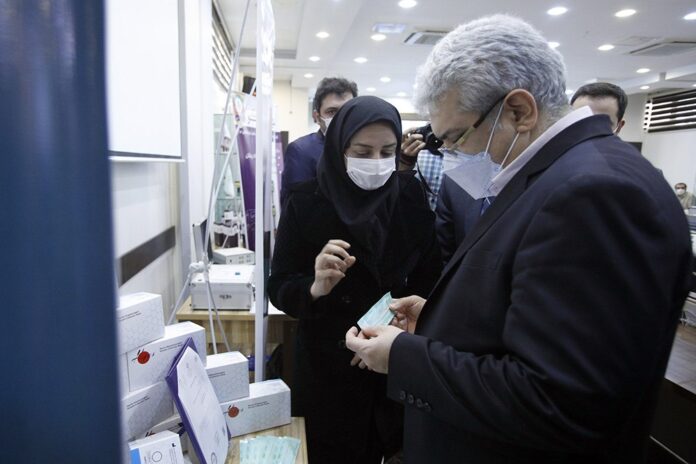
The four products are supported by the Science and Technology Department of the Presidential Office and will be commercialized to enter markets.

The products include three in the health sector and one in advanced electronic transport
One of the products unveiled was coronavirus sampling swabs which are flexible, durable and comfortable for patients who feel no pain when the product is used on them for getting COVID-19 samples.

Another product was a cochlear implant system which meets one of the urgent needs of the hearing impaired.

The third product unveiled in the health sector was an innfrared non-contact thermometer, which shows body temperature with high precision. The achievement obviates the need to import such products.

And the fourth product was a state-of-the-art electric motor which could be used in such products as industrial fans, electric vans, modern electric motorcycles, etc.

This comes as plans have been set in motion to incorporate the technology and know-how used by knowledge-based firms into industry.

Payman Salehi, the deputy head of the Science and Technology Department of the Presidential Office for innovation and commercialization, says one of the strategic priorities of the department’s Center for Major National Projects is to help commercialize innovative projects until products hit the market and part of domestic needs are met.
“Given the technological needs by different industries, knowledge-based companies can meet those needs and steer the country through the path to progress,” he said.

“Accordingly, the Centre for Major National Projects of the Science and Technology Department has put short-term and long-term plans on its agenda to meet the country’s technological and innovative needs. The centre regards some technological areas as its special targets, and one of the most important areas is health,” he added.

Iran Secures 2nd World Ranking in Scientific Production

Iranian Minister of Science, Research and Technology Mansour Gholami said this achievement was accomplished on the back of efforts by domestic researchers and technology experts.

“In this year’s festival, despite all considerations and restrictions we faced due to the coronavirus outbreak, we made every effort to hold the ceremony to recognize the country’s top researchers and technology experts,” said the minister in a ceremony held both virtually and in person to recognize top researchers and technology experts.

“It has been years that production of science in Iran has had a decent ranking among high-profile countries across the world. Of course, it requires special and all-out support for science, research and technology to maintain this standing,” he noted.

The minister then underlined that the establishment of sci-tech parks in the country has helped solve many of the existing problems.
He expressed his gratitude to the Science and Technology Department of the Presidential Office for supporting sci-tech parks, which, he added, has helped upgrade the performance of these science-technology centres.

“Today, we take pride in the fact that our scientific and technological centres, working with all their power, have been instrumental in producing science, turning science into technology, producing wealth from science and creating jobs through parks, knowledge-based companies and growth centres,” he said.

Accordingly, the minister noted, some 60 thousand basic knowledge-based jobs could be created, which requires full support through a strategic program.

Rouhani Urges All-Out Efforts to Have US Sanctions Lifted ‘Without Delay’

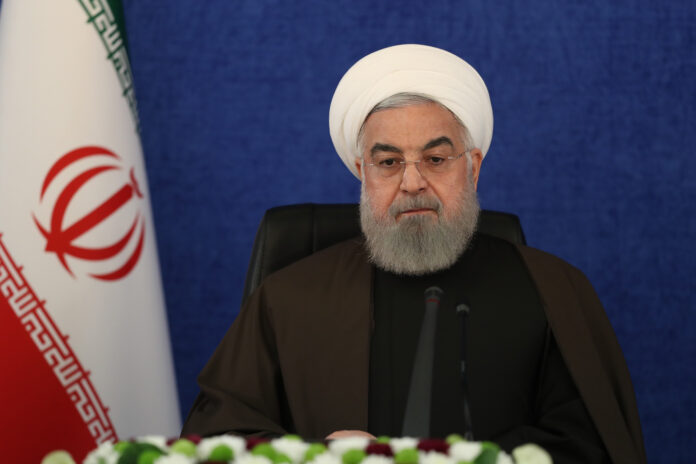
پPresident Hassan Rouhani made the comment in a ceremony where nearly 100 national projects in the domain of urban development and management came on stream.

“All of us should try to eliminate or blunt the effects of sanctions. This is our first duty,” he said.

“All of us should try to have sanctions lifted, and as the Supreme Leader said, it shouldn’t be delayed even for one hour,” he noted.

“The government should try its utmost to break the sanctions, and even an hour-long delay is not permitted,” President Rouhani explained.

He said the government will use all its power and try its best to make this happen.

The president also said the country has been inaugurating very significant projects every week despite sanctions and the economic war launched against the Islamic Republic.

President Rouhani reiterated the importance of maintaining national unity as highlighted by Leader of the Islamic Revolution Ayatollah Seyyed Ali Khamenei.

“Here, I emphasize the recommendation by the Supreme Leader regarding the issue of national unity, and that all branches of government should try to further boost national unity,” he said.

President Rouhani urged people and officials against any move that would increase divisions in the country.

“All of us should contribute to national unity. It is national unity that builds our national might, it is national unity that makes others respect Iranian people’s rights,” he noted.

“I have no doubts that the Iranian nation’s resistance over the past three years will make the next US administration respect the Iranian nation’s rights and return to their commitments and lift sanctions,” he said.

Iran Signs Arms Export Contracts with Several Countries: DM

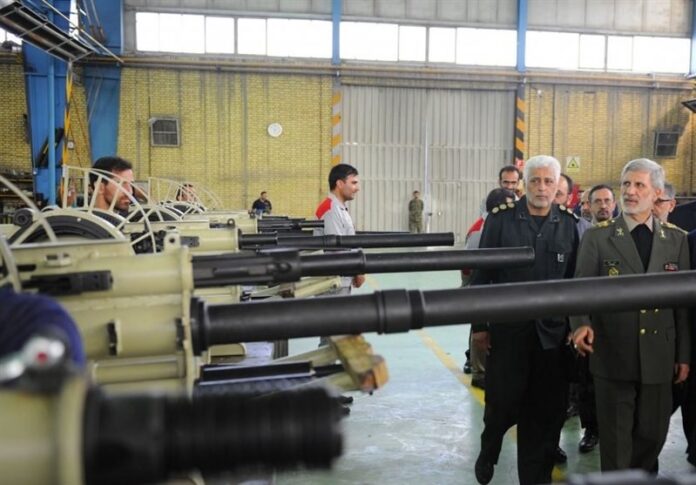
In remarks on Wednesday, the Iranian defence minister said contracts have been signed with a number of countries to export arms.

He noted that negotiations are also underway for the purchase of arms from various countries.

“Iran’s arms cooperation with some countries has been pursued very well in the period that Americans made attempts and imposed arms sanctions on us, and after the termination of embargo,” Brigadier General Hatami noted.

The minister was referring to the termination of the UN arms restrictions on Iran in October, five years after adoption day of the JCPOA in accordance with UNSC Resolution 2231.

In comments after the termination of the UN arms embargo, Hatami said the sales of Iranian weapons would outstrip the imports.

Iranian Minister Hails Inclusion of Art of Miniature in UNESCO List

In a message on Thursday, Ali Asghar Mounesan has lauded the recent move by the United Nations Educational, Scientific and Cultural Organization (UNESCO) to add the art of miniature to the Representative List of Intangible Cultural Heritage of Humanity.

In the message, the minister said the art of miniature in Iran has thousands years of history as Iranian has had a “deep relationship” with miniature and miniaturists.

The art of miniature has displayed the images of bliss, miseries, and various states of the Iranian society throughout history, Mounesan added.

Miniature Art Registered on UNESCO List of Intangible Cultural Heritage

The miniature artists have been always revered by the Iranian people, the minister added.

The art of miniature was the 15th Iranian cultural element inscribed on UNESCO Lists of Intangible Cultural Heritage.

The miniature is a type of two-dimensional artwork that involves the design and creation of small paintings on books, papier-mâché, rugs, textiles, walls, ceramics and other items using raw materials such as gold, silver and various organic substances.

Historically, the miniature was exemplified by book painting in which the text was supported visually, but the element has evolved and can also be observed in architecture and as an adornment in public spaces.

The patterns of the miniature represent beliefs, worldviews and lifestyles in a pictorial fashion and also gained a new character through the Islamic influence, according to UNESCO’s website.

Miniature Art Registered on UNESCO List of Intangible Cultural Heritage

The international registration came after the multinational case on the miniature art received the approval of judges at the 15t meeting of the Intergovernmental Committee for the Safeguarding of the Intangible Cultural Heritage of the United Nations’ Educational, Scientific and Cultural Organization (UNESCO) on December 16, 2020. 

Iran, Turkey, the Azerbaijan Republic and Uzbekistan had jointly presented the case to the committee. 

Deputy Head of the Iranian Cultural Heritage, Handicrafts and Tourism Organization Mohammad-Hassan Talebian said on the sidelines of the virtual meeting that the international registration of the miniature art is of significance. 

“The registration of a specific art for a country highlights the status of the predecessors of the people of that country and will trigger a kind of emotional reaction to cultural and arts heritage,” he noted. 

“The registration of the miniature art can not only upgrade the status of the region amid the global cultural diversity, but also boost the power of imagination and the establishment of a unique art in the public’s awareness in society, and can also serve as a driving force in the domain of research on global culture in the context of art,” he added.

The art of miniature was the 15th Iranian cultural element inscribed on UNESCO Lists of Intangible Cultural Heritage. 

The miniature is a type of two-dimensional artwork that involves the design and creation of small paintings on books, papier-mâché, rugs, textiles, walls, ceramics and other items using raw materials such as gold, silver and various organic substances.

Historically, the miniature was exemplified by book painting in which the text was supported visually, but the element has evolved and can also be observed in architecture and as an adornment in public spaces. 

The patterns of the miniature represent beliefs, worldviews and lifestyles in a pictorial fashion and also gained a new character through the Islamic influence, according to UNESCO’s website.

Iran Raps Any Move against Maritime Security after Jeddah Tanker Blast

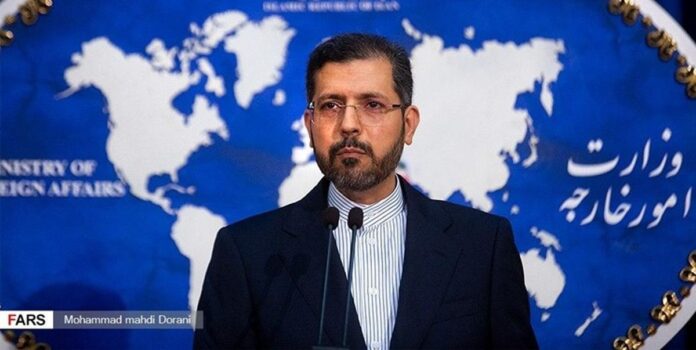
Asked about the recent explosion and fire in an oil tanker in the Red Sea, Foreign Ministry Spokesperson Saeed Khatibzadeh said on Wednesday, “The Islamic Republic of Iran rejects any provocation and destructive action harming maritime security and safety and the freedom of international trade.”

He also reaffirmed the Islamic Republic of Iran’s constant stance on maintaining regional stability and security, expressing hope that the countries in the region would step up efforts to strengthen cooperation to ensure maritime security, fight against pirates, and combat the trade of illicit materials in order to achieve sustainable regional security.

His comments came after an explosion struck a Singapore-flagged oil tanker off Saudi Arabia’s port city of Jeddah on the Red Sea on Monday morning.

Saudi authorities said the fuel transport ship was attacked by an explosive-laden boat. No casualties or injuries has been reported among the 22 sailors on board.

The blast comes after a number of security incidents concerning Saudi oil infrastructure.

On November 25, an explosion damaged a Greek-managed tanker while at berth in the Saudi port of Shuqaiq. Riyadh blamed Yemeni forces for the mine attack. The Houthis forces, who are fighting a Saudi-led military coalition in Yemen, did not comment on the incident.

Houthis, however, did claim a missile attack that had struck a Saudi Aramco oil company distribution station in Jeddah on November 23.

JCPOA Parties to Hold Informal Ministerial Meeting on December 21

Secretary-General of the European External Action Service Helga-Maria Schmid, the coordinator of the Joint Commission of the Joint Comprehensive Plan of Action (JCPOA), has released a statement after the latest meeting of the commission on Wednesday.

What follows is the text of the statement issued by the chair of the December 16 meeting of the Joint Commission of the JCPOA:

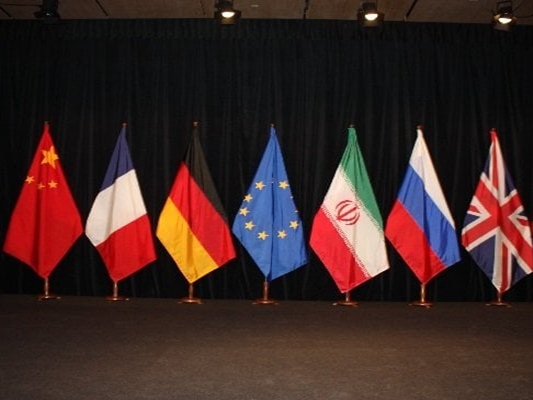
“A meeting of the Joint Commission of the Joint Comprehensive Plan of Action (JCPOA) took place virtually on Wednesday, 16 December. Under the terms of the JCPOA, the Joint Commission is responsible for overseeing the implementation of the agreement. The Joint Commission was chaired, on behalf of EU High Representative Josep Borrell, by the EEAS Secretary General Helga-Maria Schmid and was attended by representatives of China, France, Germany, Russia, the United Kingdom and Iran at the level of Political Directors/Deputy Foreign Ministers.

Participants discussed ongoing work to preserve the JCPOA and how to ensure the full and effective implementation of the agreement by all sides in light of existing challenges. Participants also agreed to hold an informal Ministerial meeting of JCPOA participants on 21 December in virtual format.”