Monday, December 29, 2025
Home Blog Page 2607

Knowledge-Based Firms ‘Invaluable’ Assets in Fight against COVID-19: Rouhani

Iranian Researchers Detect 23 Types of Mutations in COVID-19 Virus

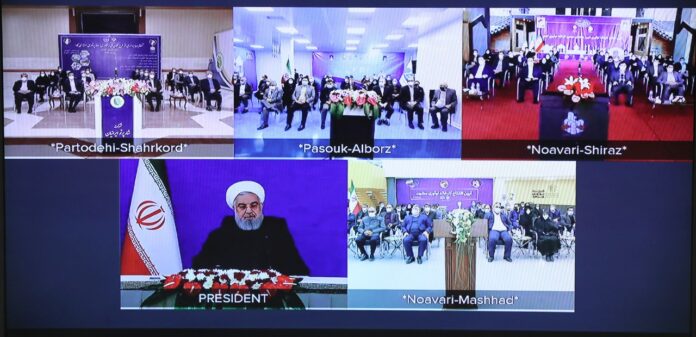
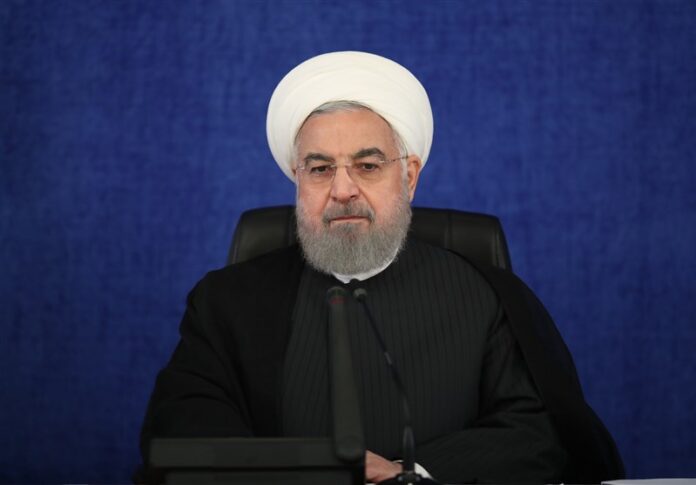
President Hassan Rouhani said they are also working to produce medicines, which will contribute heavily to the health sector.

“I’d like to thank knowledge-based companies. Knowledge-based firms help us a lot during this period. Knowledge-based companies produced a lot of equipment, including hospital equipment,” he said.

“Knowledge-based companies are also working to develop a vaccine for COVID-19, and will hopefully work to produce medicines in the future,” he said.

“These companies are invaluable,” the president noted.

President Rouhani then underlined that the number of knowledge-based firms has multiplied in the country over the past few years.

“There were only around 50 knowledge-based firms, but now their number has risen to around 5,200,” said the president.

He further underscored the importance of innovative factories to be established across the nation.

“Innovative factories have been inaugurated in some provinces. Recently, I ordered provincial governors to have an innovative factory established there and pave the wat for start-ups to begin work,” the president explained.

“There are some provinces where two innovative factories are up and running. We should become active in these areas as well,” he said.

“The electronic-government service, health sector, knowledge-based companies can work together to facilitate conditions for the health and treatment sector,” he noted.

Iran Suspends Flights to UK for 2 Weeks after Emergence of New Strain of Coronavirus

Authorities say the decision has been adopted to protect citizens’ health.

“As deemed necessary by the Iranian health ministry, flights to Britain will be suspended for two weeks,” said Shahram Adamnejad, the deputy minister of roads and urban development.

“Given the new conditions which have emerged in the UK with regards to COVID-19 infections, and at the discretion of the Iranian health ministry, flights between Tehran and destination in Britain will be suspended for two weeks in order to stop the spread of the disease and protect the health of people,” he noted.

England’s top medical officer announced on Saturday (December 19, 2020) that the UK has identified a new variant of the coronavirus that “can spread more quickly” than prior strains of the virus, leading Prime Minister Boris Johnson to impose fresh restrictions on parts of Britain to control its spread.

“We’re learning about it as we go, but we already know enough, more than enough, to be sure that we must act now,” Johnson said during a press briefing on Saturday where he laid out fresh restrictions on London and other parts of England ahead of the Christmas holiday.

“When the virus changes its method of attack, we must change our method of defense,” Johnson said.

The UK government announced the new coronavirus strain following an increase in cases in the southern and eastern parts of England.

Just over 1,100 Covid-19 cases with the new variant had been identified as of Sunday, according to a statement from Public Health England.

Now, it’s thought that the new strain could be up to 70% more transmissible than the original strain of the disease, Johnson said on Saturday, adding that it appears to be driving the rapid spread of infections.

Johnson called on residents to refrain from traveling and “stay local” to prevent the new strain from moving around the country and abroad.


Millions of Iranians Celebrate Yalda Night in Shadow of Coronavirus

For almost a year now, the COVID-19 pandemic has been the uninvited guest of the people across the world, forcing everyone to change their lifestyle.

This year, Iranian people are also forced to abandon their thousand-year-old tradition of family gatherings on Yalda Night.

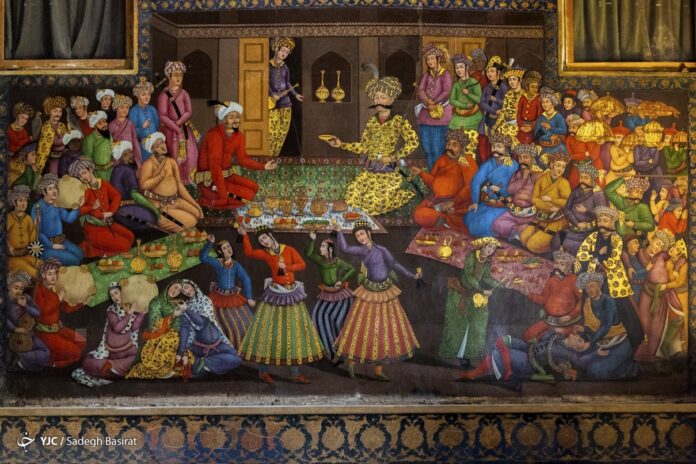
Yalda Night (Shab-e Chelleh) is a Persian winter event which is commemorated on or around December 20 or 21 each year.

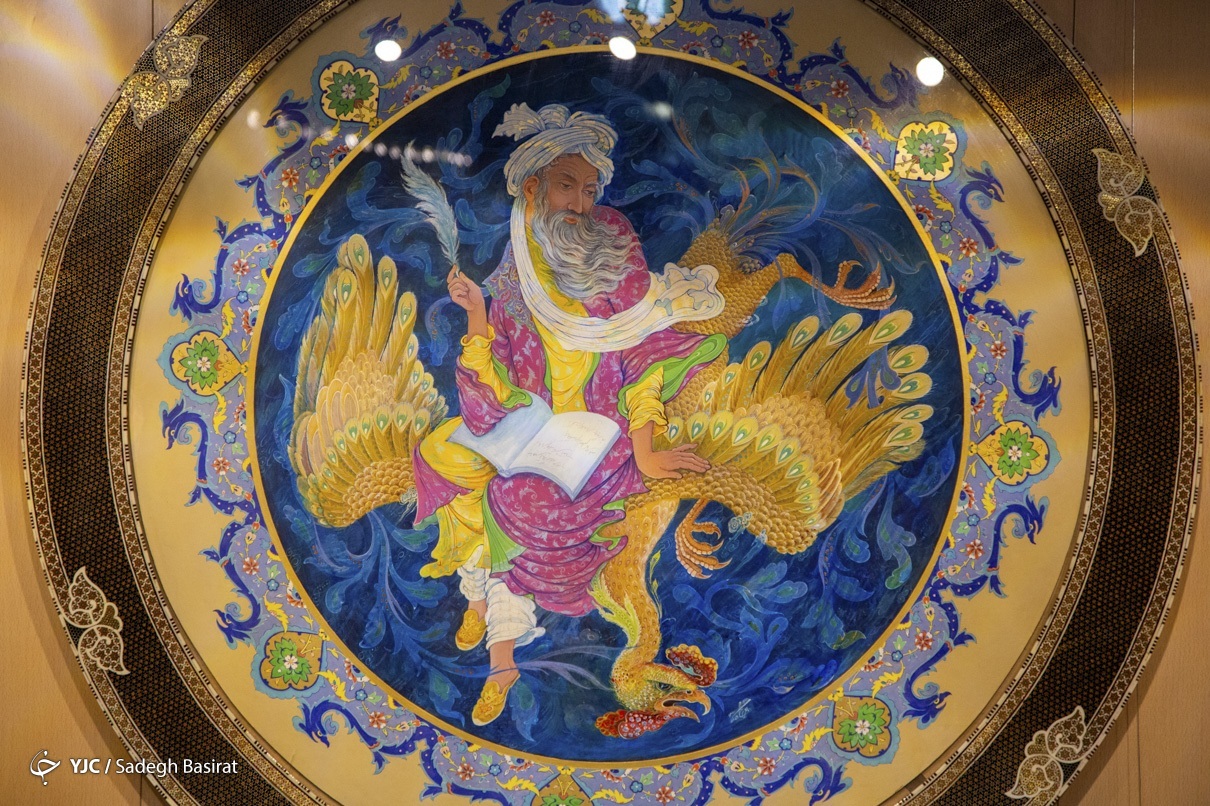
Yalda celebrations used to be a social occasion when friends and family gather to eat, drink and read poetry (especially Hafez) until after midnight.

Millions of Iranians Celebrate Yalda Night in Shadow of Coronavirus
Popular, Iconic Dishes of Yalda Night in Iran

Each member of the family makes a wish and randomly opens Hafez’s book of poems and recites the poem, which is believed to be an interpretation to the wish.

Fruits, particularly pomegranates and watermelons, and nuts are served in this night. The fruits signify the hope for having a fruitful spring and summer.

The red-coloured fruits are believed to symbolize the crimson hues of dawn and glow of life, invoking the glory of Mithra. Pomegranates with angelica powder are also believed to protect individuals against the Devil.

Central Asian countries such as Afghanistan, Tajikistan, Uzbekistan, Turkmenistan and some Caucasian states like Azerbaijan and Armenia share the same tradition as well and celebrate Yalda Night annually at this time of the year.

Yalda Night was officially added to Iran’s List of National Treasures during a special ceremony in 2008.

The annual winter ceremony manifests the traditional concept of light and good prevailing over darkness and evil in the ancient Iranian religion.

Despite all the economic hardships, many Iranians today were seen making their purchases of fruits such as pomegranates, watermelons and various dried nuts for the night’s celebration.

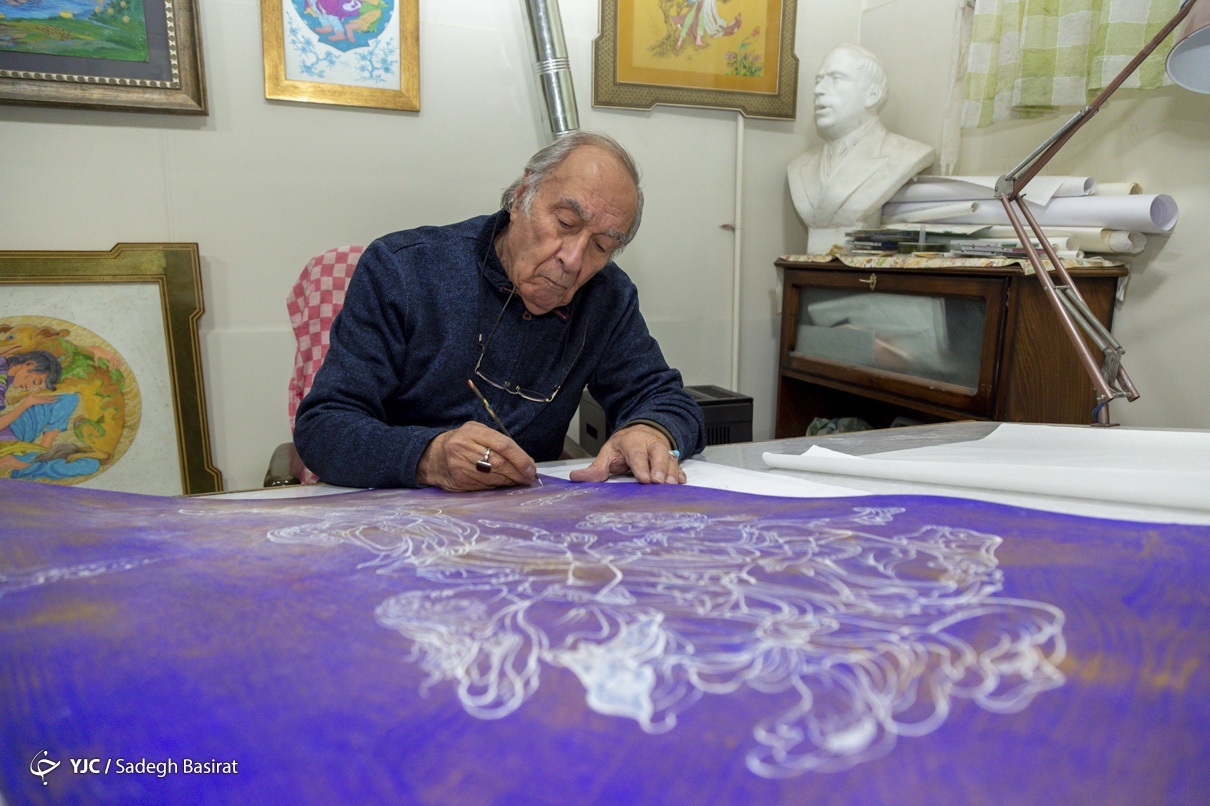
14th-Century Poets Khujandi, Hafez Linked Tajikistan, Iran: ECO

Sorour Bakhti made the comment in a ceremony held in cooperation with the national commission of the United Nations Educational, Scientific and Cultural Organization (UNESCO) marking the 700th anniversary of the birthday of Khujandi.

The official noted ECO has the honour of running, in cooperation with UNESCO’s national commission, an exhibition showcasing works by the two literary figures from Tajikistan and Iran.

Khujandi was born in Khujand in Tajikistan. His final resting place is located in the city of Tabriz in northwestern Iran.

The ECO chief underlined that Khujandi is the link between Iran and Tajikistan as well as between several other countries in the region.

As Bakhti added, Khujandi was not only a poet, but also a mystic.

It is said that there was a sort of connection between the two prominent poets, he added.

He said by looking at the books of poems of the two eminent literary figures, one would find out that the two were in contact. There are similarities between their sonnets, suggesting they had drawn on one another’s works.

Howz: An Architectural Wonder in Traditional Iranian Houses

Water is vital to life, and its existence in Iranian homes would give families peace of mind. In the past, most places in Iran, especially desert areas, faced a shortage of water.

Howzs with water in them reflected the sky and even the building of the house, producing beautiful images. Moreover, howzs created the impression that the house was larger than it really was. Furthermore, the splash of water in howzs would not only have a soothing effect on family members, but also drown out noises inside the house, thus causing the household commotion not to be heard outside.

Howz: An Architectural Wonder in Traditional Iranian Houses
Muqarnas: An Exquisite Ornamental Art in Iranian Architecture

Above all, howzs were used to store water for everyday use such as washing, watering trees, etc. In certain areas, howzs even played a key role in cooling the space because they were built on the path of the wind or wind towers and made the environment cool.

We may believe that it was not a difficult to build these ponds in old houses and that their construction did not require any special architecture. However, the interesting point is that Iranian architects took pride in building howzs in the past due to the special design they required, and regarded the art of building howzs as an edge over foreign architects.

In fact, Iranian architects would make completely level and balanced howzs without using any special tools such as set squares, plumb bobs, etc.

Iranian architects would only use their eyes and water to build an even and balanced howz. They would simply look at the surface of the water and found out whether or not the howz was level. A completely level and balanced howz wouldn’t overflow with water until fully filled. When the howz was filled to capacity, water would overflow evenly from all sides.

Below you see images of ancient howzs which no longer exist in the Iranian architecture.

Iran’s New COVID-19 Fatalities, Infections Down by 50% in Two Weeks

According to Health Ministry spokeswoman Sima-Sadat Lari, the new fatalities increase Iran’s overall death toll to 53,625, and the new cases raise the total number of infections to 1,158,384.

The figures show the partial lockdown enforced by the government has effectively halved the number of new cases and infections compared with two weeks ago.

Lari went on to say that 5,563 patients are also in critical conditions caused by more severe infection.

The spokeswoman noted that 7,046,447 COVID-19 tests have been taken across the country so far.

She said currently 205 cities are in the “orange zone” and 243 are in the “yellow zone” in terms of coronavirus outbreak.

Iran, Qatar Call for Enhancement of Sports Ties

In the meeting which came during his day-long visit to Doha, Soltanifar expressed his gratitude to the Qatari official for inviting him to visit Qatar and for hosting the Asian Football Confederation (AFC) Champions League as well as its final match held between Iran’s Persepolis team and Ulsan Hyundai of South Korea.

The Iranian minister highlighted the importance of enhancing sports relations between the two sides.

In line with the implementation of a Tehran-Doha sports agreement, Soltanifar invited the Qatari minister to visit Iran to finalize and sign the plan.

The Qatari minister, in turn, said he was ready to form a joint committee with Iran to exchange views on sports and cultural issues.

Salah bin Ghanim Al Ali expressed hope he will visit Iran by next summer.

Iran to Wait and See How Biden Will Act: Spokesman

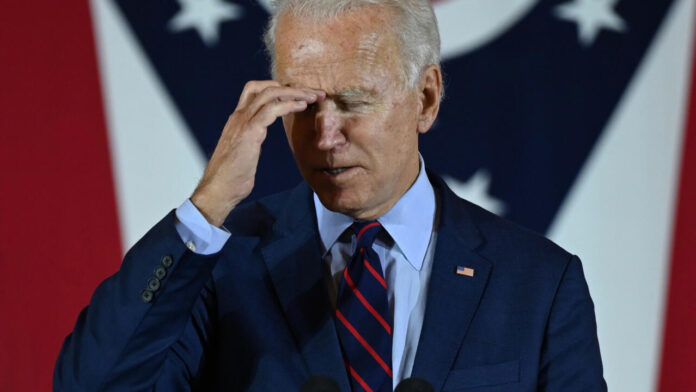
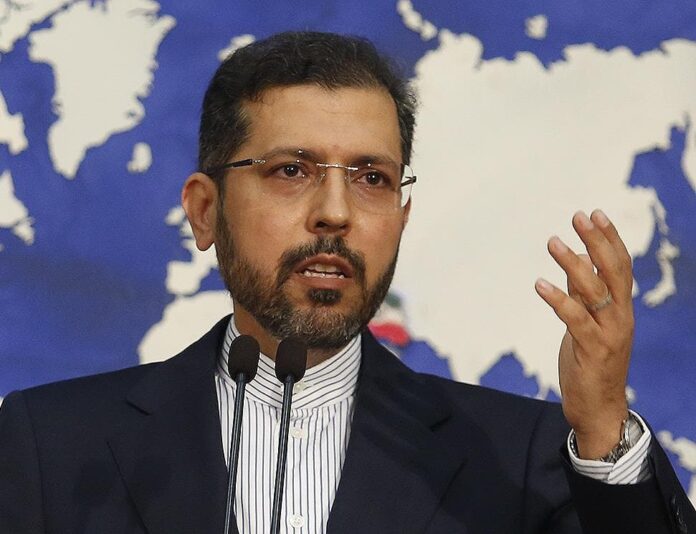
In an interview with Iranian daily newspaper Hamshahri, Saeed Khatibzadeh touched upon Iran’s stance on the US, and said, “Iran’s position is clear: Whenever the US, in practice, returns to its commitments, we will reverse all measures through which we scaled down our obligations.”

“What is important to us is action. There is a striking contrast between Mr. Biden’s comments and the performance of the current US government. But we should wait and see how the next US administration will act,” Khatibzadeh said.

The spokesman said the “maximum pressure” policy adopted by the United States against Iran led to “maximum failure” for Washington.

“Whoever is at the helms at the White House, has no other option than correcting this path,” he noted.

He further hit out at the United States for unilaterally pulling out of the deal.
“The JCPOA remains part of a binding UN resolution and all members of the world body are required to abide by it, but the US, as a signatory to the deal, stopped being a party to the agreement [by unilaterally withdrawing from it] and afterwards Washington blatantly violated Resolution 2231 by failing to make good on its commitments and impeding the implementation of obligations by others,” he said.

“The Europeans, too, have seriously failed to deliver on their commitments by failing to fulfil their obligations with regards to the lifting of sanctions,” he said.

Elsewhere in his comments, the spokesman noted Iran should rely on its domestic potential to meet its needs as reliance on foreign resources will never ensure the country’s long-term interests.

He also said Tehran welcomes negotiations within the region, but the JCPOA is off limits.
“If [by negotiations] some countries mean holding talks on the JCPOA, first [it should be noted that] the JCPOA is not supposed to be renegotiated; moreover, the JCPOA is an issue of our national security and is none of anybody’s business except Iran,” he said.