Monday, December 22, 2025
Home Blog Page 26

Six Iranian athletes ranked in world karate top ten

The 27th edition of the World Championships took place from December 6 to 10, where Iran’s national team earned three medals: a gold by Atousa Golshadnezhad, a silver by Saleh Abazari, and a bronze by Sara Bahmanyar.

Golshadnezhad, competing in the women’s –61 kg division, topped the world rankings with 4,995 points after winning the world title. Bahmanyar, who claimed bronze in the –50 kg category, moved up to second place in the global standings.

In the men’s +84 kg division, Abazari’s silver medal secured him the third position in the world ranking.

Three additional Iranian athletes who advanced to the quarterfinals or the round of 16 also made the top-ten list: Fatemeh Sa’adati rose to fourth place in the –55 kg category, Ali Maskani ranked fifth in the –60 kg division, and Fatemeh Sadeqi placed sixth in the women’s individual kata rankings.

Six Iranian athletes ranked in world karate top ten

Putin says Russia will “liberate” all of Donbass

Russia Ukraine War

Putin made the remarks in an interview with India Today on Thursday, ahead of his state visit to the country and two days after talks in the Kremlin with US presidential envoy Steve Witkoff which centered on an American-drafted peace plan for the Ukraine conflict.

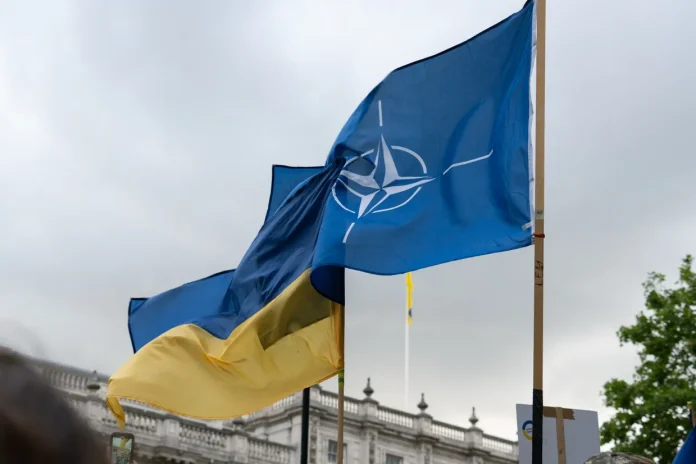
The initial 28-point version of the roadmap leaked to the media last week reportedly asked Kiev to relinquish territory in the Russian Donbass regions of Donetsk and Lugansk still under its control, abandon its NATO ambitions, and limit the size of its military – conditions Kiev has rejected.

Putin, however, signaled that the Ukrainian Army will soon lose the parts of Donbass it still controls.

“It all comes to that. Either we will liberate those territories though military force, or Ukrainian forces will withdraw and stop fighting there,” he said.

He also suggested that the devastating fighting in the area was entirely avoidable.

“We told Ukraine from the start: ‘The people don’t want to stay with you, they took part in referendums [in 2022], voted for their independence; pull back your troops, and there will be no fighting’. But they chose to fight,” Putin continued, adding that Kiev’s mistake is now becoming obvious.

Russian forces have been gradually pushing back Ukrainian troops in Donbass and elsewhere for many months. According to Moscow, Kiev is increasingly struggling to replenish manpower losses despite draconian mobilization efforts.

On Monday, the Russian military reported that it had taken control over the key frontline city of Krasnoarmeysk (Pokrovsk) in the Donetsk region, with a major Ukrainian force encircled in the area. In another significant development, Putin reported last week that Moscow’s forces have broken Ukrainian defenses in the northern part of Zaporozhye Region, and are now bypassing Kiev’s heavily fortified defenses to the south.


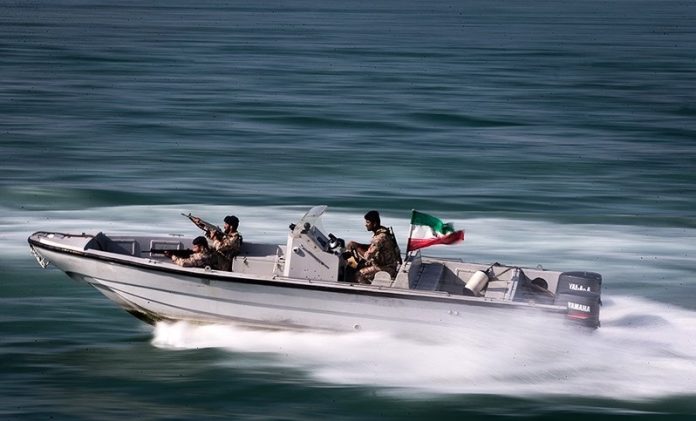
IRGC says it issued warning to US warships in Iran’s southern waters

Iranian Navy

The warnings were delivered during the two-day naval exercise named after Mohammad Nazeri –commander of the elite commando units of the IRGC Navy who was martyred in 2016.

The ongoing war game covers maritime zones in the Persian Gulf, the Hormuz Strait, the Sea of Oman, and the Nazeat Islands –Abu Musa, Greater Tunb, Lesser Tunb, and Siri.

According to reports from the exercise, the IRGC naval units have conveyed a clear message to the American warships present in the region.

A series of advanced air defense missile systems, including Navab, Majid, and Misaq, have been employed under electronic-warfare conditions.

The homegrown systems utilized artificial intelligence to detect aerial and maritime targets and strike them with high accuracy.

The war game is designed to display the IRGC Navy’s combat capabilities and the performance of new offensive and defensive systems in missile, drone, surveillance, and AI-based tracking operations.

The organizers say the drill carries a message of peace and friendship for neighboring countries while delivering a clear warning and decisive response to enemies, demonstrating that Iran’s course of resistance and deterrence continues with full force.


Israel’s conduct of war in Gaza ‘fundamentally wrong’: UN chief

Guterres made the comments in an interview with Reuters Editor-in-Chief Alessandra Galloni at the news agency’s NEXT conference in New York.

“I think there was something fundamentally wrong in the way this operation was conducted with total neglect in relation to the deaths of civilians and to the destruction of Gaza,” Guterres said.

“The objective was to destroy Hamas. Gaza is destroyed, but Hamas is not yet destroyed. So there is something fundamentally wrong with the way this is conducted,” he added.

When asked if he believed Israeli forces may be guilty of carrying out war crimes since the conflict began more than two years ago, Guterres stated that “there are strong reasons to believe that that possibility might be a reality”.

In October 2024, then-Israeli Foreign Minister Israel Katz, now the defence minister, declared Guterres “persona non grata”, accusing him of giving “backing to terrorists, rapists, and murderers” for failing to condemn Iran’s missile attack.

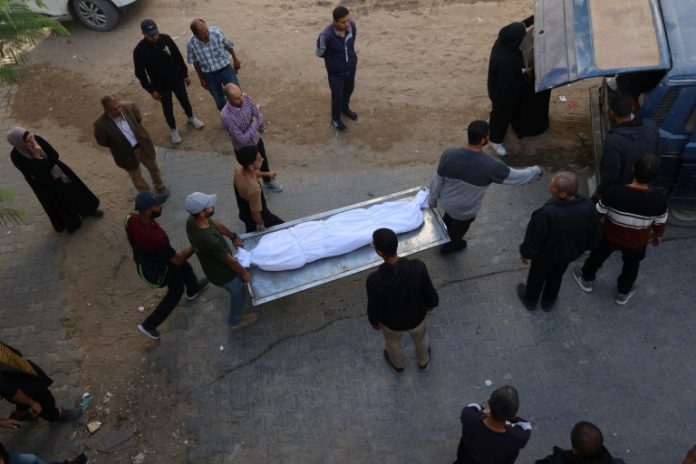
More than 70,000 people have died in Gaza since October 7, 2023, when Israeli forces launched an all-out assault in response to a Hamas-led attack on southern Israel that saw more than 1,200 people killed and 251 taken captive.

A fragile United States-brokered ceasefire – a 20-point peace plan pushed by US President Donald Trump – has been in place since October 10. But Israeli forces have repeatedly violated the truce with strikes and demolitions, claiming to be targeting Hamas infrastructure in Gaza.

According to Gaza’s authorities, Israeli troops have violated the ceasefire at least 591 times since it came into effect, killing at least 360 Palestinians and wounding 922 others.


Gaza militia leader accused of working with Israel killed

His militia, which calls itself the Popular Forces, said in a Facebook post on Thursday evening that Abu Shabab was shot “as he tried to resolve a dispute” among members of the Abu Suneima family.

The group added that he was not killed by Hamas.

Israel’s channel 12 had reported earlier that Abu Shabab was killed in clashes with “Gaza clans” and later pronounced dead at the Soroka Medical Center in southern Israel.

Abu Shabab became an infamous figure during Israel’s genocidal war on Palestinians in Gaza, as his group was accused of stealing the little humanitarian assistance that the Israeli authorities allowed into the coastal enclave.

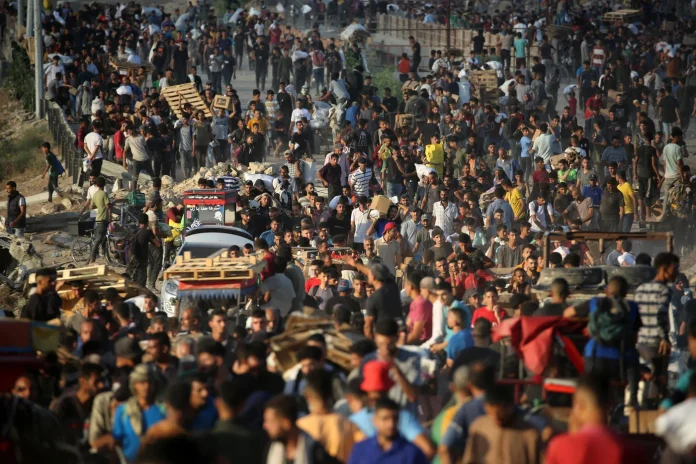
The looting of aid in the Gaza Strip came as Israel imposed a blockade on the territory, fuelling a humanitarian crisis and famine in several areas.

Israeli officials later announced that they were cooperating with armed groups in Gaza, including the one led by Abu Shabab, in order to establish a local anti-Hamas force.

On Thursday, a Hamas-affiliated security force in Gaza, Radaa, posted a photo of Abu Shabab on Telegram, captioned: “As we told you, ‘Israel won’t protect you.’”

In July, a Hamas-linked court in Gaza gave Abu Shabab 10 days to turn himself in to face charges of treason, collaborating with hostile entities, forming an armed gang, and armed rebellion.

The gang leader was reported to have been previously jailed by Hamas on drug charges.

Experts have stated that the rise of Abu Shabab reflects a longstanding Israeli policy of supporting Palestinian armed groups in an effort to create internal strife and undermine political movements and resistance.

Baghdad withdraws terror designation of Hezbollah, Houthi groups

Yemen Houthi

The official gazette, Al-Waqa’I al-Iraqiya, published a decision from the Committee for Freezing Terrorists’ Funds to designate the two groups as “terrorist organizations” and freeze their assets.

But the committee later issued a statement saying that the decision was based on a request from Malaysia and on UN Security Council Resolution 1373 concerning the freezing of assets belonging to individuals and entities associated with Daesh and al-Qaeda terror groups.

It added the list “mistakenly” included several parties and groups “that have no terrorist links to either organization,” referring to Hezbollah and Houthis. It noted that the document was released before it was fully revised and that the official gazette will be corrected to remove the unrelated entities.

There was no immediate comment from Hezbollah or the Houthis on the Iraqi move.

UN Security Council delegation visits Damascus after 14 years of isolation, meets Syrian president

After arriving in the capital, the delegation toured the devastated Jobar neighborhood to view destruction caused by strikes carried out by the former government of Bashar al-Assad, the Syrian Arab News Agency (SANA) reported.

Members also visited heritage sites in Old Damascus accompanied by Syria’s permanent representative to the UN, Ibrahim Olabi.

The Security Council delegation later arrived at Qasr al-Shaab and held talks with President Ahmad al-Sharaa.

Thursday’s visit comes as Syrians mark the first anniversary of the fall of the Assad government.

The Foreign Ministry’s media office said Wednesday the visit reflects international support for “new Syria” and for its efforts to rebuild and strengthen sovereignty and stabilize the country after the ouster of the former government.

It added that the Security Council’s engagement represents a rare moment of consensus on the Syrian issue among all member states, the first such unanimity in 14 years.

Assad, Syria’s leader for nearly 25 years, fled to Russia last December. A new transitional administration led by Sharaa was formed in January.


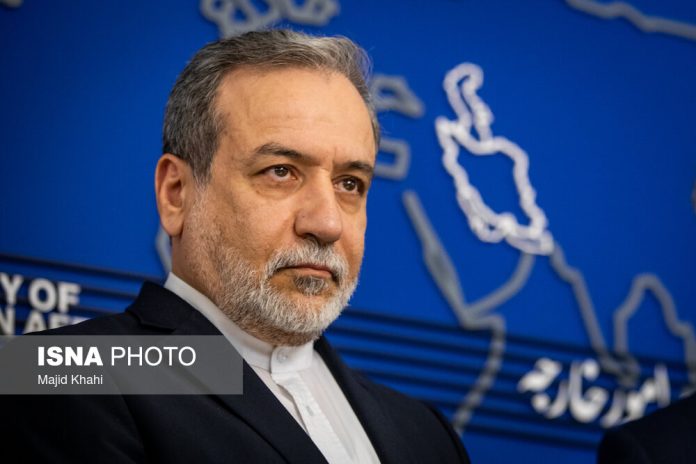
Advisor to Ayatollah Khamenei warns Persian Gulf bloc not to play with Iran’s ‘red lines’

Iran leader advisor Shamkhani in stable medical condition

Shamkhani issued the warning in a post on his X account on Thursday in reaction to the final communiqué of the 46th GCC Summit, held in Bahrain on Wednesday.

In its communiqué, the council reiterated its long-standing position on the Greater Tunb, Lesser Tunb, and Abu Musa islands in the Persian Gulf, renewing its full support for the UAE’s claim of sovereignty over the three islands. The council emphasized that these islands are an integral part of the UAE’s territory.

The communiqué also claimed that the entire ownership of the Arash gas field lies within Kuwait’s territorial waters, and that all its natural resources fall solely within the Kuwaiti-Saudi Divided Submerged Zone.

In his post, Shamkhani described the issues as Iran’s red lines.

“The role of neighbors is to create security, not to play with the red lines of the Iranian nation,” he added.

He warned that the GCC’s “unconstructive” claims regarding the Iranian islands and the Arash field were raised again amid the malicious acts of the United States and the Israeli regime.

The Leader’s representative emphasized that Iran exercised restraint during the 12 days of Israeli-American war in mid-June despite some states supporting the aggression, warning “Iran’s power in the Persian Gulf should not be misinterpreted.”

The Persian Gulf islands of Abu Musa and the Greater and Lesser Tunbs have historically belonged to Iran, a fact corroborated by numerous historical, legal, and geographical records both in Iran and internationally. However, the United Arab Emirates has repeatedly laid claim to the islands.

The islands fell under British control in 1921, but on November 30, 1971, a day after British forces left the region and just two days before the UAE was to become an official federation, Iran’s sovereignty over the islands was restored.

The dispute over the Arash gas field, which Kuwaitis call al-Durra, dates back to the 1960s when Iran and Kuwait were awarded overlapping offshore concessions for the field following its discovery.

The field is estimated to hold 20 trillion cubic feet of gas reserves, with production capacity of one billion cubic feet per day. Nearly 40% of the Arash gas field is located in Iranian waters.


Tasnim: Reports suggest rise in cancer cases among MEK women in Albania camp amid restrictions on medical access

MKO

The information, attributed to a former MEK member who fled the camp, was shared with Tasnim News Agency.

According to the account, restrictions by Albanian authorities and internal limitations imposed by the group’s leadership have made it difficult for affected members to leave the facility for treatment.

The source described growing dissatisfaction and despair within the camp, known as Ashraf-3.

Unconfirmed reports also suggest that Zahra Bani Jamali, a senior MEK member, may have died in recent days due to cancer, though no independent confirmation has been issued.

The report further notes that while Western governments and Israel continue to offer political and financial support to the MEK, they have increasingly shifted their backing toward other opposition groups, aware of the long-standing public hostility in Iran toward the terrorist organization.

According to the source, the perceived decline in external attention has deepened frustration among camp residents and spurred more attempts to leave the group.

The MEK terror group is responsible for the killing of thousands of Iranian officials and ordinary citizens. During the Iran–Iraq war in the 1980s, the MEK allied itself with Iraqi forces.

China raises Iran oil import: Bloomberg

Iran Oil

The Wednesday report by Bloomberg showed that Chinese intake of Iranian crude rose after a fresh round of import quotas was allocated late last month. The new allowances, earmarked for the so-called teapot refiners, are estimated at 7–8 million metric tons in total for nearly 20 plants.

The report said the quotas enabled two supertankers that had been idling near ports in southeastern Shandong province to finally unload their cargo this week, including a Panama-flagged vessel carrying 2 million barrels of Iranian oil that discharged at the port of Rizhao.

The report added Iran has also widened the discounts it offers to ensure continued supply to Chinese buyers.

China does not list Iranian crude volumes in its official customs data because of US sanctions. However, the country has been the largest buyer of Iranian oil since 2019, when Washington intensified restrictions on countries and companies importing crude from Iran.

Energy analytics firms estimate that China’s imports of Iranian oil have surged to historic highs of nearly 2 million barrels per day in recent months.

The flow of Iranian crude to China has remained stable despite the United Nations reimposing a series of nuclear-related sanctions on Iran in September.