Wednesday, April 8, 2026
Home Blog Page 25

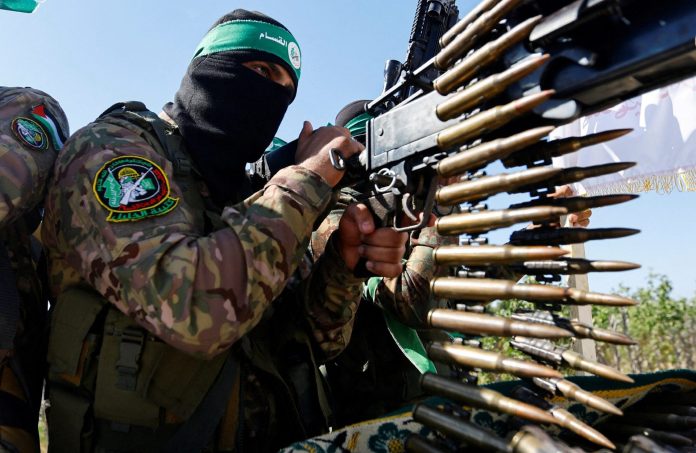
Hamas denies responsibility for Rafah explosion, calls for pressure on Israel to abide by ceasefire agreement

Hamas

The Israeli military announced that an officer was injured in a bomb blast in Rafah, with Prime Minister Benjamin Netanyahu blaming Hamas for the explosion.

Hamas said the blast took place in a zone fully controlled by the Israeli army, “where no Palestinian is present or working.”

“We have previously warned about the war remnants in this area and others,” the group announced in a statement.

“We bear no responsibility for this area since the implementation of the (ceasefire) agreement, especially those remnants had been planted by the occupation itself,” it added.

Hamas called for obliging Israel to implement the ceasefire deal and “avoid fabricating excuses to continue escalation and sabotage the agreement,” affirming its commitment to the truce.

Senior Hamas member Mahmoud Mardawi also said in a post on the US social media company X that he believes the Rafah explosion was caused by war remnants.

The blast “occurred in an area controlled by the (Israeli) occupation where no Palestinian can be present,” he added.

Palestinians have accused Israel of repeatedly violating the ceasefire agreement, which halted a two-year Israeli war that has killed more than 71,000 people, mostly women and children, and injured over 171,000 others since October 2023.

According to the Gaza government media office, at least 411 Palestinians have been killed and 1,112 others injured in Israeli attacks since the ceasefire.


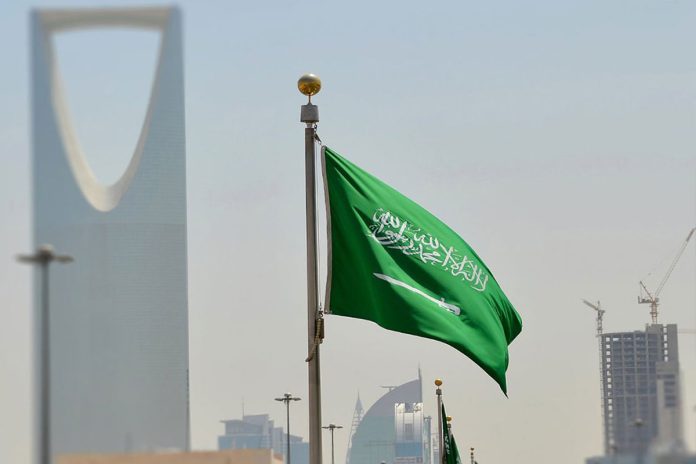
Saudi Arabia calls on Yemen separatists to cede seized territory

The separatist Southern Transitional Council is part of Yemen’s internationally recognised government, a patchwork of groups held together by their opposition to the Houthis, which rule much of the country’s north.

This month, the UAE-backed STC, which seeks to revive the formerly independent state of South Yemen, swept through swathes of the country, expelling other government forces and their allies in a move that sparked fears of secession and further instability.

“The Kingdom of Saudi Arabia points out that the military movements in the governorates of (Hadramawt and Al-Mahra), recently conducted by the Southern Transitional Council, were carried out unilaterally, and without the approval of the Presidential Leadership Council (PLC) nor in coordination with the Coalition’s leadership,” the Saudi foreign ministry said in a statement.

“These movements resulted in an unjustified escalation that harmed the interests of the Yemeni people with all of its segments,” it added.

“The Kingdom remains hopeful that the public interest will prevail through ending the escalation by the Southern Transitional Council and the withdrawal of its forces from the two governorate in an urgent and orderly manner,” it noted.

A Saudi-Emirati military delegation visited Aden for talks earlier this month to ask the STC to return the two provinces it recently seized, the statement said, adding that Saudi efforts for de-escalation were ongoing.

A source close to the STC had told AFP at the time that the delegation asked them to withdraw from the newly-seized territory but that the group refused.

Yemen’s government and the eight-member PLC that heads it are split between figures backed by the kingdom, and the separatists and their allies, who are backed by the United Arab Emirates.

The 11-year war in Yemen has pitted rebels against the internationally-recognised government, backed by a Saudi-led coalition that includes the UAE.

Turkey captures 115 IS members

Daesh

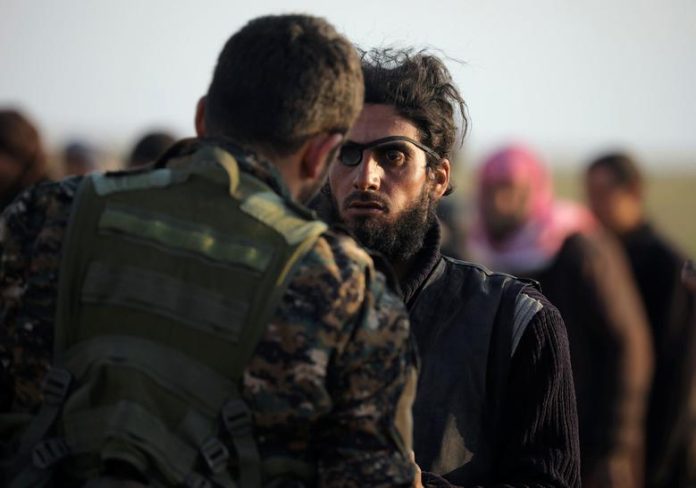
“Following intelligence indicating that the IS terrorist organisation was planning attacks during Christmas and New Year celebrations,” the prosecutor’s office ordered the detention of 137 people, 115 of whom have been arrested, the Istanbul prosecutor general’s office noted in a statement.

Turkey shares a 900-kilometre (559-mile) border with Syria, where jihadist groups are still active and where the IS was accused of an attack in mid-December that killed two US soldiers and one civilian.


Majority of Russians expect Ukraine war to end in 2026: Survey

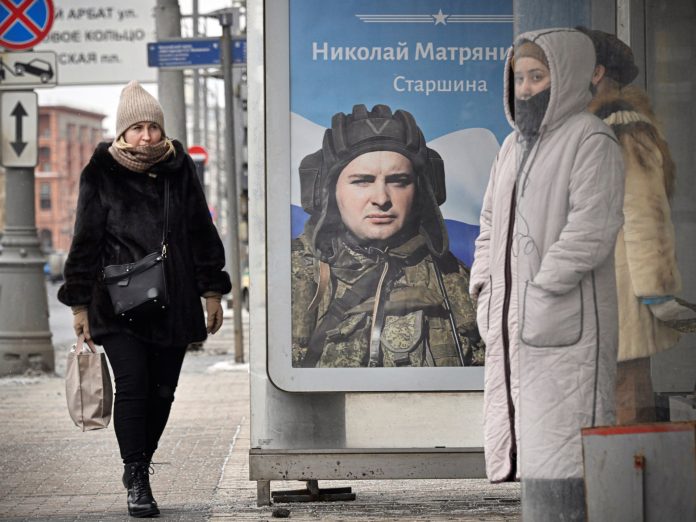
VTsIOM, Russia’s leading public opinion research centre, announced on Wednesday that its annual survey of sentiment around the outgoing year and expectations for the coming year found Russians are viewing 2026 with “growing optimism”.

“Expectations for next year traditionally look much more optimistic … In other words, while the negative perception of the current situation persists, Russians have become more likely to accept (or believe, hope?) future improvements this year, but they still do so with caution,” the organisation said in a review of its survey findings released online.

In a year-end presentation, VTsIOM deputy head Mikhail Mamonov stated that 70 percent of 1,600 people surveyed ​viewed 2026 as being a more “successful” year for Russia than this year, with 55 percent of respondents linking hope for a better year ‍to a possible end to what Russia officially calls its “special military operation” in Ukraine.

“The main reason for optimism is the possible completion of the special military operation and the achievement of the stated objectives, in line with the national interests outlined by the president,” Mamonov ‍said at the ⁠presentation.

Mamonov pointed to the Russian military’s ongoing offensive in Ukraine, Washington’s reluctance to finance the Ukraine war and the European Union’s inability to fully replace the ‌United States’ role in Ukraine – financially and militarily – as key factors behind the prospects for an eventual deal to end the fighting.

At the conclusion of the conflict, reintegration of Russian military veterans into society and the reconstruction of Russian-controlled regions of Ukraine, as well as Russian border areas, will be the main priorities, Mamonov added.

While the actual level of Russian public fatigue with the war is difficult to measure due to strict state controls on the media, expressions of public dissent as well as the prosecution of those who criticise Moscow’s war on its neighbour, approximately two-thirds of Russians support peace talks, according to independent pollster Levada, the highest number since the start of the war in 2022.

Ukrainian President Volodymyr Zelenskyy stated in comments released on Wednesday that he would be willing to withdraw troops from Ukraine’s eastern industrial heartland as part of a plan to end the war, if Moscow reciprocated by also pulling back its forces and allowed the area to become a demilitarised zone monitored by international forces.

In comments to reporters about an overarching 20-point plan that negotiators from Ukraine and the US had hammered out in Florida in recent days, Zelenskyy also added that a similar arrangement could be possible for the area around the Zaporizhzhia nuclear power plant, which is currently under Russian control.

Russia has given no indication that it will agree to any kind of withdrawal from land it has seized in Ukraine and has long insisted that Kyiv must give up the remaining territory it still holds in the Donbas industrial area before any discussions on the cessation of fighting.

Russia has captured most of Luhansk and about 70 percent of Donetsk – the two regions that make up the Donbas.

Zelenskyy also noted that figuring out the future control of the Donbas as part of the plan was “the most difficult point”, and creating a demilitarised economic zone in the region would require difficult discussions on how far troops would be required to move back and where international forces would be stationed.

Such discussions should be held at the leaders’ level, he added.

 

Poll finds most Ukrainians doubt elections would be fair

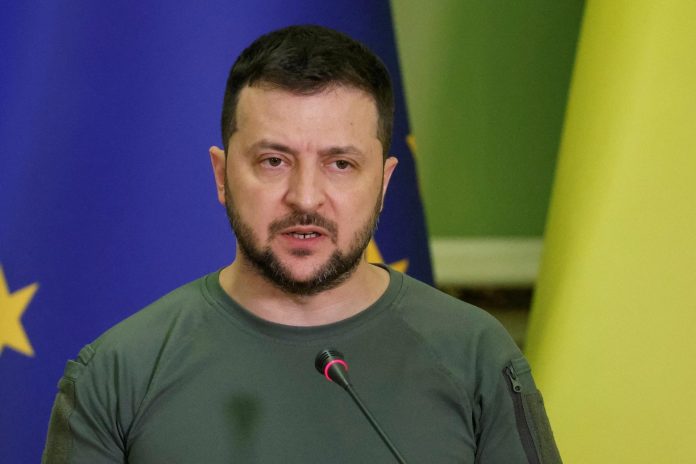
Volodymyr Zelensky

Volodymyr Zelensky, whose presidential term expired in May of 2024, has repeatedly refused to hold elections, citing martial law. Meanwhile, Russia has characterized him as an illegitimate leader. Under US pressure, Zelensky recently agreed to hold a vote within 90 days if certain conditions are met.

Delovaya Stolitsa published the findings of a poll it had recently conducted in partnership with New Image Groupe, which sought out the opinions of 800 respondents.

According to the publication, only 27% of the Ukrainians surveyed believe that elections can be held in compliance with all the international norms any time soon.

The media outlet also reported that 44% of respondents view the prospect of online voting negatively, with many fearing that the technology could be used to falsify the results. By contrast, 31% of the people surveyed have no problem with this scenario.

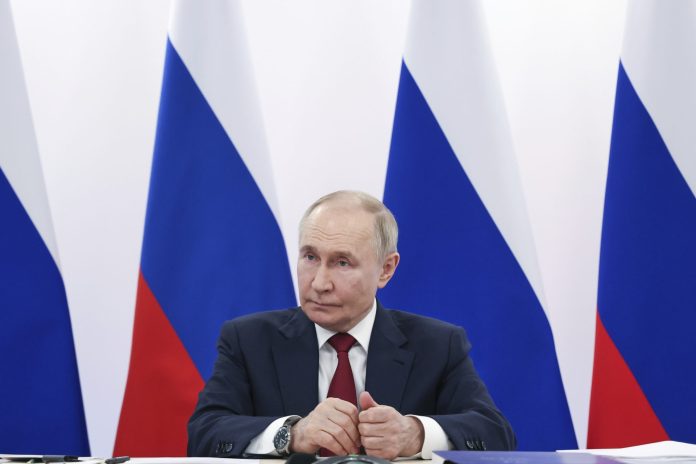
Speaking last Friday, Russian President Vladimir Putin stated that Moscow would be willing to consider “refraining from conducting strikes deep inside” Ukraine on the day of a vote if the leadership in Kiev actually went through with elections.

However, Putin stressed that such a halt in long-range strikes would only be possible if the 5-10 million Ukrainian citizens currently residing in Russia were allowed to take part in the elections.

Speaking to Politico earlier this month, US President Donald Trump said that Ukraine has not “had an election in a long time,” with its leadership “using war” as a pretext.

“It gets to a point where it’s not a democracy anymore,” he argued, adding that “it’s time” to hold a vote in Ukraine.

Responding to Trump’s remark, Zelensky said he was “ready for the elections,” so long as the West agreed to “ensure security” from Russian strikes during the vote.

Several days later, Zelensky’s senior adviser, Mikhail Podoliak, added that, besides a ceasefire, Kiev is also expecting the West to shell out for the vote.

Moscow has repeatedly ruled out the possibility of arranging a temporary ceasefire, insisting that a permanent peace agreement should be concluded that addresses the conflict’s root causes.


Atomic chief says western powers aim to halt Iran’s scientific progress

Speaking at a joint conference of Iran’s nuclear medicine, radio-oncology, hematology and oncology associations in Tehran, Eslami stressed that Iran is “obliged to move at the frontiers of knowledge.”

He described nuclear science and technology as a key driver of innovation, national power and technological superiority, which remains monopolized by major powers.

Eslami argued that Iran’s advances have been achieved despite pressure and restrictions, crediting long-term strategic guidance for maintaining continuity in the country’s nuclear program across different administrations.

He said recent regional conflicts and international debates have exposed the real objective of Western criticism, which is preventing Iran’s overall development.

Referring to the US attacks on Iran’s nuclear sites earlier this year, Eslami said facilities linked to the production of radiopharmaceuticals were among the first targets, underscoring their importance to public health and national progress.

He added that without domestic nuclear capabilities, Iran’s healthcare sector would face serious shortages.

Eslami highlighted Iran’s progress in radiopharmaceuticals, heavy water, plasma technology and lasers, noting that some Iranian products rank among the world’s purest and are in international demand.

Report: Former Afghan police commander assassinated in Tehran

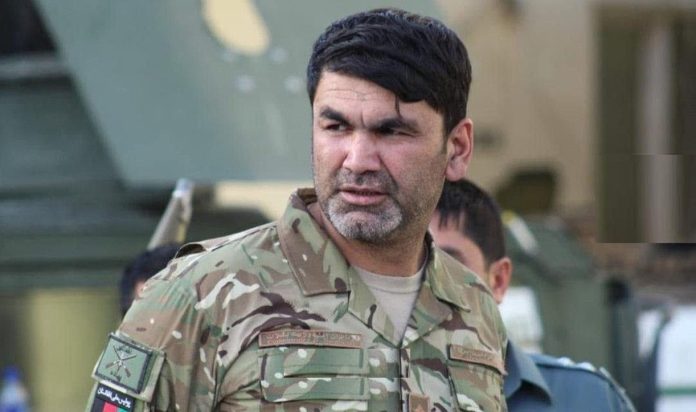
General Ekramuddin Saree, a former police chief in Afghanistan’s Baghlan and Takhar provinces during the previous republican government, died after being targeted in a shooting attack in the Iranian capital.

According to reports, unknown gunmen opened fire on a vehicle carrying Saree and his companions on Wednesday in Tehran. One of his companions was killed at the scene, while Saree was seriously wounded and transferred to hospital, where he later succumbed to his injuries.

Sources speaking to Afghan media confirmed the incident but said details about the attackers and their motives remain unclear.
Iranian authorities have so far made no official statement regarding the perpetrators or the reasons behind the attack.

Saree had served as a senior police commander in northern Afghanistan before the Taliban’s return to power in 2021. Following the collapse of the former Afghan government, he migrated to Iran.

In recent years, he was known as one of the prominent anti-Taliban figures from northern Afghanistan.

No group has claimed responsibility for the attack, and the circumstances surrounding the assassination remain under investigation.

Many countries condemn Israel for 19 new West Bank settlements

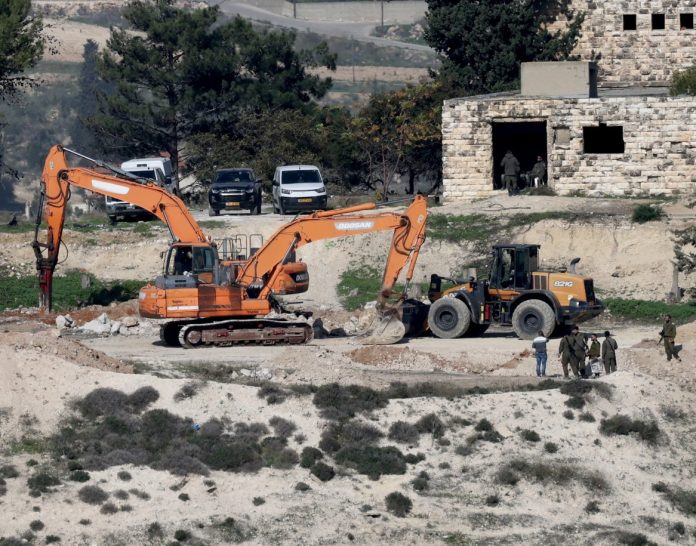
Israel approved a proposal last Sunday for the new Jewish settlements, which brings the recent total to 69, according to the far-right finance minister, Bezalel Smotrich.

“We call on Israel to reverse this decision, as well as the expansion of settlements,” said a joint statement released by Britain, which also included Belgium, Denmark, France, Italy, Iceland, Ireland, Japan, Malta, the Netherlands, Norway and Spain.

The statement continued: “Such unilateral actions, as part of a wider intensification of the settlement policies in the West Bank, not only violate international law but also risk fuelling instability.”

“They risk undermining the implementation of the comprehensive plan for Gaza amid efforts to progress to phase 2 and harming prospects for long-term peace and security across the region.”

“We recall our clear opposition to any form of annexation and to the expansion of settlement policies, including the approval of the E1 settlement and thousands of new housing units,” it added.

“We call on Israel to reverse this decision, as well as the expansion of settlements, in line with UN security council resolution 2334.”

Israel’s latest expansion plan includes two settlements that were previously evacuated during a 2005 disengagement plan.

The approval by the security cabinet increases the number of settlements in the West Bank by nearly 50% during the current government’s tenure. In 2022, there were 141 settlements in the West Bank. After the latest approval there are 210, according to Peace Now, an anti-settlement watchdog group.

Settlements are considered illegal under international law.

The 14 countries’ statement noted: “We are resolute in our support of Palestinians’ right of self-determination. We reaffirm our unwavering commitment to a comprehensive, just and lasting peace based on the two-state solution in accordance with relevant UN security council resolutions where two democratic states, Israel and Palestine, live side by side in peace and security within secure and recognized borders. We reaffirm that there is no alternative to a negotiated two-state solution.”


Zelensky wishes Putin death

In a video message published on Wednesday on his Telegram channel, Zelensky linked his remarks to Russian strikes on Ukrainian territory and framed the holiday as a moment of national unity.

“Today, we all share one dream … ‘May he perish,’ each of us may think to ourselves,” Zelensky said, in a veiled reference to the Russian president, without naming him.

“But when we turn to God, of course, we ask for something greater,” he added.

On Wednesday, Zelensky unveiled a 20-point draft peace framework which he claims Kiev has been discussing with the US, presenting the document as a proposed basis for ending the hostilities.

The proposal fails to address some key Russian concerns, such as Kiev’s claims to former Ukrainian territories that joined Russia in 2022, and its insistence on maintaining an 800,000-strong standing army supported by NATO nations.

Moscow has yet to officially respond to the proposal. Putin has repeatedly stated that Russia is open to negotiations but insists that any settlement must address the root causes of the conflict and reflect the territorial reality on the ground.


Syria says captured senior IS militant in Damascus

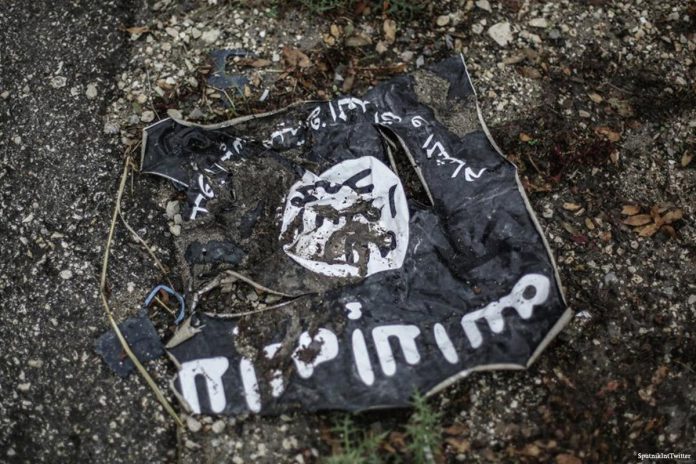
Daesh Flag

Taha al-Zoubi, also known as Abu Omar Tabiya, an IS leader in Damascus, was detained with several of his men, General Ahmad al-Dalati was reported as saying by state news agency SANA.

The arrest came less than two weeks after a December 13 attack killed two US soldiers and a US civilian that Washington announced was carried out by a lone IS gunman in central Syria’s Palmyra.

“Our specialised units, in cooperation with the General Intelligence Directorate and and International Coalition forces, carried out a precise security operation targeting” an IS hideout, Dalati added.

On December 20, a Syria monitor claimed that five IS members were killed in US strikes in retaliation for the December 13 attack.

It was the first such incident since the overthrow of longtime ruler Bashar al-Assad in December last year, and Syrian authorities said the perpetrator was a security forces member who was due to be fired for his “extremist Islamist ideas”.