Monday, December 22, 2025
Home Blog Page 26

IRGC arrests armed team linked to terrorist group near Tehran

Enayatollah Alipour stated that extensive investigations were initiated by the IRGC intelligence agents in Pardis following the anti-security activities and disruptive operations of this team.

Alipour noted that, thanks to the vigilance of the IRGC intelligence forces in Tehran province, the movements of this group were closely monitored. Ultimately, on Thursday night, under judicial orders and after the prosecutor’s involvement in the case, all field operatives of this group in Pardis were apprehended.

The Pardis prosecutor added that the members of this team had carried out disruptive operations over the past months, attacking more than ten security, military, and governmental centers in Tehran and Alborz provinces.

The arrested individuals had also identified several other targets for future actions and were recently in the process of procuring materials for making homemade bombs when they were apprehended before any destructive acts could be carried out.

IRGC Navy showcases missile capabilities in ongoing Persian Gulf exercise

The drill, named after the martyred IRGC commander Mohammad Nazeri, began on Thursday and marks one of the force’s most extensive exercises in recent years.

According to the media, the second phase of the drill featured the launch of a large number of long-range precision ballistic and cruise missiles.

IRGC Navy units fired Qadr-110, Qadr-380 and Qadir cruise missiles, as well as the 303 ballistic missile, from various inland locations toward pre-designated maritime targets in the Gulf of Oman.

All missiles struck their targets simultaneously and with high accuracy, demonstrating enhanced operational capability and long-range strike readiness.

Iran frequently holds maritime drills in the region, stating that such exercises are necessary for safeguarding national security and ensuring stability along key waterways, including the Strait of Hormuz, against the backdrop of a conflict with the US-Israeli coalition earlier this year.

Iran says US must be held accountable for “crimes against humanity” over unilateral sanctions

Marking December 4 — designated by the United Nations as the International Day of Countering Unilateral Coercive Measures — Esmail Baqaei wrote in a post that the day was proclaimed under UN General Assembly Resolution 79/293.

He added that this date also coincides with the adoption of the Declaration on the Right to Development, on December 4, 1986, pursuant to UN General Assembly Resolution 41/128.

According to Baqaei, unilateral coercive measures — including economic, financial, and banking sanctions — violate fundamental human rights, including the right to development, the right to life, the right to health, and the right to education.

The spokesman stressed that these measures, which target the health and lives of entire populations in affected countries, amount to “crimes against humanity.”

IRGC navy conducts 2nd phase of major drill, launches long-range precision missiles

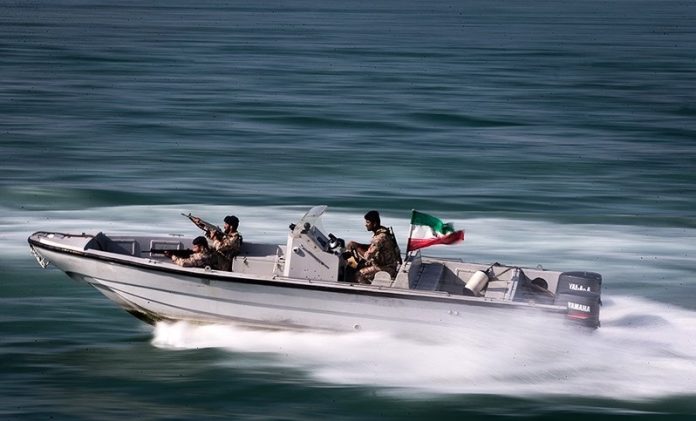
The large-scale drill, named after the late martyr Mohammad Nazari, commenced on Thursday in the Persian Gulf, around the Naze’at Islands (Abu Musa, Greater Tunb, Lesser Tunb, and Siri Island), the Strait of Hormuz, and the Sea of Oman.
On Friday, during the second phase of the exercise, a significant number of long-range precision ballistic and cruise missiles were fired.

In this phase of the drill, the Qadr 110 and Qadr 380 cruise missiles, along with the Qadir cruise missile and the 303 ballistic missile, successfully destroyed all predetermined targets in the Sea of Oman with high precision from various locations deep within the country.

Simultaneously with the missile launches, drone systems were able to attack simulated enemy bases and successfully destroy them.

Additionally, in this segment of the exercise, air defense systems deployed on vessels conducted heavy countermeasures against aerial targets intending to attack fast boats and the Iranian coast.

The resilience of combat systems and countering enemy electronic warfare in a simulated combat environment are among the primary objectives of this exercise, taking place in the waters of the Persian Gulf, the Strait of Hormuz, and around Iranian islands.

Three countries withdraw from Eurovision 2026 over Israel’s participation

According to reports, the three national broadcasters said they would not take part in next year’s competition, which is scheduled to be held in Vienna, after the European Broadcasting Union (EBU) confirmed last week that Israel would be allowed to participate.

The EBU’s decision came despite objections from several European broadcasters calling for Israel’s removal over its crimes and aggression.

Spain’s public broadcaster RTVE said it would neither participate in nor air the contest or its semifinals.
The network expressed a “lack of confidence” in the EBU’s decision-making process and accused the organization of being influenced by “political pressure.”
Spain was among eight countries that had requested a confidential vote on Israel’s participation.

Dutch broadcaster Avrotros also announced its withdrawal, stating that taking part under the current circumstances was incompatible with its “public values” and organizational principles. Ireland later confirmed it would join the boycott for the same reason.

The EBU has so far declined to hold a vote on the issue and has maintained that Israel will remain in the lineup for Eurovision 2026.

Army Chief: Iran Armed Forces Stand Ready to Defend Islamic System at Any Cost

Speaking during a meeting with the head and members of the Iranian Parliament’s Budget and Planning Committee, Hatami pointed to the long-standing hostility of the United States and Israel toward the Islamic Republic.

He said that since the 1979 Islamic Revolution, Washington and Tel Aviv have used every tool at their disposal against Iran, with their enmity growing deeper and more intense over the years.

Referring to the recent 12-day war, Hatami said Iran had been engaged in negotiations with the United States when Israel, backed by Washington, launched a brutal assault aimed at crippling Iran’s nuclear, missile, and air-defense capabilities and targeting senior commanders.

He added that Israel also pursued the broader objective of toppling the Islamic Republic itself.

He stressed that Israel’s aggression failed due to the Supreme Leader’s decisive guidance in reorganizing military command, the sacrifice and strength of Iran’s armed forces, and the vigilance of the Iranian people — ultimately forcing Israel to request a ceasefire.

“We emerged victorious because the enemy failed to achieve its goals,” he said.

Hatami added that Iran has not wasted a single moment since the conflict in strengthening its defense capabilities, making continued military empowerment a top priority.

He thanked the Iranian people for their crucial role in safeguarding national security during the 12-day conflict, reaffirming: “In every situation, we will stand to the last breath in defense of the Islamic system.”

Iran Warns UN That Unilateral Sanctions Violate Intl. Law

These measures, he said, severely undermine human rights, especially the right to development.

Iravani noted that the General Assembly has repeatedly condemned such actions for harming global relations, trade, investment, and cooperation.

He warned that the growing use of these unlawful measures has caused significant economic damage and human suffering, depriving nations of basic rights and disproportionately affecting civilians, including women, children, and the elderly.

He stressed that unilateral sanctions obstruct access to medicine, medical supplies, and essential goods, with their humanitarian impact becoming even more evident during crises like the pandemic.

Such policies, he argued, create intolerable living conditions and amount to crimes against humanity.

Iravani said Iran will continue working to counter these measures and urged UN Secretary-General António Guterres to appoint a Special Advisor on Unilateral Coercive Measures.

Iran dismisses PGCC claim over Persian Gulf islands as unfounded

Esmail Baghaei

Baqaei said Tehran regrets the council’s continued repetition of such unfounded claims.

Baqaei condemned the assertions contained in the final communiqué of the Council’s forty-sixth summit concerning these Iranian islands.

He emphasized that the Iranian islands of Abu Musa, Greater Tunb, and Lesser Tunb constitute inalienable parts of the territorial domain of Iran, and that any territorial claim thereto is fundamentally baseless and devoid of legal validity, and is manifestly incompatible with the principle of respect for the territorial integrity of States and with the precepts of good-neighborliness.

Baqaei recalled Iran’s effective, continuous, and uncontested sovereignty over these three islands throughout centuries.

He stated that the repetition of a baseless claim concerning a portion of a country’s territory does not alter geographical and historical realities, nor does it create any right for the claimant under international law.

The Spokesman for the Ministry of Foreign Affairs underscored the Islamic Republic of Iran’s policy of good-neighborliness and cooperation with neighboring States for the strengthening of relations and safeguarding of regional security and stability.

He called upon the United Arab Emirates and the Persian Gulf Cooperation Council to refrain from adopting provocative positions incompatible with good-neighborliness in relation to Iran.

Baqaei, emphasizing the pursuit of the rights of the Islamic Republic of Iran in the Arash oil field, deemed unilateral claims regarding this field devoid of validity.

He stated that the issuance of repetitive statements and the advancement of unilateral claims create no right for the State of Kuwait from a legal standpoint, and that the attainment of a fair and sustainable agreement concerning this field requires bilateral dialogue, joint efforts, and the establishment of a positive and constructive environment for securing mutual interests.

Iran marks 20th anniv. of fallen media, army personnel

The event was attended by senior military commanders, government officials, families of the martyrs, and members of the public, who gathered to honor the individuals who lost their lives in the line of duty.

Participants paid tribute to the journalists, media workers, and Army personnel who sacrificed their lives while serving the country, reaffirming their legacy and the nation’s continued respect for their contributions.

More in pictures:

Six Iranian athletes ranked in world karate top ten

The 27th edition of the World Championships took place from December 6 to 10, where Iran’s national team earned three medals: a gold by Atousa Golshadnezhad, a silver by Saleh Abazari, and a bronze by Sara Bahmanyar.

Golshadnezhad, competing in the women’s –61 kg division, topped the world rankings with 4,995 points after winning the world title. Bahmanyar, who claimed bronze in the –50 kg category, moved up to second place in the global standings.

In the men’s +84 kg division, Abazari’s silver medal secured him the third position in the world ranking.

Three additional Iranian athletes who advanced to the quarterfinals or the round of 16 also made the top-ten list: Fatemeh Sa’adati rose to fourth place in the –55 kg category, Ali Maskani ranked fifth in the –60 kg division, and Fatemeh Sadeqi placed sixth in the women’s individual kata rankings.

Six Iranian athletes ranked in world karate top ten