
Iran Says Seizure of South Korean Vessel ‘A Completely Technical Issue’
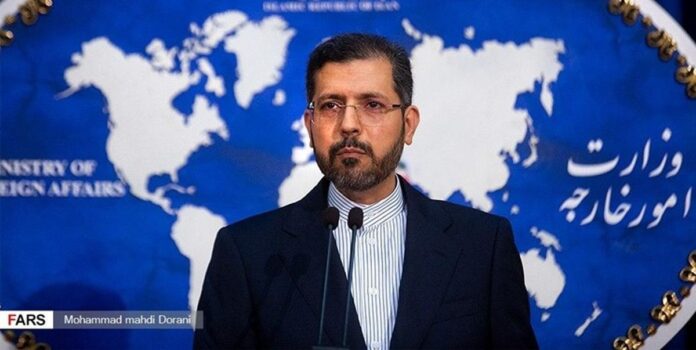
Asked by reporters about the news of the Korean vessel’s seizure, Khatibzadeh described it as a totally technical issue.
“Based on initial reports coming from local authorities, the issue is completely technical, and the vessel was led ashore upon a judicial order because the vessel had been polluting the sea,” the spokesman noted.
“Like other countries, the Islamic Republic of Iran is sensitive about such offences, especially polluting the marine environment; so, it deals with such offences in accordance with the law,” he added.
“This was not an exceptional incident, and similar incidents had earlier occurred in Iran and in other countries’ waters, and it is something usual, and further information will be announced accordingly,” Khatibzadeh said.
Iran Seizes South Korean-Flagged Chemical Tanker in Persian Gulf
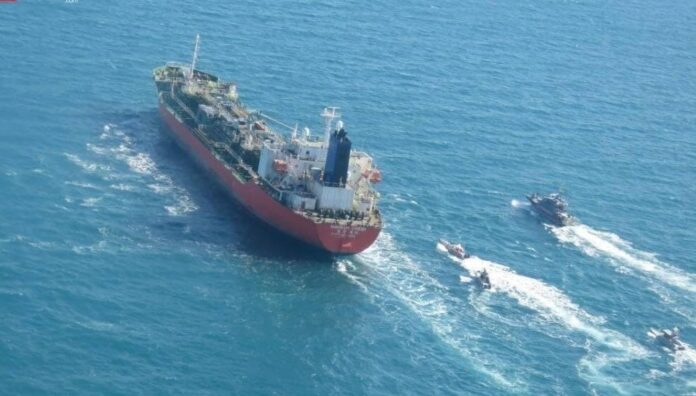
Fars News Agency reported that the Korean vessel has been seized by IRGC Navy and moved to an Iranian port.
The tanker Hankuk Chemi had left Saudi port city of Al-Jubail when it was seized at 10 am (local time) upon the Iranian Ports and Maritime Organization’s request over “repeated violation of marine environmental regulations”, according the IRGC Navy.
Data released by the tracking website Tanker Trackers show the Korean vessel was bound for the emirate of Fujairah when it was seized.
“It was carrying 7,200 tons of ethanol,” the IRGC said, adding that its crew members are from Korea, Indonesia, Vietnam and Myanmar.
According to the IRGC Navy, the tanker is now berthed at the Iranian port city of Bandar Abbas and the Judiciary will deal with its case.
Gen. Soleimani’s Assassination Blessing from US to ISIS: Helsinki Times
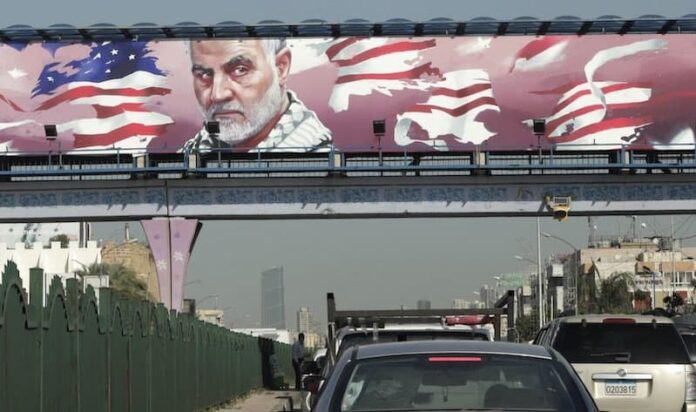
What follows is the full text of the opinion piece written by Forouzandeh Vadiati, the Iranian ambassador to Helsinki:
These days Iran honors the fallen hero, Martyr Major General Qassem Soleimani, the Commander of the Quds Force, an official branch of the armed forces of the Islamic Republic of Iran – and his companions, who were assassinated on the third of January 2020 at Baghdad International Airport.
For every Iranian and even those outside of Iran in countries who have suffered from terrorism, the name of General Soleimani signifies unmatched bravery, and selfless sacrifice against terrorism.
Throughout the last decade, our region has witnessed the rise of ISIS through their rapid advancements and occupation of territories, which involved countless atrocities against Christians, Yazidis and Muslims civilians. However, with the resistance made by a variety of courageous and devoted soldiers lead by Qassem Soleimani, ISIS’s reign and terror came to an eventual end.
This brave and Godly man fought by his heart and soul against the Saddam regime’s invasion on Iran back in 1980 to defend his country against the invaders. Likewise, Soleimani decided to accept the formal request of the governments of Iraq and Syria for assistance and visited the high danger zones in person.
Soleimani’s assassination helped shine light on the Trump Administration’s true colors. The assassination on Soleimani was also a blessing for ISIS and other terrorist groups in the region, who welcomed his assassination, calling it “an act of divine intervention that benefitted them”. It is clear that the costs of this terror attack for the American government proved to be way higher than its benefits.
It weakened the fight against Takfiri terrorism in the entire region and the world, and also tarnished the process of managing the current conflicts and crisis in the Middle East. Soleimani sought to reduce tensions and differences within the region, and his last visit to Iraq was part of his efforts to resolve the tensions between Iran and Saudi Arabia’s relations.
The attack to assassinate Martyr Soleimani was a “terrorist act”, the legitimacy and legality of which cannot be justified on any ground or basis. The designation of a nation’s armed forces as a “foreign terrorist organization” is unlawful and cannot justify any threat or use of force against them.
The irresponsible policies and unlawful practices of the current US administration continue to not only endanger the very foundations of international law and order, but also pose a threat to overall global peace and security. The international community should not condone or tolerate this situation and must demand that the United States put an end to its continued unlawful and destabilizing measures in an already volatile region that is the Middle East, by withdrawing its forces from the region.
The United States has attempted to portray itself as an advocate for dialogue and peace in the region. It is clear that such an assertion is mere duplicity and void of any sincerity. The imposition of illegal and inhumane sanctions, especially in the time of the COVID-19 pandemic by the United States, as well as its other hostile practices against Iran runs contrary to such a claim.
Warning about any military adventurism or further acts of terror against Iran and Its citizens, Iran stresses the fact that it will not hesitate to exercise its inherent right to self-defense.
Recalling that the current insecurity and instability in the broader Persian Gulf region is the direct result of the unlawful invasion of Iraq by the United States in 2003, as well as its massive military presence and its “divide and rule” policy in the region, it is also worth noting that all the above mentioned threats, including to dispatch more troops and “brand new beautiful equipment” to this already volatile region, would indeed further complicate the current situation.
Likewise, the United Nations member states must condemn, in the strongest possible terms, the unlawful threats and unfettered policies of the United States government, and to also hold it accountable for all of its unlawful acts and practices while compelling it to abide by the principles and boundaries of international law.
Although the region has lost a crucial warrior for peace and stability, Soleimani’s legacy from his contribution to the Bonn Conference, and to a relentless struggle to rid the region of ISIS will live on the in region.
We will remember Major General Soleimani and continue to commemorate his acts of courage and bravery.
Iran Officially Resumes Enriching Uranium to 20% in Fordow
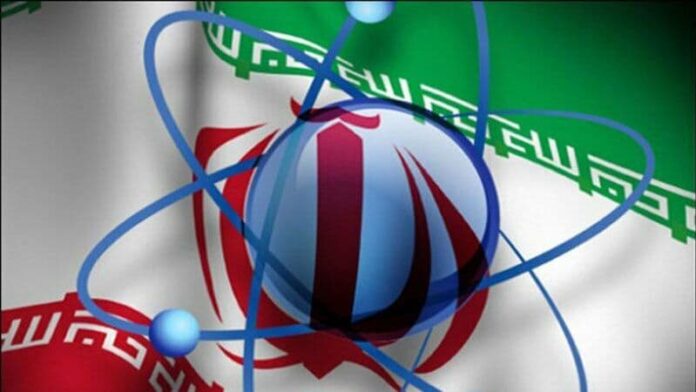
In comments on Monday, Rabiei said the 20-percent enrichment started a few hours ago after gas injection, and the first UF-6 product will be ready later in the day.
“The president had in recent days ordered the implementation of the Strategic Action to Lift Sanctions law. The gas injection process started a few hours ago, and the first UF6 enriched uranium product will be achieved within a few hours,” Rabiei said.
He said the whole process started after preliminary measures including informing the International Atomic Energy Agency (IAEA) and submitting the Design Information Questionnaire based on the country’s Safeguards commitments.
Rabiei said the government has clearly declared its negative view of the law passed by the Parliament, but it is duty-bound to implement the law.
The International Atomic Energy Agency said Friday Iran had informed its inspectors of the decision by a letter.
“Iran has informed the agency that in order to comply with a legal act recently passed by the country’s parliament, the Atomic Energy Organization of Iran intends to produce low-enriched uranium (LEU) up to 20 percent at the Fordow Fuel Enrichment Plant,” the IAEA said in a statement.
The agency said it “has inspectors present in Iran on a 24/7 basis and they have regular access to Fordow.” The parliamentary bill also called on Iran to expel those inspectors, though it appears Tehran still hasn’t decided to take that step.
Last month, the Iranian parliament required the government to scale back more obligations under the JCPOA after a prominent nuclear scientist was assassinated in a sophisticated attack near Tehran.
The law requires the Atomic Energy Organization of Iran to produce at least 120 kilograms of 20-percent enriched uranium annually and store it inside the country within two months after the adoption of the law.
The law further urges the AEOI to start the installation, gas injection, enrichment and storage of nuclear materials up to an appropriate enrichment degree within a period of three months using at least 1,000 IR-2m centrifuges.
Iran has resumed enrichment at Fordow, some 90 kilometers southwest of Tehran.
Shielded by the mountains, Fordow is ringed by anti-aircraft guns and other fortifications.
The 2015 deal called for Fordow to be turned into a research-and-development facility.
Tehran has expressed its readiness to reverse the suspension of its commitments only if the US returns to the nuclear deal and lifts all sanctions without any preconditions or if the European co-chairs manage to protect business ties with Iran against Washington’s sanctions as part of their contractual obligations.
Iran Rules Out Any Negotiation over Its Missile Program
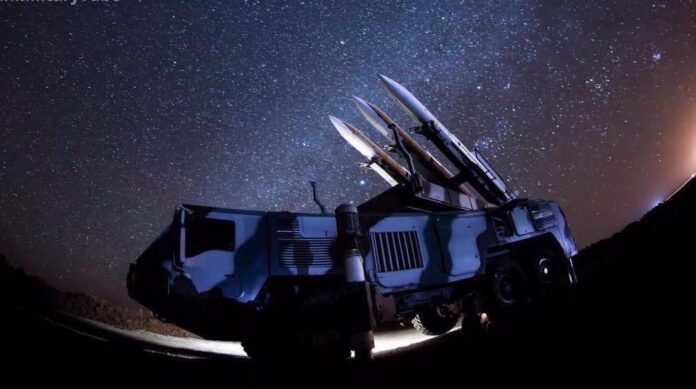
“The Islamic Republic of Iran has never held, is not holding, and will not hold any negotiation over its defence power. Iran’s defence power is defined based on the country’s national needs and we pursue them independently,” Khatibzadeh told reporters on Monday.
“Regarding the issue of missiles, it has once been stipulated in the JCPOA and the (UN Security Council) Resolution 2231, and the case is over,” he stressed.
Khatibzadeh said the Americans who participated in the nuclear talks between Tehran and world powers “know that after ‘verification’ of the peaceful nature of Iran’s nuclear program, the issue of missiles – which is of secondary importance – is null and void, and there is no point in raising it.”
“It was for the same reason that on January 16, 2016, the contents of all previous UN Security Council resolutions including Resolution 1929 were annulled. The remaining restrictions will also be lifted and annulled eight years after the implementation, namely in January 2023, based on the JCPOA timetable.”
Khatibzadeh reiterated the point that Iran “basically won’t renegotiate even a single part of the JCPOA. The Americans well know these comments just serve domestic purposes, and are of no value to the Islamic Republic of Iran.”
“Our response has not changed. Full and unconditional implementation of the JCPOA and compensating the damages caused [by Trump’s withdrawal from JCPOA],” he added.
ISIS Only Beneficiary of General Soleimani’s Assassination: Zarif
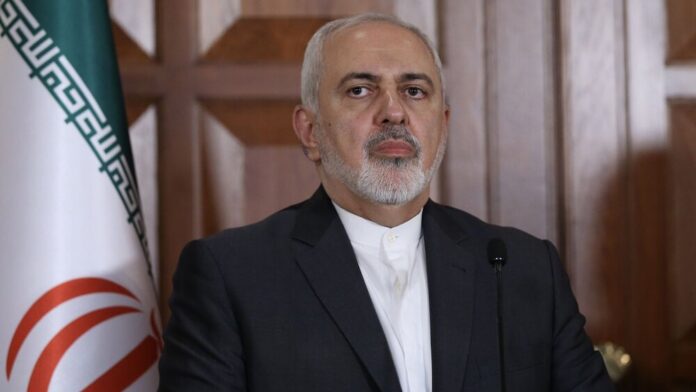
A year ago today, #1 of extremist terrorists was cowardly assassinated by the terrorist-in-chief,” Zarif tweeted on Sunday in a clear allusion to US President Donald Trump who ordered the assassination of General Soleimani near Baghdad International Airport one year ago.
The Iranian top diplomat then referred to massive ceremonies held across the region to commemorate the first anniversary of General Soleimani’s demise, reminding that “the only beneficiary of his (the commander’s) murder is ISIS.”
“As our region solemnly commemorates his one year passing, a reminder that the only beneficiary of his murder is Daesh (ISIS), which has only increased its activity since,” he said.
General Soleimani, who commanded the Quds Force of Iran’s Islamic Revolution Guards Corps (IRGC), was admired as the Middle East’s most influential and charismatic counterterrorism leader. He played a key role in helping Iraq and Syria defeat foreign-backed terrorists, chiefly Daesh, in late 2017.
The top commander was assassinated on January 3, 2020 in a drone strike outside Baghdad International Airport upon a direct order by US President Donald Trump.
IRGC Quds Force Dismisses Claim Israel Hits Iranian Forces in Syria

In an interview with Al Mayadeen TV, Brigadier General Mohammad Hejazi slammed as “fake claims” and false media propaganda many of the reports that the Zionist regime has launched attacks on Iranian forces in Syria.
He said the Israeli regime claims that Iranian forces are stationed in Syria, while Iran has never had any forces or unit stationed in Syria, since the Iranians have been involved in advisory missions in the Arab country.
A military advisor’s mission could be restricted to consultation and dialogue, but he may sometimes go to the field to carry out evaluation, the general explained.
“Iran’s presence in Syria has not involved the stationing of forces and units from the beginning. Our advisors have been present in the units and offered guides. But the (Israeli) claim that they have hit a base or garrison belonging to Iran is not true, because such thing does not exist (in Syria),” he added.
General Hejazi then noted that the Israeli regime is well aware that the martyrdom of any Iranian individual will draw a response from the Islamic Republic. “We will definitely respond, as responses have been given in the past.”
The commander then confirmed that the Zionist regime has attacked a truck that the Zionists claim has been carrying weapons, and has launched strikes on the Syrian Army base which it claims has been at Iran’s disposal.
A series of damages have been done to the Syrian Army and a number of facilities, but those actions have been responded appropriately, the IRGC general stressed.
Popular Figure, Military Strategist, Political Moderate: Gen. Soleimani
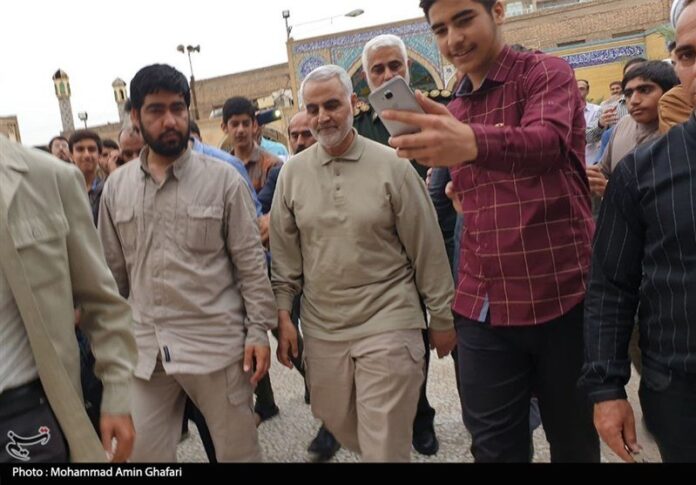
Ali Rabiei said the assassinated general has several unique features.
“First of all, he had the necessary skills and expertise in the jobs he was assigned to do,” he said.
“As described in social psychology, this feature is one of the key contributors to the [personality] growth and popularity of a person who remains committed to the task he is entrusted with and shines rather than using his position as a launch pad to take political leaps,” he said.
“Another factor is personal and moral traits,” he added.
Rabiei noted that Soleimani was a man with the common touch while being popular and powerful because he prioritized morality to the regular political dealings.
“The third feature that he had was a sense of sacrifice. Social conscience can clearly distinguish between honest and hypocritical actions, between defending the community and fighting for one’s own interests,” he added.
Rabiee said another factor is “social action.”
He explained that General Soleimani stood by people through social ups and downs and twists and turns.
He said General Soleimani was in the front line, from fighting the elements of the former Iraqi Ba’ath party and ISIS terrorists to fighting armed bandits and drug traffickers in eastern Iran to helping with relief operation in flood-stricken areas.
Moreover, he added, General Soleimani was an extraordinary military strategist.
“He had a deep understanding of the meaning of power, regional security, and symmetrical and asymmetrical war,” said Rabiei.
He said General Soleimani was also a political moderate who belonged to no specific political camp.
Iran’s Cabinet Passes Bill on Preventing Violence against Women

In a cabinet session on Sunday evening, chaired by President Hassan Rouhani, the ministers approved the bill aimed at protecting women against violence, strengthening the family bonds, and preserving the dignity of women.
The bill criminalizes any action causing physical or mental harm to women because of gender or a vulnerable position, harming their dignity, and restricting or depriving women of the legal rights and freedom.
According to the bill, the Judiciary will be tasked with setting up and sponsoring offices that provide support for the women who suffer some kind of violence or are susceptible to violence, safeguarding the rights and dignity of women in the legal courts, and holding training courses for the judges and prosecutors.
The bill also entails the establishment of a fund under the auspices of the Ministry of Justice for protecting victimized women. The fund would also provide support for the female inmates, cover their health costs, and finance training courses during their prison sentence.
The Islamic Republic of Iran Broadcasting (IRIB) is tasked under the bill with promoting media programs about preserving women’s dignity and protecting women against violence in the family or the society.
The bill also entails special educational plans at schools, promotion of social care consultancy services, constant monitoring of social harms and domestic violence, detection of the students prone to violence, enrollment of poorly supervised schoolgirls in boarding schools, and screening of the girls who have left school or been deprived of schooling.
The cabinet has also defined new responsibilities for the Ministry of Health regarding rapid treatment of the women harmed by violence, obliging the police to set up a special unit in police stations to ensure the safety of women, open special stations with female personnel, and detect the potential sources of violence against women.
The new bill also specifies punitive action on violence against women, including legal punishment, civil redress, and sentence terms in various cases threatening the physical and mental safety of women.
