Tuesday, December 30, 2025
Home Blog Page 2582

Iran Condemns US Blacklisting of Yemen’s Ansarullah

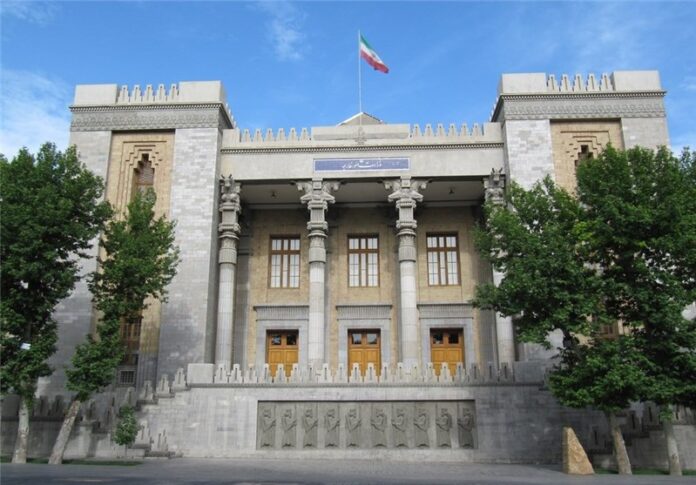
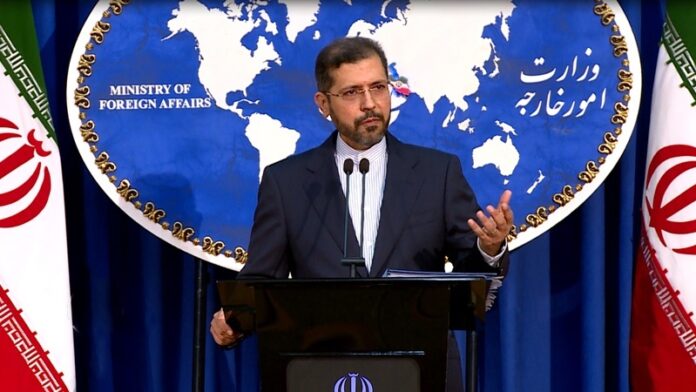
In a statement released on Wednesday, Foreign Ministry Spokesperson Saeed Khatibzadeh strongly condemned the designation of Ansarullah as what the US government has called a terrorist organization.

“Such a move would aggravate the most catastrophic humanitarian crisis in the current century and obstruct the course of ongoing efforts for the political settlement of Yemen’s crisis,” he warned.

The spokesman also noted that the US State Department’s blacklisting of Ansarullah in the final days of Donald Trump’s administration, which created regional and international tensions, has been rejected by the world community and the international circles, saying only a few warmongers have welcomed the move.

“If the new US administration seeks to reconsider the (previous administration’s) failed policy on Yemen crisis, it will be necessary for it to nullify that measure (blacklisting of Ansarullah) and develop a realistic view of the realities on the ground in Yemen,” Khatibzadeh stated.

The Iranian spokesperson finally called for the termination of political and military support for Saudi Arabia and its self-proclaimed coalition, including a ban on the arms sales to Saudis by certain countries, such as the United States.

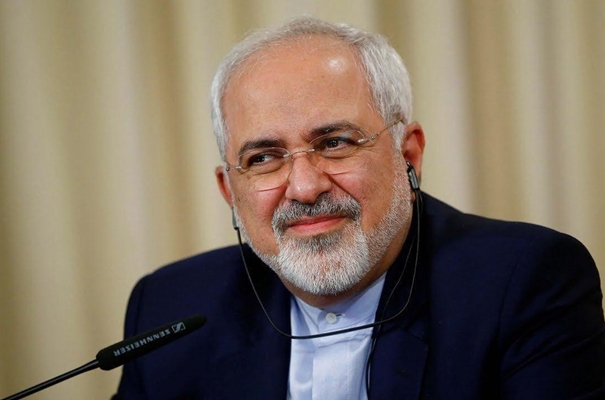
Biden Must Return US to Pre-Trump Era: Zarif

Mohammad Javad Zarif noted Iran will fully abide by its obligations if the US does so.

“As we have said before, as soon as the United States begins to make good on its commitments and we see its result, i.e., when the US lifts the sanctions, we will fulfill all of our obligations,” said Zarif. 

“This is something that the highest-ranking authority in Iran, the Supreme Leader [Ayatollah Seyyed Ali Khamenei] has said, and that is the final say to the whole world. That means they should know that Iran will remain committed to its obligations,” he added.

“The only thing that Biden should to is to return the conditions to the same as they were before the wicked tenure of Mr. Trump,” said the top diplomat.

“They themselves believe Trump has destroyed democracy and the pillars of the United States’ credibility, if any. This is something that they themselves should take care of. It is not our problem. It is their problem. We have straightforwardly announced that we will do whatever we are supposed to,” he explained.

Zarif underscored said the Biden administration should not only talk the talk, but should walk the walk.

“We don’t want paperwork, we don’t want signatures, but we want action,” he said.

“In the past, we wanted practical action, too. This time, also, we want action. This is mentioned in the JCPOA itself. We will see what the result will be, not what they simply announce they will do,” he said.

“This applies to both the Europeans and the Americans,” he said. 

“I ask our folks inside the country as well as foreign sides to go and read Appendix II of the JCPOA in which it is stipulated that what matters is the outcome. Now, we are waiting to see the outcome as well,” he said.

“If we see the side which has broken the law has now done something which has produced a result, we will deliver on our commitments, too,” the top diplomat added.

Zarif Welcomes Qatar’s Call for Arab States’ Talks with Iran

US Known It Can’t Trigger Snapback Mechanism: Zarif

“Iran welcomes my brother FM @MBA_AlThani_’s call for inclusive dialogue in our region,” Zarif said in a post on his official Twitter account on Tuesday.

“As we have consistently emphasized, the solution to our challenges lies in collaboration to jointly form a ‘strong region’: peaceful, stable, prosperous & free from global or regional hegemony,” he added.

His comments came one day after Qatar called on the Persian Gulf’s Arab states to seize on the momentum of reconciliation drive in the region and patch up their differences with Iran.

In an interview with Bloomberg television news network, Qatari Foreign Minister Sheikh Mohammed bin Abdulrahman Al Thani expressed hope that a summit between leaders of the six-member Persian Gulf Cooperation Council (GCC) and Iran would happen.

Iran, Azerbaijan Agree to Boost Railway Cooperation

The agreement came in a meeting between Iranian Minister of Roads and Transportation Mohammad Eslami and the Azerbaijan Republic’s Deputy Prime Minister Shahin Mustafayev.

In the meeting, the two sides also agreed to create a new automobile terminal at the Astara border crossing and to further promote mutual trade ties.

On the sidelines of the meeting, the Iranian minister told reporters than trade ties between Tehran and Baku have been growing in a constructive manner.

“The Islamic Republic of Iran has always been happy to see there was no slump in trade ties between the two countries, especially during the coronavirus pandemic,” Eslami added.

“Given the interactions that existed between Iran and the Azerbaijan Republic, we tried to set the stage to facilitate and expedite mutual relations,” he said.

The minister said one of the areas of cooperation between the two countries is the railway sector.
“The volume of [trade] exchanges between the two countries increased by 25 percent on the Astara-Astara rail route, which is indicative of the promotion of relations between the two countries,” he underlined.

He said the two sides also discussed the possibility of Iranian companies taking prat in the reconstruction of freed areas in the Azerbaijan Republic damaged during the conflict with Armenia.

Clinical Tests for Iranian-Cuban COVID-19 Vaccine Begin

“Phase two of clinical tests for the vaccine produced by the Pasteur Institute of Iran and the Cuban Finlay Institute has kicked off in … Havana,” said Kianoush Jahanpour, the head of the Public Relations Office of the Iranian health ministry.

“In this phase, more than 100 people ranging in age from 19 to 80 years old have been vaccinated so far. At this centre, too, 400 people will receive shots, and the total number of volunteers [for injection] will be around 900 at this stage,” he added.

Iran and Cuba have begun trials of a joint Covid-19 vaccine as Iran keeps fighting the coronavirus outbreak.

The Cuban vaccine, called Soberana 02, is the most advanced of Cuba’s four vaccine candidates and has been developed in cooperation between Cuba’s Finlay Vaccine Institute and Iran’s Pasteur Institute.

The cooperation between the two countries, both of which are under illegal US sanctions, reflects a shared drive for self-sufficiency and less reliance on imports from the West. The name of the vaccine, Soberana, is Spanish for “sovereign.”

South Korea Should Pay Penalty for Freezing Iran’s Assets: Top Banker

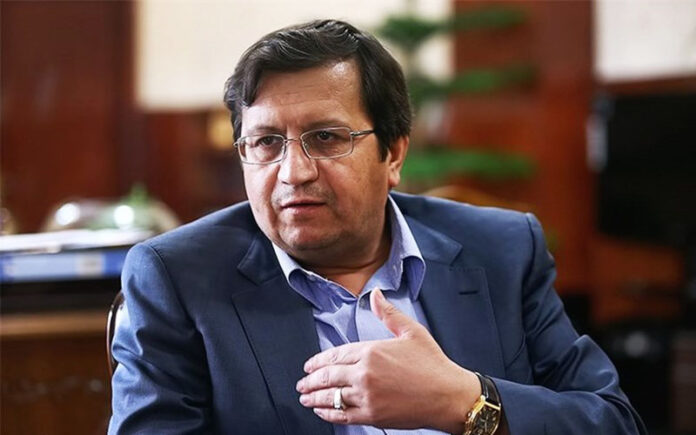
US Plot to Destabilize Iran’s Forex Market Failed: Central Bank Chief

The CBI chief made the remarks in a written response to questions from Bloomberg about billions of dollars in Iranian assets that have been frozen in the banks of South Korea under the pressure of US sanctions.

What follows is the text of the interview:

Question: You’ve said that interest should be paid on the $7 billion of Iranian funds that are currently in South Korea. How much interest do you estimate has accumulated over the past two years?

Hemmati: The Islamic Republic of Iran has been prevented from using its funds with Korean banks, as a result of the Korean banks’ full cooperation with the maximum pressure policy of the United States against Iran. This policy is against international law and not justified by legal principles. Therefore, we believe that those Korean banks should pay the damage suffered by the Islamic Republic of Iran during these two years. The amount of such damage is a technical issue which should be determined by banking and financial experts.

Question: Did the South Korean delegation give an indication that they can release the funds soon? Or did they give a time frame for when they can resolve the situation?

Hemmati: The South Korean delegation mentioned that they have the political will to resolve the issue and enable Iran to make use of their assets, but the problem is that they want to comply with the US policies and regulations as well.

Question: Were they specific about what is stopping them from releasing the money? Are they facing direct pressure from the US government, for instance, or from certain US banks?

Hemmati: There are a number of problems for the utilization of funds belonging to the Islamic Republic of Iran. Iranian banks and financial institutions, including the Central Bank of Iran, are listed by the US Treasury as sanctioned entities. Unfortunately, the Korean government has succumbed to the pressure and, unlike some other countries, refuses to cooperate with Iran. Our other partners could find some ways so that we can use resources to import humanitarian goods, but the Korean government did not propose any reliable channel in this regard. The funds are held with Korean banks which have business with the US banks and they take it as an excuse that the funds are Korean won and cannot be converted into euro directly.

Question: How did your meeting end? Did the South Koreans give any promises or pledge to make new efforts to try and release the money?

Hemmati: South Korean authorities promised that they will do whatever they could in order to release the funds. But this was not the first time they are making such promises.

Question: Did you discuss the oil tanker and is the seizure of that vessel linked to Iran’s trapped funds?

Hemmati: No.

Question: Is it possible to redirect the funds that Iran has trapped in South Korea into INSTEX? Is that something that you have been discussing?

Hemmati: Transferring the funds to INSTEX or the Swiss channel remains among the possible options but it is the second step. The first step is that we should witness a political will in Korean banks to release the funds and cooperate with Iranian banks. We have not witnessed such a political will yet. In addition, it needs to be reminded that INSTEX has been practically of little use so far and is mostly affected by the same US sanctions. So INSTEX has not worked as we expected to make trade ties with the European countries beyond the US sanctions, as the European countries have not had enough courage to hold their economic sovereignty.

Biden Has Chance to Open Up New Horizon for Ties with Iran: Spokesman

Speaking in a Tuesday press conference, Ali Rabiei urged the new US government not to follow in the footsteps of the Trump administration.

“Rather than acting upon temptations which have no results other than widespread violation of international law and crimes against humanity using ostensibly civilized methods at the expense of jeopardizing global peace and security as well as the interests of Iranian and American people, the new US administration should, by being honest both in word and in deed, and unconditionally, make good on its commitments in accordance with United Nations Security Council Resolution 2231, and delineate new horizons for its relations with Iran and the international community,” he said.

Rabiei said the Biden administration has the chance to make up for the wrong policies of his predecessor.

“Trump will reach the end of the road, and the United States will get a new president, a president who has the chance to a name a representative for the loud voice of American people, for the adjustment of trends which have, at least in the past four years, led to the humiliation, confusion and isolation of the US,” he said.

“Today, a global demand is that the US feel responsible and respect international regulations and norms. The new US government should not selectively compensate for the legacy and, in fact, the disgraceful blot that the previous administration has left behind,” he added.

“Even worse than that legacy would be to make efforts to use it as a tool to put pressure on nations, said Rabiee.

He reiterated that the Iranian nation never capitulated to American pressure.
“The resistance of our people until now must not have left any doubt that pressure and sanctions can never force us into submitting to excessive demands,” he said.

“However, the reality will not change that the ‘maximum pressure’ policy on Iranian people turned into a lasting disgrace in history, not only for those delusional individuals who imposed unprecedented pain and suffering on our innocent people, but for those who contributed to this pain and suffering by fueling this modern savagery in Persian-speaking and non-Persian-speaking media outlets outside Iran,” Rabiee explained.

“People will neither forget nor forgive the perpetrators of, and accomplices to this economic organized crime,” he added.

Rabiei then took a swipe on those who tarnished the image of the Iranian government in the name of criticizing it.

“Regrettably, there were some individuals inside the country who, in the name of criticizing the government and by turning a blind eye to the United States’ criminal behaviour and its destructive consequences on people’s lives, besmirched the image of the government which was at the forefront of this incessant campaign,” said Rabiee.

“But if they were a little fair, they could see that this government not only managed one of the most brilliant periods of economic growth in the years before sanctions were heaped upon our people, but also prevented galloping inflation during this very same period when many expected a very high inflation rate this year,” he said.

“This proper economic management came at a time when the unexpected coronavirus crisis put more burden on the government. Today and tomorrow, our people can fairly judge what is good and what is evil,” he said.

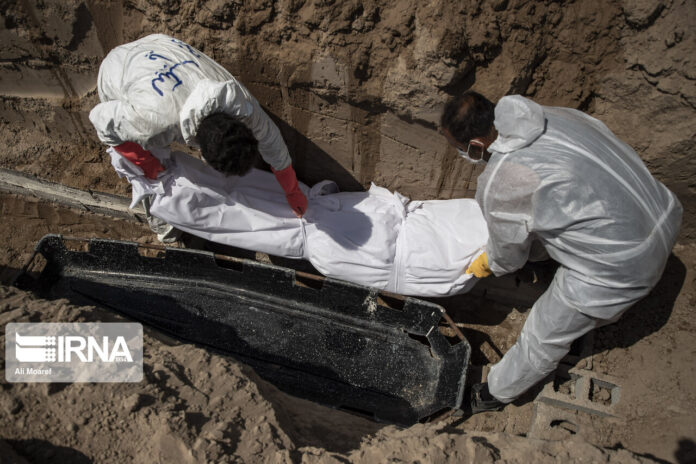
Iran Confirms 87 New COVID-19 Deaths in 24 Hours

424 More Iranians Die of Coronavirus: Ministry

In a press briefing on Tuesday, the Ministry’s spokeswoman Sima-Sadat Lari reported 5,917 new cases of COVID-19 infection, raising the total number of cases to 1,342,134.

So far, Lari added, 1,131,883 patients have recovered from the disease or been discharged from the hospital.

Lari said 4,272 patients are also in critical conditions caused by more severe infection.
The spokeswoman noted that 8,634,553 COVID-19 tests have been taken across the country so far.

She said currently 10 cities in Mazandaran province including Sari, Amol, Fereydounkenar, Qaemshahr, Neka, Tonekabon, Ramsar, Babol, Juybar, and Savadkuh are in the “red” zone, 23 cities are in the “orange” zone, 163 are in the “yellow” zone, and 252 are in the “blue” zone in terms of coronavirus outbreak.

Iran Objects to Saudi Participation in Disarmament Conference

In remarks on Tuesday, January 19, Iran’s ambassador and permanent representative to the UN Office at Geneva, Esmaeil Baqaei Hamaneh, deplored Saudi Arabia’s record of creating instability and its destructive role in the region and in the formation of a military coalition against its neighbouring state which has slaughtered civilians, devastated Yemen’s infrastructures, and led to the spread of insecurity and instability in the region.

The Iranian envoy then slammed as “destructive” Saudi Arabia’s attendance at the Conference on Disarmament in Geneva as an observer, saying the Riyadh regime’s involvement in the conference would run counter to the forum’s goals and mission.

He emphasized that Iran has acted to prevent the participation of Saudi Arabia and the United Arab Emirates in the Conference on Disarmament, because the Islamic Republic has concerns for the protection of the Conference on Disarmament’s status and place as the only multilateral international institution in the nuclear disarmament sphere.

Baqaei Hamaneh further decried Saudi Arabia as the spearhead of plans to form coalitions for war and aggression against the neighbours, as the biggest stockpile of destabilizing weapons in the region, and a country pursuing its questionable nuclear program without supervision from the relevant international organizations.

He then concluded that Saudi Arabia could not have any constructive presence in the disarmament debates, saying, “As experience shows, that country (Saudi Arabia) only abuses the meetings and discussions at the Conference on Disarmament to distract public opinion and pin the blame on others for its own mistakes and crimes in Yemen.”

According to the decision-making process in the Conference on Disarmament that operates on a consensus basis, Saudi Arabia and the United Arab Emirates were blocked from joining the conference as observers in 2021 after the Islamic Republic’s opposition.

Iran Blacklists Trump, Nine Other US Officials for ‘Acts of Terror’

In a Tuesday statement, Saeed Khatibzadeh said the move is in line with the Iranian Parliament’s legislation in that regard.

“In line with implementing “Countering the US’ Human Rights Violations as well as Adventurist and Terrorist Moves in the Region Act” ratified by the Iranian Parliament, the foreign ministry of the Islamic Republic of Iran has put on Iran’s sanctions list a number of US individuals for committing terrorist crimes as well as promoting and supporting terrorism, which poses a serious threat to regional and international peace and security, and for breaching basic regulations and fundamental principles of international law, including human rights regulations,” said the spokesman.

“The US authorities which will be put on the Islamic Republic of Iran’s sanctions list as of today include President Donald Trump, Secretary of State Mike Pompeo, former Defence Secretary Mark Esper, Acting Secretary of Defence Christopher Miller, Secretary of Treasury Steven Mnuchin, Director of the Central Intelligence Agency (CIA) Gina Haspel, former National Security Advisor John Bolton, Head of the Iran Action Group and former Special Representative for Iran Brian Hook, the US State Department’s Special Representative for Iran Elliott Abrams, and Andrea Gacki, the acting Deputy Director as well as the Associate Director for Compliance and Enforcement at the Office of Foreign Assets Control (OFAC) of the US Department of the Treasury,” he added.

“These individuals have been put under sanctions for reasons such as issuing orders to conduct, and leading the operation to assassinate martyr General Qassem Soleimani and his companions, organizing and supporting acts of terror against the Islamic Republic of Iran, creating, sponsoring, offering weapons to, and training terrorist groups, offering all-out support to the Israeli regime’s oppression against the Palestinian nation, especially the terrorist acts committed by this regime in the assassination Iranian scientist Mohsen Fakhrizadeh, imposing cruel, illegal and unilateral sanctions against the Islamic Republic of Iran and the Iranian nation, and acting deliberately to impose special living conditions on Iranians, including by preventing Iranians from gaining access to food and medicines as well as medical services and equipment, supporting oppressive regimes in the region, backing crimes against humanity and war crimes committed in Yemen by the above-mentioned regimes, and having active and all-out links to the terrorist MKO group and offering political, propaganda and cultural support for this group which has committed numerous terrorist acts against the interests of the government and citizens of the Islamic Republic of Iran,” the spokesman noted.

“The Islamic Republic of Iran reminds them that based on the basics of international law, the imposition of unilateral actions (coercive unilateral actions) amounts to blatant violation of the fundamental principles of international law stipulated in the UN Charter and [principles] against international law, including humanitarian international law, and prevent the realization of human rights,” Khatibzadeh added.

“Accordingly, the Islamic Republic of Iran reserves the right to adopt the necessary measures to counter international acts of violation by the US in all domains,” he said.

The spokesman said the Iranian foreign ministry will, in the first opportunity, release a detailed statement on the crimes committed by the above-said US officials.