Tuesday, December 30, 2025
Home Blog Page 2573

Iranian, Georgian Foreign Ministers Discuss Bilateral, Regional Issues

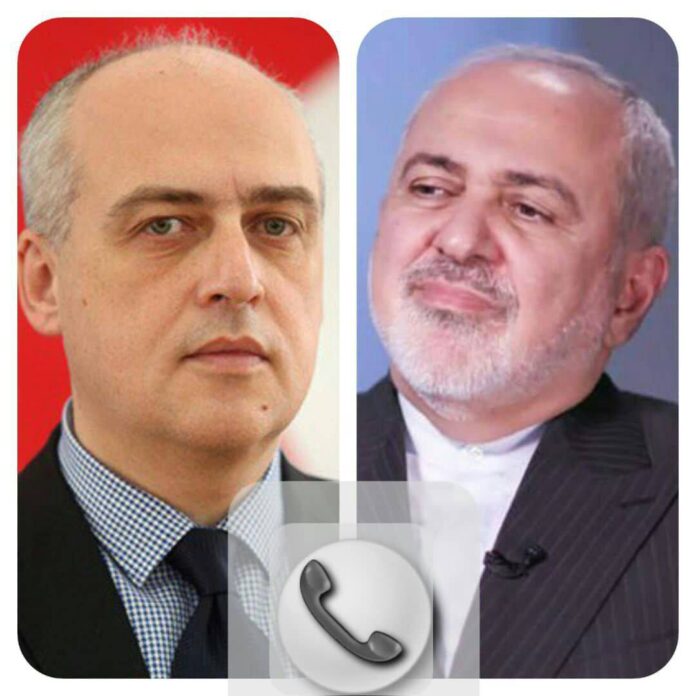
In the phone call on Thursday, the top Iranian diplomat and Foreign Minister of Georgia David Zalkaliani discussed the latest status of relations between Tehran and Tbilisi and the regional issues.

Zarif Arrives in Georgia after Trips to Baku, Moscow, Yerevan

Foreign Minister Zarif also wished his Georgian counterpart a full recovery from the coronavirus.

The two senior diplomats spoke by telephone because the Foreign Minister of Georgia has been kept in quarantine after testing positive for COVID-19.

Foreign Minister Zarif is holding face-to-face meetings with the other Georgian officials during his stay in Tbilisi.

The Iranian Foreign Minister has arrived in Georgia in a tour of the Caucasus that took him earlier to the Republic of Azerbaijan, Russia and Armenia.

Iran Inaugurates Three Agricultural Megaprojects

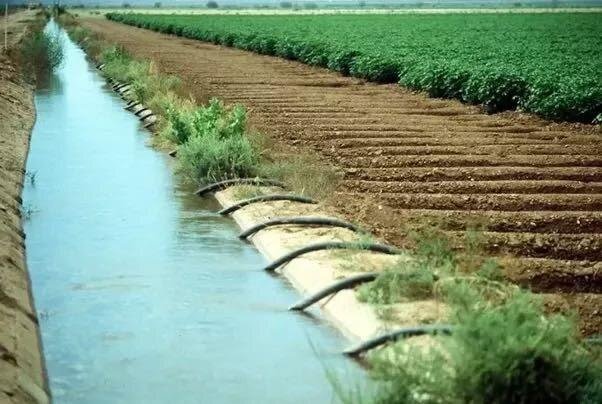
In a videoconference on Thursday morning, President Rouhani opened three major projects relating to agricultural drainage, watershed management, and protection of natural resources.

Under the new projects, irrigation and drainage programs have been carried out in 25,000 hectares of lands in west and northwest of Iran, while 78,000 hectares of farms in the northern province of Golestan have been equipped with drainage systems as part of a plan that will cover 280,000 hectares later.

Another megaproject includes 415 desert greening and dust control programs across 13 provinces under a national scheme for protection of natural resources.

The president also inaugurated 3,154 watershed management plans.

Implemented with a financing of 5,610 billion tomans, the projects would create sustainable employment for 105,771 people.

Zarif Arrives in Georgia after Trips to Baku, Moscow, Yerevan

Foreign Minister Zarif arrived in Tbilisi on Thursday morning in the fourth leg of a regional tour after visiting Baku, Moscow and Yerevan.

Speaking to reporters upon arrival in Georgia, the top Iranian diplomat said he has held talks about the bilateral relations and the regional cooperation during his stays in the Republic of Azerbaijan, Russia, and Armenia.

“Our region has undergone very tough conditions. Now we need to get past those difficult conditions and use the new circumstances for cooperation in the region to make sure that war and clashes would not break out again in our region,” Foreign Minister Zarif said.

The minister noted the he is going to meet Georgian authorities for talks about the relations between Tehran and Tbilisi and about regional cooperation.

“We have age-old bilateral ties with Georgia. There are numerous grounds for cooperation with Georgia, particularly in the transit sector,” he added.

“We are well aware of the sensitivities of our friends in Georgia to a number of the regional countries,” the top Iranian diplomat noted, saying Iran is trying to use a “regional framework for cooperation and reduction of tensions”.

“Considering the new international conditions, I hope we could remove the obstacles to mutual cooperation with Georgia and move towards closer cooperation,” he added.

Pointing to the “very positive cooperation” with Georgia in the transportation sector, Foreign Minister Zarif he has held talks with the Azeri and Armenian officials about the South-West Corridor, which leads to Georgia and connects to the Black Sea.

“This corridor is useful for Iran, Georgia, and other countries along the route,” Zarif noted.

Iranian, Georgian Foreign Ministers Discuss Bilateral, Regional Issues

Meeting with Georgian President

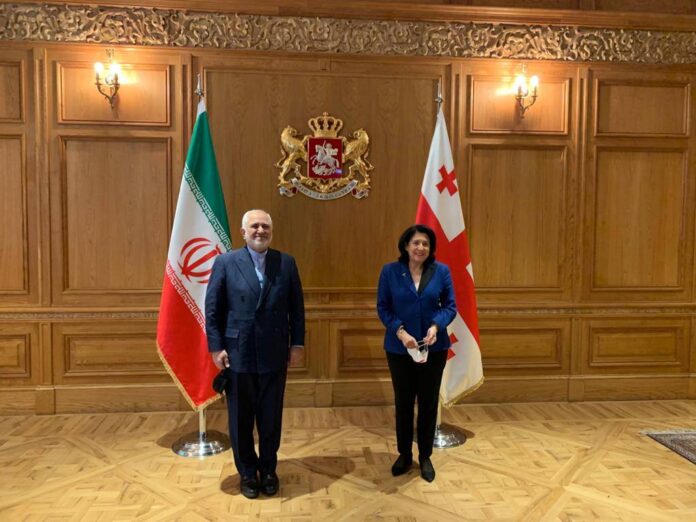
The top Iranian diplomat further had a meeting with President of Georgia Salome Zourabichvili.

In the meeting, Foreign Minister Zarif expressed the hope “that under the new international circumstances, the relations between Iran and Georgia could further expand.”

“We have historical ties,” he told the Georgian president, saying Iran and Georgia can enhance their relations in future.

The top Iranian diplomat congratulated Georgia on holding successful parliamentary elections, highlighted the historical relations between the two countries, and conveyed an invitation from the Iranian president for Ms. Zourabichvili to make a state visit to the Islamic Republic of Iran.

On the bilateral issues between Iran and Georgia, Foreign Minister Zarif expressed hope for the promotion of cooperation between the two neighbors in various fields of mutual interest, particularly the trade and economic interaction.

The Foreign Minister also pointed to a series of problems that the Iranian nationals residing in Georgia and the Iranian truck drivers are facing, calling on the government of Georgia to help settle those problems.

As regards the regional issues, Foreign Minister Zarif explicated the Islamic Republic of Iran’s stance on using the opportunity in the wake of the recent clashes in the Karabakh region for the expansion of regional cooperation to the benefit of all parties, and informed the Georgian president of the talks he has held on the subject in the regional countries.

For her part, President Zourabichvili highlighted the historical ties between Georgia and Iran, pointed to the issues relating to the corridors connecting the Persian Gulf to the Black Sea, and emphasized the importance of economic cooperation between the two neighbors, joint investment, and cooperation in the fight against the coronavirus pandemic.

The Georgian president also elaborated on her country’s views on the regional issues.

Iran Says to Help Restore Taq Kasra Only Upon Iraq’s Official Invitation

Taq Kasra is the remains of a Sassanid-era Persian monument, dating back to the 3rd-6th century. It is located near the modern town of Salman Pak in Iraq. It is the only visible remaining structure of the ancient city of Ctesiphon. The archway is considered a landmark in the history of architecture, and is the largest single-span vault of unreinforced brickwork in the world.

“If they want to have Taq Kasra definitely restored, they should prepare the ground and officially ask us to do so, so that an official memorandum of understanding would be signed immediately and researchers and restoration experts would get to the site to begin work; otherwise, the Iranian
Ministry of Cultural Heritage, Tourism and Handicrafts cannot do anything to restore and renovate the monument,” said the Iranian deputy minister of heritage, tourism and handicrafts.

Iran Says to Help Restore Taq Kasra Only Upon Iraq’s Official InvitationThis came after parts of the historical monument collapsed again, prompting both Iraqi authorities and other cultural heritage officials to warn against possible further damages to the ancient structure.
Over the past several years, Iraqi officials have called on Iranian cultural heritage authorities to help restore, renovate and save this historical monument.

However, Iran says it will send teams only when Iraq makes an official invitation.

Iran Says to Help Restore Taq Kasra Only Upon Iraq’s Official Invitation

Iranian People’s Resistance Led to US’ Submission: First VP

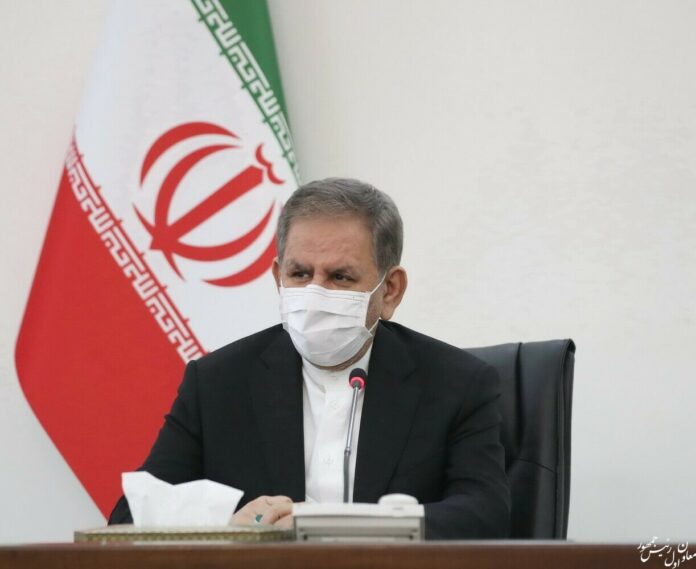
Jahangiri said Iranian people stood up to the economic war launched by Washington against the Islamic Republic.

“The experience of the tough period of the economic war showed resistance holds the key to success, and what forced the US into submission to the Iranian nation was the people’s resistance,” he said.

The vice president urged people to learn to have a common understanding of issues and threats facing the country.

“Today, we are facing different threats and opportunities in society, and we can work out a common solution only when we have a common understanding of threats and opportunities,” he added.

Jahangiri underlined that dialogue is a very important issue. “The skill of holding dialogue is very important and we should not talk to each other with the language of violence.”

The top official underscored that ill-wishers seek to put the brakes on Iran’s progress, adding efforts should be made to stop such efforts.

Iran to Raze Tel Aviv, Haifa to Ground If Israel Makes Mistake: Cmdr.

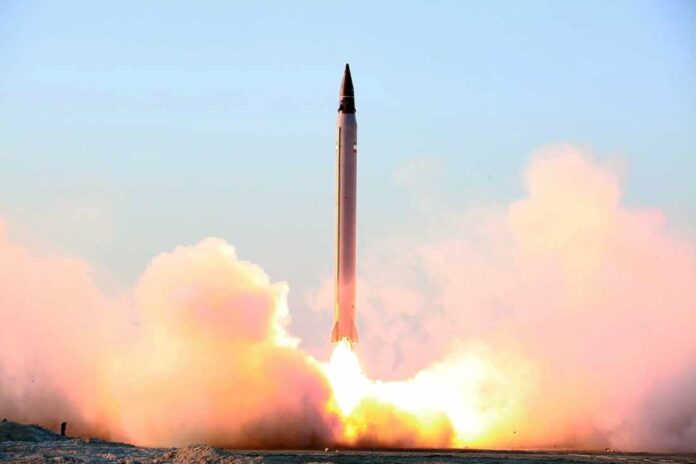
This picture, released by the Iranian Defence Ministry on Oct. 11, 2015, shows the launching of an Emad long-range ballistic surface-to-surface missile in an undisclosed location.

Brigadier General Abolfazl Shekarchi, the spokesperson for the General Staff of the Armed Forces, was echoing comments made by Leader of the Islamic Revolution Ayatollah Seyyed Ali Khamenei.

“As the Leader said in the past, if the Israeli regime makes the slightest mistake against the Establishment of the Islamic Republic of Iran, we will not only strike the missile bases which they say have set up to attack Iran, but also raze Haifa and Tel Aviv to the ground in the shortest time possible,” he noted.

The top general dismissed as psychological warfare the recent threats by Israeli general Aviv Kochavi.

“They are not aware of the capabilities of the Islamic Republic of Iran, capabilities which have not been revealed yet. Just part of them was displayed during the recent military exercises,” he noted.

“With those capabilities, Tel Aviv will be razed to the ground in no time as the Supreme Leader said,” the top general noted.

“If they make a mistake, they will see their collapse, and in fact, they will bring forward the time of their collapse,” he said.

“Today, the collapse of the Israeli regime is on the agenda. This regime must collapse and this cancerous tumour in the region must fall apart as it has brought a lot of losses upon the Muslim community,” he added.

Iran’s Zarif, Armenian PM Meet in Yerevan

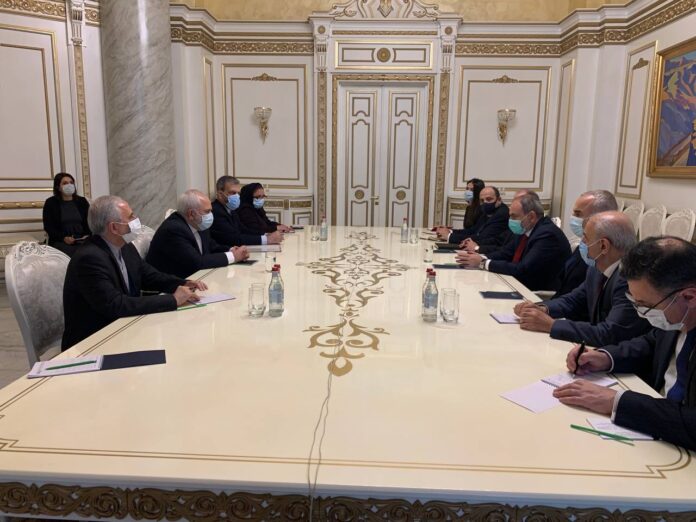
In the meeting with the Armenian premier on Wednesday evening, Foreign Minister Zarif elaborated on the latest status of Iran-Armenia relations and the regional developments, particularly after the recent conflicts in the Karabakh region, and explicated the Islamic Republic of Iran’s stances on the issue.

The top Iranian diplomat also pointed to the opportunities available in the bilateral and multilateral relations, cited the common concerns in the region, and reiterated the Islamic Republic of Iran’s call for a future full of cooperation and peace in the region.

Foreign Minister Zarif also explicated the Islamic Republic of Iran’s stances that favor the observance of international law, protection of people, respect for the rights of minorities, preserving territorial integrity, and avoidance of resorting to force amid the Karabakh crisis.

Prime Minister Pashinyan, for his part, highlighted the commonalities between Armenia and Iran in various issues pertaining to peace, security and development, saying the relations between the two nations have been based upon friendship throughout centuries. 

The Armenian prime minister and the Iranian foreign minister also held extensive talks about cooperation between the two neighbours in various fields such as trade, electricity and gas industries, transit cooperation, road constructions, and railway industry.

Iran VP Pledges Support for Kenyan Knowledge-Based Firms

Iranian Vice President Sattari, who is leading a scientific and technological delegation in a visit to Kenya, made the remarks in a meeting with Kenyan Cabinet Secretary in the Ministry of Information and Communications, Joseph Wakaba Mucheru, on Wednesday.

In the meeting, which revolved around the promotion of cooperation between the two countries, Sattari said Iran will provide the successful experience of its knowledge-based and innovative companies with their Kenyan peers.

The meeting, held on the second day of the Iranian delegation’s visit to Kenya, was also attended by Richard Ngatia, president of Kenya’s National Chamber of Commerce and Industry.

Highlighting Iran’s remarkable advances in the nanotechnology field, Sattari said, “Iran has been grappling with the US’ cruel sanctions for 40 years. However, not only did the sanctions fail to prevent Iran’s progress, but turned into the best driving force for the (Iranian) scientists and scientific elites that made us gain self-sufficiency in various scientific fields.”

Iran VP Pledges Support for Kenyan Knowledge-Based Firms


The fact that Iran has had to design and manufacture the whole equipment and products to supply its demands steered the country towards self-sufficiency and homegrown industries, he added.

The products of the Iranian knowledge-based companies meet the international standards, the vice president noted, adding, “All of these products have been manufactured with the best quality and in compliance with the world standards. The powerful Iranian companies can share their experience in this regard with the Kenyan companies applying for it.”

The Iranian vice president explained that such cooperation could happen in the form of transfer of technologies and technical knowledge and selecting competitive prices for the knowledge-based products and services, adding, “Iran’s innovation and technology center in Kenya has also facilitated such interaction.”

He said the Iranian center has been established in Kenya two years after announcement of plans to inaugurate the center, noting that its potential would be employed for the expansion of mutual cooperation with Kenya.

Sattari finally invited the Kenyan technology sector’s officials to visit Iran and observe the growing technological trend in the country and the achievements of the Iranian knowledge-based companies.

For his part, Joseph Wakaba Mucheru praised Iran and the Iranian Vice Presidency for Science and Technology for setting up an innovation center in Kenya, hailed Iran’s advances in the emerging technologies, and expressed the African country’s readiness to use Iran’s experiences in developing the technology and innovation ecosystem.

Highlighting the Iranian knowledge-based companies’ capabilities in advanced technologies, he said Kenya needs to use Iran’s development plans as a model.

Kenya has great potential for growth in digital economy as well as the information and communications technology, the minister noted, saying such capabilities have not still thrived in his country.

“Using Iran’s successful experiences in creating startups and knowledge-based companies is seen as a special opportunity for Kenya,” Mucheru added.

At the conclusion of the meeting, the Kenyan officials visited an exhibition of the Iranian knowledge-based products in the newly-inaugurated innovation and technology centre (IHIT).

Iranian Vice President for Science and Technology Sattari is visiting Kenya for the second time with a 40-strong delegation of representatives of local knowledge-based and innovative companies to pave the way for the export of homegrown knowledge-based products.

The Iranian delegation held business meetings with their Kenyan counterparts on Wednesday as part of a huge event earlier organized for the trip.

Iran Armed Forces Fully Prepared for Any Israeli Attack: Official

Speaking to reporters on the sidelines of a weekly cabinet session on Wednesday, Mahmoud Vaezi said the threatening remarks from the Israeli officials are nothing but a psychological war.

“Our people and people of the region are familiar with the language that the Zionist regime’s officials have used so far,” he noted, adding that the Zionists have neither a plan nor the capability to take action against Iran.

The Iranian Armed Forces, including the Army and the Islamic Revolution Guards Corps (IRGC), are seasoned forces defending the country, he added.

Vaezi also described the recent military exercise staged by the Iranian forces as a sign that “we have no intention of launching an offense and no intention of war, but we are serious in defending the country.”

“However, a number of the Zionist regime’s officials think that Washington will accept whatever they say. There was once someone called Trump with a son-in-law, who was practically and actually the henchman of Zionists that did a series of jobs in Washington, and imposed a series of Zionist regime’s views,” he added.

He also urged the new US administration to preserve its independence and ignore the psychological warfare by Israel and others.

“The US’ return to the JCPOA and lifting of the sanctions is an issue that is strongly opposed by the Zionist regime and some Arab countries in the region which are hostile to us, such as Saudi Arabia. They are attempting hard. They have also launched lobbies in Washington. They are constantly trying to prevent it (US’ return to JCPOA),” Vaezi stated.

The chief of staff of the president’s office finally noted that Iran does not take such psychological war and propaganda campaign seriously.

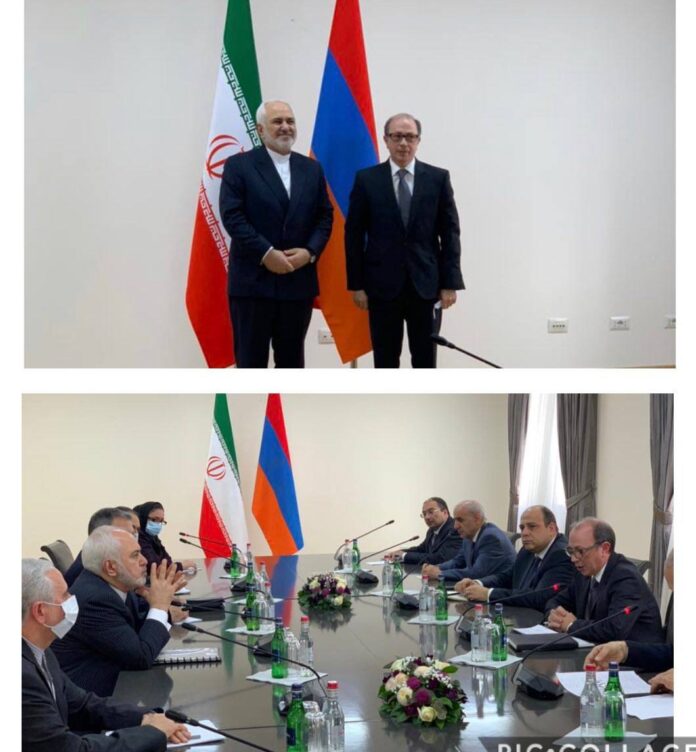
Armenia’s Territorial Integrity Is Iran’s Red Line: FM Zarif

In the meeting held in Armenia on the third leg of Zarif’s regional tour, the top Iranian diplomat highlighted the cordial and good neighbourly relations between the two countries.

He said both Iran and Armenia enjoy age-old civilizations and a long history.

Zarif described Armenia as an important neighbour for Iran, and added Tehran-Yerevan relations are a symbol of interaction and dialogue between the followers of two faiths.

Iran’s foreign minister underscored the significance of territorial integrity, independence and national sovereignty of all countries in the region, including Armenia.

He said in is necessary to observe the rights of all ethnic groups in the region.

Zarif said Armenia’s territorial integrity is Iran’s red line, which has already been emphasized.

He described as a brave move the decisions by the Armenian government and Prime Minister Nikol Pashinyan to move toward the future.

Zarif expressed regret over the human losses inflicted during the recent conflict in the region and said Iran stands ready to offer whatever assistance and make any efforts in that regard.

He expressed hope the humanitarian issues caused by the conflict will be resolved as soon as possible.

Zarif strongly dismissed the presence of terrorists and foreign fighters in the region, adding the presence of such troops is a cause for concern for both countries.

He said Tehran is ready to work with Yerevan and other neighbours in that regard and to help boost economic development in the region by tapping into the opportunity created and by taking the common interests of regional countries into account.

The top Armenian diplomat, in turn, emphasized the significance of close political, economic and trade ties with Iran.

He described his meeting with Zarif as a good opportunity to exchange views on the prospects of mutual cooperation. 

He described Iran as Armenia’s fourth economic partner.

Aivazian touched upon the importance of regional stability and security, and highlighted Iran’s key role in the region.

Among other issues on the agenda of the talks were mutual banking relations as well as issues pertaining to transportation, Iran’s exports and the environment of the Aras river.