Monday, April 13, 2026
Home Blog Page 2568

Iran Says to Remove IAEA Cameras in 3 Months if Sanctions Not Lifted

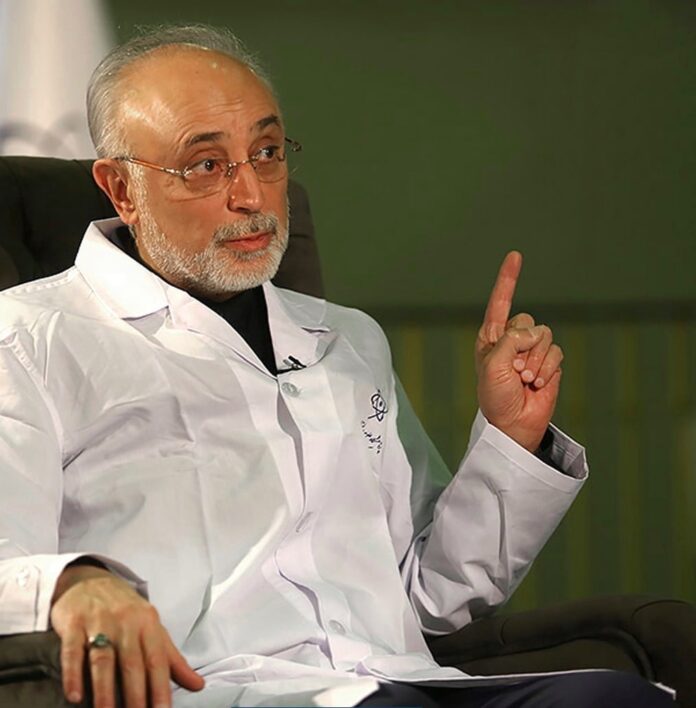
“The agency has no right to access the systems recording information as well as cameras, and we will destroy that information if sanctions are not lifted in three months’ time,” Ali-Akbar Salehi said on Friday night.

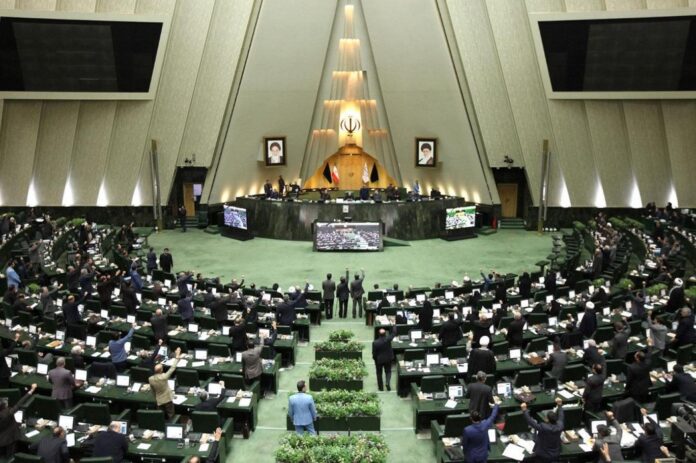
The official noted that move adopted by the government are in keeping with the legislation passed by Parliament to tackle sanctions.

“We stopped the implementation of the Additional Protocol and inspection conducted within the framework of that protocol. The move is based on the law approved by Parliament around two and a half months ago,” Salehi explained.

He added some try to create the impression that Iran does not favour talks.
“They want to make the public believe that we wouldn’t like to sit down for negotiations,” he said.

“However, talks require their own conditions,” he further said.

Iran, Syria Discuss Cultural, Media Cooperation in Damascus

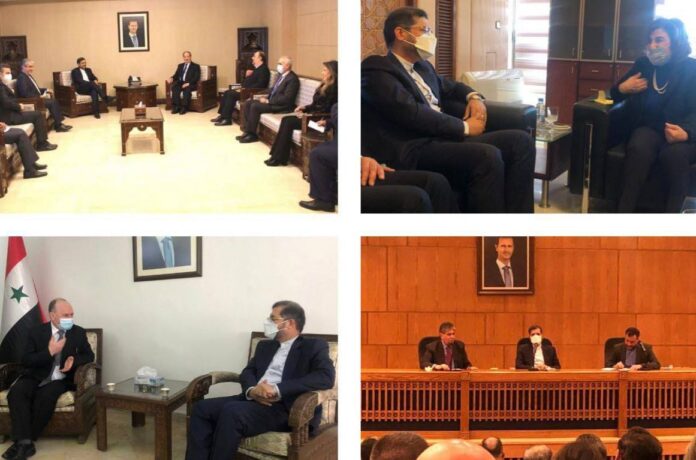
The meetings were held in Damascus in line with Iran-Syria cooperation in public diplomacy, media and cultural arenas.

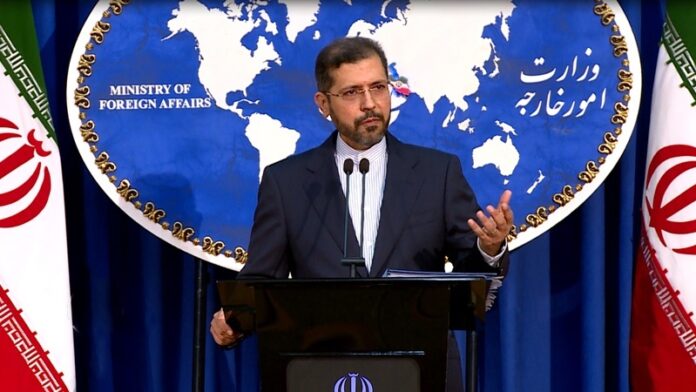
During his trip, Khatibzadeh held talks with Syrian Foreign Minister Faisal Mekdad where the two sides discussed the latest situation of bilateral ties as well as cultural and media cooperation.

In the meeting, the top Syrian diplomat underlined the importance of boosting mutual cooperation in cultural and media arenas.

Khatibzadeh also held talks with the Syrian minister of information and culture, minister of science and Bouthaina Shaaban, the senior advisor the Syrian president.

In the meetings, the Iranian foreign ministry spokesman stressed the need to further expand cultural and media cooperation between the two sides.

He also expressed pleasure with Syrian people’s resistance against terrorism and underlined Iran, like in the past, will stand by the Syrian government and nation in helping with the economic reconstruction of Syria and boosting cultural cooperation with that country. 

In the meetings, the Syrian authorities also underscored that the Syrian nation will never forget Iran’s support for Syrian people.

Khatibzadeh also delivered a speech at the Syrian Diplomatic Academy and took part in a meeting of the country’s Institute for Strategic Studies.

He also attended a meeting with Syria media and answered journalists’ questions.

Khatibzadeh also met the Syrian Deputy Foreign Minister Bashar Jaafari.

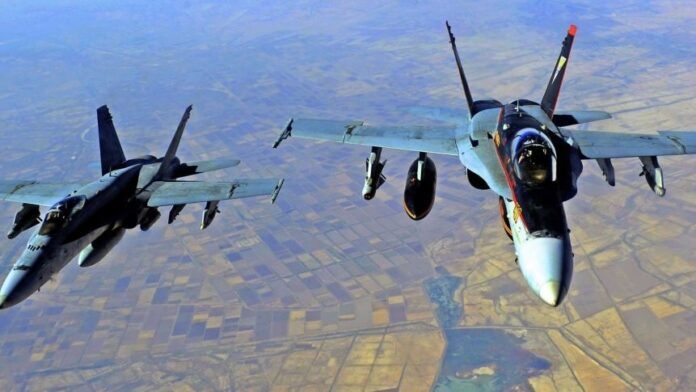
Iran Condemns US Airstrikes on Syria

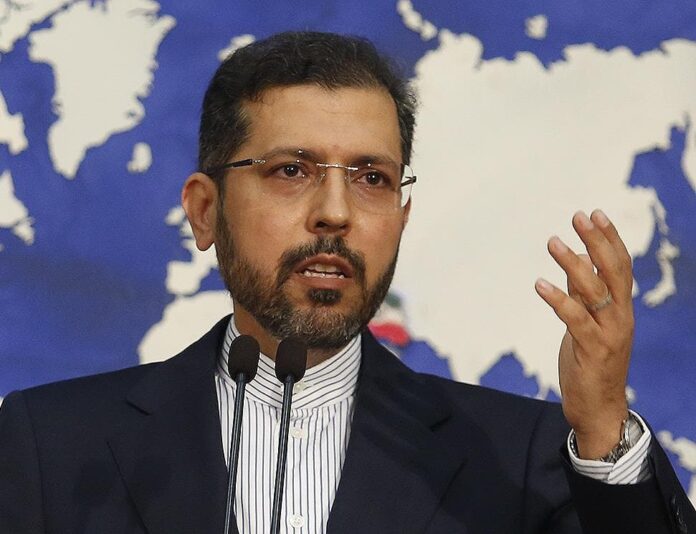
“The attacks which are a continuation of the Israeli regime’s incessant acts of aggression on the Syrian soil come at a time when American forces have, in recent years, illegally entered Syria and occupied parts of the country and looted its natural resources, including oil, which is a natural right of Syria people,” Saeed Khatibzadeh said in a statement on Friday night.

“Also, illegal US bases on Syrian soil train terrorist forces and use them as tools,” he added.
The spokesman dismissed the attacks by the new US administration as blatant violation of Syria’s territorial integrity and sovereignty and a breach of international law, which would escalate military confrontations and increase instability in the region.

Iran Says Reviewing Pakistani Media Reports about Border Clashes

“The issue is being studied by relevant officials and authorities in the Islamic Republic of Iran,” Khatibzadeh said in a Friday statement.

Considering the Pakistani side’s delivery of the body of an Iranian national to the Iranian side, the issue is being studied by the two countries’ top border guard officials, the spokesman added.

He said necessary measures will be taken by border forces at the common borders and by the Foreign Ministry based on the results of their reports.

Iranian Officials Discuss International Potential of Sci-Tech Innovation

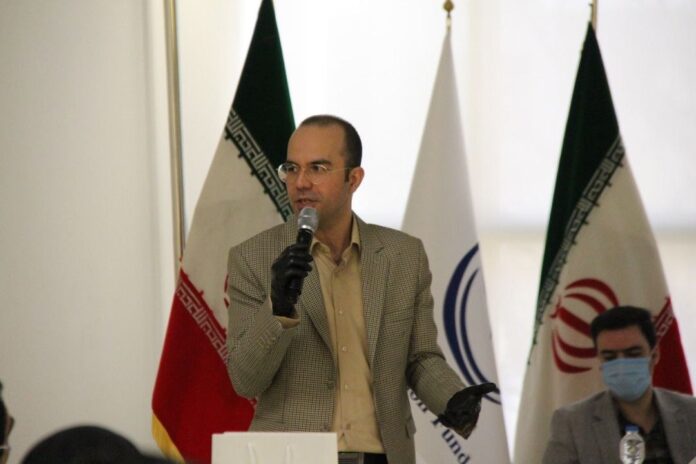
The event attended by executives and experts of the foreign ministry was aimed at tapping into the potential of each side on the international stage and establishing joint structures with peer international institutions in order to back knowledge-based companies.

Present at the event was Ali Mohammadi, the acting head of the General Department for Coordination and Monitoring of Bilateral Economic Relations, who, in an inaugural address, stressed the importance of paying attention to the economic potential of knowledge-based firms when it comes to exports as well as the need for the foreign ministry to get familiar with innovation potentialities in the country.

He added among the key responsibilities of the foreign ministry’s Economic Diplomacy Department is to give direction to the country’s trade activities.

Mohammadi said policies on foreign trade are adopted at the foreign ministry and implemented by Iranian missions overseas.

He added such a move will not be possible without getting to know knowledge-based and innovation potential.

“Holding such meetings at the INIF can offer managers and economic experts at the foreign ministry a good understanding of the innovation ecosystem, which can help complete technological and innovative structures as well as boost the country’s foreign trade,” the official explained.

He touched upon a rise in the number of innovations centres in recent years, adding the foreign ministry’s getting to know these structures are a preamble to the growth and development of foreign trade.

He also referred to multilateral agreements signed between the foreign ministry, the Science and and Technology Department of the president’s office and the Ministry of Health and Medical Education on facilitating visa requirements for technology and innovation experts.

“This will create the opportunity for the ecosystem to get the human resources it needs,” he added.
Mohammadi also expressed his gratitude to the INIF’s manager for international affairs and underscored such bilateral meetings should continue. He said such moves will further develop the language of innovation.

Also present at the event was Sohrab Assa, the INIF’s director for international affairs, who said familiarity with the concepts of the language of innovation are a precursor to international interactions.

“One of the major discourses in recent decades between different governments is the diplomacy of technology and innovation. So, it seems necessary to make further use of this type of diplomacy on the international stage and make foreign ministry experts and managers familiar with concepts associated with this kind of diplomacy,” he said.
“By promoting this language, we at the INIF aim to bring about more rapport with foreign ministry experts when it comes to evaluating technological and innovative developments on the global stage, and to boost and strengthen knowledge-based economy in the country,” Assa noted.

He touched upon one of the key concepts mentioned in the book “Why Nations Fail” by Daron Acemoglu and James A. Robinson, saying national determination to establish a rapport between different players in the country’s innovation ecosystem as well as in the nation’s diplomacy apparatus will set the stage for boosting foreign trade and national development.

The official touched upon the different rounds of policy-making in the domain of science, technology and innovation in the country and expounded on Iran’s innovation ecosystem as well as concepts associated with the innovation language.

He said among the demands of the INIF at the meeting are promptly informing players in the country’s innovation ecosystem of international events, utilization of the INIF’s potential in joint economic cooperation commissions, identification, introduction and presentation of models of cooperation and investment by the INIF with its foreign counterparts, facilitating the building of international networks with foreign sides to finance technological projects and help establish exports hubs in the country.

Also present at the meeting were several other INIF authorities, including Mostafa Baghdadi, the official in charge of ecosystem development management, Mohammad Hossein Rezvanian, the director for investment evaluation, and Mohsen Notash, the director in charge of contacting customers. They separately elaborated on their activities and reviewed potential for international cooperation.

Iran Urges All Armenian Parties to Show Restraint, Avoid Violence

In comments on Thursday, Khatibzadeh said Iran is closely monitoring the developments in the neighbouring country.

Earlier in the day, Armenian Prime Minister Nikol Pashinyan warned of an attempted military coup, after the country’s armed forces said he and his cabinet must resign.

The army “must obey the people and elected authorities,” he told thousands of supporters in the capital Yerevan. His opponents held a rival rally.
The military’s top brass was angered by the PM’s sacking of a commander.

Mr Pashinyan has faced protests after losing last year’s bloody conflict with Azerbaijan over a disputed region.

Deal with IAEA in Line with Implementation of Parliament’s Law: Iran

Chief of Staff of the president’s office Mahmoud Vaezi said Tehran’s stopping the voluntary implementation of the Additional Protocol in line with the parliamentary legislation will definitely “not be pleasant” to parties to the 2015 nuclear deal, officially known as the Joint Comprehensive Plan of Action (JCPOA), and the International Atomic Energy Agency (IAEA).

He stressed that the JCPOA should serve Iran’s interests.

“In order for the JCPOA to get back on track, signatories to the deal need to comply with their commitments under the JCPOA, and the 1,600 sanctions imposed against the Iranian government and people during the four-year tenure of [former US President Donald] Trump should be lifted,” he added.

Vaezi then touched upon the IAEA’s new claim that there are undeclared materials at some of Iran’s nuclear sites.

“These issues have been discussed with the IAEA once in the past and the case is closed on that. These documents are related to the past. Nothing new has happened since the Islamic Republic of Iran began its talks with the IAEA,” he noted.

Iran Puts into Service Major Freeway Near Tehran

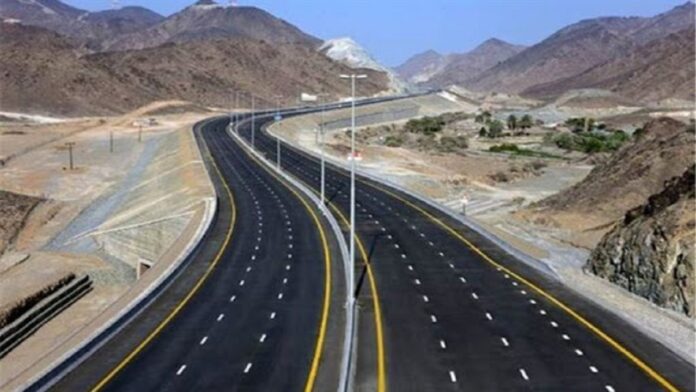
The road connects the town of Abyek in Qazvin province to Varamin in the south of Tehran after passing through the province of Alborz.

The freeway, named Ghadeer, is one of the important transportation corridors in the country and in Asia.

The project came with a price tag of Rls. 70 trillion and will create some 250 stable jobs when fully operational.

The freeway was put into service in a virtual ceremony attended by President Hassan Rouhani, who expressed his gratitude to all those contributing to the project.

He said the project is an achievement for the country at a time when boosting national economy is a top priority.

He noted Iranians put up a stiff resistance during the enemy’s economic war and withstood problems.

President Rouhani reiterated that now “everybody is confessing that the maximum pressure policy has failed.”

He underlined that the project was implemented and completed according to schedule.

The president said the more freeways and main thoroughfares are developed, the more the traffic flow will be eased, the less fuel consumption will be, the more pollution levels will drop and the less time transportation will take.

Iran’s President Congratulates Kuwait on National Day

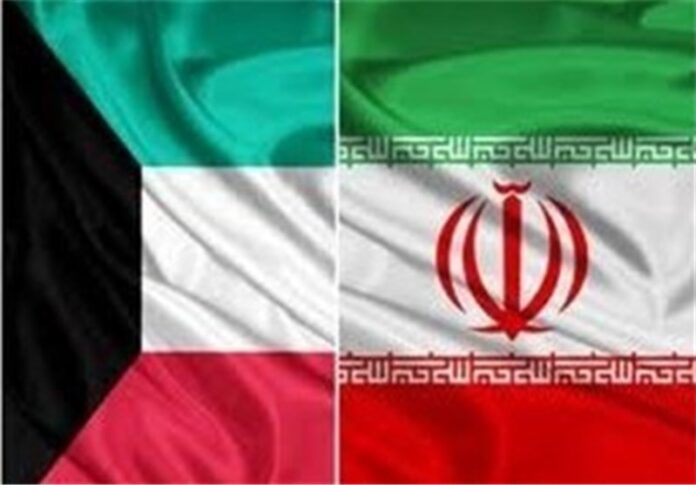
In a message on Thursday, President Hassan Rouhani expressed hope that cooperation between the two countries will further expand in light of unity and rapport and on the back of deep religious, cultural and historical commonalities between the two nations.

He also wished the Kuwaiti Emir and people health and success.

On Feb. 25, Kuwait celebrated its 60th National Day in honour of the day in 1950 when Sheikh Abdullah Al-Salem Al-Sabah became Emir of the State of Kuwait.

Kuwait was first inhabited as a small fishing village in 1613. Little did these early groups know that their modest maritime trading post was home to resources much more valuable than pearls and fish. In 1938, vast oil reserves were found in the region, a discovery which fueled the country’s evolution to become an international business hub, now home to over 4 million people.

As Kuwait first began as a fishing port, it’s no surprise that seafood is a staple of many of the nation’s widely known and celebratory dishes. One of Kuwait’s most beloved meals to recognize today’s festivities is Mutabbaq Samak, traditionally made with fried pomfret (a local fish) atop a savory bed of rice.

Along with tasty meals, Kuwaitis traditionally honour National Day by livening the streets with white, red, black, and green decorations—pan-Arab colours found on the country’s flag.

Iranian, Swedish Diplomats Discuss Yemen Crisis

During the Wednesday conversation, the two sides exchanged views on the new developments pertaining to Yemen, especially the issue of supporting the UN peace plan.

The Swedish representative expressed content with Iran’s constructive role in helping resolve the Yemen crisis politically, calling for such efforts to continue.

He also elaborated on Stockholm’s attempts in line with the peace process in Yemen and an upcoming meeting on offering assistance to Yemen, which is to be jointly hosted by Sweden and Switzerland on March 1, 2021.

Khaji, in turn, evaluated as positive the achievements of a trip to Tehran by UN Special Envoy for Yemen Martin Griffiths.

He expressed hope a change of approach by the Saudi-led coalition and its Western supporters vis-à-vis Yemeni people will lead to lasting peace in that country.

He also hoped the establishment of a ceasefire in Yemen and the lifting of a blockade on the country will improve people’s living conditions.