Friday, January 2, 2026
Home Blog Page 2554

Iran Congratulates Bulgaria on National Day

iran-bulgaria

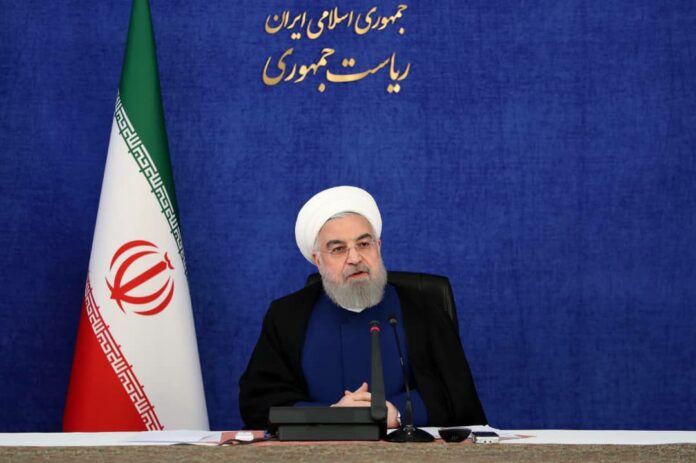
In his message to Rumen Radev, President Rouhani offered his “sincerest congratulations” to the Bulgarian people.
“Given the long-standing and historical relations between the two countries, I hope that Tehran-Sofia ties would deepen further in all political, economic and cultural spheres in order to establish and maintain international peace and stability,” he noted.
He also wished health and success for his counterpart, and prosperity and felicity for the people of the Republic of Bulgaria.

The Liberation Day, officially known as the Day of Liberation of Bulgaria from the Ottoman Dominion in Bulgaria is annually celebrated on 3 March. It commemorates the Liberation of Bulgaria during the events of the Russo-Turkish War (1877–1878) that led to the re-establishment of a Bulgarian statehood. The Treaty of San Stefano signed on 3 March 1878 envisaged the Ottoman Empire to accept the refoundation of the Bulgarian state that was conquered in 14th century during the Bulgarian–Ottoman wars.

Iran Offers Condolences over Demise of Lebanese Scholar

What follows is the full text of his message released on Wednesday:

The news of the passing of divine scholar and senior religious figure of Lebanon and the Muslim world and the Chairman of the Board of Trustees of the Association of Muslim Scholars Sheikh Ahmed al-Zain has caused grief and sorrow.

This prominent Muslim scholar, who was one of the fans and followers of the great founder of the Islamic Revolution and one of the lovers of the Islamic Republic of Iran, always supported unity and solidarity among the denominations and nations in the Muslims world, and with his wise and firm stances against the usurpers of the holy Quds, believed the only way to liberation from the wicked phenomenon of Zionism and extremism is Islamic unity and resistance.

I express condolences to the Muslim world, the resistant Lebanese nation, his respected family, students and those attached to him, on the loss of this sagacious scholar, and ask God Almighty to bestow patience upon the dear people of Lebanon and his respected family, and bless the soul of that late scholar.

Mohammad Javad Zarif

Iran, Syria Reach Deal to Enhance Mutual Sci-Tech Collaboration

Sorena Sattari said good agreements were reached with the Syrian side during his meetings with Syrian officials.

“I’m very pleased to have met dear folks in Syria today, brothers and sisters who are serving at the Syrian Ministry of Higher Education, as well as chancellors of prestigious Syrian universities,” he added.

“We have reached good agreements with Syria to expand our scientific-technological cooperation,” said the vice president.

“We are going to reach cooperation agreements on advanced sciences such as nanotechnology, biotechnology, stem cells and ICT as well as fitting Syrian universities with Iranian equipment,” Sattari explained.

“We will also discuss mutual cooperation on the enhancement of scientific-technological relations and running joint ventures,” he said.


UN Chief Calls Zarif to Discuss Efforts to Establish Peace in Yemen

During the phone call, Guterres elaborated on the UN’s latest measures to end the Yemen war, establish fair peace, and initiate political talks in the Arab country.

He also called on the Islamic Republic of Iran to continue its strenuous efforts to help establish peace in Yemen.

Foreign Minister Zarif, in turn, expressed Tehran’s support for the UN’s efforts to establish fair peace in Yemen, and underlined the necessity of ending the war, lifting the blockade, and delivering humanitarian aid to the Yemeni people.

The Iranian foreign minister also expressed hope that peace and stability will be restored in the Arab country through intra-Yemeni talks and formation of an inclusive government.

Removal of US Bans Only Way to Save JCPOA, Rouhani Tells Macron

During the phone call, Rouhani said the Joint Comprehensive Plan of Action (JCPOA) cannot be renegotiated in any way, and the only way to maintain and revive it is the removal of US sanctions.

He also warned that missing the opportunity to save the 2015 nuclear deal could make the situation more difficult.

“The stepwise reduction of commitments on the part of Iran was due to the withdrawal of the United States from the deal and the inability of the three European countries to fulfil their obligations,” Rouhani said, stressing that Iran’s measures can be reversed immediately after the other parties’ fulfilment of their obligations.

Rouhani said Iran’s move to stop the voluntary implementation of the Additional Protocol was made within the framework of the law passed by the parliament.

However, he said, Iran’s cooperation with the International Atomic Energy Agency (IAEA) will continue and the country has not withdrawn from the JCPOA in any way.

“Any unconstructive action or position in the Board of Governors could lead to new challenges and complicate the current situation,” he warned.

Rouhani referred to France as an important actor and said, “Tehran-Paris relations can be developed based on a sustainable vision and with long-term goals for bilateral, regional and global cooperation.”

Referring to the coronavirus pandemic in various countries around the world, including Iran and France, the President said that effective confrontation with the virus requires the cooperation of all countries in the world.

“The United States’ cruel, illegal sanctions have made it more difficult for Iran to deal with this disease and made it difficult for the Islamic Republic to access its financial resources, even for the supply of medicine and medical equipment, and the European Union, especially France, is expected not to remain silent regarding this inhumane act,” he said.

Macron, for his part, called for the preservation of the JCPOA a necessity for the international community and stressed the need for the continuation of talks in order for all parties to return to the full implementation of their commitments.

He stressed the need for the two sides to take the initial steps and said, “Europe is ready to be more active in the coming weeks to revive the JCPOA.”

Second Iran-Syria Business Matchmaking Meeting Held in Damascus

Addressing the opening ceremony on Tuesday, Sattari touched upon the developments which have taken place in Iran over the past six years.

“All of you know Iran for its huge oil and [natural] gas reserves. We have the largest hydrocarbon resources in the world. But what has happened in the past few years is the emergence of expert manpower potential and [the emergence of] a new economy alongside the traditional oil-and-gas-driven economy,” he told the gathering, which brought together some 40 Iranian and Syrian technological bodies.

“Today, more than 40 knowledge-based companies are present in this conference, which is only a small part of the events that have happened in the domain of technology in Iran,” he explained.

“Today, Iran has the largest startups in the region in the domains of communications and information technology, nanotechnology, biotechnology, aerospace, stem cells and other modern technologies,” Sattari added.

Future of Iran’s Economy Hinges on Youth’s Potential

Sattari, who is also the head of the Iranian Elites’ Foundation, said the new generation of knowledge-based, technological and innovative companies in Iran has been developed by young and educated manpower.

“These young people and modern companies amount to the future of Iran’s economy. They serve as a bulwark against international sanctions and threats. This new generation of companies is learning how to export their products to international markets,” he said.

“Sales of products by Iranian knowledge-based firms have reached more than $12 billion.
This economy has caught up with the existing, traditional markets in Iran,” said Sattari.

“The oil, gas and petrochemical economies have seen considerable growth. I hope the meetings today will establish a proper link between the two Iranian and Syrian sides, so that technological and knowledge-based exchanges between the two countries will increase. Iran knows no limits for trade and technological exchanges with Syria,” he said.

The vice president also touched upon the opening of the Iranian Innovation and Technology Centre in Syria.

“We have established similar centres in China and Kenya, too, and tomorrow the third such centre will be inaugurated in Syria. We hope this office will help develop trade and technological exchanges between the two countries in the knowledge-based domain,” Sattari said.

Governments Duty-Bound to Link Technology Experts

Sattari added governments have a responsibility to establish a connection between university students, professors, technological companies, businessmen and industrialists, so that they can find each other in different countries and have technological and scientific exchanges with one another.

“The Science and Technology Department of the [Iranian] president’s office also seeks to develop technology diplomacy,” he said.

Sattari said diplomacy technology is, in fact, a new form of diplomacy.
“We introduced this concept because of our technological potentialities in the world, and we hope this gathering will result in good events between Iranian and Syrian technology experts. I invite all of you to come to Iran and visit Iranian knowledge-based firms and rich history,” said the vice president.

The second meeting of Iranian knowledge-based companies and Syrian technological institutions was held aimed at creating an atmosphere to present Iranian products. On the first day of their stay in Syria, representatives from Iranian knowledge-based and innovative companies took part in face-to-face meetings with Syrian technological firms in order to get familiar with the business climate in Syria. These meetings were held in cooperation with the Science and Technology Department of the Iranian president’s office and the Iranian Innovation and Development Fund.

In the meetings, Iranian and Syrian companies introduced to each other their achievements and capabilities in order to secure a market for t their exports.

The first face-to-face meeting of 40 Iranian knowledge-based, technological and innovative companies was held in July 2020 at the same time that the Syrian Reconstruction Exhibition was underway. Fifteen companies were present at the national pavilion of knowledge-based companies at the exhibit.

Over 1.4 Million Iranians Recover from COVID-19: Health Ministry

Some 157,000 Recover from COVID-19 in Iran

In a press briefing on Tuesday, Sima-Sadat Lari said the virus has killed 86 patients since Monday noon, increasing the overall death toll to 60,267.

She said 1,648,174 patients have contracted the novel coronavirus so far, including 8,495 new cases identified in the past 24 hours.

Lari said 3,738 patients are also in critical conditions caused by more severe infection.
The spokeswoman noted that 10,972,109 COVID-19 tests have been taken across the country so far.

She said currently 11 cities are in the “red” zone, 32 cities are in the “orange” zone, 251 are in the “yellow” zone, and 154 are in the “blue” zone in terms of coronavirus outbreak.

According to Lari, the “red” cities are all in Khuzestan province in southwestern Iran, and include Abadan, Ahvaz, Mahshahr, Khorramshahr, Dezful, Dasht-e Azadegan, Ramhormoz, Shadgan, Shushtar, Karoun, and Hoveyzeh.

Iran, Syria Discuss Closer Sci-Tech Cooperation in Damascus

In the Tuesday meeting, the two sides stressed the need to forge closer scientific and technological cooperation between Tehran and Damascus.

Sattari touched upon developments in the domain of Iran’s technology and innovation ecosystem, adding that innovations presented by millions of students currently studying at Iranian universities should be utilized.

“Many players have a part in this ecosystem (the technology and innovation ecosystem), including innovative and knowledge-based companies, sci-tech parks, innovation centres, accelerators and risk-prone funds,” he added.

“In this ecosystem, ideas and innovations are turned into products,” he explained, adding that these are technological products which meet people’s needs.

“This ecosystem took shape 7 years ago and has grown stronger over these years, so much so that there are currently hundreds of innovation centres, more than 50 sci-tech parks, around 10,000 start-ups and over 50,000 knowledge-based companies,” Sattari noted.

He said the biggest start-ups in the region in the domains of nanotechnology, biotechnology, information technology and aerospace belong to Iran.

The Iranian vice-president noted that it is important for these firms to sell their products as the revenues will significantly contribute to the growth of economies.

“Sales by these companies have reached $12 billion, so far,” he said.
Sattari further highlighted that Iran has made considerable progress in the nanotechnology sector as well.

The Syrian minister, in turn, touched upon the great potential for cooperation between the two countries, saying Iran and Syria should work together closely in scientific and technological areas.

Iran Says Waiting for Biden Administration’s Action

Ali Rabiei said Iran will immediately begin to deliver on its commitments once the US does so.

“Iran’s stopping the voluntary implementation of the Additional Protocol based on Parliament’s legislation was a balancing move in accordance with Clause 36 of the JCPOA, which authorizes a party to the agreement to stop fulfilling their commitments, in whole or in part, if the other signatories fail to keep their side of the bargain. We acted within the same framework,” Rabiei said in a weekly press briefing on Tuesday.

“We remain committed to the JCPOA, and if the other signatories begin to make good on their obligations, we will immediately deliver on our commitments, including the full implementation of the Additional Protocol,” said Rabiei.

The spokesman then touched upon a recent deal between Iran and the International Atomic Energy Agency (IAEA).

“The recent agreement between Iran and the IAEA was a goodwill gesture by Iran,” he said.

“By this agreement, we once again showed the international community Iran’s determination to have peaceful nuclear activities. Of course, we expect this goodwill gesture to be met with another goodwill gesture by members of the IAEA’s Board of Governors,” Rabiei added.

“From our perspective, with the agreement reached between Iran and the IAEA, there should be no concerns about Iran’s stopping the voluntary implementation of the Additional Protocol,” the spokesman explained.

“Still, if the United States has any cause for concern, it should return to is commitments under the JCPOA to set the stage for Iran’s reciprocal move and allay this false concern. It is up to them to alleviate this concern,” he said.

“We are not in a hurry to announce our position and take remedial steps, but we will reciprocate any positive or negative move with proportionate action in due time with the appropriate method,” he noted.

“There is no use repeating the history of the past several years. The ‘maximum pressure’ policy failed. Issuing statements and pressing ahead with pressuring Iran is not an appropriate move to contribute to global peace and ensure global security. We recommended the path of diplomacy,” Rabiei added.

He also said that if any resolutions are adopted against Iran, the country will reconsider its recent deal with the IAEA,”

“This is a warning also given by our IAEA representative,” he said.

Iran Likely to Approve FATF Soon: Official

FATF’s Blacklisting of Iran; Threat or Opportunity?

Mohammad-Reza Bahonar, a conservative member of the council, said the key point with regards to the FATF is to see where national interests are or are not compatible with global interests.

The official stressed that Iran is against terrorism, and added the country will announce at international circles how it will join the Palermo protocols and Countering the Financing of Terrorism (CFT) mechanism.

“However, this should not be a lever to neutralize Iran’s fight against sanctions. This is a technical and precise job which takes some time to do,” he said.

“In order to neutralize sanctions, we need to circumvent them some times and ignore the laws of hostile countries,” he said.