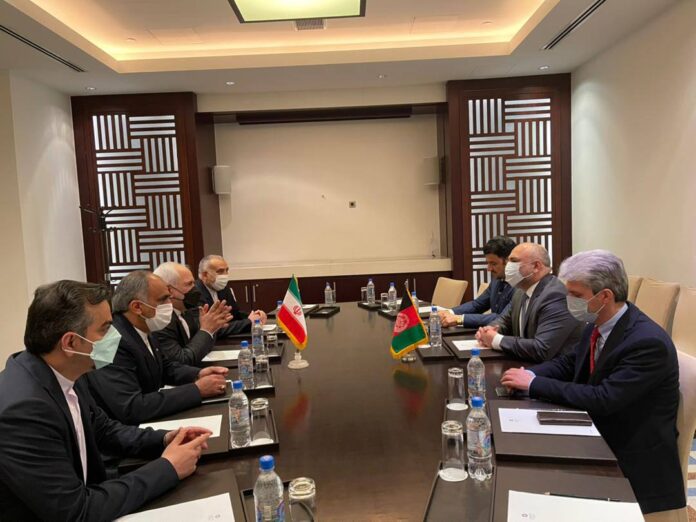
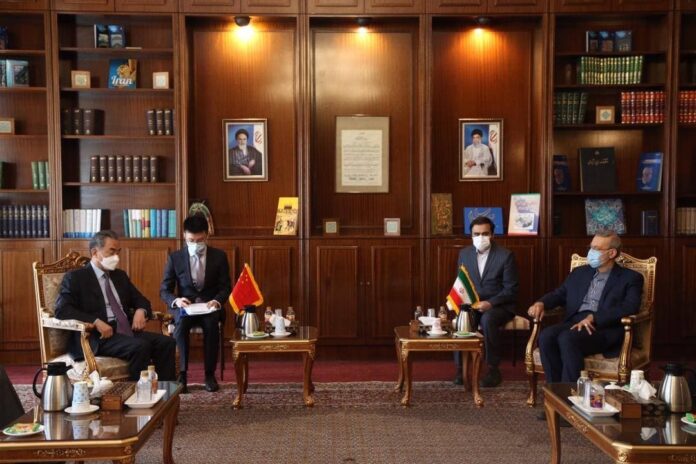
In the Monday meeting, the two sides conferred on the latest political situation in Afghanistan and ways for active participation in Afghanistan peace process.
The Indian top diplomat praised Iran’s constructive and effective role in Afghanistan political developments, and underlined the necessity for cooperation among regional countries, especially India and Iran, to consolidate peace and stability in Afghanistan.
The two sides also reviewed the latest status of economic-transit collaborations and India’s preparedness for expansion of trade with Iran.
During the Monday meeting, Zarif reviewed the latest status of Tehran-Kabul collaborations, and said the efforts of certain parties to negatively sway public opinion indicates the dissatisfaction of certain countries and movements with Iran-Afghanistan close relations.
The Iranian foreign minister referred to the removal of certain consular restrictions against Afghan nationals, and said the measures were meant to fight those who smuggle Afghan nationals into Iran.
He also stressed Tehran’s continued support for efforts to clarify the presence of Afghan nationals in Iran.
The Afghan top diplomat, for his part, expressed the Afghan nation and government’s gratitude for Iran’s contributions in containing the recent fires in Afghan customs points.
He described Iran as the closest friend of Afghanistan, and called for continuation and development of Iran’s collaborations and constructive consultations in political and economic fields.
He also expressed Kabul’s preparedness for the establishment of Iran-Afghanistan joint commission in coming weeks.
The Afghan foreign minister also elaborated on the latest political and security developments of Afghanistan, and the two sides exchanged views on the Afghan peace process.
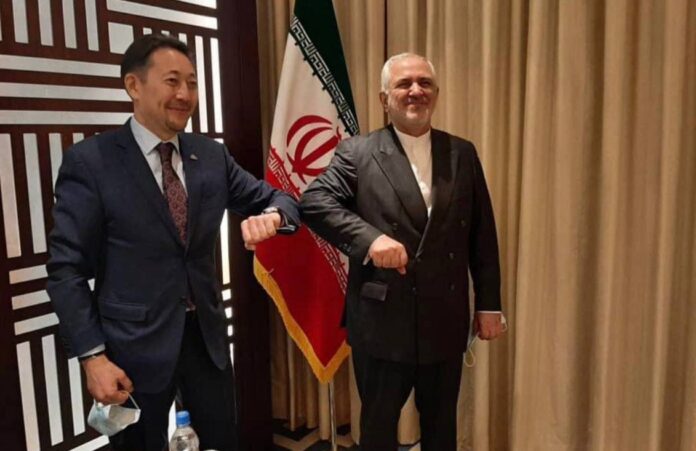
Zarif made the remarks in a meeting with Kairat Sarybay, the executive director of the secretariat of the Conference on Interaction and Confidence Building Measure in Asia (CICA), in the Tajik capital of Dushanbe.
In the Monday meeting, Zarif highlighted the significance of Asia and regional countries in the current equations of the international relations.
He also expressed Iran’s support for the reinforcement of CICA and the cooperation of member states, praising Kazakhstan’s role in Iran nuclear talks as well as the Syria peace process negotiations in the format of Astana Process as the only process effective in restoring peace in Syria.
In turn, the Kazakh diplomat praised Iran’s cooperation and participation in CICA’s regional activities, and elaborated on CICA’s upcoming plans including organizing a ministerial meeting and a leaders’ summit of the member states.
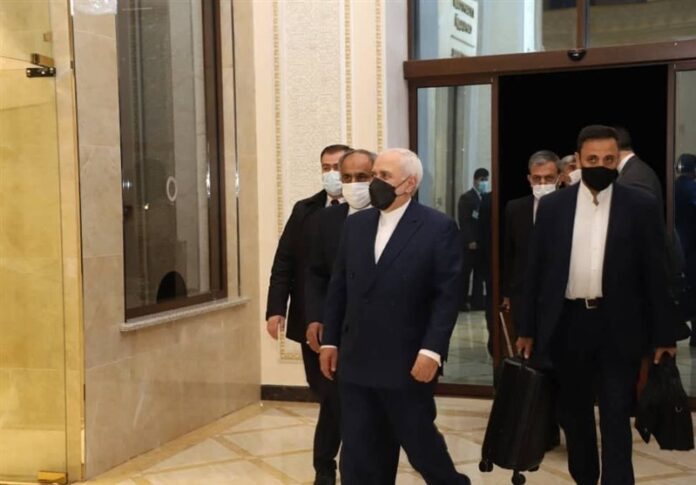
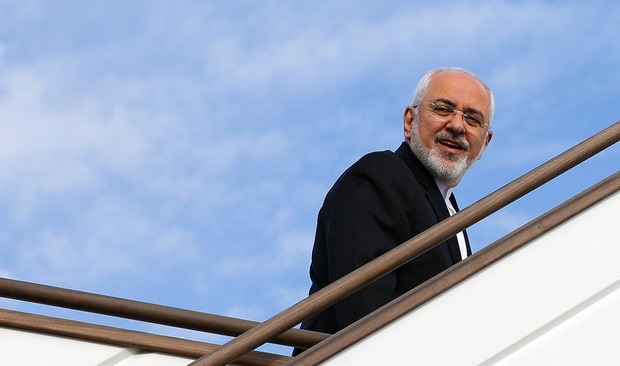
Mohammad Javad Zarif made the comment upon arrival in the Tajik capital of Dushanbe where he is to participate in a ministerial meeting of the Heart of Asia – Istanbul Process initiative and also hold talks with senior Tajik authorities.
“I’m very pleased to have found an opportunity to travel to Tajikistan, which is a friendly and neighbouring country where people speak the same language and have the same religion as Iranians, in order to attend the Heart of Asia conference, have a bilateral trip and also sit down for talks with officials from Tajikistan and other countries, so that we can work together on Afghanistan, which is also a neighbouring country where people have the same religion and language as we do, so that we can help our brothers and sisters in Afghanistan establish lasting peace and end fighting in their country,” said Zarif.
The top diplomat said he was scheduled to meet ranking Tajik officials.
“Iran and Tajikistan enjoy age-old relations. I hope this trip will play a key role in boosting and expanding mutual cooperation on all fronts,” he added.
In addition to attending and delivering a speech at the conference and holding talks with Tajik officials, Zarif will also meet his opposite numbers from Tajikistan, Afghanistan, Pakistan, India and Azerbaijan.
According to Foreign Ministry Spokesman Saeed Khatibzadeh, the conference will be attended by Tajik President Emomali Rahmon, Afghan President Mohammad Ashraf Ghani, and the foreign ministers and senior officials of the member states.
During his stay in Dushanbe, Zarif will also meet with the president of Tajikistan and a number of his counterparts from other member states including Pakistan, India, and Azerbaijan Republic, the spokesman added.
“Common civilizational, historical, and cultural heritage has created an inseparable bond between the two nations of Iran and Tajikistan who share the same faith and language,” Khatibzadeh said in a tweet on Sunday.
Heart of Asia conference is part of the ‘Istanbul Process’, which provides a platform to discuss an agenda of regional cooperation with Afghanistan at its centre.
“Heart of Asia” countries engage in result-oriented cooperation for a peaceful and stable Afghanistan and, by extension, a secure and prosperous region as a whole.
Fourteen member countries are supported by 16 other countries and 12 regional and international organizations. The member countries are Afghanistan, Azerbaijan, China, India, Iran, Kazakhstan, the Kyrgyz Republic, Pakistan, Russia, Saudi Arabia, Tajikistan, Turkey, Turkmenistan and the UAE.
The United States, Japan, Egypt, the United Kingdom, France and Germany are among the supporting countries, and the UN, NATO, SAARC, SCO and OIC are among the supporting organizations.
Annually on March 20 or 21, Iranian people celebrate the beginning of the Persian New Year, known as Nowruz. Just like other people around the world, people in Iran cook their own traditional foods to mark the arrival of spring and the beginning of their new year.
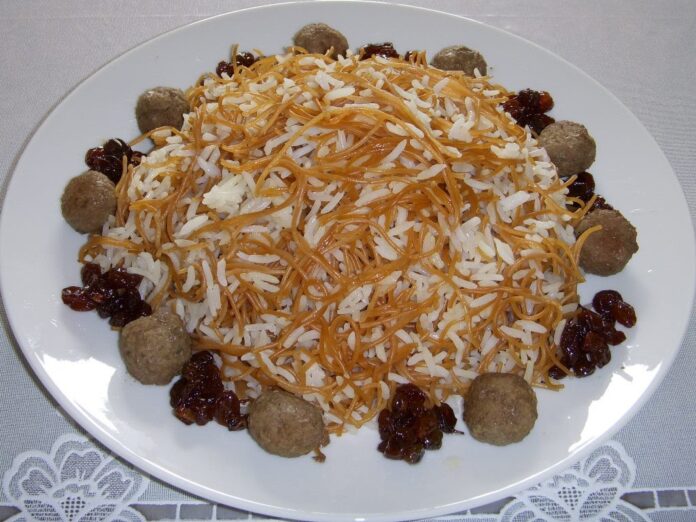
According to a report by Sarzamin-e Man magazine, among the main traditional dishes prepared and served on the eve or first day of Nowruz are Samanu (an Iranian sweet paste made entirely from germinated wheat), Sabzi Polo Ba Mahi (a mixture of rice and chopped herbs with fried fish), Kaak (a pastry and souvenir of the western Iranian province of Kermanshah), and Reshteh Polo (thin noodles with rice).
What follows is a brief look at Reshteh Polo and the recipe and instructions for cooking it:
Although, currently, many maintain that Sabzi Polo Ba Mahi is the main dish served on the eve of or the first day of Nowruz, up until a few years ago, certain Iranian ethnic groups prepared and served their own specific dish on the occasion.
Reshteh (thin noodles) Polo (rice) is one of the main Iranian dishes, traditionally, made on the eve of or the first day of Nowruz. It is still quite popular among Iranians in Nowruz and other times of the year. Still, many people in the north western Iranian provinces of East and West Azarbaijan as well as the country’s western and north eastern regions make Reshteh Polo on the initial days of the New Year. They believe that the interwoven noodles, one of the main ingredients of the food, symbolize the twisted real-life affairs and cook the food to be able to untangle the complexities of their life and get hold of their affairs. Here is the recipe and instructions for preparing the dish.
Ingredients needed to prepare the dish for up to six people:
Four cups of rice, 1.5 cups of noodles, a medium-sized onion, one cup of raisins, one cup of ground meat, salt, pepper, saffron and oil, as much as required, as well as some dates (optional)
Instructions
Soak the rice in water a few hours prior to the start of the cooking process. Then, drain the rice and pour it in a stock pot. Put the stock pot on the gas stove, turn on the flame and add some oil and salt to the rice. After the mixture started boiling, untangle the noodles and pour them into the boiling mixture. After a few minutes, using a colander, drain the mixture.
Pour some oil into the stock pot and, then, cover the bottom with a sheet of bread or slices of potato. Shut the lid of the stock pot. To help the ingredients cook thoroughly, enfold the lid in a piece of cloth before sealing the stock pot with it. In the meantime, chop the onion and fry it. Then add the ground meat to it. Fry the mixture of the ground meat and onion for as long as the mixture’s water is evaporated. Now add some salt, pepper and turmeric to the meet.
Add the raisins, earlier soaked in water, to the meat and, then, pour the saffron, you have previously infused, into the mixture. After the water of the saffron was evaporated, turn off the flame. Now, you can pour Reshteh Polo into a dish and ornament it with the mixture of ground meat, raisins, dates and saffron. If you want your dish to keep its traditional flavour, you can add the raisins and dates to the rice [instead of the ground meat mixture] and cook them together.
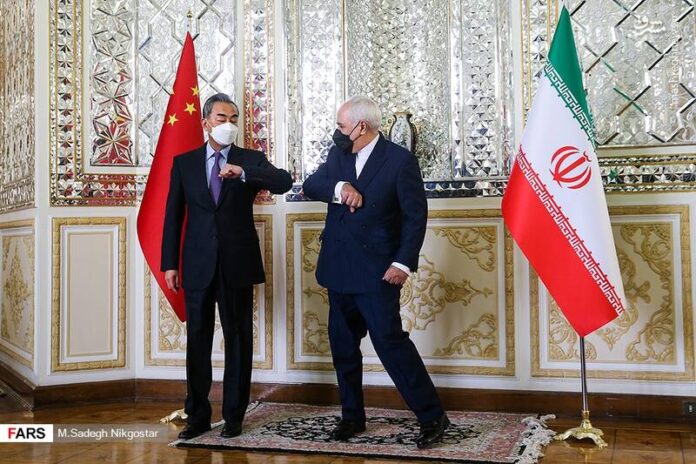
During the Saturday meeting, the two sides conferred on important issues in bilateral relations as well as regional and international affairs.
The Iranian top diplomat greeted his Chinese counterpart, highlighted the 50th anniversary of the establishment of diplomatic relations between Tehran and Beijing, and said, “Of course the history of relations between the two great civilizations of Iran and China dates back to centuries ago.”
He also noted that the signing of the roadmap of Iran-China comprehensive cooperation will further reinforce bilateral relations between the two countries.
Zarif referred to China as the friend of hard times, and said, “Accordingly, we praise the stances and measures of China at the time of cruel sanctions against Iran.”
He highlighted the need for the United States to implement all its commitments under the JCPOA, and said the removal of anti-Iran sanctions can pave the way for full implementation of the nuclear deal.
He referred to the 2022 Beijing Olympic Winter Games as an important event, and dismissed political efforts to downplay the international event.
The Chinese minister, in turn, offered congratulations on the New Persian Year and Nowruz.
He further pointed to the 50th anniversary of Iran-China diplomatic relations, and said, “Relations between the two countries have currently grown to the level of strategic partnership, and China seeks all-out promotion of its relations with the Islamic Republic of Iran.”
“The signing of the roadmap of Iran-China strategic cooperation indicates Beijing’s resolve to arrange its ties [with Iran] at the highest level possible,” he added.
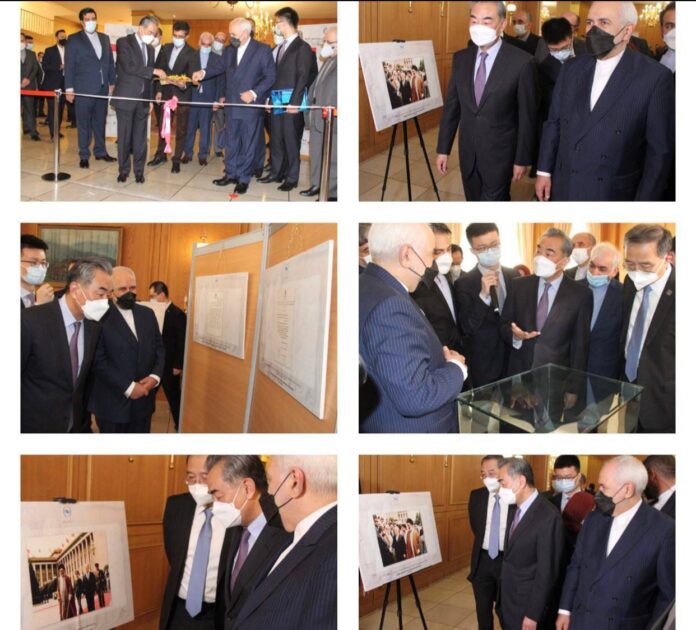
The exhibition was opened by Iranian Foreign Minister Mohammad Javad Zarif and Chinese State Councillor and Foreign Minister Wang Yi on Saturday.
Following the inauguration, the two top diplomats visited various sections of the exhibition and the documents showcased in it.
It was opened on the 50th anniversary of the establishment of diplomatic relations between the Islamic Republic of Iran and the People’s Republic of China.
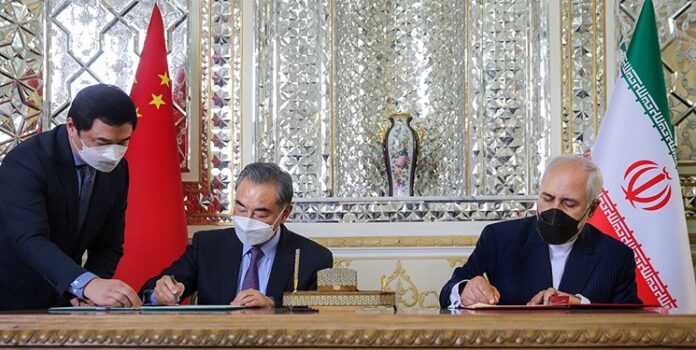
The document, which is a roadmap for 25-year strategic cooperation between the two countries, was signed in a ceremony on Saturday, March 27, 2021, attended by Iranian Foreign Minister Mohammad Javad Zarif and Chinese State Councillor and Foreign Minister Wang Yi in Tehran.
“The document focuses on the capacities and perspectives for bilateral cooperation between the two countries in various areas including economic and cultural fields, among others,” the Iranian Foreign Ministry said in a statement.
“We believe this document will further contribute to the continued development and comprehensive partnership of Iran and China, and will bring about prosperity for the two nations,” it added.
In 2016, the Islamic Republic of Iran and the People’s Republic of China issued a joint statement on comprehensive strategic cooperation between the two countries, and agreed to sign the plan for comprehensive cooperation.
Wang Yi, who arrived in Tehran on Friday, earlier held talks with Iranian President Hassan Rouhani and Ali Larijani, the Iranian Leader’s point man on China.
In a Saturday meeting in Tehran, the two sides expressed pleasure with the finalization of comprehensive cooperation plan between Tehran and Beijing.
They also discussed ways of moving forward with political, economic and strategic relations between the two countries at higher levels.
The two officials also urged closer consultations between the two countries to promote long-term and strategic cooperation.
In the meeting, Larijani touched upon Iran’s foreign policy, and said, “The Islamic Republic of Iran decides independently on its relations with other countries, and it is not like certain countries which change their positions just with a phone call.”
The top Chinese diplomat, in turn, said Beijing-Tehran ties will not be affected by the existing circumstance, and will be “permanent and strategic.”