Friday, January 9, 2026
Home Blog Page 2539

Pakistani Foreign Minister in Tehran for High-Level Talks

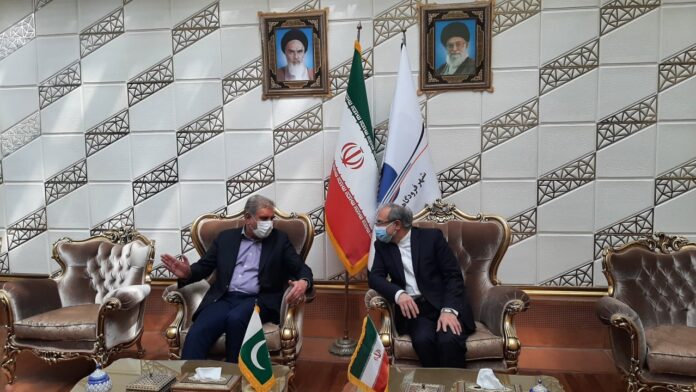
Pakistani Foreign Minister Shah Mahmood Qureshi arrives in Tehran and is welcomed at the airport by Iranian foreign ministry official Rasoul Mousavi.

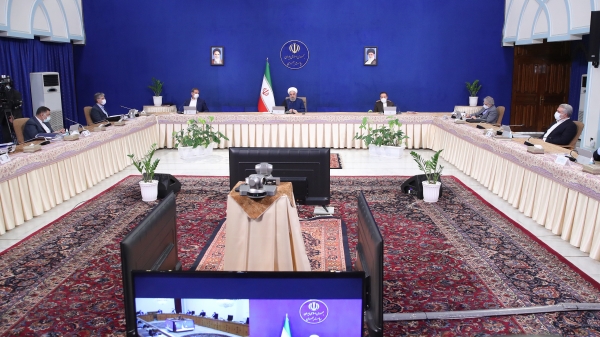
During his two-day visit, Qureshi will hold talks with Iranian Foreign Minister Mohammad Javad Zarif, President Hassan Rouhani, and Parliament Speaker Mohammad-Baqer Qalibaf.

The Pakistani top diplomat will also open the third official border crossing of Iran and Pakistan on Wednesday, April 21, 2021.

Iran Says in No Rush to Achieve Desired Outcome in Vienna Talks

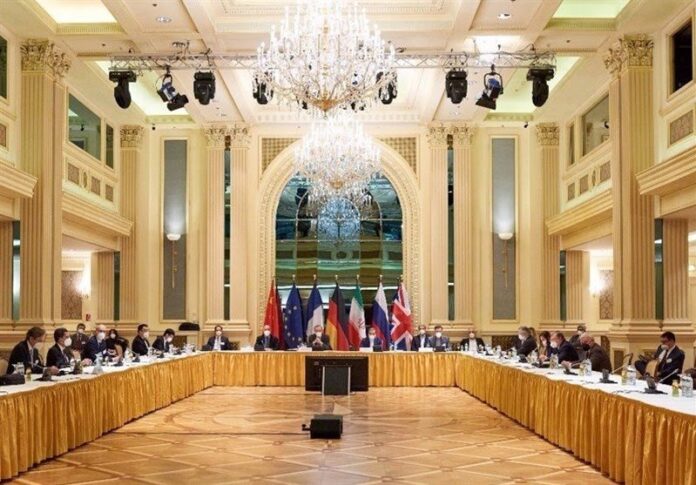
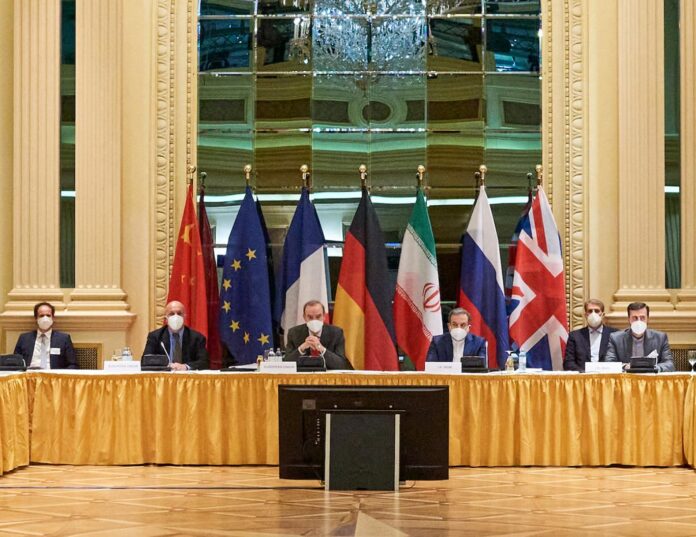
Ali Rabiei, meanwhile, praised as “constructive” the negotiations going on in the Austrian capital on the 2015 nuclear deal, officially known as the Joint Comprehensive Plan of Action (JCPOA), and the removal of sanctions.

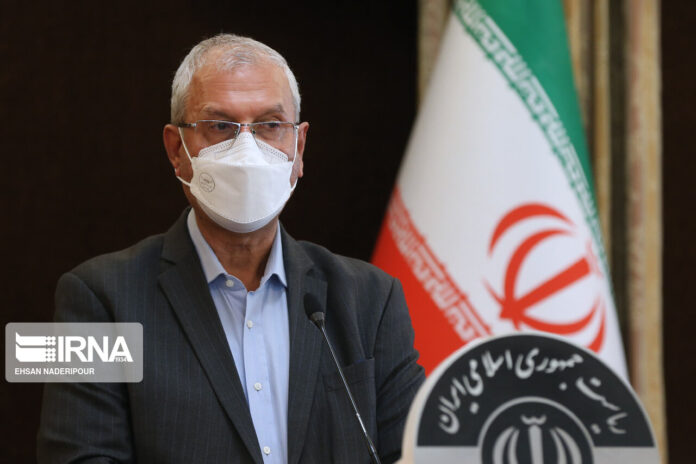
“We hope the constructive talks we are involved in will produce a favourable outcome for all parties, but at the same time we are not in a hurry, and will not give any concessions outside the framework of the JCPOA in order to secure our inalienable rights,” he said.

“Technically speaking, it is possible to remove all sanctions [imposed on Iran] in violation of the JCPOA and to revive the JCPOA in a short period of time,” said Rabiei when asked by reporters if it would be possible to lift sanctions in a short time.

He also touched upon the latest status of the talks in Vienna as well as how sanctions should be remove and the importance of all sides living up to their commitments.

He quoted head of the Iranian negotiating team Abbas Araqchi as saying that “we are not interested in reviving the JCPOA in a step-by-step manner.”

“At the moment, two working groups are reviewing and presenting a list of steps that all sides should take to fully make good on their obligations,” said the spokesman.

“Intense talks are also underway with the P4+1 group in that regard,” Rabiee added.

He also made it clear that the administration of President Hassan Rouhani believes the revival of the JCPOA is a national matter and should not be used as a tool to give certain groups an edge in the upcoming presidential election in Iran.

“The government has never used the public purse or compromised national interests to gain factional or electoral benefits, and will never do so,” he stressed.

Iran Rejects Media Reports about ‘Interim’ Nuclear Deal

Araqchi said no such thing as a “temporary agreement” or similar issues is on the agenda during talks between Iran and the P4+1 group.
“The Islamic Republic of Iran holds talks only about the last step to be taken to lift cruel sanctions against the Iranian nation, and rumours such as ‘step-by-step’ plans or a ‘temporary agreement’ are baseless,” he said.

As Leader of Islamic Revolution Ayatollah Seyyed Ali Khamenei has said, Araqchi stressed, Iran will never allow the negotiations to linger on, and at the same time will hurry to achieve the desired goal.
He said Iran also emphasises that talks should be held carefully while ensuring the country’s national interests and unchangeable positions.

He added any decision on the trend and outcome of the talks will be held in Tehran, and that the negotiating team regularly submits reports to top officials on the status of the talks.

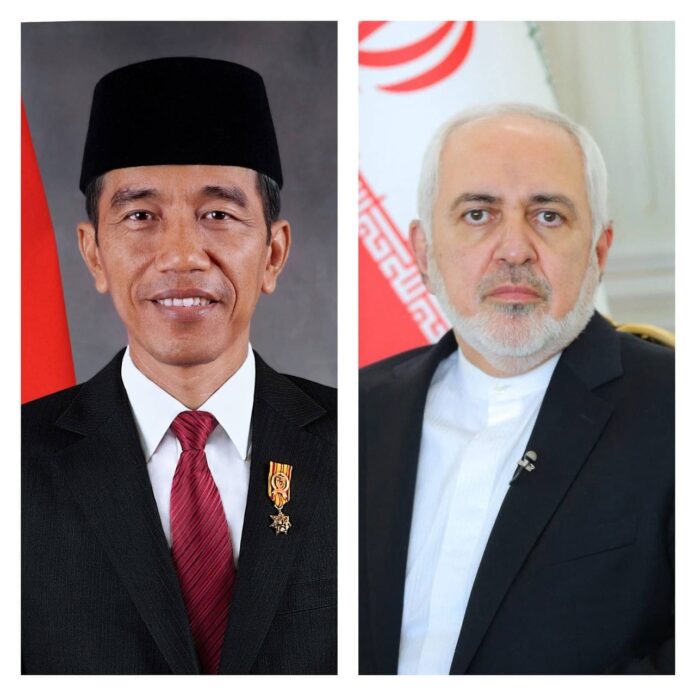
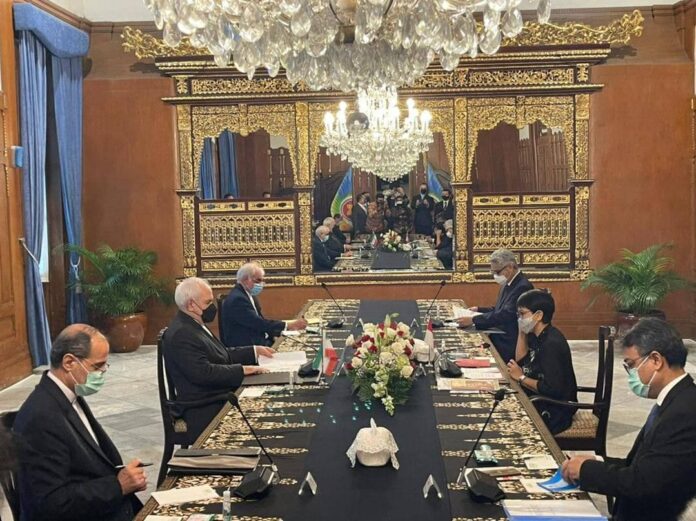
Iran’s Zarif, Indonesian President Discuss Mutual Cooperation

In the Monday meeting, Zarif expressed Tehran’s readiness to further expand brotherly ties between the two countries.

He also expressed gratitude to Indonesia for the stances it adopted at the UN Security Council in order to preserve the 2015 nuclear deal, officially known as the Joint Comprehensive Plan of Action (JCPOA), and implement UN Security Council Resolution 2231.

The top Iranian diplomat touched upon his negotiations with his Indonesian counterpart, and expressed content with a growth in Iran-Indonesia trade as well as a mutual agreement to tap into the potential of the two countries’ joint economic commission and to further boost bilateral economic relations.

The Indonesian president, in turn, stressed the importance of Tehran-Jakarta relations, saying he was pleased to see the two countries’ presidents have maintained their contacts despite the coronavirus pandemic.

He said the two countries enjoy great potential to enhance mutual economic ties, and said the two sides should move forward with their consultations to further utilise this potential and boost mutual trade.

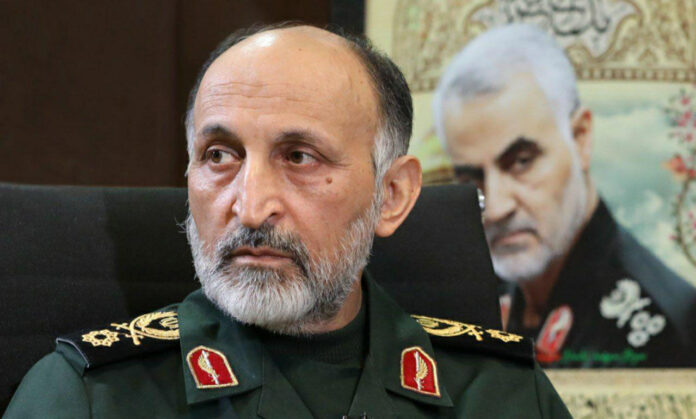
IRGC Quds Force Deputy Cmdr. Succumbs to Chemical Injuries

According to IRGC Spokesman Brigadier General Ramazan Sharif, General Hejazi died of the injuries on Sunday evening.

He was constantly present in the resistance front and carried out several missions, especially in organizing the resistance front, Sharif said.

The IRGC spokesman said Hejazi had contracted the coronavirus a few months ago, but was recovering from the disease.

“In a session that we held at Baqiyatallah Hospital, the doctors concluded that the main reason for Hejazi’s martyrdom was due to his chemical injury,” he added.

The spokesman said Hejazi was more familiar to the Zionists in the last 8 years of his life due to his presence in the Resistance Front.

“The Zionists sought for years to assassinate him,” Sharif added.

Iran Rules Out Any New Agreement Apart from JCPOA

Iran Condemns Canada’s Human Rights Resolution

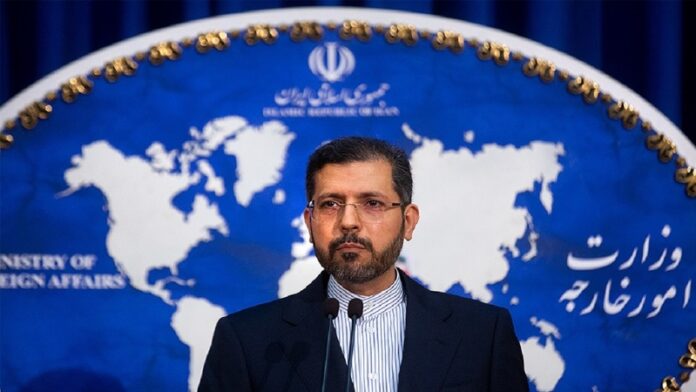
Speaking in his weekly press briefing, Khatibzadeh said the current Vienna talks are held with the aim of clarifying the path of the US return to its commitments under the 2015 nuclear deal.

Asked whether the US has shown signs of flexibility in removing the sanctions, Khatibzadeh said the answer was positive, but stressed that what counts is what is achieved at the end of the negotiations.

“The US must announce return to its commitments, fulfill them and remove its sanctions,” he said.

He also stressed that the ongoing Vienna talks will progress if the US abolishes former president Donald Trump’s failed “maximum pressure” campaign against Iran and commits to its obligations under the deal.

“Consultations will progress more easily if the US decides to move away from Trump’s failed legacy and live up to its commitments,” he added.

Khatibzadeh stressed that there are no direct or indirect talks between Tehran and Washington.

He said the Americans know very well that Iran’s remedial measures, which it began to take in response to the US withdrawal and provocations, were part of the country’s rights under the JCPOA.

These measures “will be ceased only when the US removes the sanctions and we verify that,” the spokesman said, repeating Iran’s stance that the measures are reversible provided that the US honors the deal in a verifiable manner.

He said one of the key issues is that the Biden administration does not recognize some of the sanctions imposed under Trump related to the JCPOA, but the Iranian negotiators have “stressed that those sanctions were intended to make a return to the nuclear accord more difficult.”

“At the time, Trump administration officials unashamedly said that the sanctions were imposed with that motive,” the spokesman added.

Iranian, Indonesian Foreign Ministers Discuss Bilateral Ties in Jakarta

In the meeting, Zarif referred to 70 years of friendly relations between Iran and Indonesia, and praised Jakarta’s principled stances at the UN Security Council in defence of maintaining the JCPOA and implementing the Security Council Resolution 2231.

Expressing pleasure with the growing level of trade ties between the two countries, Zarif referred to the huge capacity for bilateral business relations, and highlighted the necessity of expediting the finalisation of a preferential trade agreement between the two countries.
He also expressed the Iranian side’s preparedness for continuation of negotiations in this regard.

The Indonesian foreign minister, in turn, praised the friendly trend of growing relations between the two countries especially in the economic field, and expressed hope that the two countries would facilitate their business relations using the Iran-Indonesia Joint Business Commission as well as the agreements being negotiated.

Supporting the international law as well as exchanging views on the latest developments in the Afghanistan peace process were among other issues discussed in the meeting.

Beautiful Tiling in Iran’s Moaven-ul-Molk Tekyeh

The Tekyeh of Moaven-ul-Molk in Kermanshah is home to beautiful tiles depicting a wild gamut of images, from Quranic scenes to pre-Islamic motifs including Shahnameh kings, European villages and local notables in 19th-century costumes.

In the jargon of Iranian Shiites, a tekyeh is one of the places where mourning ceremonies, especially Muharram rituals, as well as Islamic passion plays are held.

Before tekyehs came into being, people would hold ceremonies in different neighbourhoods or would converge on main squares to mourn the Ashura event. Tekyehs were established during the Qajar era.

The Moaven-ul-Molk Tekyeh is one of the oldest ones in Iran. It is known as the world’s largest miniature-decorated tekyeh. It has always been welcomed by visitors and tourists due to its extraordinary architecture and tilework.

The tiles installed at the tekyeh fall into two categories: embossed tiles and seven-colour tiles. The tiles bear images symbolizing the Ashura event, Koranic stories and national and epic Iranian stories.

The Moaven-ul-Molk Tekyeh lies six metres lower than ground level. After entering the main gate, one has to walk down 17 steps to get to the entrance hall. The building is comprised of three parts, including the hussainiya, the zainabiya and the abbasiya.

At the building, there are numerous doors which, in the past, helped hold religious ceremonies more conveniently and allowed mourning processions to get in and out easily.

Two museums have been set up in the south of the abbasiya section: the Kermanshah Anthropology Museum and the Kermanshah Garment and Jewellery Museum.

Read More:

Here are ISNA’s photos of the historic building, dating back to Qajar era:

Marble Palace in Northern Iranian City of Ramsar

The palace was built in 1937 by Reza Shah Pahlavi and was used as a royal residence until the 1979 Islamic Revolution.

The special plasterwork at Ramsar Palace Museum is an amalgamation of Iranian an European art. The oldest artwork at the museum is “The Last Supper” tableau along with Iranian carpet tableaus, bronze trophies, vases, etc.

The palace was restored in 2019 using nanotechnology.

Here are Mehr’s photos of the beautiful palace:


Iran Reports Biggest Rise on COVID-19 Deaths Since Nov. 29

In a press briefing on Sunday, Sima-Sadat Lari reported 21,644 new cases of COVID-19 infection, raising the total number of cases to 2,237,089.

So far, Lari added, 1,785,358 patients have recovered from the disease or been discharged from the hospital.

Lari said 4,766 patients are also in critical conditions caused by more severe infection.
The spokeswoman noted that 14,386,423 COVID-19 tests have been taken across the country so far.

The spokeswoman said 389,266 people have so far received the first dose of COVID-19 vaccine, and 127,594 have received the second dose.