Sunday, December 28, 2025
Home Blog Page 2496

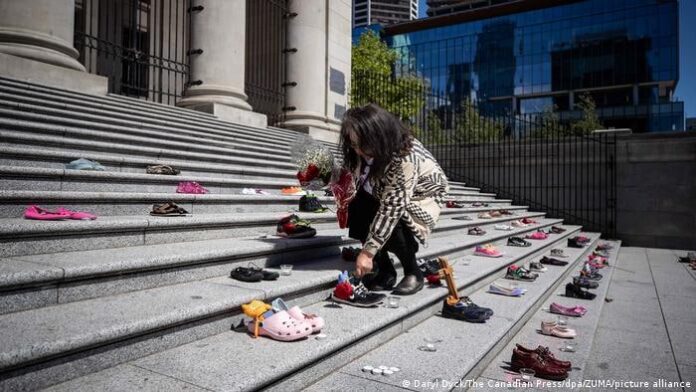
Iran Sympathises with Canada’s Indigenous Community

“It is a big human tragedy in Canada’s history, which cannot be named anything but genocide,” Khatibzadeh told reporters on Monday.

“It is a source of regret that a country which tries to hide itself behind the humanitarian mask has such disasters in its history,” he added.

Khatibzadeh sympathised with the Indigenous community of Canada, and said, “The Canadian government should always remember that whenever it seeks to portray itself as an advocate of human rights, it had better first think of its dark days in the past and try to compensate for those dark days at home.”

The remains of 215 Indigenous children were recently found on the land of a former boarding school that was created to forcibly assimilate children of First Nations origin into Canadian culture.

The discovery was confirmed at the former Kamloops Indian Residential School near the city of Kamloops, some 354 kilometres northeast of Vancouver.

Chief Rosanne Casimir of the Tk’emlups te Secwepemc First Nation on Friday described “an unthinkable loss that was spoken about but never documented by the Kamloops Indian Residential School,” and noted that some of the children were 3 years old.

The cause of the deaths is unknown.

Ground-penetrating radar devices were used during the search and researchers think a wider search may well turn up more bodies.

IHTECC Creating Competitive Atmosphere for Iranian Knowledge-Based Firms

IHTECC Creating Competitive Atmosphere for Iranian Knowledge-Based Firms

“One of the duties of this centre in recent years has been to offer support to boost the export capability of, and develop markets for knowledge-based, technological and innovative companies through offering various services,” says Mahdi Ghalenoei, the head of the Centre for International Science and Technology Interactions of the Science and Technology Department of the Presidential Office.

“Policies currently adopted to support knowledge-based firms have, so far, involved the creation of platforms to offer services (such as corridors as well as the Exports Promotion and Technology Exchange Fund), and each company has been able to use the existing bylaws depending on its needs and at its own discretion,” he adds.

“To be successful in the exports arena requires the development of approaches and upgrading of the current programs,” he says.

“The programs of IHTECC serves as an effective step toward adopting an active approach and offering specific support to boost the exports potential of top companies,” Qalenoui says.

“Competition in the domain of high-tech products in international markets is very serious and tough due to the presence of well-established and popular brands,” he underlines.

“So, we will need to pick top companies and adopt precise strategies for offering services at this centre in order to further develop the exports of high-quality and competitive products,” Ghalenoei says.

“By evaluating knowledge-based companies based on indicators in the three domains of technical issues, corporate infrastructure and the amount of domestic and foreign sales, the IHTECC ranks and chooses top knowledge-based firms offering goods and services for exports and divides them into 5-star, 4-star, 3-star and talented companies,” he explains.

Supported by the Centre for International Science and Technology Interactions, this program kicked off a year ago with the evaluation of companies, he says.

According to him, the responsibilities of the club of high-tech firms exporting commodities and services include:

1. Identifying, choosing and reinforcing top companies capable of exporting goods and services

2. choosing companies to accompany Iranian officials in foreign trips

3. establishing specialized consortiums of companies

4. creating brands, guaranteeing the quality, offering warranty and after-sales services for products

5. absorbing incentives and support in order to facilitate exports trends

“So far, more than 1,100 companies have undergone technical assessment,” he says.
“513 of them have been fully assessed. Of this number, 4 firms have been evaluated as 5-star companies, 48 firms as 4-star ones and 227 companies as 3-star ones,” Ghalenoei explains.

“Moreover, 103 companies are identified as talented firms,” he says.
It is noteworthy that the list of the companies’ rankings will be updated periodically and based on the efforts made by the companies to upgrade their status.

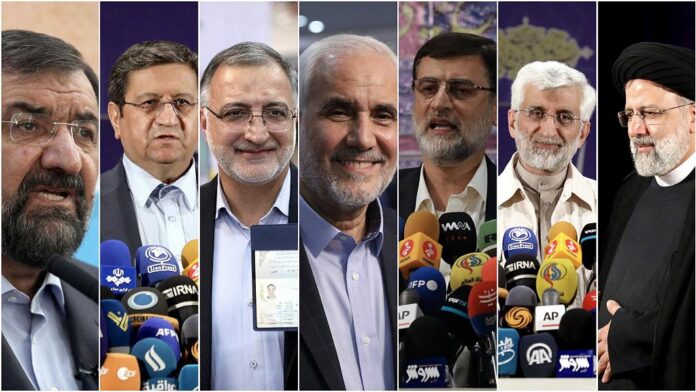
Iranian Presidential Candidates Lay Out Plans to Shore up Economy

Among hot-button issues that all candidates say are high on their agenda are plans to salvage the country’s economy and promote public welfare.

Tough economic conditions and the pressure of inflation on people have turned promises of economic prosperity into one of the candidates’ most important slogans.

The candidates’ economic pledges are as follow:

Ebrahim Raisi:

– Fighting corruption in all sectors

– placing production as top priority and planning to push the cash flow toward production

– setting up a coordinated economic team

– implementing real privatization

– cutting medical treatment costs by a half

– managing the market

– creating one million jobs per year by tapping into the 70% available economic potential in the country and also by utilizing the potentialities of the housing sector, cyberspace and the country’s seas

– reducing the inflation rate to a single-digit one

Saeed Jalili:

– reforming the distribution system and providing a proper food basket containing 13 types of staple foods such as beef and chicken for all citizens

– Solving the problem of inflation through “resistance economy” and extensive interaction with foreign countries

– reforming economic plans with the help of the youth, researchers, prominent university professors, successful managers, craftsmen and owners of different industries

– rationing all energy commodities within the framework of a program called “One”

– arranging 3-day trips for all families and 5-day trips for all young newlyweds

Mohsen Rezaei:

– setting up a fund to indemnify stock market investors for their losses

– reforming subsidies and making them smart

– raising subsidies to Rls. 4.5 million per person (When we speak of paying 4.5 million rials in subsidies, it has a scientific basis and it is practical. We save $8 billion, which will be paid to Iranian families as subsidies amounting to Rls. 4.5 million for each person. Families included in the low-income deciles of the Iranian population will receive subsidies)

– controlling prices and curbing inflation

– paying 90% of the cost of purchasing homes by banks

– creating a new job called housekeeping and developing domestic jobs (jobs done at home)

– establishing economic states by vesting economic executive powers in provinces

– developing the tourism industry in Iran

Alireza Zakani:

– removing all obstacles to production, namely removing the banks’ noose from the production’s neck

– solving problems in the industry and agriculture sectors

– tapping into the potential outside the country as a major opportunity to overhaul the economy

– developing mines and the port city of Chabahar

– paying attention to the potentialities of Iranian expatriates

Amirhossein Qazizadeh Hashemi:

– paying Rls. 5 billion in marriage loan after the establishment of the Youth’s Welfare Fund

– solving the problem of the capital market in three days

– reducing the inflation rate to a single-digit one and bringing it to below 5%

– planning to provide 4.5 million homes across the country and provide housing for the three lowest-income deciles of society and designating 30-year instalments for the indigent

– fighting smuggling and the black market

– reforming the economy, creating job stability for journalists and offering subsidies to those active in the domain of culture

Abdolnasser Hemmati:

– politics for economy

– salvaging the country’s economy and reforming its structure by a government led by an economist

– bringing about positive economic growth and increasing people’s welfare

– increasing cash subsidies

– developing financial markets, especially the capital market

– circumventing sanctions by joining the Financial Action Task Force (FATF)

– the government distancing itself from economic activities and creating a competitive economy

– paying attention to workers’ livelihood

– boosting the value of the national currency

Mohsen Mehralizadeh:

– making the economy as transparent as an aquarium

– eliminating the root causes of inflation and stopping the growing trend of inflations in 3-4 months after the formation of the cabinet

– refusing to issue money to address budget deficit

– bringing the budget’s dependence on oil to zero

– making the economy competitive by reducing the government’s role



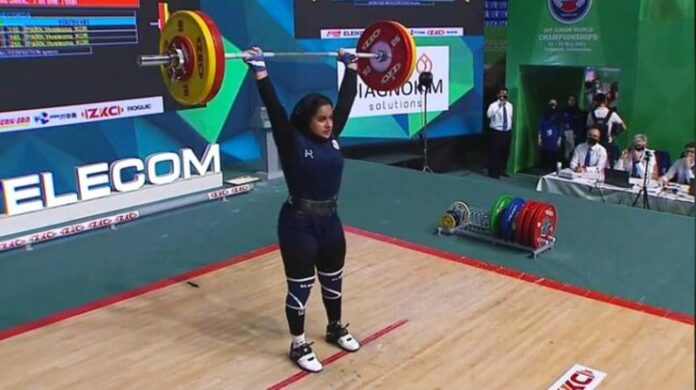
Yekta Jamali Becomes First Iranian Woman to Win World Weightlifting Medal

Yekta Jamali Becomes First Iranian Woman to Win World Weightlifting Medal

Jamali won Bronze medal at the 2021 IWF Junior World Weightlifting Championships, which is underway in Tashkent, Uzbekistan.

The 20-year-old girl lifted 92kg in snatch and 116kg in clean and jerk and won the bronze medal with a total of 208.

Uzbekistan weightlifter Tursunoy Jabborova made 111-113-244 to win the gold medal and American participant Avery Owens bagged the silver medal with 93-118-211.

The 2021 IWF Junior World Weightlifting Championship is being held in Tashkent from May 23-31.

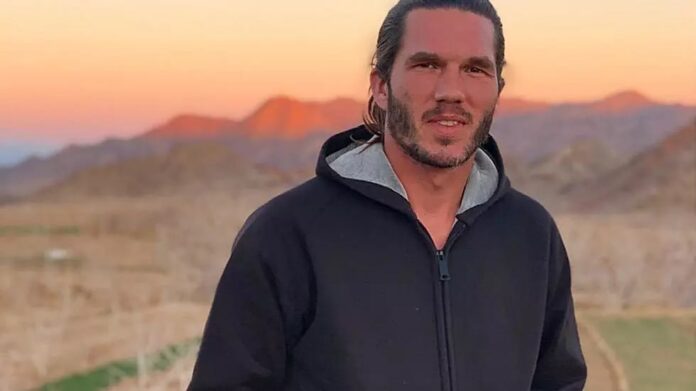
Iran Charges French National with Espionage, Propaganda against Islamic Republic

Born in 1985, Briere was arrested when flying a drone and taking photographs in a “prohibited area”.

His lawyer Saeid Dehqan says investigation had been completed and the prosecution had confirmed the charges.

“The prosecutor is preparing the indictment and sending it to the revolutionary court for the continuation of the judicial process,” Dehqan told AFP.

Currently jailed in the city of Mashhad in northeastern Iran, Briere was also facing charges of “corruption on earth”, one of the most serious offences under Iranian law, and drinking alcohol, punishable by flogging, but those charges were dismissed after the investigation.

The announcement comes days after an open letter from Briere’s sister, Blandine Briere, was published by French weekly Le Point, in which she appealed to French President Emmanuel Macron to push for her brother’s release.

She said the charges were “baseless” and that Briere had become a “negotiating tool”.

In March, a spokesman for the French foreign ministry said Briere was benefitting from consular support and that its embassy in Tehran was in “regular contact” with him.

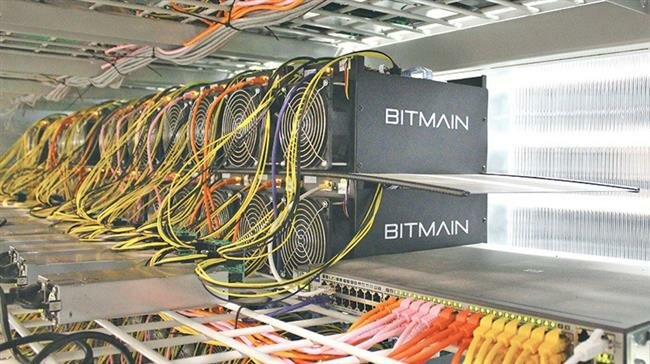
Production of Every Single Bitcoin Turns Off Lights in 30,000 Homes: Iran

Ardakanian told lawmakers in a briefing session that every single Bitcoin needs 300,000 MWh of energy to be mined. He said this means the government should cut off the electricity of 30,000 homes for 24 hours for a Bitcoin to be mined. 

He said 2,000 people have so far requested mining permits from his ministry while only 99 of them have completed the paperwork. He said the industry needs to be regulated so that there are no power outages amid the coronavirus situation and hot weather conditions. 

The minister also touched on questions raised over Iran’s electricity exports amid domestic energy needs. He said the energy ministry relies on exports to provide for its foreign currency needs to maintain the vast national power grid, as the ministry has no foreign currency budget quota. 

Ardakanian further explained that Iran’s net electricity exports amount to 500 MW, which is only a fraction of the 85,000 MW installed production capacity of the country. 

The minister also noted that the government is finalising an agreement under which Russia will finance the second and third phases of the 1,400MW Hormozgan power plant. He said foreign funding is one of the main prerequisites to catch up with the requirements of the sixth national development plan to increase national power generation by 25,000 MW. 

Ardakanian said 15,000 MW of the figure has been materialised so far. He added that 25 percent of the country’s current 85,000MW power production capacity has been installed under the current administration.

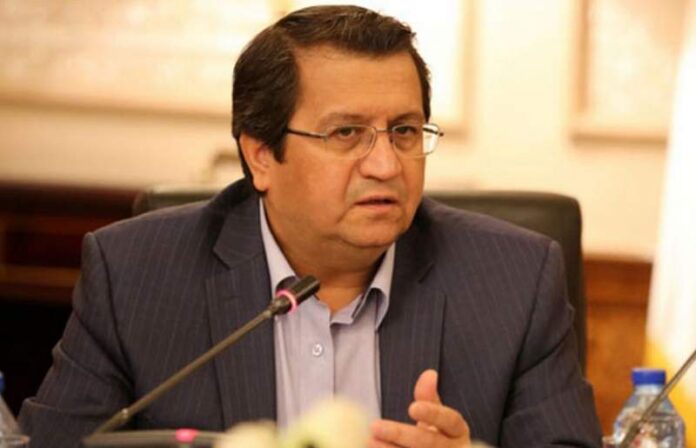
Iran’s Central Bank Governor Sacked as He Begins Presidential Campaign

Iran’s Central Bank Governor Downplays News US Sanctions

Rumours began to spread earlier today after Hemmati’s deputy, Akbar Komeijani, attended a meeting of the Rouhani administration’s economic coordination committee instead of the Central Bank Governor.

Later in the day, the news of his removal from office was confirmed by an informed source speaking to Mehr News Agency.

It was initially reported that Hamid Pourmohammadi, a deputy head of Iran’s Plan and Budget Organisation, has been named the new governor of the Central Bank, but he later denied the rumours, and said he has rejected the offer a few days ago.

Komeijani was later named as the new Governor of the Central Bank, replacing Hemmati who is one of the seven candidates approved by the Guardian Council to run for president.

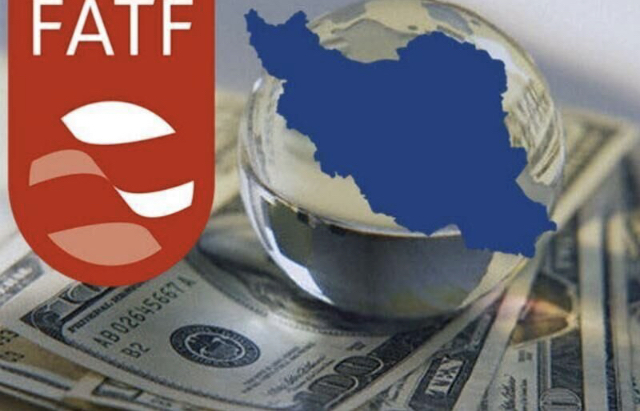
FATF Issue Could Be Resolved As Vienna Talks Move Forward: Ex-Diplomat

This development, said Jalal Sadatian, would see Tehran reap the benefits of the 2015 nuclear deal, officially known as the Joint Comprehensive Plan of Action (JCPOA), and benefit from the revival of this international agreement.

He said one of the issues at hand is Iran’s joining the FATF and its approval at the country’s Expediency Council.

“The president, the foreign minister and some members of the Expediency Council have also stressed the significance of approving the FATF and believe its ratification is a necessity. We should wait and see whether or not the FATF issue will be resolved in the country as negotiations in Vienna follow a positive trend,” said Sadatian.

He then referred to comments made by the senior Iranian negotiating team in Vienna as well as heads of other delegations at the talks.

“Based on these remarks, its seems talks in Vienna are moving forward and that agreement has been made on the general principles while some issues still remain [to be settled] and need to be discussed,” he added.

“It seems the trend will become more transparent during the fifth round of talks currently underway in Vienna,” the ex-diplomat said.

He underscored the Iranian negotiating team regularly sends to Tehran reports on its negotiations and moves forward with the talks based on the policies announced and after holding the necessary consultations.

“There is hope that this would be the last round of talks,” he said.

“Of course, in addition to this, the Iranian negotiating team has stressed that it will not sacrifice precision for speed, and that these negotiations will go on until Iran’s interests are fully secured,” the former Iranian diplomat said.

He added the technical issues being discussed in the three committees formed during the course of the negotiations are important issues.

Sadatian underscored agreements needs to be reached on the lifting of sanctions as well as Iran’s peaceful nuclear activities.

“Iran has emphasized that it should verify the United States’ lifting of sanctions and see, for example, if banks in different parts of the world would cooperate with Iran, or if Iran would be able to easily sell its oil,” he said.

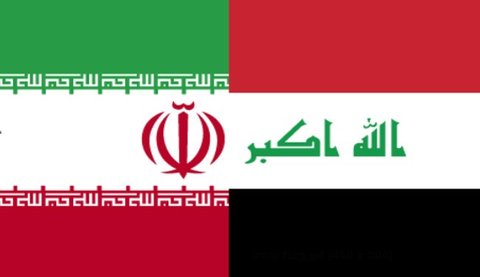
Iran to Buy 16m Doses of COVID-19 Vaccine Using Its Money Frozen in Iraq

Iraq’s overdue payments to Iran were discussed in a meeting between Iran’s Petroleum Minister Bijan Namdar Zangeneh, Iranian Energy Minister Reza Ardakanian, and a visiting Iraqi delegation led by the country’s Finance Minister Ali Abdul-Amir.

The two sides discussed how Baghdad is supposed to pay its debts to Tehran, and it was decided that talks be held in the current week to reach final agreement. 

Iran and Iraq are to hold joint meetings this week to work out ways for Iraq to pay its overdue debts to Iran.

In turn, the Iranian oil minister said the country stands ready to increase natural gas exports to Iraq, expressing hope Baghdad will pay its debts as soon as possible.

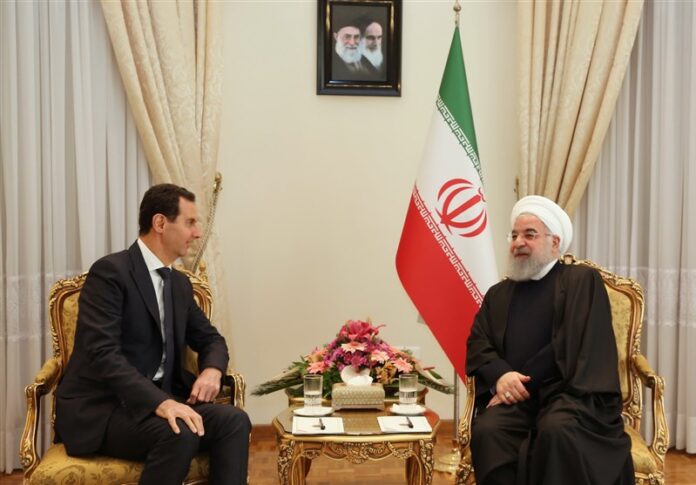
Rouhani Congratulates Assad on His Re-Election as Syrian President

In a Friday message, Rouhani described the widespread turnout of the Syrian people at the ballot box as an important step in determining the future and prosperity of Syria.

He also sincerely congratulated Assad on the successful holding of the elections, and said the Syrian voters made a “decisive choice”.

“I am confident that in the new chapter of Syria’s political life, we will see the development of cooperation between the two friendly and brotherly countries,” he added.

He finally wished health and success for Assad and dignity and felicity for the people of Syria.

Assad was re-elected in a landslide, officials said Thursday, ushering in a fourth seven-year term in the war-torn country.

Officials said 18 million were eligible to vote. But in the country ravaged by the 10-year-old conflict, areas controlled by militants or Kurdish-led troops did not hold the vote. 

At least 8 million, mostly displaced, live in those areas in northwest and northeast Syria. Over 5 million refugees — mostly living in neighbouring countries — have largely refrained from casting their ballots.

Syria’s parliament speaker, Hammoud Sabbagh, announced the final results from Wednesday’s vote. He said Assad garnered 95.1% of the votes. He said turnout stood at 78.6% of the voters, in an election that lasted for 17 hours on Wednesday with no independent monitors.