Friday, December 26, 2025
Home Blog Page 2478

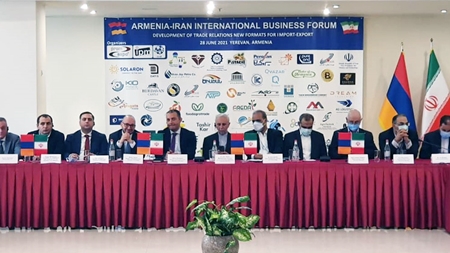
Second Iran-Armenia Business Meeting Kicks Off in Yerevan

A delegation of 50 Iranian knowledge-based companies is attending the event with the aim of developing the global market of Iranian-made products and services.

The representatives of the Iranian companies will take part in business-to-business meetings with their Armenian counterparts in order to facilitate a shared business environment between the two countries, helping the export of Iranian knowledge-based products and services to the Eurasian market.

The Armenian market has a great capacity for accepting Iranian knowledge-based and creative companies, and business exchanges with the country can play an effective role in the development of bilateral relations.

Earlier this year, a delegation of Iranian high-tech companies attended the first B2B meeting of Iran and Armenia, and the ongoing event is the second of its kind which is held with the purpose of promoting Tehran-Yerevan collaborations.

The event includes an expert meeting between Iranian companies and 120 Armenian firms operating in different high-tech fields, an expert meeting between 15 Iranian companies and 40 Armenian firms working in the ICT field, and a visit to Armenia’s technology centres and infrastructure.

Some eight million Armenian expatriates live in European countries, the US and Canada, and that provides an ample opportunity and capacity for the implementation of these countries’ technology projects. However, Armenia is not able to do all these projects by itself, and thus tries to use the capacity of other countries in this regard.

A team of Iranian IT companies, especially those working in the field of computer programming, has been formed in the country to expedite the export of Iranian knowledge-based products and services to Armenia and increase the two countries’ joint products.

The companies attending this event operate in the field of information and communication technologies, advanced materials, industrial machinery and equipment, medical equipment, etc.

In this event, 50 knowledge-based and creative companies will accompany Dr. Mahdi Eliasi, the deputy head for policy and development at the Iranian Vice Presidency for Science and Technology.

The Armenian parties participating in the meeting include Economy Minister Vahan Kerobyan, Deputy Economy Minister Narek Teryan, the Representative of the Industrial Organization of Armenia, and the Deputy Minister of High-Tech Industry.

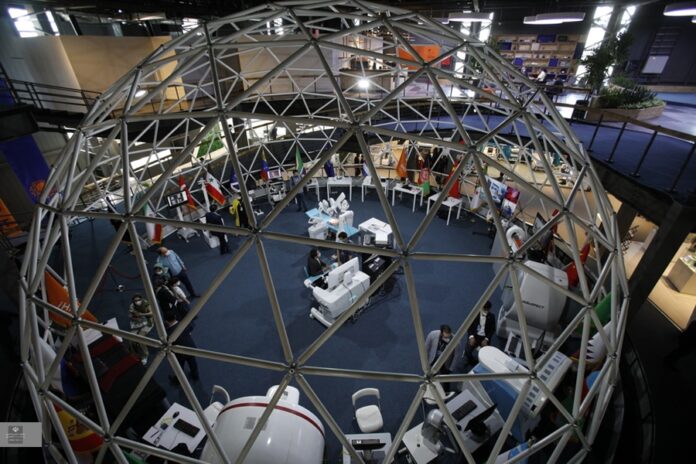
Knowledge-Based Companies Display Products for Export at Tehran Int’l Exhibition Centre

The head of the International Interactions Centre of Iran’s Vice Presidency for Science and Technology says the displayed products fall into 11 knowledge-based categories, including advanced equipment, nanotechnology, biotechnology, IT, electronics and medical equipment. 

“[Creative and innovative] companies have significantly increased production of knowledge-based products. Moreover, they have adequate capability in production of knowledge-based products. This growth has obliged us to help such products enter international markets,” said Mahdi Ghale Noei, during the launching ceremony of five national knowledge-based projects on Monday.

Ghale Noei added that the government should use available means to help double the exports of knowledge-based products.

“In the area of international markets, there are various elements including sanctions and the coronavirus disease, which force us to develop different methods for presence in international markets. Accordingly, since last year, we put Iran’s Houses of Export on the agenda. Also, 30 Iranian brokers from across the world are cooperating with us and help Iranian companies export their products, to help increase exports of the [creative and innovative] companies,” he said.

The official said the International Interactions Center has also launched the Iranian Expatriates’ system where 10,000 Iranians living abroad have registered and are active. 

Ghale Noei noted that Iran has also established Houses of Innovation and Export in Kenya, China and Syria. 

“Next month, Iran’s House of Innovation and Export in Russia will be launched. We are working to add three more such houses in the current year. These houses both display technological products of knowledge-based companies and provide joint spaces for foreign experts to work with target countries,” he said.

The official said a key feature of these houses is the participation of the private sector. He said there are inherent risks to presence in international markets and the Vice Presidency for Science and Technology is standing with companies to reduce such risks. This, he said, is through the I Hit network that helps knowledge-based companies to export their products.

Iran Unveils Key Achievements in Push toward Knowledge-Based Economy


Iran Reaffirms Support for Syria in War on Terror

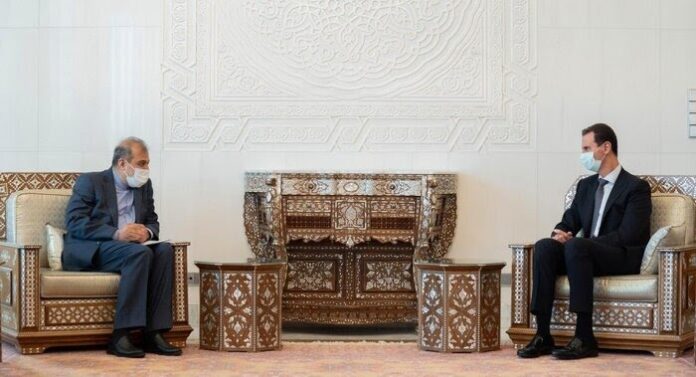
In the meeting, the two sides exchanged views on bilateral ties as well as the latest political and field developments in Syria on both domestic and international fronts, including the humanitarian situation on the ground and the holding of a future meeting of state guarantors of the Astana talks.

During the discussions, Khaji said the top priority for Iran and Syria is to enhance mutual economic relations at this juncture given the cruel sanctions slapped on both countries by the United States.

He reiterated that Tehran will continue to support the Syrian government and people in their fight against terrorism.

He also stressed the need to press ahead with efforts to settle the political crisis in Syria as well as the necessity of holding the sixth meeting of the Syrian Constitutional Committee in Geneva.

Iran Unveils Key Achievements in Push toward Knowledge-Based Economy

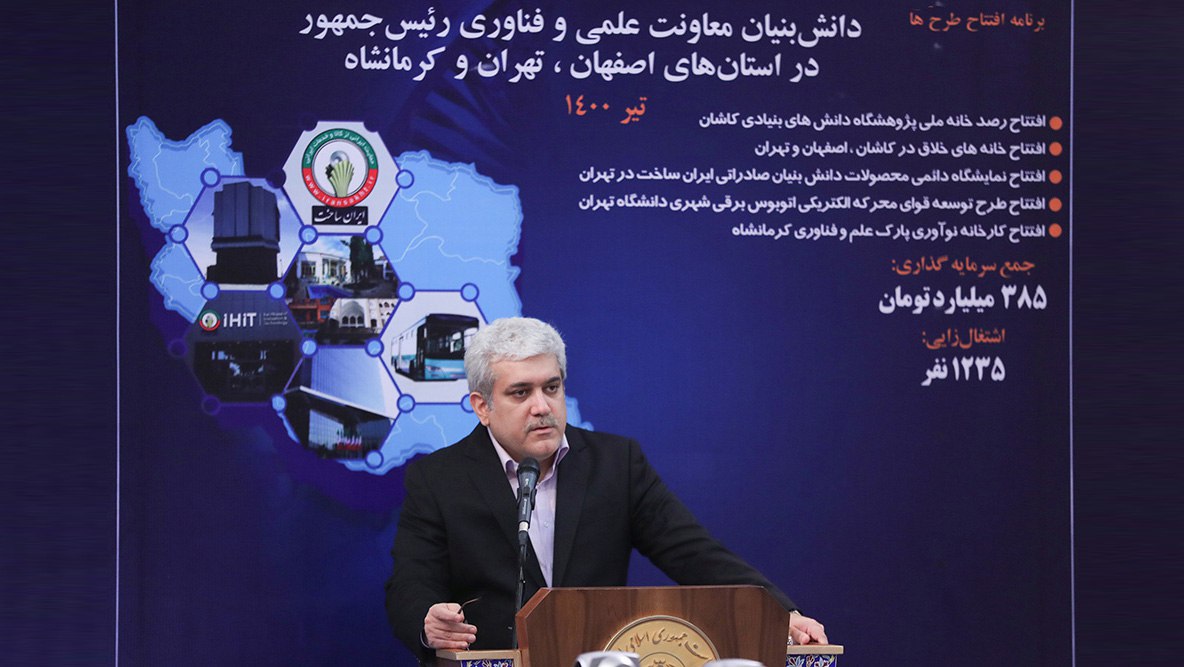
Vice President for Science and Technology Sorena Sattari made the comment during a launching ceremony for five major technological projects.

The projects include houses of creativity and innovation in the cities of Kashan and Tehran, a permanent exhibition of Made-In-Iran products for export and innovation factories of Kermanshah Science and Technology Park and the national observatory in Kashan.

Sattari said during the ceremony that the houses of creativity are being expanded to help commercialize the products of creative companies in such fields as handicrafts, animation, film, computer games and software as well as tourism, among others, especially in other countries.

Iran Unveils Key Achievements in Push toward Knowledge-Based EconomySattari added that creative and startup companies in the mentioned fields have been “ties to the knowledge-based economy”, thanks to the more than 2,700-billion-dollar global market for such products. He said the new approach to development of technology in areas with a huge capacity to generate wealth and create jobs despite requiring no advanced or complicated technology, “can lead to a major positive change in the knowledge-based economy”.

The vice president also said an interactive network of knowledge-based and creative companies is being developed to help promote the Iranian innovation biome.

“[This network has been launched] with the investment of the private sector and establishment of these houses [of creativity] in target countries for exports, with the aim of introducing achievements and capabilities of the creative and knowledge-based companies in Iran,” he said.

Sattari further explained that the Iranian House of Innovation and Technology has been launched in Tehran. He said this is an exhibition located in the venue of Tehran International Exhibition. The vice president said this serves as the head office for houses of innovation and creativity in target countries for export, and operates under the supervision of the Science and Technology Vice Presidency.

The head of the Iranian National Elites Foundation noted that there are now more than 7,000 knowledge-based and creative companies active in Iran, which are playing a major role in the national development.


Kashan Observatory

Sattari also hailed the completion of Kashan Observatory, saying it is among the eight largest observatories in the northern hemisphere of the earth.

Sattari said only the mirror used in the observatory’s Iranian-made telescope has a diameter weights 4 tons and has a positional accuracy at the micron level.

“More than 2.5 million man hours of work has been put into this technological project and more than 40,000 pieces of equipment were made inside Iran [for the telescope],” he said.

“This technological project is a source of national pride and provides the basis for Iran’s scientific and technological power. It can also lay the ground for Iran’s presence among the top countries active in this sphere in the years to come.”

Knowledge-Based Companies Display Products for Export at Tehran Int’l Exhibition Centre


Biden Admin Denying Iranian Victims of Chemical Weapons Access to Medicine: Zarif

What follows is the full text of his message released on Monday, June 28, 2021:

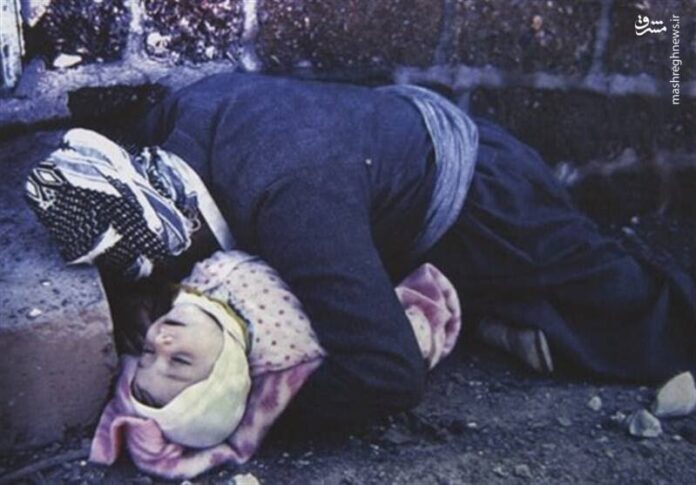
On the 34th anniversary of the harrowing tragedy of the chemical attack by Saddam Hussein’s regime on the defenceless city of Sardasht, I honour the memory of those who lost their lives in the tragedy and ask God Almighty to bestow health and a long life full of blessings upon those who became disabled during that unforgettable disaster. Sardasht symbolises the use of chemical munitions against civilians and residential areas during the contemporary era.

Our dear citizens disabled during the gas attack fell victim to the anti-human policies of some Western governments twice. The first time was when Western companies provided Saddam Hussein’s regime with chemical arms and the technology to build chemical weapons, and their governments’ representatives to the United Nations remained silent and turned a blind eye to Saddam’s chemical crimes, giving him a free hand to keep using chemical weapons against military forces and civilians alike. The second time was during the tenure of Donald Trump who, by imposing the most cruel anti-human sanctions, prevented medicines and medical equipment from being sent to Iran to allay the sufferings of dear victims disabled in the chemical attack.

Despite our attempts and the cooperation of the Organisation for the Prohibition of Chemical Weapons (OPCW), the new US administration still has not renounced the failed policy of the previous administration and maintains the illegal sanctions, denying our disabled chemical victims access to drugs and medical equipment.

The world is beholden to peace-loving Iranian people, particularly the residents of the cities of Sardasht, Oshnavieh and other Iranian cities as well as the oppressed residents of the city of Halabja, who suffered under Saddam Hussein’s chemical bombardment. And the presence of our chemical victims on European soil expedited the trend of negotiations on the prevention of chemical arms and finally led to the conclusion of the Chemical Weapons Convention in 1993.

Efforts by the government of the Islamic Republic of Iran to follow up the matter through international legal channels in order to secure the rights of the disabled chemical victims have been hampered by Western governments’ lack of political will to bring to justice the perpetrators of, and accomplices to the above-said chemical attacks, be it real persons or legal entities, and by the obstacles existing in the contemporary international criminal system.
What weapons of mass destruction and sanctions have in common is that they are directed at their targets indiscriminately. This comes as the global crisis caused by the COVID-19 pandemic has once again highlighted the necessity of enhancing international cooperation to tackle global crises and regards arbitrary measures as inefficient and doomed to failure.

There are two efficacious ways to avoid a repeat of humanitarian disasters caused by the [possible] use of weapons of mass destruction in the future. 1. Bringing to justice the perpetrators of chemical attacks along with their accomplices and accessories 2. Continuously commemorating the victims of chemical arms and honouring disabled chemical victims.

On June 28, 1987, Saddam Hussein’s regime bombarded four densely-populated areas of Sardasht with chemical bombs. Today, more than three decades on since this human tragedy, the city of Sardasht still smells of blisters and mustard-provoked coughs. Many of the residents of this city still suffer from respiratory problems and are struggling to survive.

State parties to the Chemical Weapons Convention are expected to not only follow up on the complete and rapid elimination of chemical weapons and make the convention globally binding, but also live up to their commitments under the provisions of the convention and fulfill their duties with regards to the decisions adopted at a conference of state parties to a network of international support for disabled chemical weapons victims and a fund set up to help chemical arms victims. Meanwhile, it shall be appropriate that due attention be paid to the maintenance of the humanitarian dimensions and concerns related to assistance and protection against the use of chemical weapons – as one of the key pillars of the Chemical Weapons Convention – in the future mission of the Organisation for the Prohibition of Chemical Weapons.

At the end, we commemorate this day by once again paying homage to the souls of chemical weapons martyrs, especially those who lost their lives in Sardasht, and paying respect to disabled chemical arms victims.

We ask God Almighty to offer divine reward to the disabled victims of chemical weapons for their sacrifices and putting up with the hardships associated with being disabled as well as the day-to-day sufferings brought about by the injuries caused by chemical weapons, and we wish them the best of health.

Raisi Didn’t Rule Out Possibility of Meeting with Biden: Analyst

US Protests to Engulf Entire America: Iran's Top Judge

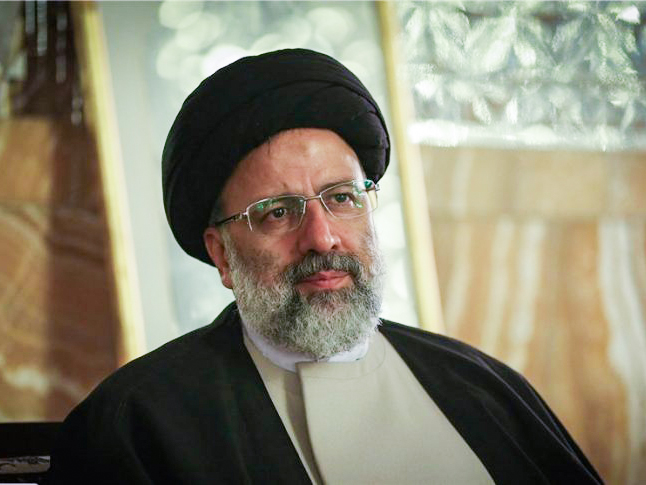
Mohammad Hossein Saffar Harandi noted the “No” uttered by Raisi was, in fact, a response to the “No” that Biden had said when asked whether or not conditions would improve with regards to Iran during the tenure of his administration.

“We believe we should have interaction [with other countries] on a large scale,” Harandi added.

“They have come down with temporary organizational paralysis, which, of course, has lasted so long,” he said with regards to the reformist camp.

Iran Announces Deal with Russia on Exploitation of Outer Space

The agreement was communicated to relevant bodies by Iranian First Vice President Es’haq Jahangiri.

In a meeting on June 23, 2021, the Iranian Cabinet authorized the Ministry of Communications and Information Technology to hold negotiations and sign up on an agreement between Tehran and Moscow on mutual cooperation to exploit outer space for peaceful ends.

The Cabinet also gave the go-ahead to go through legal procedure until the deal received final approval.

Iran Facing No Shortage of COVID-19 Vaccine in Coming Months: Health Minsiter

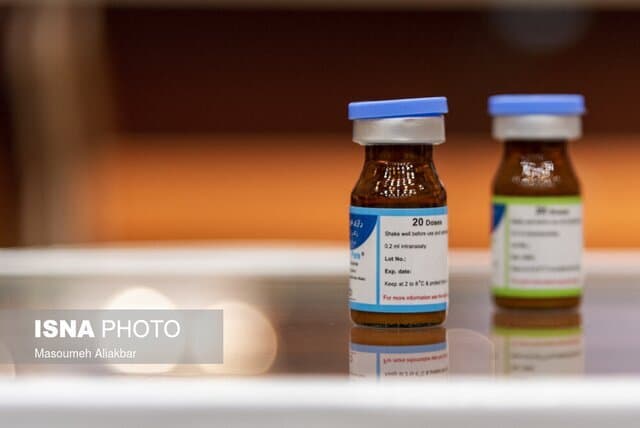
Iranian COVID-19 Vaccine ‘A Leading One’ in Clinical Trials

Saeid Namaki added Iran will also be able to “export and donate” its vaccines to other countries across the world.

He touched upon the inoculation of Leader of Iran’s Islamic Revolution Ayatollah Seyyed Ali Khamenei a few days ago, adding the production of the Iranian Sputnik COVID-19 vaccine has also got underway.

“By the admission of those who themselves are in possession of this technology, the Islamic Republic of Iran is, in terms of infrastructure, way above those who developed the technology in other countries,” he noted. 

The health minister underlined Iran kept working hard to procure medical equipment even under Washington’s sanctions.

“During the years when we were under sanctions and facing hardships, we dispatched more than 160 CT scan machines to the most remote areas in the country,” he added.

He said hundreds of oxygen generators have been installed in hospitals across the country, adding the number of molecular labs has increased from 2 to 400.

Iran’s Bushehr Nuclear Plant to Enter Circuit in Coming Days: Salehi

Iran to Produce 3k Megawatts of Nuclear Power by 2027
File photo of Bushehr nuclear power plant in southern Iran

Salehi saud “the temporary shutdown of the Bushehr nuclear power plant was due to technical issues.”

“This problem is almost resolved and the power plant will enter the circuit within the next two or three days,” he added.

Head of the Atomic Energy Organisation of Iran (AEOI) said, “The current fuel of Bushehr power plant will run out in the next two or three months, and we will load the new fuel.”

On June 20, the AEOI announced “temporary” closure of the Bushehr nuclear power plant and its disconnection from the Iranian national electricity network.

The Bushehr power plant, located 17 km southeast of the city of Bushehr and under the cooperation with Russia, began supplying electricity in September 2011.

In November 2014, Iran and Russia signed a cooperation agreement to add a second and third reactors to the plant, which are scheduled to be inaugurated in 2024 and 2026, respectively.

Salehi says Iran currently owes 500 million euros to Russia for their nuclear cooperation, and that such financial issues have kept Tehran from reaching its goal of generating ovet 8,000 megawatts of nuclear power a year.

Iran Says Negotiation Enough; Now It’s Time for Making Decisions

Abbas Araqchi

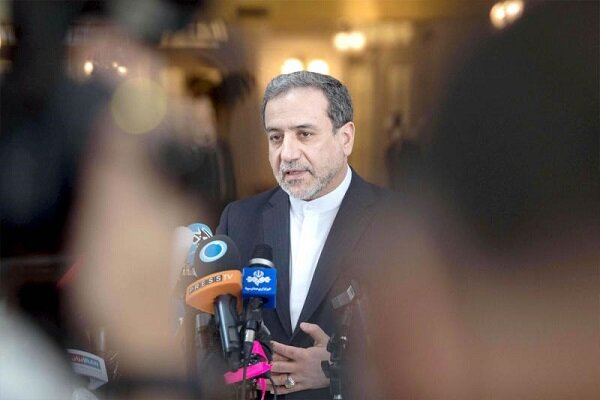
Abbas Araqchi said he discussed the latest developments surrounding the Vienna negotiations with the MPs sitting on the Parliament National Security and Foreign Policy Committee, adding he cherishes this opportunity to use the MPs’ insights.

Expressing pleasure over the meeting, he said, “There was a very good interaction today; of course, these interactions have already existed and we exchanged views with the representatives. Today, some representatives made good suggestions, some had questions that were answered. These meetings help to build national understanding and consensus.”

So far six rounds of negotiations have been held between Iran the P4+1 group for reviving the nuclear deal, officially called the JCPOA. The U.S., which quit the JCPOA during Trump’s presidency, is participating in the talks indirectly. The talks are being led by the European Union.

“We are almost reaching the final stages. There are a series of issues that have been sufficiently negotiated and it is time for the countries to decide,” Araqchi explained.

Stating that the Islamic Republic of Iran has already made “tough decisions,” he said that when the United States withdrew from the JCPOA and Iran decided to stay in the deal, it was Iran’s big and difficult decision that has led to the preservation of the nuclear deal until this date.

“Now it is the turn of the negotiation parties, and according to the negotiations we had, they must decide and reach a conclusion on the revival of the nuclear deal in order to reach an agreement,” he highlighted.

The chief nuclear negotiator underlined that it is time for all sides to make decisions. “The other parties must make their tough decisions.”