Thursday, December 25, 2025
Home Blog Page 2475

Original Dishes of Tehran: Nostalgic, Mouth-Watering, Ambrosial 

Chelo Kebab (rice with kebab)

This is a main traditional Iranian dish dating back generations.

It was cooked among courtiers and the wealthy, and today is one of the popular meals among tourists. The first Tehran restaurant serving kebabs is 130 years old and has remained in his business for more than three generations.

Original Dishes of Tehran: Nostalgic, Mouth-Watering, Ambrosial 

Gheimeh Stew

This food is very popular among Iranian and in different parts of the country. The Gheimeh stew initially originates from Tehran. It is not clear how old the dish is. However, a French tourist travelling to Iran has mentioned this food in his travelogue.

The Gheimeh stew is cooked with different recipes in Iran. Its ingredients include red meat, tomato paste, fried onions, lentils and dried lime.

Gheimeh is usually served with rice and French fries. The best kind of meat to be used in it is beef leg or lamb. Cinnamon, saffron, cardamom and rose water are sometimes added to Gheimeh to make it tastier.


Original Dishes of Tehran: Nostalgic, Mouth-Watering, Ambrosial 

Ghormehsabzi Stew

Ghormehsabzi is a national Iranian food cooked in different ways. Its ingredients include special herbs used to cook this type of stew (including chives, parsley, fenugreek, coriander, spinach or beet greens), a type of bean (red beans, pinto beans, black-eyed peas), onions, red meat, salt, pepper and dried lime. Ghormehsabzi stew is served with rice. 

The longer Ghormehsabzi takes to cook, the more delicious it becomes. It is noteworthy that November 22 has been named as World Ghormehsabzi Day by lovers of the Iranian culture.

Original Dishes of Tehran: Nostalgic, Mouth-Watering, Ambrosial 

Kalleh Gonjeshki

Kalleh Gonjeshki (Sargonjeshki) or mini-meatballs is a simple and very delectable dish dating back to the Qajar era. Its ingredients include fried onions, minced beef, potatoes, flour and tomato paste. This food is served with bread.

Original Dishes of Tehran: Nostalgic, Mouth-Watering, Ambrosial 


Haftrang Pilaf

This dish was very popular in Tehran in old times and would be served in the houses of aristocrats, state officials and large parties. This food was comprised of seven different types of luxury rice and was usually cooked with chicken, turkey or partridge and set in the middle of the table in a row. Whenever this food was made with lamb, they would put the lamb in the middle and set the pilaf around it.

Bean Pilaf

This is another popular Iranian food made with green fresh beans, minced beef or chopped meat, onions, tomato paste, tomatoes, salt, black pepper, turmeric or saffron or other spices.

Original Dishes of Tehran: Nostalgic, Mouth-Watering, Ambrosial 

Ramsons Pilaf

Ramsons (also known as wild garlic or bear leek) is a type of local herb which grows on the slopes of Alborz and Zagros mountains in May and June. It has long leaves and smells like garlic. Ramsons has antioxidant properties and is good for purifying the blood and alleviating digestive problems. This food is made with rice and ramsons and served with chicken, fish, different types of meatballs and minced beef.

Original Dishes of Tehran: Nostalgic, Mouth-Watering, Ambrosial 

Bulgur Pilaf

This tasty food used to be cooked in Lavasan region on the outskirts of Tehran. Bulgur pilaf is made with pulses (red beans, black-eyed peas, lentils and peas) and a special, aromatic type of herb. As in contains bulgur, this food is very nutritious and full of protein and fibres. Moreover, bulgur is an excellent alternative for other processed grains such as rice, and helps shed weight due to low fat levels and high calorie.

Original Dishes of Tehran: Nostalgic, Mouth-Watering, Ambrosial Dampokhtak

This simple food is cooked in various ways. It ingredients include dried yellow broad beans, rice, chicken or meat. The spices used include turmeric and salt. Pulses such as lentils, mung beans and black-eyed peas can be used instead of broad beans. 

Original Dishes of Tehran: Nostalgic, Mouth-Watering, Ambrosial 


Ajil Broth 

This was one of popular foods in Tehran in old times and was usually served during the holding month of Ramadan at Suhur meal at dawn. Its ingredients included lamb, peeled peas, hazelnuts, almonds, walnuts, sultanas and prunes as well as saffron, onions and salt. In order to cook this food, they would put all ingredients in a pot and closed the lid tight, so that it would be cooked through.


Arm-around-Neck Meatballs

This was one of old dishes in Tehran. It was made with rice, minced beef, eggs, dried aromatic herbs, gram flour, tomato paste, onions and spices. As for the name of this food, some say that this type of meatball is prepared so quickly, so much so that it gets ready as soon as a lover puts his arms around his sweetheart’s neck!


Original Dishes of Tehran: Nostalgic, Mouth-Watering, Ambrosial 

Noodle Broth

This type of broth is nutritious and liked by most people. Its ingredients include different types of pulses (peas, pinto beans, lentils, mung beans, red beans), broth herbs (spinach, chives, parsley and coriander), garlic, noodles, onions, oil, salt and turmeric. Noodle Broth is garnished with kashk, fried mint and fried onions, making it all the more delectable.

Original Dishes of Tehran: Nostalgic, Mouth-Watering, Ambrosial 

Tut Cookie

Tut (literally meaning ‘mulberry’ in Persian) is a type of local cookie made in both Qazvin and Tehran, and is named so as it looks like mulberries. This tasty cookie is made with sugar powder and almond powder and comes with different flavours such as vanilla, saffron and pistachio.

Original Dishes of Tehran: Nostalgic, Mouth-Watering, Ambrosial 


Iranian Movie Receives Int’l Award at Zagreb Film Festival

This is while the Iranian animation “The Fourth Wall” received an award at the 19th Zagreb Film Festival.

“No Room for Angels” made by Sam Kalantari was screened on the 23rd and 26th of June, and “The Exodus” made by Bahman Kiarostami on the 24th and 28th of June, 2021.

As many as 30 feature films as well as short and long documentaries were screened at the Paris festival, which from June 23-29.

“The Exodus” is themed on a centre handling the affairs of Afghan migrants returning home.

The centre is tasked with registering and repatriating Afghan migrants who have illegally entered Iran.

The film has already won an award ar an Iranian documentary film festival.

“The Exodus” was first internationally screened at the Hot Docs Canadian International Documentary Festival.

“No Room for Angels” is a documentary about the National Iranian Girls’ Hockey Team and the complicated problems they faced when taking part in the South Asia contests in South Korea.

The film has already won several awards at two festivals held in Iran.

And at the International Zagreb Film Festival, “The Fourth Wall” made by Mahbouheh Kolaee received the Zlatko Grgić Award for the best first film made outside and educational institution.

World’s Rarest Lilly Blooms in Northern Iran

The rare flower, which is protected by Iran’s Department of Environment, only grows in Damash village of Iran and Lankaran region of Azerbaijan Republic.

Lilium ledebourii has been named after German-Estonian botanist Carl Friedrich von Ledebour (1786-1851).

The flower was first discovered in 1975 and was registered as a national heritage one year later.

The plant blooms from the middle of May until the end of June.

Iran Says JCPOA Has No Better Alternative

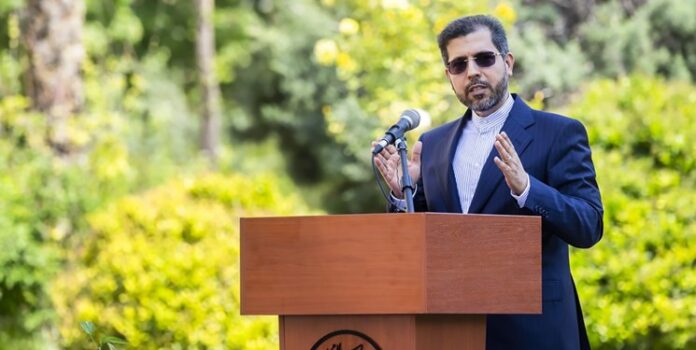
Majid Takht-Ravanchi made the comment in a speech at a meeting of the UN Security Council.

“Today’s message of this council is crystal clear: the JCPOA should be implemented and there is no better alternative to it,” said the Iranian envoy in his comments.

He also criticised a handful of UNSC member states for calling on Iran to return to its commitments under the JCPOA, saying it was the US, not Iran, that had withdrawn from the agreement.

“They asked Iran to fully return to its obligations under the JCPOA as if it was Iran that left the deal,” he said in his speech.

He said the US imposed sanctions on Iran with the announced objective of “starving a whole people.”

Takht-Ravanchi underlined Iran will not forswear the hundreds of billions of dollars in losses inflicted on its economy as a result of US sanctions.

He then noted that the US sanctions on imports of medical equipment into Iran have caused the deaths of many Iranians.

“Unfortunately, the precious lives lost due to sanctions will not come back,” he underlined.
He once again reiterated that “the JCPOA is not a one-way street.”

“The JCPOA is built on two principles: Iran’s nuclear commitments and [the other side’s] mutual obligation to lift all UN, EU and US sanctions as well as boost normal trade and economic ties with Iran,” he said.

“All these commitments have been mentioned and explained in the JCPOA and Resolution 2231 very precisely and in detail,” he said.

He also underlined that reports by the International Atomic Energy Agency (IAEA) over the past six months confirm that Iran’s nuclear program has been peaceful and there has been no diversion in Iran’s nuclear materials toward non-peaceful objectives.

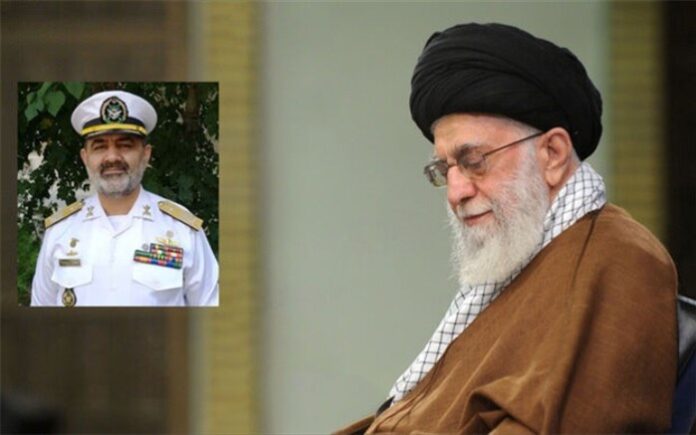
Iran’s Leader Appoints Mohseni Ejei as New Judiciary Chief

Mohseni Ejei, who previously served as the deputy head of the Judiciary, will replace Ebrahim Raisi, the President-elect who will be sworn in in early August. 

In his Thursday decree, Ayatollah Khamenei called on Ejei to continue Raisi’s evolutionary approach and to promote new technologies in the Judiciary. 

He also asked Ejei to use efficient and hard-working personnel, value the services of decent judges and at the same time confront decisively with violations.

The new Judiciary chief was also asked to communicate with people during his service.

Iranian Oil Workers Go on Strike in Protest at Low Wages

The oil workers have held widespread demonstrations across Iran, especially the oil-rich southern provinces, to demand higher wages and better conditions at the country’s oil facilities.

The viral videos circulating across social media show construction workers at 60 energy facilities leaving their jobs in protest at what Fars News calls a parliamentary bill that not only fails to increase the oil workers’ wages in the new year, but also decreases them.

According to Fars, the new fiscal year’s budget passed by the Parliament urges the government to decrease the maximum wage allowed for the country’s oil industry from “21 times the minimum wage” to “15 times the minimum wage”, hence outraging the oil workers who work in severe conditions.

In comments on Wednesday, President Hassan Rouhani pledged to resolve the oil workers’ grievances and tried to assuage fears over any economic reverberations.

Rouhani said the demonstrations held by Iranian labourers were mainly limited to private construction workers on temporary contracts at the plants.

The president claimed the strikes will not hurt Iran’s oil production and export.

“We do not have and we will not have any problem in the production, transfer, distribution and export of oil,” Rouhani said in a Wednesday meeting of his cabinet.

“I promise the workers of the oil industry that their problems will be solved,” he added.

While the changes made by the conservative parliament to the Rouhani administration’s budget bill have been the main cause of the workers’ grievances, the IRGC-affiliated Fars news agency has tried to downplay the parliament’s role to that of a match igniting fire at a gunpowder depot, which is eight years of dissatisfaction with the Rouhani administration’s performance.

Meanwhile, a former Oil Ministry official has told the Ministry’s official news agency SHANA that the Parliament’s bill ignores the Oil Ministry’s payment structures.

Ebrahim Fouladvand says the Parliament’s move to decrease the maximum wage of oil workers makes them reluctant to work under severe conditions of the oil industry, which even puts their lives at risk.

“The only motivation left for the oil workers to work under such severe conditions and ignore the future problems and diseases is that they receive a relatively higher wage than other industries’ workers. But when you decrease their maximum wage at the Parliamentary law, you are stripping those workers of the only existing advantage,” he noted.

Iran Calls on US, European Vessels to Leave Persian Gulf

In a meeting with Pierre Vandier, the Chief of Staff of the French Navy, Khanzadi hit out at Western troops for their presence in regional waters.

“We do not understand why foreign forces should be present in the Persian Gulf,” said the senior Iranian commander.

“The presence of American and European vessels off our coastal waters should be suspended,” said Khanzadi, who has traveled to Réunion (a French department in the Indian Ocean) west of Madagascar Island to attend the Seventh Indian Ocean Naval Symposium (IONS) hosted by France.
Rear Admiral Khanzadi also touched upon Iran’s geostrategic situation in the region.

“The Islamic Republic of Iran is located in a special location in the north Indian Ocean region, and many geopolitics experts describe Iran as the heart of the earth,” said Khanzadi in his meeting with the top French commander held on the sidelines of the IONS.

He said Iran closely monitors the movements of “coalition” forces in the regional waters.

“Today, a group of American and European, namely French, vessels are present in the Persian Gulf region, but we closely watch and monitor all of their movements and their vessels, even from remote distances,” said the Iranian commander.

He reiterated that security in any naval region should be ensured by its regional countries.
The French navy commander, in turn, said he would convey Iran’s message to Paris.

He also touched upon Iran’ performance during its periodical chairmanship of the IONS, saying the Naval Force of the Iranian Army was able to manage the symposium in the best way possible over the past three years despite the coronavirus pandemic.

He also said that the US under Trump invited all its allies to come to the region and increase the pressure on Iran, but that France distanced itself from Washington’s position.

Trump Virus, COVID-19 Responsible for Iran’s Economic Situation: Rouhani

Rouhani said a recent analysis has shed light on the likely situation of Iran’s economy if there was no Donald Trump administration in the US and there was no coronavirus pandemic.

“Based on the analysis, if there were no Trump and COVID-19 viruses, today the country’s economic growth would have been 4.1 percent excluding oil and 8.3 percent including oil revenues. The inflation would have been 11.5 percent and the US dollar exchange rate would have been lower than 50,000 rials. The investment growth would have been 4.7 percent and the GDP figure would have been 22 percent more than what we are witnessing now,” Rouhani said during the Wednesday meeting of his cabinet.

The president also stressed that his government has done everything at its power to counter the economic war and the coronavirus pandemic.

“The 12th government has spared no effort in the course of getting the nuclear deal implemented and removing the sanctions and has exploited every single opportunity, hour and minute in the process,” he said.

The president added that the current US administration, in its pre-election campaign, repeatedly dismissed the former administration’s withdrawal from the nuclear deal as a mistake and acknowledged that sanctions lead nowhere.

Rouhani, however, said Trump’s crimes and economic terrorism against Iran continue unabated, even after the change in the US administration. He said President Joe Biden would betray American’s vote if its follows suite on Donald Trump’s policy.

“If Biden takes the implementation of the nuclear deal lightly, he has betrayed the vote Americans cast for him,” he said.

“Anti-Iran accusations are baseless and unjustified as the Joint Comprehensive Plan of Action is a proof that shows Iran is not after nuclear weapons”.

The president said the Trump administration went beyond imposing sanctions, and even an economic war, on Iran.

“Is there is a war, you know about, in which supplies of medicine for patients were prevented? Despite the huge difficulties, the Iranian people resisted well in the face of this incessant terrorism, and today, if a number of issues are resolved, people can claim their inalienable right,” he said.

Iran has completed six rounds of talks on revival of the 2015 nuclear deal in the Austrian capital Vienna. Iran says it will return to compliance with its obligations under the accord once other signatories, especially the US, do the same. Iran says a key step would be removal of anti-Iran sanctions in a verifiable manner. But the US has so far refused to end the restrictions.

Iran Govt. Says Will Review Protocols on Dispatching Reporters on Business Trips

Iran Govt. Says Will Review Protocols on Dispatching Reporters on Business Trips

“I never expected such a bitter presence among ISNA staff,” said Ali Rabiei, as he addressed a commemoration ceremony for Mahshad Karimi, the environment correspondent of ISNA news agency, who was one of the victims of the incident.

“Several messages must have been surely conveyed by this bitter incident. Definitely, policy-making and a review of the protocols for dispatching reporters on business trips should be seriously pursued by occupational associations”.

The government spokesman highlighted the difficulties reporters and other media personnel face, saying the deaths of Mahshad Karimi and IRNA News Agency correspondent Reihaneh Yasini are cases in point.

Rabiee also touched on the death toll of 17,000 people in road traffic accidents in Iran and the deaths of the two reporters. The official said people should be educated, vehicles should be renewed and road policies should be amended to minimize loss of life on the roads.

“Today we are here to extend our condolence to the family of the bereaved,” he said.

“We sympathize with the bereaved families of the bus crash incident and honor the victims and apologize for any possible fault”.

“Mahshad Karimi and Reihaneh Yasini wrote to improve the lives and environment for the people. They wrote for the flowers, animals and every other thing that has a trace of life.The impression they made surely remains with us”.

Rabiee, accompanied with Minister of Culture and Islamic Guidance Seyed Reza Salehi Amri, had earlier visited the family of Mahshad Karimi to extend the government’s condolence on their loss.

Iran Govt. Says Will Review Protocols on Dispatching Reporters on Business Trips

It came after the head of the Department of Environment, whose organization had invited the reporters for news coverage of a project on revival of Orumiyeh Lake in West Azerbaijan Province, refused to apologize for what the families said choosing a faulty bus for the reporters’ trip. Eisa Kalantari claimed the bus had passed the necessary technical tests beforehand. This is while the vehicle reportedly overturned due to a faulty break system.

During the government officials’ meeting with the Karimi family, Mahshad Karimi’s father and his fiancé criticized Kalantari for his “insulting” comments and demanded the government to apologize.

“We expect you to prepare guidelines, to define principles, on reporters’ business trips so that a reporter knows, has a [safety] checklist, when on assignment, so that they can be assured of their health and safety, so that they know their rights. […] We pursue this through our occupational association and we expect you, as government, support our move,” added Ali Soltan Mohammade, also a reporter, whose wedding ceremony with the late Mahshad Karimi was planned for this week.

In response, Salehi Amiri, whose ministry is in charge of news agencies’ work, had pledged to prepare obligatory guidelines on reporters’ health and safety, while Rabiee pledged to apologize on behalf of the government.

Iranian Journalists Call for VP’s Resignation after Deadly Bus Crash

The journalists who held the protest rally on Wednesday expressed their protest at the Department’s lack of accountability regarding the recent crash of the bus carrying journalists near Lake Urmia in northwestern Iran.

Earlier, Iran’s First Vice-President Es’haq Jahangiri expressed regret over the tragic incident and called on the relevant authorities to be brave enough to apologize.

“Those who were responsible must be accountable, and I will pursue the issue on behalf of journalists,” he said.