Thursday, December 25, 2025
Home Blog Page 2470

Rouhani Says His Administration’s Services Downplayed by Trump’s Actions

Speaking in a ceremony to inaugurate several national projects on his last days in office, Rouhani said the achievements have been accomplished at a time when Iran was “in a state of sanctions and the pandemic, and if it was not for that evil person in the political world, we would undoubtedly have witnessed greater actions in these eight years.”

If it was not for Trump, people would have witnessed how important the government’s actions were in these eight years, he added.

“We are proud that during the hard economic war and the spread of coronavirus, we could continue the path of production, as well as supporting production with strength,” Rouhani said.

Referring to the inauguration of important plans and projects in the field of roads, urban planning, sports and youth in different cities across the country, Rouhani said, “The inauguration of about 21 trillion tomans worth of plans and projects in one day, despite the difficult conditions of economic war, is very important.”

The President said in this government, the country’s highways have increased from 12,000 kilometres to 20,000 kilometres.

“In the field of railways, very good measures have been taken in the last eight years and the connection of the country’s railways and its role in transit is very important,” he added.

Rouhani also referred to the measures taken by his administration for the development of the country’s ports, and said, “Development of Makran Coast is one of the important measures and honours of this government.”

The President added, “With the government’s work in connecting the railway lines to the railway network throughout the country, the railway will be connected from Chabahar to Zahedan to the national network and from Qazvin to Rasht and from there to Caspian Sea and then to Astara port.”

“The government has also carried out a large project to transfer seawater to the provinces of Kerman and Yazd, and there are conditions to continue this route to the provinces of Isfahan, South Khorasan, Khorasan Razavi and Sistan and Baluchestan.”

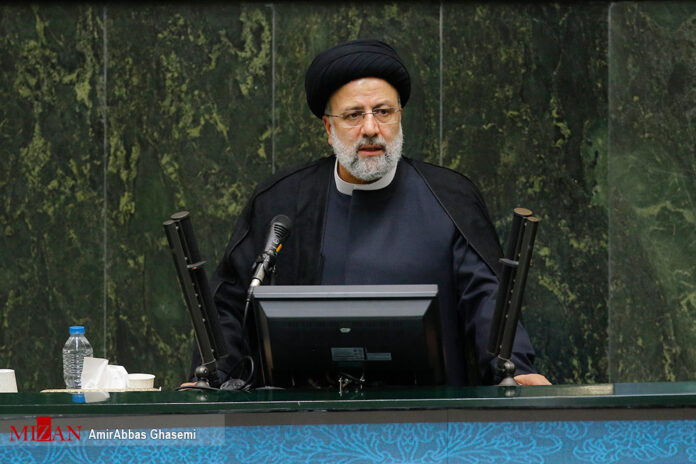
Iran Not to Resume Vienna Talks Before Raisi’s Inauguration

The source told Reuters on condition of anonymity that Iran had conveyed this to European officials acting as interlocutors in the indirect US-Iranian negotiations and that the current thinking is the Vienna talks will not resume before mid-August.

“They are not prepared to come back before the new government,” said the source, saying it was not clear whether this meant until Raisi formally takes over on Aug. 5 or until his government is in place.

“We are now talking probably not before mid-August,” added the source.

A US State Department spokesperson confirmed that Iran had asked for more time because of its presidential transition.

“We were prepared to continue negotiating but the Iranians requested more time to deal with their presidential transition,” said the State Department spokesperson.

“When Iran is done with its process, we are prepared to plan our return to Vienna to continue with our talks,” she added. “We remain interested in seeking mutual return to compliance with the JCPOA, though as (Secretary of State Antony Blinken) has made clear, this offer will not be on the table indefinitely.”

Earlier on Wednesday, Iranian President Hassan Rouhani had expressed regret that the opportunity to reach a deal with the West on the revival of the JCPOA is taken from his administration.

Rouhani Says Opportunity to Reach Deal with West Taken from His Admin.

Rouhani

President Hassan Rouhani described the Joint Comprehensive Plan of Action (JCPOA) as a strong example of international negotiations and constructive interaction, but he expressed regret that the chance to revive the deal was taken from the 12th administration. 

Rouhani, who was speaking during a weekly cabinet meeting, reminded that July 14th is the Day of Negotiation and Interaction saying that this day appears in the Iranian calendar as a day of constructive interaction with the world, IRNA reported. 

“Following the actions by the 11th administration to lift the cruel sanctions and retain the rights of the nation, we reached an agreement on July 14, 2015, and for this reason, this day was named the day of constructive dialogue and interaction,” underlined Rouhani.

“One of the most important goals of the 11th administration was to realize the rights of the nation in the field of modern technologies, trade, economy, economic activities and production, and this main and important goal was somehow repeated in the 12th administration as well.”

He further reminded that in previous years, there were some issues in the society and on the minds of people that some resolutions were passed against us in the United Nations, and as these resolutions were under Chapter 7, nothing can be done about them.

Usually, when a resolution is approved by the Security Council against a country under Chapter Seven, that country is either forced to implement it or sometimes it leads to war, but it is a rare case in the history of the United Nations for a country to resist and eventually those resolutions were revoked without being executed a moment, he went on to say. 

“We had an issue with the IAEA called PMD which was presented as possible non-peaceful activities. One person with expertise and experience said that PMD will never be resolved and the agency will use it as a leverage.”

It was difficult for the world to accept that Iran could legally enrich uranium. They said Iran should not have enrichment and it is not possible to convince the United Nations and the great powers that Iran could enrich uranium. They said sanctions could not be lifted so easily, he emphasized. 

“Experienced people in the world of politics and international relations told me that if we want to negotiate with the six great powers to reach a deal, it is a waste of time.”

In my opinion, what the 11th administration did, is recorded in the history of the country as a very valuable achievement and an important movement in political activities and international relations, he underlined, saying that in less than 100 days, we could reach an interim agreement with the P5+1, and with this interim agreement, the extension of sanctions was stopped. 

“They planned to gradually reduce our oil production to bring it to zero year by year. Our production was 972 thousand barrels per day by that time. They wanted to bring our oil production to zero by mid-2014. [By the nuclear agreement] this was stopped and in some cases our frozen assets and some of the resources of the Central Bank were released while some issues were accepted by both parties. In the same interim agreement, they agreed that Iran could have enrichment. ”


It was very important that a government which came to power with the popular vote could fulfil its the promise and take a very important step to lift sanctions and retain the rights of people within 100 days. Afterwards, we moved ahead step by step and in April 2015 we reached a general agreement with the six countries and finally on July 14, 2015 we reached a deal called the JCPOA with the P5+1, he stressed.

The head of the Supreme National Security Council stated that there were some developments both in some P5+1 countries and Iran, which we dealt with, but in January 2016, the JCPOA agreement came into effect and sanctions were lifted. Some of the steps were immediate and some others were ceremonial, but all the instructions that needed to be announced by the European Union and the US were announced and the process began.

“The conclusion we draw is that through dialogue and constructive interaction, the complicated and important issues between our country and the superpowers or international organizations can be resolved, and this was an important matter.”

At one point, it was thought that this issue would not be resolved by negotiation. It was thought that we should finally try to use force and get somewhere in the battlefield. It was assumed that with the negotiating table and talking, PMD will never be solved and Iran will never be able to enrich uranium, and sanctions will never be lifted, but all the three were achieved.

“Some made great fuss about this saying these are only on paper and so on. However, the nation saw we could practically do it. The sale of the oil and condensate which was about one million barrels, turned into 2.8 million barrels in a very short time.”

One of our lost rights was the oil market. They said you were not present in the market, but we returned to the market and retained our rights in the market. In addition, we began investments in electricity, gas, and petrochemicals fields, concluded Rouhani.

Iran, Afghanistan Discuss Latest Security Developments

In the phone call, the two sides exchanged views on the latest status of peace talks and negotiations between the parties involved in Afghanistan.

Taherian also underlined the necessity for the settlement of the ongoing crisis in Afghanistan through peaceful ways and preventing the outbreak of a civil war in the country.

Farhadi’s Latest Drama Receives 5-Minute Standing Ovation in Cannes Festival

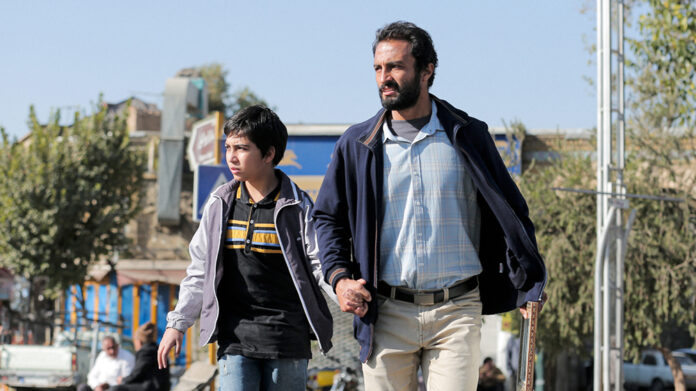
Farhadi’s latest Cannes competition entry A Hero is a social drama about moral dilemmas and the alacritous flexibility of principles.

The auteur focuses on his usual themes, holding up a mirror, and offering his viewers glimpses into the psyche of contemporary Iranian society.

The brilliant performances of actors and Farhadi’s engaging script have received critical acclaim since yesterday.

The drama delivers a tale about ethics and integrity, and how they clash with each other when personal stakes are greater.

Shot during the pandemic in Shiraz and readied in time to debut at Cannes, the distribution rights of A Hero have already been scooped up by Amazon, and it is expected to drop on Prime video soon.

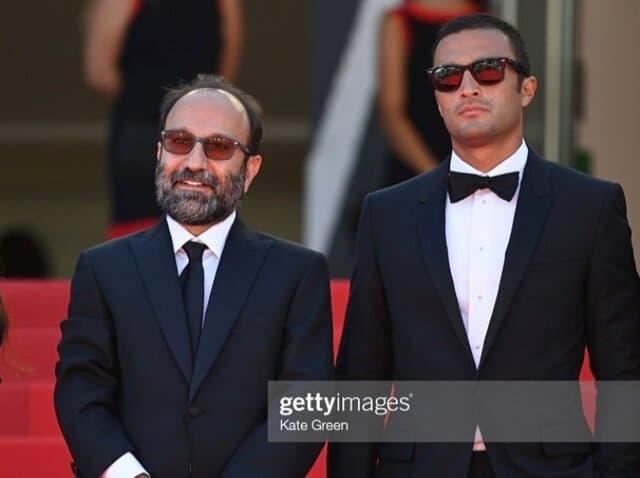
Farhadi, a Cannes favourite, attended the premiere alongside his cast on the Croisette, where he received a standing ovation lasting several minutes even before the screening began. The film will compete for the prestigious Palme d’Or (his third if he manages this feat.)

The soft-spoken and affable Rahim (Amir Jadidi) is out on parole from his prison sentence.

Farhadi's Latest Drama Receives 5-Minute Standing Ovation in Cannes Festival

A separated man with a son with speech impediment who lives with his sister’s family, he has defaulted on his debts that sent him to prison. But if he can manage to pay off his debts, he can avoid spending the rest of the years of his punishment in jail. He may have found a way out: his girlfriend Farkhondeh (Sahar Goldust) recently stumbled upon a lost handbag with some gold coins that she wants to sell to raise money for Rahim’s debt repayment.

But when the couple consult with a pawn broker, they realise the money may simply not be enough for a prison bailout. Rahim has a change of mind, and wants to return the coins.

When the prison officials get wind of Rahim’s deed after the bag is returned to its owner, they milk it to their benefit to distract public scrutiny of a prison death. Rahim is now forced to pretend he found the handbag, and the news gets picked up by local media that even prompts a charity to organise a fundraiser for his bailout.

Farhadi's Latest Drama Receives 5-Minute Standing Ovation in Cannes Festival
But things quickly go south when the disbelieving creditor raises doubts about Rahim’s story, over and above questioning the prudence of honouring Rahim for a deed that is only ethical and commonplace. Now, Rahim must convince his skeptical potential employer that his tale is indeed true, over and above getting hold of the funds raised by the charity that he is at risk of losing. In another director’s hands, things may have been different but this is Farhadi so the protracted drama unspools further with episodes in which Rahim takes one bad step after another, pushing him further away from his liberation.


Afghanistan’s Neighbours Must Accept Taliban as ‘New Reality’, Expert Says

The former Iranian ambassador to Afghanistan says the Taliban, as a powerful reality in Afghanistan, is playing a role in the unrest, and all efforts are focused on establishing negotiations between the Kabul government and the militant group to establish a lasting peace.

However, so far, all these efforts, arrangements and negotiations between the Afghans in Qatar and Russia have reached a deadlock, and the talks in Tehran are an attempt to create the same cooperation. Considering the relations with the parties and the relative trust won, Tehran has used this opportunity to play a role.

In an interview with ILNA, Mohammad Reza Forqani elaborated on the Afghan-Afghan talks held in Tehran last weekend. He also answered a question about Tehran’s role in creating peace and stability in Afghanistan and the accusation of Tehran’s inaction in this regard.

“In recent years, and especially in the last eight years, the Islamic Republic of Iran has paid little attention to its neighbours, and Afghanistan is one of these countries. Therefore, there is no doubt that our policy is a passive one in Afghanistan, and all experts and people are aware of this.”

He also noted that the Islamic Republic of Iran, despite enjoying good impression on Afghan groups has not been able to play a role in the affairs of this country as it deserves the name of Iran.

He also referred to the statements made by some Afghan experts about Tehran’s interference in the affairs of this country, adding that “I believe these remarks are not fair as they are not true at all because Iran has nothing but diplomatic and direct ties with the Kabul and has always supported the Afghan government.”

Statements in this regard are mostly negative ones, he said, and those who make these claims, whether in the guise of MPs, experts and journalists, are affiliated with currents outside Afghanistan. If Tehran has expressed any views on the issue of Afghanistan so far, it has been a response to the calls by the Iranian society to play a role.

Evaluating the inter-Afghan meeting held in Tehran last weekend, the former Iranian diplomat said “the talks between the Taliban and the Afghan government began about two years ago, especially after the agreement between the Taliban and the United States.”

“Although these peace talks have been fruitless and reached a stalemate, US negotiations with the Taliban and the signing of the agreement paved the way for all countries to recognize the Taliban as an official party to the conflict in Afghanistan, and several countries established global and regional ties with them.”

He went on to say that countries such as Russia and China have kicked off official talks with the Taliban and delegations have travelled to these two countries. Similarly, Afghanistan’s neighbours, including the Central Asian countries, have started talks with the group. While several Taliban delegations travelled to Tehran within the past years, India, as Pakistan’s opposition country, has also entered into talks with the Taliban.

Although it is too soon to judge the outcome of these negotiations, it seems fundamental changes have taken place in the negotiation process between the government and the Taliban.

Regarding the issue of border security, Forqani noted that as part of the Taliban’s military advance in recent weeks, large areas of the country have been captured by the group, including the border areas on the Iran-Afghanistan border.

“Based on previous experiences, it can be claimed that this group will not pose a security problem to the Islamic Republic of Iran, and in its recent statements, it has emphasized that the issue is a domestic one and no action will be taken to destabilize the borders. Of course, the Taliban is aware of this and knows that if they want to create a security problem for Iran, it will surely be to the detriment of this group” underlined Forqani.

“We do not have any sense of insecurity on the part of the Taliban at the moment, but it should be noted that we and other neighbours are concerned about the presence of irresponsible groups among the Taliban who have shown in the past that they are doing things which are against the interests of Afghanistan and even the Taliban themselves; therefore, this group must act as soon as possible to control such people,” he concluded.

Iran Rebukes US Intervention in Cuba

Iranian Foreign Ministry Spokesman Saeed Khatibzadeh said in a statement on Tuesday that Washington must stop its unilateral sanctions against other countries including Cuba.

He noted that Havana has faced widespread US sanctions for more than six decades and these sanctions have complicated the economy and livelihoods of Cubans, especially amid the coronavirus pandemic.

“While the United States is considered the main one to blame for numerous problems created for the Cuban people, it pretends to support the ongoing protests and intends to meddle in the internal affairs of this country in blatant violation of international rules,” added Khatibzadeh.

The spokesman further emphasised that the Islamic Republic of Iran, within the framework of its principled positions, denounces the unlawful US sanctions, which are an important factor behind the economic hardships of the Cuban people, and condemns any interference in the internal affairs of this country.

“As a country facing Washington’s unlawful and cruel sanctions, Iran expresses solidarity with the people and government of Cuba, and calls for an immediate end to unilateral US sanctions against Havana,” he added.

Thousands of Cubans joined demonstrations throughout the country on Sunday to protest Cuba’s economic crisis and handling of the pandemic. Some also called for an end to communism.

The government says the protests are orchestrated by US-financed agents. Havana says the economic crisis is largely caused by Washington’s decades-old trade embargo.

Iran Says Ready to React amid Taliban Presence on Eastern Borders

Ali Rabiei said all relevant state bodies are constantly monitoring the situation and are prepared to tackle the possible effects of the developments going on in Afghanistan near Iran’s eastern borders.

“The relevant institutions are considering different scenarios with regards to the ongoing trend of developments,” he said, adding, “Action will be taken should the need arise.”

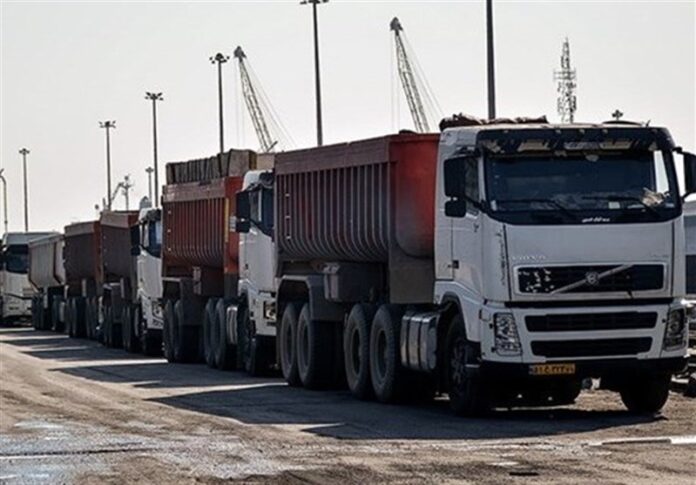
He also touched upon Tehran-Islamabad trade transactions given the developments which have taken place at border customs checkpoints in Afghanistan.

He said some of the customs checkpoints are under the Taliban control now, so, “We should wait until the situation is stabilised.”

The spokesman, however, noted that one of the border customs checkpoints is still operating and Iran-Afghanistan trade is being conducted through it as usual.

Rabiei then referred to illegal migrants trying to get into Iran from Afghanistan, saying the necessary measures have been adopted to reinforce border guards and law enforcement forces to stop illegal migrants entering Iran.

Legal Leniency Will Be Extended to Include Security, Media Crimes Convicts: Judiciary

The spokesman said these convicts will now benefit from commutation of punishments under required conditions.

“The approach of the new Judiciary Chief [Gholam-Hossein Mohseni Ejei], as we have seen it, is that when implementing the law, there will be no difference between security convicts and others and trials must strictly follow legal standards. In the new approach, legal leniency, within the framework of the regulations, will cover security and media [crimes] convicts, that means the leniency will hinge on the behavior of the convict and his/her expression of regret and compensation for his/her past,” said the spokesman Gholam-Hossein Esmaeili.

“At the very beginning of tenure of the new Judiciary Chief, Mohseni Ejei, he ordered [officials] to prepare a list of all security [crimes] convicts in the country detailing the type of their crime and their punishment as well as their behaviour, during the period they have been serving their conviction, and their current status, and each of these convicts, who is eligible and qualified to benefit from the legal leniency, it will be applied to them, within the framework of regulations.”

Over 2,400 Expatriate Elites Working with Iranian Companies, Universities: VP

The graduates’ associations aim at empowering foreign nationals graduated from Iranian universities, among other objectives.

“The Vice Presidency for Science and Technology has had a vast scope of activities concerning Iranian expatriates. We are focused on countries in North America, Europe and East Asia to expand our work in this field. Under agreements with the General staff of the Iranian Armed Forces, graduates from 400 top universities in the world have [also] been covered [in the list of recognized universities, where students are exempt from the military service],” Vice President for Science and Technology Sorena Sattari said at the signing ceremony.

“Currently, more than 2,400 Iranian expatriate elites have been attracted [in the associations]. Some 30 percent of these people are faculty members in universities and a large portion have either launched their own startups or are active in knowledge-based and creative companies.”

Sattari added that Iran has also granted Iranian nationality to foreign elites.

“In addition to facilitating foreign elites’ residence, we have managed to grant Iranian nationality to some elites from Iraq, Afghanistan, Syria, Spain and other countries. Last year, scholarships were also offered to the 100 top applicants in Afghan university entrance exam, and interestingly, the top 70 came to Iran,” he said.

During the ceremony, Head of the Leader’s Representative Office in Universities Mostafa Rostami thanked the Vice Presidency for Science and Technology as well as the National Elites Foundation, which is also headed by Sattari.

“Low cost of education in the Islamic Republic of Iran and cultural affinity of many regional students with the culture of our country are among the benefits of our educational system for regional elites,” Rostami said.

During the ceremony, the head of the International Exchanges Center of the Vice Presidency for Science and Technology also said it has launched a platform that enables Iranian expatriates to contact universities and research centers inside the country.

“Currently, some 10,000 Iranian expatriates use this application. This scale of interest is despite a host of requirements needed to sign up to the application. For example, Iranians using this application must have been graduated from one of the top 200 universities in global rankings,” said the center’s head Mahdi Ghalenoei.

“In line with the policy of using the potential of Iranian expatriate elites, using their help to expand exports of technological products is on the agenda.”