Thursday, December 25, 2025
Home Blog Page 2469

Iran Has Enough Raw Material to Produce 100m Doses of Barekat Vaccines

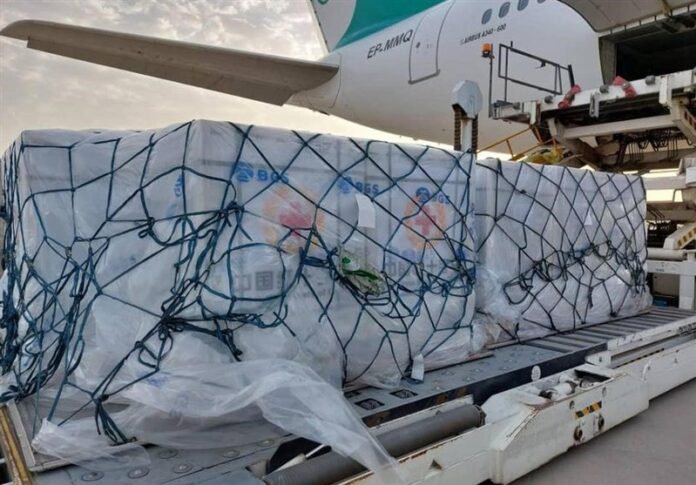
The news on the discarded doses was announced by the director of public relations at the Execution of Imam Khomeini’s Order (EIKO) Headquarters, a foundation in charge of the production of the vaccine a few days ago. 

“In the vaccine manufacturing industry, after quality control tests are completed, batches which do not meet the required standards are removed from the production line and discarded. This happens in all vaccine production lines across the world and it took place even at Pfizer and Johnson & Johnson after their production of coronavirus vaccines,” said Asghar Abdoli.

“Putting away vaccines, which fail to meet the necessary standards, is a positive point and demonstrates the transparency of the manufacturing plant [‘s operations], because it shows the health of the consumers of the shot, i.e. people, are the priority [for the producers].”

Abdoli added that each batch of coronavirus vaccines undergoes more than 10 quality control tests.

“After the production of each batch of coronavirus vaccine, tests such as Host Cell DNA, Endotoxin, microbial and viscosity and other tests are conducted on the vaccine. All these tests should be completed for the production of each batch of vaccine. All these tests must also be completed for the Barekat jab before we can mass administer it among the public. This process is being completed well,” said Abdoli.

The virologist added that quality, and not the quantity, is of prime significance when it comes to anti-COVID vaccines, stressing that these jabs are being produced in Iran with utmost care.  

Abdoli also dismissed allegations on social media about shortage of the raw material and a special gel used in the Barekat vaccine.

“There are discussions on the shortage of raw material for the Barekat vaccine, which are pure gossip. The production technology for this Iranian coronavirus vaccine is fully indigenous and we need no country in the processing of the jab. We have raw material required for production of 100 million doses of the anti-COVID shot. Rest assured, if we were dependent on another country for the manufacturing of this vaccine, they would not allow us to produce it inside the country,” he said.

He was reacting to rumours that a gel, exclusively produced by the US, is needed to manufacture the Iranian vaccine, and lack of access to the gel has forced officials to discard over a two million doses of the jab.

“The gel being talked about is the chromatography gel and naturally Iran has no exchanges with American companies to import it,” Abdoli added.

Indian Lotus in Ojak Sar Pond

The pond, which is among the tourist attractions of the region, is home to Indian Lotus, a rare species which flower in late June and mid-July.

What follows are ISNA’s photos of the flower:


US Move to Reject Prisoner Swap Deal with Tehran ‘Outrageous’, Iran Says

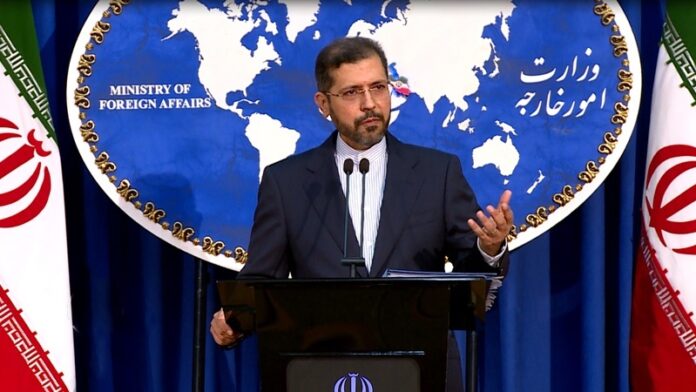
Ministry Spokesman Saeed Khatibzadeh made the comment after the spokesman for the US Department of State denied any such deal and accused Iran of an “outrageous” effort to deflect blame for the impasse in the Vienna talks on revival of the 2015 nuclear deal.

“’outrageous’=the US denying simple fact that ‘there IS an agreed deal on the matter of the detainees’. Even on how to announce it,” Khatibzadeh said in a tweet.

“Humanitarian swap was agreed with US & UK in Vienna-separate from JCPOA- on release of 10 prisoners on all sides. Iran is ready to proceed TODAY.”

Iran’s top negotiator in the Vienna talks broke the news on the deal on Saturday. Abbas Araqchi, the deputy foreign minister for political affairs, said in a tweet, that a humanitarian prisoner exchange with the US and the UK will take place on Sunday, if Washington and London meet their obligations under the swap deal. Araqchi said 10 prisoners were to be swapped overall. 

However, Spokesman for the US Department of State Ned Price claimed “there is no agreed deal yet”.

“We had been engaged in indirect talks on the detainees in

the context of the Vienna process, and the delay in restarting

that process is not helping,” Price added. 

“While it would be more effective to make progress if we were meeting in Vienna, we are also prepared to continue with talks on detainees during this period.”

Araqhi had earlier warned that the deal on exchanging prisoners is not linked with the Vienna talks on the nuclear agreement. 

He also said the talks should await the new administration in Iran to take charge.


Solar Panels Distributed among Nomads in Southwest Iran

The panels were handed out to nomads in Dinaran region where families are at least ten kilometres away from the closest power installations and asphalt road.

Under an agreement signed between the Iranian Organization for Nomads’ Affairs and the Ministry of Energy to supply electricity to nomad-populated areas, solar panels were distributed in underprivileged nomadic regions.

The Dinaran region is located in the provincial town of Ardal.

Asghar Farhadi Wins Grand Prix of Cannes Film Festival

Farhadi jointly won the award along with Finnish director Juho Kuosmanen’s “Compartment No. 6.”.
In his speech after receiving the award from eminent American filmmaker Oliver Stone, Farhadi said he has not stopped making films in the past 36 years despite all the restrictions with the hope of raising questions about the bitter social conditions of Iran.

He also expressed hope that he would be able to continue his career as he is confident that awareness-raising is one of the most important ways to save Iran.

Farhadi’s latest film, A Hero, received a five-minute standing ovation in its world premiere at the Cannes Film Festival a few days ago.

The film is a social drama about moral dilemmas and the alacritous flexibility of principles.

The auteur focuses on his usual themes, holding up a mirror, and offering his viewers glimpses into the psyche of contemporary Iranian society.
The brilliant performances of actors and Farhadi’s engaging script have received critical acclaim since its premiere.

The drama delivers a tale about ethics and integrity, and how they clash with each other when personal stakes are greater.

Shot during the pandemic in Shiraz and readied in time to debut at Cannes, the distribution rights of A Hero have already been scooped up by Amazon, and it is expected to drop on Prime video soon.
The soft-spoken and affable Rahim (Amir Jadidi) is out on parole from his prison sentence. A separated man with a son with speech impediment who lives with his sister’s family, he has defaulted on his debts that sent him to prison. But if he can manage to pay off his debts, he can avoid spending the rest of the years of his punishment in jail. He may have found a way out: his girlfriend Farkhondeh (Sahar Goldust) recently stumbled upon a lost handbag with some gold coins that she wants to sell to raise money for Rahim’s debt repayment.

But when the couple consult with a pawn broker, they realise the money may simply not be enough for a prison bailout. Rahim has a change of mind, and wants to return the coins. When the prison officials get wind of Rahim’s deed after the bag is returned to its owner, they milk it to their benefit to distract public scrutiny of a prison death. Rahim is now forced to pretend he found the handbag, and the news gets picked up by local media that even prompts a charity to organise a fundraiser for his bailout.

But things quickly go south when the disbelieving creditor raises doubts about Rahim’s story, over and above questioning the prudence of honouring Rahim for a deed that is only ethical and commonplace. Now, Rahim must convince his skeptical potential employer that his tale is indeed true, over and above getting hold of the funds raised by the charity that he is at risk of losing. In another director’s hands, things may have been different but this is Farhadi so the protracted drama unspools further with episodes in which Rahim takes one bad step after another, pushing him further away from his liberation.

Two Bodies Recovered in Flash Floods in Southeast Iran

The bodies of a man and woman were spotted in two locations 2 kilometres apart, said the Kerman governor.

Flashflooding also swept away three vehicles.

The occupants riding in one of the vehicles managed to save their lives before their car was washed away.

“The occupants in another vehicle were also saved by bystanders at the scene, but a Peugeot car whose occupants remain unaccounted for was swept away by the floods,” the governor added.

Search and rescue teams are still looking for the bodies of the other individuals still missing.

Water Protests in Iran: One Demonstrator Killed by ‘Rioters’

The acting governor of Shadgan confirmed the death of the 30-year-old man, but claimed that he was a passerby targeted by a bullet fired by “opportunists and rioters” at the security forces.

According to the governor, the police have arrested some of those behind the incident.

IRNA says protesters have set tires on fire and blocked roads in several other cities of Khuzestan.

Iranian security forces have attacked some of these gatherings, while Tehran is preparing to send an official delegation to calm the situation.

Rouhani Warns about Possible New COVID-19 Peak in Iran

Hassan Rouhani noted that seventeen months have passed since the virus broke out in the country, saying different variants of COVID-19 have emerged ever since.

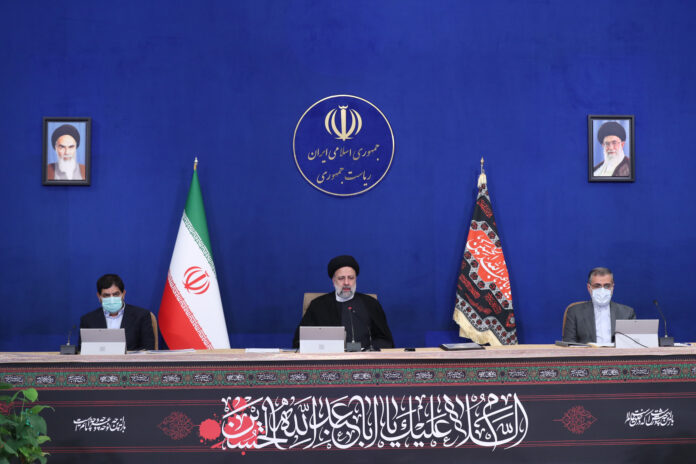
“During this period of time, this dangerous virus has not only created numerous problems for people’s health, but also led to many difficulties in various economic, social, cultural and educational areas,” said the president at a meeting of the National Coronavirus Headquarters.

He said every effort has been made to stem the spread of the virus in the country.

“These attempts delayed the transfer and transmission of the disease for some time, but unfortunately we are still witnessing the transmission and mutation of the virus in the country while everyone thought that the condition was going to get calm,” he added.

“Due to different reasons, namely the election, nonessential travel and laxity in observing health protocols, today we are seeing another surge in the disease almost all across the country,” said the president.

He voiced concern over a drop in the rate of abidance by health protocols, which has fell by nearly 50 percent in society according to reports.

“All of us should stop regarding this dangerous virus as an ordinary phenomenon and should keep observing health protocols,” he said.

He then touched upon the importance of vaccination in containing and controlling the disease and reducing the number of fatalities.

He said millions of people have been inoculated so far, adding the rest of the population will receive the jab in due time as scheduled.

Iran Calls for Focus on Commonalities in Regional Connectivity Conference

“The modern world requires the recreation of this valuable legacy at the political, economic-commercial and cultural-human levels,” Rasoul Mohajer said in an address to the conference, in a reference to cultural and civilisational commonalities that lead to historical connectivity in the region.

Mohajer also said intra-regional trade, expansion of transportation and development of transportation infrastructure are elements that help the development of regional countries. 

The deputy foreign minister also touched on some of Iran’s advantages in connecting Central and South Asia regions, saying Iran has taken a number of steps in this area:

–         Cooperation with land-locked countries and transit countries in the region, such as Pakistan and Turkey, as part of the transportation corridor of the Economic Cooperation Organisation.

–         Strengthening multi-dimensional transportation in the region and equipping the Chabahar and Bandar Abbas port cities in the south and Amirabad and Caspian port cities along the Caspian Sea.

–         Designing and implementing national and international projects to create rail links with neighbouring countries including the Khaf-Herat project, which, after being linked to Mazar-i-Sharif, will connect central Asian countries to Iran’s railway network, and through Iran, to regional and global destinations.

–         Seriously examining mechanisms for cooperation between major port cities, such as Chabahar, and other major port cities along the Indian Ocean and the Persian Gulf.

–         Serious pursuit of launching the north-south, TRACECA and Persian Gulf-Black Sea corridors as well as the Rasht-Astara-Azerbaijan Republic and Shalamcheh-Basra rail links.

–         Examining the establishment of a trade-transportation corridor between Iran and the Eurasian Economic Union to facilitate trade among the five members of the union and Iran within the framework of a free trade agreement, which is being negotiated. 

The one-day International Conference on Central and South Asia Regional Connectivity, Challenges and Opportunities, an initiative of Uzbek President Shavkat Mirziyoyev, was held in the Uzbekistan’s capital city of Tashkent with the presence of officials from 44 countries and 30 international organisations.

World Must Share Burden of Fighting Narcotics: Iran

“Yesterday, 3 police officers were martyred in Iran in a clash with drug traffickers,” Gharibabadi tweeted on Thursday.

Three police officers were killed and two others were injured in a clash with drug traffickers in the southeastern province of Kerman.

“In the absence of dedicated effort, the Europeans have to go after every gram of narcotics on their streets. Countering world drug problem requires shared responsibility by all,” Gharibabadi warned.

Iran, sitting on a major drug trafficking route between Afghanistan on the one side and Europe and the Persian Gulf Arab states on the other side, has been a pioneer in fighting drug trafficking despite losing thousands of its security forces in clashes with drug traffickers as well as the heavy costs of the fight against narcotics.

Last month, Tehran announced that narcotics seizure at Iranian border crossings and airport gateways had increased by 523% in the quarter to May 21 against the same quarter in 2020.