Thursday, December 25, 2025
Home Blog Page 2453

Iran’s Leader Sets One-Week Deadline to Resolve Issues in Pandemic Fight

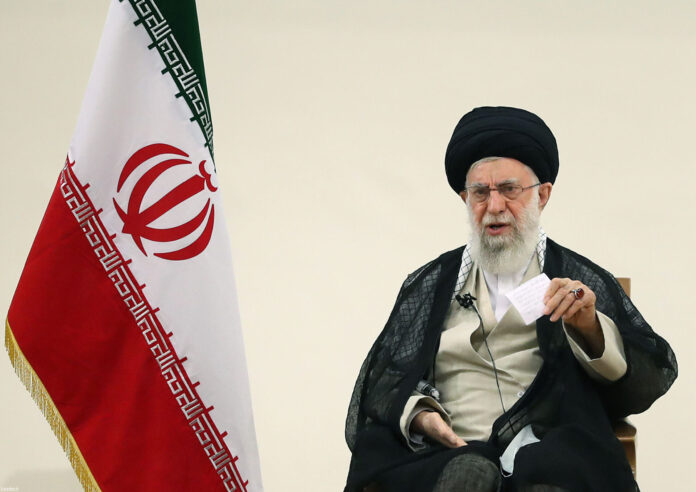
In a televised speech on Wednesday, Ayatollah Khamenei said as the President set a one week deadline to deal with the pandemic situation a few days ago, it must be stressed that all the officials must do their utmost very quickly to harness the disease which is going “wild”.

“Hereby I say that by the end of this one week deadline, all the officials must take a critical decision to take action and do whatever is necessary,” stressed the Leader. 

He also ordered the armed forces to enter the field and use their total might to help people.

“This disease has gone wild not only in Iran, but almost all over the world. As the disease, the virus, or the enemy takes on a new form, we must change our defense form and our method. In my opinion, the corona disease is the first issue of the country. It is an urgent issue of the country that must be pursued [immediately].”

The Leader of the Islamic Revolution also expressed sorrow over the daily death of over 500 people due to the corona pandemic saying that this is really painful. 

“It’s easy in words, but when you look at it, more than five hundred families are missing a member in one day. Is that a small thing? Is this a small matter? Tens of thousands of people get infected in a single day. What hardships do those who get sick go through! For medicine, for treatment, for testing, for various problems. These are really breaking the heart of every Muslim and the heart of every fellow countryman who looks at this situation; so we have some duties,” reiterated Ayatollah Khamenei. 

The Leader also referred to the extreme fatigue of the health crew saying that this is a really big concern.

“Facing these problems day and night in this hot summer weather and at these hospitals is really an important issue. They are under physical and mental pressures. The medical teams, doctors, nurses and the like are really doing a Jihad! I do really appreciate their efforts as my appreciation is not that much important because the Almighty God is the one who thanks them while witnessing their efforts,” noted Ayatollah Khamenei. 

He also called on the governmental institutions and organizations to provide free of charge corona testing.  

“At the beginning of the corona [pandemic], general diagnostic tests became common, and that was a very good thing, it has to be continued. Both the health network and the Basij forces must work in this regard to provide free diagnosis test for everyone. Today, it is not available for everyone. There are problems. It has costs for people. It has heavy costs for some.”

He also said that all people must have access to the diagnosis tests urging the insurance companies to help the government to make this happen.

The Leader of Iran also talked about the shortage or lack of medicine in pharmacies and hospitals while they are available at higher prices in the unofficial market saying that it indicates a problem in the distribution network and this problem must be solved.

Speaking about Muharram mouring ceremonies, Ayatollah Khamenei warned that such ceremonies must not turn into the cause of spread of the virus.

He stated that we need these rituals, but they should be observed with full care in a way that these ceremonies do not become the subject of scorn for the opponents and the enemies.

The leader of the Islamic Revolution also added that there must be a redoubled effort for both import of the vaccine and its domestic production. He said the officials must deliver the vaccine to all people in any way they can, because millions of vaccines must be provided.

Iran is facing the fifth peak of the corona pandemic and over 500 people are losing their lives every day due to the deadly disease. Reports say that most of the hospitals are full and the health personnel are tired while the number of contractions are soaring day by day.  
 

Regional Cooperation Prerequisite for Sustainable Security, Iran Tells Iraq

Speaking in a Tuesday meeting with Iraqi Foreign Minister Fuad Hussein in Tehran, Raisi thanked the Iraqi Prime Minister for inviting him to attend the summit of Iraq’s neighbours, and said, “Iraq’s move to hold this summit is a very good one.”

He said Iran considers the interference of foreigners in the affairs of the region as tension-rising and threatening, just as it considers the dialogue between the countries of the region to resolve issues, create security and stability.
“Cooperation and synergy among the countries of the region, without the intervention of foreigners, are a necessary condition for the stability of regional security, as well as the establishment of peace in the countries of the region and the provision of welfare for the nations of the region.”

Raisi stated that Iran has always been sensitive and concerned about solving the problems of Iraq, adding, “Iran considers the growth and development of Iraq as its own growth and development.”

Hussein, in turn, handed over the invitation of his country’s Prime Minister to Raisi and called the holding of the summit of Iraq’s neighbouring countries a step in support of the political process and economic development of the country.
“This summit is a step towards laying the cornerstone of a collective action of the countries of the region to create lasting security in the region,” he noted, referring to a summit where both Iran and Saudi Arabia are to be invited. 

Noting that lasting security in the region would not be possible without the presence of Iran and Iraq, the Iraqi Foreign Minister said, “Holding this meeting will create a basis for dialogue between the countries of the region in order to reach a collective understanding in the region”.

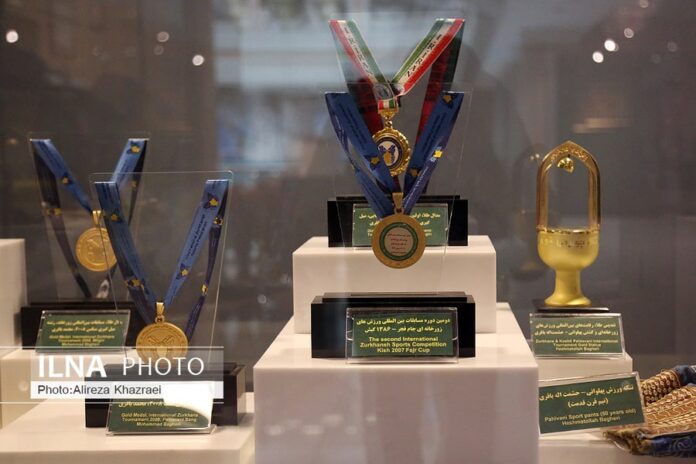
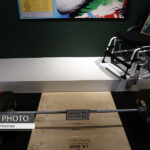
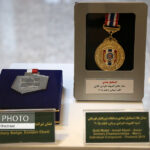
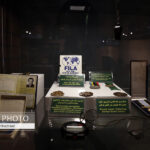
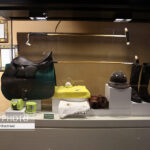
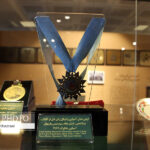
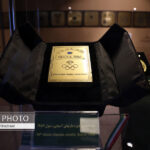
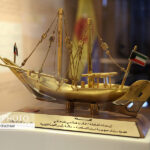
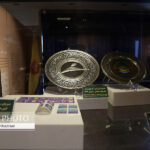
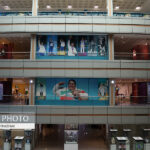
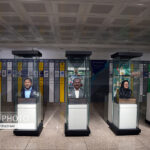
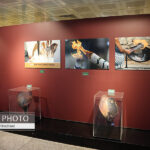
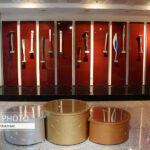
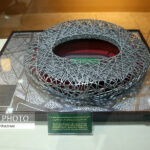
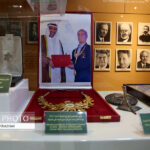
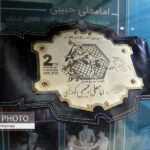
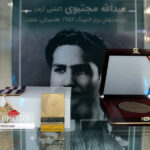
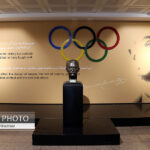
Iran’s Nat’l Sports Museum: A Display of Nation’s Athletic History, Honours

Located in the capital, Tehran, the three-storey museum measures 2500 square meters in area, of which 500 square meters is dedicated to the entrance space and the remaining 2000 square meters made up of two 1000-sqm floors is where Iran’s sports history is put on show.

Any museum reflects a whole variety of cultures and displays the cultural heritage of nations, including their lifestyles, ways of thought and beliefs.

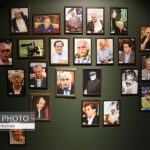
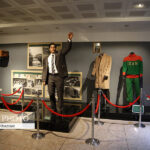
Iran’s National Sports, Olympics and Paralympics Museum is a place to showcase and provide an opportunity to deliberate on the history of athletics, competitions, values, wins, defeats, dreams and stories in the domain of sports.

The main objective of the museum is to safeguard Iran’s sports heritage as well as to offer training and cultural services plus familiarizing visitors with concepts such as sportsmanship, dynamism, creativity and the spirit of Paralympics.

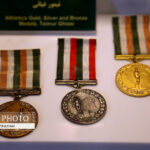
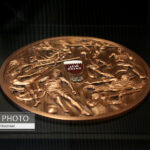
Many sportspeople and veteran athletes have donated to the museum their sports gear, awards, medals, cups and other items.

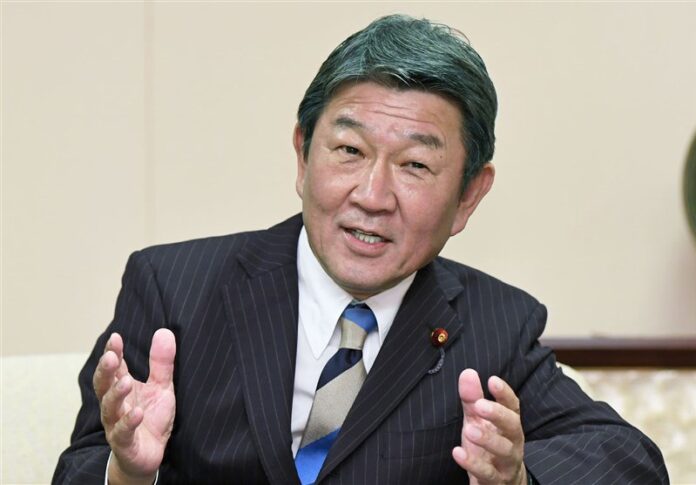
Japan FM to Visit Tehran in Near Future: Iranian Embassy

In a tweet, the embassy said the visit can open up a new chapter to deepen and expand bilateral ties between Iran and Japan. 

“This visit can open up a new chapter for close mutual consultations on key regional and international issues,” the embassy said.

“This visit will hopefully set the stage for exchange of views on topics of interest for both countries.”

Japan’s official news agency, the NHK, had earlier also confirmed Toshimitsu Motegi’s visit for talks with top Iranian government officials early next month. 

“During meetings with Iran’s foreign minister and other officials of [President] Ebrahim Raeisi’s government, Motegi is expected to ask them to play a constructive role in an attempt to reduce tensions and ensure stability in the Middle East,” the NHK said in its report.

Iran and Japan enjoy traditionally friendly ties. Motegi is also likely to raise the issue of indirect talks between Iran and the US on the 2015 nuclear during his visit. 

The Japanese foreign minister is also planned to visit Israel, Palestine, Egypt, Jordan, Turkey, Iraq and Qatar.

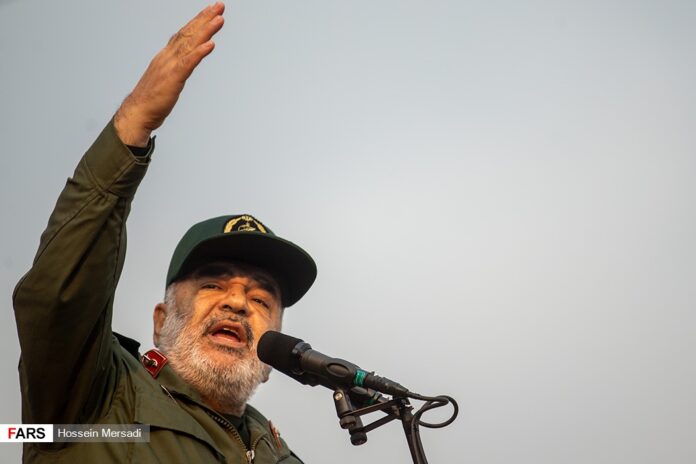
Iran Waiting for Israel’s Wrong Move to Destroy Tel Aviv Regime: IRGC Chief

General Salami IRGC Chief

Major General Hossein Salami added the enemies of the Islamic Revolution have been repelled, adding, “No one has eroded their power as much as we have.”

“We have great potential to overcome our opponents,” said General Salami, the commander of Iran’s Islamic Revolution Guards Corps (IRGC).

“We grew up in war and we have got used to defeating the enemy, and we have, by God’s grace, overcome them in all arenas,” the top commander noted.

“We learned how to live independently, and that is why everybody wants to defeat us, but the reality is that we keep moving forward with power,” he said.

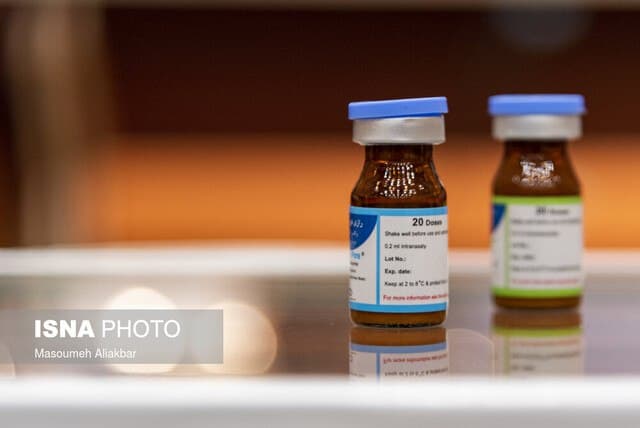
2nd Phase Trials Show Iran’s Covo-Pars Coronavirus Jab 80% Effective

“In the second phase, 500 people received the first and second doses and 400 others also received the third dose. Our initial analysis shows 80 percent effectiveness. Fortunately, no serious problems were reported in the people who were studied, and the result was satisfactory,” Mohammad Hossein Fallah Mehrabadi told ISNA news agency.

Mehrabadi added that the institute has already begun mass production of the vaccine.

“We have begun the mass production. Last month, 400,000 doses were produced and were registered in the Food and Drug Administration’s system, after completing the quality control process. Starting from August 22, the production capacity will rise to 1 million doses,” he said.

“We are planning to produce 15 to 20 million doses by the end of the year [March 2022]. Production can begin after the vaccine successfully completes the first phase of its clinical study and the required dose is determined, given that the second and third phases are also verified. The production and quality control processes are time consuming, so we should plan in advance and begin the production.”

Mehrabadi also expressed hopes the third and final phase of the trials begin later this month. He further explained that the second phase trials ended two weeks ago and the report is sent to the Food and Drug Administration. Mehrabadi said there will be a meeting with the organization’s officials next week to discuss the permit for third phase trials.

“We have two planned scenarios for the third phase with regard to the situation in the society where different age groups and job categories would enter the clinical trial. One of the proposals, set forth by the Committee on Ethics and the Food and Drug Administration, is to compare Covo-Pars jab with a verified vaccine (which is now being injected to people) to study their effectiveness. For this to take place, we need some 48,000 volunteers and, if this scenario is confirmed, the Health Ministry will be responsible for the supply of the other vaccine,” he said.

“The second scenario is to inject the vaccine to the first group and inject placebos to the second group [of volunteers] and to examine the rate of the disease in both groups to decide the effectiveness of the vaccine. For this scenario some 27,000 volunteers are needed.”

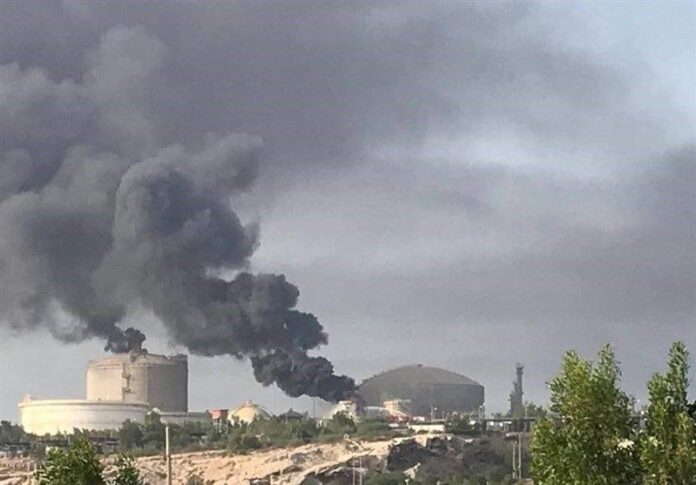
Fire at Petrochemical Facility in Southern Iran ‘Fully Contained’

“At 2 am local time, a spark, whose reason remains unclear, triggered a fire at the daily gasoline tank, and operations to extinguish the flames got underway from the very early minutes,” said the spokesperson for the petrochemical facility.

“The fire at the tank was brought under control at 6 am and has now been fully contained an currently cooling operations are underway,” he said.

Iranian Drama ‘6.5 Per Metre’ Named France’s Fourth Best-Selling Film

The great interest in the movie, which saw it rank fourth in the box office of some theatres in France this week, has led 20 more theatres to plan to show it this week.

But why the French welcomed “Metri Shesh-o Nim”?

The movie’s producer Seyyed Jamal Sadatian says the French are interested in his movie because they relate well to the police character (played by Payman Maadi), as the actor, despite censoring in Iran, has managed to closely reflect the reality of the society.

Sadatian made the comments during an interview with “The Open Parenthesis” program of the national radio’s Namayesh (drama) channel, which is produced by Maral Dousti. There, Sadatian offered his take on film-makers’ impact on the society and screening of “Metri Shesh-o Nim” in France.

One of the experts of The Open Parenthesis addressed the screening of the movie in France and the critical reviews in French publications that described the police character and the rebellion, shown in the movie, as a positive issue. He asked Sadatian why the French picked this film to watch despite the coronavirus pandemic.

“If I want to answer your question, we should see what the reaction of the people in Iran was to the movie. In Iran, people watched a movie in which the police character was acceptable to them, as censoring and interference in the story, whether in series or in screen movies, leads to the characters we seek to criticize, to be generally so remote from the reality that people cannot relate to them. That’s because, after all, everyone sees these characters around them and, based on their own observations, can judge these characters to see whether their pars can be seen in the society,” he said.

“Perhaps, the police and the criminal and other characters of Metri Shesh-o Nim were people whom people knew them. I think that is the reason behind the interest in this story both in Iran and in the several festivals where it was screened.”

“The movie was exciting for the French company that bought it. This movie was planned to be screened in France in March 2019, but the coronavirus pandemic put off its screening. It is interesting to know that, based on what the French distributor said three groups of cinema owners in France watched the movie and all of them related to it. Their argument was that the educational aspects of this movie can be very helpful for the French society, just like in Iran, and in terms of structure, the story has been told in a way that it leaves an impact on the people.”

Those Who Left Iran Despite Travel Ban Can Return Home Without Facing Arrest: Judiciary

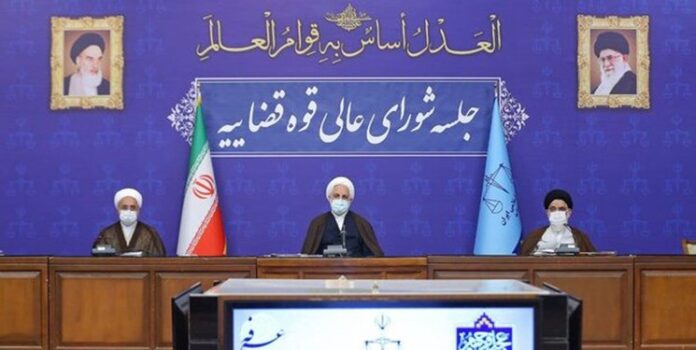
“There are people whom, because they were banned from exiting the country, are worried that they get arrested the moment they arrive at the borders and are sent to prison, without investigations into their charges. These people, after coordination with the judicial system, can return to the country without being arrested,” Ejei said.

The judiciary chief further explained that relevant guidelines have been given to the prosecutors and directors of justice administrations.

“For many people who have criminal or legal cases [in process], especially those who face legal proceedings and a long time has passed since arrest warrants or exit bans were issued for them, their arrest is not necessary. These people can enter the country without any worry after announcing to the judiciary’s public relations center or prosecutors, the time of their entry and how they will arrive [in the country],” he said.

Ejei also touched on the issue of some Iranian expatriates who want to return to the country and their concerns that they could face legal action.
“No Iranian, who is a national of Iran and is now living abroad, is banned from entering and faces no other prohibition for returning to the country,” he said.

“There are cases where if these people come [home] and their issues are investigated, this helps them and ends the limbo they’re living in.”

“There are currently people in other countries, whose possessions and facilities have no custody inside [the country] and their beneficiaries fear to return. But if these people return, their financial issues will be clarified in a simple and accurate investigation.”

The judiciary chief also touched on his recent visit to the temporary detention center as well as the security section of Evin prison and his talks with people who are kept there on security or non-security-related charges. He ordered director generals of justice administrations, prosecutors and judges to occasionally inspect prisons and detention centers.

“Judicial officials should not stop at getting reports from assistant prosecutors and prisoner supervisors. But they should, more than ever, supervise the prisons so they can make correct decision on those in custody,” he said.

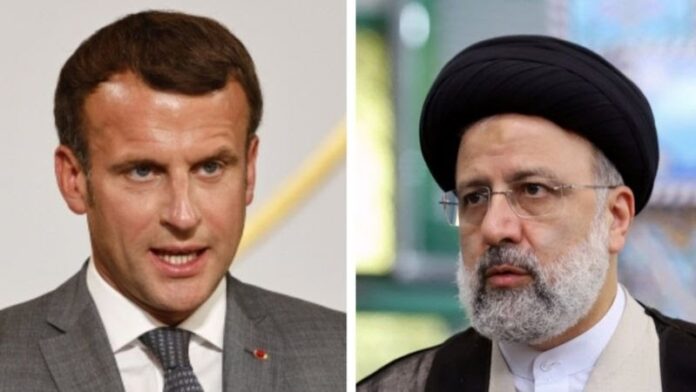
Iranian, French Presidents Discuss Lebanon Woes, JCPOA Revival

During the one-hour phone call, Raisi said the new Iranian government welcomes the development of relations with France based on mutual interests and mutual respect.

He stressed the development of relations between the two countries, especially in the economic and trade fields, and said, “The rights of the Iranian people must be ensured in any negotiations.”

Raisi referred to the US’ repeated and gross violations and the failure of the three European parties to the Joint Comprehensive Plan of Action (JCPOA) to comply with their obligations under the international agreement, and said, “By imposing new sanctions, the Americans have clearly violated their obligations and even extended the new sanctions to the humanitarian aspects.”

He said both the United States and the Europeans must fulfil their obligations under the nuclear deal.

“In any negotiation, the rights of the Iranian people must be upheld and the interests of our nation must be ensured.”

“The Islamic Republic is very serious about providing security and maintaining deterrence in the Persian Gulf region and the Sea of Oman, and will confront the factors that deprive security,” he added.

President Raisi also pointed to the crisis in Lebanon, and said, “We support any action that is aimed at stability, security and improving the economic situation of the Lebanese people, and we welcome France’s support in this regard.”

Macron, in turn, congratulated Raisi on his inauguration and wished him success, saying, “Iran and France can play a role in establishing peace and stability in the region through their cooperation.”

Referring to the US unilateral withdrawal from the JCPOA and the suspension of the implementation of the international agreement, Macron said, “We are looking for a solution to this issue and we hope that negotiations will start again.”

Macron further pointed to maritime security, and said, “First of all, we must create a framework of stability and make sure that there will be stability in various issues, including the state of the seas.”

President Macron noted that France has always tried to provide a solution for stability in Lebanon, and expressed hope that with Iran’s cooperation, the ground would be laid for stability and solving the country’s problems.

At the end of the conversation, the French President called for the continuation of talks between Tehran and Paris with the aim of deepening bilateral relations.