Thursday, December 25, 2025
Home Blog Page 2422

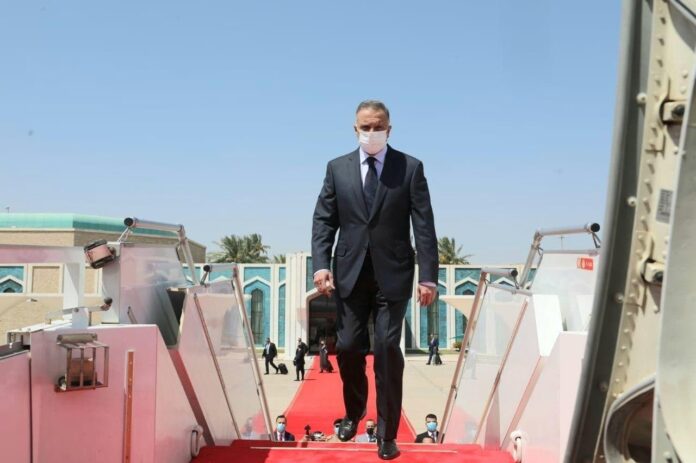
Official: Iraqi PM to visit Iran on Sunday

The visit will mark Al Kadhemi’s first meeting with Raisi since he took office last month, and comes ahead of Iraq’s October 10 legislative polls.

Al Kadhemi will raise “issues of security, energy, and relations between Saudi Arabia and Iran” with Raisi, a government source said, requesting anonymity.

Oil-rich Iraq has been caught for years in a delicate balancing act between its two main allies, the United States and neighbouring Iran.

The Islamic republic exerts major clout in Iraq through allied armed groups within the Hashed Al Shaabi, a powerful state-sponsored paramilitary network.

Iraq is highly dependent on Iranian imports, and the Islamic republic supplies a third of Iraq’s gas and electricity needs. However, Baghdad currently owes Tehran six billion dollars for energy supplied.

Baghdad has also been brokering talks since April between US ally Riyadh and Tehran on mending ties severed in 2016.

Last month Iraq hosted a summit of regional leaders, attended by the foreign ministers of Iran and Saudi Arabia as well as French President Emmanuel Macron.

Sunday’s meeting is also expected to address the issue of visas for Iranian pilgrims travelling to Shiite holy sites in Iraq.

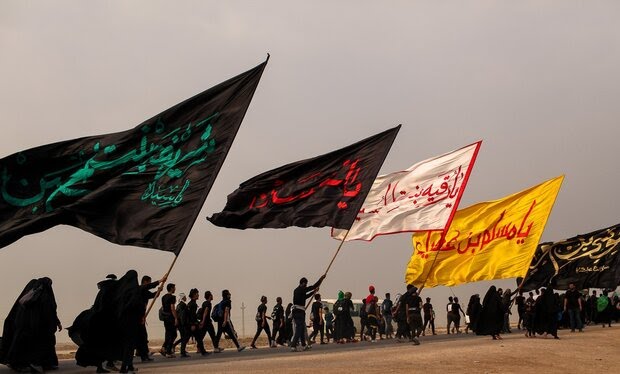
Iraqi authorities late on Thursday announced new quotas for foreign pilgrims for the Arbaeen pilgrimage in the Shiite shrine city of Karbala later this month.

Al Kadhemi’s office announced that 60,000 Iranian pilgrims would be allowed to attend, up from 30,000 previously announced.

The number of visas issued to foreign pilgrims permitted has dropped sharply in the past two years due to the coronavirus pandemic.

Al Kadhemi, who came to power in May last year after months of unprecedented mass protests against a ruling class seen as corrupt, inept and subordinate to Tehran, had called for early parliamentary elections in response to demands by pro-democracy activists.

Source: Agence France-Presse

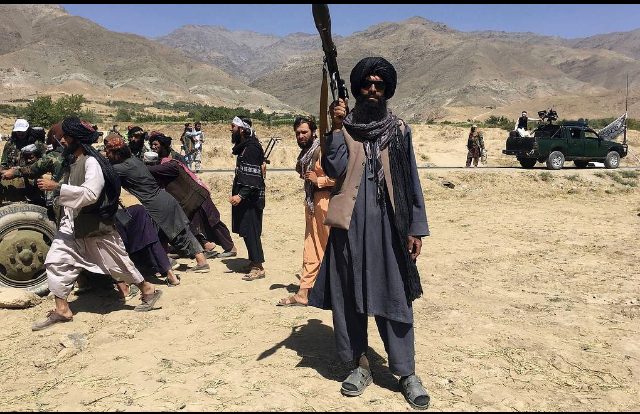
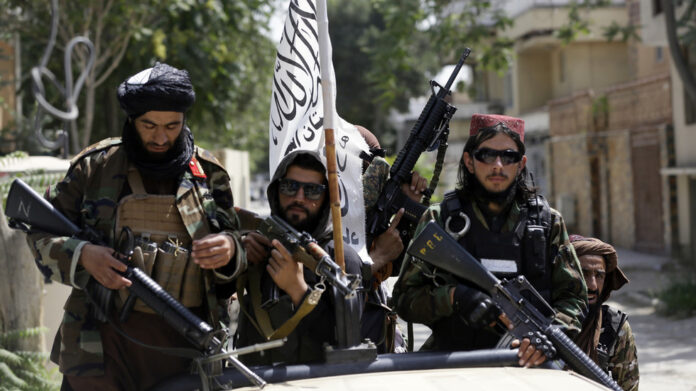
Taliban kills ex-VP’s brother in Panjshir

 The strategic valley is Afghanistan’s last remaining holdout where anti-Taliban forces seem to be working on forming a ‘guerrilla movement’ to take on the Taliban.

Source told Aamaj News Azizi was arrested and shot on Thursday in Rokha district in Panjshir.

His brother Saleh did not flee from the country like former President Ashraf Ghani. He became one of the leaders of resistance against the Taliban. His exact location remains unknown.

The Taliban announced this week that Panjshir, the last stronghold of the anti-Taliban resistance movement National Resistance Front of Afghanistan (NRF), was under the group’s control.

However, resistance leader Ahmad Massoud insisted the fight continued and called for a national uprising. Massoud’s calls were met with rallies across the country in support of his movement.

The Taliban fighters are tightening their control over Panjshir region by denying residents food and executing civilians, witnesses disclosed.

The witnesses told The Washington Post the Taliban killed at least eight civilians who were “neither supporters of the resistance or the Taliban”.

NRF Spokesman Ali Nazary said on Friday the Taliban has expelled thousands of people from the Panjshir province and is committing ethnic cleansing.

“The Taliban have expelled thousands of people from Panjshir,” he added.

They are committing ethnic cleansing & the world is still watching and ignoring this situation,” Nazary wrote on his Twitter page.

He also called on the international community to stop the war crimes in Afghanistan.

The TOLOnews TV channel reported on Friday a humanitarian crisis and hunger are looming for the residents of Panjshir province where a resistance was organized to counteract the Taliban that seized power in the country.

According to its sources, following the beginning of military actions, the Taliban blocked roads to the province, there is no power or phone connection in the region. According to the sources, 

“Panjshir’s residents will encounter serious problems and a threat of hunger if the situation doesn’t change,” the sources declared

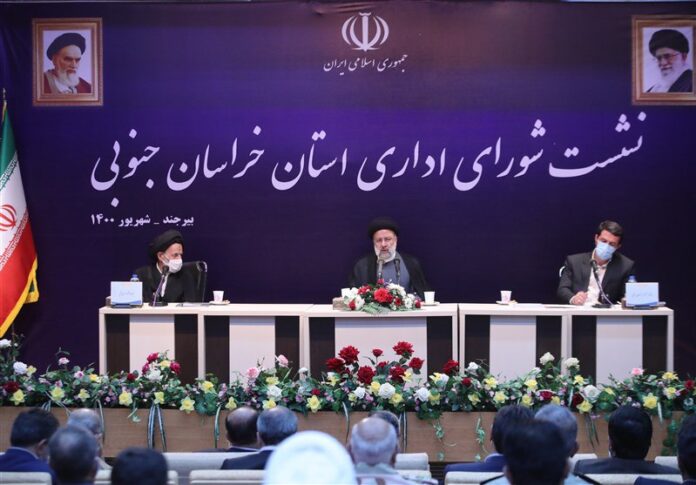
Raisi: Iran can overcome problems by relying on domestic capabilities

“The United States and Western countries have never solved any problems of nations and will not do so, just as they made the honorable people of Afghanistan miserable for 20 years,” the Iranian president said on Friday night at the end of a one-day trip to South Khorasan province.

Raisi said he believes that there is no unsolvable problem in the country and that all challenges can be met by Iranian people.

“Since I entered the executive branch, I have come to believe more in this and I strongly believe that all problems can be resolved by youths and people with faith,” Reisi noted.

The president also Emphasized that the distribution of resources in Iran should be fair, adding that the best way to achieve fair distribution is budgeting based on spatial planning.

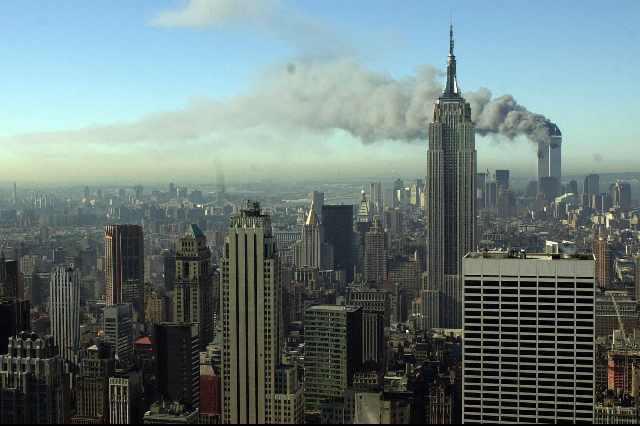
Poll: Americans say 9/11 changed US for worse than better

According to a poll by Washington Post and ABC News, 46 percent of Americans believe that their country has been changed for the worse following the terrorist attacks that occurred in New York City, and at the Pentagon in Washington, DC, on September 11, 2001.

The number easily exceeds the 33 percent who said the US has changed for the better.

The results found by the survey also differ vastly from those of a similar poll carried out just one year after the attacks.

In a 2002 poll, 67 percent of Americans maintained that the event has changed the country for the better.

9/11 was a series of strikes that killed nearly 3,000 people and caused about $10 billion worth of property and infrastructure damage in the United States.

Iran trying to up visa quota for Arbaeen pilgrims

Amir Abdollahian however said another million-strong march on the shrine of Imam Hussein is impossible due to the strict Covid restrictions and the need to protect the health of pilgrims. 

Local media soures say, Iraq had earlier increased the visa quota for Iranians from 40 thousand to 80 thousand upon orders from Prime Minister Mustafa al-Kazemi. 

This came after Iranian government officials held talks with the Iraqis over the matter. Iraq has capped the number of visas for foreign pilgrims participating in the Arbaeen ceremonies lest they should bring about a super spreader event amid the Covid pandemic. Arbaeen marks the 40th day after the martyrdom of the Prophet Muhammad’s grandson Imam Hussein at the battle of Karbaka by the army of tyrant of the time Yazid.  Each year, millions of Iranians participate in Arbaeen mourning ceremonies in the Iraqi city of Karbala.

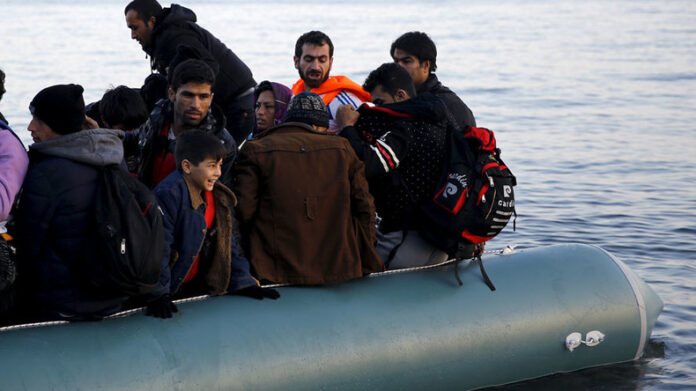
France warns UK about pushing back migrant boats

Relations between London and Paris plunged to a new low as the UK was accused of breaking maritime law and of “blackmail”, after the British government threatened to withhold funds for France to beef up its coastal patrols.

The clash came as leading lawyers, a senior Tory MP, the union representing Border Force officers, and a former chief of the naval staff all agreed that the pushback policy was likely to be unworkable without French cooperation.

Lord West, the ex-naval chief, also warned that the plan – which Home Secretary Priti Patel hopes to launch within weeks – could easily end up with “someone being killed”.

Nicolas Pillerel, diplomatic adviser to French Interior Minister Gerald Darmanin, echoed Lord West’s fear, saying, “Intercepting boats in the sea when they don’t want to be escorted is extremely dangerous. And this can lead to tragedies.”

“It risks the Channel becoming a new theatre of human tragedies, as we have already seen in other seas,” added Pillerel, referring to mass drownings in the Mediterranean and Aegean.

However, according to a report, the home secretary is determined to plough ahead, believing French officials will have no choice but to cooperate if boats are forced back into French waters.

Patel intends to speak personally to any Border Force commanders who have assessed that migrant boats can be pushed back, to make clear she fully supports that decision.

Training has been going on for 18 months already and is expected to finish by the end of September, with Border Force officials being trained to physically bump boats backwards.

The home secretary’s plan, which came in response to orders from Prime Minister Boris Johnson to curb the crossings, sparked a furious reaction when the French interior minister met with Patel on Wednesday.

Darmanin tweeted, “France will not accept any practice that is contrary to the law of the sea, nor any financial blackmail.”

The minister said he had told Patel that “Great Britain must stick to its commitments”, adding, “The friendship between our two countries merits better than posturing, which harms the cooperation between our services.”

The Home Office announced it had received legal advice indicating that boats could be turned back in some circumstances, but it was thought that this would not require any maritime laws to be broken, or place passengers at risk.

Colin Yeo, a specialist immigration lawyer, said it was a policy that “sounds tough but will never be implemented”, akin to earlier UK threats to “install wave machines or a floating fence”.

Pushback has been used previously by the Italian authorities in the Mediterranean, and by the Australian and US governments, but there has always been another nation willing to accept refugees back.

James Turner, a QC specialising in shipping disputes, agreed with the view that turning back migrant boats in the middle of the Channel would “not be lawful under international law”.

Lucy Moreton of the ISU union, which represents Border Force staff, called the idea “dead in the water”, noting, “In practical terms, if this happened even once I’d be surprised.

“You also need the consent of the French to do it because, as you turn the vessel back towards France – when it crosses the median line – it has to be intercepted and rescued by the French, and it appears the French will simply not engage in this,” Moreton added.

Moreton stated that officers were concerned migrants and refugees would “panic” and put themselves at even greater risk, now that the policy had been made public.
Tim Loughton, a Conservative member of the Commons Home Affairs Committee, agreed the plan was unworkable, saying, “In practice it’s just not going to happen.”

And Lord West, the former first sea lord, added, “People forget how dangerous the sea is. It’s flat, calm, and people have been coming across, but it doesn’t take much suddenly for people to go into the water and drown.”

Johnson’s spokesperson refused to discuss the new approach, stating, “I’m not going to get into the operational tactics used by Border Force staff.”

However, they denied any plan to rewrite maritime laws, and brushed off the French protests and refusal to cooperate, insisting that the UK was “confident” the policy would work.

The spokesperson said, “It’s right that our Border Force has the right range of tactics to address this problem. They will make sure it is tested and that it is carried out by trained Border Force staff and that it is safe and legal.”

More than 12,500 migrants have arrived from France so far this year – including 1,500 in the last week alone – a sharp rise from around 8,000 in 2020.

Source: The Independent

UN chief calls for dialogue with Taliban

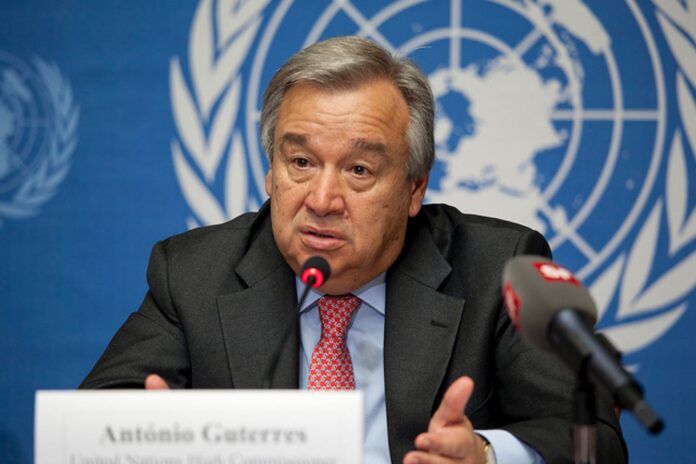
“We must maintain a dialogue with the Taliban, where we affirm our principles directly — a dialogue with a feeling of solidarity with the Afghan people,” he stated in an interview with AFP.

“Our duty is to extend our solidarity to a people who suffer greatly, where millions and millions risk dying of hunger,” Guterres added.

The UN chief said there were “no guarantees” about what might come out of talks but that discussions are a must “if we want Afghanistan not to be a center of terrorism, if we want women and girls to not lose all the rights acquired during the previous period, if we want different ethnic groups to be able to feel represented”.

“Until now, in the discussions that we have had, there is at least a receptivity to talk,” noted Guterres, who does not rule out going to Afghanistan one day if conditions are right.

What the UN wishes is “an inclusive government”, where all components of Afghan society are represented, and “this first preliminary government” announced a few days ago “does not give that impression” he added, regretfully.

“We need respect for human rights, women and girls. Terrorism must have no base in Afghanistan to launch operations in other countries and the Taliban must cooperate in the struggle against drugs,” Guterres continued.

He said Afghanistan must be governed “in peace and stability, with the rights of the people respected.”

Guterres stated that the Taliban wants recognition, financial support and sanctions to be abolished.

“That gives a certain leverage to the international community,” he said, adding that “an economic collapse situation which could create appalling humanitarian consequences” must be avoided.

Guterres suggested that, as with Yemen, it is possible to foresee the granting of “financial instruments” to Kabul that would not be subject to current sanctions.

“It is in the interest of the international community and I am not talking about the lifting of sanctions or recognition. I am talking about targeted measures to allow the Afghan economy to breathe,” he told the news agency.

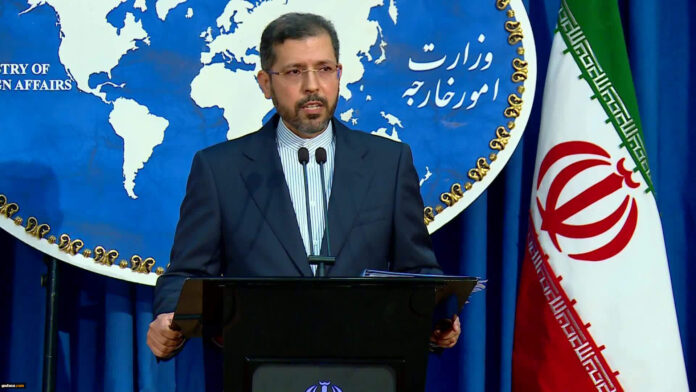
Iran raps ‘Arab Quartet Committee’ statement

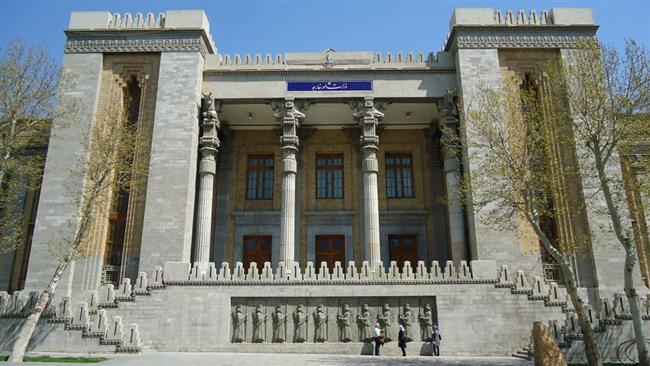
Iran's Foreign Ministry

“Such statements show that the members of the committee lack the least understanding of regional developments,” Khatibzadeh said in a statement on Friday.

The foreign ministry spokesman dismissed allegations of Iranian interference in the domestic affairs of other countries as hackneyed.

He said countries that have a history of intervention, creating tension, breeding terrorists and war mongering especially in West Asia and Africa are in no position to make accusations against Iran.

He said the main concern of those behind such statements is to serve Israel overtly and covertly.

Khatibzadeh advised the four countries to focus on the Israel’s crimes against Palestinians.
He said issuing such statements simultaneously with the actions of some of these countries to mend ties with Iran is contradictory.

On Thursday, the self-proclaimed Arab quartet committee comprising Saudi Arabia, the United Arab Emirates, Bahrain, and Egypt repeated its allegations of support for terrorism against Iran. It also accused Iran of aggressive acts in the region.

Taliban cancels inauguration ceremony for Afghan interim govt.

“The inauguration ceremony of the new Afghan government was canceled a few days ago. In order not to confuse people further, the leadership of the Islamic Emirate (the name the Taliban calls itself) announced the part of the Cabinet, and it has already started to work,” Inamullah Samangani, a member of the Taliban’s cultural commission, wrote on his Twitter page, without specifying the further date for the event.

Furthermore, he denied previously disseminated information that the inauguration was supposedly scheduled for September 11, calling it rumors.

Earlier, several foreign and regional media reported that the Taliban planned to inaugurate the new Afghan government on September 11, 2021. As it was stated, Russia, Iran, China, Qatar and Pakistan were invited to the ceremony.

On August 15, Taliban fighters swept into Kabul without encountering any resistance, and gained full control over the Afghan capital within a few hours. Afghanistan’s President Ashraf Ghani claimed he had stepped down to prevent any bloodshed and subsequently fled the country. On September 6, the Taliban took over the entire country, while the next day, it announced the new interim Afghan government, which included only members of the movement itself.

Source: TASS

Iran says reserves right to respond to Israel threats

In a tweet, Foreign Ministry spokesman Saeed Khatibzadeh described Israel as an outlaw regime. Khatibzadeh also lashed out at Israel for going on at Iran’s peaceful nuclear program while the regime itself is sitting on an illicit arsenal of nukes and refuses to sign the Nuclear Non-proliferation Treaty.

He added that Iran is a signatory to the NPT and has had its nuclear facilities inspected by the International Atomic Energy Agency, IAEA, more than any other country. Khatibzadeh said Iran reserves the right to respond to Israel’s threats and that the world is waking up to the destabilizing nature of the “West’s darling”.

Israel’s military chief Aviv Kohavi recently said the regime has prepared plans on striking Iran. Israel has frequently threatened Iran with war over the past years without making good on its threats. Iran says the saber-rattling is merely part of Israel’s psychological warfare.