Sunday, December 21, 2025
Home Blog Page 2418

Pentagon chief: Al-Qaeda may reform in Afghanistan

U.S. Secretary of Defense Lloyd Austin speaks during a joint news conference at the Ministry of Foreign Affairs in Doha, Qatar September 7, 2021. Olivier Douliery/Pool via REUTERS

“That’s the nature of the organization,” he told a small group of reporters in Kuwait City at the conclusion of a four-day tour of Persian Gulf states on Thursday.

He said the United States is prepared to prevent an Al-Qaeda comeback in Afghanistan that would threaten the United States.

“We put the Taliban on notice that we expect them to not allow that to happen,” Austin added, referring to the possibility of Al-Qaeda using Afghanistan as a staging base in the future.

In a February 2020 agreement with the Donald Trump administration, Taliban leaders pledged not to support Al-Qaeda or other extremist groups that would threaten the United States. But US officials believe the Taliban maintain ties to Al-Qaeda, and many nations, including Arab states, are concerned that the Taliban’s return to power could open the door to a resurgence of Al-Qaeda influence.

Austin has asserted that the US military is capable of containing Al-Qaeda or any other extremist threat to the United States emanating from Afghanistan by using surveillance and strike aircraft based elsewhere, including in the Persian Gulf. He also has acknowledged that it will be more difficult without American troops and intelligence teams based in Afghanistan.

Austin and Secretary of State Antony Blinken appeared together in Qatar on Tuesday in a show of US gratitude for that Gulf state’s help with the transit of tens of thousands of Afghans and others evacuated from Kabul. Blinken also visited an evacuee transit site in Germany, and Austin visited Bahrain and Kuwait.

Together, the Austin and Blinken trips were meant to reassure Gulf allies that President Joe Biden’s decision to end the US war in Afghanistan in order to focus more on other security challenges like China and Russia does not foretell an abandonment of US partners in the Middle East. The US military has had a presence in the Gulf for decades, including the Navy’s 5th Fleet headquarters in Bahrain. Biden has not suggested ending that presence, but he — like the Trump administration before him — has called China the No. 1 security priority, along with strategic challenges from Russia.

Austin, a retired Army general, has a deep network of contacts in the Gulf region based in part on his years commanding US and coalition troops in Iraq and later as head of US Central Command, which oversees US military operations in the Middle East.

Austin had been scheduled to visit Saudi Arabia on Thursday as the final stop on his Gulf tour. But on Wednesday evening his spokesman, John Kirby, announced that the visit had been dropped due to “scheduling issues”. Kirby offered no further explanation but said Austin looked forward to rescheduling.

Austin indicated that his visit was postponed at the Saudis’ request, adding, “The Saudis have some scheduling issues; I can’t speak to exactly what they were.”

The Saudi stop notably was to happen two days before the 20th anniversary of the terrorist attacks on the United States that killed nearly 3,000 people. Fifteen of the men who hijacked commercial airliners and crashed them into the twin towers of the World Trade Center, the Pentagon and a Pennsylvania field on September 11, 2001 were Saudis, as was Osama bin Laden, whose Al-Qaeda network plotted the attack from its base in Afghanistan. The attack prompted the US invasion that became a 20-year war in Afghanistan.

US relations with the Saudi government have been strained at times in the intervening years. In 2018, Crown Prince Mohammed bin Salman oversaw an unprecedented crackdown against activists, rivals and perceived critics. The year culminated in the gruesome killing of Washington Post contributing columnist and dissident Jamal Khashoggi by Saudi agents in the Riyadh Consulate in Turkey.

Earlier this month, Biden directed the declassification of certain documents related to the 9/11 attacks, a gesture to victims’ families who have long sought the records in hopes of implicating the Saudi government. Public documents released in the last two decades, including by the 9/11 Commission, have detailed numerous Saudi entanglements but have not proved government complicity.

The Saudi government denies any culpability. On Wednesday the Saudi Embassy in Washington released a statement welcoming the move to declassify and release more documents related to 9/11, claiming, “No evidence has ever emerged to indicate that the Saudi government or its officials had previous knowledge of the terrorist attack or were in any way involved in its planning or execution.”

Source: The Associated Press

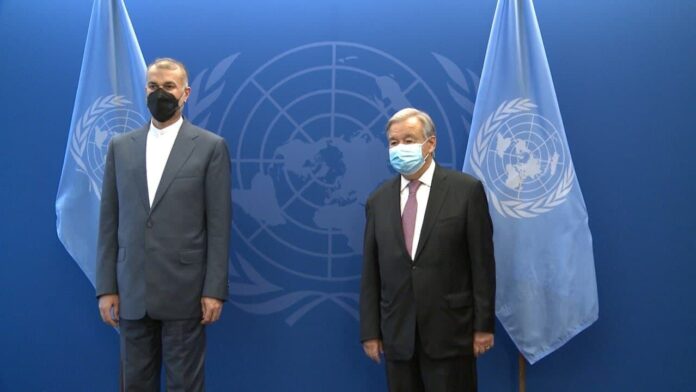
Lavrov: Russia accepts no change to Iran nuclear deal

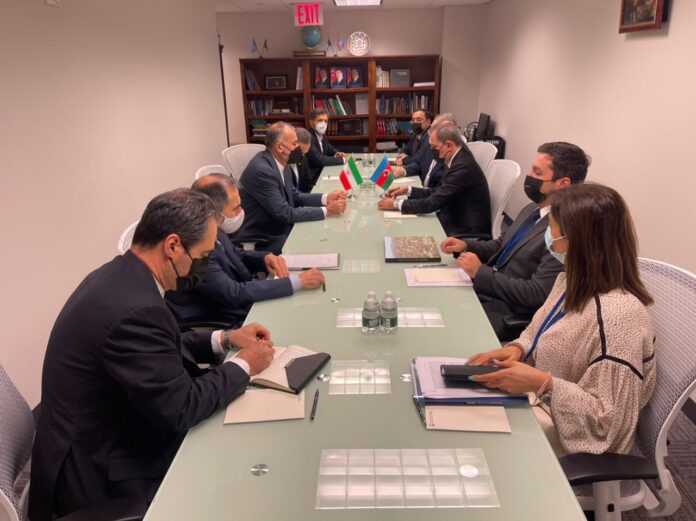
Lavrov and Amir Abdollahian were speaking over the phone on Thursday.

Russia is a signatory to the nuclear deal known as the Joint Comprehensive Plan of Action, JCPOA.

Iran, Russia, China and the European troika have been engaged in talks to revive the deal which plunged into disarray following the US’s unilateral withdrawal from the agreement in 2018.

After the US pullout and its reinstatement of sanctions on Iran, Tehran scaled down its obligations under the JCPOA. Tehran also says the European troika has failed to live up to its commitments under the deal.

In their telephone conversation, Amir Abdollahian and Lavrov discussed a host of other issues including bilateral ties and the situation in Afghanistan. Both top diplomats agreed that an inclusive government must be formed in Afghanistan that would involve all Afghan ethnic and political groups.

As for Covid, Amir Abdollahian emphasized that Iran expects Russia to stick to previous agreements on supplying Iran with more sputnik vaccines.

Hurricane Ida death toll rises to 82 in US, hundreds of thousands without power

As many as 30 people died in southeastern states, including 26 victims in Louisiana, while 52 more deceased in the northeastern regions, the CBS news broadcaster reported on late Wednesday, citing data of states’ authorities.

Hurricane Ida, which made landfall approximately 10 days ago, caused extensive damage across areas of the Gulf Coast, Pennsylvania, New York, and New Jersey. US President Joe Biden has recently visited several of the damaged communities.

Causes of death related to the extreme weather and damage of Hurricane Ida include drowning, falling trees, excessive heat, and carbon monoxide poisoning.

More than a dozen die in North Macedonia Covid hospital fire

The fire broke out late on Wednesday following an explosion in a COVID-19 clinic in Tetovo in the northwest of the Balkan country, stated Prime Minister Zoran Zaev, who immediately headed to the town.

“A huge tragedy has occurred in the Tetovo COVID-19 centre,” Zaev said on Twitter overnight, adding, “An explosion caused a fire. The fire was extinguished but many lives were lost.”

At least 14 people died in the disaster, the prosecutor’s office later said in a statement, raising the toll from the 10 deaths confirmed overnight.

“Prosecutors have ordered autopsies to identify the bodies of the 14 people who died in the fire and we are looking into whether there are others dead,” the statement added.

Health Minister Venko Filipce had earlier expressed “profound condolences” to the victims’ families on Twitter.

The fire broke out as the former Yugoslav republic celebrated the 30th anniversary of its independence, with festivities in the capital Skopje, including a military parade.

The blaze destroyed part of the modular units recently built in front of the hospital to accommodate COVID patients.

Several hours after the disaster, people walked past charred containers while stretcher bearers went back and forth to rescue vehicles.

Source: RIA Novosti

UN: 18k Yemeni civilians killed or injured in Saudi-led war

In a report, a group of UN experts cited the Yemen Data Project for the airstrike figures and said that the Yemeni people have been subjected to some 10 airstrikes a day, a total of more than 23,000 since the beginning of the Saudi war in March 2015.

According to the project, a local data-gathering operation, all of the airstrikes against Yemen have been carried out by the Saudi-led coalition.

Saudi Arabia launched the hugely indiscriminate war on Yemen in 2015 to restore power to Yemen’s former officials, who have been loyal friends to Riyadh, and crush the popular Ansarullah resistance movement.

Yemen’s Army and Popular Committees have, however, never laid down their arms in the face of the heavily Western-backed coalition.

They have staged numerous daring counterattacks against the kingdom, including its oil facilities and capital, and made surprise advances in the western province of Ma’rib to the sheer alarm of Riyadh and its supporters.

The war has deteriorated largely into a stalemate leading to the world’s worst humanitarian crisis.

However, the exact toll of the conflict remains unclear mainly because of limited access to some of the remote areas in which it is conducted.

According to a report by the UN humanitarian body in December 2020, the Saudi-led war had killed more than 200,000 civilians, including more than 100,000 from indirect causes such as starvation and preventable causes due to lack of basic services.

UN Under-Secretary-General for Humanitarian Affairs and Emergency Relief Coordinator Martin Griffiths warned last month that Yemen is spiraling faster toward food shortages and other humanitarian catastrophes, with millions of people in the Arab country ravaged by a Saudi war being “a step away” from famine and related diseases.

“Today, about 5 million people are just one step away from succumbing to famine and the diseases that go with it. Ten million more are right behind them,” Griffiths, former United Nations special envoy for Yemen, added.

The US-based Armed Conflict Location and Event Data Project (ACLED), a nonprofit conflict-research organization, estimates that the war has claimed more than 144,620 lives in Yemen since 2015.

The UN report emphasized that the continuation of the sale of weapons has exacerbated the fighting.

Yemen’s Foreign Minister Hisham Sharaf Abdullah on Tuesday slammed the US and Britain for openly supporting Saudi Arabia in its military aggression against Yemen while urging the Sana’a government defending the country to stop fighting, saying such a dual approach is meant to keep up arms sales to the Riyadh regime.

Abdullah called on Washington and London to stop taking sides with the Saudi-led aggressor and work instead to play a positive and neutral role in efforts to establish peace in Yemen.

Source: Press TV

Poll: Americans worried about domestic terror than foreign threats

The survey, conducted by The Associated Press and the NORC Center for Public Affairs Research, found that 65 percent of Americans are extremely concerned or very concerned about extremist groups based inside the US, compared to 50 percent of Americans who said the same of extremist groups based outside of the US.

When broken down by party, Democrats were more likely to be concerned about homegrown terror threats than Republicans, 75 percent to 57 percent.

Seventy-five percent of respondents said they were extremely concerned or very concerned about the spread of misinformation, which was the highest percentage any of the threats received.

The poll also found that roughly one-third of Americans believe the wars in Iraq and Afghanistan were worth fighting as the US approaches the 20th anniversary of the September 11, 2001, terrorist attacks, which preceded the United States’ invasions of those countries.

Thirty-four percent of Americans said they believe the Iraq War was worth fighting, with 63 percent saying it was not worth fighting, according to the poll.

The results were similar for the war in Afghanistan: 35 percent of respondents said the conflict was worth fighting, while 62 percent said it was not worth fighting.

The survey came amid the US troop withdrawal from Afghanistan. The mission was completed in late August after 20 years, ending America’s longest war.

A separate survey conducted by Pew Research Center last month, before the final troops left Afghanistan, found that 54 percent of US adults supported the decision to pull troops from the country, with 42 percent saying it was the wrong move.

The poll also found that 69 percent of the American public feels the US mostly failed in achieving its goals in Afghanistan, with only 26 percent saying President Joe Biden’s administration had done an excellent or good job in handling the situation.

Selasal Castle, Iran’s 10th cultural heritage site registered on UN list

The castle, located in the city of Shushtar, includes multiple big yards, barracks, stables, bathrooms, shabestans [underground spaces], towers, gardens, qourkhanehs (places of weapons], naqarehkhanehs [places of musical instruments], harems, kitchens, big ponds, a fence and a moat.

Salasel Castle was registered on UNESCO’s list of World Heritage Sites in 2009 and is Iran’s 10th cultural heritage site to be registered under number 1315 on the United Nations’ list together with the 12 other monuments as Shushtar Historical Hydraulic System.

Shushtar is an ancient Iranian city, approximately 61 kilometers away from Dezful, Khuzestan province. The city dates back to the Achaemenid era.

Taliban to hold general elections in Afghanistan

“General elections are planned to be held which will include a broad array of the Afghan society. We are seeking to involve the broadest spheres of the population, talented people who are not Taliban members,” the Al-Jazeera TV channel quoted a spokesman for the Information and Culture Ministry of the Islamic Emirate of Afghanistan (as the Taliban refers to Afghanistan).

The Taliban launched a large-scale operation to regain control over Afghanistan after the United States announced the withdrawal of its military personnel from the country. On August 15, Afghan President Ashraf Ghani stepped down and fled the country, while the Taliban forces swept into Kabul, meeting no resistance. US service members fully withdrew from Afghanistan last week, ending their 20-year presence in the country. On September 6, the movement claimed that the whole territory of Afghanistan was now under their control and unveiled a new temporary government made up exclusively of Taliban members on September 7.

Maasai Mara lives on, best wildlife photos of the year

There is also a competition for the photographers of wildlife each year by the same name.
The Greatest Maasai Mara Photographer of the Year was established as a way of ensuring the Mara will survive for generations to come.

The Competition is open to entrants of all ages from all over the world, provided that they travel to the Maasai Mara themselves.

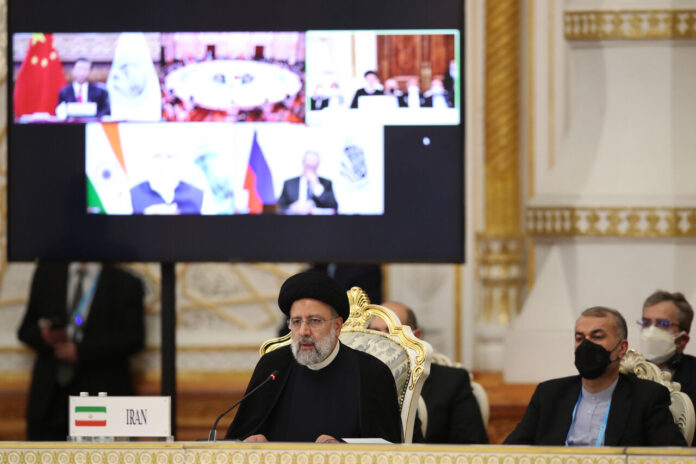
Raisi says to throw weigh behind domestic production of covid vaccines

Raisi said the production of domestic vaccines, including Fakhra and Razi, and the development of Barakat vaccine production lines, have accelerated with the high pace of issuing legal licenses by the Ministry of Health and Medical Education.

He spoke of the rise in the number of vaccine imports, saying the import of vaccines has also accelerated significantly in recent days, adding that Iran has so far received about 50 million doses.

He said more than 1.1 million doses were administered in a single day as part of the third step in the fight against Covid-19, and the number of shots can be increased to two million per day.

Referring to the contribution of the IRGC, Basij, the Red Crescent in the anti-covid drive, he said, “Today, the necessary measures have been put in place for reopening scientific and educational centers and schools as part of the next step and for reducing restrictions on economic activities and replacing those restrictions with smart ones as the sixth step.”
Raisi said all these measures will become operational in the near future.