Monday, December 22, 2025
Home Blog Page 2418

Ex official: Trump admin sought to mitigate US casualties in Iran missile attack

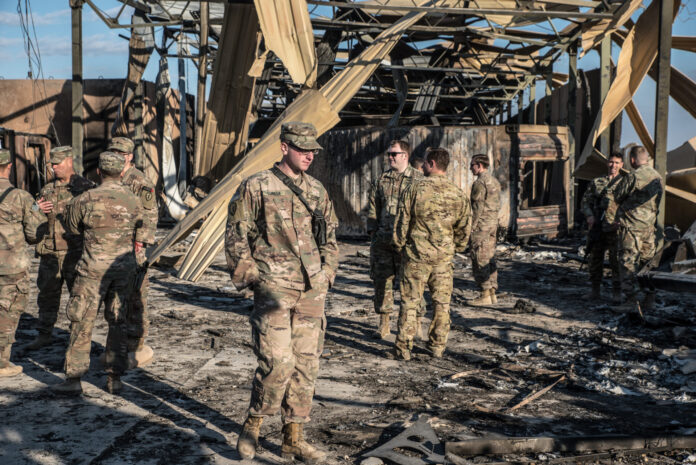
AIN AL-ASAD, IRAQ - JANUARY 13, 2019: U.S. officials stand near a damaged installation hit by Iranian airstrikes inside the Ain al-Asad base near Anbar, Iraq, on January 13, 2019. (Photo by Emilienne Malfatto/For The Washington Post)

Speaking to former CNN journalist Michelle Kosinski and the former head of Britain’s MI6 intelligence agency, Sir Richard Dearlove, on the podcast “One Decision”, Farah said that the Trump-era White House had asked the Defence Department to refrain from providing regular updates on US soldiers’ injuries.

Referring to the attack as the “heaviest several hours of my life”, Farah noted that the initial assertion by Trump about no casualties in the missile strike was true “at the time that we gave those facts to the president”, but the former president appeared to have gone “too far” in an attempt to show that “the Iranians were not successful in harming our targets in response”.

“And I think that it ended up glossing over what ended up being very significant injuries on US troops after the fact”, Farah continued, adding, “We did get pushback from the White House of, ‘Can you guys report this differently? Can it be every 10 days or two weeks, or we do a wrap-up after the fact?’ […] It was this drip, drip of quote unquote bad news”.

Farah, however, claimed that she did not yield to the pressure from the White House at the time, stating that she had the feeling that “transparency is always going to be your best friend in that field”.

The missile attack by Iran was carried out on January 8, 2020, five days after Trump ordered a drone strike that killed Soleimani when the latter was leaving Baghdad Airport.

When asked to estimate the potential seriousness of the injuries, Trump noted in February that he had “heard that they [US troops] had headaches” and estimated it was “nothing serious”.

The assassination of Soleimani drew massive backlash not only from Iran, but from many others. Particularly, former UN special rapporteur on extrajudicial, summary, and arbitrary killings, Agnes Callamard, stressed at the time that the killing was “unlawful” due to Washington’s failure to provide evidence of an imminent threat from Soleimani, a high-profile military official who was killed “on the territory of a third, non-belligerent country, and outside a known armed conflict”.

Tehran has denounced Soleimani’s assassination numerous times, dubbing the drone strike against the Islamic Revolution Guards Corps (IRGC) general an act of “state terrorism”. In July, Iran’s ambassador to the United Nations office in Geneva blasted the Joe Biden administration, noting that Washington’s “failure in holding accountable and bringing to justice the perpetrators behind the assassination is explicitly clear”.

Source: The Guardian
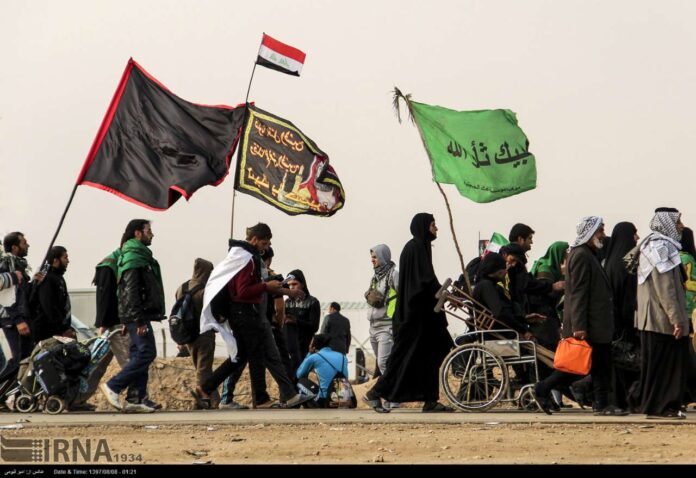
Iraq increases Iranians’ visa quota for Arbaeen rituals

Previously, Iraq said it would allow only 40 thousand Iranian nationals to attend the ceremonies in the Iraqi city of Karbala as part of measures to fight the Covid pandemic.

Baghdad now says Iraqi Prime Minister Mustafa al-Kazemi has instructed authorities to issue 80 thousand visas for Iranians, Iraqi website Shafaghnews reported.

This came after Iranian government officials held talks with the Iraqis over the matter.

Arbaeen marks the 40th day after the martyrdom of the Prophet Muhammad’s grandson Imam Hussein along with 72 of his companions at the battle of Karbaka by the army of tyrant of the time, Yazid.

Each year, millions of Iranians join huge crowds at Imam Hussein’s shrine in Karbala to mark Arbaeen.

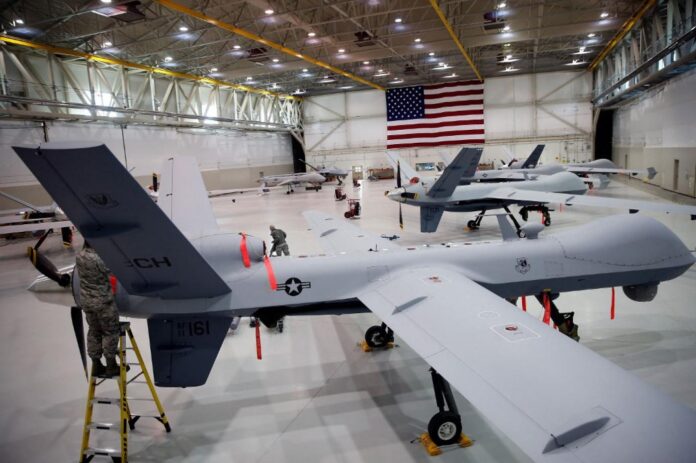
US sets up Persian Gulf drone task force amid tensions with Iran

“The bottom line on why we’re doing this is so that we can develop and integrate unmanned systems and AI as a means to do two things,” said Vice Adm. Brad Cooper, commander of NAVCENT, US 5th Fleet and Combined Maritime Forces.

“One, enhance our maritime domain awareness, and two, increase deterrence,” he added.

Arch enemies Iran and Israel have exchanged accusations over responsibility for attacks targeting maritime vessels linked to each country in the waters of the Gulf since February.

Western countries claimed Iran was behind the drone attack on Israeli-linked MT Mercer Street tanker off Oman’s coast which killed two people on board. Tehran denies the allegations.

The maritime attacks come at a time when the nuclear talks between Iran and the US are stalled.

The US fifth fleet’s area of operations encompasses approximately 2.5 million square miles of water area and includes the Gulf, Gulf of Oman, Red Sea and parts of the Indian Ocean.

The Fifth Fleet is based Bahrain.

Source: Al-Arabiya

Official: Infections much higher than needed to end COVID pandemic in US

“In a country of our size, you can’t be hanging around and having 100,000 infections a day. You’ve got to get well below 10,000 before you start feeling comfortable,” Fauci told Axios.

According to the Centers for Disease Control and Prevention (CDC), the seven-day moving average for cases is currently around 140,000.

With current infection rates as high as they are, Fauci added, “That’s not even modestly good control … which means it’s a public health threat.” He added that “we’re still in pandemic mode.”

Fauci said that when enough people have become vaccinated “you’ll still get some people getting infected, but you’re not going to have it as a public health threat”.

As of Thursday, at least 73 percent of the US eligible population has received at least one dose of a COVID-19 vaccine, with 62.4 percent fully vaccinated. But just 53 percent of the country’s total population is fully vaccinated.

Fauci, the country’s leading expert on immunology, stated that while available vaccines have been effective, not enough people are taking steps to protect against the delta variant.

He also warned that the longer the pandemic is allowed to rage on, the higher the chances are that a “monster variant” that is stronger than the vaccines will occur.

Immunology experts have repeatedly stated that as long as large groups of people continue to contract COVID-19 and harbor it in their systems, mutations like the delta and more recently identified mu variant will occur, increasing the chances of a vaccine-resistant strain occurring.

President Joe Biden on Thursday admonished unvaccinated Americans and some elected officials for exacerbating the coronavirus pandemic as he laid out new, more aggressive steps his administration is taking to confront COVID-19, according to The Hill.

“We have the tools to combat COVID-19, and a distinct minority of Americans, supported by a distinct minority of elected officials, are keeping us from turning the corner. These pandemic politics, as I refer to it, are making people sick, causing unvaccinated people to die,” Biden said in prepared remarks from the State Dining Room of the White House.

“We cannot let these actions stand in the way of protecting the large majority of Americans who have done their part and want to get back to life as normal,” he added.

Biden captured the frustration expressed by vaccinated Americans, saying the US has made substantial progress against the virus but that the remaining 25 percent of eligible Americans — about 80 million people — who have not yet gotten vaccinated for COVID-19 threaten those gains.

He went on to address unvaccinated people directly, telling them that his patience is “wearing thin”.

“My message to unvaccinated Americans is this: What more is there to wait for? What more do you need to see? We have made vaccinations free, safe and convenient. The vaccine is FDA approved. Over 200 million Americans have gotten at least one shot. We’ve been patient but our patience is wearing thin and your refusal has cost all of us,” Biden continued, adding, “So please, do the right thing.”

Biden, without naming anyone, also accused some elected officials of “actively working to undermine the fight against COVID-19”.

“Instead of encouraging people to get vaccinated and mask up, they are ordering mobile morgues for the unvaccinated dying of COVID-19 in their communities,” Biden said, adding that “this is totally unacceptable”.

Biden’s remarks represented a notable shift in tone as he more sternly confronts Americans who have not got the COVID-19 vaccine and conservative politicians who have spouted anti-vaccine messages.

At one point on Thursday, Biden suggested the unvaccinated could reverse US gains in the economic recovery.

Biden also announced a new rule that will require all private employers with upwards of 100 employees to mandate weekly testing as well as plans to require vaccines for most federal workers and contractors. He also stated he would require employers to provide paid time off to get the vaccine and he urged large entertainment venues to require proof of vaccination or testing to gain entry.

Biden, who two months ago was celebrating the country’s progress against COVID-19 with a large outdoor Independence Day gathering, warned that the US faces a difficult road ahead against the highly contagious delta variant. At the same time, he stressed that the situation would not be as dire as last winter because of the strength of the vaccines in combating serious illness.

“We’re in a tough stretch and it could last for a while,” Biden noted.

COVID-19 cases have risen across the US after a low point earlier this year, as the delta variant has spread among unvaccinated Americans. In some areas of the country, COVID-19 patients have overwhelmed hospitals.

Taliban accuses US of violating Doha agreement over minister banned

FBI

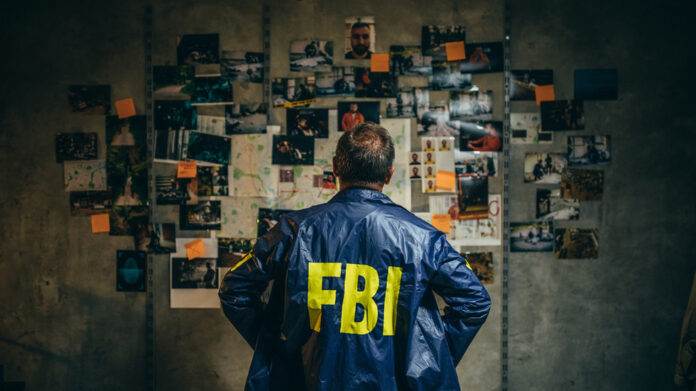
The Taliban has accused Washington of violating the peace deal the two signed in 2020 in Qatar, for keeping its new Interior Minister Sirrajudin Haqqani on the US terror list.

The new minister, who is part of the Haqqani Network, had been accused of attacks on US forces in Afghanistan during the 20 years of war. The US has a $5 million bounty for Haqqani. He also remains on a United Nations terror list.

Several other members of the group, including the acting Prime Minister Mullah Mohammad Hassan Akhund, are blacklisted internationally.

“Pentagon officials have remarked that some cabinet members of the Islamic Emirate or family members of the late Haqqani Sahib are on the US blacklists and still targets,” said a statement from the ministry of foreign affairs.

“The Islamic Emirate considers this a clear violation of the Doha Agreement which is neither in the interest of the United States or Afghanistan,” the statement added, referring to the agreement signed in the Qatari capital.

The deal paved the way for the withdrawal of US-led foreign forces in return for a guarantee from the Taliban not to allow groups such as Al-Qaeda and Daesh to operate on Afghan soil. The US forces withdrew just before an August 31 deadline in what turned out to be a chaotic exercise, ending America’s longest war.

The US-Taliban deal excluded the West-backed Afghan government led by former President Ashraf Ghani, who fled the country after Taliban fighters swept through the country last month with little resistance from government forces.

Source: Al-Jazeera

Russia, US envoy discuss Iran nuclear deal

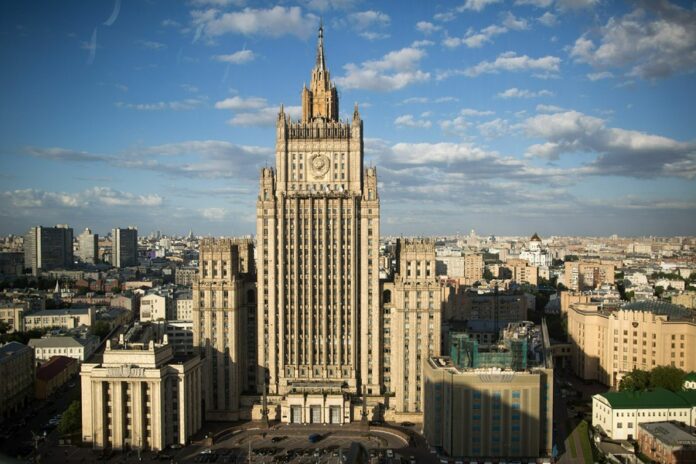
“A meaningful exchange of views on the prospects for restoring the full-fledged implementation of the JCPOA took place. Both sides reaffirmed their determination to continue cooperation in the ‘Vienna format’ involving all JCPOA member states, including Iran, along with US representatives,” the ministry added in a statement following the talks held on Wednesday and Thursday.

It noted the importance of Tehran’s willingness to return to the negotiating table as soon as possible.

The need for further work based on the outcome of the talks that took place in April-June was highlighted at the consultations as well, the Russian Foreign Ministry added.

“[The parties] emphasized the IAEA’s substantial contribution to the stabilization process and the revival of the JCPOA. Mutual intention to continue to support the agency’s verification activities in light of UN Security Council Resolution 2231 was expressed,” the report said.

President Joe Biden Iran’s envoy, Malley, also stated on Thursday that he had a “good and constructive” meeting with Ryabkov on the goal of returning to the JCPOA, also known as the Iranian nuclear deal.

“Good & constructive meetings in Moscow with Ryabkov where we discussed our shared goal of a return to negotiations and quick mutual resumption of compliance with the JCPOA,” Malley tweeted.

Source: RIA Novosti and TASS

Russia slams NATO plan over Afghan refugees

“It is a true catastrophic plan if NATO allies push through a forced opening of Afghan borders with adjacent countries. It will hit Europe like a tonne of bricks. Although they don’t seem to understand it yet,” Spokeswoman for the Russian Foreign Ministry Maria Zakharova wrote in her Telegram channel on Wednesday.

The diplomat commented on the reports that European countries offered “money and resources” to Tajikistan, Turkmenistan and Uzbekistan if they agree to let in Afghan refugees.

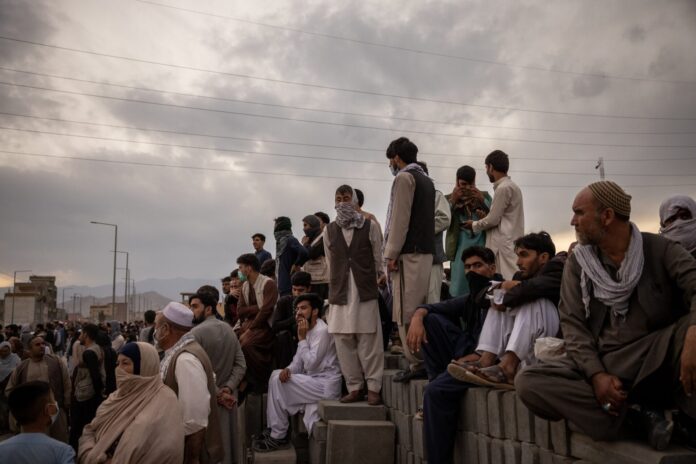
The Taliban launched a large-scale operation to regain control over Afghanistan after the United States announced the withdrawal of its military personnel from the country. On August 15, Afghan President Ashraf Ghani stepped down and fled the country, while the Taliban forces swept into Kabul, meeting no resistance. US service members fully withdrew from Afghanistan last week, ending their 20-year presence in the country.

Source: TASS

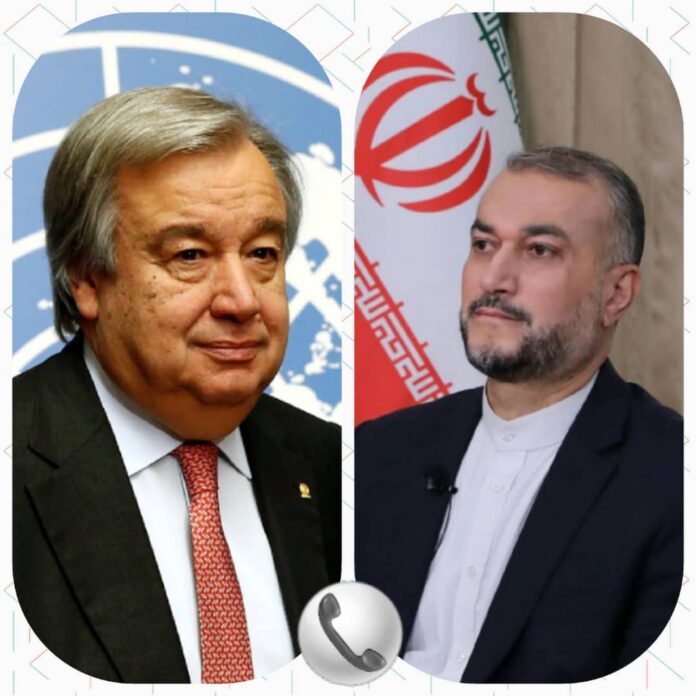
Iran FM to UN chief: US made mistake maintaining illegal sanctions

Hossein Amir Abdollahian and António Guterres were speaking over the phone.

The foreign minister said Iranian government is conducting the necessary studies on the possibility of resuming the Vienna talks.

Amir Abdollahian added, “Unfortunately, the US has made a miscalculation by maintaining their illegal sanctions on Iran and they mistakenly think they can use the sanctions as a bargaining chip”.

Amir Abdollahian demanded the other parties to the nuclear deal, known as the Joint Comprehensive Plan if Action, JCPOA, pay serious attention to the rights and interests of the Iranian people.

Also referring to the situation in Afghanistan, he expressed serious concern regarding the new influx of Afghan migrants and stressed the need for assistance from relevant UN organizations .

Abdollahian also said Tehran is following the case of the cowardly assassination of General Qassem Soleimani by the US at international and legal levels and that the US will not be able to dodge its responsibility for his assassination.

The UN chief in his turn appreciated Iran’s efforts in generously hosting Afghan refugees.

Guterres stressed the need for the resumption of the nuclear talks in Vienna.

Pentagon chief: Al-Qaeda may reform in Afghanistan

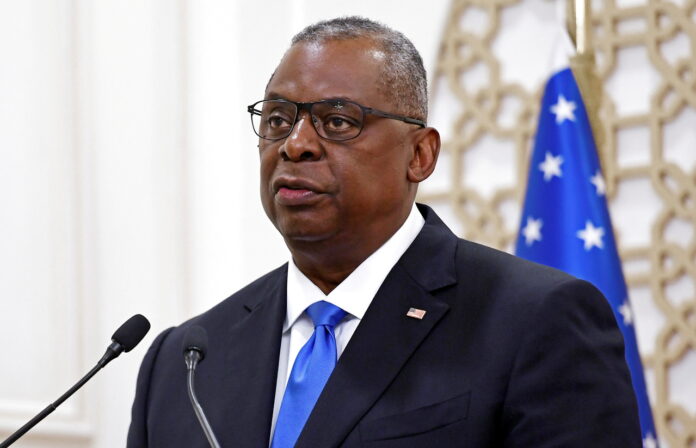
U.S. Secretary of Defense Lloyd Austin speaks during a joint news conference at the Ministry of Foreign Affairs in Doha, Qatar September 7, 2021. Olivier Douliery/Pool via REUTERS

“That’s the nature of the organization,” he told a small group of reporters in Kuwait City at the conclusion of a four-day tour of Persian Gulf states on Thursday.

He said the United States is prepared to prevent an Al-Qaeda comeback in Afghanistan that would threaten the United States.

“We put the Taliban on notice that we expect them to not allow that to happen,” Austin added, referring to the possibility of Al-Qaeda using Afghanistan as a staging base in the future.

In a February 2020 agreement with the Donald Trump administration, Taliban leaders pledged not to support Al-Qaeda or other extremist groups that would threaten the United States. But US officials believe the Taliban maintain ties to Al-Qaeda, and many nations, including Arab states, are concerned that the Taliban’s return to power could open the door to a resurgence of Al-Qaeda influence.

Austin has asserted that the US military is capable of containing Al-Qaeda or any other extremist threat to the United States emanating from Afghanistan by using surveillance and strike aircraft based elsewhere, including in the Persian Gulf. He also has acknowledged that it will be more difficult without American troops and intelligence teams based in Afghanistan.

Austin and Secretary of State Antony Blinken appeared together in Qatar on Tuesday in a show of US gratitude for that Gulf state’s help with the transit of tens of thousands of Afghans and others evacuated from Kabul. Blinken also visited an evacuee transit site in Germany, and Austin visited Bahrain and Kuwait.

Together, the Austin and Blinken trips were meant to reassure Gulf allies that President Joe Biden’s decision to end the US war in Afghanistan in order to focus more on other security challenges like China and Russia does not foretell an abandonment of US partners in the Middle East. The US military has had a presence in the Gulf for decades, including the Navy’s 5th Fleet headquarters in Bahrain. Biden has not suggested ending that presence, but he — like the Trump administration before him — has called China the No. 1 security priority, along with strategic challenges from Russia.

Austin, a retired Army general, has a deep network of contacts in the Gulf region based in part on his years commanding US and coalition troops in Iraq and later as head of US Central Command, which oversees US military operations in the Middle East.

Austin had been scheduled to visit Saudi Arabia on Thursday as the final stop on his Gulf tour. But on Wednesday evening his spokesman, John Kirby, announced that the visit had been dropped due to “scheduling issues”. Kirby offered no further explanation but said Austin looked forward to rescheduling.

Austin indicated that his visit was postponed at the Saudis’ request, adding, “The Saudis have some scheduling issues; I can’t speak to exactly what they were.”

The Saudi stop notably was to happen two days before the 20th anniversary of the terrorist attacks on the United States that killed nearly 3,000 people. Fifteen of the men who hijacked commercial airliners and crashed them into the twin towers of the World Trade Center, the Pentagon and a Pennsylvania field on September 11, 2001 were Saudis, as was Osama bin Laden, whose Al-Qaeda network plotted the attack from its base in Afghanistan. The attack prompted the US invasion that became a 20-year war in Afghanistan.

US relations with the Saudi government have been strained at times in the intervening years. In 2018, Crown Prince Mohammed bin Salman oversaw an unprecedented crackdown against activists, rivals and perceived critics. The year culminated in the gruesome killing of Washington Post contributing columnist and dissident Jamal Khashoggi by Saudi agents in the Riyadh Consulate in Turkey.

Earlier this month, Biden directed the declassification of certain documents related to the 9/11 attacks, a gesture to victims’ families who have long sought the records in hopes of implicating the Saudi government. Public documents released in the last two decades, including by the 9/11 Commission, have detailed numerous Saudi entanglements but have not proved government complicity.

The Saudi government denies any culpability. On Wednesday the Saudi Embassy in Washington released a statement welcoming the move to declassify and release more documents related to 9/11, claiming, “No evidence has ever emerged to indicate that the Saudi government or its officials had previous knowledge of the terrorist attack or were in any way involved in its planning or execution.”

Source: The Associated Press

Lavrov: Russia accepts no change to Iran nuclear deal

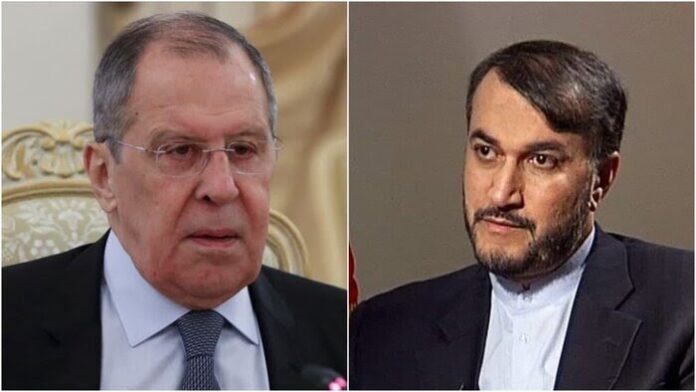
Lavrov and Amir Abdollahian were speaking over the phone on Thursday.

Russia is a signatory to the nuclear deal known as the Joint Comprehensive Plan of Action, JCPOA.

Iran, Russia, China and the European troika have been engaged in talks to revive the deal which plunged into disarray following the US’s unilateral withdrawal from the agreement in 2018.

After the US pullout and its reinstatement of sanctions on Iran, Tehran scaled down its obligations under the JCPOA. Tehran also says the European troika has failed to live up to its commitments under the deal.

In their telephone conversation, Amir Abdollahian and Lavrov discussed a host of other issues including bilateral ties and the situation in Afghanistan. Both top diplomats agreed that an inclusive government must be formed in Afghanistan that would involve all Afghan ethnic and political groups.

As for Covid, Amir Abdollahian emphasized that Iran expects Russia to stick to previous agreements on supplying Iran with more sputnik vaccines.