Saturday, December 20, 2025
Home Blog Page 2401

Iran president in Tajik capital for high-profile summit

Raisi was greeted by Tajikistan’s Prime Minister Ghaher Rasoulzadeh.

He will address the Shanghai Cooperation Organization’s summit on Friday.

There will also be a meeting between the Iranian delegation headed by the president and the Tajik officials. Raisi will hold talks with other heads of state on the sidelines of the meeting.

Before heading for Dushanbe, Raisi expressed hope the visit to Tajikistan will open a new chapter in bilateral ties. He added that Iran and Tajikistan will sign a number of deals including economic and agricultural agreements during his stay in Dushanbe.

The meeting is expected to focus on Afghanistan following the Taliban takeover of the country in August. Fighting terrorism and extremism will also top the agenda of talks at the Shanghai Cooperation Organization.

Iran holds an observer status at the Shanghai Cooperation Organization. But it’s trying to become a permanent member of the body.

China, India, Kazakhstan, Kyrgyzstan, Pakistan, Russian, Tajikistan, and Uzbekistan are member states of the Shanghai Cooperation Organization

Taliban mulling creation of regular armed forces in Afghanistan

Fasihuddin added that consultations on the matter are ongoing during a press conference in Kabul.

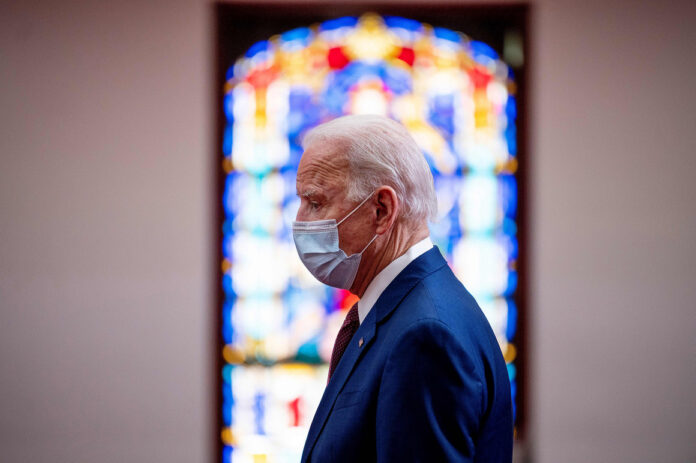
The US provided the Afghan security forces with $28 billion in weaponry between 2002 and 2017, with virtually all of this equipment now feared to have fallen into the Taliban’s hands. In July, US President Joe Biden claimed that hundreds of thousands of uniformed troops, nearly 300,000, were ready to defend Afghanistan. They, however, did not manage to stop the Taliban.

Last week, the Taliban announced that Panjshir, the last Afghan province not under the group’s control, had been taken over. The following day, the Taliban announced the composition of the new interim government of Afghanistan led by Mohammad Hasan Akhund, who has been on the UN sanctions list since 2001.

In early August, the Taliban stepped up their offensive against Afghan government forces and entered the capital, Kabul, on August 15, completing the takeover of the country. The events prompted a mass evacuation of western citizens and Afghans who had aided or worked for foreign troops and organisations.

Source: TOLOnews

Iranian Fuel Convoys Arrive in Lebanon

The tankers carrying fuel oil entered the town of Hermel in southern Baalbek-Hermel Governorate on Thursday, reported Lebanon 24.

The Lebanese Al-Manar satellite television station also confirmed the news, saying 20 Iranian fuel tankers have arrived in Lebanon.

Meanwhile, Seyyed Hassan Nasrallah, the secretary general of the Lebanese resistance movement Hezbullah, asked Lebanese people not to throng the path through which the convoys were passing in order to facilitate the trend of transferring the fuel.

On Monday, the Iranian convoys had arrived in a Syrian port from where they set sail for Lebanon.

Nasrallah had warned the US and Israel against attacking the Iranian fuel vessels, saying Hezbullh regarded the tanker ships as Lebanese soil.

UN concerned over North Korea missile launch

Riviere said there was consensus among the group to condemn the test, which North Korea announced was launched using a “railway-borne missile system”.

“Everyone is very concerned about this situation,” de Riviere told several journalists after the 45-minute meeting.

“This is a major threat to peace and security, it’s a clear violation of the Council’s resolutions,” he continued, adding, that the missiles had fallen “within Japan’s exclusive economic zone.”

Pyongyang earlier confirmed that it launched the test on the same day Seoul became the first non-nuclear country to test a submarine-launched ballistic missile (SLBM).

The missiles fired by North Korea were a test of a new “railway-borne missile system” designed as a potential counterstrike to any forces that threaten the country, the state-run Korean Central News Agency (KCNA) reported on Thursday.

The missiles flew 800km (497 miles) before striking a target in the sea off North Korea’s east coast on Wednesday, KCNA reported.

On Wednesday, South Korean and Japanese authorities noted they had detected the launch of two ballistic missiles from North Korea, just days after it tested a long-range cruise missile that analysts said could have nuclear capabilities.

The two Koreas have been in an increasingly heated arms race, with both sides unveiling more capable missiles and other weapons.

In a statement from London, the British Foreign Office condemned the test as a “clear violation” of Security Council resolutions and a “threat to regional peace and security”, as the United States has also done.

“We urge North Korea to refrain from further provocations, and to return to dialogue with the US,” the British statement reads.

North Korea has been steadily developing its weapons systems, raising the stakes for stalled talks aimed at dismantling its nuclear and ballistic missile arsenals in return for US sanctions relief.

“The railway-borne missile system serves as an efficient counterstrike means capable of dealing a harsh multi-concurrent blow to the threat-posing forces,” said Pak Jong Chon, a North Korean marshal and member of the Presidium of the Politburo of the ruling Workers’ Party of Korea, who oversaw the test, according to KCNA.

“(Pak) said that the deployment of the railway-borne missile system for action in accordance with the line and policies on modernising the army set forth at the eighth Congress of our Party holds very great significance in increasing the war deterrence of the country,” the KCNA added.

North Korean leader Kim Jong-un did not oversee the test-firing, the report noted.

Photos released by state media showed an olive-green missile rising on a column of smoke and flame from the roof of a train parked on tracks in a mountainous area.

South Korea had reported the missiles were fired from the central inland area of Yangdok.

“Rail mobile missiles are a relatively cheap and reliable option for countries seeking to improve the survivability of their nuclear forces,” Adam Mount, a senior fellow at the Federation of American Scientists, said on Twitter, adding, “Russia did it. The US considered it. It makes a ton of sense for North Korea.”

Mount and other analysts stated the system is likely to be constrained by North Korea’s relatively limited and sometimes unreliable rail network, but that it could add another layer of complexity for a foreign military seeking to track and destroy the missiles before they are fired.

According to KCNA, Pak noted there are plans to expand the railway-borne missile regiment to a brigade-size force in the near future and to conduct training to gain “operational experience for actual war”.

The army should prepare tactical plans for deploying the system in different parts of the country, Pak said.

It is unusual to see the sheer variety in missile delivery systems and launch platforms that North Korea develops, said Ankit Panda, a senior fellow at the US-based Carnegie Endowment for International Peace.

“It’s not very cost effective (especially for a sharply resource-constrained state) and far more operationally complex than a leaner, vertically integrated force,” he added on Twitter.

The railway-system test displayed on Wednesday could possibly set the stage for developing one capable of launching a larger, nuclear-armed intercontinental ballistic missile (ICBM), Panda added.

He also noted that some of the missile systems displayed by North Korea may be about “technology demonstration”, which may not be fully deployed.

Source: Al-Jazeera

US, UK, Australia forge military alliance against China

President Joe Biden just announced a new working group with Britain and Australia to share advanced technologies — including the acquisition of nuclear-powered submarines — in a thinly veiled bid to counter China.

The trio, now known by the acronym AUKUS, will make it easier for the three countries to share information and know-how in key technological areas like artificial intelligence, cyber, quantum, underwater systems, and long-range strike capabilities.

Biden, joined virtually by British Prime Minister Boris Johnson and Australian Prime Minister Scott Morrison on Wednesday afternoon, detailed the reasons for the trilateral effort.

“This is about investing in our greatest source of strength, our alliances and updating them to better meet the threats of today and tomorrow,” Biden said from the White House in between two monitors showing the other world leaders.

 “AUKUS — it sounds strange, all these acronyms, but it’s a good one,” he added.

Morrison stated “we must now take our partnership to a new level”, while Johnson added, “We’re adding a new chapter in our friendship.”

All three countries will work over the next 18 months to figure out how best to deliver the technology, which the U.S. traditionally has only shared with the U.K., the official announced. U.S. officials and experts noted that Australia currently doesn’t have the requisite fissile material to run a nuclear-powered submarine, meaning the next year and a half of negotiations will likely feature nuclear-material transfer discussions.

Washington and Canberra signed a gold-standard “123 agreement” in 2010 in which Australia promised not to enrich or reprocess nuclear material sent to it by the U.S.

Australia doesn’t seek a nuclear weapon, Morrison and Biden emphasized. Still, a senior U.S. administration official previewing the remarks Wednesday morning said of the nuclear-powered submarines that “this technology is extremely sensitive. This is frankly an exception to our policy in many respects. I do not anticipate that this will be undertaken in other circumstances going forward”.

There’s nothing explicitly about China in the three-way deal, but two U.S. officials noted that the subtext of the announcement is that this is another move by Western allies to push back on China’s rise in the military and technology arenas.

“This is a surprising and extremely welcome sign of the Biden administration’s willingness to empower close allies like Australia through the provision of highly advanced defence technology assistance — something that Washington has rarely been willing to do,” said Ashley Townshend, director of foreign policy and defense programming at the United States Center in Sydney.

 “It suggests a new and more strategic approach to working collectively with allies on Indo-Pacific defence priorities,” Townshend added.

Canberra will abandon a $90 billion submarine deal with France and will instead acquire American-made nuclear-powered submarines, with help from the U.K. The French deal had long been in trouble, with the Naval Group, the French shipbuilder tasked with constructing the 12 submarines, and the Australian government sparring over design changes and cost increases over the past several years.

Neither Naval Group nor the French government has commented on the change in direction.

A new class of nuclear-powered submarines would give Washington and its allies in the Pacific a powerful new tool to attempt to contain Chinese military expansion, and would follow on the current deployment of a British aircraft carrier to the region, and recent transits by French and German warships to the South China Sea.

The U.S. and U.K. have long partnered on their nuclear-powered submarine programs, sharing technology across their various classes of ships. Bringing Australia into the fold would be a major step in increasing the ability of the three countries to operate together undersea across the Pacific, as well as adding a powerful allied punch in the region that is currently lacking.

Another U.S. official said that any sale of submarines to Australia would take several years. But in the interim, there will be a push for more American nuclear submarines to make port calls in Australia to show presence. Late last year, the U.S. wrapped up an agreement with Norway to expand and upgrade a port in the Arctic to allow American nuclear-powered submarines to dock and resupply, a major move for expanded operations in the High North where the powerful Russian Northern Fleet holds sway.

Pentagon officials have already started working with Congress to try and smooth the path for more industrial cooperation with Australia and the U.K., a process that could take some time as U.S.-based defense companies and members of Congress will likely tread carefully about sharing technology, and potentially offshoring some jobs.

“We’re working with Congress to make sure that we have that authority to invest in Australia and the U.K.,” Jesse Salazar, the Pentagon’s deputy assistant secretary for industrial policy, stated at an event at George Mason University on Wednesday.

Beijing has a growing missile arsenal at its disposal and its forces are increasingly aggressive, sailing naval ships near Japanese and American waters in recent days. It’s part of China’s effort to assert its primacy in the Indo-Pacific and lay claim to disputed territories. Chinese officials say territory that falls within the country’s “nine-dash line” in the South China Sea belongs to Beijing.

In response, the U.S. continues to build partnerships with other nations that serve as a bulwark against China. One such group is known as “the Quad”, comprised of the U.S., Japan, Australia, and India. Formed in its current iteration in 2017, the four-nation grouping is cautious about explicitly saying that its economic, technological, and military cooperation is about thwarting Beijing’s aims, but analysts say the Quad wouldn’t be as robust today if it weren’t for China’s continued aggressions.

On Sept. 24, all four Quad-nation heads will meet at the White House for the first-ever in-person, leader-level gathering of the group.

Japan has long been wary of Chinese intentions and provocations in the East China Sea, but Australia and India have seen more recent flashpoints.

A trade war between China and Australia has worsened relations between the countries. The dispute, which began in April 2020 after Prime Minister Scott Morrison asked for an inquiry into the origins of Covid-19, has cost the two nations roughly $4 billion. Josh Frydenberg, Australia’s treasurer, this month accused Beijing of trying to exert “political pressure” with penalties on Australian products.

And China-India relations have also been tense, with recent fatal standoffs at their long-disputed border high in the Himalayas.

Source: Politico

Iran to boost oil refining capacity

“It has been estimated that the country’s refining capacity will increase 1.5 times in the next 3 to 4 years from currently 2.2 million barrels to 3.5 million barrels per day,” the oil minister stated on Wednesday.

He also announced that contracts have been signed with eight capable investors for the construction of petro-refineries.

“Iran has more than 150 billion barrels of proven oil reserves and has a good capacity in the upstream sector and, undoubtedly, any increase in oil and gas production capacity will be accompanied by increases in the production of petroleum products,” Owji noted.

The Iranian oil minister added that the planned increase in the oil and gas refining and production capacity must be accompanied by improvement in the consumption methods of petroleum products.

Republican senators urge Biden to designate Taliban as terror group

In a letter dated Wednesday to Secretary of State Antony Blinken led by Sen. Joni Ernst (R-Iowa), several senators said the “current version of the Taliban government presents a significant threat to the United States”.

“Since reestablishing control of Afghanistan, the Taliban resumed the same murderous and oppressive habits that characterized their leadership tenure prior to the arrival of U.S. forces in 2001,”  the senators, which include Ernst and Sens. Rick Scott (R-Fla.), Dan Sullivan (R-Alaska.) and Tommy Tuberville (R-Ala.), added in their letter.

The senators pointed to the treatment of civilians, including women, in Afghanistan under the Taliban’s regime. Last week, several news outlets reported that the Taliban had beaten women who had taken part in a demonstration following the announcement that the Taliban’s cabinet was all-male.

Women who spoke with the BBC stated that during the protest they had been struck by batons and whipped. Witnesses told CNN that some journalists had also been reportedly beaten while covering the protest.

The Taliban have previously claimed that they will support the rights of women under Islamic framework and not go after old enemies, however, much of the international community remains increasingly skeptical.

The senators also pointed to the recent appointment of Sirajuddin Haqqani, an FBI-wanted militant who was named as the acting interior minister. Haqqani is also the leader of the Haqqani network, which in 2012 became designated a terrorist organization by the U.S.

“Given their history of supporting terror attacks on the United States, their brutal style of governance, their continued display of atrocities against Americans and our allies, and now, their enhanced military capability, the current version of the Taliban government presents a significant threat to the United States. Further, the Taliban display the will and the means to attack Americans and American interests,” the senators noted.

The senators argued that the Taliban had met the necessary criteria to designate the group as a foreign terrorist organization, stating that they urged him “to consider designating the Taliban as a foreign terrorist organization and treating them as such to the maximum extent of the law”.

The call follows resolutions introduced by both Sen. Lindsey Graham (R-S.C.) and Rep. Michael Waltz (R-Fla.) on Tuesday, that would also call on the State Department to deem the Afghan Taliban a foreign terrorist organization in addition to declaring the group’s takeover in Afghanistan a “coup d’etat”.

“This resolution is one of the most important things Congress can do regarding the takeover of Afghanistan by the Taliban,” Graham said in a statement, adding, “Designating the Taliban as a Foreign Terrorist Organization will make it harder for countries to provide them aid and recognition. We would be sending a strong signal that America does not do business with terrorist groups and their sympathizers. The Taliban are radical jihadists in every sense of the word and use terror as their tactic.”

The Taliban were designated Specially Designated Global Terrorists in July 2002 by former President George W. Bush. However, the U.S. current list of Foreign Terrorist Organizations does not include them.  

The calls for a designation come as the international community cautiously decides how or if to recognize the Taliban’s cabinet as a legitimate government. Biden and Blinken have noted they will judge the Taliban based on their actions and not just their words.

Iran calls for end to looting of Syria’s oil, wealth

During a session of the United Nations Security Council on Wednesday, Ershadi called for immediate removal of sanctions against Syria and warned that water must not be weaponized against Syrians.

She said the Syrian people have been suffering from one of the world’s worst humanitarian crises for over 10 years and that the situation is now worse than ever.

“The International community bears a serious political and ethical responsibility about this grave situation,” the Iranian envoy noted.

She urged immediate and full implementation of UN Security Council resolution 2585 which calls upon all member states to respond with practical steps to address the urgent needs of the Syrian people.

Ershadi also stressed that the ultimate solution to the situation in the war-torn country is through withdrawal of all uninvited foreign forces, defeating terrorists and securing Syria’s territorial integrity, unity and its political independence.

She said Iran will continue to help the Syrian people and government to overcome their challenges.

The Syrian army backed by Iranian advisers and the Russian air force managed to win the war against foreign-backed militants which began in 2011. It is in control of most parts of Syria but some areas are still under the control and U.S. and Turkish forces. Reports show American military convoys have been smuggling stolen oil from Syria’s oil wells. 

During the war in Syria, the United States and its allies imposed sanctions against Damascus and are still enforcing them.

France says Daesh chief in Sahara killed

The head of Islamic State in the Greater Sahara (ISGS), who was wanted for deadly attacks on US soldiers and foreign aid workers, has been killed in an operation by French troops.

Adnan Abu Walid al-Sahrawi was “neutralised by French forces”, Macron tweeted early Thursday.

“This is another major success in our fight against terrorist groups in the Sahel,” Macron stated, without giving the location or details of the operation.

He was behind the killing of French aid workers in 2020 and was also wanted by the United States over a deadly 2017 attack on American troops in Niger.

Islamic State in the Greater Sahara is blamed for most of the attacks in the Mali, Niger and Burkina Faso region.

The flashpoint “tri-border” area is frequently targeted by ISGS and the Al-Qaeda-affiliated Group for the Support of Islam and Muslims (GSIM).

ISGS has carried out deadly attacks targeting civilians and soldiers in Mali, Niger and Burkina Faso.

The United States had offered a $5 million reward for information on the whereabouts of Sahrawi, who was wanted over an October 4, 2017 attack in Niger that killed four US Special Forces and four Niger troops.

August 9, 2020, in Niger, the head of ISGS personally ordered the killing of six French aid workers and their Niger guides and drivers.

Sahrawi was formerly a member of Al-Qaeda in the Islamic Maghreb (AQIM) and also co-led Mujao, a Malian group responsible for kidnapping Spanish aid workers in Algeria and a group of Algerian diplomats in Mali in 2012.

The French military has killed several high-ranking members of ISGS under its strategy of targeting militant leaders since the start of its military intervention in Mali in 2013.

In June this year, Macron announced a major scaleback in France’s anti-militant Barkhane force in the Sahel after more than eight years of military presence in the vast region to refocus on counter-terrorism operations and supporting local forces.

“The nation is thinking this evening of all its heroes who died for France in the Sahel in the Serval and Barkhane operations, of the bereaved families, of all its wounded,” he noted.

“Their sacrifice is not in vain. With our African, European and American partners, we will continue this fight,” Macron added in another tweet.

The north of Mali fell under militant control in 2012 until they were pushed out of the cities by France’s military intervention in 2013.

But Mali, an impoverished and landlocked nation home to at least 20 ethnic groups, continues to battle terror attacks and intercommunal violence, which often spills over to neighbouring countries.

Source: AFP

Iran Rejects IAEA Female Inspector’s Claim of ‘Sexual Harassment’

“These false claims are aimed at kicking up a fuss and creating a frame-up in the run-up to a meeting of the [IAEA’s] Board of Governors,” said Kazem Gharibabadi.

“Unfortunately, there were several cases of terrorist operations and acts of sabotage at [Iran’s] nuclear sites; accordingly, our policy on the protection of our nuclear facilities changed a few months ago,” he said.

“These policies also apply to the methods of inspecting IEAE’s inspectors,” he said. 

“We announced this policy to the IAEA, and this policy continues to be improved,” he said.

“At the same time, the IAEA was told to advise its inspectors to show maximum cooperation with our security guards given the current sensitivity and the fact that there is precedent for acts of sabotage,” the top official said.

“Naturally, when inspectors or the IAEA’ Secretariat itself compare the new measures with the previous ones, they think that these moves are aimed at harassing them, but that’s not the case and none of our colleagues (security guards at Iran’s nuclear sites) have such an intention, and all they do is simply geared to protection,” he noted.

“The stepping up of security measures applies to IAEA inspectors, too,” said Gahribabadi.

“Maybe they wouldn’t be frisked and their stuff wouldn’t be searched before, but we asked the agency to understand this and not to have a different interpretation,” he said.