Friday, April 24, 2026
Home Blog Page 2400

Poland Pays Tribute to Iranians for WWII Hospitality

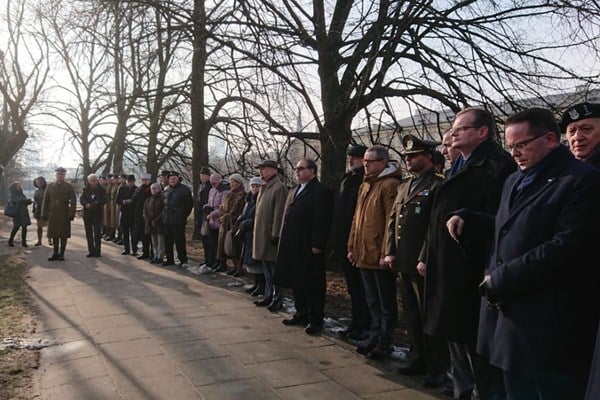
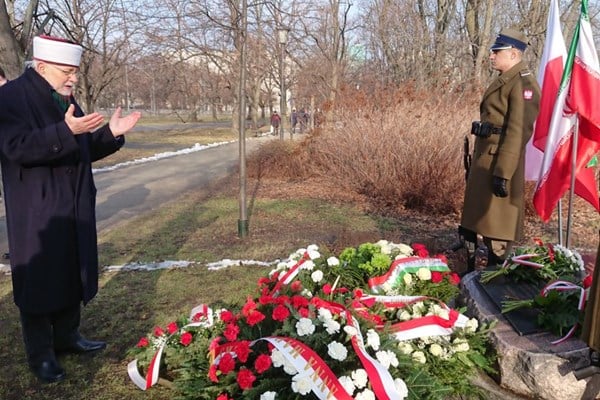
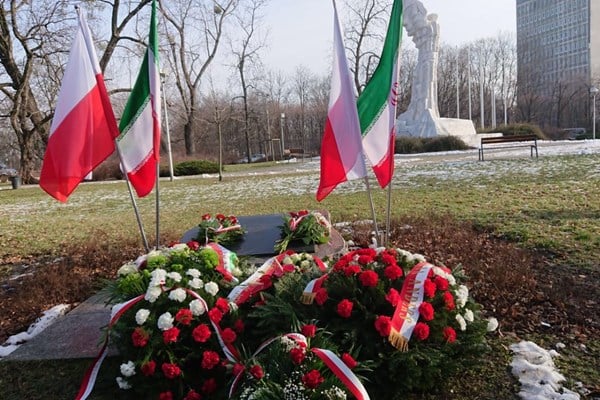
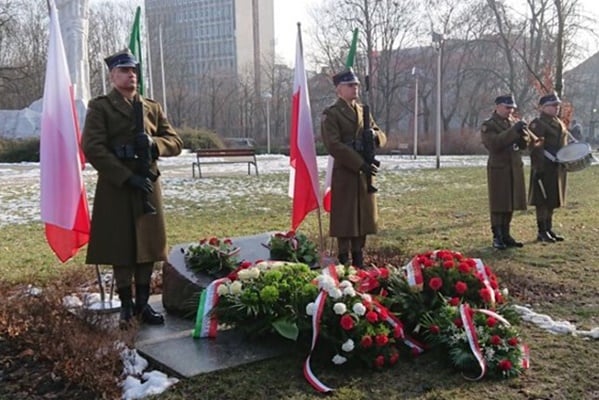
Held on Friday, the ceremony was attended by Iranian ambassador to Warsaw Mas’oud Edrisi Kermanshahi and a number of Polish officials including deputy foreign minister, deputy defence minister, and representatives from the prime minister’s office and Warsaw municipality.

A number of World War survivors who had spent some time in Iran also took part in the ceremony and read out a statement appreciating Iran’s hospitality, a report by Fars news agency said.

Poland Pays Tribute to Iranians for WWII HospitalityIn 1942, about 120,000 refugees from Poland fled to Iran. Despite political instability and famine in Iran at that time, the Polish refugees were welcomed by the generous Iranian people.

The issue of Iran’s hosting of the Polish refugees was raised just recently after US Secretary of State Mike Pompeo said Warsaw is going to host a conference with a focus on stability and security in the Middle East, including the “important element of making sure that Iran is not a destabilizing influence.”

Poland Pays Tribute to Iranians for WWII HospitalityIn protest, Iran’s Foreign Ministry summoned Polish chargé d’affaires in Tehran Wojciech Unolt to provide answers as to why Warsaw had agreed to host the event.

In a post on his Twitter account, Iranian Foreign Minister Mohammad Javad Zarif dismissed the summit a “desperate anti-Iran circus” saying “while Iran saved Poles in WWII, it now hosts desperate anti-Iran circus.”

Last month, Poland’s Deputy Foreign Minister Maciej arrived in Iran and held talks with his Iranian counterpart Abbas Araqchi on the conference.

Elaborating on the upcoming conference in Warsaw, Lang said “the conference will generally discuss ways to press ahead with peace and security in the Middle East, and there will be no stance against any country including the Islamic Republic of Iran during the conference.”

He said Poland maintains that Iran, as one of the main players of the Middle East, has an influential role in the regional developments.

Days before heading to Tehran, Lang had called hosting the conference a “success” for his country saying “the conference has pivotal importance for the Polish-US relations. “It is the expression of our strategic partnership and trust. A total of 70 states from all over the world were invited to partake in the conference.”

Poland Pays Tribute to Iranians for WWII Hospitality

Michelle Obama’s ‘Becoming’ Breaks Publishing Record in Iran

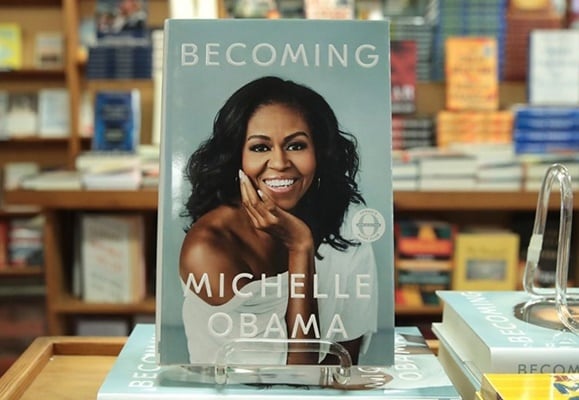
The book, translated into Persian by Ali Salami, was first released in Iran on January 15 by Mehr-Andish Publication.

The publisher released the first 16 print runs of the translated book in 500 copies each but for the 17th run, it has increased the number to 1,000, a report by Mehr News Agency said.

The former first lady’s memoir sold more than 1.4 million copies in print and digital formats in the US and Canada during the first week after its release on November 13.

Published by Crown, the book has been released in 24 languages. Becoming sold more copies than any other book published in the United States in 2018, breaking the record in just 15 days. On its first day, the book sold more than 725,000 copies, making it one of the year’s biggest debuts.

“Becoming” has also well exceeded the pace of previous memoirs by first ladies. In 2003, Hillary Clinton’s “Living History” had first week sales of around 600,000 copies.

The memoir also became the No. 1 adult non-fiction title in the United Kingdom, Germany, France, the Netherlands, Spain, Denmark, and Finland.

It is a window to the personal life of Michelle Obama, the former First Lady of the US, before and after entering the White House. In the memoir, Michelle, through a cordial story, invites the reader into her personal life and elaborates on the experiences forming her character since childhood in Chicago till she became the US First Lady.

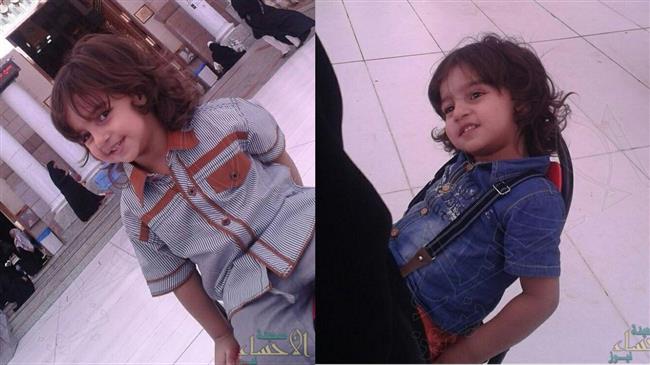
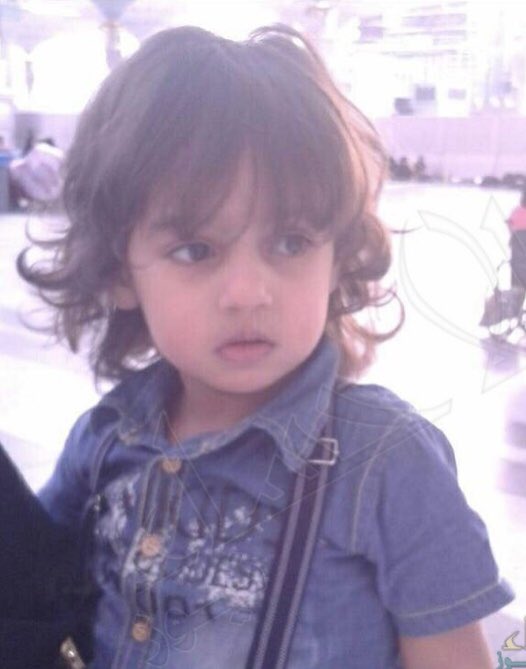
6-Year-Old Boy Brutally Killed in Medina before Mother’s Eyes

According to what circulated on social media, Zakariya Bader al-Jabir — said to be six or seven years old — was savagely murdered by a taxi driver in front of his mother late last month.

The New Arab website says his mother’s recitation of salutations for the family of Prophet Mohammed (PBUH) outraged the taxi driver who, according to “witnesses”, broke the window of his car, before grabbing the “seven-year-old” boy by the back of his shirt and slitting his throat in front of his mother.

The Muslim Vibe website’s account is also similar to that of the New Arab. It says the mother and the child had taken a taxi on their way to al-Masjid al-Nabawi Mosque in the middle of the day, when the driver “pulled over the car, got out, and forced the boy out of the car near a coffee shop in the al-Tilal neighborhood.”

“The taxi driver then broke a glass bottle to obtain a shard of glass, which he then used to cut the throat of the child and stab him,” the report said.

On the way, driver uncle overheard Mamma whispering ‘salawat/darood’ on the Prophet and his progeny. He curiously asked if we were Shia. When Mamma answered ‘Yes’, driver uncle became furious. (2/3)

He dragged me out of the cab, broke a glass bottle, and slit my throat in front of Mamma. She immediately fainted and I stopped breathing.

What was my crime? (3/3)#Zakariya #SaudiArabia pic.twitter.com/U3WF0EktVg

26 people are talking about this

The Muslim Vibe has quoted onlookers as saying a policeman who happened to be stationed nearby had also attempted to stop the man from attacking the child but was unsuccessful in saving the boy. The policeman restrained the man until police backup was called.

But there is no concrete evidence of any of this; the boy was killed, but the motivation behind the attack remains unknown, and no details of the alleged killer have emerged.

A human rights NGO, Shia Rights Watch, narrates the story of the “six-year-old” boy in another way:

“The mother and her son took cab to visit the shrine of Prophet Muhammad in Medina. An unknown man approached them and asked the mother if she is Shia when they arrived at the shrine, the woman said yes. Minutes after this conversation a car stopped by the woman and pulled the child away from her and attacked him with a broken piece of glass,” the report said, quoting activists as saying.

This 6 year old was slaughtered in Saudi Arabia.

The mother and her son took cab to visit the shrine of Prophet Muhammad in Medina. An unknown man approached them and asked the mother if they were Shi’a. When she said “yes”, they killed her child.

His name was Zakariya.

1,499 people are talking about this

The Saudi Gazette website also quotes informed sources as saying that the assailant was a 35-year-old man sitting in a coffee shop in al-Tilal neighborhood and went out when he saw the young boy walking in front of him in the company of his mother.

“The sources said the killer quickly grabbed the boy from the hands of his mother, broke a bottle he found near the coffee shop and stabbed him. The boy had ordered a meal from a nearby restaurant and was going to collect it when the man saw him,” the report said.

“The sources said the mother was a heart patient working in Jeddah and she had come to Madina with her son to pray at the Prophet Muhammad’s Mosque.”

The Shia community of Saudi Arabia later gathered in mourning and showed solidarity with the parents. The community also reported this incident was “a result of ongoing violations and lack of protection by the Saudi authority toward its Shia population,” the Shia Rights Watch reported.

Videos went viral earlier this week, purportedly showing the dead body of the little boy in a mosque, where Shia cleric Sheikh Amri is mourning his death and making a speech to a group of people gathering around the body. The cleric tries to console the father and then leads the funeral prayer of the boy.

“This young child reminds us of Karbala. Zakariya is also the victim of Harmala. May Allah grant him paradise with the infant of Imam Hussein (AS),” the cleric is heard saying in one video, referring to the story of the martyrdom of third Shia Imam, Hussein ibn Ali, and his family members, including his infant Ali-Asghar, in Karbala.

While Saudi Arabia has been quick to claim mental health issues on the part of the taxi driver as an explanation for why the boy was murdered, locals have claimed this was an act of sectarianism because the boy was from a Shia Muslim background, and point to the fact that many crimes against the Shia minority of Saudi Arabia have been committed before.

On the contrary to claims of mental health problem, which were apparently alleged by a person claiming to be Zakariya’s uncle, social media users say the person was a fake one, and his claim was false.

SAUDI ARABIA EXPOSED AGAIN: Saudi media are claiming the murder of the 6 year old boy, Zakariya Al Jaber was not committed because he was a Shia. Here’s a video of Zakariya’s funeral ceremony proving that he was murdered SIMPLY because he was a SHIA!#SaudiArabia#ShiaGenocide

We automatically hide video that might contain sensitive content.

Here’s Saudi media explaining the exact scene of the crime that took place in Medina, Saudi Arabia except the part where he was a MURDERED BECAUSE HE WAS A SHIA. They bought a fake person who claimed to be Zakariya’s uncle where he said that the murderer had “mental issues” pic.twitter.com/jbD4KNk8UI

19 people are talking about this

No official statement has been issued by either the police department or the Saudi government as of now over the potential link to sectarianism in this investigation, and this highlights the need for a transparent probe into the heinous crime.

The Saudi Shia community has been under military crackdown by their government and many Shia activists are in prisons and on death row.

The Saudi regime has cracked down on its Shia citizens, particularly in the Eastern Province, which has been the scene of peaceful demonstrations since February 2011.

Protesters have been demanding reforms, freedom of expression, the release of political prisoners, and an end to economic and religious discrimination against the oil-rich region.

The protests have been met with a heavy-handed crackdown by the regime. Regime forces have increased security measures across the province.

Over the past years, Riyadh has also redefined its anti-terrorism laws to target activism.

Back in January 2016, the Muslim world was infuriated when prominent Shia cleric Sheikh Nimr Baqir al-Nimr, an outspoken critic of Riyadh, was executed by Saudi authorities. Nimr had been arrested in Qatif, Eastern province, in 2012.

‘1979 Revolution Rebirth of Iranian Nation’

Iran Appoints Female Ambassador to Denmark

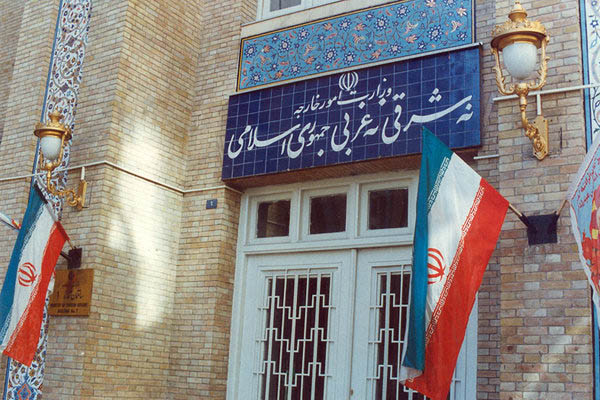
The Iranian Foreign Ministry on Saturday released a statement on the 40th anniversary of the glorious victory of the Islamic Revolution.

What follows is the full text of the statement:

In the Name of God

The “Ten-Day Dawn” is the manifestation of the perseverance and resolve of a great nation, with a civilization and culture as old as the history, and a wise leader who led the country into a rebirth in various social, cultural, international, political, and economic spheres.

After enduring years of ups and downs through resistance, dignity and unity, the great nation of Iran is proudly celebrating the fortieth anniversary of its Islamic Revolution despite all the endless plots, conspiracies, and hostilities.

At the fortieth anniversary of its rebirth, the nation is now more mature, prudent, and powerful than ever, and thanks God for the dignity and power it has retained thanks to the blessing of the glorious and popular revolution, and backed by its deeply-rooted national and religious beliefs. Getting stronger, prouder, and more hopeful every day, the nation is living its decent life in the land of tolerance.

Today, forty years after the great nation of Iran took an oath of allegiance to transform its political and social life, and after four decades of sweet and bitter experiences the entire nation gained in various fields for a high price, we should learn from certain deficiencies and shortcomings and stand united behind the main pillars of the revolution – the Leader, the people, Islam, and Iran – and firmly bestow “a more brilliant and dignified Iran” upon the future children of the nation.

There is no doubt that the victory of the Iranian nation’s revolution in February 1979, and four decades of resistance against the storm of events and incidents, could not be possible without honesty, solidarity, unity, and accompaniment of the nation with the Establishment of the Islamic Republic of Iran. These are the values that we still need on the fortieth birthday of the Islamic Revolution, and should embrace them in a more powerful way than ever in all aspects of our social and political lives.

The “Independence, Freedom, Islamic Republic” slogan of those days is still our most important social need. Interaction and establishing peaceful and multilateral relations with the world based on mutual respect and free from any hegemony and domination is among Iran’s strategies, and has been a basis for all the decisions and policies declared and implemented by the Islamic Republic in its foreign policy since the early days of the 1979 Revolution. The Iranian nation’s children at the foreign ministry, like soldiers at the forefront of the country’s foreign policy, are still committed to the slogan with a revolutionary and popular spirit.

Undoubtedly, during the past 40 years, the world and our region have undergone different and fundamental developments and events. In line with these changes, countries in the world have made conceptual and formal changes to the instruments, language, and methods they use to secure their interests. The Foreign Ministry of the Islamic Republic of Iran is still committed to the deeply-rooted principles and values of the 1979 Revolution, and has always endeavoured, and will do so in the future, to secure the interests of the country, the people, and the Establishment while adapting itself to the new conditions and using new instruments and languages.  

Continuing to tread this path, which is full of ups and downs, requires a national consensus and the support of all domestic capacities and potentialities for the country’s foreign policy and diplomacy apparatus, which serves as a driving force in [implementation of] the policies of the sacred Establishment of the Islamic Republic of Iran in regional and global spheres.

On the fortieth anniversary of the Islamic Revolution, we commemorate the memory of martyrs, the Imam of martyrs, and all those who helped the huge tree of revolution come to fruition and remain green and fruitful by sacrificing their lives, assets, and reputation before 1979 and during the forty-year decent life of the revolution.

We also congratulate the Iranian nation on these happy days, renew our allegiance to the Leader and the great and appreciative nation of the Islamic Iran, and vow to attend the 22 Bahman [Feb. 11] rallies in a bid to show our resolve in continuing the path of Imam and martyrs and the Leader of the Islamic Revolution.

Iran Starts Ten-Day Celebrations of 40th Revolution Anniversary

Pumpkin Art: Iranian Artist’s Beautiful Designs

Pumpkin Art: Iranian Artist's Beautiful Designs

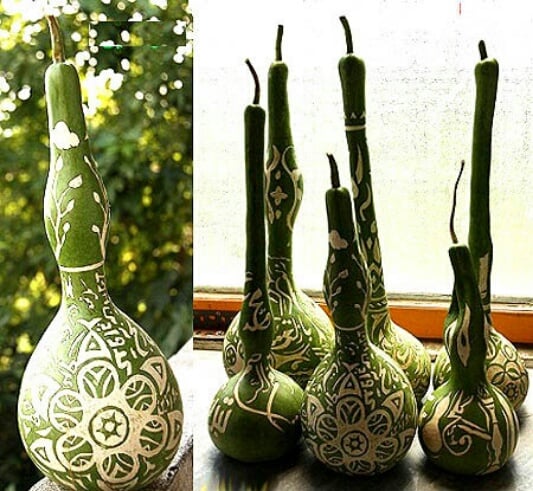
A Mazandarani artist named Hamid Reza Golmohammadi has received the permit to launch a pumpkin art workshop for engraving and paintings on pumpkins.

From the West to the East of Mazandaran, there are hundreds of products created with the innovation and art of Mazandarani craftsmen and the native culture and lifestyle of the province. They mostly include wooden containers and woolen or cotton clothes and dolls.

Golmohammadi has showcased his works at various exhibitions inside and outside the province. The artist had received a badge of innovation in arts in 2000. 

According to ISNA, at first the artist used to make the pumpkin art just for fun, but during various handicraft exhibitions, he decided to make money out of it. Therefore, he started to produce works that come to use.

In addition to producing decorative works, he made works such as vases, lamps and wall mirrors decorated with pumpkins since. Boxes, musical instruments, and other home stuff are among his other products.

Golmohammadi believes that a handicraft artist can create valuable works of art; which may last a long time and be kept as an ornamental piece in exhibitions.

He says it is also possible to produce artistic stuff that all people can purchase. This way, people enjoy the art while the artist earns good money.

Iran’s Gas Production at South Pars Joint Field Exceeds Qatar’s

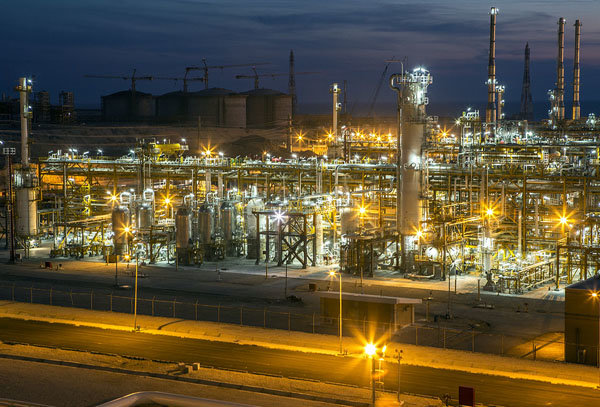
Speaking in an interview with State TV this week, Bijan Zanganeh said Iran’s production at the field has been increased to over 610 million cubic metres per day.

The development of the South Pars field is nearing its end, with four out of the six remaining phases to be completed in weeks, he said.

“[Late February] four phases of the South Pars with a capacity of 110 million cubic meters per day will be inaugurated in the president’s presence,” he said.

Zanganeh said another phase of the project will be completed in the next Iranian year (starting March 21).


Iran Leader Pardons Huge Number of Inmates

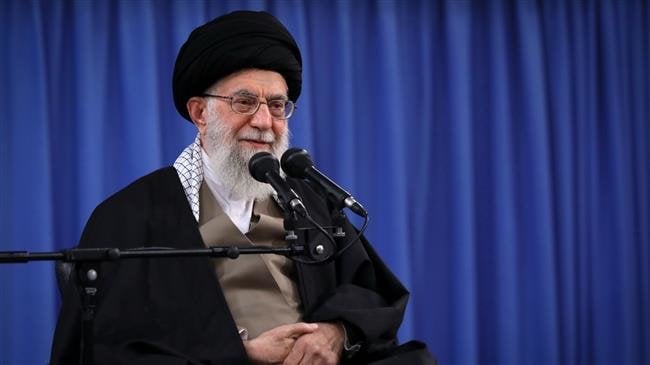
Those granted “Islamic clemency” through the Leader’s approval had been convicted at the country’s public and Islamic Revolution courts, the Judicial Organization of the Armed Forces, and the State Discretionary Punishment Organization, IRNA reported on Thursday.

Ayatollah Khamenei issued the approval on the occasion of the 40th anniversary of the victory of the Islamic Revolution in response to a letter from Iran’s Judiciary Chief Ayatollah Sadeq Amoli Larijani who had asked for clemency for a large group of eligible convicts.

In his letter, Ayatollah Amoli Larijani mentioned the following categories as the eligible convicts for the Leader’s pardon:

– Those sentenced to maximum six months in jail, whose sentence has not been carried out yet for any reasons provided that they were not sued by natural persons as plaintiff or could obtain the plaintiff’s consent before March 6, 2019;

– Those sentenced to paying reparations amounting to 10,000,000 rials (around $80) or less, and some of those incapable of paying higher reparations.

– Convicts sentenced to various jail terms from one to ten years, provided that they have already spent part of their sentences behind the bars as specified in the letter by the Judiciary Chief as well as men and women sentenced for life, provided that they have already spent at least 15 years (for men) and 12 years (for women) in jail.

– All persons sentenced to flogging according to Islamic law.

The following convicts, however, have been excluded from the Leader’s pardon:

– Those convicted of armed or large-scale smuggling of narcotics;

– those put in jail on security charges with a sentence of more than one year;

– those convicted for kidnapping, if not pardoned by the victim;

– those committing crimes involving acid attacks;

– prisoners convicted for rape or involvement in activities aimed at spreading corruption and vice;

– those convicted for armed robbery or aggravated robbery with jail terms of more than five years;

– prisoners convicted of embezzlement, bribery, fraud, counterfeiting of banknotes and coins, money laundering, sabotaging the country’s economic system, smuggling of alcoholic beverages, as well as organized or professional smuggling of goods and foreign currencies.

Iran May Pull Out of JCPOA If Europe Sets Conditions for INSTEX

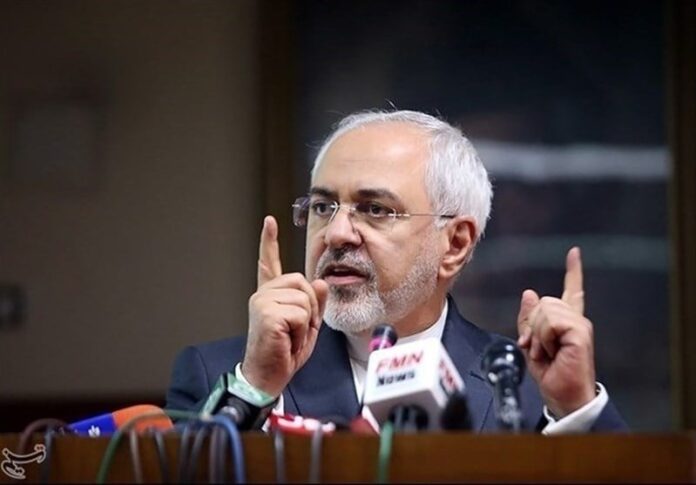
If Europeans demand changes to Iran’s missile program and the country’s accession to the Financial Action Task Force (FATF) as preconditions for fulfilling their commitments, Tehran would have numerous options, one of which is to withdraw from the nuclear deal known as the Joint Comprehensive Plan of Action (JCPOA), Zarif told RT Arabic TV.

On Monday, Council of the European Union issued a conclusion on the Islamic Republic, urging Iran to “adopt and implement the necessary legislation pursuant to its commitments under the Financial Action Task Force (FATF) Action Plan.”

The EU has also voiced readiness to “continue cooperation with Iran in these areas, including by providing technical assistance for the implementation of the FATF Action Plan.”

Earlier on Monday, Iranian Judiciary Chief Ayatollah Sadeq Amoli Larijani stressed that the country would never accept the “humiliating conditions” of the European Union’s financial mechanism for trade with Iran, including Iran’s accession to FATF.

“The European countries have reportedly set two ‘strange conditions’ for the mechanism named the Instrument in Support of Trade Exchanges (INSTEX),” the top judge deplored, saying, “The countries should be aware that Iran will by no means accept these humiliating conditions and will not accede to any demand at the expense of opening a small waterway such as INSTEX.”

INSTEX will be based in Paris and be managed by a German banking expert. Britain will head the supervisory board.

The European countries are reportedly going to use the channel initially only to sell food, medicine and medical devices in Iran.

In May 2018, the US president pulled his country out of the JCPOA, the nuclear deal that was achieved in Vienna in 2015 after years of negotiations among Iran and the Group 5+1 (Russia, China, the US, Britain, France and Germany).

Following the US exit, Iran and the remaining parties launched talks to save the accord.

Iran’s ‘Death to America’ against US Gov’t, Not Nation: Leader

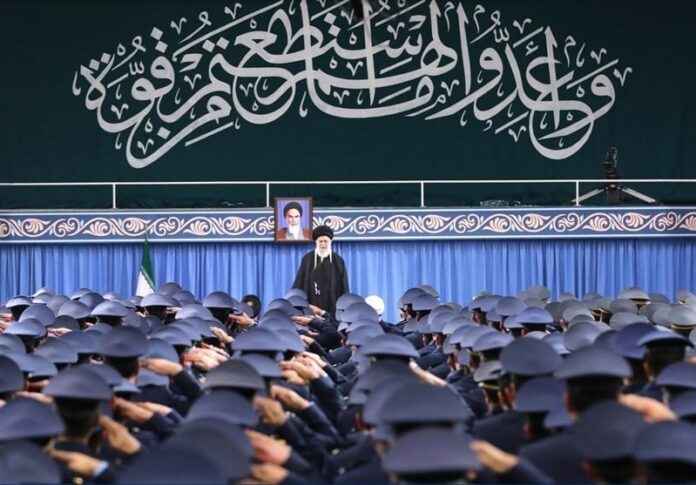
“The US is an embodiment of evil, but yet complains why you [Iranians] chant ‘Death to America’,” the Leader said in a Friday meeting with a group of Iranian Air Force commanders and personnel in Tehran.

“First of all, I should tell the American officials: Death to America means death to Trump, John Bolton, and Pompeo. It means death to American statesmen, which currently include these people,” he noted.

“Death to America means ‘death’ to you, the few people ruling the country; we don’t mean the American nation.”

“Secondly, the Iranian nation will continue to chant the ‘death to America’ slogan as long as the US remains evil and wicked,” he added.

Ayatollah Khamenei referred to the US regime as an “epitome of evil and violence” and “a crisis-maker and a warmonger.”

He also noted that the US regime’s existence has always hinged on encroachment upon others with the aim of securing their own interests.

The Leader’s comments came after in reaction to US President Donald Trump’s State of the Union address early Wednesday, in which he said they will not avert their “eyes from a regime that chants ‘death to America’ and threatens genocide against the Jewish people.”

In his Friday comments, the Leader also dismissed the human rights criticisms leveled by European countries against the Islamic Republic, saying that they themselves are cracking down on their citizens and are thus in no position to criticize Iran.

“In the streets of Paris, they attack protesters and blind them, and then shamelessly make human rights demands on us,” Ayatollah Khamenei said.

“Do you even know what human rights are? They never knew what human rights are either today or in the past, and even throughout their history,” the Leader said.

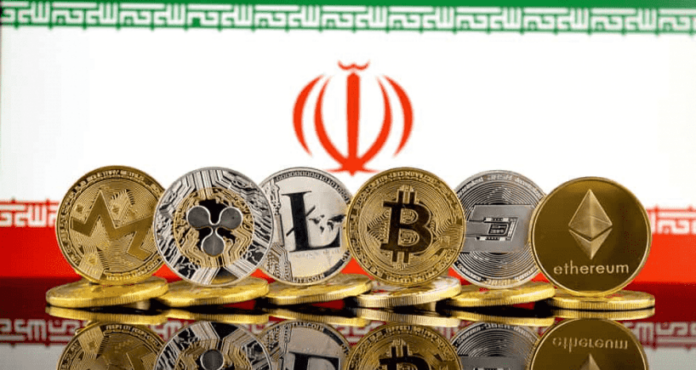
Iran Turns Dream into Reality by Unveiling Its Own Cryptocurrency

This dream began when the country learned that it was going to face new economic sanctions with the United States and instead of carrying foul like most countries would, it took it as an opportunity and it has now taken what most economic analysts see as the boldest economic step any nation can make.

Another factor that has occasioned this move is that the country was recently removed from the Society of Interbank Financial Telecommunication, popularly known as SWIFT; hence making it nearly impossible for it to operate its import and export business. This could cripple the economy of this nation; thus informing the need to develop alternative strategies of moving money.

After the swift disconnect, the governor of the Central Bank of Iran Abdolnasser Hemmtai said in a statement “The regulator has already begun the work of looking for an alternative after the Swift Disconnect.”

The Islamic Republic announced the cryptocurrency, named “Payman”, on January 29 during the Annual Electronic Banking and Payments System whose theme was “Blockchain Revolution.”

This cryptocurrency will use a ledger technology which will work by allowing a network of computers to verify transactions between parties other than use a third-party entity to validate them.

Payman will be issued by the central bank and will be backed up by Rial. According to reliable sources, it is not yet confirmed whether the digital currency will be implemented in large scale, but what is certain is that it will be used by citizens to make payments locally.

According to Yashar Rashedi who is a Blockchain developer at Radfa, a local digital currency firm, this central bank-issued currency will not match giant cryptocurrencies such as Bitcoin due to its centralized nature, but its presence will have an impact on the market. He further states that the currency might not enjoy widespread use from the general public, but it will offer a host of beneficial features for developers and startups who were used to centralized bank APIs.

The rolling out of this cryptocurrency will be done in phases. First, it has been released as a rial-backed digital currency which will be used to enhance payments between Iranian institutions and banks based on the crypto space. Later, it will be released as a primary method of paying for goods and services by the general public.

Some critics argue that this new development will not help Iran make payments with other countries, but crypto experts suggest that it is a move that might build a strong foundation for the Islamic country to join the hyped Blockchain-based international payments systems which are regarded as the best alternative for SWIFT.

The Iranian authorities have stated that the virtual currency will be governed by the Central Bank and will be built on a privately-owned Blockchain that cannot be mined.

Although Iran will face many stumbling blocks in the implementation of the currency, crypto fanatics believe that embracing cryptocurrency will create a conducive environment for rapid economic growth.

If you want to invest in a Middle East business that sells banner stands or any other product that you feel will speed up business growth especially in Iran, you need to arm yourself with knowledge on how you will run block-chain-based transactions.

The benefits Iran will get from this move are immense, but the question of whether it will be implemented remains to be seen.