Monday, December 22, 2025
Home Blog Page 240

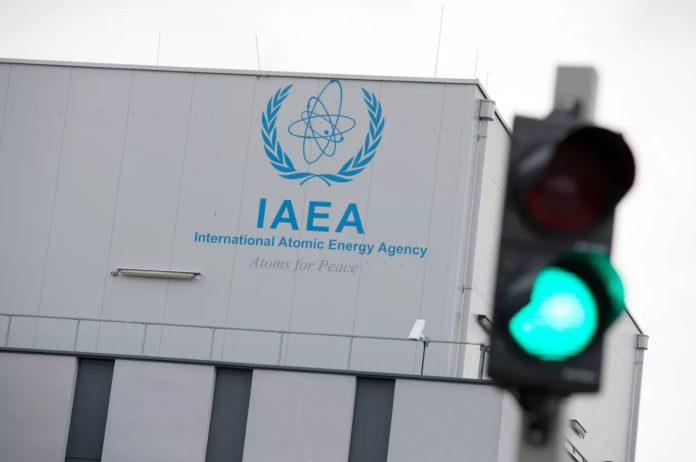
Iranian president condemns IAEA silence on Israeli aggression

During a phone call with Armenian Prime Minister Nikol Pashinyan, Pezeshkian said the attack violated all international rules and regulations.

He also referred to Iran’s historical commitment to peace and stability in the region, saying while Iran has consistently complied with IAEA regulations and reaffirmed its prohibition on nuclear weapons based on a religious fatwa issued by the Iranian Supreme Leader, the nation’s nuclear program continues to be judged by false claims, fake intelligence, and a politically motivated media campaign.

Pezeshkian condemned the IAEA’s failure to denounce the Israeli-US aggression, calling it a violation of the agency’s own charter to defend the rights of its member states.

“We welcome inspections because we have nothing to hide, but we categorically reject pressure and denial of our legal rights”, he said.

The Iranian president also denounced the “double standards” of countries that claim to uphold human rights yet remain silent on the “genocide, starvation, and mass killings” carried out by the Zionist regime in Gaza.

On bilateral ties, Pezeshkian described relations with Armenia as “friendly and constructive”, reaffirming Iran’s policy of cooperation with all neighbors based on mutual respect and territorial integrity.

Armenian Prime Minister Nikol Pashinyan expressed condolences over recent Iranian casualties and reiterated his country’s eagerness to deepen cooperation, inviting Pezeshkian for an official visit.

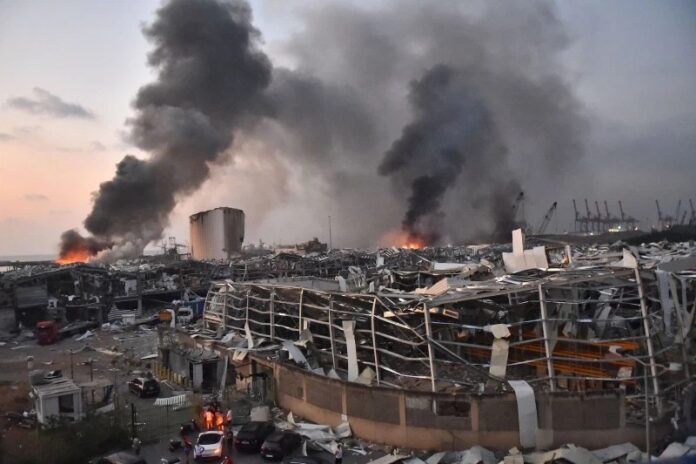
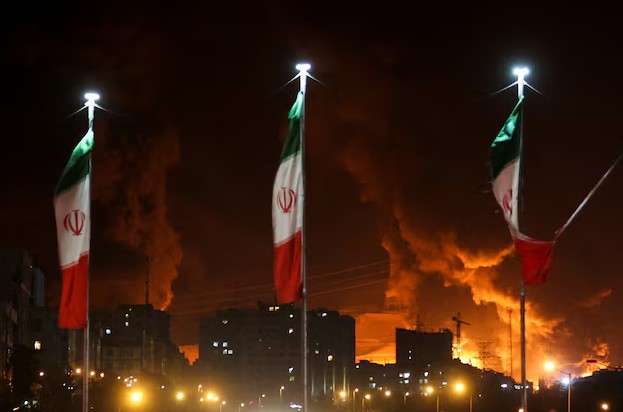
Fire contained at major refinary in Abadan, southern Iran

That’s according to an official statement by the refinery’s public relations office.
The refinery confirmed that production continues without disruption, utilizing spare capacity in other units to maintain stable output.

Initial technical investigations into the fire suggest that it was caused by a pump leak in Unit 70.

Authorities have found no evidence of sabotage or human interference so far.
Meanwhile, the incident resulted in the death of one refinery worker.

The Abadan Oil Refinery, located in the oil-rich province of Khuzestan, is the largest oil refinery in Iran, with a processing capacity of 520,000 barrels per day.

PMU asks Iraqi government to provide air defense systems amid fears of attacks by Zionist regime

Iraqi Forces

PMU, otherwise known Hashd al-Shaabi (its Arabic name), voiced concern over the issue.

This comes after senior Shia cleric Sadroddin Qabanji warned, in a sermon in the Iraqi city of Najaf, of an imminent Israeli plot to strike key figures within the Coordination Framework, a major Shia political coalition. In response, Hashd called on Baghdad to ignore US pressure and accelerate the delivery of essential military hardware to resistance fighters.

Deputy Chief of Staff of the group Yasser al-Eisawi told Tasnim News, “We have been sidelined due to political decisions, despite the fact that both the Iraqi army and Hashd possess the capability to defend our skies”.

He added that Iraq’s airspace was openly violated by Israel during the recent 12-day conflict between Iran and the Zionist regime.

“We are now focused on enhancing our military capabilities to protect Iraq’s airspace, but this requires political will as the first step”, Eisawi said.

Former IRGC commander to Arab nations: Wake up

Mohsen Rezaei

In a post on the social media platform X, Rezaei issued a stark warning about the Zionist regime’s plots against regional nations.

He said, ‘Peace through power’ now means: give up the Golan Heights, accept Tel Aviv’s conditions, open the doors to the US, and don’t protest if you’re bombed…this is the region’s new and unwritten law. Arabs, wake up.”

Rezaei’s remarks come amid continued tensions in Syria following Israeli military involvement in the Arab nation’s internal strife in support of the Druze community.

Syrians have condemned the Zionist regime’s intervention in their country, saying Tel Aviv is fueling division and seeking the fragmentation of Syria.

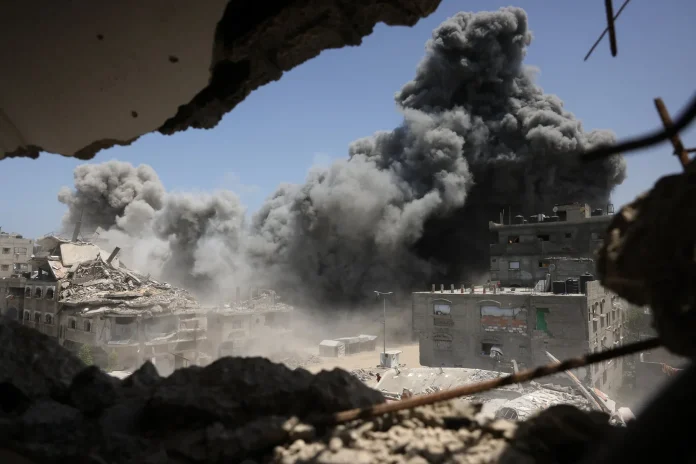
Hamas says Israel refuted ceasefire agreement releasing all captives in Gaza

Gaza War

Abu Obeida, the longtime spokesperson of the Qassam Brigades, said in a nearly 20-minute prerecorded video released on Friday that the group had in recent months offered a “comprehensive deal” that would release all captives at once – but it was dismissed by Israeli Prime Minister Benjamin Netanyahu and his far-right ministers.

“It has become clear to us that the government of the criminal Netanyahu has no real interest in the captives because they are soldiers,” he continued, adding that Hamas favours a deal that guarantees an end to the war, a withdrawal of Israeli forces, and entry of humanitarian aid for besieged Palestinians.

If Israel withdraws from this round of indirect talks held in Qatar, Abu Obeida stated, then Hamas does not guarantee a return to any partial deals, including a 60-day deal currently under discussion that would see 10 captives released.

Hamas is still holding 50 people in Gaza, about 20 of whom are believed to be alive.

Speaking during a dinner with lawmakers at the White House on Friday, US President Donald Trump claimed another 10 captives will soon be released from Gaza.

“We got most of the hostages back. We’re going to have another 10 coming very shortly, and we hope to have that finished quickly,” Trump stated, without providing details.

The US leader has claimed for weeks that a ceasefire and captive deal is imminent, but nothing has materialised.

In his first video message since early March, Abu Obeida also said Hamas fighters are “ready to continue a long battle of attrition” and will keep up ambushes across Gaza with the aim of killing or capturing invading Israeli soldiers.

He slammed the leaders of Arab and Islamic nations, as well, for their inaction in face of the “genocide” being committed by Israel, adding, “Your necks are burdened with the blood of tens of thousands of innocents who were betrayed by your silence.”

The comments come as the talks in Doha have not led to any results as Israel insists on maintaining and expanding military control over Gaza, including the Morag Corridor and the new Magen Oz Corridor that respectively separate Rafah and Khan Younis in the south from the rest of the enclave.

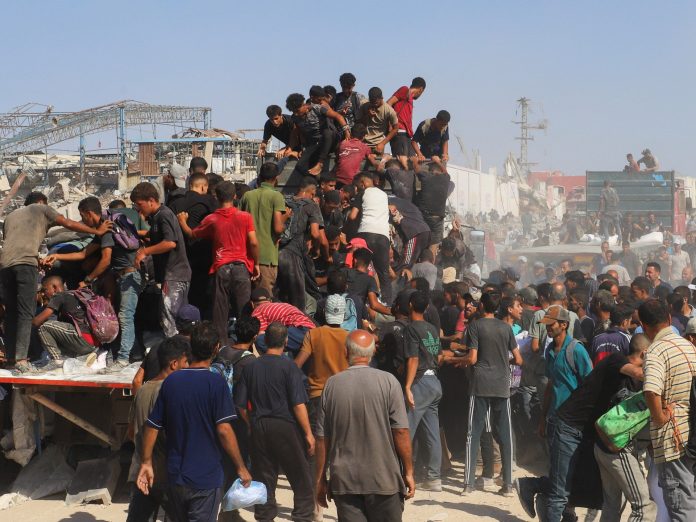
Latest figures by Gaza’s Ministry of Health show that more than 58,600 Palestinians have been killed and 139,974 others wounded since the start of the war in October 2023, including at least 7,850 killed and 28,000 injured since Israel broke the last ceasefire in March.

The ministry added that an “unprecedented” number of starved people of all ages, including children, are arriving at emergency departments of the few hospitals left partially standing in Gaza in a state of extreme exhaustion and fatigue.

Europe’s largest missile maker linked to bombs used in deadly Gaza attacks: Guardian

The investigation traces key components of the GBU-39 small diameter bomb, which has been deployed in multiple airstrikes since the Oct. 7, 2023, Hamas attack on Israel.

In retaliation, Israel launched a genocidal military assault on Gaza that has drawn international concern over the scale of civilian casualties and destruction.

MBDA, a multinational defense company jointly owned by BAE Systems (UK), Airbus (France), and Leonardo (Italy), manufactures “wings” for the GBU-39 at a factory in Alabama, in the US. These extend after launch, enabling the bomb to be guided accurately to its target.

The bombs themselves are produced by US defense giant Boeing. Revenues from MBDA’s US arm flow through MBDA UK, headquartered in Hertfordshire, and on to the group’s central office in France.

According to company records, MBDA distributed nearly £350 million ($471 million) in dividends last year to its three shareholders.

Using open-source evidence and expert analysis, the investigation verified 24 instances where GBU-39 bombs were used in strikes that resulted in civilian deaths. Each of those incidents reportedly included children among the fatalities.

Many of the attacks took place without warning, at night, and targeted buildings such as schools and tent camps where displaced civilians had been sheltering.

Some of these airstrikes are currently under scrutiny by the UN and Amnesty International, both of which have raised concerns about potential violations of international humanitarian law.

Amnesty has described several of the strikes as suspected war crimes.

MBDA confirmed its contractual relationship with Boeing to supply the bomb’s wing assemblies and said in a statement that it “complies [with] all relevant national and international laws applicable to the arms trade in the countries in which it operates … all of whom have export policies and operate robust export control regimes.”

The GBU-39 is supplied to Israel through the US’ military aid program, which allows for arms to be purchased using American grants and loans. Bombs have been supplied both from Boeing directly and from US military stockpiles.

Since Oct. 2023, an estimated 4,800 GBU-39 bombs have been delivered to Israel. The most recent shipment, consisting of 2,166 bombs, was announced in February 2025—coinciding with United Nations reports that nearly 70% of Gaza had been reduced to rubble.

In September, UK Foreign Secretary David Lammy suspended some arms export licenses to Israel, citing the risk of “serious violations” of international humanitarian law. “The move was designed to target items which could be used in the current conflict in Gaza,” Lammy said.

However, campaigners have said the UK’s actions fall short of addressing the broader flow of weapons.

The pause applies only to military equipment exported directly from Britain, and does not affect MBDA’s operations in the US.

The GBU-39, launched from fighter jets, carries a relatively small payload of less than 250 pounds and is designed to strike targets with precision, limiting damage to surrounding structures.

Its use has been promoted by US officials, including under President Joe Biden, as an alternative to heavier munitions used earlier in the conflict.

Nonetheless, experts say the bomb can be devastating in densely populated areas.

According to the investigation, the 24 verified strikes between November 2023 and May 2025 resulted in more than 500 deaths, including at least 100 children.

Rejecting international calls for a ceasefire, Israel has pursued a brutal offensive on Gaza since late October 2023, killing nearly 59,000 Palestinians, most of them women and children.

The relentless bombardment has destroyed the enclave and led to food shortages and the spread of diseases.

Last November, the International Criminal Court issued arrest warrants for Israeli Prime Minister Benjamin Netanyahu and his former Defense Minister Yoav Gallant for war crimes and crimes against humanity in Gaza.

Israel also faces a genocide case at the International Court of Justice for its war on the enclave.

Real determination needed for win-win agreement on Iran’s nuclear program: FM

Abbas Araghchi

In an interview with CGTN during his stay in China for a recent meeting of the Shanghai Cooperation Organization (SCO), Araqchi outlined the preconditions for the resumption of negotiations about Iran’s peaceful nuclear program following the Israeli and US military attacks against the country’s nuclear facilities.

Asked about the “conflict” in the wake of the Israeli and US strikes on Iran, the foreign minister said, “It is not a conflict. It is an act of aggression by Israel against Iran. Unprovoked aggression against the Islamic Republic of Iran. We had no way but to exercise our right of self-defense. So we defended our country. We defended it in a very courageous way. And we forced the aggressors to stop their aggression and ask for an unconditional ceasefire, which was accepted by us. The ceasefire is, of course, fragile. The reason is obvious. I think there is no ceasefire made by the Israeli regime, and that regime has a very bad record on that. We are very careful. We are fully prepared. If the ceasefire is broken, but this is not our wish. That was not our wish from the beginning. We didn’t want this war, but we were prepared for that. We don’t want this war to continue, but again, we are fully prepared for that.”

When asked what Iran needs to consider before making a decision about the possibility of restarting the nuclear talks with the United States, Araqchi said, “We are not convinced yet that there is this real determination. At the same time, there should be also a real intention for a win-win solution. Our nuclear program is for peaceful purposes, and we are 100% confident on that. And we have no problem to share this confidence to anybody else. And that can happen only through negotiations. And we did it in 2015 when we negotiated with the so-called P5+1 countries. And we came to a deal. We concluded the deal. And the whole world celebrated, if you remember, as an achievement of diplomacy at that time in 2015. And we remain committed to that. Then all of a sudden, the United States decided to withdraw, which was very unfortunate. Everything we saw today is the result of that withdrawal.”

“Is there any possibility to come back to a negotiated deal? I think yes. But it needs, as I said, real serious determination by the US side to put aside military option, go for a negotiated solution. I think the recent attack to our nuclear facilities proved that there is no military option to deal with Iran’s nuclear program. There should be only a diplomatic solution. A negotiated solution can work. And we are prepared for that only when they put aside their military ambitions and they are compensating what they have done to us. And then we can re-engage into negotiations,” he added.

Commenting on Iran’s interaction with the SCO, the foreign minister said, “As you said, Iran has joined the Shanghai Cooperation Organization as a full member. We attach great importance to SCO and value its effort to, as I said, find the proper place of countries of the south in international arena. And at the same time, we see many other countries who wish to join this organization, which is good by itself. And we all have a real intention to go to this path and address the security issues, economic issues, even cultural issues of the member states in a different way than the Western countries usually address.”

Asked about Iran’s expectations from the SCO, Araqchi said, “I have to say that we are very grateful to the SCO secretariat and each and every member state who condemned the act of aggression by the Israeli regime and the United States against the Islamic Republic of Iran, particularly against the nuclear facilities of Iran.”

“As you know, attacking -act of aggression- is by itself a violation of international law against the Charter of the United Nations. But attacking nuclear facilities is even a bigger violation, an unforgivable violation of the international law. It is totally prohibited to attack a nuclear facility which could have disastrous environmental consequences against human beings. So, as I said, we are grateful for SCO member states who condemned that, particularly China. I think it had a very strong position in support and solidarity with the Islamic Republic of Iran to express their condolences for the people who lost their lives, women and children included. We expect full support, political support, by SCO summit, upcoming support for the Islamic Republic of Iran,” the foreign minister concluded.

US director of national intelligence calls for Obama to be prosecuted over 2016 election claims

She said Obama and senior officials in his administration had “[laid] the groundwork for … a years-long coup” against Trump after his victory over Hillary Clinton by “manufacturing intelligence” to suggest that Russia had tried to influence the election. That included using a dossier prepared by a British intelligence analyst, Christopher Steele, that they knew to be unreliable, Gabbard claimed.

The post-election intelligence estimates contrasted with findings reached before the election, which indicated that Russia probably was not trying to interfere.

In extraordinary comments calling for prosecutions, she added: “The information we are releasing today clearly shows there was a treasonous conspiracy in 2016 committed by officials at the highest level of our government.

“Their goal was to subvert the will of the American people and enact what was essentially a years-long coup with the objective of trying to usurp the President from fulfilling the mandate bestowed upon him by the American people.”

“No matter how powerful, every person involved in this conspiracy must be investigated and prosecuted to the fullest extent of the law, to ensure nothing like this ever happens again. The American people’s faith and trust in our democratic republic and therefore the future of our nation depends on it,” she continued.

Gabbard, a former Democratic member of Congress, said she was passing documents supporting her case to the justice department. They included a partially redacted intelligence community assessment from the Obama administration on cyber threats to the 2016 election and a series of previously classified memos, including some from the office of James Clapper, who served as Obama’s director of national intelligence.

Clapper is one of several officials named by Gabbard as apparently implicated in the supposed conspiracy. Others include John Brennan, the former CIA director, John Kerry, the then secretary of state, Susan Rice, the national security adviser at the time, Andrew McCabe, the then deputy FBI director, who later fell foul of Trump, and Obama himself.

The attempt to return the spotlight back to the Russia investigation – long derided by Trump as a “hoax” – comes as the US president finds himself in the maelstrom of the lingering scandal over the disgraced financier Jeffrey Epstein, who was found dead in his prison cell in 2019 while awaiting prosecution on sex-trafficking charges.

The Trump administration has come under mounting pressure from the president’s make America great again (Maga) base to release files on the case, including a supposed list of Epstein’s influential clients.

Trump, in response, has variously dismissed the existence of such files or said they were invented by Obama and members of his administration, including James Comey, the former FBI director, and Joe Biden, vice-president in the Obama administration.

Commentary accompanying a series of Obama-era memos published by Gabbard’s office uses terms characteristic of Trump and his most ardent supporters to paint an alleged conspiracy to discredit his 2016 win.

Following a meeting on 9 December 2016 of Obama’s most senior national security team, the document – entitled the Russia Hoax – says: “Deep State officials in the IC [intelligence community] begin leaking blatantly false intelligence to the Washington Post … claiming that Russia used “cyber means” to influence “the outcome of the election.

“Later that evening, another leak to the Washington Post falsely alleges that the CIA “concluded in a secret assessment that Russia intervened” in the election to help President Trump.”

On 6 January the following year, the document continues: “The Obama administration shares the unclassified ICA [intelligence community assessment] with the public. It falsely alleges, based in part on ‘further information’ that had ‘come to light’ since the election, that Putin directed an effort to help President Trump defeat Hillary Clinton. This ‘further information’ is later confirmed to be the Steele dossier.”

The assessment “suppressed” previous pre-election assessments that Russia lacked the intent or means to successfully hack the poll, Gabbard’s report alleges.

The Steele dossier, which contained salacious details of “kompromat” allegedly held by Russian intelligence on Trump, formed part of the basis for a lengthy investigation conducted by Robert Mueller, who was appointed as special counsel into the Russia affair. Mueller’s subsequent report concluded that Russia interfered “in sweeping and systematic fashion” in the election campaign but “did not establish that members of the Trump campaign conspired or coordinated” with the Russian government’s activities.

Gabbard’s nomination as national intelligence director was one of Trump’s most contentious. It drew criticism because of her lack of previous intelligence experience, having never even served on a congressional committee on the subject, and a track record of supportive comments about Russia’s President Vladimir Putin and repeating Kremlin talking points on the war with Ukraine.

Iranian chess prodigy Sina Movahed wins Title Tuesday, defeating world stars

The tournament, hosted weekly by Chess.com, features many of the world’s top grandmasters. Movahed impressed observers by advancing through all rounds undefeated.

In the final round, he faced off against Russian Grandmaster Alexey Sarana, who had scored 9.5 points. With composure and strategic brilliance, the young Iranian overcame his opponent to finish with a perfect 10 points and secure the championship title.

His victory earned him the tournament’s $1,000 cash prize and, more importantly, a direct qualification spot in the elite Titled Tuesday Grand Prix, a series that includes the top-performing players from across the tournament’s calendar.

Chess analysts have called Movahed one of the most promising young players to watch in the coming years.

Why China remained silent during Iran’s 12-day conflict, expert elucidates

Hamed Vafaei, a China affairs expert at the University of Tehran, attributed Beijing’s silence to a traditional Chinese proverb: “Sit atop the mountain and watch the tigers fight.”

The phrase reflects China’s deliberate neutrality in conflicts where it sees high costs and limited direct benefits.

According to Vafaei, while Iran and China signed a 25-year comprehensive cooperation agreement years ago, real strategic integration has not materialized.

Unlike countries such as Saudi Arabia and the UAE, which have tied key sectors of their economies to China, Iran has yet to establish a consistent economic foothold in Beijing’s value chain.

China, cautious of Western traps and focused on its own century-long national development goals, avoids direct involvement in high-risk security crises. Its support for partners like Iran is typically limited to diplomatic or economic gestures.

Vafaei stressed that unless Iran deepens its strategic and economic ties with China, particularly in energy and industry, it should not expect Beijing to take sides in future security matters.