Sunday, December 28, 2025
Home Blog Page 2394

Iranian daily Keyhan: West cannot tell Tehran what to do

Keyhan said two US administrations after former president Barack Obama said they would not respect an agreement concluded by their predecessor.

The daily said the European troika also supported this heinous move by the US. According to Keyhan, the West and the US expect Iran to return to the negotiating table fast and claim they agreed on 70 to 90 percent of differences with the former Iranian government.

It added that neither ex-president Rouhani nor former foreign minister Zarif claims they finalized an agreement with the West over the nuclear deal.
Keyhan noted that the US and the European troika are in no position to tell Iran what to do on the Vienna talks as the US betrayed the deal and the Europeans followed in Washington’s footsteps.
Keyhan added that the US is not trustworthy.

Iran FM says doubts the seriousness of the Biden admin returning to JCPOA

He added that France also wants full co-operation between Iran and the International Atomic Energy Agency.

Le Drian reminded Amirabdollahian of the invitation the French government extended to the top Iranian diplomat during Baghdad summit to visit Paris. Le Drian said France is looking forward to welcoming the Iranian foreign minister.

During the meeting, Amirabdollahian described the talks in Baghdad as “good” and said he thinks France is interested in expanding relations with Iran. They believe in bilateral relations.

Amirabdollahian said two phone conversations between the Iranian and French presidents show both sides view the Tehran-Paris relations as very important.

He also thanked the French foreign minister for inviting him to Paris and extended an invitation to Le Drian to visit Tehran. He said the new government of the Islamic Republic of Iran is interested in expanding bilateral and regional cooperation.

Amirabdollahian noted that the current government is pragmatic and accepts negotiations as an important tool of diplomacy.

He added that Iran is ready to return to the Vienna talks and is rapidly reviewing the previous negotiations. At the same time, the Iranian foreign minister regretted the lack of serious and practical action by the United States and the three European countries in fulfilling their obligations. He said practical and tangible results are extremely important for the Iranian people when they consider returning to the negotiating table. He also reiterated that the current US administration has not taken any serious and practical steps to return to its obligations and, to the contrary, has imposed new sanctions on Iran. Amirabdollahian said Iran doubts the seriousness of the Biden administration in returning to the Iran nuclear deal, known as the JCPOA. Amirabdollahian and Le Drian also spoke over the situation in Afghanistan.

Amirabdollahian said the Islamic Republic of Iran is in contact with all parties in Afghanistan and is trying to encourage them to form an inclusive government. He however noted that important challenges remain in this regard. The Iranian foreign minister also referred to the growing number of Afghan refugees in Iran and the Islamic Republic’s history of hosting Afghan nationals, calling for international support, including from France, for vaccination of Afghan asylum seekers.

In return, the French foreign minister agreed with Iran’s position on the need to form an inclusive government and prevent the spread of terrorist acts in Afghanistan. Le Drian stated that it is necessary to help refugees in Afghanistan’s neighboring countries as well as internally displaced Afghans. He said France is considering implementing joint projects for this purpose.

President Raeisi: Nearly 70% of Iranians vaccinated

Raeisi said on Saturday Iran is reaching the goal of vaccinating 70 percent of the population, adding “We are reaching a point where we should plan on removing Covid-related restrictions instead of imposing new ones”.

He however warned against slacking on Covid safety rules.

Health authorities said on Saturday 280 more people died of the Coronavirus in the last 24 hours. That pushes the death toll from the start of the pandemic to 119,072. Meanwhile, 10,843 new infections were detected from Friday to Saturday.

The total caseload now stands at 5,519,728.

A huge rise in vaccine imports and production inside Iran accelerated the vaccination drive in the country over the past few weeks.

The exact number of Covid vaccine doses administered so far is 49,789,504. Iranian officials say age limit for vaccination has nearly been removed. They have already said the entire population will soon be fully vaccinated.

Iran FM: Tehran favors talks that ensure rights and interests of Iranians

He answered their questions about a variety of issues, including the foreign and regional policy of the Islamic Republic and the future of the Iran nuclear deal.

During the meeting, the foreign minister stressed the determination of the new government of the Islamic Republic to adopt a foreign policy based on giving priority to neighbors and Asian countries. He outlined Iran’s views on regional issues, including the situation in Afghanistan, Syria, Yemen, Bahrain and other countries. Amirabdollahian also stated that although the new government has given priority to developing relations with neighbors and Asian countries, it will also maintain a balance in its foreign policy.

The foreign minister also said Tehran is committed to diplomacy based on its principles and is ready for fruitful talks that ensure the rights and interests of the Iranian people, despite the fact that the US went back on its promises under the nuclear deal and also despite the European troika’s inaction in this regard.

The issue of Afghanistan was one of the topics discussed at the meeting. Amirabdollahian reaffirmed Iran’s principled policy to support forming an inclusive government in Afghanistan and preventing the spread of terrorist activities in the region.

Russia warns US sanctions against ‘Spirit of Geneva’

A dramatic package of new sanctions on senior Russian officials put forward by lawmakers in Washington would fly in the face of constructive negotiations held between the two countries’ leaders just months ago, Kremlin Spokesman Dmitry Peskov said.

Speaking to reporters on Friday, Peskov stated that the proposals, backed by an influential Congressional committee earlier this week, “would significantly undermine the spirit of Geneva”.

Russian President Vladimir Putin and his American counterpart Joe Biden met in the Swiss city in June for talks about a range of issues, including nuclear safeguards and maintaining regional stability.

“It’s probably not up to us to make predictions,” Peskov noted, “but it is obvious that the various aspirations American congressmen have aren’t weakening. However, this bill still has to go through several steps, and then there is the question of whether the administration will put the recommendations into practice.”

He added that the White House signing off on the new restrictions would be a betrayal of the progress made earlier this year and extinguish “the modest hopes we had for establishing some kind of substantive dialogue that appeared after Geneva”.

On Wednesday, members of the House Committee on Rules backed the amendments, put forward by Democratic Party Rep. Tom Malinowski of New Jersey. The proposals give the federal government a six-month deadline to consider imposing sanctions on 35 Russians under the ‘Global Magnitsky Act’.

Among those on the list for purported ‘human rights’ breaches is Mikhail Mishustin, Russia’s prime minister; Moscow Mayor Sergey Sobyanin and Peskov himself. Also included are Chelsea Football Club owner Roman Abramovich, as well as journalists such as Channel 1 CEO Konstantin Ernst and RT’s editor in chief, Margarita Simonyan.

The talks between Biden and Putin were held earlier this year against a backdrop of rising tension dividing the two countries. The Russian president said afterwards that the conversation was “constructive” and not overshadowed by major questions of domestic politics.

“I don’t think there was any kind of hostility,” he added.

UK troops linked to deaths of hundreds of Afghan civilians

The government has paid out compensation for the deaths of 289 civilians in Afghanistan, including at least 16 children, according to analysis of official figures.

The study of internal Ministry of Defence documents shows overall, £688,000 was paid out by the British military for the deaths, an average of £2,380 per fatality.

The findings are from an analysis by charity Action on Armed Violence (AOAV) and relate to deaths in 189 incidents between 2006 and 2013.
Some £397,000 was paid out for 240 injuries, an average of £1,654, the charity said.

The Ministry of Defence (MoD) announced the UK had always sought to minimise the risk of civilian casualties through “rigorous targeting processes”.

One family received £586.42 following the death of their 10-year-old son in December 2009 – with other claimants receiving higher payouts for damage to a crane and the loss of six donkeys.

In February 2008, a family was given just £104.17 for a confirmed fatality and property damage in Helmand province.

Most of the deaths occurred in Helmand, scene of some of the fiercest fighting involving UK forces, and were recorded in compensation payout data obtained under a Freedom of Information request.

In one December 2009 incident, the document listed four children “shot and killed by ISAF (International Security Assistance Force)”, with £4,223.60 paid in compensation a month later.

The youngest recorded casualty was a three-year-old boy, killed in December 2009 by “shock from [a] controlled explosion” during an operation to clear an improvised explosive device.

The files record the deaths of 16 children, the charity said, based on cases that either specify an age or describe victims as a “child”, “boy” or “girl”.

But the true figure could be as high as 86 by including cases that mention the terms “son”, “daughter” or “nephew” because Afghanistan has a population with a median age of 18.4 – so the likelihood of someone’s child being a minor is high.

Murray Jones, the author of the AOAV report, stated, “These files do not make for easy reading. The banality of language means hundreds of tragic deaths, including dozens of children, read more like an inventory.

“Sadly, due to the way civilian casualties were recorded, these totals are likely to be just a fraction of the true number,” Jones added.

The amount of compensation paid is determined by common law principles which include factors such as pain and suffering along with financial loss.

The settlements also reflect local customs and practice, as well as economic factors, and are in line with other countries which provided forces for the 20-year Afghan campaign led by the United States which ended in chaotic fashion with the evacuation from Kabul airport in August.

An MoD spokesman said, “Every civilian death is a tragedy and the UK always seeks to minimise the risk of civilian casualties through our rigorous targeting processes, but that risk can never be removed entirely.”
“The amount of compensation paid is determined by legal principles which consider the degree of injury and both past and future losses; settlements also reflect local customs and practice,” he added.

Source: The Independent

US green-lights certain transactions with Taliban

Amid concern that sanctions on the Taliban would worsen a continuing humanitarian crisis in Afghanistan, the United States has taken steps to pave the way for aid to flow into the economically paralysed nation.

The US Treasury Department on Friday said it issued two general licences, one allowing the US government, NGOs and certain international organisations, including the United Nations, to engage in transactions with the Taliban or Haqqani Network – both under sanctions – that are necessary to provide humanitarian assistance.

The second licence authorises certain transactions related to the export and re-export of food, medicine and other items.

“Treasury is committed to facilitating the flow of humanitarian assistance to the people of Afghanistan and other activities that support their basic human needs,” Andrea Gacki, director of the US Treasury’s Office of Foreign Assets Control, stated in the statement.

She added that Washington will continue to work with financial institutions, NGOs and international organisations to ease the flow of agricultural goods, medicine and other resources while upholding sanctions on the Taliban, Haqqani Network and others.

The Taliban seized control of the country last month as foreign forces allied with the US withdrew from Afghanistan after a 20-year war. The events culminated in the capture of the capital, Kabul, on August 15, two decades after the Taliban was driven from power by a US-led campaign following the September 11 attacks on the United States.

The United Nations warned that at the start of the year more than 18 million people – about half of Afghanistan’s population – require aid amid the country’s second drought in four years.

UN Secretary-General Antonio Guterres said last week that Afghanistan is on “the verge of a dramatic humanitarian disaster” and has decided to engage with the Taliban in order to help the country’s people.

US President Joe Biden’s administration has noted it is committed to allowing humanitarian work in Afghanistan to continue, despite Washington listing the Taliban as a specially designated global “terrorist” group.

The sanctions freeze any assets the Taliban has in the US and bar Americans from dealing with the group, including the contribution of funds, goods or services.
Friday’s move expands on that specific licence, allowing international organisations and NGOs to pay taxes, fees, import duties or permits, licences or other necessary transactions for assistance to reach the people of Afghanistan.

The licences allow NGOs and foreign financial institutions to continue humanitarian assistance such as the delivery of food, shelter, medicine and medical services, including COVID-19 assistance, a Treasury spokesperson said.

“We have not reduced sanctions pressure on Taliban leaders or the significant restrictions on their access to the international financial system,” the spokesperson added.

On Friday, Afghans held a protest in Kabul, calling for the release of central bank assets held in the US.

The US froze $9bn US in Afghan foreign reserves held in New York and the World Bank, and the International Monetary Fund and European Union have suspended financing for projects in Afghanistan.

Source: Al-Jazeera

UK PM bidding to ease tension with France over AUKUS

A description of the conversation from Macron’s office said the prime minister sought the call on Friday, and expressed the hope that the countries could resume cooperation “in line with our values and our common interests”.

In response, the French president told Johnson “he is awaiting his proposals” on how to do this, the brief statement from the Élysée added.

A more lengthy Downing Street readout of the call omitted this last detail, instead saying the pair “reaffirmed the importance of the UK-France relationship and agreed to continue working closely together around the world on our shared agenda, through NATO and bilaterally”.

“The leaders noted in particular the strategic significance of our longstanding cooperation in the Indo-Pacific and in Africa, including through the joint mission in Mali,” it added.

The prime minister on Thursday urged the French to “prenez un grip about this and donnez-moi un break” – to “get a grip” and “give me a break” – over the fallout from the Aukus deal.

Relations between the two countries were already facing strain over the repercussions of Brexit and the UK’s desire for France to limit the number of refugees and migrants crossing the Channel.

Tensions rose last week after the UK’s decision to join the US and Australia in the Aukus pact, leading Canberra to cancel a £48bn submarine contract with France and replace it with nuclear technology from the UK and US, an arrangement negotiated without any prior French knowledge.

France recalled its ambassadors to the US and Australia for consultations about what was termed the “exceptional seriousness” of Canberra’s decision to cancel the order. While the French ambassador in London remained in place, this was only because France considered the UK a “junior partner” in the affair, the French Europe minister, Clément Beaune, stated.

During a visit to Washington this week, Johnson further deepened the row by claiming the UK, US and Australia had been “a bit taken aback by the strength of the French reaction” over Aukus.

The Downing Street statement said Johnson and Macron agreed to “intensify cooperation” on Channel crossings, the Northern Ireland protocol and post-Brexit fishing licences. The former two issues are notably bigger domestic political issues in the UK than in France.

It added, “The prime minister also looked forward to welcoming President Macron to Glasgow in November for Cop26, and they discussed the importance of increased international action ahead of the summit on climate finance and net zero commitments.”

On Thursday, French Foreign Minister Jean-Yves Le Drian told his US counterpart Antony Blinken the way out of a diplomatic crisis between France and the US over a submarine deal will “take time and require actions”.

The meeting of Blinken and Le Drian came after U.S. President Joe Biden and Macron spoke by telephone on Wednesday and agreed to launch in-depth consultations to rebuild trust between the two NATO allies. They also agreed to meet in Europe at the end of October.
Le Drian said in a statement he had discussed with Blinken at the United Nations in New York “the terms and main issues” to be addressed during those in-depth consultations.

The U.S. State Department said Blinken and Le Drian had also discussed cooperation between the United States and European countries including France in the Indo-Pacific region.

Blinken stated in a press conference later on Thursday that he was committed to working closely with Le Drian on the consultations.

“We recognize this will take time and hard work and will be demonstrated not only in words, but in deeds,” Blinken added.

“I am convinced that our interests together are so strong and the values that we share so unshakable that we will carry forward and get some good work done,” he continued.

China frees two Canadians following release of Huawei executive

Canadian citizens Michael Spavor and Michael Kovrig are returning to Canada nearly three years after they were arrested in China, Prime Minister Justin Trudeau announced on Friday evening.

“These two men have gone through an unbelievably difficult ordeal,” Trudeau said in Ottawa, adding, “For the past 1,000 days, they have shown strength, perseverance, resilience and grace.”

Spavor and Kovrig boarded their flight about 7:30 p.m. ET, Trudeau noted. They are being accompanied by Dominic Barton, Canada’s ambassador to China.

The ‘two Michaels’ were detained in what is widely considered a retaliatory act after Meng was arrested in Vancouver on Dec. 1, 2018, at the request of the U.S. government.

Meng reached a deferred prosecution agreement with the U.S. government earlier Friday, setting off a quick chain of events that saw her extradition case dropped by a B.C. court and concluded with her departure from the Vancouver airport, also about 7:30 p.m. ET.

China has insisted throughout the legal saga that Spavor and Kovrig were arrested on legitimate grounds, but the timing of their release is sure to bolster Ottawa’s argument that the two men were arbitrarily detained.

Trudeau deflected questions about what the development will mean for the strained relationship between Canada and China. He also did not answer exactly how their release came about.

“There is going to be time for analysis and reflection in the coming days and weeks, but the fact of the matter is, I know Canadians will be incredibly happy to know right now, this Friday night, Michael Kovrig and Michael Spavor are on a plane and they’re coming home,” he told reporters in Parliament’s West Block building.

Spavor, an entrepreneur who worked in North Korea and China, was found guilty of spying and sentenced to 11 years in prison and extradition by a Chinese court in August.

The trial for Kovrig, a diplomat, concluded in March, but he had not yet been sentenced.

Both men were initially detained on Dec. 10, 2018, 10 days after Meng’s arrest in Vancouver.

Trudeau was asked on Friday if he spoke to Chinese President Xi Jinping ahead of the release, but Trudeau said Canadian diplomats were the ones leading the work.

U.S. Secretary of State Antony J. Blinken said in a statement that his government welcomes the return of the Spavor and Kovrig “after more than two-and-a-half years of arbitrary detention”.

As part of her arrangement with U.S. prosecutors, Meng pleaded not guilty in a court Friday to multiple fraud charges.

The Huawei chief financial officer entered the plea during a virtual appearance in a New York courtroom. She was charged with bank fraud, wire fraud and conspiracies to commit bank and wire fraud more than two and a half years ago.

The agreed statement of facts from Friday’s U.S. court appearance said that Meng told a global financial institution that a company operating in Iran in violation of U.S. sanctions was a “local partner” of Huawei when in fact it was a subsidiary of Huawei.

David Kessler, an attorney with the United States Attorney’s Office for the Eastern District of New York, told the court the deferred prosecution agreement (DPA) will last four years — from the time of her arrest on Dec. 1, 2018, to Dec. 1, 2022.

Meng’s legal battle in Canada played out in stark contrast to the Chinese prosecutions of Spavor and Kovrig, which Canadian officials routinely decried for a lack of transparency.

She also lived under house arrest at a multimillion-dollar home in Vancouver while awaiting extradition. Spavor and Kovrig were held in Chinese prisons during the same period.

Meng read from a prepared statement, following what was likely her last appearance in a B.C. court, in which she thanked the Canadian government “for upholding the rule of law”.


Source: CBC News

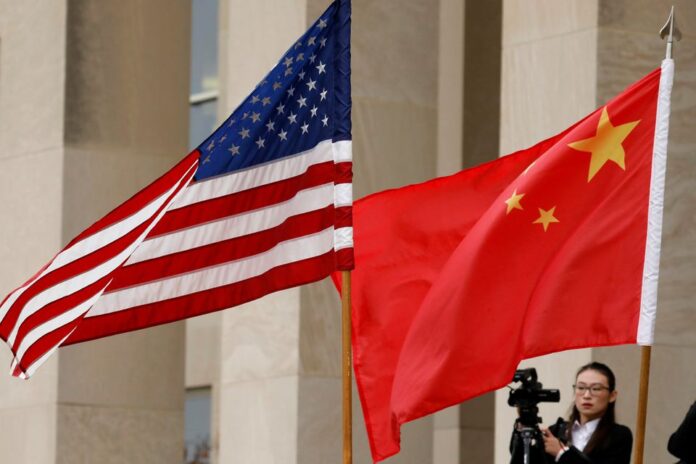
China urges U.S. to lift sanctions on Iran

In an address to the 76th session of the UN General Assembly via video conference on Tuesday night, Iranian President Ebrahim Raeisi said “nukes have no place in Iran’s defense doctrine”, and called for all signatories to the 2015 nuclear deal, known as the Joint Comprehensive Plan of Action (JCPOA), to stay true to the landmark agreement.

The Iranian president stressed that Tehran has so far been adhering to its nuclear commitments under the JCPOA while Washington violated the accord‎ by withdrawing from it three years ago and reimposing draconian sanctions on the country.

Raeisi added that 15 reports released by the International Atomic Energy Agency have attested to the adherence of Iran to its commitments, however, the US has not yet discharged its obligation, which is lifting sanctions.

“China appreciates this and believes it shows Iran’s constructive attitude of upholding the JCPOA and supporting negotiations to resume compliance,” Zhao Lijian, the Chinese Foreign Ministry spokesperson, said at a regular news briefing in the capital Beijing on Friday.

“China always believes that resuming full and effective implementation of the JCPOA meets common interests of all parties,” he added.

Zhao censured the so-called US maximum pressure campaign against Iran and expressed China’s pledge to work relentlessly to bring the 2015 nuclear deal “back onto the right track” by helping to resume negotiations on the revival of the accord and cooperating with other JCPOA-related parties.

“As the one that started the new round of tensions in the Iranian nuclear situation, the US should redress its wrong policy of maximum pressure on Iran, lift all illegal sanctions on Iran and measures of long-arm jurisdiction on third parties, and work to resume negotiations and achieve outcomes at an early date,” the Chinese Foreign Ministry spokesperson stated.

“China will work with all parties and continue to make relentless efforts to bring the JCPOA back onto the right track,” Zhao continued.

In an interview with NBC News on Thursday, Foreign Minister Hossein Amir Abdollahian noted Iran is ready to resume talks on reviving the 2015 nuclear deal but the administration of US President Joe Biden is sending a “negative sign” by keeping illegal sanctions on Tehran.

Amir Abdollahian stressed that Iran remains ready to restart the nuclear talks “very soon” but the US administration is refusing to remove the sanctions and is instead imposing new ones.

Iran and six world powers—the US, Russia, China, France, Britain and Germany—agreed on the JCPOA in 2015. Three years later, the JCPOA was unilaterally abandoned by Washington under former US President Donal Trump and more sanctions were introduced as part of the so-called maximum pressure campaign, in spite of Tehran’s hitherto strict compliance with the multilateral accord.

The parties to the JCPOA began high-profile talks in Vienna earlier this year after the Biden administration voiced willingness to rejoin the deal and remove the draconian sanctions his predecessor slapped on the Islamic Republic.

Since the beginning of the Vienna talks, Tehran has argued that the US—as the first party that violated the JCPOA—needs to take the first step by returning to full compliance with the agreement. Tehran also says it will resume all of its nuclear commitments under the deal only after the US removes all the sanctions in practice.

Source: Press TV