Sunday, December 21, 2025
Home Blog Page 2387

China says Asia-Pacific doesn’t need ‘submarines and gunpowder’

China announced the Asia-Pacific region needs economic growth and jobs, not gunpowder and submarines, in the latest salvo from Beijing after the US, Australia and the UK announced a new trilateral security partnership.

Zhao Lijian, the China’s foreign ministry spokesperson, speaking in Beijing, urged the Aukus members to reverse their decision and “fulfil their international nuclear non-proliferation obligations”.

The Aukus pact, and the associated deal to help Australia build nuclear-powered submarines, boosts Australia’s power across the western Pacific, and comes as a response to the threats posed by China’s expanding military footprint.

“Facing common challenges of fighting the pandemic and economic recovery, the people in the Asia-Pacific region need growth and employment, not submarines and gunpowder,” Zhao added, in the first official comments from the foreign ministry following the Mid-Autumn Festival national holidays this week.

In the wake of the Aukus deal, western security analysts have braced for a tougher response from China. Beijing has so far confounded many experts by instead making several overtures that appear to embrace multilateralism on trade and climate change.

Less than 24 hours after Aukus was announced, Beijing formally lodged an application to join the Comprehensive and Progressive Agreement for Trans-Pacific Partnership.

The surprise move stumped many trade specialists because it potentially hands diplomatic leverage to Australia and Canada with whom China has seen ties fall to historic lows — all CPTPP members have a veto power over new members.

Xi Jinping, China’s president has also pledged to end China’s financing of new coal power plants abroad, in a victory for environmentalists following years of international lobbying efforts.

Xi’s comments, made at the opening meeting of the United Nations General Assembly in New York on Tuesday, helped to ease some fears that tension between China and the US threatens to derail co-operation on combating the global threat of climate change.

These concerns have escalated ahead of the of the COP26 UN climate conference in Glasgow in November that environmentalists see as critical to setting more ambitious targets for cutting carbon emissions.

Li Shuo, an energy policy officer at Greenpeace, the campaign group, stated Beijing needed to focus its attention on transitioning to cleaner energy within China.
“Reducing its coal addiction at home is an urgent need. More decisive signals should be sent in the lead up to Cop2026 to ensure China’s emissions peak before 2025,” Li noted.

Source: Financial Times

Iranian cleric warns Azeri officials not to fall for plots by Israel’s lackeys

Seyyed Mohammad Ali Al Hashem warned Azerbaijani officials that the Israeli regime aims to sow sedition and destabilize the region and Muslim countries.

He added that Israel feeds off of sedition and strife among Muslims. He was referring to the recent claims by a few Azeri MPs who talked about quote wiping Iran off the map.

Tabriz’ Friday prayer leader also spoke of the US plots against Iran. He said a pillar of Washington’s strategy against the Islamic Republic is to resort to aggressive regionalism through coalition with the reactionary regimes of the region and undermining the alliance between Iran and its allies.

Al Hashem however said Iran’s accession to the Shanghai Cooperation Organization as a permanent member marked a heavy defeat for the US and the Israeli regime and opened a new chapter in Iran’s alliance formation efforts.

Closure removal ritual

During the ritual, farmers remove the closure and go fishing in the morning. They do the ritual happily and treat it as a recreation too.

Iraq praises neighbors’ role in crushing Daesh

“Iraq was able to liberate cities from ISIS (Daesh or ISIL) and protect the world from its crimes,” he told the Assembly’s 76th Session in New York on Thursday.

He valued the support that had been provided by “our neighbors and friends” in making the victory possible.

At Baghdad’s request, Iran began providing military advisory support for the Iraqi forces’ anti-Daesh operations in 2014, when the group emerged in the Arab country, starting its campaign of bloodshed and destruction.

This is not the first time that the Arab country expresses its gratitude towards the Islamic Republic over the assistance.

Salih also considered “the valor” of the Iraqi military and the Popular Mobilization Units (PMU), also known as Hashd al-Sha’abi, to have been instrumental in routing the group.

He also thanked the Iraqi religious authority in the holy city of Najaf for issuing the fatwa (religious decree) that led to formation of the PMU following Daesh’s rise.

The PMU, a predominantly-Shia Muslim counter-terrorism force, has been integrated into the Iraqi armed forces as one of its official branches owing to its contribution to the anti-terror struggle.
Meanwhile, the Iraqi chief executive turned to the issue of regional peace and the pivotal role that was played by Iraq, Palestine, Yemen, and Syria’s stability in realization of a peaceful region.

“It is not possible to establish peace in the region without acknowledging and fulfilling the full legitimate rights of the Palestinian people,” he noted.

“Peace in the region will not be achieved” without realization of security and stability in Iraq and restoration of the country’s full sovereignty.

Nor is it possible to establish peace in this part of the world “without acknowledging and fulfilling the full legitimate rights of the Palestinian people”.

It is time for a serious move to end the suffering of the Syrians, he further stated, and also identified continuation of the war in Yemen and its security and humanitarian repercussions as a cause for concern.

Source: Iraqi News Agency

UN: Starvation looming in Yemen, 16m in danger

Speaking at a virtual gathering of aid and development ministers, David Beasley, executive director of the World Food Program, described a worsening humanitarian crisis in Yemen.

“We’re literally looking at 16 million people marching towards starvation,” Beasley said.

“We need this war to end, number one. If donors are getting fatigued, well, end the war. World leaders need to put pressure on all parties involved in this conflict because the people in Yemen have suffered enough,” he added.

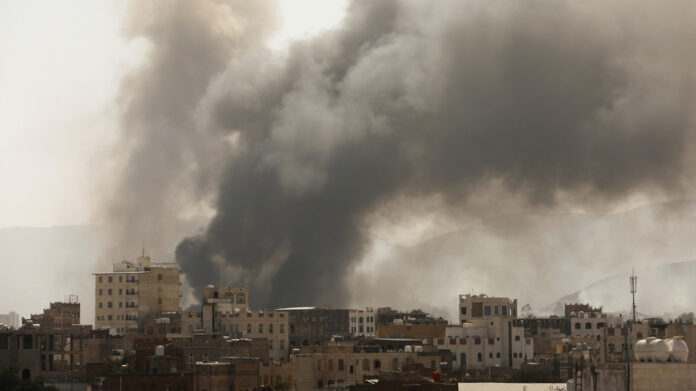
Yemen has been mired in a war since 2015. The conflict has claimed the lives of more than 230,000 people, displaced an estimated 4 million, and left 80 percent of the country’s 29 million citizens in need of aid.

The UN has called this situation “the world’s worst humanitarian crisis”, as heavy artillery and air strikes have hurt access to medical care and put pressure on those few remaining facilities.

Beasley warned that unless donors step in, the food rations of more than 3 million people could be slashed by October and up to 5 million by December.

Source: Xinhua news agency

Iranian Good Samaritan dies of severe burns

Ali Landi, 15, was receiving treatment at Imam Mousa Kazem Hospital in the city of Isfahan. Officials at the hospital said severe infection caused by the burns that damaged 91 percent of his body rendered treatment efforts ineffective.

When Ali was admitted to hospital for treatment, Iran’s Minister of Labor Ahmad Vahidi instructed the governor of Isfahan province, Abbas Rezaee, to give special support to the selfless teen who endangered his own life to rescue two women, one of them an elderly.
The fire broke out in the city of Izeh, in Khuzestan Province.

Second Lebanon-bound Iranian oil tanker reaches Syria

Lebanon’s Hezbollah Resistance Movement announced on its website on Thursday evening that the second Iranian tanker with diesel onboard has arrived at the port.

The first Iranian vessel discharged its cargo at the same port in mid-September.

The Iranian ships are unable to transport directly to Lebanon by sea because of U.S. sanctions, and sail to Syria instead for land transfer by trucks.

According to Hezbollah, which is behind the initiative, key services like hospitals will get priority access.

Hezbollah has announced that more Iranian fuel ships will head to Syria under an agreement between the resistance movement and the Islamic Republic.

The movement’s Secretary General Seyyed Hassan Nasrallah has warned Israel and the U-S to stay away from the Iranian tankers.

A severe economic meltdown has left Lebanon severely short of fuel and other basic necessities.

Poll: 51% of Americans prefer Trump to Biden

Trump

Americans are split on whether Trump was a better president than his successor, Biden. Fifty-one percent of those surveyed say that Trump is the superior commander in chief, while 49 percent prefer Biden, according to a new Harvard CAPS/Harris Poll survey.

Forty-eight percent of respondents say they have a positive view of Trump compared to 46 percent who say they have a favorable opinion of his successor. Biden’s favorability is slightly underwater, however: 49 percent of those surveyed said they have an unfavorable view of the current president, while slightly less — 47 percent — report an unfavorable opinion of Trump.

The findings are a remarkable shift for Biden, who repeatedly outperformed Trump’s favorability numbers throughout the early months of his presidency.

But multiple crises, including a surge in new COVID-19 infections in recent months and the chaotic withdrawal of U.S. troops from Afghanistan, have bruised public perceptions of Biden.

“The mounting issues on all fronts have led to the surprise conclusion that Trump is now seen as good a president as Biden, suggesting the honeymoon is being replaced now with buyer’s remorse,” Mark Penn, the co-director of the Harvard CAPS-Harris Poll survey, said.

“Since Trump lost the popular vote by 5 points, Trump getting 51 percent as a better president is actually an improvement from Election Day,” he added.

The latest Harvard CAPS-Harris Poll survey also shows Biden’s overall approval rating under water for the first time since he took office. Forty-eight percent of those surveyed say they approve of the job he’s doing in the White House, while 50 percent disapprove.

That follows on the heels of a July Harvard CAPS/Harris Poll survey that showed his approval rating sinking to 52 percent from 62 percent in June.

In a sign that the debacle in Afghanistan may be the biggest factor influencing views of his presidency, Biden saw his biggest drops in approval on his handling of foreign affairs and his administration’s efforts to combat terrorism. In both matters, his approval dropped 13 points since July.

Other members of Biden’s administration aren’t faring any better than Biden in the public eye, according to the poll.

Fifty-five percent of those surveyed say that Mike Pence was a better vice president than his successor, current Vice President Harris. Secretary of State Antony Blinken performs even worse, with 63 percent of respondents saying that his predecessor, Mike Pompeo, was the better secretary of State.

Penn noted that for Blinken, in particular, the U.S. withdrawal from Afghanistan has proved particularly tough.

“People see Pence as a better VP by 10 points and overwhelmingly see Pompeo as far better than Blinken, who has been out front on Afghanistan,” Penn stated.

The poll also found Trump is the clear favorite to win the GOP’s 2024 presidential nomination if he decides to mount another bid for the White House.

Nearly 6 in 10 Republican voters surveyed — 58 percent — say they would vote to put the former president back on the ballot in 2024, suggesting the party is ready and willing to give Trump another chance after his 2020 loss to Biden.

No other potential 2024 Republican candidate comes close to matching Trump. Former Vice President Mike Pence notches a distant second place with 13 percent support among GOP voters, while Florida Gov. Ron DeSantis, a rising star in the Republican Party, scored only 9 percent support in a primary field that includes Trump. Former U.S. Ambassador to the United Nations Nikki Haley and Sen. Marco Rubio (R-Fla.) are tied for fourth place, garnering 3 percent support each.

Source: Sputnik

WHO raises alarm over Afghanistan health system

Afghanistan’s health system is “on the brink of collapse” due to international funding cuts since the Taliban took over the country, the WHO official warned.

Nine of Afghanistan’s 37 COVID-19 hospitals have closed and “all aspects” of the country’s pandemic response have declined, including testing and vaccination, per a statement from WHO chief Tedros Adhanom Ghebreyesus following his visit to the capital, Kabul, where he met with Taliban leaders.

Measles outbreaks are spreading and the country’s polio eradication efforts are at risk due to the funding cuts, according to the report.

Afghanistan “faces an imminent humanitarian catastrophe”, Tedros warned.

“Cuts in donor support to the country’s largest health project, Sehatmandi, has left thousands of health facilities without funding for medical supplies and salaries for health staff,” said Tedros in a joint statement with Ahmed Al-Mandhari, the WHO’s regional director for the Eastern Mediterranean.

“Many of these facilities have now reduced operations or shut down, forcing health providers to make hard decisions on who to save and who to let die,” the statement noted, adding, “Only 17% of all Sehatmandi health facilities are now fully functional.”

A report from the UN’s World Food Program has found only 5% of households in Afghanistan have enough food to eat every day.

Martin Griffiths, the United Nations under secretary for emergency relief, has announced that he’s releasing $45 million from an emergency fund in an effort to help prevent Afghanistan’s health care system from collapsing.

Source: Axios

UN chief reiterates support for Iran nuclear deal, slams U.S. withdrawal

At the beginning of the meeting, which lasted more than 50 minutes, the UN Secretary General stated that he has been familiar with Iran for decades and has traveled to the country in different posts, saying the cooperation between the Islamic Republic of Iran and the United Nations is going well.

Referring to the UN’s principled stance in rejecting the US withdrawal from the Joint Comprehensive Plan of Action, Guterres said he always supported the nuclear deal.

The UN chief noted that consultations and cooperation between the United Nations and Iran on regional issues such as Yemen have always been ongoing, saying that the United Nations welcomes broader cooperation with the Islamic Republic.

Guterres called Iran’s position on Afghanistan a principled stance and said that he believes an inclusive government should be formed in Afghanistan so that all groups have a voice in the government. The UN chief also stressed the need to guarantee the rights of all groups, ethnicities and women in the future of Afghanistan.

Noting that the UN mission in Afghanistan has become much more serious, he clarified that Iran is a close partner in cooperation with the UN on all these issues.

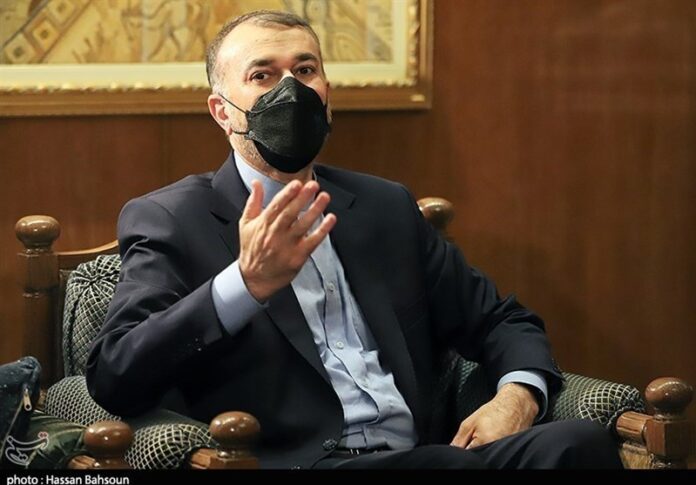
Later in the meeting, Amirabdollahian stated that the relations between Iran and the United Nations, especially its secretary generals, have always been close and respectful, and thanked Guterres for his constructive vision and efforts for the world peace.

Amirabdollahian noted that the Islamic Republic of Iran supports the initiatives of the United Nations and welcomes the impartial and fair stances of the world body.

Stressing the need for the United Nations to play a serious and constructive role in the region, Amirabdollahian said: There is a need for a fair and responsible presence by United Nations everywhere, from Palestine to Syria, Yemen and Afghanistan.

Amirabdollahian added that after decades, the humanitarian situation in Palestine is still grave due to the actions of the occupiers and the crimes of the Zionist regime.

The final solution must be holding a referendum and a vote by the genuine residents of Palestine. Unfortunately, the United Nations has acted passively in the past, and I hope that will change in your tenure, Amirabdollahian told Guterres.

The Iranian foreign minister touched on the situation in Syria and noted that part of Syrian territory is under foreign occupation.

In the case of Yemen, this inhumane siege must end, he added.

The top Iranian diplomat noted that the United States uses sanctions against nations, uses terrorism against nations in order to advance its political goals, and the most obvious example of which was the cowardly assassination of general Soleimani.

In the end, the foreign minister stressed the need for a united voice by the UN against such brazen actions, stating: Of course, Iran is pursuing the case nationally and internationally to bring the perpetrators of the assassination of general Soleimani and his entourage to justice.