Sunday, December 28, 2025
Home Blog Page 2384

Biden ignores Palestine’s Abbas request for meeting

It’s unusual for a U.S. president to reject a meeting request from the Palestinians, and it could be seen as further indication of how low the Israeli-Palestinian issue is on Biden’s foreign policy priority list.

Several weeks ago, when Abbas and his aides were discussing whether to visit the UN in person, they decided to check the possibility of meeting Biden on the sidelines in New York or soon afterward in Washington.

The White House told the Palestinians, Biden wouldn’t be doing any bilateral meetings in New York and his schedule wouldn’t allow for a meeting in Washington, U.S. and Palestinian sources said.

That contributed to Abbas’ decision not to travel to New York and to send a videotaped speech instead, the sources added.

In the end, Biden visited New York only briefly, but he did have three bilateral meetings there. The White House declined to comment for this story.

In his speech at the UN last Tuesday, Biden did stress that he supports a two-state solution, but acknowledged that “we are a long way from that goal at this moment”.

Abbas warned in his own speech that Israel’s actions would result in a “one-state solution”, and he gave Israel a one-year ultimatum to end its occupation of the West Bank, after which time the Palestinians would consider withdrawing their recognition of Israel on the 1967 lines.

Abbas also indirectly criticized U.S. policy toward Israel, saying, “There are some countries that refuse to acknowledge the reality that Israel is an occupying power, practicing apartheid and ethnic cleansing.”

“These countries proudly state that they have shared values with Israel. What shared values are you referring to? This has emboldened Israel, only furthering its arrogance and allowing it to reject and violate all UN resolutions,” he added.

Israeli Prime Minister Naftali Bennett, speaking on Monday at the UN, didn’t mention the Israeli-Palestinian conflict at all.

Bennett’s aides say he felt there was already more than enough discussion of the topic at the UN and that Israel didn’t need to be viewed through that prism.

The Biden administration’s point man on Israel-Palestine, deputy assistant secretary of state Hady Amr, will travel to Jerusalem and Ramallah next Monday for meetings with Israeli and Palestinian officials.

Pentagon officials blame State Department for Afghan messy exit

Top Pentagon officials blamed the State Department for not beginning evacuations of civilians from Afghanistan sooner, calling the efforts “chaotic”, while defending the “skill and leadership” of U.S. troops during a hearing before the House Armed Services Committee focused on the military withdrawal. 

The U.S. military withdrawal from Afghanistan was complete on Aug. 31, after successfully evacuating more than 124,000 individuals from Kabul – including 6,000 American citizens. Despite the large number of evacuations prior to the withdrawal date, at least 100 American citizens and thousands of Afghan allies remain in Afghanistan.

Pressed on why evacuations did not begin sooner, Austin said it was a “State Department call”.


“We provide an input, as I said in my opening statement, to the State Department,” Austin added, explaining, though, that officials were “being cautioned” by the Ghani administration that “if they withdrew American citizens and SIV applicants at a pace that was too fast, it would cause a collapse of the government that we were trying to prevent”.

“I think that went into the calculus,” Austin continued.


He added, though, that military officials “provided our input” to the State Department. 

“We certainly would have liked to see it go faster or sooner,” Austin said, noting, “But, again, they had a number of things to think through as well.” 

Later, Milley described the evacuation efforts in the days leading up to the Aug. 31 troop withdrawal deadline as “chaotic”, when asked about the best way to extract U.S. military from Afghanistan. 

“I just want to be clear – we’re talking about two different missions,” Milley said, adding, “The retrograde of troops … that is complete by mid-July, and that was done, actually, without any significant incident. And that’s the handover of 11 bases, the bringing out of a lot of equipment … that was done under the command of Gen. Miller.” 

“Noncombatant evacuation operation is different,” Milley noted, referring to the Joe Biden administration’s efforts to airlift Americans and Afghan allies from Kabul prior to the troop withdrawal deadline. 

“Noncombat operation – that was done under conditions of great volatility, great violence, great threat,” he continued.

Milley said the U.S. military “inserted 6,000 troops on relatively short notice because there were some contingency plans to do that”.

“That’s a different operation,” Milley stated, adding, “And I think, that, in the first two days as we saw, were not only chaotic, but violent and high-risk.” 

Milley said, though, that “because of the skill and leadership of our troops, they were able to get control of a situation in an airfield, in a country that was falling apart and then execute the operation”.

“So, I think it would have been difficult under any circumstances, and I think our soldiers performed extraordinarily well actually in 48 hours, getting control of an airfield in another country, eight and a half time zones away,” Milley added. 

Milley and Austin’s testimony comes nearly a month after the Biden administration on Aug. 31 withdrew all U.S. military assets from the region after having a presence there for 20 years following the attacks on Sept. 11, 2001.

An Aug. 26 suicide bombing outside of Kabul’s Hamid Karzai International Airport took the lives of 13 U.S. service members – 11 Marines, one Navy sailor and one Army soldier. Eighteen other U.S. service members were wounded. The bombing also left more than 150 civilians dead.

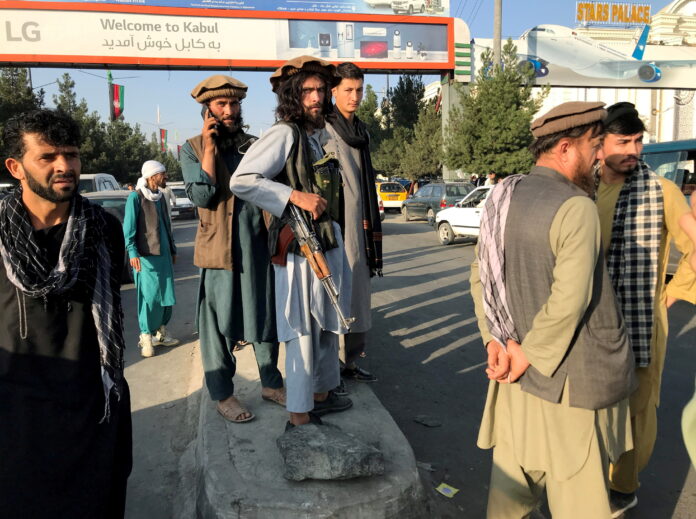
As the Biden administration began the withdrawal of military assets, provincial capitals across Afghanistan began to fall to the Taliban. By mid-August, the Taliban attained control of two-thirds of Afghanistan. And by the time the U.S. withdrew all U.S. troops from the country on Aug. 31, Kabul had also fallen to the Taliban. In mid-August, U.S. intelligence assessments projected the capital city could fall to the Taliban within 90 days. 

Administration officials have admitted to leaving more than 100 American citizens behind. Officials, though, said their mission in Afghanistan had shifted from a military mission to a diplomatic one, with some saying they were working with the Taliban to ensure safe passage for those Americans and U.S. visa holders, as well as some Afghan allies, to evacuate the country. 

Milley, during the hearing Wednesday, called the war in Afghanistan a “strategic failure” for the United States, and warned that the Taliban “remain a terrorist organization” and maintain ties with al Qaeda. 

“The Taliban was and remain a terrorist organization and they still have not broken ties with al Qaeda,” Milley testified, noting, “I have no illusions who we are dealing with.” 

He added, again, that the Taliban “have not broken with al Qaeda.”

Iran FM, IRGC’s Quds Force Cmdr. Stress War on Terror

In a meeting with Quds Force Commander Brigadier General Esmail Qaani at the foreign ministry, the top Iranian diplomat highlighted the key role that late former Quds Force Commander Lieutenant General Qassem Soleimani played in fighting terrorism.

“If it weren’t for the special role of this martyr and hero in fighting terrorism and Zionism, our region would be in another state now,” said Amir Abdollahian.

“If the ISIS terrorist group had succeeded in Syria and Iraq, the whole world would be facing terrorism and extremism today,” the foreign minister added.

He described the IRGC’s Quds Force as a “soldier without borders” which plays a pivotal role in ensuring security and peace both in the region and across the world.

“The foreign ministry of the Islamic Republic of Iran will proudly follow in the footsteps of the lord of peace, general Soleimani, when it comes to institutionalizing peace and friendship with regional countries fighting terror,” he added.

General Qaani, in turn, congratulated Amirabdollahian on his appointment as Foreign Minister.

The top general also underscored the foreign ministry’s special role in ensuring the country’s national interests.

Poll: Americans do not trust Biden on COVID

A majority of Americans questioned in a new survey says Biden cannot be trusted on the coronavirus pandemic, the Axios-Ipsos poll showed.

Fifty-three percent of respondents said they didn’t have very much trust or no trust at all in Biden to provide accurate information about the coronavirus. Forty-five percent trust the president either a great deal or fair amount, according to the survey. 

When Biden first took office in January, 58 percent said they trusted him to provide accurate information about COVID-19.

The new poll found that 81 percent of Democrats trusted Biden on the coronavirus, compared to 11 percent of Republicans and 42 percent of independents.

The results come as the nation deals with a rise in coronavirus infections fueled by the delta variant. While the U.S. has not gone back to the same lockdowns seen at this time last year, there’s still no clear end to the pandemic in sight.

The Axios-Ipsos survey found that declining trust over the pandemic is also an issue among other institutions.

Forty-nine percent of respondents said they trusted the federal government to provide accurate information on COVID-19, compared to 54 percent who said as much two weeks ago.

In addition, 50 percent said they trusted their state government to provide accurate information on COVID-19, also down from 54 percent who responded that they trusted the government earlier this month.

Further, 64 percent said they trusted the Centers for Disease Control and Prevention, down 2 percentage points from when the last survey.

Sixty percent said they trusted “national public health officials” to provide accurate information about COVID-19, down 2 points.

Iran’s knowledge-based companies to attend Gitex Dubai

GITEX Dubai is the largest and most prestigious IT exhibition in the Middle East. The event takes place every year in the fall and brings together experts of this field. The exhibition will run from 16 to 17 October.

“Artificial Intelligence”, “Big Data Management and Utilization Technologies”, “Cloud-Related Solutions”, “Network and Cyber Security”, “Blockchain Technologies”, Financial Solutions, etc.” will be the main themes of the exhibition.

Following the initial call by the Innovation and Prosperity Fund, the registered companies participated in training and empowerment courses that were held in order for them to participate in the fair. After successful participation in these practical courses, knowledge-based companies took part in judging sessions with the presence of prominent professors of the Iranian innovation and technology ecosystem, and the companies to attend this outstanding international event were finally selected. The Innovation and Prosperity Fund says, in order to develop the market of knowledge-based companies, the fund has plans to support their presence in prestigious domestic and foreign exhibitions.

China urges US to drop s “long-arm jurisdiction” regarding Iran

In response to a media report of the US asking China to cut oil imports from Iran, China’s Foreign Ministry said on Wednesday that Beijing’s cooperation with Tehran is conducted within the framework of international law and urged the US to drop its “long-arm jurisdiction”.

Citing American and European officials, Reuters reported on Tuesday that the US has reached out to China about cutting China’s imports of crude oil from Iran, as the US tries to persuade Iran to resume talks about reviving a nuclear deal.

China’s position on China-Iran economic and trade cooperation is consistent and clear, and cooperation has always been conducted under the framework of international law, Hua Chunying, a spokesperson for the Chinese Foreign Ministry, stated at a regular press briefing on Wednesday when asked about the report.

China and Iran have always conducted cooperation following the principles of equality and mutual benefit, win-win cooperation and commercialization, Hua added.

The spokesperson further stressed that China firmly opposes any unilateral sanctions and urged the US to lift the so-called long-arm jurisdiction over third-party entities and individuals as soon as possible.

The Reuters reported that China’s imports of Iranian crude oil was one of the issues raised by US Deputy Secretary of State Wendy Sherman when she visited China at the end of July.


Source: Global Times

China warns of the return to cold War era, citing AUKUS

The AUKUS nuclear submarine deal launched by the U.S., the U.K. and Australia could cause hidden dangers to regional peace and stability, as well as international order, Chinese State Councilor and Foreign Minister Wang Yi said Tuesday.

Wang made the remarks when he co-chaired the 11th round of high-level strategic dialogue between China and the European Union (EU) via video link with Josep Borrell, the EU’s High Representative for Foreign Affairs and Security Policy.

He added the three countries have drawn ideological lines and built a new military bloc that will lead to the hidden danger of the resurgence of the Cold War, according to a Chinese Foreign Ministry statement.

The move will cause the hidden danger of an arms race, prompting some regional countries to step up their military development and increase the risks of military conflict, he added.

Nuclear proliferation will be another impact that will damage the nuclear non-proliferation system, like the South Pacific Nuclear Free Zone Treaty, the minister said.

“We urge the three countries to follow the trend of the times and play a constructive role in regional peace and stability,” he stated.

Wang also talked about the relations with the EU, stressing that adherence to the one-China policy is the political foundation of the ties.

Both China and the EU believe that bilateral exchanges should be based on mutual respect, seeking common ground while shelving differences, expanding cooperation and reducing antagonism, upholding the international order based on the UN Charter and international law, and jointly addressing common challenges such as COVID-19 and climate change, he added.

Borrell said developing relations with China is an important agenda of the EU, and it is very important for the two sides to maintain close and smooth communication, the ministry statement added. The EU, he continued, is willing to work with China to prepare for the next stage of high-level exchanges between the two sides.

The EU always pursues the one-China policy, which is an important cornerstone of its relations with China and the EU will not conduct official exchanges with the Taiwan region, he said.

Borrell added that the bloc is ready to continue to strengthen cooperation with China on fighting COVID-19, climate change and biodiversity conservation.

Iran calls for global nuclear disarmament

any stockpiling and use of atomic weapons.
Iranian Deputy Foreign Minister Reza Najafi called for global nuclear disarmament.

Najafi was speaking on Tuesday during the UN General Assembly’s high-level meeting to commemorate the International Day for the Total Elimination of Nuclear Weapons.

Najafi paid tribute to the victims of nuclear weapons, saying the only way to ensure that nuclear arms are not used is to completely destroy them.

He also referred to the modernization of nuclear weapons by the United States and other nuclear-armed states in violation of the Nuclear Non-Proliferation Treaty, NPT. The Iranian deputy foreign minister said those states oppose any nuclear disarmament negotiations despite their legal obligations under Article VI of the NPT.

Najafi also singled out the Israeli regime, saying Tel Aviv threatens peace and security in the Middle East and beyond through its clandestine nuclear program, thus the international community should demand the regime join the NPT without precondition by placing its nuclear facilities under the auspices of the International Atomic Energy Agency, IAEA.

Earlier at the meeting, Saudi Foreign Minister Prince Faisal bin Farhan Al Saud urged the international community to assume its responsibilities toward what he called Iran’s violations of the 2015 nuclear deal, known as the Joint Comprehensive Plan of Action.

Najafi dismissed Farhan’s claims and stressed the need for transparency in Saudi Arabia’s nuclear program under the auspices of the IAEA.

Iran slams intl. community’s inaction regarding Israeli crimes

Iran’s representative to the 48th regular session of the UN Human Rights Council urged the body to recognize Israel as a racist apartheid regime.

The Iranian envoy said the regime has committed many instances of mass killings, systematic torture, and arbitrary detention.

He referred to Israel’s crimes against Palestinian children, saying the only crime of those kids was that they threw stone at “this monster” with their small hands.

The Iranian representative said the international community’s indifference has emboldened the regime to commit the gravest injustices in history.

The Iranian official also said the US support of Israel has made the regime feel immune from any challenges.

Peyman Jebelli appointed as new IRIB chief

In an edict released on Wednesday, Ayatollah Khamenei thanked outgoing IRIB head Abdulali Ali-Asgari for “his tireless and diligent efforts as a faithful and devoted manager” and wished Jebelli success in his new post.

“I appoint you as the chairman of the IRIB for a period of five years,” Ayatollah Khamenei said in his message to Jebelli.

The leader cited Jebelli’s “religious and revolutionary qualifications, long expertise and experience in the management of the IRIB and knowledge of the nature, functions and duties of the national media.”

Ayatollah Khamenei added, “The national media serves as a university for raising public awareness and knowledge, and as a platform for confronting the hostile waves of distortion and sedition, and is a sanctuary for everyone’s eyes and hearts to enjoy the effects of beauty and art, and a place to spread hope and joy in the country”.

Jebell was born in 1967 in Tehran. He is a university professor and a leading expert and analyst on political matters. He served as the chief executive officer of the IRIB World Service as per a directive issued on August 14, 2016. Jebelli has also served as the media director of Iran’s Supreme National Security Council under its former secretary Saeed Jalili. Moreover, he has been the CEO of Press TV, Iran’s 24-hour English speaking news channel. Also a diplomat, he served as Iran’s ambassador to Tunisia from 2011 to 2014. Jebelli played a crucial role in launching Iran Press video news agency and Al Alam Syria TV station as well as Internet television channels Hausa and Press TV French.