Sunday, December 28, 2025
Home Blog Page 2383

“5th peak of Covid has ended in most of Iran”

Over 800,000 Iranians Infected by Coronavirus

The statement came after West Azerbaijan and Kurdistan provinces said the Covid spike came to an end there.

The Health Ministry also said hospitalizations are down in all provinces. It however warned that any laxity in health protocols could cause infections to spike again.

The end of the fifth Covid peak pushed down the number of cities marked red from 29 to 16. The highest daily Coronavirus death tally happened on September 30 when 542 people died.

Authorities attribute the decrease in the new Covid cases to vaccine imports and production at home that accelerated the vaccination process countrywide. They hope to inoculate all citizens in a matter of months.

Covid-19 has so far killed 120,428 people in Iran since the start of the pandemic some two years ago.

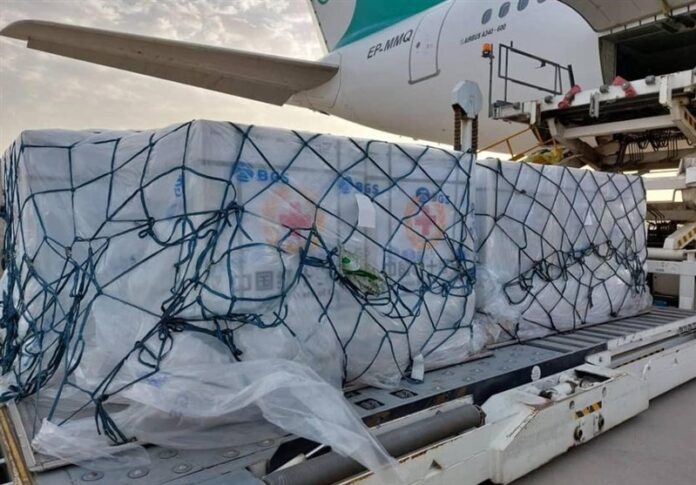
Another COVID-19 Vaccine Cargo Arrives in Iran

The shipment contains some 6 million doses of vaccines, said IRCS’s Secretary General Mohammadhassan Qosian.

“In the last week of September, two cargos containing a total of 12 million doses of COVID-19 vaccines were imported into the country by the IRCS. Both 6-million-dose consignments included the Sinopharm vaccines and are intended for individuals under 17 years of age,” he said.

He added the IRCS has imported more than 52 million doses of coronavirus vaccines since mid-spring this year.

He noted the IRCS is the main importer of vaccines in Iran.

So far more than 37.7 million people in Iran have received the first dose of the COVID-19 vaccine, and nearly 16.7 million have received the second dose as well, bringing the total number of jabs to over 53.8 million.

US general warns of terror groups resurgence in Afghanistan

Taliban fighters pose for a picture in front of a bakery at a market area in Khenj district, Panjshir Province on September 15, 2021, days after the hardline Islamist group announced the capture of the last province resisting to their rule. - Under late Afghan commander Ahmad Shah Massoud, the Panjshir fighters earned a legendary reputation for resistance, defending their mountain homes first from the Soviet military for a decade, then throughout a civil war, then the last Taliban regime from 1996-2001. (Photo by Wakil Kohsar / AFP) (Photo by WAKIL KOHSAR/AFP via Getty Images)

Milley warned on Wednesday of a “real possibility” that al-Qaeda or Daesh could rebuild in Afghanistan as early as spring 2022 in the wake of the U.S. military withdrawal.

While testifying before the House Armed Services Committee, Milley said that the terrorist threat from Afghanistan is less than it was on 9/11 but that the conditions could be set for a reconstitution of al-Qaeda and/or Daesh.

Secretary of Defense Lloyd Austin agreed during his own testimony, saying “there is clearly a possibility” for the terrorist groups to regenerate now that U.S. forces have left the country, which was taken over by the Taliban.

“Al Qaeda has been degraded over time,” Austin stated, adding, “Now, terrorist organizations seek ungoverned spaces so that they can train and equip and thrive and, and so, there is clearly a possibility that that can happen here, going forward.”

“Our goal is to maintain a laser-like focus on this so that it doesn’t happen,” he continued.

The Taliban promised the Donald Trump administration in February 2020 that it would not allow terrorist organizations to use the country as a launchpad for attacks if the U.S. withdrew its forces. However, defense officials are less-than-certain that the Taliban will honor its promise.

Austin said he wouldn’t rule out the possibility that the U.S. will have to return to Afghanistan.

“While I won’t rule anything out, I would just say it’s not preordained that we will go back or have to go back into Afghanistan again,” he noted, adding, “But if we do, the military will provide good credible options to be able to do that and to be effective.”

During testimony before the Senate Armed Services Committee one day earlier, Austin noted that the military could monitor and conduct strikes against the terrorist groups from bases far away, if necessary.

“Over-the-horizon operations are difficult but absolutely possible,” he said.

General Kenneth McKenzie, CENTCOM commander, stated during the hearing on Tuesday that is it “yet to be seen” whether the U.S. can deny al-Qaeda and Daesh the ability to use Afghanistan to launch attacks.

“We could get to that point, but I do not yet have that level of confidence,” he added.

Meanwhile, President Joe Biden has pledged to prevent the groups from rebuilding to a point where they could attack Americans or the United States.

Algeria, Morocco furious over French visa restriction plan

Morocco and Algeria have expressed their dismay at France’s decision to reduce the number of visas granted to nationals from Maghreb countries.

France on Tuesday announced it would sharply reduce the number of visas granted to people from Algeria, Morocco and Tunisia, accusing the former French colonies of not doing enough to allow illegal immigrants to return.

The move prompted Algiers to summon French ambassador Francois Gouyette and hand him “a formal protest” on Wednesday, the foreign ministry said in a statement, adding that the visa reduction caused “confusion and ambiguity as to its motivation and its scope”.

In neighbouring Morocco, Foreign Minister Nasser Bourita told reporters the French decision was “unjustified” and “does not reflect the reality of consular cooperation in the fight against irregular migration”.
Unlike its neighbours, Tunisia has not reacted officially, but many of its citizens displayed their concern Wednesday in front of the offices of TLS Contact, the only private company authorised to receive applications for France.

On Tuesday, French government spokesman Gabriel Attal told Europe 1 radio that it was “a drastic decision, and unprecedented, but one made necessary by the fact that these countries are refusing to take back nationals who we do not want or cannot keep in France”.

The station reported French President Emmanuel Macron took the decision a month ago after failed diplomatic efforts with the three North African countries.

UK army to drive fuel tankers amid crisis

Kwarteng confirmed soldiers will be driving the tanker fleet within days – despite claims from his colleague George Eustice that the Army would not be deployed to help with the petrol crisis.

Panic-buying at petrol stations has triggered a shortage of fuel at the pumps over the last week.

This is because there are not enough HGV drivers to distribute the product around the country at the moment, leading to speculation that the government would call on the Army to assist.

When pressed about why the Army was only on standby and not currently mobilised by ITV News, the business secretary stated, “Anyone versed in military defence issues knows it takes a couple of days, sometimes a few days to get troops on the ground.”

Speaking on Wednesday, he noted, “We’ve decided to do that – and I think in the next couple of days, people will see some soldiers driving the tanker fleet.”

His comments are a direct contrast to remarks from environment secretary Eustice on Monday.

He told Sky News, “We have no plans at the moment to bring in the Army to actual do driving, but we always have a civil contingencies section within the Army which is always on standby if we need them, but we don’t judge that is necessary at the moment.”

Kwarteng also tried to reassure the public that, despite ongoing queues outside petrol stations and fights breaking out across the country, the fuel crisis is “clearly stabilising”.

He continued, “If we look at the inflows yesterday of petrol – they were matched yesterday by the sales, so that means the situation is stabilising.”

“I think people are behaving quite responsibly, actually,” he stated, adding, “Clearly we have the Army on standby, we’ve made preventative measures, we’ve tried to alleviate the HGV driver shortage by changing visa rules.”

Johnson echoed this message and noted the situation was “stabilising” on Tuesday, while transport secretary Grant Shapps stated things were “getting better on the forecourt”.

However, industry sources told The Times that the disruption could stretch over several weeks because the petrol stations will need time to restock.

BP is reportedly expected to experience issues throughout the next month.

Death toll in Ecuador jail riot tops 110

A prison massacre that erupted Tuesday in Ecuador has killed 116 people and wounded about 80, Ecuador’s President Guillermo Lasso said Wednesday.

The death toll represents a significant uptick from earlier estimates after Tuesday’s bloody clashes at the Litoral Penitentiary, located on the outskirts of the coastal city of Guayaquil.

In a speech televised Wednesday, Lasso indicated the prison was not yet entirely secured, and urged inmates’ relatives and families to stay away from the area.

“I wish I was able right now to say that yes, we have completely secured the Litoral Penitantiary, but frankly I cannot. This meeting we just had was to organize the next steps forward, and I hope in the next few hours you will see some of the plans we agreed in action,” he stated in a televised address.

Lasso also added more bodies might be found in the next few hours.

Ecuadorian prison agency SNAI had earlier reported detonations and “fights between criminal gangs” in one of the pavilions of the prison.

Those killed and injured suffered from injuries resulting from bullets and grenades, according to regional police commander Fausto Buenaño.

“The inmates call us (saying) Sister they are killing me. Call the police, they need to enter the pavilion (prison wing) five,” the sister of one inmate told Reuters.

At least five of the deceased prisoners were beheaded before responding police and the tactical forces “managed to restore order”, the governor of Guayas Province, Pablo Arosemena, noted Tuesday.

Ecuador’s prisons have been wracked with bloodshed this year, with more than 140 violent deaths reported, according to SNAI figures.

In response to the latest deaths, the government has declared a 60-day state of emergency across Ecuador’s prisons. The measure allows military troops to be deployed to penitentiaries, and limits inmates’ rights to privacy and free association in order to allow searches and other surveillance measures.

The state will devote $24 million to the prisons system during the state of emergency, Lasso added during his speech.

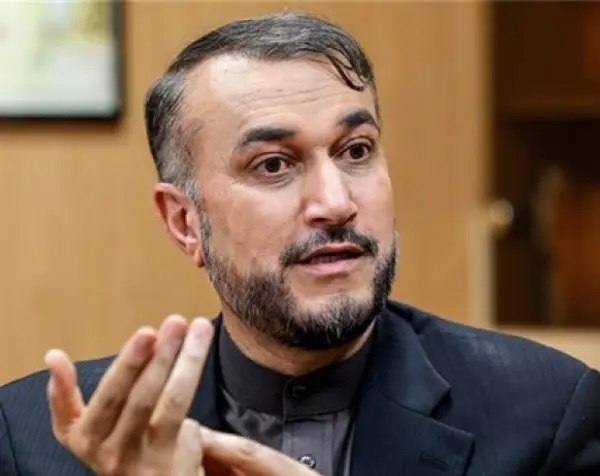
IAEA Should Not Turn into Plaything for Terror Groups: Iran

Eslami Iran nuclear chief

Mohammad Eslami added “nuclear terrorism” has levelled accusations against Iran’s nuclear program using “seditious ploys and … undocumented evidence.”

“Such behaviour has become threadbare,” said Eslami, who is also the vice president.
The AEOI chief, who is in Moscow for talks with Russian nuclear officials, made the comment in an interview with the Sputnik news agency.

He also weighed in on the level of uranium enrichment in Iran, saying Tehran remains committed to regulations within the framework of the Additional Protocol and lives up to its obligations under the Nuclear Non-Proliferation Treaty (NPT).

“The Islamic Republic of Iran’s nuclear program is peaceful, and uranium is enriched to a level which could be used for peaceful projects,” he added.

He then touched upon he IEAE’s recent position on Iran’s nuclear policy and the agency being denied access to monitoring cameras at a nuclear site in the city of Karaj west of the Iranian capital, Tehran.

“Under the Safeguards Agreement, the IAEA has been operating monitoring cameras in Iran for years and the agency conducts inspections on a regular basis,” he said.

“Unfortunately, due to shenanigans and animosities against Iran, a politically-motivated and double-standard approach has been adopted toward Iran’s nuclear program,” said the AEOI chief.

“Such behaviour is completely illegal and rejected,” he said.

North Korea refuses US offer for talks

Kim expressed his willingness to restore stalled communication lines with South Korea in early October to promote peace while shrugging off U.S. offers for dialogue as “cunning ways” to conceal its hostility against the North, state media reported Thursday.

Kim’s statement is an apparent effort to drive a wedge between Seoul and Washington as he wants South Korea to help him win relief from crippling U.S.-led economic sanctions and other concessions. Pyongyang this month has offered conditional talks with Seoul alongside its first missile firings in six months and stepped-up criticism of the United States.

The U.N. Security Council scheduled an emergency closed meeting Thursday at the request of the United States, United Kingdom and France on North Korea’s recent tests.

During a speech at his country’s rubber-stamp parliament on Wednesday, Kim said the restoration of cross-border hotlines — which have been largely dormant for more than a year — would realize the Korean people’s wishes for a peace between the two Koreas, according to the official Korean Central News Agency (KCNA).

Kim still accused South Korea of being “bent on begging external support and cooperation while clamoring for international cooperation in servitude to the U.S.”, rather than committing to resolving the matters independently between the Koreas.

Kim repeated his powerful sister Kim Yo Jong’s calls for Seoul to abandon “double-dealing attitude” and “hostile viewpoint” over the North’s missile tests and other developments, adding the fate of inter-Korean ties is at a critical juncture. 

Some experts say North Korea is pressuring South Korea to tone down its criticism of its ballistic missile tests, which are banned by U.N. Security Council resolutions, in a bid to receive an international recognition as a nuclear power.

South Korea’s Unification Ministry responded that it’ll prepare for the restoration of the hotlines that it said is needed to discuss and resolve many pending issues. It said the “stable operation” of the channels is expected because their restoration was directly instructed by Kim Jong Un.

On the United States, Kim Jong Un dismissed repeated U.S. offers to resume talks without preconditions, calling them an attempt to hide America’s “hostile policy” and “military threats” that he stressed remain unchanged.

The Joe Biden administration “is touting ‘diplomatic engagement’ and ‘dialogue without preconditions’ but it is no more than a petty trick for deceiving the international community and hiding its hostile acts and an extension of the hostile policy pursued by the successive U.S. administrations,” Kim stated.

He added, “The U.S. remains utterly unchanged in posing military threats and pursuing hostile policy toward (North Korea) but employs more cunning ways and methods in doing so.”

North Korea has long called U.S.-led economic sanctions on it and regular military drills between Washington and Seoul as proof of U.S. “hostile policies” on them. Kim Jong Un has noted he would bolster his nuclear arsenal and not resume nuclear diplomacy with Washington unless such U.S. hostility is withdrawn.

U.S. officials have repeatedly expressed hopes to sit down for talks with North Korea “anywhere and at any time”, but have maintained they will continue sanctions until the North takes concrete steps toward denuclearization. The diplomacy has been stalled for 2 ½ years due to disagreements over easing the U.S.-led sanctions in return for limited denuclearization steps.

Prior to the launch Tuesday of what North Korea announced was a new hypersonic missile, it also this month launched a newly developed cruise missile and a ballistic missile from a train. Both of those weapons could carry nuclear bombs to attack targets in South Korea and Japan, both key U.S. allies where a total of 80,000 American troops are stationed.

UN warns famine looming in Ethiopia region

The crisis in Ethiopia is a “stain on our conscience”, the UN humanitarian chief said, as children and others starve to death in the Tigray region under what the U.N. has called a de facto government blockade of food, medical supplies and fuel.

Griffiths issued one of the most sharply worded criticisms yet of the world’s worst hunger crisis in a decade after nearly a year of war, in an interview with The Associated Press.

Memories of the 1980s famine in Ethiopia, which killed some 1 million people and whose images shocked the world, are vivid in his mind, “and we fervently hope is not happening at present,” he said.

“That’s what keeps people awake at night,” Griffiths added, “is worrying about whether that’s what is in prospect, and in prospect soon.”

He described a landscape of deprivation inside Tigray, where the malnutrition rate is now over 22 percent — “roughly the same as we saw in Somalia in 2011 at the start of the Somali famine”, which killed more than a quarter-million people.

The war in Ethiopia began last November on the brink of harvest in Tigray, and the U.N. has announced at least half of the coming harvest will fail. Witnesses have said Ethiopian and allied forces destroyed or looted food sources.

Meanwhile just 10 percent of needed humanitarian supplies have been reaching Tigray in recent weeks, Griffiths said.

“So people have been eating roots and flowers and plants instead of a normal steady meal,” he continued, adding, “The lack of food will mean that people will start to die.”

Last week The AP, citing witness accounts and internal documents, reported the first starvation deaths since Ethiopia’s government imposed the blockade on the region of 6 million people in an attempt to keep support from reaching Tigray forces.

But the problem is not hunger alone.

The U.N. humanitarian chief, who recently visited Tigray, cited the lack of medical supplies and noted that vulnerable children and pregnant or lactating mothers are often the first to die of disease. Some 200,000 children throughout the region have missed vaccinations since the war began.

And the lack of fuel — “pretty well down to zero now”, Griffiths noted — means the U.N. and other humanitarian groups are finding it all but impossible to reach people throughout Tigray or even to know the true scale of need.

Phone, internet and banking services have also been cut off.

Billene Seyoum, the spokeswoman for Ethiopia’s Nobel Peace Prize-winning Prime Minister Abiy Ahmed, did not respond to questions. The government has blamed problems with humanitarian aid delivery on the Tigray forces, who long dominated the national government before Abiy sidelined them. Abiy’s government also has alarmed U.N. officials and others by accusing humanitarian workers of supporting the Tigray fighters.

Griffiths called such allegations unacceptable and unfair. He said he has told the government to share any evidence of misconduct by humanitarian workers so the U.N. can investigate, but “so far as I’m aware, we haven’t had such cases put to us”.

Ethiopia’s crisis has led the U.N., the United States and others to urge the warring sides to stop the fighting and take steps toward peace, but Griffiths warned that “the war doesn’t look as if it’s finishing any time soon”.

Molavi’s Works Interpreted Differently in Iran, West: Expert

Rumi, better known as Molavi in Iran, authored a poetic collection of anecdotes and stories known as “Masnavi,” which is regarded as his magnum opus, along with several other literary works.

What follows is an interview with Tamimdari conducted by Khabaronline about how Molavi, as the author of Masnavi, is known in Iran and how he is known around the world through his translated works, namely the ones translated by Coleman Barks

  How different is the “Rumi” introduced to the world through Coleman Barks’ translations from the literary figure that we Iranians know as “Molvavi”?

Tamimdari: In fact, these two have nothing to do with each other. Of course, several translators have rendered his works into other languages. 

For instance, we can mention Arthur John Arberry. Another one is Reynold Alleyne Nicholson, whose translations of Rumi’s works are the most famous ones and are more adducible as he was an expert in the Arabic language and was familiar with Islamic and mystic concepts.

Anyone who wants to translate Rumi’s poets from one language to another should know Persian and Arabic, should be familiar with the Quran and hadiths and should be familiar with poets who came before Rumi.

We can say that Coleman Barks’ translation of Rumi’s works was just an indulgence.

Barks knew neither Persian nor Arabic. Moreover, in his translations, Barks has omitted all Quranic verses and hadiths and added his own interpretation of Rumi’s poems.

I remember one of our professors kept saying that Madonna had read Rumi’s poems! And we told him that Madonna was a mediocre, uneducated singer and unable to have any understanding of Rumi’s works. The reason is that mystic works are commonly referred to as the “second language,” which needs interpretation.

Even in our own country, people who interpret Masnavi are different. Some regard Masnavi as a misleading book while some adore it as a second Quran. However, that is not the case with distinguished Iranian poet Hafez. I believe all this emanates from the extent of the reader’s familiarity with the Quran and hadiths and his understanding of Islamic knowledge.

In fact, the Westerners are mostly into love, eating and that kind of thing and, hence, have a superficial interpretation of Persian poetry.