Saturday, December 27, 2025
Home Blog Page 2370

French MPs denounce Bahrain’s human rights abuses

Several French members of parliament urged France’s foreign minister to speak out over the deteriorating human rights situation in Bahrain, a human rights organisation said.

According to a report by Americans for Democracy and Human Rights in Bahrain (ADHRB) on Monday, four legislators raised alleged abuses by Bahraini authorities – including detention of political opponents, repression of freedom of expression, and political prisoner violations – with French Foreign Minister Jean-Yves Le Drian.

The four lawmakers – Gerard Leseul, Jean-Christophe Lagarde, Isabelle Rauch, and Dominique Potier – highlighted several cases with Le Drian, including that of academic and blogger Abdul Jalil al-Singace, ADHRB noted.

Al-Singace was among 13 activists who took part in anti-government protests 10 years ago and were convicted on charges that included “setting up terror groups to topple the regime”. He was a key member of the opposition Haq movement.

Potier also brought to attention to “overcrowding” and “lack of appropriate measures” to tackle the spread of COVID-19 in prisons.

Since the 2011 uprising in the Gulf kingdom, Bahrain has outlawed opposition parties and arrested dozens of activists, sparking international criticism.
There have been reports of torture and forced confessions in death penalty cases, some involving political prisoners accused of “terrorism”.

Bahrain rejects allegations of human rights violations. The kingdom has claimed Iran trained and backed the demonstrators in order to topple the Manama government – an accusation Tehran denies.

ADHRB said there has been mounting pressure from French politicians during the last few months encouraging the French government to speak out against human rights abuses in Bahrain.

“Hopefully, the repeated calls by French MPs prompt the foreign minister to take concrete action against Bahrain’s systematic violations of fundamental freedoms, and prompt similar actions amongst other countries in the region,” ADHRB added.

In September, a group of bi-partisan US senators called on American Secretary of State Antony Blinken to press Bahrain to end what it calls the “violent, systemic repression” of its population.

They called on Blinken to “promote reform and respect for basic human rights” in Bahrain.
The US Navy’s Fifth Fleet, which patrols the Gulf, is based in Bahrain and the senators expressed concern that “Bahrain’s violent, systemic repression will breed resentment and instability” that could threaten the US presence.

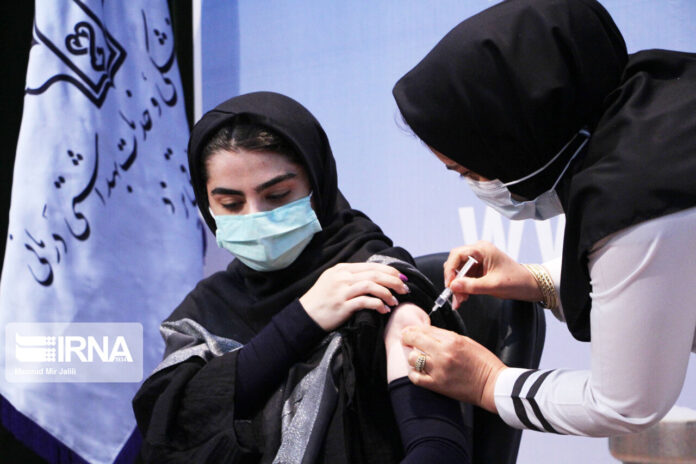
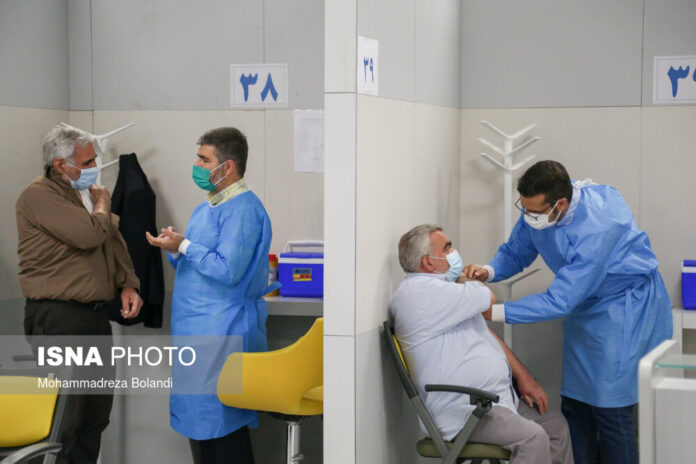
Pastu Covac added to available vaccines in Iran

“Fortunately, the first batch of a 6 million dose shipment of Pastu Covac vaccine was delivered and distributed yesterday,” Shanehsaz said on Tuesday.

“We hope that this number of Pastu Covac vaccines will increase to 10 million doses. The increase in production depends on an agreement between the Pasteur Institute of Iran and the Cuba’s Finlay Vaccine Institute,” he added.

Pastu Covac is developed jointly by the Iranian and Cuban institutes, and is believed to be one of the safest coronavirus shots available for injection in children aged 2-18.

Iran has been domestically manufacturing several types of vaccines to battle the outbreak of the deadly respiratory disease.

The Islamic Republic, which has been hit by five waves of the outbreak, is also producing COVID-19 shots jointly with Cuba, Russia, and Australia.

Meanwhile, Health Ministry figures showed on Tuesday that 216 more Iranians lost their lives to the disease over the past 24 hours.

Based on official figures, over 121,500 Iranian have died from the disease so far.
Iran has in recent weeks accelerated imports of different types of vaccines and stepped up inoculations in a bid to contain the outbreak.

The country has so far administered over 59,658,000 doses of coronavirus shots.

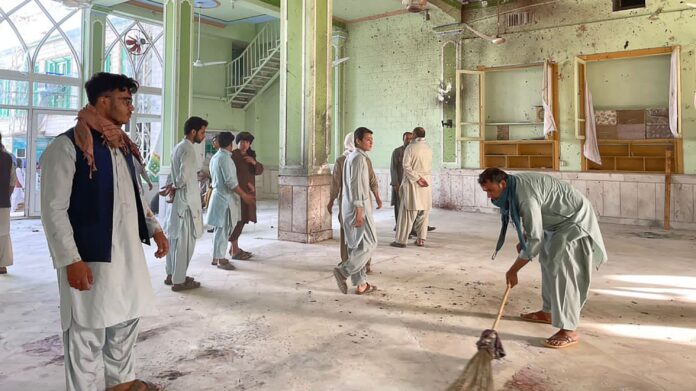
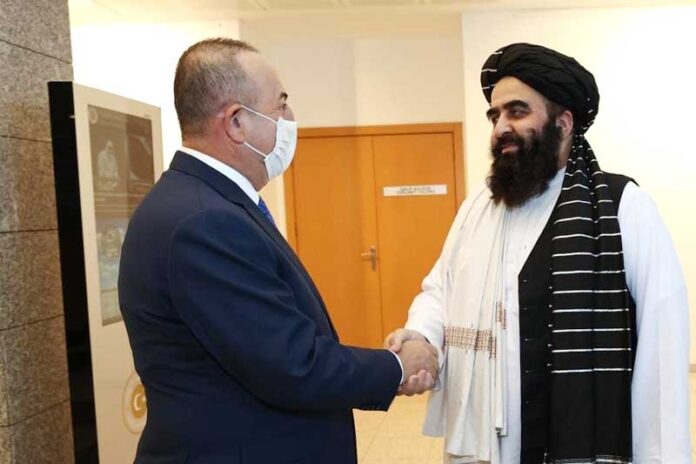
Taliban says not to allow Daesh to attack Iran from

Shir Ahmad Ammar made the remark in a meeting with Iranian authorities on the border between Iran and Afghanistan where the Iranian side delivered humanitarian aid to the Afghans.

Herat’s deputy governor said the Taliban are committed to international law and neighborly ties and will not let Daesh to use Afghanistan as a launching pad for their acts of terrorism.

Iran has sent humanitarian aid to Afghanistan steadily over the past weeks. On Tuesday, a plane carrying 50 tons of Iranian aid landed in Kabul Airport.

A delegation of Iran’s Khorasan Razavi Province bordering Afghanistan visited Kabul and held trade talks with the Taliban. Iran has held several rounds of talks with the Taliban and urged the group to form an inclusive government which would represent all Afghan ethnic groups and political factions.

Iran has also hosted huge numbers of Afghan refugees since the Taliban takeover of Afghanistan nearly two months ago.

Wintering birds taking refuge at Iran’s Miankaleh Lagoon

The wintering birds, including waterfowl, otters, cuckoos, swallows and flamingos, estimated to number about 10,000, are taking refuge in the international
45,000-hectare Miankaleh lagoon, and the number is expected to increase to 400,000 this year.

Wintering birds taking refuge at Iran’s Miankaleh LagoonLouros Rabiee, head of Mazandaran Environmental Wildlife Department in northern Iran says 89,000 wintering birds have died in Miankaleh biosphere reserve in the last two years.

He added that Miankaleh International Wetland will be monitored continuously to prevent the death of wintering birds as it happened in 2019 and 2020.

The officials also said the southeast of the Caspian Sea is home to more than 100 species of wintering birds, many of which do not have habitats outside Miankaleh.

Rabiee noted that by the end of December, other groups of wintering birds, including geese, swans, pelicans and herons, will migrate to Miankaleh International Wetland. The head of Mazandaran Environmental Wildlife Department said Mazandaran province’s environment has taken short-term measures such as dredging about 66 km of streams on the south side of the lagoon to save wintering birds from botulism.


UN says war crimes committed in Libya

Investigators commissioned by the United Nations’ top human rights body to examine possible abuses in Libya said Monday they have turned up evidence of possible war crimes and crimes against humanity in the restive North African country.

The first findings from a “fact-finding mission” commissioned by the Human Rights Council, which were released on Monday, chronicle accounts of crimes like murder, torture, enslavement, extrajudicial killings and rape. The findings could send a potent signal to key international and regional powers amid violence and mistreatment that has wracked Libya since the fall of former autocrat Moammar Gadhafi a decade ago.

“The violence that has plagued Libya since 2011, and which has continued almost unabated since 2016, has enabled the commission of serious violations, abuses and crimes, including crimes against humanity and war crimes, against the most vulnerable,” the three members who led the mission say in their report.

The experts cite reports indicating that the Libyan Coast Guard – which has been trained and equipped by the European Union as part of efforts to stanch the flow of migrants across the Mediterranean – has mistreated migrants and handed some over to detention centers where torture and sexual violence are “prevalent”.

Amid concerns about foreign mercenaries operating in Libya, they experts state there are “reasonable grounds to believe” that personnel from a Russian private military company known as the Wagner Group, “may have committed the crime of murder” in connection with evidence that they had fired gunshots directly at people not taking direct part in the hostilities.

The report also cites findings from “reliable organizations” that some 87,000 migrants have been intercepted by the Libyan Coast Guard since 2016, including about 7,000 “currently” in centers run by the Department for Combatting Illegal Migration.

Such roundups have continued in recent days: an unprecedented crackdown in Libya has led to the detention of more than 5,000 people, including hundreds of children and women, and violence in associated raids has left at least one migrant dead, according to a U.N. tally.

The fact-finding mission, which documents possible rights violations and abuses since 2016, adds to a litany of news reports, U.N. studies and warnings from advocacy groups about deadly violence, mistreatment of migrants, horrific conditions of detention and overall instability across Libya in recent years.

“Mindful of the need to ensure justice for victims, the mission has identified individuals and groups (both Libyan and foreign actors) who may bear responsibility for the violations and abuses under investigation,” the experts wrote.

“In view of the complexity of the situation, additional time and resources are required to establish individual and state responsibility for all violations occurring since 2016,” they added.

Under U.N. mediation, the country – now ruled by a transitional government after years of divisions – has made tenuous steps toward returning to stability, including through plans to hold national elections late this year.

Vishka Asayesh Wins Best Actress at US Winter Film Awards for “The Badger”

The Badger won the best actress award thanks to the brilliant role played by Vishka Asayesh.

Asayesh had earlier also won the best actress award from the 19th Riverside International Film Festival and was nominated for best actress in the 11the Queens World Film Festival for her role in The Badger.

The Badger was first screened last year, in the 23rd edition of Shanghai Film Festival. It has so far taken part in 45 international film festivals and has won 17 awards.

The Badger also features Iranian actors and actresses Hassan Majouni, Mehraveh Sharifinia, Behnoush Bakhtiari, and Gohar Kheirandish on its cast.

Hollywood production workers to go on strike

HOLLYWOOD, CA - NOVEMBER 17: General view of the Hollywood Sign on November 17, 2020 in Hollywood, California. (Photo by AaronP/Bauer-Griffin/GC Images)

Backstage production workers belonging to the International Alliance of Theatrical Stage Employees (IATSE) union have voted to strike over dismal work conditions made more extreme by the Covid-19 pandemic.

The IATSE, which represents over 150,000 members in the US and Canada, announced on Monday that the proposed action would be “the first nationwide strike in our 128-year history”. Among the group’s eligible voters, approximately 98% or over 52,000 members voted in favor of a strike.

Overwhelming support for the strike from workers could end up spelling bad news for many productions, many of which are already dealing with heightened union regulations due to the Covid-19 restrictions.

“The members have spoken loud and clear,” the IATSE said in a statement.

“Our people have basic human needs like time for meal breaks, adequate sleep, and a weekend. For those at the bottom of the pay scale, they deserve nothing less than a living wage, the IATSE added.

Long-time IATSE leader Matthew Loeb told the Los Angeles Times in a recent interview that the group was not “looking for parity, per se” between the working conditions of well-paid actors and that of ordinary crew members, but that underlying principles should be the same in both cases.

He noted that the union would strive to negotiate its “own agreement” with the Alliance of Motion Picture and Television Producers (AMPTP), which represents most production companies. The IATSE has been lobbying for months for better working conditions for their members, but negotiations with the AMPTP have not been fruitful so far.

“The ball is in their court. If they want to avoid a strike, they will return to the bargaining table and make us a reasonable offer,” Loeb noted in the public statement on Monday.

The IATSE has also set up a petition open to “non-member allies” that demands a “livable wage” for crewmembers and rules to avoid “excessively unsafe and harmful working hours”. The petition has collected nearly 120,000 signatures as of Monday evening.

Production crews working on new media – podcasts, streaming content, etc. – are paid far less despite the projects having budgets that match productions from traditional studios, the union argued.

Their move has received some support from members of Congress.

The IATSE has been calling for a new three-year deal with production companies that increases pay for backstage crew members, ups contributions to medical and pension plans, and provides more sustainable hours, after the current deal expired on September 10.

The Covid-19 pandemic almost universally shut down productions in 2020. While many are now back to work in the entertainment industry, productions have run into issues keeping up with costly mandates. Some actors have also expressed dissatisfaction.

The last major strike in Hollywood was 14 years ago, when writers refused to return to work for approximately four months, leaving numerous movie and television productions to either shut down, squeeze in last-minute rewrites, or – in the case of television shows – cut down episode orders significantly.

The AMPTP announced in a Monday statement that they hope negotiations continue and a strike can be avoided.

“A deal can be made at the bargaining table, but it will require both parties working together in good faith with a willingness to compromise and to explore new solutions to resolve the open issues,” they stated.

China warns U.S. against “Taiwan independence” attempts

The United States should stop supporting “Taiwan independence” separatist forces and take concrete actions to maintain peace and stability across the Taiwan Strait, The China’s Foreign Ministry announced.

Spokesperson Hua Chunying made the remarks in response to a query about a relevant statement issued by U.S. State Department spokesperson Ned Price.

Hua said Taiwan belongs to China and the United States is in no position to make irresponsible remarks. The relevant remarks by the U.S. side seriously violate the one-China principle and the stipulations of the three China-U.S. joint communiques and send an extremely wrong and irresponsible signal.

She added for quite some time, the United States has been making negative moves by selling arms to Taiwan and strengthening official and military ties with Taiwan, including the launch of a 750 million U.S. dollars arms sale plan to Taiwan, the landing of U.S. military aircraft in Taiwan and frequent sailing of U.S. warships across the Taiwan Strait. These provocative moves undermine China-U.S. relations and regional peace and stability. China is firmly opposed to them and has taken necessary countermeasures.

Noting that the one-China principle is the political foundation of China-U.S. relations, Hua noted on the Taiwan question, the United States should abide by the one-China principle and the stipulations of the China-U.S. joint communiques rather than something cooked up by itself unilaterally.

“Taiwan independence” leads nowhere, she said, adding that China will take all necessary measures to resolutely crush all attempts at “Taiwan independence” and China has firm resolve and will to safeguard national sovereignty and territorial integrity.

“The United States should correct its mistakes, earnestly abide by the one-China principle and the stipulations of the three China-U.S. joint communiques, prudently and properly handle Taiwan-related issues, stop supporting and emboldening separatist forces of ‘Taiwan independence’, and take concrete actions to safeguard rather than undermine peace and stability across the Taiwan Strait,” Hua stated.

Envoy believes Afghans unlikely to ‘soon’ trust US after messy exit

Afghanistan’s ambassador to the U.S. said she does not believe Afghans will trust another American president anytime soon, more than one month after the U.S. evacuated troops from Afghanistan and the country fell to the Taliban.

Raz asked during an interview with “Axios on HBO” if she thinks Afghanistan will ever trust an American president again, responded “not soon, probably”.

“I’m sorry to say that. I don’t think so,” she added.

Raz’s comments, made during her first television interview since Afghanistan collapsed, come as Afghans and the world are watching to see how the Taliban leads the country after regaining power in August.

When asked by Axios’s Jonathan Swan if she still trusts the U.S., Raz said “no”, explaining that she lost trust in the policies of the U.S. and the former Afghan government she served.

“I trust and believe that people — I mean, I’ve lost some trust in the U.S. policies, and I think probably government policies, including my own leadership and government policies,” Raz stated.

When asked if she thinks America is the leader of the free world, Raz told Swan that in terms of democracy, she would probably “question it and laugh at it”.

Pressed on why, Raz suggested that the U.S. gave up on helping Afghanistan become a working democracy.

“Because you were engaged in building one in Afghanistan, and the people believed in it, they fought for it, but when the negotiations arrived with Taliban that was not a priority to be negotiated,” she continued.

Criticism regarding the U.S. withdrawal from Afghanistan has been mounting since the Taliban ramped up its offensive in August, raising questions over whether pulling troops from the country was the right move, or whether it could have been done more effectively.

Former President Donald Trump put the U.S. on course for its eventual withdrawal when his administration made a deal with the Taliban to pull out all troops from Afghanistan by May 2021.

When Joe Biden took over, he held the U.S.’s commitment to withdrawing personnel from the country, but pushed that deadline back to Sept. 11, the 20th anniversary of the terrorist attacks that sparked the conflict.

Raz said the deal the Trump administration signed with the Taliban, also referred to as the Doha agreement, legitimized the insurgent group.

“When they get the political legitimacy from the international community, they almost felt OK, there is no need to more even negotiate, which meant that they are the same Taliban that they were before,” Raz added.

The ambassador also touched on the circumstances for Afghan women amid the Taliban’s leadership.
Asked if she got the sense that President Biden cared about the fate of Afghan women, Raz, who previously served as Afghanistan’s first female ambassador to the United Nations, said “I don’t think so”.

“He said the U.S. could not be the police of the world to protect women in any other country,” she added.

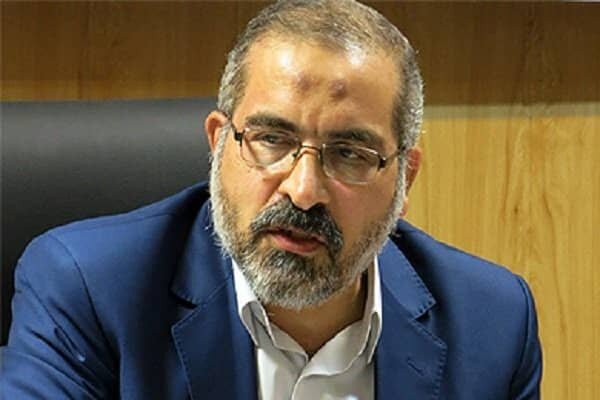
Kharrazi: Azerbaijan Republic can’t buy security from foreign forces

“Given their motives, illegitimate goals and interests, it can lead to military competition in the region, and harm or even destroy the host country. In addition, the greater the role of foreign forces, the deeper the dependence of the host country on them,” Kharrazi explained.

He warned that the Zionist regime is pursuing sinister goals that will ignite the flames of war in the region due to the strategic mistakes of the current government of the Azerbaijan Republic, and this will be a catastrophe.

He praised the liberation of Karabakh region last year, saying that Iran had long advised former Azeri president Heydar Aliyev to strengthen the country’s armed forces through logistical and educational cooperation with Iran to take back its occupied territories.

“It was unfortunately not accepted by him, and as a result, Azerbaijan became more dependent on foreign powers and resorted to foreign forces.” Kharrazi explained.

“Which regional country has been able to strengthen its military power through the presence of foreign forces on its soil that it no longer needs foreign forces?” the chairman of Iran’s Strategic Council on Foreign Relations asked.

He said the Islamic Republic is an undisputed power in the region because of its self-reliance and independence from foreign forces.

Kharrazi advised the northwestern neighboring country to rely on its own people instead of trying to “buy security” from foreign forces.