Saturday, December 27, 2025
Home Blog Page 2371

Iranian artist Fatali Oveisi dies

Oveisi was born in the village of Fordo near the Iranian city of Qom on January 11, 1946.

The veteran actor obtained a degree in cinema directing and acting from the State University of Texas in 1974.

He starred in many movies including Captain Khorshid (1987), Hamoun (1990), the Love-Stricken (1992) and Baanoo (1999). His two directorial films are Sarboland and Maryam and Mitil.

Oveisi also acted in many TV series including Zirzamin (Basement), Fasten Our Seatbelt, Baghcheh Mino (Minoo Garden) and Tanhatarin Sardar (The Loneliest Commander).
His funeral procession will be held on Wednesday.

Ethiopia’s PM Abiy Ahmed sworn in for new term

Ahmed has been sworn in for a new five-year term as his government faces a host of challenges, including a months-long conflict in the northern region of Tigray.

Abiy took the oath of office, administered by Supreme Court Chief Justice Meaza Ashenafi, on Monday following similar oaths by the speaker and deputy speaker of the parliament’s lower house.

“I, Abiy Ahmed Ali, today in the House of People’s Representatives, accept the appointment as prime minister, as I pledge to undertake responsibly and with faith to the constitution the responsibility placed upon me by the people,” he noted.

Abiy’s Prosperity Party was declared the winner of parliamentary elections earlier this year in a vote criticised and, at times, boycotted by opposition parties but described by some outside electoral observers as better run than those in the past.

In June, the prime minister’s party won 410 of the 436 parliamentary seats that were contested.

Three regions where elections had been delayed voted last month. Voting did not take place in the northern Tigray region which is under the control of regional forces opposed to the government in Addis Ababa.

The election marked the first time Abiy faced voters since he was appointed prime minister in 2018 following several years of anti-government protests.

The prime minister, the 2019 Nobel Peace Prize winner for restoring ties with neighbouring Eritrea and for pursuing sweeping political reforms, now faces major challenges.

The 11-month Tigray conflict is weakening Ethiopia’s economy, once one of Africa’s fastest growing, and threatening to isolate Abiy, once seen as a regional peacemaker.

Thousands have been killed in the conflict and hundreds of thousands faced famine-like conditions, according to the UN.

It is unclear whether Abiy’s swearing-in will alter the course of the war pitting government forces against the Tigray People’s Liberation Front (TPLF) rebel group, which dominated national politics before he took power.

Abiy’s office, which blames the rebels for starting the war last November with attacks on federal army camps, has said certain conciliatory measures, like declassifying the TPLF as a terrorist group, can only happen after a new government is formed.

“The position has been that any change in approach to the conflict with the forces from Tigray can only occur after the formation of a new government,” stated William Davison, senior Ethiopia analyst for the International Crisis Group.

International partners like the US, which has threatened to impose targeted sanctions related to the conflict, “will be looking at this closely to see if there is any shift in position”, Davison told AFP news agency.

Just three African heads of state – from Nigeria, Senegal and neighbouring Somalia – attended Monday’s ceremony. A mass rally in Addis Ababa’s Meskel Square, to be attended by dignitaries including the presidents of the three African countries, was planned for the afternoon.

“The road ahead might be daunting, but we shall not be weary,” Abiy’s senior adviser Mamo Mihretu wrote on Twitter.

Last week, Ethiopia’s government faced condemnation from the United Nations, United States and several European nations after it expelled seven UN officials it accused of supporting the Tigray forces who have been battling Ethiopian and allied forces.

Taliban says destroyed Daesh cell after Kabul explosion

A hideout of the Daesh terrorists has been dismantled in Kabul, the capital of Afghanistan, the Taliban said on Monday.

Zabihullah Mujahid, the group’s spokesman and acting deputy minister for information and culture, announced in a statement that the hideout was located in the northern Kher Khana district of the capital.

According to him, as a result of this “decisive and successful” operation, the center was completely destroyed and all Daesh members in that center were killed.

He did not provide specific figures for the casualties.

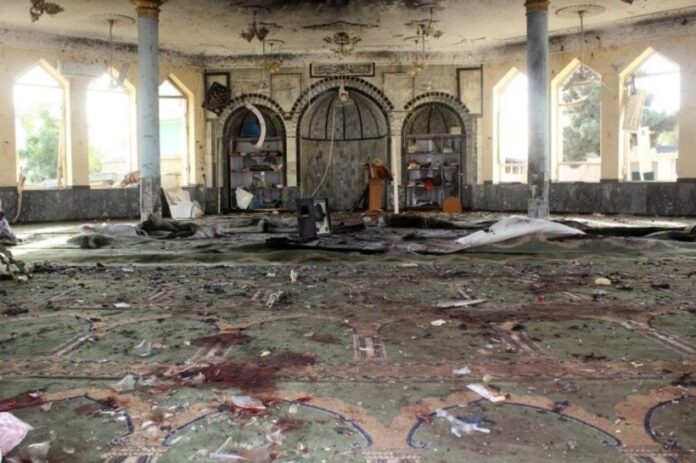
On Sunday, people had gathered at the mosque for a memorial service for the late mother of Mujahid, the group’s longtime spokesperson and now an acting deputy information minister in the interim Taliban administration.

At least twelve people were killed and 30 others wounded when a bomb went off near the entrance of the Eidgah Mosque in Kabul.

Daesh has claimed responsibility for the fatal attack near the Kabul mosque. Through its news agency Amaq, the terror group claimed Sunday’s attack was carried out by a suicide bomber.

Also, the Daesh’s Khorasan chapter, ISKP, took responsibility for Sunday’s deadly shooting in eastern Nangarhar province that claimed the lives of two Taliban members and a journalist.

Through its propaganda site Amaq, Daesh also claimed Saturday’s attacks on the Taliban patrol team in the Charikar city of Parwan province, resulting in 10 casualties.

Japan’s new PM says ready to meet N. Korean leader, attacks China

Fumio Kishida, former foreign minister, attends a press conference after being elected as the new leader of the ruling Liberal Democratic Party (LDP), at the LDP headquarters in Tokyo on September 29, 2021. (Photo by Du Xiaoyi / POOL / AFP)

Speaking to reporters on Monday, Kisida stressed that the Japanese government “must closely watch whether China can meet the high levels required by the TTP [the Trans-Pacific Partnership agreement] on matters such as state-owned companies and information security”.

According to him, there were “some questionable issues in China” related to human rights.

At the same time, he touted China as Japan’s largest trading partner, calling to continue discussions with Tokyo.

The remarks come after Chinese Foreign Ministry spokeswoman Hua Chunying told a press conference last week that Beijing “is willing to work together with Japan’s new governing team […] to deepen pragmatic cooperation in various areas and promote the healthy and stable development of Sino-Japanese relations”.

Tokyo and Beijing remain at loggerheads over a group of uninhabited islands in the East China Sea, as well as issues related to Taiwan and Hong Kong.

Tokyo maintains it has had sovereignty over the islands since 1895, while Beijing claims that the islands are marked as a Chinese territory on Japanese maps circa 1783 and 1785.

Beijing does not recognise Japan claiming control over the islands, referring to the territory as the “Diaoyu Islands”. Tokyo opposes Beijing’s ships sailing in the vicinity of the disputed territory, calling them “unacceptable incursions”.

Kishida has also stated that he is ready to meet with North Korea’s Kim without preconditions.

His remarks come as Pyongyang has intensified fire-testing of its newly-developed missiles over the last month.

Kishida additionally noted that Tokyo will strengthen its defence capability and continue to see the US-Japanese alliance as the cornerstone of the nation’s foreign policy.

Last Week, senior defence officials from the US, Japan, and South Korea held a call during which they discussed regional security and the threats posed by North Korea’s nuclear and missile programmes.

The discussion took place following reports suggesting that North Korea test-fired its newly-developed hypersonic and anti-air missiles. Overall, there have been at least six launches by Pyongyang since early 2021.

Aside from concerns over Pyongyang’s missile programmes, Japan also believes North Korea may pose a cybersecurity threat. On 28 September, Tokyo adopted the country’s three-year cybersecurity strategy roadmap that lists North Korea as one of the emerging cyberthreat nations with beefed up capabilities, along with China and Russia.

Notably, the first and last time the leaders of North Korea and Japan met in person was in 2002, when Japan’s PM Koizumi Junichiro paid a visit to Pyongyang and met with Kim Jong-Il to discuss the issue of the abduction of Japanese citizens. Back in 2019, then-Prime Minister Shinzo Abe voiced a readiness to meet with Kim without conditions to end the long-running mistrust between the nations. This meeting, however, never materialized.

On Monday, Japanese lawmakers voted to approve the country’s ex-Foreign Minister Kishida as the new prime minister.

Iran to have highest elderly population growth

He explained that about five percent of the Iranian population was elderly in 1976, but now this figure has reached 10 percent.

“We will have the world’s highest elderly population growth in the future and this is a worrying issue, because we do not have the infrastructure necessary for this number of elderly people,” Delbari warned.

He touched on some of the problems that Iranian senior citizens are facing.

“We have a shortage, not only in the specialized category, but also at different levels and even in the trained associates for simple care and different geriatric fields,” Delbari explained.

The head of the Scientific Association of the Elderly said Iran with eight million senior citizens currently needs 2,200 specialists but has only 20 geriatricians.

He said that senior citizens in Iran have 5.5 children on average and usually receive proper support from most of them.

Delbari warned, however, that there are about 80,000 unmarried elderly people and the figure could reach 3 million in 30 years, and Iran will have to introduce a care force to take care of these people, and this is a serious danger that has to be planned for from now.

Iran to US, EU: End Sanctions to Help Address Global Energy Crisis

The multiplication of the natural gas prices in Europe as a result of a drop in the fuel’s reserves there, was unprecedented, said Oil Minister Javad Owji, adding “The people of Europe and the US are struggling with these problems amid illegal and unjust sanctions their governments, for years, have maintained against the crude oil of Iran, as one of the major exporters of oil.”

He was speaking on Monday after the 21st meeting of the oil and energy ministers of the Organization of Petroleum Exporting Countries and its allies, known as OPEC Plus, that was held via videoconference.

“Existing evidence well proves that Iran is not the sole party who has paid the cost of this unilateral and extra-regional policy, and it citizens of other countries in the world have to pay for the heavy costs of this lack of judgment. These costs, we believe, will have much wider consequences in the future, if they insist on their illogical sanctions on Iranian crude exports.”

The minister noted that Iran is ready to help stabilize the market by helping end the shortage in product of oil. He said decision-makers in the US and the European countries should “learn a lesson” and end the anti-Iran sanctions to ensure people around the world have access to affordable energy.

Report: China, US officials to meet in Switzerland soon

“China’s top diplomat Yang Jiechi will hold talks with US National Security Adviser Jake Sullivan in Switzerland this week, according to sources familiar with details of the meeting,” the statement reads.

“The talks between the pair – said to be most likely to take place on Wednesday – will come less than a month after the telephone call between the two nations’ presidents, Xi Jinping and Joe Biden,” according to the newspaper.

Meanwhile, U.S. Trade representative Katherine Tai has stated she plans to raise “serious concerns” about China’s trade practices in direct talks with her Chinese counterpart in the coming days that will also focus on enforcing Beijing’s commitments under a Donald Trump-era trade pact.

Tai noted that the Joe Biden administration’s goal “is not to inflame trade tensions with China” but rather to chart a path forward to “durable coexistence” for both the U.S. and China in the trade arena.

The Biden administration is keeping existing tariffs on Chinese goods in place but Tai announced that officials would resume “a targeted tariff exclusion process” to offer relief to businesses that have been impacted by the tariffs.

Meantime, the leaders of the Senate Intelligence Committee have warned of continuing threats posed by the Chinese government to telecommunications systems and other critical technologies ahead of a major international summit.

Committee Chairman Mark Warner (D-Va.) sent a letter to Secretary of State Antony Blinken urging him to use this week’s Organization for Economic Cooperation and Development (OECD) ministerial meeting to work with other democratic nations to establish rules of the road around developing technologies, particularly to counter Chinese efforts in this area. Blinken is set to speak at the meeting.

Zuckerberg’s personal wealth down by 7bn after outage

Zuckerberg’s personal wealth has fallen by more than $6 billion in a few hours, knocking him down a notch on the list of the world’s richest people, after a whistleblower came forward and outages took Facebook Inc.’s flagship products offline.

A selloff sent the social-media giant’s stock plummeting 4.9% on Monday, adding to a drop of about 15% since mid-September.
The stock slide on Monday sent Zuckerberg’s worth down to $121.6 billion, dropping him below Bill Gates to No. 5 on the Bloomberg Billionaires Index. He’s down from almost $140 billion in a matter of weeks, according to the index.

On Sept. 13, The Wall Street Journal began publishing a series of stories based on a cache of internal documents, revealing that Facebook knew about a wide range of problems with its products — such as Instagram’s harm to teenage girls’ mental health and misinformation about the Jan. 6 Capitol riots — while downplaying the issues in public. The reports have drawn the attention of government officials, and on Monday, the whistleblower revealed herself.

In response, Facebook has emphasized that the issues facing its products, including political polarization, are complex and not caused by technology alone.

“I think it gives people comfort to assume that there must be a technological or a technical explanation for the issues of political polarization in the United States,” Nick Clegg, Facebook’s vice president of global affairs, told CNN.

A number of users around the world noticed the resumption of activities of Facebook, Instagram and WhatsApp.

Armenia’s top security official holds discussions with Iranian envoy

The two sides reviewed security issues and stability in the region.

Grigoryan and Badakhshan Zohuri also exchanged views on the prospect of cooperation to solve new challenges in the region and economic relations between Armenia and Iran, especially the development of Armenian Province of Syunik, and stressed the importance of the Iranian port of Chabahar.

The Iranian ambassador stressed that Tehran is trying to strengthen its relations with Armenia at the highest level.

On Monday, Armenian Foreign Minister Ararat Mirzoyan sat down for talks with his Iranian counterpart Hossein Amirabdollahian in Tehran.

Amirabdollahian told the Armenian foreign minister that Tehran will not allow terrorist forces and the Zionist regime to harm Iran’s good relations with its neighbors.

Mirzoyan said during the meeting that rapid international and regional developments have led senior officials of the two countries to meet frequently.

Meanwhile Armenian Prime Minister Nikol Pashinyan said on Monday that the Islamic Republic is Armenia’s partner, and that Yerevan has never been and will never be involved in any plot against Iran.

US legal advisor resigns over Biden immigration policy

A prominent legal adviser to the Biden administration has issued a six-page memo accusing the United States government of breaking international law by expelling migrants without even considering their claims to asylum.

First invoked by the Trump administration, Title 42 was ostensibly intended to protect public health. An order issued by the US Centers for Disease Control and Prevention in March 2020 cited COVID-19 as a reason to effectively close the border to migrants seeking refuge. It was harshly criticized at the time by public health experts outside the administration, who viewed it as a means of carrying out a long-standing policy goal of limiting immigration, using the pandemic as justification.

While the Biden administration’s critics falsely claim there are now “open borders”, Biden has continued enforcing the order – appealing a recent court decision that found it illegal – with exceptions made for unaccompanied children and many families. Last month, nearly 4,600 Haitians, the majority women and children, were expelled in a matter of days under the policy.

“Is this who we are?” That’s the question State Department legal adviser Harold Koh asks in the memo obtained and published by Politico on Monday.

A law professor at Yale University, Koh notes that the US is obliged, under international law, not to expel vulnerable people back to countries where they legitimately fear persecution.

From October 2020 through August 2021, US Border Patrol expelled people under Title 42 more than 938,000 times.

It is “particularly unjustifiable” in the case of Haiti, Koh writes, with the administration not even considering the asylum claims of Haitians it expels under Title 42 – despite itself acknowledging, in its granting of Temporary Protected Status for those already residing in the US, that Haiti has been rocked by political instability and natural disasters that make it unsafe place to which to return.

“Title 42 permits customs officers, with supervisor approval, to identify persons who should
be excepted from expulsion based on the totality of the circumstances, including consideration of
significant law enforcement, office and public safety, humanitarian and public health interests,” Koh said.

“But if Haiti is undeniably a humanitarian disaster area, the question should be: at this moment, why is this Administration returning Haitians at all?” he asked.

Politico reported that Koh is leaving his position as an adviser to the State Department and that his memo had “been circulating across the administration” over the weekend. Reached by Insider, he declined to comment on the potential repercussions for the White House continuing, in his view, to violate international law.

Koh previously advised the State Department during President Barack Obama’s administration, attracting controversy at the time over his argument that the US had a legal right to carry out extrajudicial executions, via drone strikes, in countries such as Afghanistan, Pakistan, and Yemen.