Tuesday, December 23, 2025
Home Blog Page 2367

Khatibzadeh: ‘Foreign terrorists on Azeri soil near Iran’s border’

Saeed Khatibzadeh added that Iran’s relations with other countries are not against any other nation as the Islamic Republic’s foreign policy builds on an inclusive view.

The senior diplomat also spoke about the terrorist attack in Kabul. He said, “Terrorism is deplorable in any form. Iran has taken a firm stand on terrorist operations and has condemned them without exception. Afghanistan is tired of terrorism, violence and extremism, and we must all help a secure and stable Afghanistan.”

He also referred to the presence of foreign terrorists on Azerbaijani Republic’s soil near Iran’s border. Khatibzadeh said Iran has received tips about the issue and that it notified the Republic of Azerbaijan. He noted that Iran’s friends have told Tehran that other nations in the region face no threat.

Khatibzadeh added that Iran is still critical of Azerbaijani authorities over their mistreatment of Iranian truck drivers. He also said Baku should not allow the Zionist regime take action or make statements against Iran from inside Azeri soil.

On the Vienna talks, he said the current US administration is sticking by its predecessor’s failed policy of sanctions and this will block efforts to revive the Iran nuclear deal. Khatibzadeh said the US can show good will by unlocking frozen Iranian assets. He added that the nuclear deal has no alternative.

Elsewhere, he talked about the activity of anti-Iran terror groups in Iraq’s Kurdistan region.

Khatibzadeh, said the presence of terror groups in the area is against good neighborly ties with Iraq and international law. The spokesman noted that officials in the Kurdistan region have been notified of Iran’s warning and that those bases have to be dismantled.

Khatibazdeh in other comments turned to Iran talks with Saudi Arabia. He said negotiations are at their best and several rounds of talks have taken place in Baghdad. According to the Iranian Foreign Ministry spokesman, the two sides are trying to start a lasting relationship within the framework of mutual consent. Khatibzadeh did not confirm reports that a delegation from Saudi Arabia visited Tehran to reopen the Saudi embassy.

The senior diplomat also spoke about the Iranian foreign minister’s visit to Beirut. He said Hossein Amirabdollahian’s visit to Lebanon will take place at the end of the week, adding that the formation of the government in Lebanon has been Iran’s long-standing wish.

Annual Fuel Loading begins at Iran’s Bushehr Nuclear Power Plant

Iran to Produce 3k Megawatts of Nuclear Power by 2027
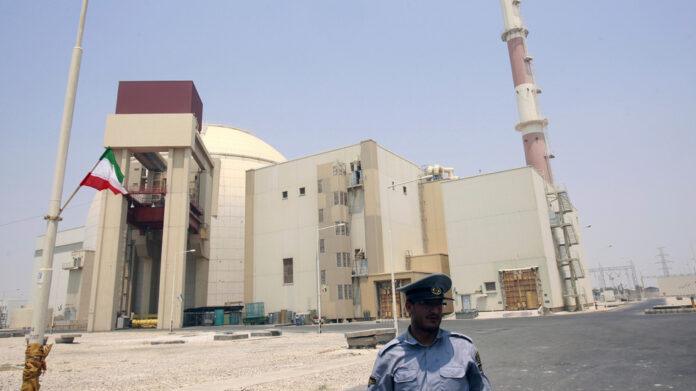
File photo of Bushehr nuclear power plant in southern Iran

According to the Iranian Electricity Management Company, annual fuel change and technical inspections in order to ensure the safe and secure operation of Bushehr nuclear power plant and increase the useful life of its unique equipment is required.

Since the start of operation around ten years ago, the plant has saved 78 million barrels of crude oil and prevented the release of 43 million tons of pollutants. Lack of greenhouse gas emissions is one of the main advantages of nuclear power plants, and for this reason, in recent years, developed and developing countries has extensively developed and built nuclear power plants.

The Bushehr nuclear power plant has played an important role in providing the electricity needed by Iran with a production capacity of 1000 MW, since its launch until reaching the production limit of 51 billion kilowatt hours of electricity.

Also, this power plant has played a decisive and effective role in overcoming the summer peak and the peak of electricity consumption in the country this year with continuous production.

The Bushehr nuclear power plant is currently being operated by duty-bound domestic experts. Iran is among the countries capable of operating nuclear power plants. The safe and secure operation of the plant is under the constant supervision of domestic and foreign regulatory agencies, including the International Atomic Energy Agency (IAEA) and the World Association of Nuclear Operators (WANO).

UAE says seeking to reduce tension with Iran

Speaking at the World Policy Conference on Saturday, Anwar Gargash, a diplomatic adviser to the UAE president, expressed concern about a “looming Cold War” between the United States and China, saying there was uncertainty about the US commitment to the region as the Persian Gulf countries focus on the post-COVID-19 economy.

The Persian Gulf states enjoy strong economic relations with China and are also heavily reliant on the US military. They are now closely monitoring talks between Iran and the five major world powers – Britain, France, Germany, China and Russia – to revive a 2015 nuclear deal as well as the Taliban’s return to power in Afghanistan after the US withdrawal.

“We will see in the coming period really what is going on with regards to America’s footprint in the region. I don’t think we know yet, but Afghanistan is definitely a test and to be honest it is a very worrying test,” Gargash told the conference.

Stressing the importance of making efforts to manage the region in a better way, he noted, “There is a vacuum and whenever there is a vacuum there is trouble.”

In efforts to de-escalate tensions, the UAE has been engaging with non-Arab countries of Iran and Turkey, which are playing a leading role in resolving conflicts in West Asia and North Africa. Iran and Saudi Arabia have also recently started an Iraqi-brokered dialogue process in Baghdad.

Iranian Foreign Ministry Spokesman Saeed Khatibzadeh said last month that Tehran is pleased with how negotiations on bilateral issues have proceeded with Saudi Arabia, emphasizing that the two regional players have the capacity to establish “sustainable” ties.

Khatibzadeh added Iran had had several rounds of talks with the Saudi government in the Iraqi capital over the past few months. “There have been good talks regarding bilateral issues. There has also been very serious progress in negotiations concerning the security of the Persian Gulf”.

Elsewhere in his address, the UEA official noted he is “very positive” about reaching out to Iran and that it would change its regional course, adding that he is “betting Iran is also concerned about vacuum and escalation”.

Gargash added the COVID-19 pandemic placed non-political priorities at the forefront and a main concern now was being caught in between the US and China.

“We are all worried very much by a looming Cold War. That is bad news for all of us, because the idea of choosing is problematic in the international system, and I think this is not going to be an easy ride,” the UAE official continued.

In August, Iranian Foreign Minister Hossein Amir Abdollahian reiterated the Islamic Republic’s resolve to cooperate with all neighbors, including the UAE, saying the two countries can make strides toward promoting good neighborliness in the region.

In a post on his Twitter account, Amir-Abdollahian said he had “a positive and cordial conversation” with UAE Vice President and Prime Minister Sheikh Mohammed bin Rashid Al Maktoum on the sidelines of the Baghdad Conference for Cooperation and Partnership, which was held on August 28.

Iran: Azerbaijan Republic to be removed from transit route to Europe

Ahead of a trip to Armenia at the head of a technical and engineering delegation, Khademi said on Monday that Iran and Armenia will jointly complete a direct road between the two countries.

“The visit to Armenia is aimed at strengthening relations and cooperation in the development of the two countries’ transport infrastructure. In light of the problems that have arisen for heavy vehicles on this route, the construction of an alternative route in the north-south corridor and the elimination of a third country… is one of the most important goals of this trip,” the managing director of Construction and Development of Transportation Infrastructures Company said.

“By cooperating with Armenia in completing the Tato road, Iran can easily reach Armenia and connect to Europe from there without having to cross Azerbaijan,” Khademi explained.

He said only 15 kilometers of the direct road remains to be completed and, when ready, it will play an important role in facilitating traffic in the north-south corridor and developing economic cooperation.

The Republic of Azerbaijan, without prior notice, recently imposed restrictions and taxes on Iranian trucks that carry goods from Iran to Armenia through the newly-liberated Karabakh region.

Iran says it must be informed about any new restrictions or taxes on Iranian commercial trucks through diplomatic channels.

Russia: Iran FM in Moscow on Wednesday

“On October 6, Moscow will host negotiations between the Minister of Foreign Affairs of the Russian Federation Sergei Lavrov and his Iranian counterpart Hossein Amir Abdollahian,” Russian Foreign Ministry said in a statement.

“The meeting will continue the regular dialogue between the heads of the foreign affairs agencies of the two countries. The last time they spoke by phone was September 9, 2021,” it added.

The two diplomats will also discusses the situation in Afghanistan, including reconstruction assistance, according to Moscow.

Syria’s Assad, Jordan King talk for first time in decade

Abdullah II received a phone call from Assad in what officials stated was the first such communication since the start of the conflict in Syria a decade ago.

The conversation, announced by the royal palace on Sunday, was the latest step in a recent normalisation of ties between leaders who had long been on opposing sides in Syria’s civil war, with Jordan supporting Syrian western-backed rebels seeking to drive Assad from power.

“They discussed relations between the two brotherly countries and ways of enhancing cooperation,” the Jordanian palace statement said.

King Abdullah II told Assad his country supported the territorial integrity of its northern neighbour and efforts to preserve its “stability and sovereignty”, the palace statement added.

Jordan last week fully reopened a border crossing with Syria to boost investment and trade that had suffered during the decade-old conflict.

Jordan, which hosts 1.3 million Syrian refugees, has been economically hurt by the cut in ties with Syria and the closure of the borders. Jordan’s trade balance with Syria dropped from $615m in 2010 to $94m in 2020, according to official Jordanian statistics

Japan’s ex-FM elected as 100th PM, new govt. unveiled

Japanese lawmakers voted on Monday to approve Kishida as new prime minister. The LDP chose Kishida as its new leader last week.

Kishida reportedly plans to dissolve the House of Representatives on 14 October. According to NHK, an election for Japan’s lower house will be convened on 31 October.

In September, former Prime Minister Yoshihide Suga announced his decision to step down amid plummeting popularity over his handling of the coronavirus response, including the slow rollout of vaccines. Suga has spent just 384 days in office.

Four people were bidding for the post — Vaccination Minister Taro Kono, former Foreign Minister Fumio Kishida, former Interior Minister Sanae Takaichi, and LDP Executive Acting Secretary General Seiko Noda.

Kyodo has reported that Kishida’s first business in office will be that of implementing measures to prevent a new COVID-19 outbreak, as the island nation has recently been undergoing a decline in cases.

The composition of the new Japanese government was also announced on Monday.

The announcement was made by new Cabinet Secretary General Hirokazu Matsuno.

Foreign Minister Toshimitsu Motegi and Defense Minister Nobuo Kishi retained their posts.

Koichi Hagiuda will head the Ministry of Economy and Trade.

Kosaburo Nishime will be in charge of the Northern Territories.

Genjiro Kaneko was appointed the minister of agriculture. Shun’ichi Suzuki became the finance minister. The Health Ministry will be headed by Shigeyuki Goto. Tsuyoshi Yamaguchi will serve as the minister of environment. Yasushi Kaneko will serve as the minister of national affairs, while Yoshihisa Furukawa was appointed the minister of justice, and Shinsuke Suematsu will head the Ministry of Science and Education.

Secret wealth of world leaders revealed in 12mn documents

Leaked papers appear to show how some of the world’s elites accumulate property empires while avoiding millions in taxes, with reports focusing on European, Middle Eastern and South American leaders, and world-famous celebrities.

Obtained from 14 offshore banking institutions and analyzed by the International Consortium of Investigative Journalists (ICIJ), the ‘Pandora Papers’ reveal the financial chicanery of more than 100 billionaires, 35 current and former world leaders, and 300 public officials. The first round of information, handed to a select list of international outlets and studied by “600 journalists”, was published on Sunday.

According to the ICIJ, King Abdullah II of Jordan is a prolific user of shell corporations to manage his global property empire. The monarch reportedly used 36 of these companies from 1995 to 2017 to purchase 14 luxury properties in the US and UK worth more than $106 million. The king’s lawyers say he used these stand-in companies to maintain his privacy rather than to dodge any taxes.

Azerbaijan’s ruling Aliyev family has traded almost $500 million worth of British property in recent years, according to the leaks. One of these properties was sold by an Aliyev-owned front company to the Queen’s crown estate for a sizable $90 million.

Two EU leaders are named in the leaks: Czech Prime Minister Andrej Babiš, who used an offshore investment company to acquire a $22 million château in the South of France, and President Nicos Anastasiades of Cyprus, who founded a law firm accused of hiding a Russian billionaire’s wealth.

Former British Prime Minister Tony Blair and his wife Cherie are mentioned, with the pair allegedly having dodged $422,603 in property taxes when they purchased an $8.8 million London office partially owned by the family of a prominent Bahraini lawmaker. The Blairs were apparently able to circumvent these taxes by purchasing the foreign holding company that owned the office.

The list of leaders is extensive, and also includes Ukrainian President Volodymyr Zelensky, Kenyan President Uhuru Kenyatta, Lebanese Prime Minister Najib Mikati, and Sheikh Mohammed bin Rashid Al Maktoum, the prime minister of Dubai and vice president of the United Arab Emirates.

Despite featuring an image of Vladimir Putin front and center on their introductory piece, and mentioning Putin nearly 50 times in a spin-off article about the “hidden riches of Putin’s inner circle”, The Guardian had to admit in its reporting that the Russian president “does not appear in the files by name”. Instead, the paper focused on Putin’s “friends”, including billionaire businessman Gennady Timchenko, and Putin’s rumored past “girlfriend”.

A number of celebrities are mentioned in the leaks, including pop star Shakira and former cricket superstar Sachin Tendulkar of India.

Lawyers for both stress that their offshore holdings were legitimate and declared to the tax authorities.

Offshore banking is not illegal, and is often used by the wealthy to avoid taxes, while shell companies are frequently used to distance the rich from their holdings for political reasons or reasons of public image. However, such mechanisms make it easier to hide ill-gotten gains from the eyes of law enforcement or regulators.

“There’s never been anything on this scale and it shows the reality of what offshore companies can offer to help people hide dodgy cash or avoid tax,” Fergus Shiel of the ICIJ told the BBC.

“They are using those offshore accounts, those offshore trusts, to buy hundreds of millions of dollars of property in other countries, and to enrich their own families at the expense of their citizens,” Shiel added.

However, the leaks reveal a status quo that few would find surprising, especially since the 2016 Panama Papers and 2017 Paradise Papers offered readers a look into the world of offshore banking.

Pakistani PM: US in “shock and confusion” following Afghanistan fall

In a televised interview with the Turkish-state affiliated TRT World, Khan noted on Saturday the United States government will “sooner or later” have to recognise the Taliban, which now rules Afghanistan.

Khan also stated that the US public is currently looking for a scapegoat and “unfairly targeting” US President Joe Biden.

Critics have announced the West-backed government collapsed following Biden’s decision to pull out US troops from Afghanistan. Despite intense pressure, Biden stuck to the August 31 deadline to withdraw troops, ending the US’s longest war.

The US troop withdrawal was part of an agreement with the Taliban signed under former President Donald Trump in 2020. The agreement signed in the Qatari capital Doha also asked the Taliban not to allow armed groups such as al-Qaeda to use Afghan soil to carry out attacks against the US and its allies.

But the dramatic military takeover of Afghanistan by the Taliban has prompted the US and international financial institutions to cut ties with the country. Afghan central bank assets worth more than $9bn are frozen by the US triggering a liquidity crisis.

The Pakistani prime minister stressed that if the US does not unfreeze the Afghan reserves, the country could face a “chaotic situation”, and that the US has to come up with a solution.

Pakistan, which neighbours Afghanistan, fears that an economic and humanitarian crisis will have a spillover effect on it. It already hosts nearly 3.5 million Afghan refugees.

Islamabad is considered to have close ties with the Taliban, many of whose leadership stayed in Pakistan during the 20 years of war against the US occupation. Khan’s government has been calling on Western governments to deal with the Taliban.

When Khan was asked if he was “pro-Taliban”, he responded that he is “anti-military solutions” and that the only way to solve the conflict in Afghanistan is through peaceful means.

Khan went on to say that Pakistan alone recognising Taliban would not “make much difference” but a joint recognition of regional powers and neighbours would be a better solution.

During the interview, Khan revealed that his government is currently in peace talks with some of the groups within the Pakistan Taliban, known by the acronym TTP, and he further revealed that the talks are being held in Afghanistan and if reconciliation is achieved, members of the organisation would be “forgiven”.

The Pakistani prime minister said the concern on human rights abuses should not be “selective” in the international community and that the lockdown of Indian-administered Kashmir by the Indian military should also be addressed.

He pointed out that Afghanistan is currently passing through a historical stage and was either moving towards stability after the wars that lasted four decades, or going in the wrong direction, chaos and a huge humanitarian and refugee crises which will affect all of Afghanistan’s neighbours.

In response to the question about the relations between Pakistan and the US, Khan stated the two countries are in constant contact with each other.

North and South Korea reopen communication line, hold talks

The Democratic People’s Republic of Korea (DPRK) decided to restore all the north-south communication lines starting from 9:00 a.m. on Monday, according to the official Korean Central News Agency (KCNA).

The report said the decision was announced to follow the promise made by Kim in a speech last Thursday in which he expressed the intention of restoring the cut-off north-south communication lines as part of the effort to realize the expectation and desire of the entire nation who want the north-south relations to be restored.

“The South Korean authorities should make positive efforts to put the north-south ties on a right track and settle the important tasks which must be prioritized to open up the bright prospect in the future, bearing deep in mind the meaning of the restoration of communication lines,” the report added.

Inter-Korean relations have remained cold since the summit between the DPRK and the United States reached no deal in early 2019. The inter-Korean hotlines were briefly back in operation in late July, but the DPRK began refusing Seoul’s regular calls again two weeks later in protest against the joint military drills by South Korea and the United States.

The South Korean government expressed hope for the resumption of inter-Korean dialogue following the restoration of communication lines, the unification ministry said Monday.

The government believes that the connection of the inter-Korean communication lines has laid the foundation for stabilizing the situation on the Korean Peninsula and restoring inter-Korean relations, the ministry announced in a statement sent to reporters.

Through the stable management of the communication lines, the government hopes to resume dialogue as soon as possible, begin and advance substantive discussions on improving inter-Korean relations and making peace take root on the Korean Peninsula, it added.