Monday, April 27, 2026
Home Blog Page 234

Ayatollah Khamenei says Iran ready to share its advancements with Saudi Arabia

Prince Khalid bin Salman, brother of Crown Prince and de facto ruler Mohammed bin Salman, called on Ayatollah Khamenei in Tehran Thursday afternoon to present the message of Saudi Arabia’s King Salman.

“We believe that the relationship between the Islamic Republic of Iran and Saudi Arabia will be beneficial for both countries and the two countries can complement each other,” the Leader said.

Referring to some of Iran’s advancements, Ayatollah Khamenei said, “The Islamic Republic is ready to help Saudi Arabia in these areas.”

“It is much better for brothers in the region to cooperate and help each other than to rely on others,” he added.

Ayatollah Khamenei emphasized that the expansion of relations between the two countries has enemies.

“These hostile motives must be overcome, and we are ready for this.”

The Saudi defense minister expressed great satisfaction with the meeting which was also attended by Iran’s Chief of Staff of the Armed Forces Major General Mohammad Hossein Bagheri.

“I have come to Tehran with the agenda of expanding relations with Iran and cooperation in all fields,” Prince Khalid said.

“And we hope that the constructive talks will provide for stronger relations between Saudi Arabia and the Islamic Republic of Iran than in the past,” he added.

Report: Iran’s internet filtering costs double communications ministry budget

Mobile Internet Iran

Khorasan newspaper, citing a parliamentary survey, reported that despite the massive expenditures, the restrictions have largely failed as 81% of Iranians continue accessing blocked content through VPNs, while 78% expressed dissatisfaction with internet quality.

Key findings also show that the VPN market in Iran generates 25-30 trillion tomans ($290-350 million) yearly.

Critics argue that these restrictions fail to achieve their intended goals and impose heavy economic, ethical, and technical burdens on the country.

Ramezanali Sobhanifar, a former head of Iranian Parliament’s Communications Committee, questioned the persistence of filtering policies, urging policymakers to provide clear timelines and solutions.

“What exactly is preventing the removal of these filters?” asked Sobhanifar.

Similarly, former MP Jalal Rashidi-Koochi emphasized that lifting bans on popular platforms like Instagram and YouTube is essential, as partial measures such as unblocking WhatsApp fail to reduce VPN usage.

Presidential aide and social advisor Ali Rabiei questioned the practical benefits of filtering, criticizing the significant public expense it entails.

President Pezeshkian: Iran, Saudi Arabia can be model for regional cooperation

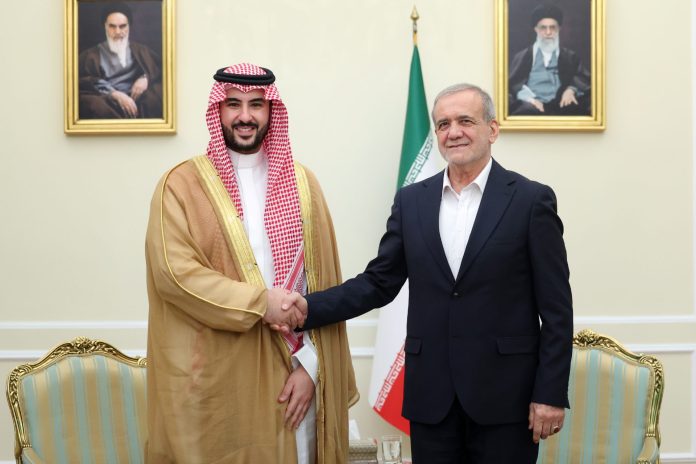
During a meeting with Saudi Arabia’s Defense Minister in Tehranvon Thursday, President Pezeshkian said, “Iran and Saudi Arabia can rely on their shared capacities to resolve many of the region’s problems without the need for foreign intervention.”

He expressed hope that the friendship between the two countries will strengthen the interests of the Islamic world and frustrate the enemies’ attempts to interfere and sow division.

President Pezeshkian pointed out that Iran, Saudi Arabia can be a model for regional cooperation.

Saudi Defense Minister, Prince Khalid bin Salman, in turn, said Iran and Saudi Arabia are two key pillars of the region, and strong relations between the two nations can serve as an effective model for convergence and synergy in the Islamic world.

He added that Saudi leaders are eager to visit Iran at the earliest opportunity.

The Saudi defensce minister said the positions of Iran and Saudi Arabia regarding developments in Gaza and Palestine are aligned.

He said the actions of the Zionist regime in Gaza, the West Bank, Lebanon, and Syria indicate its attempts to exploit the existing gaps in the region.

IAEA Chief engaged in active shuttle diplomacy between Iran, U.S. amid nuclear talks

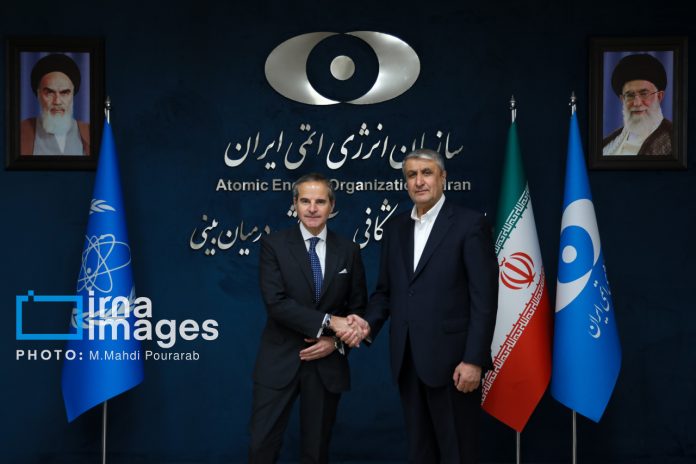
In a joint press appearance with Mohammad Eslami, head of the Atomic Energy Organization of Iran, Grossi stated that he is in constant contact with both Iranian and American negotiators to explore how the Agency can act as a bridge and help facilitate a positive outcome.

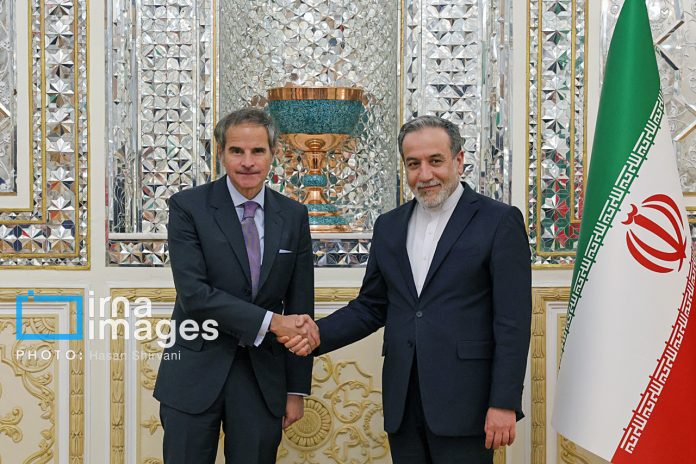
Grossi noted that he had “deep and honest” conversations with senior Iranian officials, including Foreign Minister Seyed Abbas Araghchi, and that the discussions centered on how the IAEA can contribute to confidence-building and verifiability of any eventual agreement.

He acknowledged the sensitivity and complexity of the current moment and said the IAEA’s role would be critical in ensuring any nuclear deal is credible and enforceable.

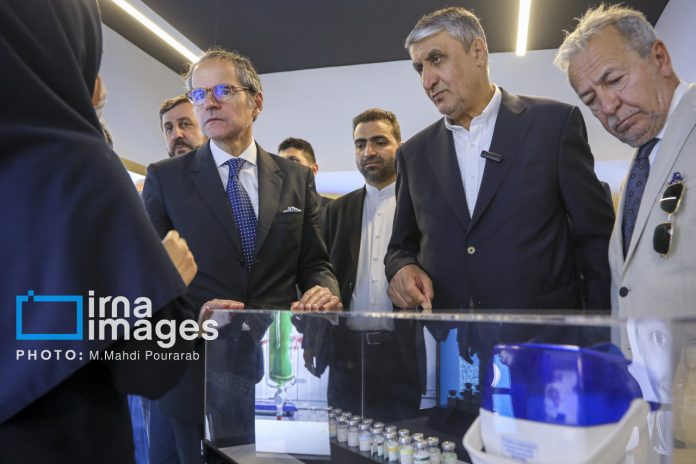
Grossi also visited Iran’s nuclear technology exhibition and expressed admiration for the country’s achievements in peaceful nuclear applications, especially in the fields of medicine and health.
While commending Iran’s technical advancements, he reiterated the Agency’s responsibility to ensure all nuclear activities remain strictly peaceful and non-proliferative.

Eslami emphasized that Iran expects the IAEA to maintain professional neutrality and avoid language or actions that could be exploited by hostile actors.
He confirmed that outstanding issues from the March 2023 joint statement are being addressed constructively, and both sides agreed that remaining matters will be discussed at the technical level in the coming days.

The visit comes at a crucial juncture in the broader diplomatic process. Tehran and Washington are expected to engage in indirect nuclear talks in Rome, and Grossi’s shuttle diplomacy is seen as an attempt to maintain momentum while providing international oversight that could make a deal more palatable to all parties involved.

IAEA chief visits Iran’s nuclear achievements exhibition following high-level talks

Grossi was introduced to Iran’s latest advancements in areas such as the nuclear fuel cycle, energy production, heavy water technology, radiopharmaceuticals, plasma technology, nuclear fusion, lasers, quantum technologies, nuclear agriculture, industrial accelerators, and nuclear safety systems.

The visit comes amid ongoing indirect talks between Iran and the US, mediated by Oman, aimed at resolving sanctions disputes and nuclear issues.
Grossi’s trip was pre-planned but gains significance as negotiations resumed.

His agenda includes addressing two outstanding safeguards disputes and preparing a comprehensive report on Iran’s nuclear program for the upcoming IAEA Board of Governors meeting, as mandated by a recent resolution.

On Wednesday, Grossi held discussions with senior officials, including Foreign Minister Seyed Abbas Araghchi, who stressed the importance of IAEA maintaining its technical and impartial role, resisting undue external pressures, and adopting clear stances against threats to Iran’s peaceful nuclear facilities.

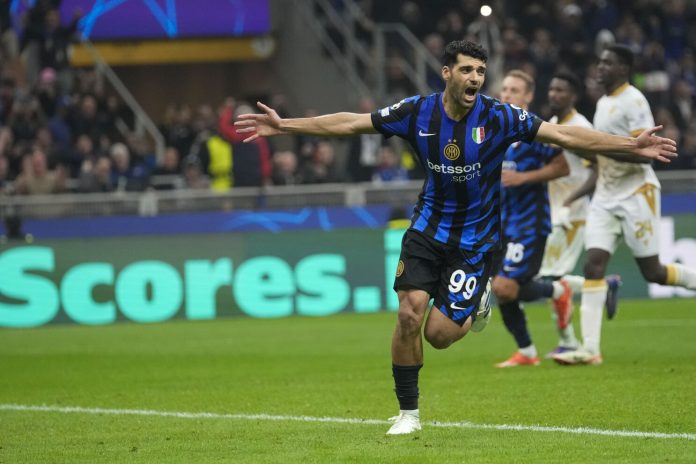
Mehdi Taremi named Iran’s Athlete of the Year at National Sports Awards

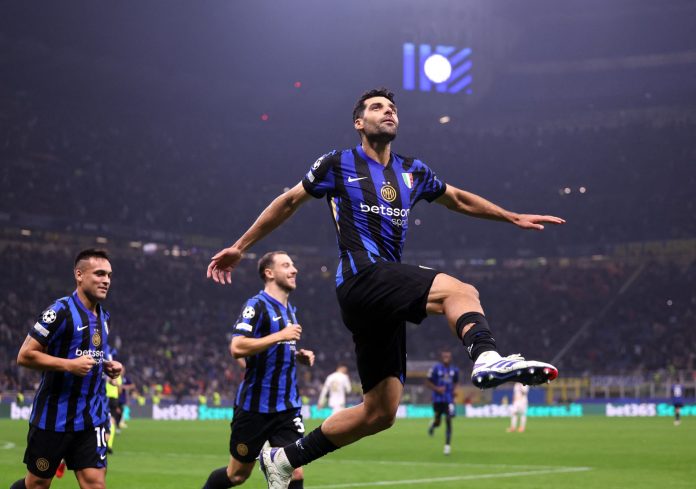
Taremi won “Best Goal” for his Inter Milan strike in addition to his Iran’s Athlete of the Year honors.

Taremi, who was absent in the ceremony due to club commitments, in a video address expressed gratitude and enthusiasm for his goal being chosen in a popular vote as the best.

The 31-year-old forward said, “I’m honored my goal was chosen. We’re united in chasing every club and international trophy – I’ll keep scoring for Iran’s pride.”

Known for his exceptional goal-scoring ability, Taremi has had a remarkable career trajectory.

His international career took off when he joined Al-Gharafa in Qatar and later moved to Portugal’s Rio Ave, where he was the Primeira Liga joint-top scorer in the 2019-20 season.

Taremi’s success continued at FC Porto, where he won multiple domestic titles and established himself as one of the league’s top players.

In 2024, he transferred to Italy’s Inter Milan, further solidifying his status as a global football talent.

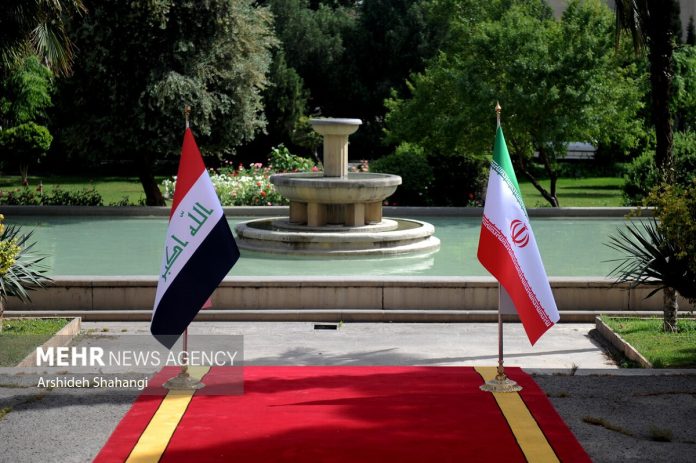
Iran, Iraq sign agreement for NGL 3100 feedstock supply to border province petrochemical plant

Iran and Iraq Flags

The deal marks a key development in bilateral energy cooperation during Iranian Oil Minister Mohsen Paknejad’s two-day visit to Iraq at the invitation of his Iraqi counterpart.

The visit also culminated in several other agreements covering various areas, including offshore exploration and the transfer of associated gases from Iraq’s border fields to Iran, aimed at providing feedstock for NGL units with private sector participation.

Mehdi Obouri, CEO of Ahdaaf Investment Company, emphasized the daily requirement of 240 million cubic feet of NGL 3100 for the development and operation of the Dehloran Petro-Refinery Project.

He highlighted the importance of achieving full fuel supply and maximizing project capacity, noting that field utilization currently stands at about 50% of its potential.

Obouri said the agreement would play a significant role in addressing Iran’s energy imbalances and resolving environmental challenges in Ilam Province, where the plant is located.

He also stressed that such projects would boost regional employment and prosperity, expressing optimism the Iranian president will inaugurate the national project later this year.

Iran FM says talks with IAEA chief “constructive”; urges agency to maintain neutral role in nuclear talks

Seyed Abbas Araghchi met on Wednesday evening with the IAEA Director General Rafael Grossi during his visit to Tehran.

In a statement posted on X, Araghchi called the discussions “productive,” stressing the IAEA’s potential to facilitate a peaceful resolution to Iran’s nuclear dossier.

Araghchi stated the IAEA can play a pivotal role in the coming months if it maintains technical focus and resists political pressures.

He noted, “As various disruptive elements have aligned to derail the current negotiations, we need a ‘Director General of Peace.’”
The Iranian foreign minister emphasized Iran’s desire to trust Grossi’s mission to “keep the agency away from politicization” and adhere strictly to its professional mandate, unaffected by “unjust external pressures.”

Iran’s foreign minister demanded that the IAEA adopt “clear positions” against threats targeting Tehran’s peaceful nuclear facilities.

During the talks, Araghchi briefed Grossi on the indirect negotiations between Tehran and Washington regarding sanctions relief and nuclear issues, the first round of which was held in Oman on Saturday.

Grossi welcomed the revived diplomatic efforts, expressing full support for continued dialogue “until mutually acceptable results are achieved.”

Taremi’s strike against Milan in Serie A voted as best goal of year

Mehdi Taremi

Taremi scored the goal for Inter in Italy’s Serie A.

Meanwhile, people participating in the polling chose Sareh Javanmardi as Iran’s Paralympic Woman of the year 1403.

The Paralympic shooter from Shiraz is the first ever female gold medalist from Iran to win in the shooting category of the Paralympics Games.

The Iran women’s national handball team was also selected as the best national team of the year 1403 in Iranian sports by the popular vote while the women’s sitting volleyball team were voted as the best team of the year 1403 in Iranian sports.

Trump tariffs will mean world uses less oil in 2025: IEA

The International Energy Agency slashed its forecasts for global oil demand growth by a third for the year ahead, and warned that it could make further downward revisions depending on whether a trade war develops.

The Paris-based agency had previously forecast that the world’s appetite for crude, which is a key economic indicator, would rise by 1.03m barrels a day this year to a record high.

But after Trump’s “liberation day” tariffs on global trade it has cut its forecast growth to 730,000 barrels a day. Oil demand growth could slow further next year to 690,000 barrels a day due to “the weaker economic environment”, it said.

“While imports of oil, gas and refined products were given exemptions from the tariffs announced by the United States, concerns that the measures could stoke inflation, slow economic growth and intensify trade disputes weighed on oil prices,” the agency said.

The benchmark price for oil fell from almost $75 a barrel to four-year lows of below $60 a barrel in under a week after Trump set out a swathe of global tariffs on trade, including particularly punitive rates for Chinese goods.

Oil prices have reclaimed some ground, after Trump paused some of the tariffs for 90 days, pending negotiations. But fears over a global economic slowdown have remained, keeping an oil market recovery in check.

Big banks have revised down their forecasts for the oil price to account for a potential global economic recession. The Swiss bank UBS cut its price forecast by $12 a barrel to $68 a barrel for this year while Goldman Sachs said it expected the benchmark crude price to average $63 a barrel this year, and fall further to $58 next year.

The IEA warned that the falling oil market prices triggered by Trump’s trade tariffs were likely to upend his own election promise to expand the country’s oil and gas industry by urging producers to “drill, baby, drill”.

US shale producers need global market prices of at least $65 a barrel to drill new shale oil wells and make a profit, according to the IEA, and the industry could now also face higher costs on importing steel and drilling equipment as a result of the tariffs.

The agency has revised down its forecasts for US oil production growth this year by 150,000 barrels a day to 490,000 barrels a day. Meanwhile, the countries which make up the OPEC oil cartel and their allies have said they will increase their collective oil production by 411,000 barrels a day – although the increase may be smaller in reality because some countries are already exceeding their quotas.

The IEA warned that risks to its forecasts “remain rife given the fast-moving macro backdrop”.