Thursday, December 25, 2025
Home Blog Page 2334

UN: 10k children killed or maimed in Yemen war

Yemen War

The protracted war in Yemen has killed or maimed at least 10,000 children since the conflict began in March 2015, which is equivalent to four children every day, according to the UN children’s agency.

At a media briefing in Geneva on Tuesday, James Elder, a spokesperson for the UNICEF said these are the cases verified by the agency, while the actual toll could be much higher.

Elder, who recently returned from his visit to Yemen, stated he met scores of people affected by the six-year war, warning that the country was “on the brink of total collapse.”

He added Yemen’s humanitarian crisis represents a “tragic convergence of four threats,” including violent and protracted conflict, economic devastation, shattered services for support systems and a critically under-funded UN response.

Yemen, situated on the southwestern corner of the Arabian Peninsula, has been beset by violence and chaos since 2015, when Saudi Arabia and its allies launched the devastating war to reinstall the former regime of Abd Rabbuh Mansur Hadi in Sana’a. The prolonged war has killed hundreds of thousands of Yemeni civilians and spawned the worst humanitarian catastrophe in modern world history.

The UNICEF spokesperson noted the agency urgently needs more than $235 million to continue its life-saving work in the country till mid-2022; otherwise, it will be forced to wind up its operations.

“Funding is critical. We can draw a clear line between donor support and lives saved. But even with increased support, the war must come to an end,” the UN official stated. “At the current funding levels, and without an end to fighting, UNICEF cannot reach all these children. There is no other way to say this, without more international support, more children – those who bear no responsibility for this crisis – will die,” he warned.

He said four out of every five children need humanitarian assistance in the country, which accounts for more than 11 million kids. At the same time, 400,000 children continue to suffer from acute malnutrition, more than two million children are out of school and another four million are at the risk of dropping out, he noted.

Elder added 1.7 million children have been internally displaced because of violence, and numbers are mounting with the recent escalation in the strategic city of Ma’rib.

A staggering 15 million people, more than half of whom are children, do not have access to safe water, sanitation, or hygiene, the official said, adding that the agency is providing many services to people in the crisis-stricken country but the severity of the humanitarian situation “cannot be overstated.”

“The economy is in a critical condition. GDP has dropped by 40 percent since 2015, when the violence escalated. Huge numbers of people have lost their jobs, and family incomes have plummeted. About one-quarter of people – including many medical workers, teachers, engineers, and sanitation workers – rely on civil servant salaries that are paid erratically, if at all,” Elder added.

Pointing to the lack of means to procure food, he said children in Yemen are not starving because of “a lack of food,” but because their families “cannot afford food.”

“Yemen is the most difficult place in the world to be a child. And, unbelievably, it is getting worse,” he continued.

In August, the UN agency said one child was dying every 10 minutes in Yemen of preventable causes, including malnutrition and vaccine-preventable diseases.

“More than six years ago, adults started a war in Yemen. They did so despite knowing the terrible toll that violent conflict exacts on children,” UNICEF executive director Henrietta Fore told a UN Security Council meeting.

“The war in Yemen, now in its seventh year, has created the largest humanitarian crisis in the world – one made worse by the public health and socioeconomic consequences of the COVID-19 pandemic,” Fore added in corroboration of the situation that has afflicted the country.

Multiple UN-brokered talks between the warring sides have failed to produce a breakthrough over the years as Saudi-backed foreign mercenaries have sought to inflict harm on the people of Yemen. While the Saudi-led coalition continues to lose large swaths of territory it had occupied following the 2015 invasion, Yemeni armed forces and the allied Popular Committees continue to grow in strength.

EU says focused on removing anti-Iran sanctions

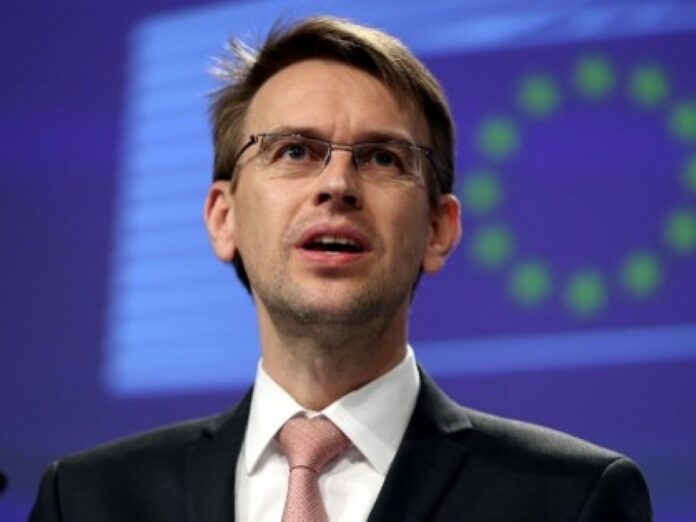
EU spokesman Peter Stano said at the same time, the parties to the JCPOA will make efforts to revive the talks aimed at resuscitating the deal.

He added that the problem faced by Iran is the US sanctions and that the EU is trying to resume the Vienna talks so that the road is paved for Tehran to return to full compliance with the agreement and for the US to return to the deal.

He said the US will remove the unilateral sanctions after returning to the JCPOA and Iran will then be able to enjoy benefits under the agreement.

Iran stuck to the JCPOA for one year after the US withdrawal under former president Donald Trump in 2018. Tehran however started to roll back its commitments under the deal when the European signatories failed to live up to their obligations.

The Biden administration has now said it’s determined to return to the JCPOA. But Iran says the US president is following in the footsteps of his predecessor as Biden continues to use sanctions as leverage against the Islamic Republic.

Congress panel urges criminal charges against Brazil president over Covid-19

The senator leading a congressional investigation into Brazil’s handling of the COVID-19 pandemic has recommended that Bolsonaro face criminal charges – including homicide – over a catalogue of alleged government errors that led to the deaths of thousands of people.

A nearly 1,200-page draft document prepared by opposition Senator Renan Calheiros for a Senate committee that discussed the matter late on Tuesday began an inquiry in April which alleges that Bolsonaro turned down early opportunities for the government to acquire vaccines, delaying Brazil’s inoculation campaign at the cost of an estimated 95,000 lives.

The report says Bolsonaro was guided “by an unfounded belief in the theory of herd immunity by natural infection and the existence of a treatment”.

“Without the vaccine, deaths would be stratospheric, as they turned out to be,” the report adds.

The draft report, which recommends the president be indicted on 11 charges, from charlatanism and inciting crime up to homicide and genocide against the Indigenous community, still needs to be voted on by the 11-member Senate committee and could still be vetoed and altered.

Three senators on the commission were lobbying for the removal of the homicide and genocide charges, the Associated Press new agency reported, citing five senators.

Any charges would have to be brought by Brazil’s prosecutor – a general appointed by Bolsonaro.

Earlier on Tuesday, Bolsonaro dismissed the inquiry as a “joke” and told supporters he was not concerned about it. He has remained defiant despite the increasing criticism.

The presidency and Health Ministry did not immediately respond to requests for comment from the Reuters news agency.

The inquiry, which heard tearful testimony from relatives of the dead, also said charges should be filed against dozens of people including three of Bolsonaro’s sons who are also in politics. The report alleges they spread misinformation that incentivised “non-compliance with sanitary measures to contain the pandemic.”

More than 600,000 people have died in Brazil from COVID-19, the second-highest death toll worldwide after the United States.

Bolsonaro has been widely criticised by public health experts for railing against lockdowns, frequently refusing to wear a mask in public and declaring he has not been vaccinated.

He has also pushed unproven remedies for the illness.

The report adds Bolsonaro is “principally responsible for the government’s errors committed during the COVID-19 pandemic” and that he acted against the advice of his Health Ministry in supporting the use of unproven treatments.

The pandemic has already had an effect on Bolsonaro with less than half of Brazilians still saying they support the right-wing president.

Afghanistan summit kicks off in Moscow

The talks involve representatives of ten countries of the region, as well as a high-level delegation of the Taliban movement.

Moscow has urged the Taliban to stay committed to its pronounced pledge to refrain from using the territory of Afghanistan against third countries further on, Russian Foreign Minister Sergey Lavrov said at a Moscow format meeting on Afghanistan on Wednesday.

“We are calling upon the Taliban movement to strictly follow the policy of preventing the territory of Afghanistan from being used against the interests of any third counties, first and foremost, Afghanistan’s near neighbors — the Central Asian states. Our friends and allies. For our part we plan to use our own capabilities, including those in the United Nations, the SCO, the CSTO, and other multilateral organizations,” he added.

The Islamic State (IS) and Al-Qaeda groups seek to take advantage of instability in Afghanistan, Lavrov said.

“Numerous terror groups seek to take advantage of it [instability], first and foremost, the Islamic State and Al-Qaeda, who are once again trying to lift up their heads, carrying out bold and deadly raids in various parts of the country,” he pointed out.
According to Lavrov, the situation in Afghanistan following the establishment of a new balance of power cannot be described as stable.

“On the one hand, there is no alternative to [the new balance of power] in the foreseeable future and on the other, there is a lack of official international recognition, as well as the social, economic and financial issues and humanitarian challenges that the new Kabul authorities are facing,” the Russian top diplomat added.

Russia regrets a US delegation is absent from the Moscow format talks on Afghanistan, Lavrov said in his opening remarks.

“We regret our American counterparts do not participate this time,” he added.

Lavrov recalled that the United States dodged participation in a meeting of the enlarged troika (Russia, the United States, China and Pakistan) for a second time and voiced the hope there were no fundamental problems behind this.

“One of the possible reasons is the US special envoy for Afghanistan has been replaced,” Lavrov said, adding, “It is to be hoped that the United States remains ready to keep working on the Afghan track and the new special envoy will join the efforts, including those to be exerted following the Moscow format meeting in the context of implementing the agreements that you will achieve today, I hope”.

Russia notes the efforts of Afghanistan’s new administration to stabilize the military and political situation in the country, Lavrov said.

“We note the efforts they (the Taliban interim government) take to stabilize the military and political situation, establish the activities of the state machine,” he added.

“However, the task of achieving stable peace in Afghanistan is still relevant,” the minister noted.

“We see the formula for its successful solution mainly in the formation of a truly inclusive government, which should fully reflect the interests of all not only ethnic, but also political forces of the country,” he added.

The new balance of forces in Afghanistan “has no alternatives in the foreseeable future,” Lavrov continued, adding, “After a dramatic change of the situation it is senseless to search for those guilty of the failure to reach a tangible result in the matter of national reconciliation. I should only note that the expectations from the previous government of Afghanistan headed by former president Ashraf Ghani have not been met. Currently a new administration holds the power. This fact of life places the responsibility up on the Taliban movement.”

On August 15, Taliban fighters swept into Kabul without encountering any resistance and gained full control over the Afghan capital within a few hours. Afghanistan’s President Ashraf Ghani said he had stepped down to prevent any bloodshed and subsequently fled the country. On September 6, the Taliban declared a complete victory in Afghanistan and on September 7 formed an interim government which hasn’t yet been officially recognized by any country.

The Moscow format was created in 2017 on the basis of a six-party mechanism of consultations by special envoys from Russia, Afghanistan, India, Iran, China, and Pakistan.

Iranian Sunni Muslim praying on Valiasr Street in central Tehran

The news outlets say the man sells fruits on Valiasr Avenue, the longest street in the Middle East linking Tajrish square in the north to Rahahan square in the south of the capital.

The footage is in sharp contrast with what Iran sees as a propaganda campaign by the West’s mainstream media aimed at portraying the Islamic Republic as being intolerant toward religious and ethnic minorities.

Iran is a Shia majority country but followers of other Islamic sects like Sunni Muslims and also those who follow other religions including Christianity, Judaism and Zoroastrianism have been peacefully living side by side for centuries.

All this sends a clear message that the old-hat scheme to sow ethno-sectarian strife in Iran is a failed project.

Iran is commemorating Islamic Unity week, held by both Shia and Sunni Muslims. The event refers to the two different dates of the birthday of Prophet Muhammad, narrated by the two sects.

Bagheri: Iran, Russia to help enhance regional security

Iran Top Commander General Bagheri

In an exclusive interview with IRNA, Major General Mohammad Bagheri said the Iranian and Russian efforts will stabilize the region and will lead to the development and progress of the two countries.

He also described his talks with his Russian counterpart Valery Gerasimov and Defense Minister Sergey Shoygu in Moscow as constructive.

Major General Bagheri also said Iran-Russia relations have developed in recent years and military and defense cooperation between the two sides is expanding.

He said during his trip to Moscow he discussed the purchase of weapons and the arms contracts that have been signed with the Russian side.

The Iranian chief of staff of the armed forces stated that a meeting of the Iran-Russia joint military commission will be held in Tehran in three months and bilateral defense cooperation will be further expanded.

He noted that the joint commission will focus on defense industries, military contracts, exchange of experiences and the fight against terrorism.

He referred to the Iranian and Russian efforts in the fight against terrorism especially in Syria, adding that the United States knows all too well that the era of a unipolar world is over and America now has to withdraw its forces from the West Asia region.

FBI search property linked to sanctioned Russian Billionaire

Footage posted by NBC correspondent Laura Strickler from outside the palatial residence, who described it as “home of Russian oligarch Oleg Deripaska,” despite the billionaire apparently not living there, shows officers wearing masks and FBI windbreakers standing guard at the perimeter.

Deripaska’s representative on Tuesday confirmed that the property in Washington, DC, as well as one other in New York, were being searched, adding that it was related to the US sanctions. However, neither property belongs to Deripaska personally but to relatives, the spokesperson added.

The FBI initially refused to comment on the ongoing raid to reporters at the scene, but later confirmed to RIA Novosti that the DC property was being searched based on a court order.

In 2018, Deripaska was targeted by US Treasury Department sanctions, after officials claimed he’d acted as a proxy for Russian government officials. The wealth of the RUSAL aluminum empire’s founder is estimated by Forbes at $4.9 billion.

Deripaska, whose lawyer said he was a “victim” of the “general hysteria” around the events of Russiagate, attempted to sue the US government over the sanctions, but the case was dismissed by a federal court judge.

“The effect of these unlawful actions has been the wholesale devastation of Deripaska’s wealth, reputation, and economic livelihood,” the tycoon’s attorney wrote in the 28-page lawsuit.

The US has accused Deripaska of money laundering, extortion, racketeering and “illegally wiretapping a government official.” 

NBC News claim he was also repeatedly denied a US visa “over his alleged ties to organized crime.”

Sputnik reported the FBI agents, after hours of searches, left the house.

IAEA chief plans to visit Iran in near future

The head of the United Nations’ nuclear watchdog said on Tuesday he anticipates news soon on when he may travel to Iran, adding that he expects to go to Tehran before the agency’s November Board of Governors meeting.

Grossi said in Washington that his expectation was based on his conversations with Iranian officials, but he did not provide details.

“I am expecting news soon about it,” he told reporters.

Grossi added the IAEA has been able to service cameras at all sites in Iran aside from the TESA Karaj complex.

The workshop at the TESA Karaj complex makes components for centrifuges, machines that enrich uranium, and was hit by apparent sabotage in June in which one of four IAEA cameras there was destroyed. Iran removed them and the destroyed camera’s footage is missing.

TESA Karaj was one of several sites to which Iran agreed to grant IAEA inspectors access to service IAEA monitoring equipment and replace memory cards just as they were due to fill up with data such as camera footage. The Sept. 12 accord helped avoid a diplomatic escalation between Iran and the West.

The head of the Atomic Energy Organization of Iran, Mohammad Eslami, had urged the UN nuclear agency, the IAEA, to clarify its stance on the attack on Tessa Kara Complex near Tehran.

Eslami said the nuclear site once came under a terrorist attack by the Zionist regime and it is necessary that International Atomic Energy Agency clarify its position on the incident.

He also added installing cameras at the facility is not binding under the 2015 Iran nuclear deal and that the IAEA know this.

The agency has announced Iran has failed to fully honor the terms of a deal struck some three weeks ago to allow the watchdog’s inspectors to service monitoring equipment in the country.

At the same time Iran’s envoy to IAEA has stated that the director general’s report isn’t accurate and goes beyond the agreed terms of the joint statement. Tehran insists that the agency must first condemn the terrorist attacks and acts of sabotage against its nuclear facilities.

North Korea confirms tested ‘new type’ of ballistic missile

North Korea has confirmed it test-fired a new SLBM, a day after South Korea reported the launch of what it said appeared to be an SLBM from North Korea’s east coast.

State media reported on Wednesday a “new type” of SLBM had been launched, and released a series of photos.

The device had “lots of advanced control guidance technologies”, North Korea’s state news agency Korean Central News Agency (KCNA) said, adding that it was fired from the same vessel that the North used in its first SLBM test five years ago.

The report did not mention leader Kim Jong Un, suggesting he did not watch the test.

The launch, near the city of Sinpo, where Pyongyang has a major shipyard building submarines, is the fifth since September, the eighth this year, and the first test of an SLBM since 2019. The North is banned from missile tests under United Nations sanctions.

The UN Security Council will hold an emergency closed-door meeting on North Korea on Wednesday at the request of the United States and the United Kingdom.

Pyongyang has been gradually improving its military arsenal since talks on denuclearisation broke down in 2019 following the collapse of the Hanoi summit between Kim and then US President Donald Trump.

Kim has accused the US and South Korea of maintaining a “hostile policy” towards the North, insisting that his country’s military development is crucial for “self-defence”.

The White House reviewed North Korean policy after Joe Biden took office in January and has been urging Pyongyang to return to the negotiating table – key envoys from the US and South Korea met in Washington, DC this week as the test was detected and Sung Kim, Biden’s special envoy on North Korea, is due to travel to Seoul to discuss the possibility of reviving diplomacy with Pyongyang.

On Tuesday, the US again stressed it remained open to diplomatic engagement with Pyongyang, but urged North Korea to refrain from further “provocations”.

Talks have faltered over the North’s demands for sanctions relief, and on Wednesday South Korean Foreign Minister Chung Eui-yong called on Washington to ease sanctions if the North returned to talks.

“Action must be taken as soon as possible to stop North Korea from further developing nuclear and missile capability,” he told parliament, noting, “I think considering relaxing sanctions can surely be an option.”

Robert Kelly, professor of political science at Pusan National University in South Korea, told Al Jazeera the tests were probably a sign that the North was looking for more from the US and not just in terms of sanctions relief.

“Maybe it went to their head a little that Donald Trump personally met the North Korean leader three times and now North Korea feels they’re entitled to some presidential attention and that Joe Biden himself should be somehow involved,” he stated, adding that “this is one of the reasons why US presidents had not met the North Koreans before, but I think this is what the North Koreans want. They want more than envoys, secretaries and spokesmen”.

The photos of the test published by KCNA appeared to show a missile that was thinner and smaller than previous SLBM designs, with analysts speculating it could be a previously unseen model that was first showcased at a defence exhibition in Pyongyang last week.

A smaller SLBM could allow more missiles – albeit at a shorter range – to be stored on a single submarine, potentially moving the North closer to fielding an operational ballistic missile submarine (SSB).

But analysts announced the development was likely to have only a limited effect until the country made more progress on a larger submarine that has been seen under construction.

“It just means they’re trying to diversify their submarine launch options,” said Dave Schmerler, a senior research associate at the James Martin Center for Nonproliferation Studies in California.

“It’s an interesting development but with only one submarine in the water that can launch notionally one or two of these it doesn’t change much,” Schmerler added.

KCNA reported the new missile featured advanced control guidance technologies including “flank mobility and gliding skip mobility”.

“[The SLBM] will greatly contribute to putting the defence technology of the country on a high level and to enhancing the underwater operational capability of our navy,” it added.

Schmerler said it was unclear exactly what KCNA meant by “flank mobility”, but “glide skip” was a way to change a missile’s trajectory to make it harder to track and intercept.

The North last tested an SLBM in October 2019.

In a report this month on the country’s military capabilities, the US government’s Defense Intelligence Agency said the North’s pursuit of submarine-launched ballistic missile capabilities along with its steady development of land-based mobile long-range weapons highlighted Pyongyang’s intention to “build a survivable, reliable nuclear delivery capability”.

Iran slams terror attack in Damascus as “cowardly”

The Ministry’s spokesman Saeed Khatibzadeh expressed sympathy with the people and government of Syria. 

He said such blind acts of terrorism are doomed to failure adding the cowardly acts will not affect the determination of the Syrian people and government in their effort to fight terror and liberate their territories that have been occupied nor will they undermine Syria’s stability. 

More than a dozen people got killed and several others wounded when two roadside bombs tore through a bus carrying military personnel in the Syrian capital Wednesday morning.

The Syrian television aired images of the charred cabin of the bus and rescue workers collecting body parts.

The channel said the blasts occurred during the rush hour when people were heading to work.