Sunday, December 21, 2025
Home Blog Page 2327

Iran and Turkey determined to fight terrorism

Iran’s Interior Minister Ahmad Vahidi has held talks with his Turkish counterpart Süleyman Soylu in Tehran.

Vahidi said at the news briefing following his talks with Soylu that in the meeting, the development of relations between the two countries in all areas was discussed.

Vahidi added, “We discussed the fight against terrorism, international crime, arms trafficking, the development of cross-border activities, and the development of joint cooperation in all areas, including the issue of immigration.“

He added he and his Turkish counterpart also talked about more general issues such as the destructive role of the US and Zionist regime in the region and the many problems they have created for nations including Afghanistan and the conspiracies they have hatched in the region.

Vahidi noted that the determination of the two countries to develop strategic relations is firm.

He also said Iran and Turkey will not allow others to disrupt their relations.

Soylu also described his talks with Vahidi as important. He said Iran and Turkey cooperate in the fight against terrorist groups including the PKK and they are resolved to combat terror.

Soylu added Iran and Turkey also plan to form an action group for fighting terrorism and narco-trafficking.

Iranian, Turkish interior ministers meet in Tehran

The Turkish official was officially greeted by the Interior Ministry’s Security Deputy Hossein Zolfaghari.

Vahidi and Soylu are finalizing their review of the security memorandum between the two ministries.

Several other officials including the commander of the Turkish Gendarmerie are accompanying Soylu during his visit to Tehran.

Saint Petersburg welcomes Iran’s General Bagheri

Major General Bagheri arrived in the northern port city of St. Petersburg as he continued his trip to Russia to meet with naval officials and visit naval combat facilities. Admiral Vladimir Kasatonov, Commander of the North Sea Fleet and Deputy Commander of the Russian Navy, and a group of high-ranking Russian generals greeted Major General Bagheri at the Russian Navy headquarters. After the official welcoming ceremony, Major General Bagheri and Admiral Kasatunov inspected the ceremonial guards and then entered into talks with the Ambassador of the Islamic Republic of Iran Kazem Jalali and a group of deputies and high-ranking military officials of the two countries in attendance.

At the beginning of the meeting, the Commander of the North Sea Fleet and the Deputy Commander of the Russian Navy expressed his happiness over the presence of Major General Bagheri in St. Petersburg.

Kasatunov said the Iranian and Russian navies have held numerous naval exercises in recent years and will continue their cooperation.

The senior Russian official referred to the presence of the 75th Strategic Naval Fleet of the Iranian Army in the recent naval parade in St. Petersburg and called for the strengthening of military ties between Tehran and Moscow.

Major General Bagheri also said Iran-Russia relations are expanding as two important partners in the international arena. He added that the naval fleet of the Iranian Army entered the Gulf of Finland for the first time after crossing the Atlantic Ocean and participated in the Russian naval parade.

He said this shows the military and defense clout of Iran’s military and its interest in expanding defense cooperation with Russia.

Bagheri noted that ties, especially military and defense cooperation, have been on the rise in recent years, saying with the conclusion of arms contracts and their implementation in the near future, these relations will expand significantly.

Taliban: Afghan territory not to be used against others

The Taliban movement remains committed to its pledge not to take aggressive action against other countries, he stated.

“We have practically proven with our actions that the soil of Afghanistan will not be used against anyone, and since the day we made our commitment in the Doha agreement, we have remained committed to that clause,” he noted speaking through an interpreter.

The Taliban movement launched a massive operation for establishing control of Afghanistan after the United States last spring declared its troop pullout. On August 15, Afghanistan’s President Ashraf Ghani left the country. The radicals entered Kabul without encountering any resistance. On September 6 the movement declared it had established control of the whole of the country’s territory and the next day, on September 7 it announced the composition of an interim government, whose legitimacy has not been recognized by any country yet.

In February 2020, US officials and the Taliban signed a peace agreement in Doha. The Taliban pledged they would not use the territory of Afghanistan for actions posing a threat to the security of the United States or its allies.

The Taliban movement does not need military aid from abroad, but assistance in restoring the country is required, Deputy Prime Minister of Afghanistan’s interim government Abdul Salam Hanafi told journalists on the sidelines of the third session of the Moscow consultations on Wednesday.

“We do not need military assistance. We need support for peace in Afghanistan, in the restoration of Afghanistan,” he continued.

Iran Says Administered Over 1.1 Covid Jabs in 24 Hours

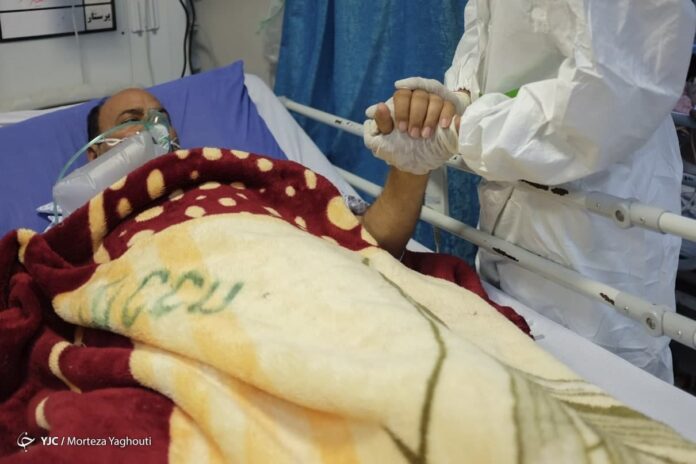
The ministry’s public relations center said over 49 million Iranians have so far received the first dose of the vaccine. It said nearly 27 million people have also received a second dose. That makes total of more than 76 million doses of administered vaccines.

The ministry added that 11,770 new coronavirus infections were detected since Tuesday, including 1,798 people, who were hospitalized.
Over the same period, the ministry said, 162 patients lost their lives to the virus, raising the overall fatalities to 124,585 people since the beginning of the pandemic in early 2020.

The ministry added that 4,559 Covid patients are now in intensive care units due to the severity of their symptoms.

Currently, 9 Iranian cities are marked red, meaning they face a critical stage of Covid outbreak on a scale that lists cities as red, orange, yellow and blue.

US official calls for maintaining sanctions against Taliban

Adeyemo stated he sees no situation where the Taliban would be allowed access to Afghan central bank reserves, which are largely held in the United States.

“We believe that it’s essential that we maintain our sanctions against the Taliban but at the same time find ways for legitimate humanitarian assistance to get to the Afghan people. That’s exactly what we’re doing,” Adeyemo told the Senate Banking Committee on Tuesday.

The Taliban have called for the US to lift a block on more than $9bn of Afghan central bank reserves held outside the country as the government struggles to contain a deepening economic crisis.

The Taliban took back power in Afghanistan in August after the United States pulled out its troops, almost 20 years after the armed group was deposed by US-led forces following the September 11, 2001, attacks on the US.

The US and other Western countries have been grappling with difficult choices as a severe humanitarian crisis loomed large in Afghanistan. They have been trying to work out how to engage with the Taliban without granting them the legitimacy they seek, while ensuring humanitarian aid flows into the country.

“Our goal is to make sure that we are implementing our sanctions regime against the Taliban and the Haqqani network, but at the same time allowing for the permissible flow of humanitarian assistance into the country,” Adeyemo added.

The Haqqani network is a group affiliated with the Taliban based near the border with Pakistan and blamed for some of the worst suicide attacks of the war.

Adeyemo noted the Department of the Treasury was taking every step it could within its sanctions regime to make clear to humanitarian groups that Washington wants to facilitate the flow of aid to the Afghan people, but warned that for humanitarian assistance to flow, the Taliban have to allow it to happen within the country.

The Treasury last month further paved the way for aid to flow to Afghanistan despite US sanctions on the Taliban when it issued two general licences.

UN: 10k children killed or maimed in Yemen war

Yemen War

The protracted war in Yemen has killed or maimed at least 10,000 children since the conflict began in March 2015, which is equivalent to four children every day, according to the UN children’s agency.

At a media briefing in Geneva on Tuesday, James Elder, a spokesperson for the UNICEF said these are the cases verified by the agency, while the actual toll could be much higher.

Elder, who recently returned from his visit to Yemen, stated he met scores of people affected by the six-year war, warning that the country was “on the brink of total collapse.”

He added Yemen’s humanitarian crisis represents a “tragic convergence of four threats,” including violent and protracted conflict, economic devastation, shattered services for support systems and a critically under-funded UN response.

Yemen, situated on the southwestern corner of the Arabian Peninsula, has been beset by violence and chaos since 2015, when Saudi Arabia and its allies launched the devastating war to reinstall the former regime of Abd Rabbuh Mansur Hadi in Sana’a. The prolonged war has killed hundreds of thousands of Yemeni civilians and spawned the worst humanitarian catastrophe in modern world history.

The UNICEF spokesperson noted the agency urgently needs more than $235 million to continue its life-saving work in the country till mid-2022; otherwise, it will be forced to wind up its operations.

“Funding is critical. We can draw a clear line between donor support and lives saved. But even with increased support, the war must come to an end,” the UN official stated. “At the current funding levels, and without an end to fighting, UNICEF cannot reach all these children. There is no other way to say this, without more international support, more children – those who bear no responsibility for this crisis – will die,” he warned.

He said four out of every five children need humanitarian assistance in the country, which accounts for more than 11 million kids. At the same time, 400,000 children continue to suffer from acute malnutrition, more than two million children are out of school and another four million are at the risk of dropping out, he noted.

Elder added 1.7 million children have been internally displaced because of violence, and numbers are mounting with the recent escalation in the strategic city of Ma’rib.

A staggering 15 million people, more than half of whom are children, do not have access to safe water, sanitation, or hygiene, the official said, adding that the agency is providing many services to people in the crisis-stricken country but the severity of the humanitarian situation “cannot be overstated.”

“The economy is in a critical condition. GDP has dropped by 40 percent since 2015, when the violence escalated. Huge numbers of people have lost their jobs, and family incomes have plummeted. About one-quarter of people – including many medical workers, teachers, engineers, and sanitation workers – rely on civil servant salaries that are paid erratically, if at all,” Elder added.

Pointing to the lack of means to procure food, he said children in Yemen are not starving because of “a lack of food,” but because their families “cannot afford food.”

“Yemen is the most difficult place in the world to be a child. And, unbelievably, it is getting worse,” he continued.

In August, the UN agency said one child was dying every 10 minutes in Yemen of preventable causes, including malnutrition and vaccine-preventable diseases.

“More than six years ago, adults started a war in Yemen. They did so despite knowing the terrible toll that violent conflict exacts on children,” UNICEF executive director Henrietta Fore told a UN Security Council meeting.

“The war in Yemen, now in its seventh year, has created the largest humanitarian crisis in the world – one made worse by the public health and socioeconomic consequences of the COVID-19 pandemic,” Fore added in corroboration of the situation that has afflicted the country.

Multiple UN-brokered talks between the warring sides have failed to produce a breakthrough over the years as Saudi-backed foreign mercenaries have sought to inflict harm on the people of Yemen. While the Saudi-led coalition continues to lose large swaths of territory it had occupied following the 2015 invasion, Yemeni armed forces and the allied Popular Committees continue to grow in strength.

EU says focused on removing anti-Iran sanctions

EU spokesman Peter Stano said at the same time, the parties to the JCPOA will make efforts to revive the talks aimed at resuscitating the deal.

He added that the problem faced by Iran is the US sanctions and that the EU is trying to resume the Vienna talks so that the road is paved for Tehran to return to full compliance with the agreement and for the US to return to the deal.

He said the US will remove the unilateral sanctions after returning to the JCPOA and Iran will then be able to enjoy benefits under the agreement.

Iran stuck to the JCPOA for one year after the US withdrawal under former president Donald Trump in 2018. Tehran however started to roll back its commitments under the deal when the European signatories failed to live up to their obligations.

The Biden administration has now said it’s determined to return to the JCPOA. But Iran says the US president is following in the footsteps of his predecessor as Biden continues to use sanctions as leverage against the Islamic Republic.

Congress panel urges criminal charges against Brazil president over Covid-19

The senator leading a congressional investigation into Brazil’s handling of the COVID-19 pandemic has recommended that Bolsonaro face criminal charges – including homicide – over a catalogue of alleged government errors that led to the deaths of thousands of people.

A nearly 1,200-page draft document prepared by opposition Senator Renan Calheiros for a Senate committee that discussed the matter late on Tuesday began an inquiry in April which alleges that Bolsonaro turned down early opportunities for the government to acquire vaccines, delaying Brazil’s inoculation campaign at the cost of an estimated 95,000 lives.

The report says Bolsonaro was guided “by an unfounded belief in the theory of herd immunity by natural infection and the existence of a treatment”.

“Without the vaccine, deaths would be stratospheric, as they turned out to be,” the report adds.

The draft report, which recommends the president be indicted on 11 charges, from charlatanism and inciting crime up to homicide and genocide against the Indigenous community, still needs to be voted on by the 11-member Senate committee and could still be vetoed and altered.

Three senators on the commission were lobbying for the removal of the homicide and genocide charges, the Associated Press new agency reported, citing five senators.

Any charges would have to be brought by Brazil’s prosecutor – a general appointed by Bolsonaro.

Earlier on Tuesday, Bolsonaro dismissed the inquiry as a “joke” and told supporters he was not concerned about it. He has remained defiant despite the increasing criticism.

The presidency and Health Ministry did not immediately respond to requests for comment from the Reuters news agency.

The inquiry, which heard tearful testimony from relatives of the dead, also said charges should be filed against dozens of people including three of Bolsonaro’s sons who are also in politics. The report alleges they spread misinformation that incentivised “non-compliance with sanitary measures to contain the pandemic.”

More than 600,000 people have died in Brazil from COVID-19, the second-highest death toll worldwide after the United States.

Bolsonaro has been widely criticised by public health experts for railing against lockdowns, frequently refusing to wear a mask in public and declaring he has not been vaccinated.

He has also pushed unproven remedies for the illness.

The report adds Bolsonaro is “principally responsible for the government’s errors committed during the COVID-19 pandemic” and that he acted against the advice of his Health Ministry in supporting the use of unproven treatments.

The pandemic has already had an effect on Bolsonaro with less than half of Brazilians still saying they support the right-wing president.

Afghanistan summit kicks off in Moscow

The talks involve representatives of ten countries of the region, as well as a high-level delegation of the Taliban movement.

Moscow has urged the Taliban to stay committed to its pronounced pledge to refrain from using the territory of Afghanistan against third countries further on, Russian Foreign Minister Sergey Lavrov said at a Moscow format meeting on Afghanistan on Wednesday.

“We are calling upon the Taliban movement to strictly follow the policy of preventing the territory of Afghanistan from being used against the interests of any third counties, first and foremost, Afghanistan’s near neighbors — the Central Asian states. Our friends and allies. For our part we plan to use our own capabilities, including those in the United Nations, the SCO, the CSTO, and other multilateral organizations,” he added.

The Islamic State (IS) and Al-Qaeda groups seek to take advantage of instability in Afghanistan, Lavrov said.

“Numerous terror groups seek to take advantage of it [instability], first and foremost, the Islamic State and Al-Qaeda, who are once again trying to lift up their heads, carrying out bold and deadly raids in various parts of the country,” he pointed out.
According to Lavrov, the situation in Afghanistan following the establishment of a new balance of power cannot be described as stable.

“On the one hand, there is no alternative to [the new balance of power] in the foreseeable future and on the other, there is a lack of official international recognition, as well as the social, economic and financial issues and humanitarian challenges that the new Kabul authorities are facing,” the Russian top diplomat added.

Russia regrets a US delegation is absent from the Moscow format talks on Afghanistan, Lavrov said in his opening remarks.

“We regret our American counterparts do not participate this time,” he added.

Lavrov recalled that the United States dodged participation in a meeting of the enlarged troika (Russia, the United States, China and Pakistan) for a second time and voiced the hope there were no fundamental problems behind this.

“One of the possible reasons is the US special envoy for Afghanistan has been replaced,” Lavrov said, adding, “It is to be hoped that the United States remains ready to keep working on the Afghan track and the new special envoy will join the efforts, including those to be exerted following the Moscow format meeting in the context of implementing the agreements that you will achieve today, I hope”.

Russia notes the efforts of Afghanistan’s new administration to stabilize the military and political situation in the country, Lavrov said.

“We note the efforts they (the Taliban interim government) take to stabilize the military and political situation, establish the activities of the state machine,” he added.

“However, the task of achieving stable peace in Afghanistan is still relevant,” the minister noted.

“We see the formula for its successful solution mainly in the formation of a truly inclusive government, which should fully reflect the interests of all not only ethnic, but also political forces of the country,” he added.

The new balance of forces in Afghanistan “has no alternatives in the foreseeable future,” Lavrov continued, adding, “After a dramatic change of the situation it is senseless to search for those guilty of the failure to reach a tangible result in the matter of national reconciliation. I should only note that the expectations from the previous government of Afghanistan headed by former president Ashraf Ghani have not been met. Currently a new administration holds the power. This fact of life places the responsibility up on the Taliban movement.”

On August 15, Taliban fighters swept into Kabul without encountering any resistance and gained full control over the Afghan capital within a few hours. Afghanistan’s President Ashraf Ghani said he had stepped down to prevent any bloodshed and subsequently fled the country. On September 6, the Taliban declared a complete victory in Afghanistan and on September 7 formed an interim government which hasn’t yet been officially recognized by any country.

The Moscow format was created in 2017 on the basis of a six-party mechanism of consultations by special envoys from Russia, Afghanistan, India, Iran, China, and Pakistan.