Saturday, December 27, 2025
Home Blog Page 2313

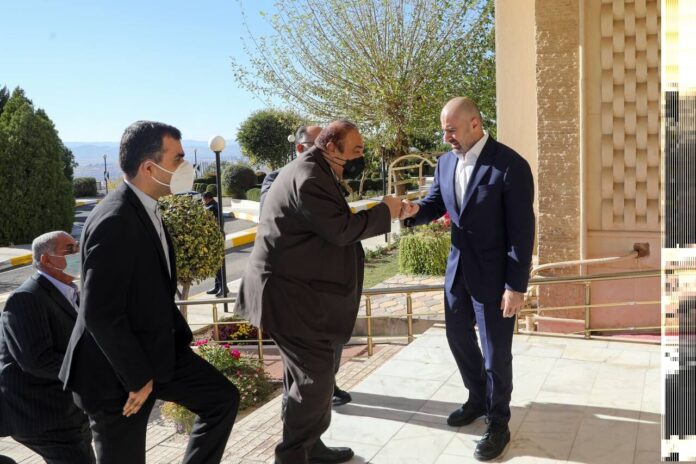
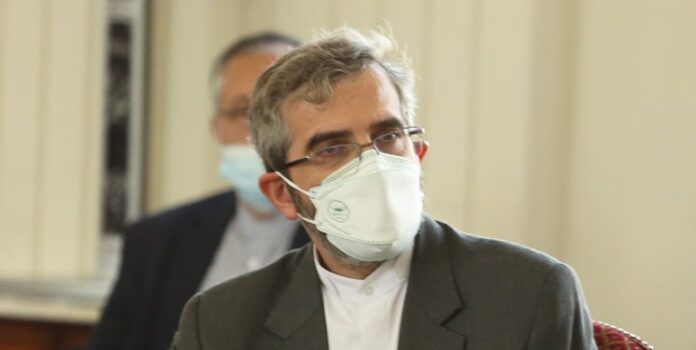
Iran deputy FM meets senior Russian diplomat in Moscow

The two sides discussed issues of mutual interests, calling for expansion of cooperation and finding ways to open new avenues in order to coordinate on different mutual, regional and international affairs.

The Iranian deputy foreign minister arrived in Moscow Thursday night.

Bagheri and his entourage are also scheduled to hold talks with another Russian counterpart Sergei Ryabkov, on new round of talks in Vienna, Austria, in a bid to pave the way for lifting cruel sanctions imposed by the United States on Iran.

Upon his arrival, the Iranian diplomat stated that in accordance with a recent agreement between Iran and the P4+1 group of countries (Britain, France, Russia, China plus Germany), Iranian representatives are scheduled to hold joint meetings with each of the four states; so, the first joint session will be held between Russia and Iran.

He stipulated that the new round of talks will be held merely with the aim of lifting illegal and cruel US sanctions.

The Iranian deputy FM further pointed out to supports made by Russia and China for result-oriented negotiations on revival of the 2015 nuclear deal.

The Iranian official in his first trip as deputy FM to Moscow noted that he would discuss other issues of mutual interests.

Over 85mn doses of Covid-19 vaccine administered in Iran so far

Iran has imported tens of millions of Covid-19 shots over the past months and has also stepped up its own production.

Iran has been hit by five waves of the disease and is now trying to avert another wave through an intensified vaccination program.

In its Friday announcement, the Health Ministry also reported 123 new fatalities from the respiratory disease and nearly ten thousand new infection cases.

Official figures show nearly 126,000 people in Iran have lost their lives to the virus so far. Many say the real number is higher.

Syria villages hit by Turkey’s heavy fire

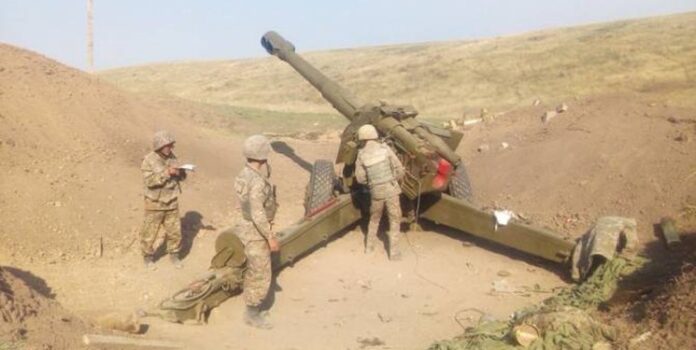
Heavy Turkish artillery shelling targeted the villages in the countryside of Aleppo. There were no immediate reports about possible casualties and the extent of damage caused, according to Al-Mayadeen.

The development came amid reports that the Turkish military is poised to launch two new military operations in northern Syria.

Informed sources, speaking on condition of anonymity, told RIA Novosti news agency that Turkish-backed militants are on high alert in northern Syria, and would involve themselves once troops start the onslaughts.

The sources described the Turkish military operations as preemptive, emphasizing they could begin at any time.

“An operation will be mounted in [Syria’s northern] Idlib province to support terrorist groups based there. Another operation will be launched in northeastern Syria against Kurdish militants,” the unnamed sources added.

The sources said the Turkish military operations would likely not begin before the forthcoming meeting between Turkey’s President Recep Tayyip Erdogan and his US counterpart Joe Biden in Glasgow, Scotland, during the COP26 climate summit.

Syria’s official SANA news agency, citing local sources, reported on Wednesday that two convoys of 100 trucks each, carrying battle tanks, artillery batteries and logistical supplies, had crossed into Syrian territories through Khirbet al-Joz crossing, and headed towards Jabal al-Zawiya area in Syria’s northwestern province of Idlib.

The report added that the convoys were meant to fortify the positions of Turkish military forces in northwest Syria, and help militants fighting Syrian government troops.

Idlib is the last major stronghold of foreign-backed terrorists, especially Hay’at Tahrir al-Sham (HTS) militant group, fighting against the legitimate government of Syrian President Bashar al-Assad.

Earlier, SANA reported that dozens of Turkish military trucks loaded with various ammunition and logistical supplies as well as armored personnel carriers entered Syrian territories on Tuesday.

Local sources said that the convoy later headed toward positions held by Turkish-backed militants in the city of Ras al-Ayn.

The sources noted that a large number of Turkish unmanned aerial vehicles flew overhead as military and logistical equipment were brought into Syria.

Turkey has deployed forces in Syria in violation of the Arab country’s territorial integrity.

Ankara-backed militants were deployed to northeastern Syria in October 2019 after Turkish military forces launched a cross-border invasion in a declared attempt to push fighters of the Kurdish People’s Protection Units (YPG) from border areas.

Ankara views the US-backed YPG as a terrorist organization tied to the homegrown Kurdistan Workers’ Party (PKK), which has been seeking an autonomous Kurdish region in Turkey since 1984.

Turkey has played a major role in supporting militants in Syria ever since a major foreign-backed insurgency overtook the country more than ten years ago.

Syrian President Bashar al-Assad and other senior officials have said the Damascus government will respond through all legitimate means available to the ongoing ground offensive by Turkish forces and allied militants in the northern part of the war-battered Arab country.

Iran’s Ambassador to the United Nations Majid Takht Ravanchi on Wednesday slammed the illegal presence of foreign forces in Syria, and demanded their immediate and unconditional withdrawal from the crisis-stricken country.

“Occupation of Syrian territories by foreign forces must end. All occupying and unwanted foreign forces must, therefore, leave the country without any preconditions or further delays,” he stated at a UN Security Council session on Syria.

UNGA committee approves Iran’s proposal on nuclear disarmament

The United Nations General Assembly (UNGA) First Committee has unanimously endorsed a biennial resolution proposed by Iran on follow-up of the implementation of commitments verified in 1995, 2000 and 2010 conferences on nuclear disarmament.

The resolution urges signatories to the Non-Proliferation Treaty (NPT) to speed up their efforts in line with carrying out their commitments under the previous agreements on destruction of nuclear weapons arsenals based on principles of transparency, irreversibility and under international supervision.

The United Nations General Assembly First Committee is one of six main committees at the General Assembly of the United Nations. It deals with disarmament and international security matters. The First Committee meets every year in October for a 4–5 week session, after the General Assembly General Debate.

According to the NPT, nuclear countries have pledged that they will refute manufacturing of nukes and transferring nuclear arms to other nations.

Iran’s proposal emphasizes that all member states of the United Nations are expected to support creation of a Middle East free from nuclear weapons, which entails the Zionist regime’s accession to the NPT and allowing supervision of the International Atomic Energy Agency (IAEA).
The proposal also stresses that non-nuclear states should be ensured that nuclear powers will never use nukes against them.

Iran’s representative in the session warned that new round of nuclear arms race is very alarming, calling for a halt for such attempts.

It is expected that the Iranian proposal would be submitted to the UNGA about one month later to be finalized.

Iran’s permanent Ambassador to the UN Majid Takht-Ravanchi has criticized the states and regimes who hold nuclear weapons while seek justifications for not abiding by their commitments.

Takht-Ravanchi made the comments after the UN Disarmament and International Security (First Committee) approved the resolution presented by Iran, according to IRIB.

“Unfortunately, nuclear weapons holders are unwilling to live up to their nuclear disarmament commitments and only try to justify that the the necessary ground is not ready for nuclear disarmament,” the Iranian UN envoy said.

He noted that their justification cannot be bought and added, “They committed themselves to nuclear disarmament in 1970, and this is not justifiable.”

IRGC chief: US escaped from Afghanistan with humiliation

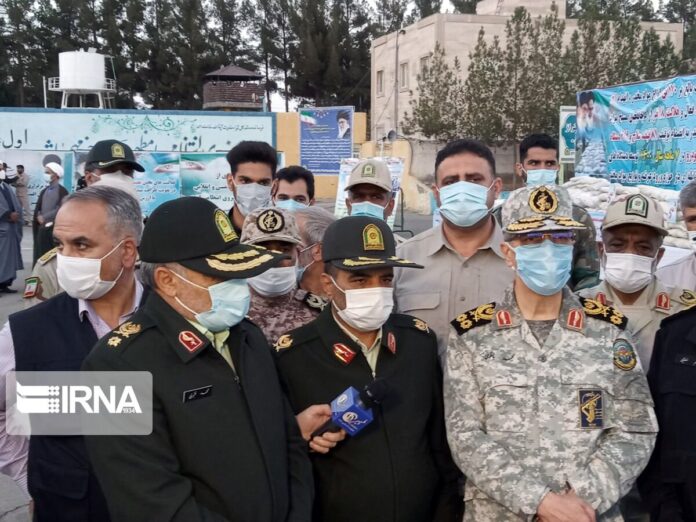
Major General Hossein Salami said on Thursday the United States is fleeing from the region due to resistance of regional nations and has no more room to operate in West Asia.

He stated, “In the political battle [with the West], Islam and Muslims have emerged victorious and this is a reality… A proof [to this reality] is the humiliating escape of the [American] enemy from Afghanistan.”

The IRGC chief commander added, “The [global] arrogance is fleeing the region as it has no more room to operate in the [West Asia] region, and the US has been marginalized more than ever before.”

Drawing attention to the formation of resistance movements in all parts of the Muslim world, including Syria, Iraq, Yemen, and Afghanistan, Salami argued that as a result of that, the enemy forces’ morale has plummeted and they have become frustrated.

The IRGC’s top commander noted that in today’s world, realities cannot be hidden anymore and every development is being reported to the entire globe in real time.

“The fact of the matter is that Islamic territories are not a safe place for the enemies and Islam does not allow Muslims” to let the region be a safe place for the enemies, General Salami continued.

The IRGC chief further stated that “we are in the final stages of the resistance and this juncture has always been difficult, but the Iranian nation is certainly about to score a great triumph.”

In similar remarks a day earlier, a former chief of the IRGC said the Americans “left Afghanistan in disgrace” twenty years after their invasion of the country, expressing hope that they will be soon expelled from Iraq and Syria as well.

Major General Yahya Rahim Safavi, who served as the IRGC chief commander from 1997 to 2007, lauded Iran’s military power, adding three major wars broke out near the country’s territory but it remained unaltered.

Also, “the Daesh project was defeated and the Islamic resistance front, led by [late founder of the Islamic Republic] Imam Khamenei emerged victorious,” stated Rahim Safavi, who currently serves as a top military adviser to Leader of the Islamic Revolution Ayatollah Seyyed Ali Khamenei.

He also mentioned the US assassination of Iran’s top anti-terror General Qassem Soleimani in Iraq in early 2020, saying Iran became the only country to dare target a major American base since the Second World War.

The general was making a reference to the IRGC’s targeting of Ain al-Asad in al Anbar Governorate, western Iraq, in an operation to avenge the assassination of General Soleimani.

“No one had dared do so since the Second World War,” he asserted, adding, “But our dear and powerful Leader has stood up to the United States and the Zionists.”

Official: Iran holds talks with Taliban

The Foreign Ministry’s Director General for West Asia Rasoul Mousavi said Iran always tried to prevent the Taliban’s takeover of Afghanistan in the past, but now it has no choice but to accept Afghanistan’s realities.

He added, “Whether we like it or not, the Taliban are now the rulers of Afghanistan”.
The Foreign Ministry official said the talks need to be made official.

Mousavi also said, in the secret negotiations, the Taliban recognized Iran’s right to the water of Hirmand River, the longest river in Afghanistan part of which is in Iran.

Iran has not yet officially recognized the Taliban as rulers of Afghanistan, saying its recognition is contingent upon their formation of a broad-based government made up of all Afghan ethnic and political groups.

Top Iran negotiator in Moscow: Nuclear talks to resume

Bagheri made the comments in Moscow where he’s going to talk with his Russian counterpart Sergei Ryabkov to explore ways of resuming the nuclear negotiations. Bagheri referred to his talks with the EU coordinator Enrique Mora in Tehran and Brussels, describing them as candid and constructive.

Bagheri added that during the meeting with Mora, he outlined Iran’s demands that must be met in Vienna. According to Bagheri, it was also agreed that Iran and each of the signatories to the nuclear deal will hold separate face to face meetings in Vienna to discuss ways of removing the oppressive sanctions.

Bagheri noted that what matters is the seriousness of the other side to lift the illegal sanctions.

Iran and the signatories to the nuclear deal have agreed to resume the Vienna talks before November’s end.

The nuclear deal plunged into chaos after the US withdrawal in 2018. Following its pullout, the US under former president Donald Trump reinstated sanctions on Iran. Tehran rolled back its commitments under the agreement in retaliation.

US President Joe Biden now says he intends to return to the nuclear deal. He has asked Iran to also return to full compliance with the agreement. But Iran says it will only do so after Washington removes the sanctions.

IAEA chief hopes to meet Iran’s president “soon”

The Director-General of the International Atomic Energy Agency (IAEA), Rafael Grossi, spoke about Iran’s recent decision to restart nuclear talks before the end of November in an interview with Euronews.

Negotiations to revive the Iran nuclear deal, officially called the Joint Comprehensive Plan of Action (JCPOA), have been taking place in Vienna with Germany, France, the United Kingdom, China, Russia and indirectly the United States. But the process reached an impasse after Raisi won the presidency in June.

Grossi, who, as IAEA chief, acts as guarantor of the whole agreement, said he hasn’t yet met President Raisi but hopes to do it soon to build a relation of “mutual trust and confidence”.

“Our relationship with Iran is a permanent one, it’s not predicated on the JCPOA or other things. It’s a permanent relationship based on their membership on the Treaty on the Non-Proliferation of Nuclear Weapons, which requires all countries in the world to have a system of inspections,” he continued.

“Of course, there are ups and downs as in any relationship, and we are always making every possible effort to keep it at a good level. And this has been my message all along,” the IAEA chief added.

The director called on Iran to allow the agency to replace the monitoring and surveillance equipment installed in the country’s nuclear sites.

IAEA inspections are an essential part of the 2015 deal and have become in recent years an important point of contention.

“I think diplomacy cannot fail. We have to make sure that every element is there and it is possible to have a sort of a modus vivendi,” he stated.

“Iran can continue with its nuclear programme within important limitations and giving, at the same time, all the necessary assurances to the international community that nothing is incorrect or not in the way it should be. And for that, you have the inspectors,” Grossi added.

Grossi has recently expressed hope to meet with Iran’s Foreign Minister Hossein Amir Abdollahian “soon”, describing it as “very important”.

The chief had stated he expects to visit Tehran before the end of next month for talks with Iranian officials over the country’s nuclear programme.

On Wednesday, Iran announced it will resume negotiations with world powers in November on reviving the nuclear deal.

Iran’s Deputy Foreign Minister Ali Bagheri Kani said he and coordinator of the nuclear deal’s joint commission Enrique Mora have agreed to the resumption of the Vienna talks before the end of November.

Bagheir made the announcement in a tweet following his talks with Mora in Brussels.

He stated he held serious and constructive negotiations with Mora over the vital components of the nuclear talks.

Bagheri added that the two sides agreed to resume negotiations before the end of November, noting the exact date of the talks will be announced next week.

The Vienna talks stalled before a new administration took office in Iran several months ago. The current Iranian government has repeatedly stressed it’s ready for talks but insists any dialogue must bear tangible results that would serve the interests of the Iranian people.

The Iran nuclear deal plunged into disarray after former US president Donald Trump pulled Washington out of the agreement in 2018.
Following his withdrawal, Trump reinstated harsh sanctions on Iran. In response, the Islamic Republic rolled back its obligations under the deal.

The US under President Joe Biden has announced multiple times it intends to return to the JCPOA.

It has called on Iran to return to full compliance with the deal. But Iran says the US must first show good-will by removing the anti-Tehran sanctions. Iran has also criticized the European troika for their inaction to resist the US’s unilateral sanctions on Iran.

China urges US to correct wrong policy on Iran

“The US should thoroughly correct its wrong policy of ‘maximum pressure’ on Iran, and Iran should resume full compliance on this basis,” Wang Wenbin, a Chinese Foreign Ministry spokesperson, said.

“Other parties should also create a favorable atmosphere for achieving the above goals,” he added.

Wang stressed that it is in the common interests of the international community to bring the deal, officially called the Joint Comprehensive Plan of Action (JCPOA), back on track as soon as possible and promote regional peace and stability.

He made the remarks a day after Iran’s new lead negotiator, Ali Baqeri-Kani, announced that the negotiations to revive the JCPOA will resume before the end of November.

There has been mounting pressure on Tehran to return to the negotiating table in recent weeks.

Back in April, Iran and the remaining parties to the landmark nuclear deal began negotiations to restore the deal. The talks were paused in late June, after Iran’s presidential election.

But according to Baqeri-Kani, the exact date of the next meeting would be announced in the course of the next week.

“China welcomes Iran’s announcement of its return to the Vienna negotiations before the end of November, appreciates Iran’s invitation for the IAEA chief’s visit, and supports both sides in resolving differences through dialogue,” Wang stated during his Thursday presser.

Noting the “important progress” made in the previous six rounds of negotiations, he said all parties should make renewed efforts to push for breakthroughs in the negotiations based on the principle of objectivity and justice.

“China will stay in close communication with relevant parties, take a constructive part in negotiations, firmly uphold the JCPOA and push for the political and diplomatic settlement of the Iranian nuclear issue,” the Chinese spokesman continued, adding, “At the same time, we will resolutely safeguard our legitimate rights and interests.”

The current complications surrounding the full implementation of the JCPOA by all sides began after the US unilaterally withdrew from the deal in May 2018 and reinstated the harsh economic sanctions on Iran that were lifted after the deal went into force in January 2016.

Following the US withdrawal, Tehran waited a whole year for the remaining parties to the deal, mainly the Europeans, —France, Britain, Germany—to secure its economic interests under the accord.

However, as the European trio failed to honor their commitments by safeguarding Iran’s economy from Washington’s so-called maximum pressure policy, the Islamic Republic began to exceed the limits set by the JCPOA on its nuclear work in May 2019, as part of its right under the deal.

On Wednesday, Baqeri-Kani told Press TV that Iran is dead set on its position of engaging in only “result-oriented” negotiations via the Vienna format.

“Result-oriented talks are acceptable for us; talks that will have practical outcomes; talks that will lead to the removal of cruel and illegal sanctions. But we do not accept talks for the sake of talks and reject them,” he stressed, following a long meeting with Enrique Mora, the European Union’s deputy foreign policy chief, in Brussels.

Biden to discuss Iran with E3 at G20

Sullivan told reporters aboard Air Force One en route to Rome that Biden will meet with the leaders of Germany, France, and Britain “to touch base on where things stand right now with respect to trying to resume negotiations for a return to the JCPOA”, referring to the Joint Comprehensive Plan of Action, commonly known as the Iran nuclear deal.

The discussion will be an opportunity to coordinate on a joint negotiating position and understand Iran’s progress on its nuclear program, he added.

Iran’s Deputy Foreign Minister and nuclear negotiator Ali Bagheri Kani stated on Wednesday that Tehran has agreed to resume negotiations over the nuclear deal before the end of November.

The United States and Iranian officials began indirect talks in Vienna this April to restore the 2015 nuclear agreement, but their disagreements remained significant after six rounds of negotiations, which have been interrupted due to Iran’s government transition.

To pressure Tehran, the Biden administration has recently reiterated the window for negotiations on a return to the JCPOA will not be open forever and warned of turning to other options if diplomacy fails.

The United States withdrew from the 2015 nuclear deal in May 2018 when Donald Trump was in office, and imposed sanctions on Iran. In response, Tehran has gradually stopped implementing parts of its commitments to the deal since May 2019.