Saturday, December 27, 2025
Home Blog Page 2312

EU not to recognize new Israel settlements

“Settlements are illegal under international law and constitute a major obstacle to the achievement of the two-state solution and a just, lasting and comprehensive peace between the parties,” according to a statement from the office of EU foreign policy chief Josep Borrell.

Stating the EU strongly rejects the expansion of settlements, the statement said the union will not recognize any changes to the pre-1967 borders, including those pertaining to Jerusalem, that are not agreed upon by the parties.

The statement urged the Israeli government to revoke the recent steps, which are totally incompatible with ongoing efforts to reduce tensions, and instead focus on furthering meaningful re-engagement between the conflicting parties.

“The EU will continue to play its part supporting steps towards sustainable peace between Israelis and Palestinians,” it added.

On Sunday, Palestinian Prime Minister Mohammad Shtayyeh called the plans “a blatant aggression on our lands.”

However, despite Shtayyeh’s condemnation, Israel’s Higher Planning Council approved the construction of 3,144 settlement units in the West Bank on Wednesday.

There were 13 illegal Jewish settlements in occupied East Jerusalem and 253 others in the West Bank. More than 660,000 Jewish settlers live in these settlements, making life even harder for Palestinians living under occupation.

Under international law, the West Bank, including East Jerusalem, is regarded as “occupied territory”, making all Jewish settlements there illegal.

Iran President Calls for Reopening of Schools, Universities in Late November

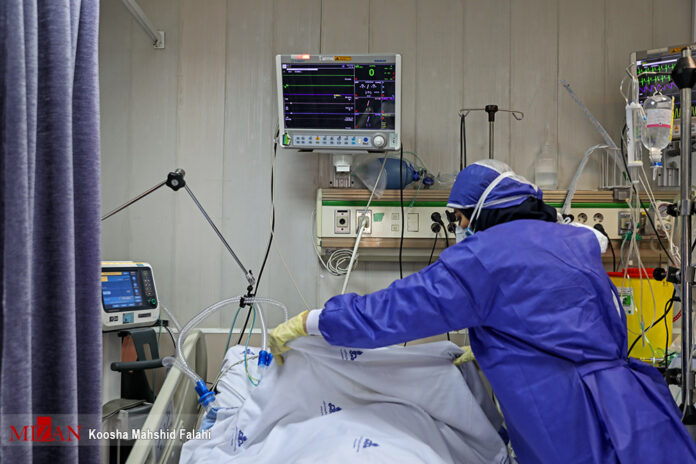
Ebrahim Raeisi also said the national drive to vaccinate school and university students against coronavirus should move full steam ahead.

“The health ministry, in cooperation with the Ministry of Science, Research and Technology and the Education Ministry, should make plans to reopen schools and universities on November 22 in accordance with directives,” said the president at a meeting of the National Coronavirus Task Force.

“Given that students over 12 years old as well as university students have been vaccinated, measures can be taken to reopen educational centers on November 22 while observing health protocols,” he noted.

The president also called on people to seriously abide by health protocols and avoid non-essential gatherings as well as whatever that may increase the risk of infection.

Migratory Siberian Crane Returns to Iranian Refuge for Winter


The rare bird had also spent the last cold season in the same refuge, but returned to Siberia in February 2021. Now, the crane has returned to the Iranian lagoons for the winter.

The crane called Omid (hope) used to flow all the way from Siberia to northern Iranian Mazandaran province over a distance of 5 thousand kilometers along with his mate, Arezoo (wish), every year.

After his mate died, Omid has kept coming to the Iranian wetlands for 14 years now. 

Siberian cranes migrate to these lagoons from their natural habitat in Siberia after flying across Russia, Kazakhstan and the Azerbaijan Republic before arriving in Iran.

They spend around four months in the two wetlands, which are a refuge for migratory birds.

Siberian cranes have a long lifetime, live in special habitats, reproduce only a few young and, more importantly, remain loyal to their mates. 

If they lose their mate, they will not mate again for their whole life. 

Given that the Siberian crane is regarded as an endangered species, the Department of the Environment of Mazandaran Province protects this rare bird with the assistance of natives and local communities.

EU calls Tehran-Brussels talks over JCPOA “useful”

Peter Stano said on Friday that the Wednesday meeting between Iran’s Deputy Foreign Minister Ali Baqeri and EU deputy foreign policy chief Enrique Mora in Brussels “helped to define a way forward to resume negotiations in Vienna.”

Speaking at a regular briefing, Stano added, “We are working together with other partners, including Iran and other signatories (to the 2015 nuclear deal) to fix a concrete date as early as possible to reconvene in Vienna.”

In a tweet following the talks with Mora, Baqeri stated Iran will rejoin the negotiations aimed at the removal of the United States’ sanctions against Tehran before the end of November.

“We agree to start negotiations before the end of November. Exact date would be announced in the course of the next week,” he tweeted.

Washington re-introduced the sanctions against Iran in 2018, after leaving the Joint Comprehensive Plan of Action (JCPOA), a historic nuclear agreement that had lifted the inhumane economic bans in return for some voluntary restrictions on Iran’s nuclear energy program.

Following a year of strategic patience, Iran resorted to its legal rights stipulated in Article 26 of the JCPOA, which grants a party the right to suspend its contractual commitments in case of non-compliance by other signatories, and let go of some of the restrictions imposed on its peaceful nuclear program.

Iran and the remaining parties to the JCPOA have held six rounds of talks in Austria’s capital, Vienna, since April, which began after the administration of US President Joe Biden voiced willingness to rejoin the agreement. The talks were, however, put on hold in the run-up to Iran’s presidential election in June so that the Islamic Republic could go through a period of government transition.

A source familiar with the top Iranian nuclear negotiator told Press TV on Wednesday that Iran has officially announced readiness for talks with the three European signatories to the JCPOA – France, Britain, and Germany – in Tehran or in the trio’s respective capitals, contrary to claims by certain US media.

Taliban renews call for release of Afghan assets abroad

“The money belongs to the Afghan nation. Just give us our own money,” Taliban finance ministry spokesman Ahmad Wali Haqmal told Reuters on Friday.

“Freezing this money is unethical and is against all international laws and values,” he added.

Haqmal said that Afghanistan would respect human rights, including the education of women, but within the framework of Islamic law, as he sought fresh funds on top of humanitarian aid that he said had offered only “small relief”.

A top central bank official has called on European countries, including Germany, to release their share of the reserves to avoid an economic collapse in Afghanistan that could trigger mass migration toward Europe.

“The situation is desperate and the amount of cash is dwindling,” Shah Mehrabi, a board member of the Afghan central bank said, warning, “Europe is going to be affected most severely if Afghanistan does not get access to this money.”

He added Afghanistan needed $150 million each month to “prevent imminent crisis”, noting that any transfer could be monitored by an auditor.

“If reserves remain frozen, Afghan importers will not be able to pay for their shipments, banks will start to collapse, food will be become scarce, grocery stores will be empty,” he stated.

According to Mehrabi, about $431 million of Afghan central bank reserves are held with German lender Commerzbank, and roughly $94 million with Germany’s Central Bank, the Bundesbank.

The Bank for International Settlements, an umbrella group for global central banks in Switzerland, holds a further approximately $660 million of Afghan reserves.

The Taliban are struggling to contain a deepening economic crisis. War-ravaged Afghanistan also needs urgent international action to support millions of people struggling with rising hunger and the collapse of services. The Taliban’s efforts to stabilize the situation have been undermined by international sanctions, as banks are running out of cash and civil servants are going unpaid.

The Taliban have already warned Western diplomats that insisting on sanctions as a means to pressure their governance could undermine security and trigger a wave of economic refugees.

Nearly $10 billion in Afghanistan’s national assets have been held by the US Federal Reserve since the Taliban laid siege to Kabul in August and overthrew a US-backed government. Deputy US Treasury Secretary Wally Adeyemo has ruled out any possibility of allowing the Taliban access to the reserves.

Under the previous government in Kabul, around 43 percent of the South Asian country’s GDP came from foreign aid, according to the World Bank. Ninety percent of the country’s population lives below the poverty line, with an income of less than $2 daily.

The Taliban took power in Afghanistan as the US was in the middle of a chaotic troop withdrawal from the country. The group announced the formation of a caretaker government in early September.

The Taliban previously ruled Afghanistan from 1996 to 2001, when the United States invaded the country on the pretext of fighting terrorism following the September 11 attacks in the US.

Iran negotiator: Tehran wants US sanctions lifted

Deputy Foreign Minister Ali Bagheri said in an interview with Russian channel RT on Friday the aim of the negotiations with P4+1 is to remove the US oppressive and illegal sanctions against Iranians.

“We have constructive relations with International Atomic Energy Agency (IAEA) and we are confident that this Agency will not allow any political abuse,” he continued.

“The Agency should not allow other countries to use it [IAEA] to achieve their biased goals,” he added.

“We expect the IAEA to condemn terrorist operations against Iran’s nuclear facilities,” Bagheri noted.

Bagheri considered cooperation with neighboring countries as one of the priorities of the Iranian government, announcing efforts are making to solve the existing problems in this field.

He also noted that during his visit to Moscow, he had a constructive talk with the Russian Deputy Foreign Minister and the two sides agreed on having periodic consultations.

Bagheri arrived in Moscow on Thursday evening to meet with senior Russian diplomats.

The Moscow visit came after the deputy FM held a meeting with the EU’s Enrique Mora in Brussels on how to remove US’ unlawful sanctions imposed on the Islamic Republic.

Iran has agreed to resume negotiations over the nuclear deal before the end of November, but the United States continues to put pressure on Tehran.

A source familiar with discussions about Iran nuclear deal has told CNN that US President Joe Biden will discuss potential options ‘of imposing higher costs on Iran’ during his G20 meetings with allies and that those costs could be imposed even as the Iran talks are underway.

Also on Friday, the US Treasury Department imposed sanctions on four Iranian individuals and two entities, for their involvement in promoting the Unmanned Aerial Vehicle (UAV) programs of Iran’s Islamic Revolution Guards Corps (IRGC).

Tehran has stressed the sanctions send the message that the Biden administration that talks of returning to the nuclear deal, is not trustworthy. Iran has announced the imposition of new sanctions on the Islamic Republic shows a contradictory behavior on the part of the White House. Foreign Minister Spokesman Saeed Khatibzadeh stated that a government that talks of returning to the nuclear deal but follows in the footsteps of former US president Donald Trump sends the message that it is not trustworthy.

‘US withholding information over Afghanistan collapse’

The inspector general charged with reviewing U.S. involvement in Afghanistan noted on Friday that he has faced recent pressure from the State Department to redact some of their reports while noting the Pentagon classified much of its work detailing the failings of the country’s own military forces.

Sopko referenced numerous attempts to “impede” his work, adding that “U.S. agencies have not made honest reporting easy for SIGAR.”

Sopko’s comments, published on SIGAR’s website, came at the Military Reporters & Editors Association annual conference, where the inspector general details multiple efforts by State to get SIGAR to redact information from its reports, including removing all mentions of former Afghan President Ashraf Ghani.

“Shortly after the fall of Kabul, the State Department wrote to me and other oversight agencies requesting to ‘temporarily suspend access’ to all ‘audit, inspection, and financial audit … reports’ on our website because the Department was afraid that information included in those reports could put Afghan allies at risk,” Sopko said.

“But despite repeated requests, State was never able to describe any specific threats to individuals that were supposedly contained in our reports, nor did State ever explain how removing our reports now could possibly protect anyone since many were years old and already extensively disseminated worldwide. Nevertheless, with great reservation, I acceded to State’s initial request because it was made at the height of the emergency evacuation from Afghanistan,” he added.

After Sopko complied, State returned with another request, this time passing along a spreadsheet listing some 2,400 items it wanted redacted — something SIGAR reviewed and “found all but four to be without merit.”

“Given how hard the Department reportedly was working to evacuate Americans from Afghanistan and resettle Afghan refugees, I was surprised they found the time to go through every one of our reports and compile such an exhaustive list,” he said.

“Upon reviewing their request, it quickly became clear to us that State had little, if any, criteria for determining whether the information actually endangered anyone,” he added.

Among the requests was a plea to remove the name of a USAID official who publicly testified before Congress in 2017 and whose testimony is still posted on the committee’s site. It also asked SIGAR to remove Ghani’s name from all of its reports.

“While I’m sure the former President may wish to be excised from the annals of history, I don’t believe he faces any threats simply from being referenced by SIGAR,” Sopko said.

Sopko’s speech also detailed past efforts from the Department of Defense (DOD) going back to 2015 to restrict information on the performance of the Afghan security forces, purportedly at the request of the Afghan government.

Sopko added that information would have been important to share with lawmakers and blunted widespread surprise over the rapid fall of the country’s security forces to the Taliban.

“In essence, [it was] nearly all the information you needed to know to determine whether the Afghan security forces were a real fighting force or a house of cards waiting to fall. In light of recent events, it is not surprising that the Afghan government, and likely some in DOD, wanted to keep that information under lock and key,” Sopko stated.

“This information almost certainly would have benefited Congress and the public in assessing whether progress was being made in Afghanistan and, more importantly, whether we should have ended our efforts there earlier. Yet SIGAR was forced to relegate this information into classified appendices,” he noted.

Sopko ended with a call to DOD declassify this information now that the U.S. has withdrawn.

“DOD should immediately make available to SIGAR and the public the information restricted at the request of the Ghani government, for the simple reason that there no longer is a Ghani government and the Afghan security forces have already completely collapsed,” he continued.

Neither the State Department nor DOD responded to request for comment.

The Wall Street Journal reported Thursday, citing classified materials it obtained four different US intelligence agencies offered nearly two dozen assessments of the situation in Afghanistan before the country surrendered to the Taliban, but none of them managed to predict the rapid fall of Kabul.

The agencies reportedly rolled out their “scattershot assessments of the staying power of the Afghan military and government” instead, estimating that the government would not likely survive after the US withdrawal and analysing advances of the Taliban in the country from spring 2020 to July 2021.

After Biden announced his decision to withdraw the US troops from Afghanistan, several intelligence reports followed. One of them was a report by the Central Intelligence Agency (CIA), titled “Government at Risk of Collapse Following U.S. Withdrawal” and focused on how the Ghani administration would fall by the end of the year should the American troops leave the country. Then the CIA produced a document titled “Afghanistan: Assessing Prospects for a Complete Taliban Takeover Within Two Years”.

Another intelligence report from the Defense Intelligence Agency, crafted in June, suggested that the militants would stick to their strategy of isolating rural areas from Kabul for another year.

The summaries cited by The WSJ also offered insights into some of the recommendations received by both former President Donald Trump and his successor Biden as they tried to figure out how to withdraw the US troops from Afghanistan safely.

The Biden administration has been widely criticised for the chaotic evacuation from Afghanistan – which not only led to chaos at the Kabul airport for several days but also claimed the lives of 13 US soldiers and over a dozen of Afghan civilians. However, officials from virtually every US agency and department seemingly can point the finger at someone else for the fiasco.

Joint Chiefs of Staff Chair Gen. Mark Milley noted there was “nothing that I or anyone else saw that indicated a collapse of this army and this government in 11 days”, suggesting that the intelligence community failed to get the timeline right.

CENTCOM Chief General Frank McKenzie asserted back in September that it was Trump’s decision to sign a peace agreement with the Taliban that turned out to be a key factor that prompted the swift fall of the Ghani administration.

Intelligence officials have also defended their work, with CIA Director William Burns arguing that his agency performed well enough even though it could not say “with mathematical precision” that “former President Ghani in Afghanistan is going to flee his office and not tell his senior-most aides on the 15th of August”.

Russia pleased ‘US shows seriousness’ to return to JCPOA

“We are glad that our US partners demonstrate their willingness and seriousness to return back to the JCPOA (Joint Comprehensive Plan of Action),” Permanent Representative to the United Nations Vassily Nebenzia said in a press briefing on Friday.

“We know that there has been an impasse for a while after the election in Iran… We are telling them that we have to sit down and finally… return to the deal. Let’s hope that it will happen soon,” he added.

The diplomat noted that the parties have encountered some issues during the discussions, and the director general of the International Atomic Energy Agency (IAEA), Rafael Grossi, has been personally involved in resolving them to allow the restart of the negotiations.

Nebenzia has also noted the US was the first to withdraw from the JCPOA. Whatever Iran did afterwards was a reaction. It is all reversible.

While Iran has agreed to resume negotiations over the nuclear deal before the end of November, the United States continues to put pressure on Tehran.

A source familiar with discussions about Iran nuclear deal has told CNN that US President Joe Biden will discuss potential options ‘of imposing higher costs on Iran’ during his G20 meetings with allies and that those costs could be imposed even as the Iran talks are underway.

Also on Friday, the US Treasury Department imposed sanctions on four Iranian individuals and two entities, for their involvement in promoting the Unmanned Aerial Vehicle (UAV) programs of Iran’s Islamic Revolution Guards Corps (IRGC).

Iran’s Foreign Ministry spokesman has condemned the US Treasury’s latest sanctions on real and legal Iranian persons, saying the sanctions send the message that the Biden administration that talks of returning to the nuclear deal, is not trustworthy.

Saeed Khatibzadeh said the imposition of new sanctions on the Islamic Republic shows a contradictory behavior on the part of the White House.

Khatibzadeh added that a government that talks of returning to the nuclear deal but follows in the footsteps of former US president Donald Trump sends the message that it is not trustworthy.

The Iranian Foreign Ministry spokesman stated various administrations in the US have proved the extent of their incapability to understand the realities of the Islamic Republic of Iran.

Khatibzadeh noted that such moves are a continuation of the Trump administration’s failed policy of maximum pressure and its illegal and oppressive sanctions.

He announced that the policy has failed to produce any results and it will not yield anything but new setbacks for the US.

Biden seeks ‘higher costs on Iran’ despite Tehran announcing talks resumption

US officials are highly skeptical that renewed talks over the Iran nuclear deal will yield the desired results and are actively discussing imposing penalties on Tehran as Biden prepares to meet with key allies on the margins of the G20 to chart a path forward.

Biden and his counterparts from the United Kingdom, Germany, and France will meet in Rome on Saturday just one day after the US imposed new sanctions on Iran related to its drone program and less than a week after Tehran announced it would return to the talks in Vienna following a months-long hiatus.

The fact the new hardline Iranian government has appointed a negotiating team led by opponents of the deal has only increased the sense of pessimism.

Sources in Washington tell CNN there is an ongoing debate within the Biden administration about how to proceed and how much to increase the pressure on Iran.

However, they say the US and its allies are now more willing to impose a higher cost on Iran for failing to come to an agreement if Tehran continues to take actions that are inconsistent with the 2015 nuclear deal.

The sources wouldn’t detail what those costs might be, but one person familiar with discussions tells CNN that Biden will discuss potential options during his G20 meetings with allies and that those costs could be imposed even as the Iran talks are underway.

National security adviser Jake Sullivan, briefing reporters en route to Rome, said that the meeting on the margins of the G20 is an opportunity to “closely coordinate” with the “E3” counterparts “on a joint negotiating position as we work towards a resumption of negotiations” as well as “level set on our understanding of Iran’s progress on the nuclear program since they left the JCPOA”, the Joint Comprehensive Plan of Action.

The G20 meeting was announced shortly after Tehran announced it would formally go back to nuclear talks in Vienna before the end of November, a return that would end a more than four-month long hiatus during which newly elected hardline President Ebrahim Raisi formed a government and then a new nuclear negotiating team.

Sullivan stated Thursday that it was “not entirely clear to (him) yet whether the Iranians are prepared to return the talks”, noting that “we have heard positive signals that they are but I think we have to wait and see when and whether they actually show up in the negotiating table.”

The public pronouncements from Iran “don’t give us a huge amount of optimism”, one US official familiar with the talks said, adding that so far, there’s little indication that the Iranian team is intent on being pragmatic and resolving the outstanding issues. While the US will go into the talks with a constructive spirit and see what they hear, this official said, they added that there is no reason to be optimistic right now.

The Biden administration’s skepticism about Iran’s announcement — in contrast to more positive comments as the talks under the last Iranian administration were underway — underscores just how wary it is about the renewed Vienna negotiations leading to a sustainable outcome.

A European diplomat said that Tehran’s willingness to restart talks is “not a solution, but it is a reasonably significant step forward”.

This diplomat and others had seen Iran’s delay in returning to the talks in Vienna as a stalling tactic while the country continued to develop its nuclear program. Now, there is broad discussion about “pushing up the pressure” on Iran, this diplomat said.

“At the moment, there’s no time pressure on the Iranians, there’s no time pressure on anyone,” the diplomat continued, adding, “We need to make it feel like this is a bit urgent, I think it’s the first step we need to do.”

Though critics say the Biden administration has been lax about enforcing sanctions on Iran, US officials insist that they have kept up the pressure of President Donald Trump’s “maximum pressure regime” and argue that if they made the unilateral move to ease sanctions, that could split their united front with allies and serve Iran’s interests to divide other parties to the talks.

In recent weeks US officials have met with partner countries in order to prepare for “a world where Iran doesn’t have constraints on its nuclear program”, US Special Envoy for Iran Rob Malley noted earlier this month ahead of meetings with Gulf and European partners.

Talks on the JCPOA — which the US abandoned under the Trump administration — were suspended in late June after six rounds between Iran, China, Germany, France, Russia, the United Kingdom and indirectly, the United States.

Analysts say that pressure from Russia may have contributed to Iran’s willingness to return to the Vienna talks, but doubts remain about China’s willingness to apply pressure on Iran alongside the other parties to the nuclear deal.

A US official told CNN that the US and China do not see eye-to-eye on reining in Iran’s behavior, adding that the tense US-China relationship is also making things harder.

China has continued to import Iranian oil which is a major source of revenue for country, and there is no clear strategy to pressure China to change course. Congress sees China as a critical piece of the puzzle and is growing frustrated that there does not appear to be more of a concerted effort to get them on board, congressional aides explained.

A State Department spokesperson responded to Iran’s announcement Wednesday, saying they’d seen reports about Iran’s willingness to return to talks and underscored that patience is running short.

On Friday, Iran and Russia stressed that new talks between Iran and the P4+1 group will only be successful if they lead to lifting of anti-Tehran sanctions.

During a meeting in Moscow on Friday, Iranian Deputy Foreign Minister and his Russian counterpart Sergei Ryabkov said successful talks should also ensure implementation of all the parties’ commitments under the Iran nuclear deal.

The two sides discussed mechanisms for lifting sanctions against the Islamic Republic.

Iran has agreed to resume negotiations with the P4+1 group in the coming weeks in the Austrian capital- Vienna- on a possible return of the United States to the 2015 nuclear deal.

Based on an agreement, Iran will hold bilateral talks with each of the P4+1 group members namely Russia, China, Britain, France and Germany to share views on the upcoming negotiations on lifting the sanctions against the Iranians.

The Iranian foreign minister said Iran, the Russian Federation and China have close views on regional and international issues especially the nuclear deal.

He added that it is necessary for the European members of the P4+1 to abide by their commitments and make an effort to lift illegal sanctions.

Ryabkov noted before his Friday talks with Bagheri that Moscow understands the Islamic Republic of Iran’s concerns and requirements for the resumption of talks in Vienna.

“I am sure we will agree on the timing of the resumption and the mechanism of the talks,” the deputy Russian foreign minister stated.

Bagheri visited Moscow after his talks with the top European Union diplomat, Enrique Mora, in Brussels on Wednesday.

Iran urges removal of Syria sanctions, end of Yemen siege

“It is a source of serious concern that in 2021, there are still over 6.8 million Syrians that remain internally displaced while 5.6 million Syrian refugees are also hosted in certain regional countries,” Ambassador and Deputy Permanent Representative of the Islamic Republic of Iran to the United Nations Zahra Ershadi said, addressing the Third Committee of the United Nations General Assembly.

“To that end, the full and immediate removal of unilateral sanctions as well as supporting the reconstruction of this country are essential,” she added.

The full text of Ershadi’s statement is as follows:

In the Name of God, the Compassionate, the Merciful.

Mr. Chair,

I would like to begin by acknowledging the activities of the United Nations High Commissioner for Refugees (UNHCR).

It is quite alarming that, according to the UNHCR report, the number of refugees and displaced persons is increasing.

It underscores that the efforts aimed at addressing the underlying causes of this trend must be redoubled.

It is also disappointing that despite the extraordinary generosity of particularly host countries, there is still a wide gap between the required funds and the needs such funding can address, which stresses the necessity for substantially increasing funds by donors.

Likewise, it is unfortunate that in the past two years, COVID-19 has also worsened the dire situation of refugees and the host countries.

To address this situation, there is a strong need to include the sharing of vaccines, especially with countries hosting large numbers of refugees, as has also been stressed by the High Commissioner during the 72nd session of the UNHCR Executive Committee on 8 October 2021.

It is a source of serious concern that in 2021, there are still over 6.8 million Syrians that remain internally displaced while 5.6 million Syrian refugees are also hosted in certain regional countries.

Recalling the conference on the return of refugees held in Damascus on 11 and 12 November 2020, we stress that every effort must be made to help them to return to their original places of residence.

To that end, the full and immediate removal of unilateral sanctions as well as supporting the reconstruction of this country are essential.

In this context, we warn about the political instrumentalization of the international protection of refugees by certain States.

Likewise, as reported by the UNHCR, Yemen remained the most acute humanitarian crisis globally with some 20.7 million people in need of humanitarian assistance, with displace persons to be four times more likely to be at risk of hunger.

To provide the conditions for an end to this tragedy and bring peaceful resolution to this crisis, the inhumane blockade imposed on this nation must be removed fully and immediately.

One of the major developments in 2021 in our region has been the sharp increase in the number of internally displaced persons and asylum-seekers following the withdrawal of foreign forces from Afghanistan and the subsequent developments.

As a result, as the UNHCR has reported, around 570,000 people became newly displaced within Afghanistan and an increasing number of individuals fled to neighboring countries.

For more than 40 years, the Islamic Republic of Iran has hosted one of the largest populations of refugees despite it being subjected to inhumane unilateral sanctions, particularly by the United States.

During all of these years, only five percent of the total funds needed to support refugees in Iran has been provided by the international community.

We have indeed generously shared our much-needed resources with refugees and supported them many times more than our fair share.

This fact has been acknowledged on numerous occasions time and again at the international level. In recent years, High Commissioner Grandi has affirmed in this very Committee that despite economic pressures, the Islamic Republic of Iran had continued to be an exemplary host country.”

Our experience tells us that when there is a flow of Afghan asylum seekers that might lead to Europe, Iran is urged to host them, and while some assistance is provided at the beginning, as soon as the dust settles, the host country is left alone almost completely.

Now that Iran’s economy has been and continues to be seriously affected as a result of the COVID-19 pandemic as well as unilateral sanctions, along with the developments in recent months wherein Iran has hosted more than 300,000 new Afghan asylum seekers, we cannot host the displaced populations any longer.

Obviously, the durable solution to the problem of Afghan refugees and the displaced population is nothing but to help bring peace, stability and prosperity to Afghanistan.

This in turn can only be realized through the establishment of a truly inclusive and representative Government that is committed to not only combating terrorism and organized crime but also guaranteeing and protecting, based on true Islamic teachings and principles, the human rights of all including ethnic, linguistic and religious minorities and women.

We urge the UNHCR to seriously facilitate the voluntary repatriation operations and resettlement of refugees in the third countries.

In this context, it is extremely disappointing that, according to the UNHCR report, the number of resettled refugees plummeted to its lowest level in almost two decades”.

Against this background, we also echo the call by the High Commissioner for the necessity of expanding “the number of countries and the number of places available for this life saving solution, which is an important contribution to burden and responsibility sharing”.

According to the latest report of the UNHCR, 86 percent of the worlds refugees are hosted by developing countries. Most of these refugees are in a few developing States like Iran.

In the absence of adequate international assistance and support, it is indeed unfair and unreasonable to expect these countries to single-handedly bear such a heavy burden.

This situation once again underlines the importance of the strict application of the principles of solidarity and equitable burden- and responsibility-sharing.

Recalling the serious negative impacts of unilateral coercive measures on the global response to the issue of refugees, we strongly call for the immediate removal of all such sanctions.

The Islamic Republic of Iran will continue to play its role in addressing the problems of refugees.

I thank you, Mr. Chair.