Tuesday, December 23, 2025
Home Blog Page 230

Imam Khomeini’s grandson: Iran has reached “patriot vs. traitor” divide

Ahmad Khomeini

In remarks shared on his Instagram account on Friday, Khomeini praised the national unity demonstrated during US-Israeli assaults last month, noting that even those less religiously observant came forward in defense of Iran.

“Every Iranian felt personally attacked,” he said, adding that the threat to the country’s territorial integrity mobilized a broad spectrum of society, including ethnic minorities, Sunnis, political dissidents, and Iranians abroad.

He recounted discussions with political figures such as Ali Larijani and Ali Akbar Nategh-Nouri regarding coordinated public responses, emphasizing that figures like Mohammad Khatami and Mehdi Karroubi had already issued strong statements of support.

Khomeini credited the Iranian military’s response for deterring adversaries and highlighted the enduring loyalty of Iran’s underprivileged classes, whom he said have consistently supported the establishment despite economic hardship.

He stressed the role of Iran’s Leader and called for a more inclusive approach in the country’s political, economic, and social structures to preserve national unity.

Ayatollah Khamenei: Iran will grow stronger than ever

Ayatollah Khamenei

Ayatollah Khamenei made the remarks in a message on the occasion of the fortieth day after the martyrdom of many Iranians in attacks by the Zionist regime against Iran, including military commanders and nuclear scientists.

Ayatollah Khamenei said, with divine grace, the Islamic Republic of Iran will grow stronger every day, stressing the importance of not forgetting this truth and the responsibilities that come with it.
Ayatollah Khamenei said preserving national unity is the duty of every citizen.

He added that speeding up scientific and technological progress in all sectors is the responsibility of the country’s academic and research elites.
The leader noted that maintaining the dignity and reputation of the Iranian nation is a serious obligation for all public speakers and writers.
He also said constantly equipping the country with tools to safeguard national security and independence is the responsibility of military commanders.
Ayatollah Khamenei added that it is the duty of all executive institutions to show seriousness, persistence, and efficiency in solving the country’s problems and completing unfinished tasks.

Ayatollah Khamenei also said keeping the revolutionary spirit and motivation alive is a duty that lies on everyone’s shoulders.

The Leader then paid tribute to the Iranian nation and all the martyrs, along with their grieving families.

Iranian deputy FM: Uranium enrichment inside Iran non-negotiable

Iran nuclear program

Takhte Ravanchi was speaking after the latest round of talks with the E3 and the EU in Istanbul on Friday.

“We clearly declared that enrichment must continue inside the country”.

He added that enrichment is a fundamental and legitimate right of Iran, and there is no compromise on this issue.

The Iranian delegation met with their European counterparts from the E3 group consisting of the UK, France and Germany to discuss nuclear negotiations.

Takhte Ravanchi noted that the talks took place against the backdrop of aggression by the Zionist regime and the US, which he condemned as violation of international law and the UN Charter.

“We criticized the silence and unbalanced reactions of some European governments regarding this aggression, which constitutes a blatant breach of international norms”, he said.

According to the Iranian deputy foreign minister, another point of contention discussed was the re-imposition of sanctions and the so-called snapback mechanism.

“US responsible for decades of assassinations against Iran”

Mohammad Javad Larijani

Larijani stressed that a retaliatory assassination of US President Donald Trump would have legal and moral justification.

Speaking at a memorial ceremony for Dr. Majid Tajan Tajari, a young Iranian AI scientist killed during the Zionist regime’s 12-day aggression against Iran, Larijani condemned the US and Israeli policy of targeting Iran’s elite.

He described these acts as part of a “Western civilization of scientist-killing”.

Larijani also defended the fatwas issued by over 400 Iranian clerics who sanctioned retaliatory actions against Trump, stressing that the US cannot expect impunity for extraterritorial killings while being immune to consequences.

Larijani further criticized the US for its consistent violation of commitments under international agreements, despite Iran’s full compliance.

He urged Iranian negotiators to enter any future talks with the US from a position of strength.

He warned against repeating past diplomatic mistakes, saying Iran’s future negotiations must not be based on blind trust, especially after years of “fabricated US terrorism”.

He honored fallen Iranian scientists and commanders, saying Western powers are seeking to prevent Iran from emerging as a global leader in science and technology.

Iranian, Saudi FMs discuss regional developments, Gaza crisis

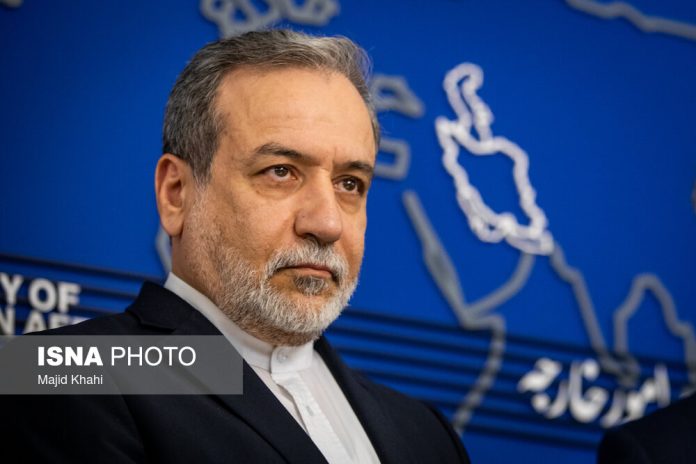
Araghchi condemned the escalating atrocities by the Israeli regime, particularly the blockade of food and medicine in Gaza, describing it as a form of genocide.

He stressed the urgency of using all available capacities including the Organization of Islamic Cooperation (OIC) and other international bodies to break the siege and deliver essential aid to the people of Gaza.

Araghchi also denounced the recent move by the Israeli Knesset to impose full control over the occupied West Bank, calling it a blatant display of Israel’s expansionist and law-breaking nature.

The top Iranian diplomat warned that this action, amid continued human rights violations and the assault on Gaza, reveals the Zionist regime’s ultimate intent to wipe out Palestine as a nation, land, and identity.

Meanwhile, Araghchi briefed his Saudi counterpart on the latest status of talks between Iran and the three European countries.

Both sides agreed on the urgent need for practical and immediate measures to stop the violence in Palestine and to support the people of Gaza.

They discussed the use of joint Islamic and Arab platforms to address the crisis in the besieged territory.

Iran–E3 Talks Conclude in Istanbul; Sides Agree to Continue Dialogue

Vienna Talks

Kazem Gharibabadi, speaking after the sixth round of negotiations between Iran and the three European countries — the UK, France, and Germany — held on Friday in Istanbul, provided details of the discussions.

He stated: “Majid Takht-Ravanchi, Deputy Foreign Minister for Political Affairs, and I had an extensive, frank, and serious exchange with the political directors of the three European countries and the European Union.”

The Deputy Foreign Minister added that the latest developments regarding sanctions relief and nuclear issues were thoroughly discussed.

He continued: “We strongly criticized their positions on the recent aggressive war launched by the United States and the Zionist regime against the Iranian people, and we explained our principled positions, including on the so-called snapback mechanism.”

He noted that both sides came to the meeting with specific ideas, and various aspects of these ideas were examined.

He said that it was agreed to continue consultations on the matter.

The sixth round of negotiations between Iran and the three European countries  along with the Deputy EU Foreign Policy Chief, was held at the level of deputy ministers and political directors.

Istanbul also hosted the fifth round of these negotiations on May 15, which was held at the deputy level as well.

Iran, E3 resume nuclear talks in Istanbul amid rising tensions

Nuclear Negotiations in Vienna

The first face-to-face meeting between Iran and the European parties to the Joint Comprehensive Plan of Action (JCPOA) comes nearly a month after the 12-day military conflict between Iran and Israel stopped with a ceasefire agreement.

The Iranian delegation is led by deputy foreign ministers Kazem Gharibabadi and Majid Takht-Ravanchi.

The meeting also includes the participation of a deputy from the EU’s foreign policy chief.

According to Iranian Foreign Ministry spokesman Esmail Baqaei, the agenda centers on sanctions relief and Iran’s peaceful nuclear program.

He emphasized that Tehran intends to firmly present its demands.

Baqaei criticized the European countries for their failure to condemn US-Israeli military aggression, calling their positions “unjustifiable” and inconsistent with their legal and ethical obligations under UN Security Council Resolution 2231.

“This is a session of accountability,” Baqaei stated, underlining Iran’s intent to seek clear answers and press for commitments related to sanctions and nuclear cooperation.

Iran’s Telecommunications Satellite Successfully Placed in Orbit

According to data received from the launch site, Nahid-2 successfully reached its designated orbit.

The satellite was launched at 9:24 AM (Iran time) from Russia’s Vostochny Cosmodrome.

Nahid-2, weighing approximately 110 kilograms, was designed and built by the Iranian Space Research Center under the commission of the Iranian Space Agency. It marks a significant step for Iran’s space industry in developing both Low Earth Orbit (LEO) satellite constellations and future high-altitude (GEO) telecommunications satellites.

The launch of Nahid-2 was part of a multi-satellite mission that also included Russia’s Universat-M3 and M4 satellites, as well as 18 other satellites from various countries, including Iran.

The presence of the Iranian Space Agency and Iranian Space Research Center logos on the Soyuz launch vehicle highlighted Iran’s official and active participation in this international mission.

The Soyuz launcher had previously carried other Iranian satellites—such as Khayyam, Pars 1, Kosar, and Hodhod—into space.

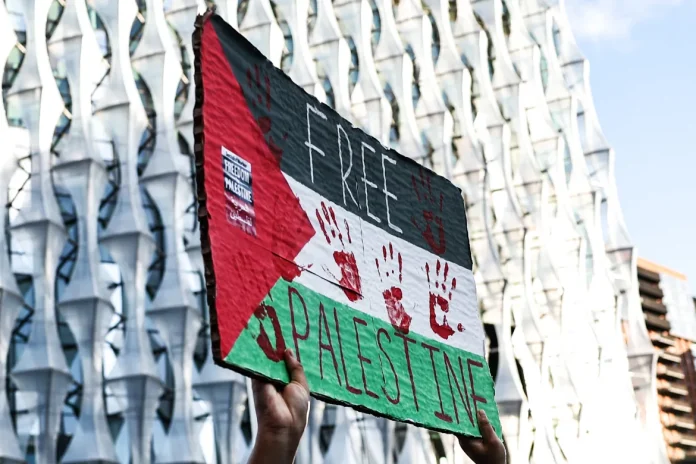
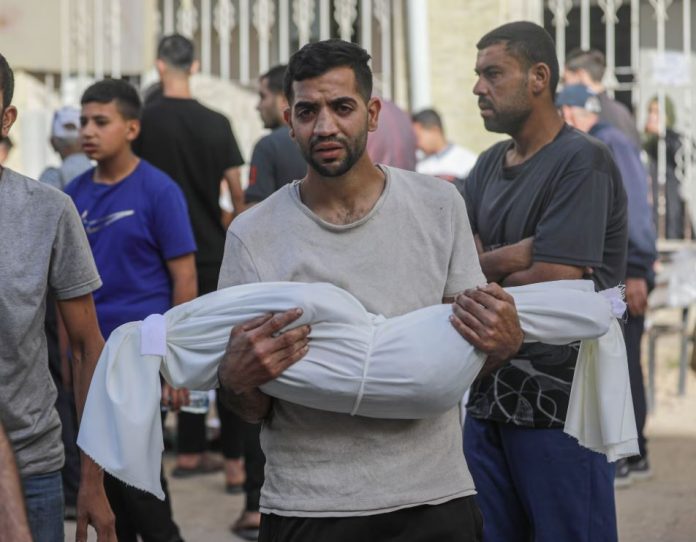
Almost a third of Gazans ‘not eating for days’: UN

Gaza War

The Rome-based World Food Programme had previously warned of a “critical risk of famine” in war-raged Gaza, over which international condemnation of Israel’s actions has been growing.

“Nearly one person in three is not eating for days. Malnutrition is surging with 90,000 women and children in urgent need of treatment,” a WFP statement said.

It added that 470,000 people are expected to face “catastrophic hunger” — the most critical category under the UN’s Integrated Food Security Phase classification — between May and September this year.

“Food aid is the only way for people to access any food as food prices are through the roof,” the WFP noted.

“People are dying from lack of humanitarian assistance.”

Aid groups have warned of surging numbers of malnourished children in Gaza, which Israel placed under an aid blockade in March amid its war with Hamas.

Iran urges Europe to reconsider stance on nuclear deal at Istanbul meeting

Esmael baghaei

Speaking to IRNA on Friday, Baqaei said the meeting is a test of Europe’s realism and a chance to correct previous “unconstructive approaches” that undermined Europe’s credibility in the nuclear negotiations.

He reiterated Iran’s objections to European support for military assaults by the US and Israel, saying these positions have turned Europe into justifiers of aggression and international law violations.
He warned that such stances would again be formally protested during the Istanbul talks.

Baqaei rejected any legal or moral basis for Europe’s repeated threats to trigger the JCPOA’s snapback mechanism, asserting that their continued violation of the deal disqualifies them from invoking its provisions.

He also emphasized that Iran’s nuclear steps were lawful countermeasures under the JCPOA following US withdrawal.

Baqaei criticized Europe’s “submission” to Israeli pressure and said any attempt to extend UN Security Council Resolution 2231 would be “baseless and unacceptable.”

He also noted an IAEA deputy director’s visit to Tehran is being planned for further technical discussions.