Wednesday, April 8, 2026
Home Blog Page 23

Trump could unveil Gaza ‘peace council’, ‘government’ soon: Report

Israel’s Channel 12 quoted senior White House officials as saying the US hopes to announce the establishment of a Palestinian technocratic government to run day-to-day affairs in Gaza in early January, a key provision of phase two of the plan to end the genocidal war.

The White House also plans to unveil a multinational peace council to oversee the technocratic government’s work and an international stabilisation force to handle security in Gaza next month, Channel 12 reported.

Trump could announce the peace council, which he has suggested he would head, as early as in the Davos Economic Forum on January 19, it added.

Meanwhile, the US envisions the start of staged disarmament of Hamas and other Palestinian armed groups, to be managed by the newly established technocratic government, according to a senior White House official quoted by Channel 12.

Hamas’s demilitarisation, part of the ceasefire framework adopted by the United Nations Security Council in November, has remained a key sticking point that the Palestinian group has not fully committed to. Earlier this month, senior Hamas figure Khaled Meshaal stated that the group would be open to a temporary “freeze” on its weapons but not full disarmament.

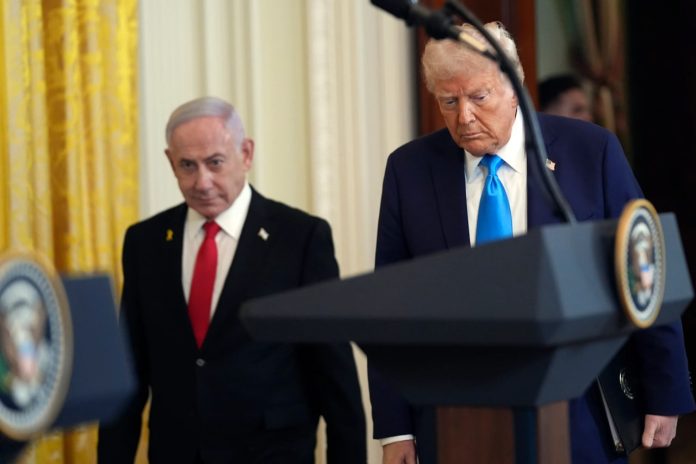
Trump’s envoy Steve Witkoff recently briefed Israeli officials on US plans to advance the ceasefire process, including the establishment of the new peace council, Israel’s Channel 13 quoted a senior Israeli official as saying.

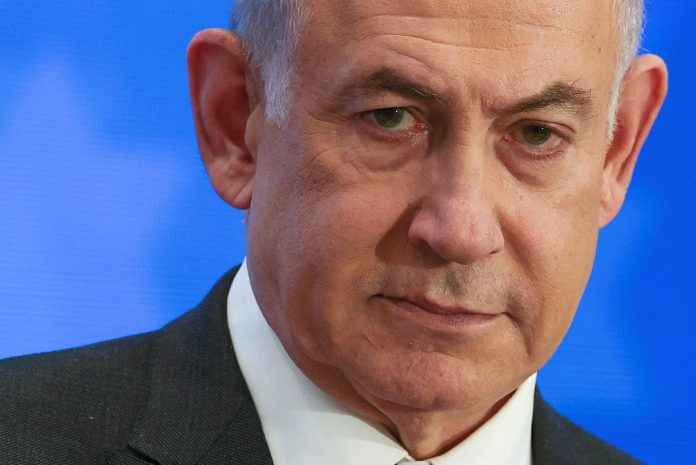
But Netanyahu, who expected to meet Trump on Monday, has resisted the plans, expressing particular scepticism about the proposal for Hamas’s disarmament, a separate informed source told Israel’s Channel 12.

The report follows repeated Israeli violations of the October ceasefire that have thrown its future into jeopardy.

During the 11-week truce, Israel has continued to attack Gaza on a near-daily basis, killing at least 406 Palestinians, including many civilians, according to the Palestinian Ministry of Health.

Israel has also blocked the full delivery of aid promised by the ceasefire, continuing to restrict essential and nutritious food items like meat, dairy, and vegetables.

The US has grown frustrated by what it perceives as Israel’s disregard for the truce and “delay” tactics that hamper Washington’s plans to advance the peace process, Israel’s Channel 12 reported.

“It’s felt for some time as if the Israelis are having second thoughts about the Gaza agreement,” an unnamed US official told the media, adding, “Implementation is already difficult, but sometimes the Israelis make it even harder.”
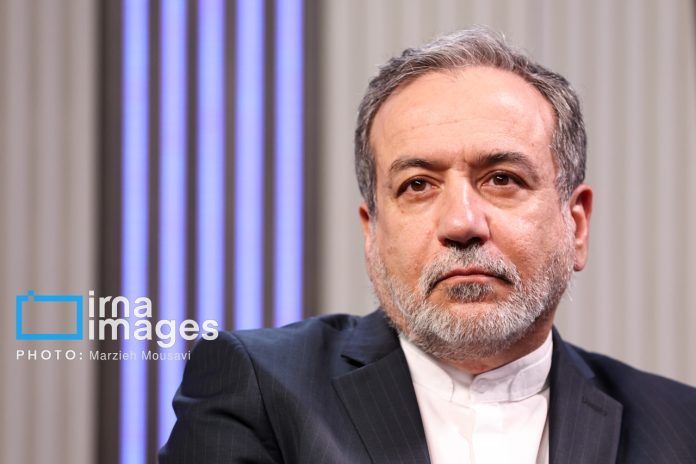

 

Iran says US pursuing ‘law of jungle’ over diplomacy

Abbas Araghchi

Araghchi made the statements while addressing a host of students and academics at Russia’s MGIMO University last week. His remarks have been released today by the Foreign Ministry.

In his address, the minister stressed that the international system is “unfortunately moving toward disorder”.

“After the establishment of the United Nations, countries tried to create an order based on international law and regulations, but what we are witnessing today, especially in the new policies of the US government, is a disregard for laws and a replacement with force and power,” Araghchi said.

Iran’s top diplomat added that US President Donald Trump’s foreign policy is based on “peace through force”, while humanity has been trying for years to achieve peace through diplomacy and law.

“Peace through force means that whoever has greater power imposes their will on others; this is ‘the law of jungle’,” he explained.

The Iranian minister further said that Washington is not only “intervening anywhere in the world, carrying out attacks, conducting assassinations and imposing sanctions”, but also giving its ally in West Asia, Israel, a green light to “act freely in violation of all international laws.”

“In recent years, Israel has attacked several regional countries, and tens of thousands of Palestinians in Gaza have been killed, with genocide ongoing, but, unfortunately, the US and some European countries have remained silent,” he said.

Araghchi also referred to the June attacks on Iran’s peaceful nuclear facilities, which are under the supervision of the International Atomic Energy Agency, as “one of the biggest violations of international law.”

“These are examples of the lawlessness in the international system that is pushing the world towards greater insecurity.”

Unlike the past, Araghchi said, the US is now explicitly acknowledging the use of force. He pointed out that “While we were negotiating, we were attacked, and then we were asked to engage in negotiations based on surrender. Even the President of the United States explicitly called for [Iran’s] ‘unconditional surrender.'”

However, he stressed that Iran’s resistance and response to the aggression managed to force Washington and Israel to “shift from demanding surrender to seeking an unconditional ceasefire.”

“We decided to resist and utilized our capabilities, including our defensive and missile capabilities. Our armed forces gave a decisive response. While it is said that the sky over Iran was within the enemy’s reach, it is not mentioned that the sky over the occupied territories was also within the range of Iranian missiles.”

“This experience shows that in the current international system, countries have no choice but to be powerful,” Araghchi emphasized.

Supported by the United States, Israel conducted an aggression on Iran on June 13, a few days before the sixth round of indirect nuclear talks between Tehran and Washington.

More than a week later, the United States also entered the war by bombing three Iranian nuclear sites in a grave violation of the United Nations Charter, international law, and the Non-Proliferation Treaty (NPT).

On June 24, Iran, through its successful retaliatory operations against both the Israeli regime and the US, managed to impose a halt to the illegal assault.


China sanctions many US firms over Taiwan arms sales

The United States has long been Taiwan’s biggest arms supplier despite China viewing the democratic island as part of its territory and refusing to rule out using force to bring it under control.

Taipei announced this month that Washington had approved $11 billion in defence sales in what would be one of the largest weapons packages for the island.

China criticised the deal and announced new sanctions on Friday against Boeing’s defence manufacturing outpost in St. Louis, aerospace giant Northrop Grumman and others.

The companies appear to have little or no business in China and some have been previously sanctioned by Beijing.

Chinese entities will be banned from working with the firms, and their assets in the country will be frozen.

The arms sales “violate the one-China principle… seriously damaging China’s sovereignty and territorial integrity”, Beijing’s foreign ministry said.

China also sanctioned 10 industry executives, banning them from entering the country, including Hong Kong and Macau.

African Union refutes ‘any recognition of Somaliland’ after Israel declaration

Benjamin Netanyahu

In a statement issued by its head, Mahamoud Ali Youssouf, the AU called for African borders to be respected and said: “Any attempt to undermine the unity, sovereignty, and territorial integrity of Somalia… risks setting a dangerous precedent with far-reaching implications for peace and stability across the continent.”

The chief of the pan-African body, which counts Somalia as a member, stated that he “firmly rejects any initiative or action aimed at recognizing Somaliland as an independent entity” and stating that Somaliland “remains an integral part of the Federal Republic of Somalia”.

Israeli Prime Minister Benjamin Netanyahu’s office has stated that he announced “the official recognition of the Republic of Somaliland as an independent and sovereign state”.

“The declaration is in the spirit of the Abraham Accords,” Netanyahu’s office said, referring to several agreements between Israel and Arab countries brokered by US President Donald Trump during his first presidency to normalise ties with Israel.

It added Netanyahu had invited Abdullahi to visit.


Minor earthquake shakes northeastern Tehran, renewing warnings over seismic risks

Earthquake Iran

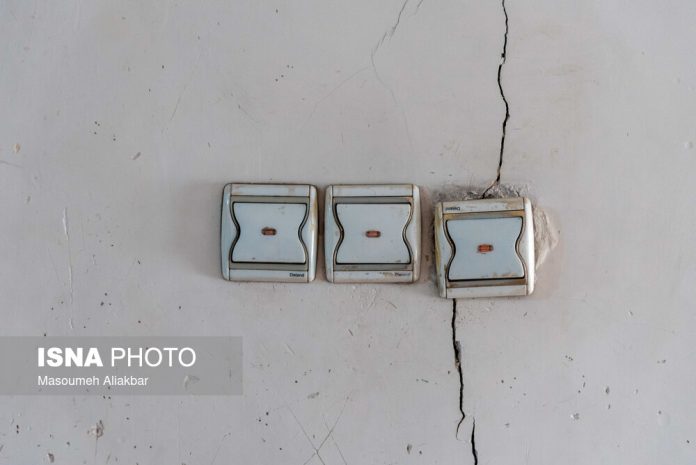
The tremor occurred at 9:52 a.m. local time, at a depth of about seven kilometers. Residents in Pardis and several districts in northeastern Tehran reported feeling the quake.

Tehran’s provincial emergency services said no injuries or damage have been reported so far.

“Our assessments indicate that this earthquake caused no casualties,” the spokesperson for Tehran Emergency Organization said.

Although the quake was relatively weak, it has once again highlighted concerns about Tehran’s vulnerability to major seismic events. Experts have long warned that Iran lies on several major seismic fault lines, and Tehran itself is surrounded by active faults, including the Mosha, North Tehran and Rey faults.

Seismologists and disaster management officials have repeatedly cautioned that a strong earthquake in the capital could have devastating consequences, given Tehran’s high population density, aging infrastructure in some areas, and limited preparedness in certain districts.

Iran’s Leader: Core dispute with west is opposition to global dominance, not nuclear issue

Ayatollah Khamenei

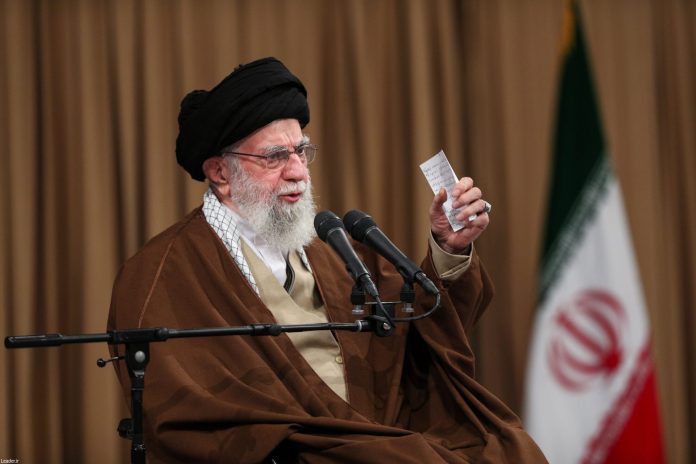
In a message to the 59th annual meeting of the Union of Islamic Student Associations in Europe, Ayatollah Khamenei said recent tensions stem from Iran’s challenge to “the domination and coercion of the prevailing global system” and its pursuit of just national and international Islamic order.

He referred to the defeat of a “heavy military assault” by the US and its regional allies on Iran, attributing their failure to the initiative, courage and sacrifices of Iranian youth.

According to the message, these developments enhanced Iran’s international standing and demonstrated the country’s ability to confront powerful adversaries through faith, unity and self-reliance.

Ayatollah Khamenei acknowledged the loss of scientists, military commanders and civilians, saying their deaths would not halt Iran’s progress and that the families of those killed remain at the forefront of the movement.

Addressing Iranian students abroad, he said they carry a significant responsibility in advancing these goals.

He urged them to rely on faith, recognize their capabilities and guide their associations toward supporting Iran’s broader vision.

He concluded by expressing confidence in eventual success.

Militant group claims responsibility for Syria mosque bombing

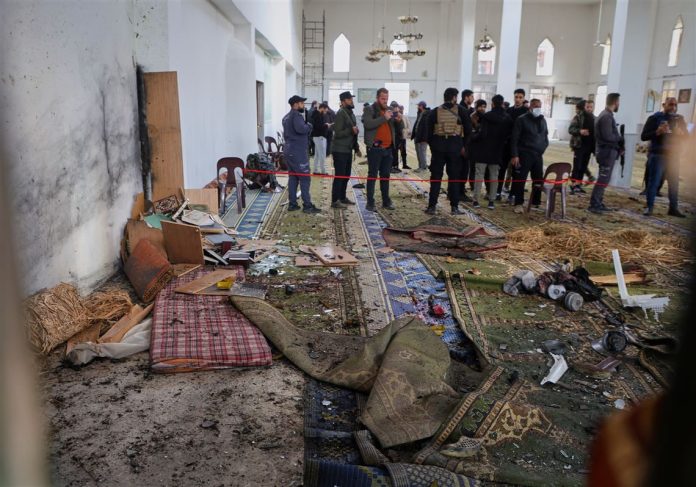
In a statement on Telegram, the Saraya Ansar al-Sunna announced its fighters “detonated a number of explosive devices” in the Imam Ali Bin Abi Talib Mosque, which is located in an Alawite area.

The group was formed after the ouster of ruler Bashar al-Assad, who is a member of the Alawite community.

The militant group had claimed responsibility for a Damascus church bombing in June.

Syria’s Foreign Ministry has called Friday’s deadly bombing of a Homs mosque a “desperate attempt” to destabilise the country, vowing to hold the perpetrators accountable.

In a statement, the ministry condemned “this cowardly criminal act”, which killed at least eight people, saying it came “in the context of repeated desperate attempts to undermine security and stability and spread chaos among the Syrian people”.

The ministry reiterated its “firm stance in combating terrorism in all its forms”, stressing that “such crimes will not deter the Syrian state from continuing its efforts to consolidate security, protect citizens, and hold those involved accountable”.


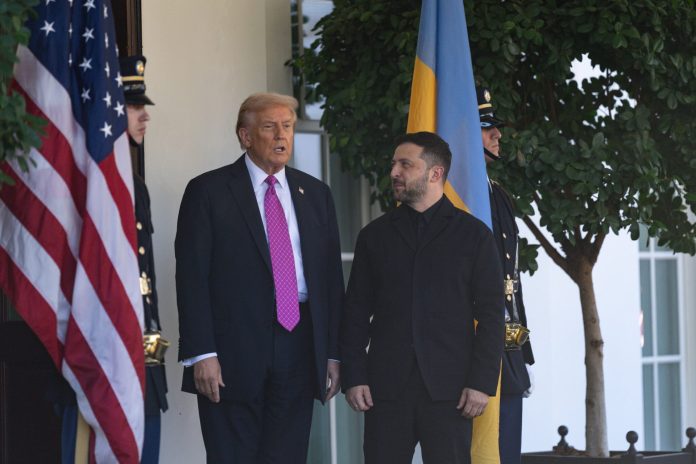
Zelensky to meet Trump over Russia war

The meeting to discuss new peace proposals comes amidst Trump’s intensified efforts to broker an agreement to end Europe’s worst conflict since World War II.

Tens of thousands have been killed, millions forced to flee their homes and much of eastern and southern Ukraine destroyed since Russia invaded in February 2022.

The latest plan is a 20-point proposal that would freeze the front line but open the door for Ukraine to pull back troops from the east, where demilitarised buffer zones could be created, according to details revealed by Zelensky this week.

It was the clearest the Ukrainian leader has been in acknowledging the possibility of territorial concessions. The plan was more acceptable to Kyiv than an initial 28-point proposal tabled by Washington last month that adhered to many of Russia’s core demands.

Moscow has yet to respond to the latest proposal, but has indicated it would not water down of its sweeping demands.

“Over the weekend, I think on Sunday, in Florida, we will have a meeting with President Trump,” Zelensky said in a message to journalists on Friday.

His office later announced that a meeting had been “planned” for Sunday in the southern US state where Trump has a home.

Part of the plan includes separate US-Ukraine bilateral agreements on security guarantees, reconstruction and the economy. Zelensky stated they were changing on a daily basis.

“We will discuss these documents, security guarantees,” he added.

“As for sensitive issues, we will discuss Donbas and the Zaporizhzhia nuclear power plant, and we will certainly discuss other issues.”

Zelensky said this week there was still disagreements between Kyiv and Washington over those two core issues.

Washington is pushing Ukraine to withdraw from the 20 percent of the eastern Donetsk region that it still controls — Russia’s main territorial demand.

It has also proposed joint US-Ukrainian-Russian control of the Zaporizhzhia, Europe’s largest nuclear plant that Russia seized during the invasion.

Zelensky stated that he could only give up more land if the Ukrainian people agree to it through a referendum, and does not want Russian participation in the nuclear plant.

Ukraine did appear to have won some concessions in the latest plan, which, according to Zelensky, removed a requirement for Kyiv to legally renounce its bid to join NATO as well as previous clauses on territory seized by Russia since 2014 being recognised as belonging to Moscow.

The Kremlin announced Friday that foreign policy aide Yuri Ushakov had held a telephone call with US officials to discuss the negotiations. It did not elaborate and has not indicated its position on the latest plan.

Moscow has shown little inclination to abandon its hardline territorial demands that Ukraine fully withdraw from the eastern region of Donbas and end efforts to join NATO.

It also wants a ban on Western countries deploying peacekeeping troops in Ukraine and sweeping political and military restrictions that Kyiv says are tantamount to capitulation.

Zelensky said Ukrainian negotiators were not directly in touch with Moscow, but that the United States acted as intermediary and was awaiting Russia’s response to the latest proposal.

“I think we will know their official response in the coming days,” Zelensky continued.

He expressed scepticism over whether Moscow genuinely wanted to halt its invasion. “Russia is always looking for reasons not to agree,” he added.


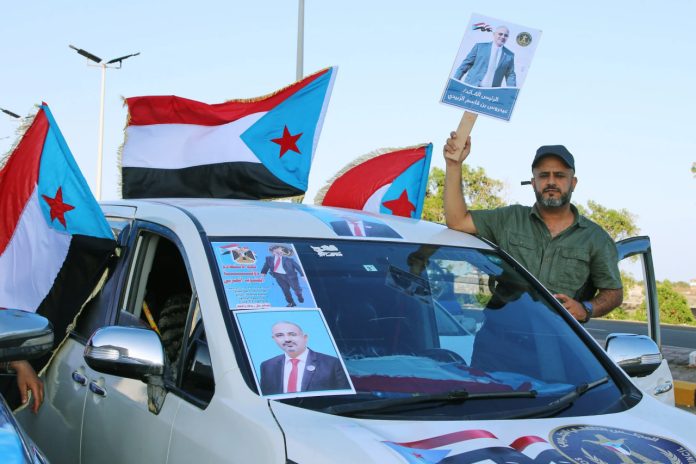
Yemen official says around 15,000 Saudi-backed fighters amass near border

All the areas where they were deployed are located at the edges of territory seized in recent weeks by the UAE-backed Southern Transitional Council separatist group.

“We have not received military instructions to move towards the two provinces,” the official stated, requesting anonymity to discuss sensitive matters.

Yemeni separatists have announced that they would not be deterred by strikes on their positions that they blamed on Saudi Arabia, but that they were nonetheless open to working with Riyadh.

“The Council affirms that such actions will not serve any path of understanding and will not deter the people of the South from continuing to move forward toward restoring their full rights,” the separatist Southern Transitional Council (STC) said.

Still, the group “affirms its openness to any coordination or arrangements based on guaranteeing the protection of the security, unity and integrity of the South and ensuring that security threats do not return, in a way that meets the aspirations and will of our Southern people and the common interests with our brothers in the kingdom,” they added, referring to Saudi Arabia.

Yemen’s internationally recognised government has called on a Saudi-led coalition to take military measures to support its forces in the country’s largest province Hadramawt, hours after strikes that Yemen separatists announced hit their positions there.

Yemeni news agency Saba reported after a national defence council meeting in Riyadh that the Yemeni government asked the coalition to “take all necessary military measures to protect innocent Yemeni civilians in Hadramawt province and support the armed forces” in imposing a de-escalation after separatists seized most of the province.

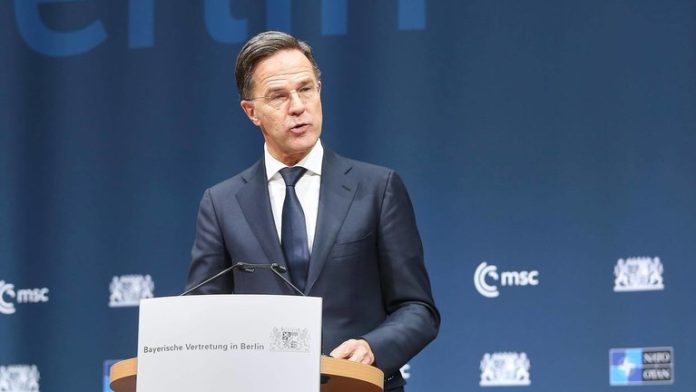
EU should not act as alternative to NATO: Chief

Rutte was responding to Manfred Weber, the head of the European People’s Party (EPP), the largest group in the European Parliament, who called for the EU to be turned into a “European NATO” in late November.

On Friday, he urged Brussels to “act confidently” and “write [its] own security strategy.”

“We must stop shaping our policy out of Washington papers,” the German politician said.

When asked if he shares the sentiment, the NATO chief warned that “there’s more than the EU” when it comes to NATO.

The EU members of the US-led bloc account for only around a quarter of its total economic output, he added.

Washington has “one big expectation” of its European NATO partners, which is “us spending more, Europe taking more responsibility,” Rutte maintained.

US President Donald Trump pushed NATO members towards committing to spend 5% of their GDP on their militaries annually by 2035 at a summit in The Hague in June. The move did not sit well with some members, including Slovakia and Spain. Madrid emerged as the biggest opponent of the increase, which it dismissed as “absolutely impossible,” prompting Trump to threaten it with tariffs over a failure to comply.

Brussels and Washington also appear to have different approaches to the Ukraine conflict. In November, Hungarian Prime Minister Viktor Orban warned that the EU was stalling US peace efforts and “plotting war.” Earlier the same month, the New York Times reported that Washington had cautioned Kiev’s European backers against dragging out the conflict, citing an increasing risk of escalation.

Moscow maintains that the hostilities are a NATO proxy war sparked by the bloc’s continued eastward expansion. Earlier this month, President Vladimir Putin told a Q&A that Russia has no desire to confront the bloc as long as its interests are respected.