Monday, December 22, 2025
Home Blog Page 2296

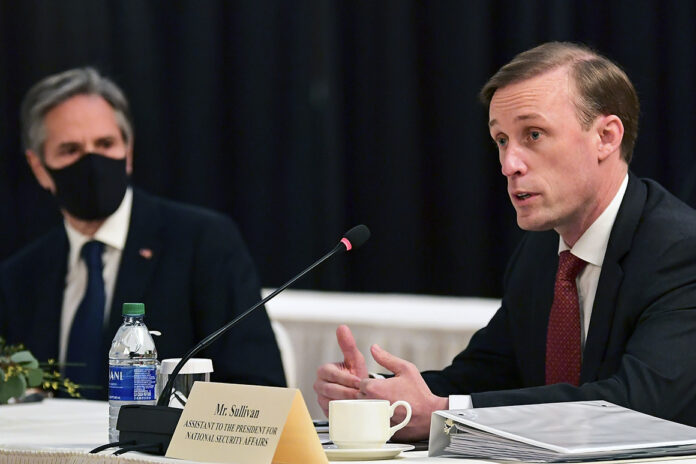
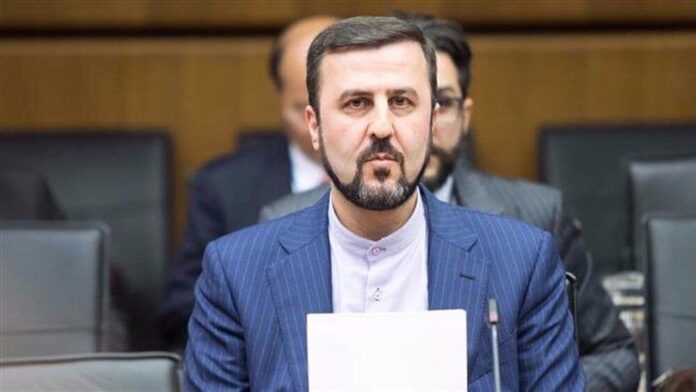
Talks on Iran nuclear deal to resume in Vienna on November 29: Tehran

“In a phone conversation with Mr. Enrique Mora (the EU representative in the Vienna talks), we agreed to resume the negotiations on November 29 aimed at lifting the illegal and inhumane [US] sanctions,” tweeted Ali Baqeri, Iran’s deputy foreign minister for political affairs, who is also Tehran’s top nuclear negotiator.

The two diplomats had already agreed to resume talks between Iran and the 4+1 group after November.

The US unilaterally withdrew from the JCPOA under former President Donald Trump in 2018 and re-imposed the sanctions as part of its policy of “maximum pressure” targeting the Islamic Republic. 

Its European allies in the agreement, namely the UK, France, and Germany, bowed down to the American pressure and started toeing the sanctions line as closely as possible.

The talks began earlier this year to examine the potential of the US’s return to the JCPOA, and the reversal of a set of nuclear countermeasures that Iran has been taking in reaction to the Western allies’ non-commitment to the deal.

The negotiations, however, halted in the run-up to Iran’s presidential elections in June.

US says possible to implement understanding on JCPOA compliance

Talks on reviving the 2015 landmark agreement will resume on Nov. 29, the country’s top nuclear negotiator noted on Wednesday.

“We agreed to start the negotiations aiming at removal of unlawful & inhumane sanctions on 29 November in Vienna,” Ali Bagheri wrote in a tweet later confirmed in United States and European Union (EU) statements.

Tehran and six powers started to discuss ways to salvage the nuclear pact in April. It has eroded since 2018, when then-US President Donald Trump withdrew from it and re-imposed sanctions on Iran, prompting Tehran to breach mandated limits on uranium enrichment the following year.

Negotiations have been on hold since the June election of hardline Iranian President Ebrahim Raisi, who is expected to take a tough approach when they resume in Vienna.

The six rounds of talks held so far have been indirect, with chiefly European diplomats shuttling between US and Iranian officials because Tehran refuses direct contact with Washington.

In Washington, US State Department spokesperson Ned Price said the United States hoped Tehran would return in good faith and ready to negotiate. Washington believed they should resume where they adjourned in June.

“We believe it remains possible to quickly reach and implement an understanding on a mutual return to compliance with the JCPOA by closing the relatively small number of issues that remained outstanding at the end of June,” Price told a news briefing.

“We believe that if the Iranians are serious, we can manage to do that in relatively short order. (However)… this window of opportunity will not be open forever, especially if Iran continues to take provocative nuclear steps.” he added.

Washington has also announced US Special Envoy for Iran Robert Malley will be heading the US delegation in Iran nuclear talks.

Named the JCPOA, the pact required Iran to take steps to restrict its nuclear program in return for relief from US, EU and United Nations (UN) economic sanctions.

Earlier on Wednesday, the secretary of Iran’s Supreme National Security Council suggested negotiations to revive the deal would fail unless US President Joe Biden could guarantee that Washington would not again abandon the pact.

Iran’s Foreign Minister Hossein Amir Abdollahian has recently stated that any talks over Iran’s nuclear program must lead to tangible results and the P4+1 group of countries should get ready for this.

Amir Abdollahian said Iran is not after talks just for the sake of talking.

The top Iranian diplomat reiterated any negotiations must produce tangible results based on mutual respect and interests.

The foreign minister added Iran is closely examining Biden’s behavior.

Tehran has announced it’s hypocritical of Washington to ask for talks with Tehran and impose new bans on the country. Iran has however noted that it will not give in to pressures over its nuclear energy program.

Analysts are raising the alarm over failure to revive the Iran nuclear deal, saying in that case there would be ‘no Plan B’ for Biden.

IRGC releases footage of blocking US oil seizure

Earlier reports said the United States Navy had stopped an Iranian vessel off the Sea of Oman and transferred its oil cargo to another tanker.

The released footage shows Iranian speedboats and naval forces being heliborne and landing on the deck of the oil tanker that was carrying seized Iranian oil to an unknown destination.

The US forces attempted to seize the tanker but the IRGC’s NAVY secured it.

Then US warships started chasing the tanker, using helicopters and warships, but all their attempts to block the tanker’s path or seize it failed.

The IRGC successfully steered the ship to Iran’s territorial waters and it later docked in Bandar Abbas port on October 25th.

Iranian officials including Oil Minister, Javad Owji, and Foreign Minister Hossein Amir Abdollahian have thanked the IRGC for securing the oil tanker.

The US has a long history of harassing Iranian ships in the Persian Gulf and the Sea of Oman.


Report: Halloween in Iran, cultural onslaught or a way to have fun

According to ILNA, the event has attracted the attention of certain segments of society in Iran for several years now. In the days leading up to October 31, we witnessed the buying and selling of accessories and decorations for this celebration.

This market starts with the idea of making costumes of cartoon characters, ways to decorate food with scary themes and making a carved pumpkin template online, and continues with the sale of clothes and decorative accessories, the preparation of cakes and special sweets in confectionary stores, the photography of this ceremony by studios and scary make-up or make-up similar to famous Hollywood figures in men’s and women’s hairdressing salons.

ILNA adds surprisingly, Halloween travel tours are also being promoted by several travel agencies these days.

But the remarkable thing is that despite all the online advertisement about the spread of this holiday in Iran, a limited number of physical stores and sales centers offer Halloween accessories and equipment.

In fact, what can be clearly seen regarding the preparations for Halloween in Iran are the online promotion of services by sellers and orders by customers, and finally the online publication of photos of this celebration which is currently specific to a certain segment of society, so that it may not yet be considered a covert cultural onslaught.

But the influx of such ceremonies into our culture is inevitable, and in the coming years, Halloween, like Valentine may spread as if they were part of our culture.

According to ILNA, It is perhaps possible to find healthy ways, which are in accordance with the traditions and religion of Iran, to inject happiness into society. It may be possible to raise awareness about cultural onslaught by increasing public vigilance, and perhaps by respecting past traditions, and finding new ways for the youth to burn their energy to replace rituals such as Halloween.

All vaccination centers in Iran giving Covid booster shot

So far, 53,310,456 people have received the first dose of Covid vaccine and 36,655,534 have been fully inoculated. Meanwhile, 102,866 people have received the booster shot, the third dose of Covid vaccine. Now all vaccination places are giving the third dose to citizens.

Despite the accelerating vaccination campaign, Covid is still killing people in Iran, though in lower numbers compared with the peak of the fifth wave of the pandemic.

The disease has killed 147 more Iranians over the past 24 hours. The fatalities push the number of those killed so far since the start of the Pandemic to 126,763.

The downward trend in Covid deaths, infections and hospitalizations has continued over the past couple of months thanks to the vaccination process.

Meanwhile the Mask application that monitors the state of Covid across Iran shows the number of cities marked red has risen from 22 to 29. Red is the highest level of risk from Covid. Mask also says 112 cities are orange, 221 yellow, and 86 blue, which are respectively the signs of decreasing risk, with blue showing a return to normal.

Iranian authorities have repeatedly warned citizens against relaxing health protocols as the situation is fragile with regard to the Covid pandemic.

US says to maintain military presence in ME

“I must stress that, against the background of a lot of misinformation in this regard recently, our partnerships in the field of security will remain,” Deputy Assistant Secretary of State for Middle East Affairs, Joe Hood, said during a conference on security in the Middle East.

He added, “Our permanent military presence in the region has been guaranteed for more than 70 years, and this basic reality will not change.”

Hood indicated that the United States is adapting to changing conditions and threats in the region, stressing that a not large number of American forces in the region are training partners.

The diplomat affirmed the commitment of the United States to guarantee freedom of trade and navigation with the aim of not allowing any disturbance in the American and global economy.

A report by The Wall Street Journal published in June cited a senior Pentagon official as saying that the US plans to maintain its military presence in the Middle East region.

The White House maintains American forces presence in the region under the pretext of preventing the re-emergence of Daesh in the country. Analysts, however, believe US forces’ true mission is to protect Washington’s interests in energy resources while safeguarding the Israeli regime’s expansionists policy in Palestine.

Brown University’s Costs of War Project has recently released a report saying that the total budgetary costs and future obligations of the US post-9/11 wars are “about $8 trillion in current dollars”, and adding that about 929,000 people had been killed in the US wars on terror.

Shamkhani: Powerless US president not ready to give guarantees

Ali Shamkhani

Ali Shamkahni said if there is no change in the status quo, it is obvious where the nuclear talks will be heading for. Shamkhani also drew parallels between what the Iranian nation is facing now and what it did during the imposed Iraqi war in the 1980s. 

Ali Shamkhani said during the war, former Iraqi dictator Saddam Hussein kept launching attacks against Iran and now sanctions against the nation are continuing.  

He added that during the war parts of Iran were occupied and now the Iranian economy has been taken hostage. Shamkhani also said during the war Iranian soldiers defended their country and now Iranian scientists are continuing the legal nuclear activities. 

The secretary of Iran’s Supreme National Security Council noted that there is no sign the aggressor has learned a lesson.

Hackers attack Israeli engineering companies

The group announced on Tuesday that it had struck Ehud Leviathan Engineering, David Engineers, and H.G.M. Engineering, without making any demands for money or anything else.

It also leaked data from the Israeli firms, including projects, maps, contracts, pictures, letters and video conferencing images.

Documents about infrastructure projects such as highways and public water systems, as well as a tender concerning construction at the entrance of al-Quds were also among the leaked information.

Moses Staff announced that the information it had exposed did not include everything that it had obtained, and that it would gradually release the rest.

Recently, Black Shadow group hackers broke into the servers of Israeli internet hosting company Cyberserve, bringing down a number of widely-used websites and warning the firm that it was in possession of data that could be leaked.

It further demanded a ransom payment of $1 million in digital currency to stop the leak.

Separately, Moses Staff stated it had access to confidential documents, including reports, operational maps, information about soldiers and units, and letters and correspondence.

In an earlier attack, it leaked photos of Israeli minister of military affairs Benny Gantz and army soldiers and a 2010 letter from Gantz to the deputy chief of the joint chiefs of staff and chief of intelligence in the Jordanian Armed Forces.

It also released Excel files containing the names, ID numbers, emails, addresses, phone numbers and even socioeconomic status of Israeli army soldiers, mechina pre-military students and individuals connected to the ministry of military affairs.

“We are going to publish this information to aware [sic] all the world about the Israeli authorities’ crimes,” the hacking group said on its Telegram channel.

“We’ve kept an eye on you for many years, at every moment and on each step. All your decisions and statements have been under our surveillance. Eventually, we will strike you while you never would have imagined,” it added.

According to Moses Staff’s website, the group has hacked over 165 servers and 254 websites and compiled over 11 terabytes of data, including Israel Post, the ministry of military affairs, files related to Gantz, the Electron Csillag company and Epsilor company.

The group also noted that it will not forget “the soldiers whose blood is shed due to wrong policies and fruitless wars, the mothers mourning for their children, and all the cruelty and injustice done to the people of this nation,” vowing to “keep fighting! To uncover your hidden crimes.”

Taliban bans foreign currencies in Afghanistan

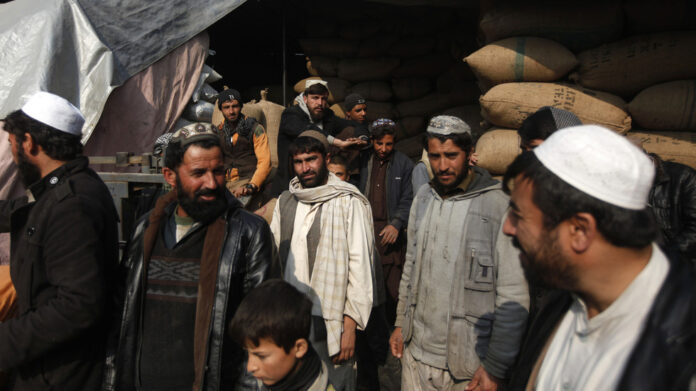
The Taliban has announced a complete ban on the use of foreign currency in Afghanistan, a move certain to cause further disruption to an economy pushed to the brink of collapse by the abrupt withdrawal of international support in the wake of the group’s takeover of the country.

“The Islamic Emirate instructs all citizens, shopkeepers, traders, businessmen and the general public to … conduct all transactions in Afghanis and strictly refrain from using foreign currency,” the Taliban said in a statement posted online by spokesperson Zabihullah Mujahid.

“Anyone violating this order will face legal action,” the statement added.

“The economic situation and national interests in the country require that all Afghans use Afghani currency in their every trade,” the statement read.

The use of US dollars is widespread in Afghanistan’s markets, while border areas use the currency of neighbouring countries such as Pakistan for trade.

The Taliban’s government is pressing for the release of billions of dollars of central bank reserves as the drought-stricken nation faces a cash crunch, mass starvation and a new migration crisis.

Afghanistan’s previous Western-backed government had parked billions of dollars in assets overseas with the United States Federal Reserve and other central banks in Europe.

But after the Taliban took over the country in August, the US, as well as the World Bank and the International Monetary Fund (IMF), decided to block Afghanistan’s access to more than $9.5bn in assets and loans.

The decision has had a devastating effect on Afghanistan’s healthcare and other sectors, all of which are struggling to continue operations amid cutbacks to international aid.

With a harsh winter fast approaching, Sulaiman Bin Shah, the former deputy minister of industry and commerce, told Al Jazeera late last month that the Afghan people “are paying a huge price because of the slow pace of diplomatic processes and negotiations”.

The World Food Programme has announced some 22.8 million people – more than half of Afghanistan’s 39 million population – were facing acute food insecurity and “marching to starvation”, compared with 14 million just two months ago.

The food crisis, exacerbated by climate change, was dire in Afghanistan even before the takeover by the Taliban.

Aid groups are urging countries, concerned about human rights under the Taliban, to engage with the new rulers to prevent a collapse they say could trigger a migration crisis similar to the 2015 exodus from Syria that shook Europe.

The departure of US-led forces and many international donors left the country without grants that financed three-quarters of public spending.

The finance ministry stated it had a daily tax take of roughly 400 million Afghanis ($4.4m).

Russia rejects report of Iran limitation on Caspian resources

Referring to recent claims made by Ardeshir Dadras, Head of Compressed Natural Gas (CNG) Association, Russian Embassy in Tehran announced that these statements are not true.

Making such statements was aimed at undermining the friendly relations between Russia and Iran, the embassy wrote on its Twitter account.

Earlier, the Head of CNG Association had stated that according to an Iran-Russia agreement, as long as Iran’s gas balance is positive and production is in the proportion to domestic consumption, Iran does not have the right to extract Caspian gas resources.

According to this agreement, Iran does not have the right to extract from 8 large gas wells in the Caspian Sea, which is in the waters of Iran, he had claimed.