Tuesday, December 23, 2025
Home Blog Page 2295

Vietnam says in talks with Iran over oil tanker

The tanker, blocked by Iran off the Sea of Oman, was carrying confiscated Iranian oil to an unknown destination.

“The Ministry of Foreign Affairs has held talks with the Iranian embassy in Hanoi, and the Vietnamese embassy in Iran has held talks with the Iranian authorities to verify information and settle the incident to ensure safety and humane treatment for Vietnamese citizens,” foreign ministry spokeswoman Pham Thu Hang said at a regular press briefing.

Hang added the captain of the Vietnamese tanker in a telephone call with the embassy on Oct 27 had confirmed all 26 crew had been treated well and were in good health.

On Wednesday, Tehran announced naval forces of the Islamic Revolution Guards Corps (IRGC) have thwarted an attempt by the United States Navy to confiscate a tanker carrying Iranian crude in the Sea of Oman.

The United States stopped the Iranian vessel and transferred its oil cargo to another tanker and was trying to take the vessel away when the Islamic Revolution Guards Corps Navy intervened.

The IRGC forces used a helicopter to board the tanker and led it towards Iranian territorial waters.
The naval forces of the United States used several helicopters and a frigate to chase the Iranian tanker but the IRGC blocked their way.

The American naval forces tried once again to block the path of the Iranian ship with several more vessels but failed.

The tanker is currently in the territorial waters of the Islamic Republic of Iran.

Tehran has also released footage showing IRGC navy force blocking US attempts to confiscate Iranian oil in the Sea of Oman.

American officials have claimed Iranian forces had actually seized a Vietnamese-flagged oil tanker, MV Southys, and US naval forces were just monitoring the situation.

Iran Not to Leave Negotiating Table: President Raeisi

“As we have said before, we will not leave the negotiations, but will stand up to excessive demands aimed at harming the interests of our nation,” said Ebrahim Raeisi on Thursday.

He said Tehran would like the kind of talks which would result in an outcome.

“We will never renounce the Iranian nation’s rightful demand, i.e., the lifting of cruel sanctions,” said the president.

“Iranian people have always denounced the United States’ interventionist and bullying moves in the region, namely its recent behavior, and have always been thankful for the tactful and strong responses by the brave forces safeguarding the country’s dignity and independence and ensuring the Iranian nation’s interests.

“We will not step back from the Iranian nation’s interests and will pursue the lifting and neutralization of sanctions,” he said.

NAM calls for unilateral sanctions lifted

She told before the Sixth Committee of the 76h Session of the United Nations General Assembly on Agenda item 84 that “while the Non-Aligned Movement continues to attach great importance to the work of the Special Committee on the Charter of the United Nations and on the Strengthening of the Role of the Organization, it can also play a key role in the current reform process of the United Nations, as mandated in Resolution 3499(XXX) of 15 December 1975.”

The full text of Ershadi’ statement is as follows:

Over the years, the Committee has worked diligently to produce various documents in the form of declarations and resolutions, such as the Manila Declaration. Negotiated and adopted by the Charter Committee in 1982, the Manila Declaration is only one of the many major achievements of the Committee. Such a body of work demonstrates the Committee’s strengths as an effective forum to clarify and promote general international law and charter provisions. The Special Committee has been also instrumental in the preparation of the Handbook on the Peaceful Settlement of Disputes, which needs to be updated in light of the new developments as well as the practices of Member States in this regard.

The Non-Aligned Movement is of the view that the United Nations is a central and indispensable forum dedicated to addressing issues relating to international cooperation, economic development and social progress, peace and security, human rights and the rule of law based on dialogue, cooperation and consensus-building among States. In this context, the Movement attaches great importance to the strengthening of the role of the United Nations and recognizes the efforts taken to develop its full potential.

The Non-Aligned Movement also reiterates its concern over the continuing encroachment by the Security Council on the functions and powers of the General Assembly and those of the Economic and Social Council through addressing issues which fall within the competence of the latter organs, and the attempts to enter areas of norm-setting and establishing definitions which fall within the purview of the General Assembly.

The Non-Aligned Movement reaffirms that the reform of the Organization should be carried out in accordance with the principles and procedures established by the Charter of the United Nations while preserving the legal framework of this constitutional instrument. For this purpose, the Special Committee on the Charter of the United Nations and on the Strengthening of the Role of the organization can contribute to the examination of the legal matters in this process.

Madame Chairperson,

The Charter Committee provides an opportunity for Member States to hear from the UN Secretariat regarding all aspects of the Introduction and implementation of sanctions imposed by the United Nations, in accordance with the guidelines contained in the Annex to General Assembly resolution 64/115 of 16 December 2009.

It is important to note that this document is the product of the Charter Committee and provides a comprehensive as well as balanced approach to the issue of UN sanctions. As such, we expect that the briefing by the Secretariat will preserve such a balanced approach. In particular, we are interested in hearing more about the perceived objective assessments of the short-term and long-term socio-economic and humanitarian consequences of sanctions by the Security Council’s Sanction Committees, including the methodology used for the assessment of the humanitarian implications of sanctions. We also expect the information on the humanitarian consequences of the introduction and implementation of sanctions to be presented, including those which that have a bearing on the basic living conditions of the civilian population of the target State, on its socio-economic development and on third States which have suffered or may suffer as a result of their implementation. We also call on the UN Secretariat to develop its capacity on the proper assessment of the unintended side effects of sanctions imposed by the Security Council.

We note that the capacity of the Secretariat has not been sufficiently developed in the past in order to adequately and fully assess the short-term as well as long-term socio-economic and humanitarian consequences of UN sanctions. In this regard, there is a dire need to enhance the expertise and capacity of the UN Secretariat in order to enable its ability to properly assess the unintended consequences of the UN sanctions on civilian populations.

The Security Council’s imposed sanctions still remain an issue of serious concern to the Member Countries of the Non-Aligned Movement. It is the Movement’s view that the imposition of sanctions should be considered as a last resort. Furthermore, targeted sanctions may be imposed only when there exists a threat to international peace and security or an act of aggression, in accordance with the Charter. They are not applicable as a preventive measure in any and all instances of violation of international law, norms or standards.

Sanctions are blunt instruments, the use of which raises fundamental ethical questions as to whether the suffering inflicted on vulnerable groups in the target country is a legitimate means of exerting political pressure. The objectives of sanctions are not to punish or otherwise exact retribution on the populace.

Sanctions regimes should avoid triggering unintended consequences in the target State or third States which may lead to violations of human rights and fundamental freedoms. They should also avoid hindering humanitarian assistance from reaching the civilian population.

In this regard, the objectives of sanctions regimes should be clearly defined based on tenable legal grounds, and their imposition should be for a specified timeframe. Lastly, such sanctions should be lifted as soon as the objectives are achieved. The conditions demanded of the State or party on which sanctions are imposed should also be distinctly outlined and be subject to monitoring its impacts and periodic review.

The Movement also expresses its deep concern regarding the imposition of laws and other forms of coercive economic measures against developing countries, including unilateral sanctions, which violate the Charter of the United Nations and undermine international law as well as the rules of the World Trade Organization. Furthermore, the Movement calls on countries that have imposed unilateral sanctions to put an end to such sanctions immediately.

Madame Chairperson,

The NAM fully supports all efforts aimed towards promoting the peaceful settlement of disputes based on provisions of international law and the Charter of the United Nations. In this regard, the annual thematic debates on the means for the settlement of disputes is an important initiative highlighted by the NAM to the Charter Committee. A constructive and informative debate was held this year on States’ practices regarding the use of arbitration under the agenda item on peaceful settlement of disputes. Building upon the information presented within the debate, we are looking forward to discussing other means as well in order to work towards better understanding and progress. The Movement maintains that these annual thematic debates on means of dispute settlement can contribute to more efficient and effective use of such peaceful means while promoting a culture of peace among Member States. Moreover, when the Committee exhausts discussions on all means of dispute settlement reflected in article 33 of the UN Charter, the input and materials collected by this process can provide a valuable basis for further consideration by the Committee with an aim towards achieving concrete and result-oriented outcomes.

Madame Chairperson,

With respect to the proposals under the agenda items related to the maintenance of peace and security as well as peaceful settlement of disputes, the Movement expresses its concern over the reluctance of some Member States in engaging meaningful discussion. The NAM reiterates the need for genuine political will in order to advance the long-standing issues included in the agenda of the Committee and invites Member States to fully utilize the capacity of the Special Committee by bringing new and practical proposals to the Committee.

The Movement is of the view that the Committee should redouble its efforts, inter alia, to examine suggestions and proposals regarding the Charter and the strengthening of the role of the UN. Moreover, we are ready to engage in discussion with other groups to arrange a work programme for the Charter Committee to facilitate any discussion in the future with the aim of enhancing the ability of the UN to achieve its purposes.

The Movement takes note of the progress made by the Secretariat since the last report in updating the Repertory of Practice of United Nations Organs and the Repertoire of the Practice of the Security Council. However, the Movement notes with concern that the backlog in the preparation of volume III of the repertory is not eliminated. In light of this issue, the Movement calls upon the Secretary-General to effectively address this matter on a priority basis. Finally, we express our satisfaction with the availability of studies on the internet and regular updating of the website of the Repertory and repertoire by the Codification Division.

Turkey probes Twitter posts over ‘Erdogan death’

Erdogan

Turkish police initiated legal action against several people over a series of Twitter posts suggesting that Erdogan had died. It comes after a viral video of the president seen shuffling and having difficulty walking circled the web.

The 30 suspects are under investigation, accused of allegedly sharing “disinformation and manipulative content” and insulting Erdogan for sharing posts on Twitter using the hashtag “olmus”, which translates to “is said to be dead”, according to a police statement Wednesday obtained by Bloomberg.

The “olmus” hashtag was briefly trending on Turkish Twitter, with one user tweeting, “Turkish news networks, if someone bites in the street, they will report immediately until nightfall… In the last 24 hours, Erdogan’s death has been deafening on social media. All news networks sleep. They do not confirm or deny. They do not say anything,” referring to the speculation of the death of the Turkish president.

In recent months evidence is growing that Turkey’s president is ailing after a series of videos have surfaced in which the Turkish leader has not looked well.

In recent footage shot Friday at the 98th-anniversary commemoration of the founding of the Turkish Republic, Erdogan is seen walking and looking unstable on his feet, which raised more obvious concerns that ignited the conspiracy of an alleged death.

His office, however, denied any health issues and launched legal proceedings against the individuals that spread the alleged rumors.

Fahrettin Altun, Communications Director of the Republic of Turkey, posted a video on Twitter Wednesday of Erdogan walking more robustly after a plane journey from Istanbul to Ankara, with the caption, “Trust the friend, fear the enemy.”

Erdogan made a statement to the press on Wednesday, after receiving the Ambassador of Ukraine Vasyl Bodnar at the Presidential Complex. He followed that with a tweet posted on his Twitter account reading, “As we have done since November 3, 2002, #MilleteHizmetYolunda We will continue to work non-stop and walk the path with our Nation”. The hashtag translates to “on the way of service to the nation.”

China seeks revival of JCPOA jointly with Russia

China and Russia are ready to continue strategic interaction and will jointly promote the political settlement of the Iranian nuclear problem, according to the commentary on a telephone conversation between the two countries’ deputy foreign ministers, Ma Zhaoxu and Sergey Ryabkov, which took place on Wednesday.

It specified that the Chinese and Russian diplomats during the conversation reached a consensus on a wide range of issues. It emphasizes that the return to the JCPOA must be carried out taking into account the interests of each of the parties concerned, on the basis of mutual respect.

Russian Foreign Minister Sergey Lavrov stated earlier during the G20 summit, Moscow fully supports the return to the JCPOA in its original form.

The document was signed with Tehran in 2015 by five permanent representatives of the UN Security Council and Germany. Former US President Donald Trump decided to break the deal in 2018, but current US leader Joe Biden has repeatedly expressed his readiness to restore it. The five plus one group (Russia, UK, Germany, China, US, and France) has been holding talks in Vienna on this issue since April. The start of the next round is scheduled for November 29.

Pentagon review finds no misconduct in Kabul strike that killed civilians

The review, done by Air Force Lt. Gen. Sami Said, found there were some breakdowns in communications and in the process of identifying and confirming the target of the bombing, according to a senior defense official familiar with the report.

But, Said concluded that the mistaken strike happened despite prudent measures to prevent civilian deaths, said the official, who spoke on condition of anonymity to discuss a report not yet released.

Said’s review said the drone strike must be considered in the context of the moment, as US forces under stress were being flooded by information about threats to troops and civilians at the Kabul airport, just days after a deadly suicide bombing. Thousands of Afghans were swarming the airport, trying to get out of the country following the Taliban takeover.

According to the official, Said found that better communication between those making the strike decision and other support personnel might have raised more doubts about the bombing, but in the end may not have prevented it.

Said was asked to investigate the Aug. 29 drone strike on a white Toyota Corolla sedan, which killed Zemerai Ahmadi and nine family members, including seven children. Ahmadi, 37, was a longtime employee of an American humanitarian organization.

The intelligence about the car and its potential threat came just days after an Islamic State suicide bomber killed 13 US troops and dozens of Afghans at a Kabul airport gate. The US was working to evacuate thousands of Americans, Afghans and other allies in the wake of the collapse of the country’s government.

Said concluded that US forces genuinely believed that the car they were following was an imminent threat and that they needed to strike it before it got closer to the airport.

The report, which has been endorsed by Defense Secretary Lloyd Austin, made several recommendations that have been passed on to commanders at US Central Command and US Special Operations Command. The official stated the review recommends that more be done to prevent what military officials call “confirmation bias” — the idea that troops making the strike decision were too quick to conclude that what they were seeing aligned with the intelligence and confirmed their conclusion to bomb what turned out to be the wrong car.

The review recommends that the military have personnel present with a strike team whose job it is to actively question such conclusions. The report adds using a so-called “red-team” in such self-defense strikes that are being done quickly might help avoid errors.

Said also recommended that the military improve its procedures to ensure that children and other innocent civilians are not present before launching a time-sensitive strike.

For days after the strike, Pentagon officials asserted that it had been conducted correctly, despite mounting reports that multiple civilians and children had died and growing doubts that the car contained explosives. Said’s review concluded that officials made their initial assessments too quickly and did not do enough analysis.

While Said’s report does not find individual fault or recommend discipline, officials said commanders may decide to take administrative actions once they review his report.

The US is working to pay financial reparations to the family, and potentially get them out of Afghanistan, but nothing has been finalized.

A second defense official noted Austin has asked that Gen. Frank McKenzie, head of US Central Command, and Gen. Richard Clarke, head of US Special Operations Command, come back to him with recommendations for changes to address the gaps.

Said’s review mirrors many of the findings outlined by McKenzie several weeks after the investigation.
The Central Command review found that US forces tracked the car for about eight hours and launched the strike in an “earnest belief” — based on a standard of “reasonable certainty” — that it posed an imminent threat to American troops at Kabul airport. The car was believed to have been carrying explosives in its trunk.

The air raid was the last in a US war that ended just days later, as the final American troops flew out of Kabul airport, leaving the Taliban in power.

Russia: US maximum pressure led to Iran nuclear advancement

“Any new US administration needs to learn from the strategic mistakes of the past. Isn’t it clear that the maximum pressure resulted in an enormous advancement of the Iranian nuclear programme? Is there any irresponsible politician in the US to repeat this catastrophic exercise?” Mikhail Ulyanov, Russia’s ambassador at the United Nations International Atomic Energy Agency in Vienna, wrote on Twitter on Thursday.

China has recently announced, the United States as the culprit of the current Iranian nuclear crisis, should thoroughly rectify its erroneous policy of maximum pressure on Tehran.

On Wednesday, a senior Iranian diplomat said negotiations are slated to resume in Vienna on November 29, on the revival of the 2015 Iran nuclear deal known as the Joint Comprehensive Plan of Action (JCPOA).

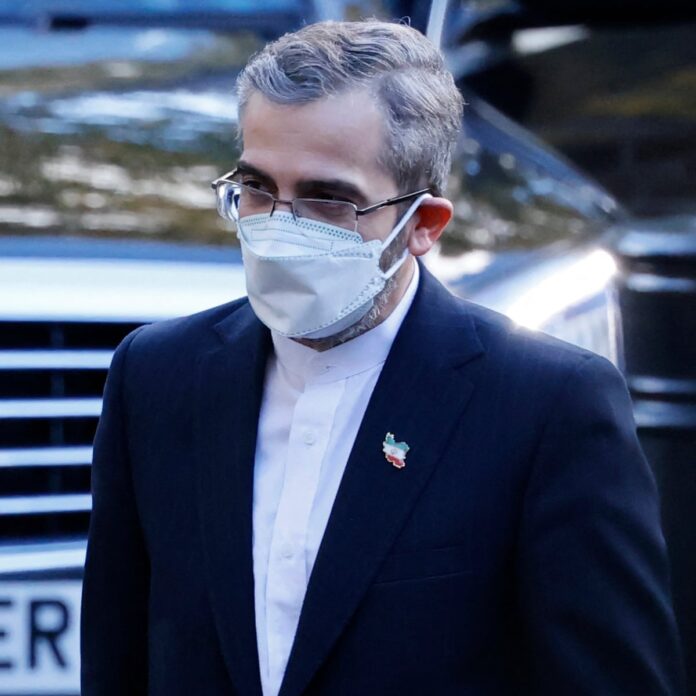
“In a phone conversation with Mr. Enrique Mora (the EU representative in the Vienna talks), we agreed to resume the negotiations on November 29 aimed at lifting the illegal and inhumane [US] sanctions,” tweeted Ali Baqeri, Iran’s deputy foreign minister for political affairs, who is also Tehran’s top nuclear negotiator.

The two diplomats had already agreed to resume talks between Iran and the 4+1 group after November.

The US unilaterally withdrew from the JCPOA under former President Donald Trump in 2018 and re-imposed the sanctions as part of its policy of “maximum pressure” targeting the Islamic Republic.

Its European allies in the agreement, namely the UK, France, and Germany, bowed down to the American pressure and started toeing the sanctions line as closely as possible.

The talks began earlier this year to examine the potential of the US’s return to the JCPOA, and the reversal of a set of nuclear countermeasures that Iran has been taking in reaction to the Western allies’ non-commitment to the deal.

The negotiations, however, halted in the run-up to Iran’s presidential elections in June.

Iranians mark anniv. of 1979 US embassy takeover

Demonstrators gathered outside the former US embassy building with the following motto: The Iranian nation’s resistance is key to the decline in the US’ hegemonic dominance.

The ceremony is being held in conformity with coronavirus health protocols.

“The US has been a factory producing all dictators of the world,” Major General Hossein Salami, the commander of the Islamic Revolution Guards Corps (IRGC) told the participants in the gathering in Tehran.

“The US has 750 military bases across the world to establish its political domination over the world, each of these bases, with a circle of political influence, has tried to create an all-encompassing political dominance in the world,” he added.

“Also on the United States’ track record are the production of torture machines and sending them to all dictators and offering torturing techniques to imprison justice- and freedom-seekers around the world,” he explained.

The top commander said Washington used Iran under the Shah, the former Iranian dictator, as one of the pillars of the US strategy to secure its domination over West Asia.

“The United States’ direct wars left more than eight million people dead, not to mention Washington’s proxy wars” he said.

General Salami noted the US has launched more than 40 major wars around the world, namely wars against countries in Europe, Africa, South America and the Middle East as well as against Russia.

He added the US has been defeated by the Iranian nation, adding Washington does not regard these failures as an object lesson.

Israeli spyware firm NSO added to US trade blacklist

The US has added NSO Group, the Israeli military spyware company that created software traced to the phones of journalists and human rights activists around the world, to a trade blacklist as it targets the growing surveillance threat posed by hacking-for-hire companies.

NSO and a competitor, Tel Aviv-based Candiru, were among four companies added by the commerce department on Wednesday to its so-called entity list, which would restrict exports of US hardware and software to the companies.

Groups like NSO use developer versions of popular operating software to develop “zero-click exploits”, which do not require the user to open a malicious link to deploy, according to a person familiar with their practices.

NSO said in a statement it was “dismayed by the decision, given that our technologies support US national security interests and policies by preventing terrorism and crime, and thus we will advocate for this decision to be reversed”.

“We look forward to presenting the full information regarding how we have the world’s most rigorous compliance and human rights programmes that are based [on] the American values we deeply share, which already resulted in multiple terminations of contacts with government agencies that misused our products,” it added.

Being blacklisted from US exports might effectively mean they “are finished”, stated Eitay Mack, an Israeli human rights lawyer who has campaigned for years to get NSO’s export license revoked by the Israeli government, with little success.

“NSO has tried for years tried to be on the ‘good side’, to try to claim that its activities are above reproach,” noted John Scott-Railton, at the University of Toronto’s Citizen Lab, which advocates on behalf of journalists and dissidents.

“This designation by the commerce department gives us the strongest indication of the US view of the NSO Group, which suggests they take a dim view . . . and see the company’s activities as potentially contrary to the national security of the US,” he added.

The US commerce department said the designation of the two companies was “based on evidence that these entities developed and supplied spyware to foreign governments that used these tools to maliciously target government officials, journalists, businesspeople, activists, academics and embassy workers”.

“These tools have also enabled foreign governments to conduct transnational repression, which is the practice of authoritarian governments targeting dissidents, journalists and activists outside of their sovereign borders to silence dissent. Such practices threaten the rules-based international order,” the department added.

In the past NSO has allegedly rented server space from companies such as Amazon Web Services and used it to surreptitiously break into phones and computers, Facebook has announced in a lawsuit filed against the company in the US. Amazon reportedly shut down that access in July, after an Amnesty International report detailed the alleged use of other Amazon services to deliver hacks.

The lawsuit from WhatsApp’s owner, Facebook, alleges that NSO Group exploited a vulnerability in the world’s most popular messaging service to deliver its spyware. NSO has asked for the suit to be dismissed.

While it is unclear what effect this move will have on the technical capabilities of NSO, Candiru and the two other companies blacklisted on Wednesday, the commerce department’s decision supports findings by the University of Toronto’s Citizen Lab and Amnesty International that their tools are regularly abused by repressive regimes.

Danna Ingleton, deputy director of Amnesty Tech at Amnesty International, stated in a statement that in addition to sending a “strong message” to NSO, the commerce department’s move also represented “a day of reckoning for NSO Group’s investors”.

NSO, the largest of the known Israeli largest cyber warfare companies, has said repeatedly that it sells its weapon only to nations in order to fight terrorism and serious crime, and with the approval of the Israeli government.

Candiru could not be reached for comment.

Both companies are part of a growing Israeli cyber industry that often recruits veterans of the army’s elite units and sells software that enables clients to hack computers and mobile phones remotely.

NSO’s licensed military-grade software, Pegasus, was last year revealed to have been used to target smartphones belonging to 37 journalists, human rights activists and other prominent figures.

French media reported that it had been used by Morocco to spy on senior French officials, including the personal mobile phone of President Emmanuel Macron.

Those revelations caused a diplomatic spat between Israel and France, which has demanded that Israel rein in NSO Group’s sales, according to two people briefed on the talks.

According to research by Microsoft and the University of Toronto’s Citizen Lab, Candiru exploited vulnerabilities in Microsoft and Google products, enabling governments to hack the laptops of more than 100 journalists, activists and political dissidents globally.

The commerce department also added a Russian company, Positive Technologies, and Singapore-based Computer Security Initiative Consultancy to its list, alleging that they “traffic in cyber tools” used to gain unauthorised access to computer systems.

Neither company immediately returned a request for comment. Gina Raimondo, commerce secretary, said the US was “committed to aggressively using export controls to hold companies accountable that develop, traffic, or use technologies to conduct malicious activities that threaten the cyber security of members of civil society, dissidents, government officials, and organisations here and abroad”.

Kevin Wolf, a partner at law firm Akin Gump and a former senior commerce official, noted US companies often “choose to avoid doing business with listed entities completely in order to eliminate the risk of an inadvertent violation and the costs of conducting complex legal analyses”.

Iran’s U-23 team runners-up at world wrestling championship

Iran’s under 23-year old Greco-Roman team with their one gold, four silver, and two bronze medal ranked second world best in Serbia 2021 World Wrestling Championship in Belgrade on Wednesday evening.

In the competitions held from October 1-3 in Serbia’s capital city, Belgrade Amin Mirzadeh gained the team’s only gold medal in 130kg weight category, the team’s four silver medals were gained by Puya Dadmarz in 55kg, Madi Mohsenjezhad in 60kg, Mohammad-Havad Rezaie in 67kg and Amin Kavianinezhad in 77kg weight categories, and their two bronze medals by Alireza Nejati in 63kg, and Nasser Alizadeh in 78kg weighs.

The Russian under-23 team with their 190 points ranked first in the world, Iran with 155 points ranked second best, and Georgia with 105 points gained the world’s 3rd best place.

The 4th to 10th best teams in the international Greco-Roman championship were respectively the Turkish (91 pts), Hungarian (86 pts), Azerbaijani (67 pts), Armenian (64 pts), Ukrainian (60 pts), German (35 0ts), And Swedish (31 pts) teams.