Monday, December 22, 2025
Home Blog Page 2297

Analysts: ‘No Plan B’ for Biden If nuclear deal fails

Reviving the Iran nuclear deal was a top foreign policy goal for Biden when he entered office. But the landmark agreement appears to be on the verge of irrevocable collapse, as western leaders grow increasingly impatient with Tehran over the stalled Vienna talks to restore the pact.

If negotiators aren’t able to pump life back into the deal, experts warn there’s no feasible “Plan B” for Biden and the prospect of conflict in the Middle East could increase.

Barbara Slavin, director of the Future of Iran Initiative at the Atlantic Council, told Insider that she hasn’t given up all hope that the deal can be salvaged, emphasizing that the Iranian economy is in “a fragile enough state” that the government could see virtue in a return to the deal.

“A couple of factors will be key: how much pressure China exerts to convince Iran it will benefit from even short-lived sanctions relief and whether the Biden administration can craft language … that will provide confidence that the US will stick to the agreement for the duration of Biden’s presidency,” Slavin added.

Biden recently pledged that the US would only break from a revived deal if there’s clear evidence Iran violated its terms.

“There is no ‘Plan B’, there is only a continuation of ‘Plan A’: diplomacy plus the incentive of easing sanctions,” Slavin said.

“There is no military solution to the Iranian nuclear program and past Israeli efforts to slow things down through sabotage and assassinations have only incentivized Iran to speed up,” Slavin said.

“Iran is already a threshold state, with all the necessary expertise and material to build bombs if it decides to do so,” Slavin continued, adding, “Iran has not done so because it has always calculated that it could protect its territorial integrity without nukes and that going that route would only spark a dangerous new nuclear arms race in the Mideast.”

Joseph Cirincione, distinguished fellow at the Quincy Institute for Responsible Statecraft, in a tweet on Monday underscored that diplomacy is the best and “only way” to “contain Iran’s nuclear program and prevent a new Middle East war.”

Israeli officials have signaled a military response against Iran would be necessary if the talks fail. Secretary of State Antony Blinken on Sunday did not rule out military options against Iran if the negotiations fail.

“If the Vienna talks were to fail, prospects of a military escalation between Iran and Israel increase,” Randa Slim, a senior fellow at the Middle East Institute, told Insider.

With tensions still high, the US over the weekend flew a B1-B bomber over the Middle East alongside fighter jets from Israel, Bahrain, Egypt, and Saudi Arabia.

Iran’s Foreign Minister Hossein Amir Abdollahian has stated that any talks over Iran’s nuclear program must lead to tangible results and the P4+1 group of countries should get ready for this.

Amir Abdollahian said Iran is not after talks just for the sake of talking.

The top Iranian diplomat reiterated any negotiations must produce tangible results based on mutual respect and interests.

The foreign minister added Iran is closely examining Biden’s behavior.

Tehran has announced it’s hypocritical of Washington to ask for talks with Tehran and impose new bans on the country. Iran has however noted that it will not give in to pressures over its nuclear energy program. Tehran said talks over possible returning of the US to the JCPOA will resume by November’s end in Vienna.

Iran has time and again rejected threats by Israel as psychological warfare. It however stresses it’s ready to give a devastating response to any aggression.

A senior Iranian military commander has said the country’s military is waiting for a wrong move by the Israeli regime to destroy it.

Major General Hossein Salami stated the enemies of the Islamic Revolution have been repelled, adding, “No one has eroded their power as much as we have.”

“We have great potential to overcome our opponents,” said General Salami, the commander of Iran’s Islamic Revolution Guards Corps (IRGC).

“We grew up in war and we have got used to defeating the enemy, and we have, by God’s grace, overcome them in all arenas,” the top commander noted.
“We learned how to live independently, and that is why everybody wants to defeat us, but the reality is that we keep moving forward with power,” he added.

In response to recent threats by Israeli regime officials, Iran’s Defense Minister Brigadier General Mohammad Reza Ashtiani has warned any aggression against Tehran will be met with an overwhelming response.

He reiterated that enemies will pay a heavy price if commits a “foolish act” against Iran.

Ashtiani said Iran’s defensive capabilities and its recent advances in new military technologies are only meant to protect the country from possible foreign aggression.

He added that Iran will continue to beef up its military might in line with its defensive doctrine.

Ashtiani stated the US’s lackeys have resorted to empty rhetoric against Iran due to their desperation.

The defense minister noted that Israel has already suffered many defeats from Iran and it unleashes its fury on the defenseless Palestinian women and children instead.

Israel’s military chief Aviv Kohavi recently said the regime has speeded up military plans to deal with Iran’s nuclear program. Kohavi also added “a significant chunk of the boost to the defense budget, as was recently agreed, was intended for this purpose”.

Secretary of Iran’s Supreme National Security Council has recently warned the Israeli regime against making any anti-Tehran move.

Vice Admiral Ali Shamkhani made the comment in reaction to reports that Tel Aviv had allocated a special funding to act against Iran’s nuclear program.

“Instead of earmarking a $1.5-billion budget to make evil moves against Iran, it should think of appropriating tens of thousands of billions of dollars for the reconstruction of damage from Iran’s crushing response,” he stated.

Iran sends more humanitarian aid to Afghanistan

The cargo comprised 50 tons of rice, 20 tons of other types of foodstuff, and warm clothes and medical items.

The Iranian aids were carried to Afghanistan in five trucks.

Iran’s previous contributions to the Afghan nation were delivered to Taliban officials to be distributed among those in need in Kabul, Kunduz, and Qandahar.

IRGC foils U.S. attempt to confiscate Iranian tanker in Sea of Oman

The United States stopped the Iranian vessel and transferred its oil cargo to another tanker and was trying to take the vessel away when the Islamic Revolution Guards Corps Navy intervened.

The IRGC forces used a helicopter to board the tanker and led it towards Iranian territorial waters.

The naval forces of the United States used several helicopters and a frigate to chase the Iranian tanker but the IRGC blocked their way.

The American naval forces tried once again to block the path of the Iranian ship with several more vessels but failed.
The tanker is currently in the territorial waters of the Islamic Republic of Iran.

IAEA chief seeks eye-to-eye talks with Iranians

The International Atomic Energy Agency (IAEA) has been unable to access surveillance footage of Iranian nuclear sites, or online enrichment monitors and electronic seals since February.

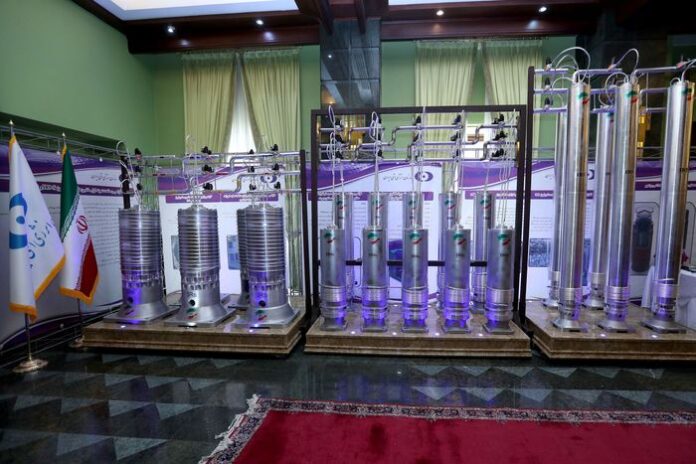
Physical inspections of Iran’s nuclear facilities have also been problematic even as Tehran has continued to develop new centrifuges and enrich uranium up to purity levels closer to what’s required for an atomic weapon. Western nations fear Iran could be developing the skills and know-how to build an atomic bomb, though Tehran denies any such ambitions.

“I would say we are flying in a heavily clouded sky,” Grossi said of his agency’s ability to perform its monitoring function in Iran.

“So we are flying and we can continue in this way, but not for too long,” he added.

Grossi told The Associated Press that he hopes to return to Iran soon “and to have the proper high level talks, eye-to-eye” that would restore the agency’s ability to know in real-time what the country is doing.

“This is in their interest as much as it is in the international community’s interest, because if they take seriously their intentions to continue with their nuclear program for civil purposes, they have to give the guarantees of what is going on there,” he noted on the sidelines of the UN climate summit in Glasgow.

“One has to, at some point, come to grips with this situation,” Grossi said, adding, “Otherwise we are going to be in a very uncertain territory, and I hope that will not be the case.”

The IAEA was charged with monitoring a 2015 accord, known as the Joint Comprehensive Plan of Action or JCPOA, aimed at curbing Iran’s nuclear activity in exchange for the lifting of crippling sanctions.

The US pulled out of the accord under former President Donald Trump and reimposed sanctions on Iran. European nations have tried to bring the United States back into the nuclear accord, but their efforts have been frustrated by the unwillingness of Tehran’s new hardline government to resume formal talks that would include reopening parts of the 2015 deal.

“Together with the change of government, we have seen increased levels of tight security around their facilities, and this has led on occasion to some difficult moments with our inspectors,” Grossi added.

“We are checking that very, very carefully. I would never put my inspectors in harm’s way,” he said, without elaborating.

The head of the Atomic Energy Organization of Iran (AEOI) has announced the IAEA should not turn into a plaything for terrorist groups.

Mohammad Eslami stated “nuclear terrorism” has levelled accusations against Iran’s nuclear program using “seditious ploys and … undocumented evidence”.

“Such behaviour has become threadbare,” noted Eslami, who is also the vice president.

He also weighed in on the level of uranium enrichment in Iran, saying Tehran remains committed to regulations within the framework of the Additional Protocol and lives up to its obligations under the Nuclear Non-Proliferation Treaty (NPT).

“The Islamic Republic of Iran’s nuclear program is peaceful, and uranium is enriched to a level which could be used for peaceful projects,” he added.

Lebanon FM: Saudi Arabia dictates “impossible terms”

“If they just want Hezbollah’s head on a plate, we can’t give them that,” Bou Habib stated.

“Hezbollah is a component of politics in Lebanon. It has a regional armed dimension, yes, but this is beyond what we can resolve,” he said.

Lebanon is facing its worst rift yet with Gulf Arab states, spurred by a minister’s critical comments about the Saudi-led intervention in Yemen that described the war there as futile.

Saudi Arabia and some Gulf Arab allies have reacted angrily to the remarks made by the information minister in an interview last week, which he’d filmed before taking up his position in cabinet. Riyadh expelled Lebanon’s ambassador, banned all imports from Lebanon and recalled its envoy for consultations.

Kuwait and Bahrain followed suit by expelling the top envoys in their own capitals, while the United Arab Emirates withdrew all its diplomats from Beirut.

Saudi Arabia has announced its actions were driven not just by George Kordahi’s comments but rather were rooted in its objection to the increasing dominance of the Hezbollah group over Lebanese politics.

The row is part of a longstanding feud between Saudi Arabia and Iran that has played out in proxy conflicts across the region, from Yemen to Syria to Iraq.

Gulf states are traditional aid donors to Lebanon but for several years have been increasingly dismayed by Hezbollah’s expanding power, and have so far been loathe to help rescue Lebanon from a devastating economic crisis.

On Tuesday, Bou Habib told Reuters he believed mutual dialogue between Lebanon and Saudi Arabia was the only way forward to solving the dispute. But he added that there had been no meetings on any level between both parties since Prime Minister Najib Mikati’s cabinet was formed on Sept 10.

“There has been no dialogue (with Saudi Arabia) even before the problem with minister Kordahi … the Saudi ambassador here never communicated with us,” Bou Habib continued.

“He (the Saudi ambassador) was here and was communicating with a lot of Lebanese politicians, but he wasn’t communicating with us,” he said, adding, “We need to know what they want… we prefer dialogue to dictates.”

Kordahi has refused to resign over the incident, but Bou Habib stated it was unclear whether his resignation would solve the rift with Saudi at this point, although it could be enough for others in the Gulf.

The only offer on the table towards a resolution so far has come from Qatar, whose Emir met Mikati in Glasgow on the sidelines of the COP26 meeting on Monday, Bou Habib announced.

“There is the possibility of a Qatari mediation,” Bou Habib said, but added that it was in the initial stages and that the Qataris had not spoken with the Saudis yet over the matter.

Qatar has denounced the Kordahi comments but has not announced any diplomatic initiative over the incident.

Bou Habib underscored any Qatari effort to mediate could be helped by the resolution earlier this year of a separate row pitting Qatar against Saudi Arabia and three other Arab states that had resulted in an improved rapport between Doha and Riyadh.

Mikati’s government, formed after over a year of political deadlock that has added to Lebanon’s financial decline, is trying to revive talks with the International Monetary Fund (IMF) to unlock much needed foreign funds.

But aside from political paralysis over an internal row to do with the Beirut port blast investigation, this latest diplomatic crisis has hampered the cabinet, Bou Habib underlined.

“Of course we have been affected, we have been affected a great deal, not a little,” he continued.

Iran marks Fight Against Arrogance Day

Iran’s Acting Education Minister Alireza Kazemi attended a school in downtown Tehran to mark the occasion. 

The ceremony was aired live on Shad Channel, an educational online channel for Iranian students and teachers. 

Tomorrow, November 4, marks the Day of Student in Iran, and since the occasion falls on Thursday this year, authorities decided to hold the ceremony on Wednesday.  The occasion is observed each year and a rally is held outside the former US embassy in Tehran which is notoriously called the Den of Espionage in Iran. 

The Commander of the Islamic Revolution Guards Corps General Hossein Salami will address crowds participating in the rally. This year’s slogan for the Day of Fight Against Arrogance is “The Resistance and Perseverance of the Iranian People: Key to the Decline of the US’s Arrogance”.

Daesh claims responsibility for deadly attack on Kabul hospital

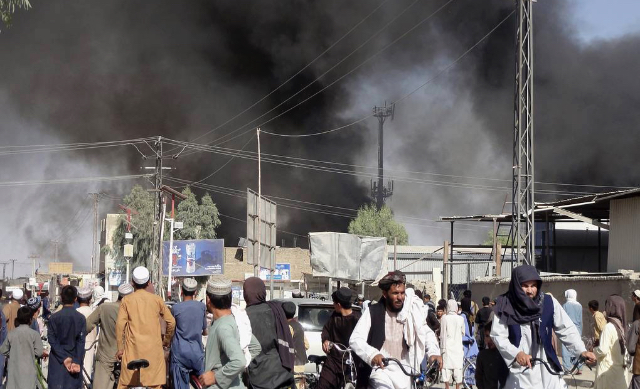
At least 25 people were killed and more than 50 wounded when Daesh gunmen attacked the 400-bed Sardar Mohammad Daud Khan hospital after two heavy explosions at the site in central Kabul, officials said.

The explosions hit the entrance of the hospital and were followed by an assault by a group of Daesh gunmen, all of whom were killed within 15 minutes, Taliban spokesman Zabihullah Mujahid stated.

He added Taliban special forces dropped by helicopter had prevented the attackers from entering the hospital itself, with all of them killed at the entrance or in the courtyard.

The attack is the latest among the growing attacks and killings since the Taliban retook power in the country in August, after the US and its allies pulled out their last troops from the country in a rushed way following after decades of war in Afghanistan.

In August, a bombing by Daesh gunmen at Kabul International Airport killed more than 150 civilians and 13 American soldiers. 

The Sardar Daud Khan hospital has been targeted before. Daesh gunmen mounted an attack on the hospital in 2017, killing more than 30 people.

The United Nations mission in Afghanistan (UNAMA), along with Pakistan and some other countries, condemned the attack.

“Attacks targeting medical personnel and civilians seeking treatment are violations of human rights and international humanitarian law. Those responsible need to be held to account,” UNAMA announced in a tweet.

The Iran’s Foreign Ministry later also condemned the attack. Spokesperson Saeed Khatibzadeh said Tehran deplored any act of terror against ordinary people and offered sympathy to the families of the victims.

Syria: Israel targets Damascus neighborhood

Syrian state TV reported early on Wednesday that Israel had launched an aerial attack with a number of missiles targeting an area in the Damascus’ countryside.

Citing an unknown military source, the Syrian state TV added that the attack resulted in “some material damage.”

Syria’s official news agency SANA also reported the development and said the Israeli aggression took place in the town of Zakia, in the western Damascus countryside, in the early hours of the day.

“At approximately 12:56 a.m. today, the Israeli enemy carried out an air aggression with a number of missiles from the direction of northern occupied Palestine, targeting a point in Damascus countryside in the Zakia area, which led to some material losses,” SANA quoted a military source as stating.

There were no immediate reports of possible casualties and the state-run news agency gave no details on the sites targeted.

SANA reported Syrian air defenses responded to the missiles that had been launched from over northern Israel. The strike comes less than a week after Syrian air defenses intercepted missiles over the same area.

Israel frequently targets military positions inside Syria, especially those for Hezbollah, which has played a key role in helping the Syrian army in its fight against the foreign-backed terrorists.

The Tel Aviv regime mostly keeps quiet about its attacks on Syrian territories, which many view as knee-jerk reaction to the Syrian government’s increasing success in confronting terrorism.

Israel has been a main supporter of terrorist groups that have opposed the government of President Bashar al-Assad since foreign-backed militancy erupted in Syria ten years ago.

Senior Taliban commander killed in Daesh attack

The Taliban spent 20 years waging an insurgency against the ousted US-backed government before seizing control of Kabul in August.

Now they face the struggle of bringing stability to Afghanistan, which has been hit in recent weeks by a series of bloody assaults claimed by rivals, Daesh.

Several people were killed and wounded in Tuesday’s attack on Kabul’s main military hospital, according to a health ministry official.

Hamdullah Mokhlis, a member of the hardline Haqqani network and an officer in the Badri Corps special forces, is the most senior figure to have been killed since the Taliban seized Kabul.

“When he got the information that Sardar Daud Khan Hospital was under attack, Maulvi Hamdullah (Mokhlis), the commander of the Kabul corps, immediately rushed to the scene,” the Taliban media official said.

“We tried to stop him but he laughed. Later we found out that he was martyred in the face-to-face fight at the hospital,” he added.

The attack began with a suicide bomber detonating his explosives near the facility’s entrance before gunmen broke into the hospital grounds.

As part of the response, Kabul’s new rulers deployed their special forces to the roof of the building in a helicopter captured from Afghanistan’s former US-backed government.

In a statement released on its Telegram channels, Daesh announced that “five Islamic State group fighters carried out simultaneous coordinated attacks” on the site.

Taliban spokesman Zabiullah Mujahid has stated the attack was put down within 15 minutes thanks to the rapid intervention.

Daesh has claimed four mass casualty attacks since the Taliban takeover on August 15, including suicide bomb blasts targeting Shiite Muslim mosques.

Spokesman for the Taliban’s Political Office in Qatar, Ahmad Yasir, has also reported all Daesh militants that took part in the attack resulting in two blasts near Kabul’s hospital have been eliminated.

“The shootout in Kabul ended with the elimination of the militants,” he stated on Tuesday.

Iran’s first electric car hits streets

Now Yuz, as Iran’s first electric car is named, has hit the streets. 

The homegrown car is equipped with an electric motor in the rear axle that is capable of producing 20 horsepower or 15kw. With each charge for about 3 and a half hours, which takes 30 minutes, it consumes as much electricity as an iron. 

This car can travel 100km with each charge. However, on urban trips in a city like Tehran, it can travel 60 km per day. That’s a two-seater four-wheeled engine and weighs 480kg and can withstand a weight of up to 250 kg. 

Yuz is 2.32 meters long, which is equal to the width of ordinary cars. It’s 1.19 meter wide and 1.46 meter high. Its small size allows the driver to park it in the least possible space. 

It has other advantages. The most obvious advantage is that Yuz, like other electric cars, results in a significant reduction in air pollution and greenhouse gas emissions. Its small size and easy driving are other advantages of Yuz. 

The CEO of its manufacturer, the science-based company “Parax Motors”, says the French model of this engine will be sold without batteries for 7,000 to 8,500 Euros, depending on its options. But efforts, he added, are being made to sell Yuz at a lower price in Iran.