Friday, December 26, 2025
Home Blog Page 228

Netherlands bans Israeli ministers, calls for EU sanctions over Gaza

Smotrich and Ben-Gvir

“[National Security Minister] Itamar Ben Gvir and [Finance Minister] Bezalel Smotrich are no longer welcome here,” Dutch Foreign Minister Caspar Veldkamp announced late on Monday.

The Netherlands formally declared both men as persona non grata and pledged to enter their names into the Schengen Area’s registry of undesirable individuals.

Defending the move in parliament, Veldkamp said the pair had “repeatedly incited violence against the Palestinian population, persistently advocated for the expansion of illegal settlements, and called for ethnic cleansing in the Gaza Strip.”

“These actions and statements are beyond justification,” he added.

“The cabinet has taken this step because their conduct undermines any prospect for peace and breaches fundamental principles of international law.”

Ben Gvir, Israel’s national security minister, responded by saying on X: “Even if I’m banned from all of Europe, I’ll keep working for our country and demanding that we topple Hamas and back our fighters.”

He also suggested that the Netherlands welcomes and tolerates “terrorism” while unwelcoming a “Jewish minister from Israel”.

In his statement, Veldkamp also revealed that since 7 October 2023, the Dutch government had rejected 11 export licences for military equipment or dual-use items destined for Israel.

However, it did approve two licences related to components for the Iron Dome missile defence system.

Veldkamp said Israel’s ambassador to the Netherlands would be summoned for urgent discussions.

“We will ask him to urge [Israeli] Prime Minister [Benjamin] Netanyahu’s government to change course,” he stated, adding, “The current situation is intolerable and morally bankrupt.”

On Monday, Middle East Eye reported that Netherlands has named Israel as a foreign threat to the country’s national security for the first time, citing disinformation campaigns endangering the lives of Dutch citizens.

A report published by the National Coordinator for Security and Counter-terrorism (NCTV) says that Israel attempted to influence public opinion and politics in the country by circulating documents directly to Dutch journalists and politicians instead of using the official diplomatic channels.

The diplomatic row between Israel and the Netherlands escalated on Monday after Dutch Prime Minister Dick Schoof warned of potential European Union sanctions against Israel over its conduct in Gaza.

In a social media post, Schoof said he had convened an emergency meeting with senior ministers to address what he described as the “catastrophic” conditions in the besieged enclave.

“The people of Gaza must be given immediate, unfettered, safe access to humanitarian aid. If the EU decides tomorrow that Israel is not in compliance with the relevant agreements on this, the Netherlands supports the plan to suspend Israeli participation in the EU research programme Horizon,” added Schoof.

He noted that additional measures, potentially affecting trade, might also be considered.

Israeli President Isaac Herzog accused Schoof of misrepresenting the tone and content of their recent phone call.

“Sorry, Prime Minister, with all due respect this tweet does not reflect the spirit or the details of our phone call,” Herzog posted.

“Nor does it reflect my crystal-clear position: it will be a huge mistake if the EU takes such steps, especially in light of Israel’s ongoing and upgraded humanitarian efforts.”

The Netherlands becomes the seventh country to sanction Ben Gvir and Smotrich, joining the United Kingdom, Canada, Australia, New Zealand, Norway, and Slovenia.

Iran urges UN to condemn terror attack in Zahedan, calls for firm stance against all forms of terrorism

Amir Saeed Iravani

In a letter addressed to the UN chair, Ambassador Amir Saeid Iravani referred to the attack earlier this week on the judiciary building in Zahedan by the so-called terrorist group Jaish al-Adl, describing it as a coordinated and brutal assault that deliberately targeted civilians.

According to the letter, three armed militants opened fire on Saturday, killing at least six civilians, including a six-month-old infant, and injuring 24 others. Iranian security forces swiftly neutralized all three attackers. Jaish al-Adl has openly claimed responsibility.

Labeling the incident the deadliest attack by the group since October 2024, Iravani accused Jaish al-Adl of operating with external support, including from Daesh-Khorasan and allegedly from the Israeli regime.

Iran reaffirmed its commitment to combating terrorism and urged that the letter be circulated as an official UN document under the agenda item on eliminating international terrorism.

Trump confirms Gaza suffering ‘real starvation’, pledges to open US food hubs

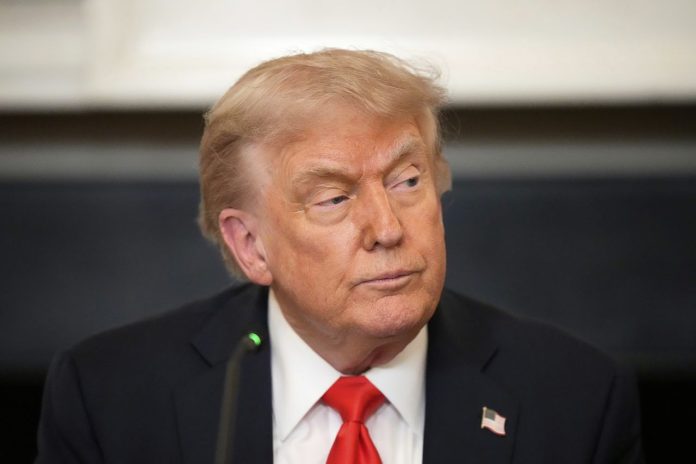
Speaking in Scotland, Trump said the US and other nations are giving money and food to Gaza but that Israeli Prime Minister Benjamin Netanyahu has “got to sort of like run it.”

“I want him to make sure they get the food,” Trump continued, adding, “I want to make sure they get the food.”

Trump’s comments seemed to result from the images in recent days of the worsening hunger crisis in Gaza and were more urgent than the resigned message he had about the 21-month Gaza war last week, when ceasefire talks derailed.

His remarks on Monday also marked a new divergence from Netanyahu after the two leaders had become closer following their nations’ join attacks in Iran.

The US president was asked if he agreed with Netanyahu’s comments on Sunday in which the Israeli leader said, “There is no policy of starvation in Gaza and there is no starvation in Gaza.”

“I don’t know,” Trump replied Monday.

“I mean, based on television, I would say not particularly because those children look very hungry.”

In the face of mounting international criticism, the Israeli military over the weekend began airdrops of aid, along with limited pauses in fighting in three populated areas of Gaza for 10 hours a day to help with the distribution.

Trump on Friday had expressed some resignation about the situation in Gaza after the US and Israel pulled their negotiating teams out of talks in Qatar to try to reach a ceasefire.

Trump stated last week that Hamas was likely “going to be hunted down” and said of Israel, “They’re going to have to fight and they’re going to have to clean it up.”

But Trump seemed more inclined to action on Monday after reports of starvation-related deaths and images of people, especially young children and infants, struggling to get food continued to emerge over the weekend, drew international outcry.

The US president, speaking as he visited with British Prime Minister Keir Starmer, said that the US was “going to set up food centres,” but he didn’t offer specifics.

While Trump urged Netanyahu to do more to deliver aid, the US leader faced similar pleas.

Egyptian President Abdel Fattah al-Sissi stressed in a televised address on Monday that Trump is “the one who is able to stop the war, deliver the aid and end this suffering.”

“Please, make every effort to stop this war and deliver the aid,” el-Sissi added, addressing Trump in his remarks, adding “I believe that it’s time to end this war.”

Trump noted Hamas has stolen food and aid trying to reach people in Gaza, but when asked by a reporter about what responsibility Israel has for limiting aid to the area, he said, “Israel has a lot of responsibility.”

“We have to help on a humanitarian basis before we do anything. We have to get the kids fed.”

Starmer was more adamant than Trump, calling it “a desperate situation” in Gaza.

“I think people in Britain are revolted at seeing what they are seeing on their screens,” he added.

Starmer, who faces pressure from his Labour Party to recognise a Palestinian state as France did last week, said the UK supports statehood for the Palestinians but it must be part of a plan for a two-state solution.

Trump emphasized last week that France’s recognition of a Palestinian state “doesn’t carry any weight.”

“I’m not going to take a position,” Trump said on Monday of recognising a Palestinian state. He added of Starmer, “I don’t mind him taking a position.”

The comments came as the UN General Assembly on Monday brought together high-level officials to promote a two-state solution to the decades-old Israel-Palestinian conflict.

Israel and the US are boycotting the two-day meeting.

UN chief urges ‘viable two-state solution’ to Israel-Palestine conflict

Israeli forces West Bank

The 193-member UN General Assembly decided in September last year that such a conference would be held in 2025.

Hosted by France and Saudi Arabia, the conference was postponed in June after Israel attacked Iran.

Addressing the attendees on Monday, Saudi Foreign Minister Prince Faisal bin Farhan Al Saud urged all countries to support the conference goal of a roadmap laying out the parameters to a Palestinian state while ensuring Israel’s security.

In opening remarks, United Nations Secretary-General Antonio Guterres said, “We must ensure that it does not become another exercise in well-meaning rhetoric.

“It can and must serve as a decisive turning point – one that catalyses irreversible progress towards ending the occupation and realising our shared aspiration for a viable two-state solution.”

French Foreign Minister Jean-Noel Barrot told the conference: “We must work on the ways and means to go from the end of the war in Gaza to the end of the Israeli-Palestinian conflict, at a time when this war is jeopardising the stability and security of the entire region.

“Only a political, two-state solution will help respond to the legitimate aspirations of Israelis and Palestinians to live in peace and security. There is no alternative.”

France intends to recognise a Palestinian state in September at the annual gathering of world leaders at the United Nations General Assembly, French President Emmanuel Macron said last week.

Palestinian Prime Minister Mohammed Mustafa called on all countries to “recognise the state of Palestine without delay”.

“All states have a responsibility to act now,” stated Mustafa at the start of the meeting.

The meeting comes as Israel’s war on Gaza still rages after more than 21 months.

The war was triggered in October 2023 when Hamas led an attack on southern Israel, killing at least 1,200 and seizing 250 others as captives, according to Israeli statistics.

Since then, Israel’s military assault on Gaza has killed more than 59,000 Palestinians, mostly women and children, according to health authorities in the besieged territory.

Despite growing international pressure on Israel to end its war, Israel and the US were not taking part in the meeting.

The US State Department announced that the three-day event was “unproductive and ill-timed,” as well as a “publicity stunt” that would make finding peace harder.

The diplomatic push is a “reward for terrorism”, it said in a statement, and it also called the promise to recognise a Palestinian state by Macron “counterproductive.”

Speaking to reporters later on Monday, Prince Faisal called for US President Donald Trump’s involvement in resolving the ongoing conflict.

“I’m firmly in the belief that the US engagement, especially the engagement of President Trump, can be a catalyst for an end to the immediate crisis in Gaza and potentially a resolution of the Palestinian-Israeli conflict in the long term,” he told reporters.

The UN has long endorsed a vision of two states side by side within secure and recognised borders.

Palestinians want a state in the occupied West Bank, East Jerusalem and the Gaza Strip, all territory captured by Israel in the 1967 war with neighbouring Arab states.

The UN General Assembly in May last year overwhelmingly backed a Palestinian bid to become a full UN member by recognising it as qualified to join and recommending the UN Security Council “reconsider the matter favourably”.

The resolution garnered 143 votes in favour and nine against.

The General Assembly vote was a global survey of support for the Palestinian bid to become a full UN member – a move that would effectively recognise a Palestinian state – after the US vetoed it in the UN Security Council several weeks earlier.

Two major Israeli rights groups say Tel Aviv committing genocide in Gaza

Gaza War

B’Tselem and Physicians for Human Rights-Israel (PHRI) both published separate reports on Monday in which they accused Israel of genocidal crimes and incitement to genocide.

In its report, B’Tselem examined Israel’s policies in Gaza and statements made by senior Israeli politicians and military commanders on its goals in the enclave. It led the group to “the unequivocal conclusion that Israel is taking coordinated action to intentionally destroy Palestinian society in the Gaza Strip”.

The report includes statistical analysis, as well as personal testimonies and documentation of crimes and incitement.

“Nothing prepares you for the realisation that you are part of a society committing genocide. This is a deeply painful moment for us,” said Yuli Novak, the group’s executive director.

“But as Israelis and Palestinians who live here and witness the reality every day, we have a duty to speak the truth as clearly as possible: Israel is committing genocide against the Palestinians.”

Novak added that the Hamas-led surprise attack on 7 October 2023, which killed around 1,200 Israelis, “created deep existential fear among Israelis”.

“The extremist, far-right messianic government is using that fear to promote an agenda of destruction and expulsion,” she continued.

“The lives of all Palestinians, from the Jordan River to the Mediterranean Sea, are being treated as worthless. They can be starved, killed, displaced – and the situation keeps getting worse.”

B’Tselem warned that the patterns of Israel’s “destruction and annihilation” was being replicated in the occupied West Bank, leading to a “real risk the genocide will spread beyond the Gaza Strip”.

Meanwhile, PHRI’s report presented a detailed legal analysis on Israel’s war on Gaza, focusing on the dismantling of Gaza’s healthcare system.

It stated that Israel’s aggression meets the criteria for genocide under the Convention on the Prevention and Punishment of the Crime of Genocide, to which Israel is a signatory.

PHRI found evidence of a “deliberate and systematic dismantling of Gaza’s healthcare system and other vital systems necessary for the population’s survival”.

That included direct Israeli attacks on hospitals, the deliberate blocking of medical aid into the enclave and of medical evacuations out of the territory, as well as the killing and abduction of medical personnel.

“This is not incidental damage from war – it is a deliberate policy aimed at harming the Palestinian population as a group,” the report concluded.

Guy Shalev, PHRI’s executive director, stated: “As people who believe in the sanctity of life, we are obligated to speak the truth: this is genocide, and we must fight it.

“For 22 months, hospital after hospital has been attacked, patients have been denied life-saving treatment, and aid has been blocked. This is a clear and consistent pattern of destruction.”

Shalev added that as medical professionals, it was PHRI’s duty to its colleagues in Gaza who are risking their lives to save others “under impossible conditions, to face the truth and do everything we can to protect them”.

Both groups strongly criticised the international community, which it accused of complicity in Israel’s war on Gaza through either active support or inaction.

They called on global leaders to use all means under international law to stop Israeli genocide against Palestinians.

Leading human rights organisations have also reached the conclusion that Israel is committing genocide.

In December 2024, Amnesty International became the first major organisation to conclude that Israel had committed genocide during its war on Gaza, while Human Rights Watch concluded that “genocidal acts” had been committed.

Francesca Albanese, the UN’s top expert on Palestine, authored two reports last year suggesting that genocide was taking place in Gaza.

Earlier this month, a renowned Israeli professor of Holocaust and genocide studies called Israel’s war on Gaza an “inescapable” case of genocide, joining a chorus of prominent Israeli and Jewish scholars coming to the same conclusion.

Omer Bartov, a professor at Brown University and a former Israeli army soldier, wrote in The New York Times that after deliberating and examining Israel’s war, his “inescapable conclusion… [is] that Israel is committing genocide against the Palestinian people”.

“Having grown up in a Zionist home, lived the first half of my life in Israel, served in the IDF [Israel Defence Forces] as a soldier and officer and spent most of my career researching and writing on war crimes and the Holocaust, this was a painful conclusion to reach, and one that I resisted as long as I could,” he wrote.

“But I have been teaching classes on genocide for a quarter of a century. I can recognise one when I see one.”

Bartov is considered one of the world’s leading scholars of the WWII Holocaust and an expert on genocide. One of his most well-known books is Anatomy of a Genocide.

At least 59,800 Palestinians – mainly women and children – have been killed by Israeli forces in Gaza since October 2023. At least 144,851 others have been wounded during that time.

In June, a UN Commission of Inquiry found that Israeli air strikes, shelling, burning, and controlled demolitions had damaged or destroyed more than 90 percent of schools and university buildings across the Gaza Strip.

A study earlier this year found that 80 percent of Gaza’s water and sanitation infrastructure had been destroyed.

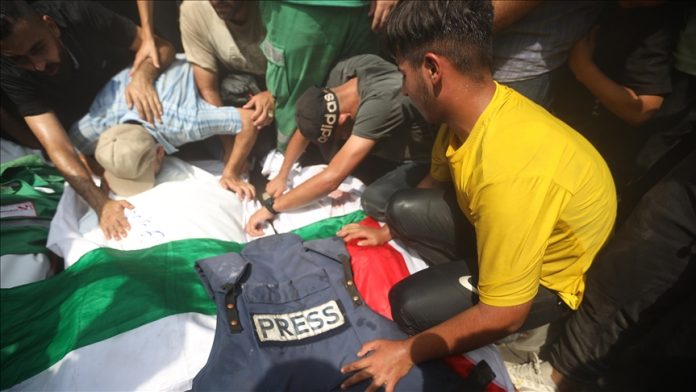
Israel’s blockade on food and aid supplies entering Gaza has led to at least 147 deaths due to starvation, including 88 children. Local officials say 40,000 infants are at risk of imminent death.

Iran’s FM warns of Tehran’s tough response to fresh assault

Abbas Araghchi

In a post on his X account on Monday night, Araqchi responded to the recent comments made by US President Donald Trump who has claimed that he will order fresh American attacks on Iran’s nuclear facilities if Tehran tries to restart enrichment activities.

“Iran, a nation with a rich culture originating from 7,000 years of civilization, will never respond to the language of threat and intimidation. Iranians have never bowed down before any foreigners and respond only to respect,” Araqchi said.

“Iran knows exactly what happened during the recent American-Israeli aggression, both to us and our adversaries—including the extent of blows that are still being censored. If aggression is repeated, we will not hesitate to react in a more decisive manner and in a way that will be IMPOSSIBLE to cover up,” the foreign minister stated.

“More than a million Iranians need medical radioisotopes produced by the Tehran Research Reactor, an American-supplied facility fuelled by 20%-enriched uranium. Iran also needs enrichment to fuel our nascent nuclear power reactors,” he said.

“No one in their right mind would abandon the fruits of tremendous investment in homegrown and peaceful technology which is saving lives—and simply because bulling foreigners demand it,” Araqchi added.

“The recent unlawful bombing of Iranian nuclear facilities has proven what we have always stated: there is no ‘military solution’. If there are concerns about the possible diversion of our nuclear program into non-peaceful purposes, the ‘military option’ proved incapable—but a negotiated solution may work,” the top diplomat said.

“All should know that we Iranians have NOT BOUGHT our PEACEFUL nuclear program; we have BUILT IT WITH BLOOD, SWEAT, AND TEARS. The technology and know-how that our FORMIDABLE human resources have developed CANNOT be destroyed by bombings. Yes, our enrichment facilities are severely damaged, but our DETERMINATION IS NOT,” Araqchi underlined.

While the Zionist regime waged a war of aggression against Iran on June 13 and struck Iran’s military, nuclear and residential areas for 12 days, the US stepped in and conducted military attacks on three nuclear sites in Iran’s Natanz, Fordow and Isfahan on June 22.

The Iranian military forces conducted powerful counterattacks immediately after the aggression. The Islamic Revolution Guards Corps Aerospace Force carried out 22 waves of retaliatory missile strikes against the Zionist regime as part of Operation True Promise III that inflicted heavy losses on cities across the occupied territories.

Also, in response to the US attacks, Iranian armed forces launched a wave of missiles at al-Udeid air base in Qatar, the largest American military base in West Asia.

A ceasefire that came into force on June 24 brought the fighting to a halt.

Tehran opposes any attempt meant to disintegrate Syria: Iran’s envoy

Amir Saeed Iravani

Amir Saeid Iravani made the remarks during a UN Security Council meeting on Syria as the southern Sweida province has witnessed deadly clashes between the Druze community, Bedouins, and the ruling HTS forces, while Israel has used the violence as a pretext to attack various sites across the Arab country.

Iravani warned against the Tel Aviv regime’s “dangerous and destabilizing” schemes aimed at detaching Syria’s southern governorates from the authority of the central government, noting that such illegal actions constitute a flagrant violation of international law, the UN Charter and Security Council resolutions.

“The Islamic Republic of Iran reaffirms its unwavering commitment to the sovereignty, unity, and territorial integrity of the Syrian Arab Republic.”

“We strongly oppose any attempt—whether direct or indirect— to undermine Syria’s national sovereignty or to fragment its territory,” he said.

The Iranian envoy also expressed worries about the recent outbreak of violence in Sweida and said Tehran supports the interim government’s efforts to restore stability.

He further condemned the mass killing of Syria’s Alawites in the coastal cities of Latakia and Tartous, saying justice must be pursued through credible mechanisms, free from foreign interference and political manipulation.

“We urge full respect for the rights of all minorities and the resolution of internal differences through inclusive dialogue. Sectarian violence undermines public trust in the political transition, which must remain inclusive and nationally owned. A unified and diverse Syria is essential for lasting peace and stability,” he added.

Meanwhile, Iravani denounced the recent Israeli airstrikes and acts of aggression targeting Damascus and southern Syria, as well as the regime’s illegal occupation of the Golan Heights.

“There is no military solution to the crisis in Syria,” he said, adding, “The only viable path forward is through a Syrian-led and Syrian-owned political process, facilitated by the United Nations and based on core principles outlined in Resolution 2254.”

He also expressed Iran’s commitment to working constructively with the UN and regional partners to support peace, justice, and the full recovery of Syria, free from occupation, terrorism, and foreign interference.

Iran’s president criticizes inaction of human rights advocates in addressing Israeli crimes

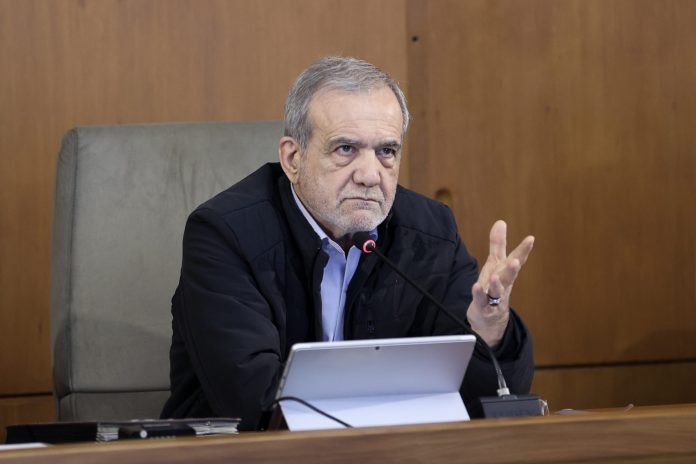
During a ceremony to receive the credentials of Andre Vass Gimaraes, the new Ambassador of the Federative Republic of Brazil, on Monday, President Pezeshkian expressed appreciation for Brazil’s stance and its role as the rotating president of the BRICS group concerning the recent aggression of the Israeli regime against Iran.

Highlighting Brazil’s support for the oppressed Palestinian people, the president remarked that the situation in Gaza today contradicts all international laws and is distressing to any conscientious observer. Unfortunately, the so-called advocates of human rights and democracy not only fail to take effective measures to prevent the crimes of the Israeli regime but also provide military and legal backing for these actions, which is truly shameful.

Pezeshkian further noted that despite the geographical distance, Iran and Brazil possess significant potential for expanding cooperation across various fields. He wished the new ambassador success in enhancing relations and fostering interactions for mutual benefit.

The new ambassador condemned the crimes of the Israeli regime against the people of Gaza and its aggression against Iran.

He also stated that Brazil is committed to its principled policy of defending multilateralism and countering unilateralism by leveraging the capabilities of the BRICS group.

Gimaraes emphasized the diverse opportunities for cooperation between Iran and Brazil, asserting that mutual strengths can overcome the challenges posed by distance.

He conveyed that Brazilian President Luiz Inacio Lula da Silva had asked him to communicate that Brasilia seeks a bright future in its relations with Tehran. The ambassador pledged to exert his utmost efforts to establish a win-win relationship and ensure mutual interests between the two nations.

Iran not seeking war, but to respond firmly to potential onslaught: President Pezeshkian

During a ceremony to receive the credentials of Pierre Cochard, the new Ambassador of France to Tehran, on Monday, President Pezeshkian stated that while Iran is willing to accept supervision of its nuclear activities, this should not be interpreted as disregarding the rights of the Iranian people. The Islamic Republic is ready for dialogue but remains resolute in its response to any future acts of aggression.

The president further noted that Iran, particularly under his administration, is focused on fostering internal unity and engaging with the international community.

However, he criticized Western nations for undermining this effort through false propaganda and unfounded accusations regarding the Islamic Republic’s nuclear program.

Pezeshkian also condemned the brutal actions of the Israeli regime against the oppressed people of Gaza, sharply criticizing the inaction and silence of European countries, especially France, on this matter.

Referring to the massacre of children, women, and men due to starvation resulting from the criminal blockade of Gaza, he asked whether newborns are considered terrorists, who are killed either by bombardment or by the hunger stemming from the siege. The president expressed hope that countries like France would take a more proactive stance in preventing the ongoing crimes of the Israeli regime.

In response, Cochard extended condolences for the loss of Iranian lives in the recent terrorist attack in Zahedan, affirming that France is dedicated to maintaining a path of dialogue and diplomacy while working to strengthen mutual trust. He highlighted that even during the 12-day war, France kept its embassy in Tehran open.

Cochard stressed that the diverse opportunities for cooperation between Tehran and Paris, expressing France’s interest in enhancing interactions.

He reiterated that France believes the only way to resolve differences regarding the nuclear issue is through dialogue and that diplomacy must be given the necessary time to succeed.

Senior Iranian delegation meets Masoud Barzani in Erbil to discuss bilateral cooperation

During the Monday meeting, Rahmani conveyed the greetings of Iranian President Masoud Pezeshkian to Barzani and appreciated the Kurdistan Region’s role in welcoming Iranian pilgrims at the Haj Omran border crossing and facilitating their passage during religious events.

Both sides stressed the deep-rooted historical and friendly ties between Tehran and Erbil and underscored the importance of strengthening economic relations.

Meanwhile, the governor of Iran’s West Azarbaijan Province on Sunday met with Governor of Erbil Omid Khoshnaw.

During that meeting, the Iranian official said Iran is ready to expand cooperation in areas such as trade, transit, tourism, education, and joint investment.
He further called the continuation of these efforts a symbol of cultural and religious solidarity.

Khoshnaw for his part welcomed the expansion of relations with the Islamic Republic of Iran, especially with neighboring provinces like West Azarbaijan.

He reaffirmed the Kurdistan Region’s commitment to improving border infrastructure, facilitating pilgrim movements, and enhancing economic and social cooperation.