Saturday, December 27, 2025
Home Blog Page 2276

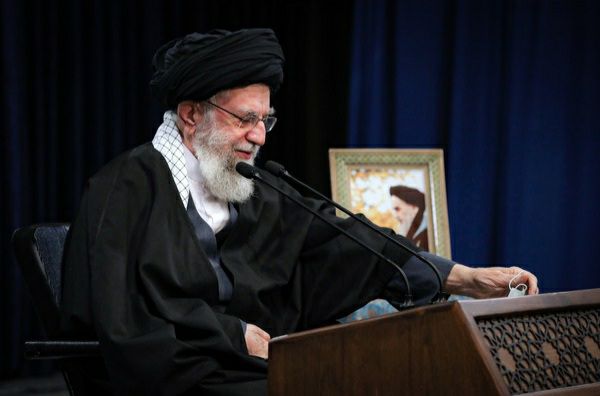
Iran’s Leader: Encouraging youth to leave country amounts to treason

Ayatollah Khamenei said if a nation neglects its abilities, they will easily be plundered. 

The Leader made the comments in a speech to a group of Iranian university elites. 

Ayatollah Khamenei said that there are people in some universities who encourage young talents to leave Iran. “I clearly say this is treason. This is enmity toward Iran”, the leader said. 

He added that those who encourage migration from Iran are not the youth’s friends. Ayatollah Khamenei also said a key part of the colonialist powers’ soft war is to distract a talented nation, be it Iran or another nation, of its talent and make it become indifferent to its talent or even deny it. 

The Leader said Iran is higher than the world average in terms of mental talent and this is not a claim but is a proven fact. 

Ayatollah Khamenei noted that being a scientific elite is a divine blessing and gift. “Divine blessings should be appreciated. What makes a person an elite is not only mental talent and capacity. There are many who are talented and have mental ability but their talent is wasted”, Ayatollah Khamenei said. 

The Leader also spoke of his decision to ban some imports from abroad. Ayatollah Khamenei said after the imports were banned, prices must not be increased. 

He underlined that all companies including the auto makers must be made science-based. 

Ayatollah Khamenei also referred to artificial intelligence as a key and decisive field. The Leader said artificial intelligence will play an important role in the future and “we must rank among the top ten nations of the world in artificial intelligence”.

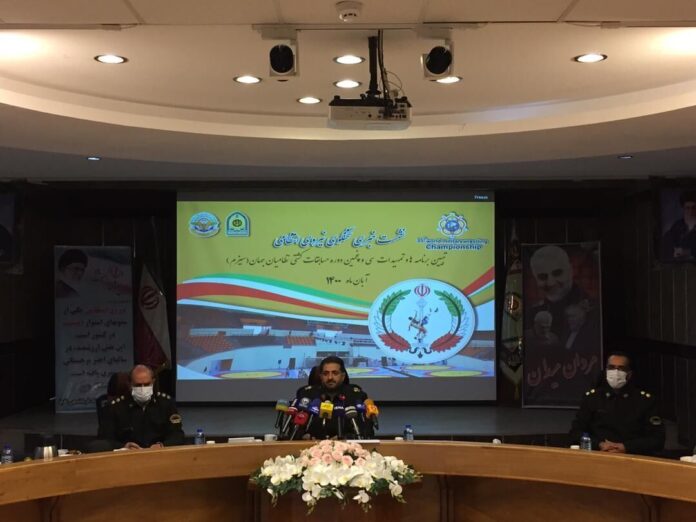
Tehran to host World Military Wrestling Championship

Brigadier General Mehdi Hajian told reporters on Wednesday that the competition was an important international event and Iran would manage it in the best manner.

He stated that International Military Sports Council (CISM) has 140 members and Iran has been a member to the body since 1957 and has hosted several events of the tournament in different fields, like volleyball.

He evaluated CISM’s goals and sports diplomacy in armed forces as significant, noting that it helps ring solidarity between armed forces of different countries, as well as peace and international security.

The competitions will be held on November 20-25. Ukraine, Guinea, France, Nigeria, Seri Lanka, Greece, Poland, Syria, and the Netherlands are some of the countries that will partake in the event.

Iranian president names new pick for Education Minister

The new proposed Minister of Education was born in 1961. He holds a PhD in Management from Tehran-based Allameh Tabatabei University. 

Nouri has had a strong executive background. He has held the following posts in his resumé: director general of Planning and Budget Department and head of the IT and Communications Headquarters of the Education Ministry; member of the Teachers Fund’s Board of Trustees; and teaching at the Teacher’s Training College of Ilam and Iranian schools in Qatar and Bahrain. 

Raeisi’s previous pick for Minister of Education lost the vote of confidence at Parliament on Tuesday. 

The president had three months to propose a nominee for the post and only six days are left from the deadline for him to introduce a candidate and get Parliament’s approval for his pick.

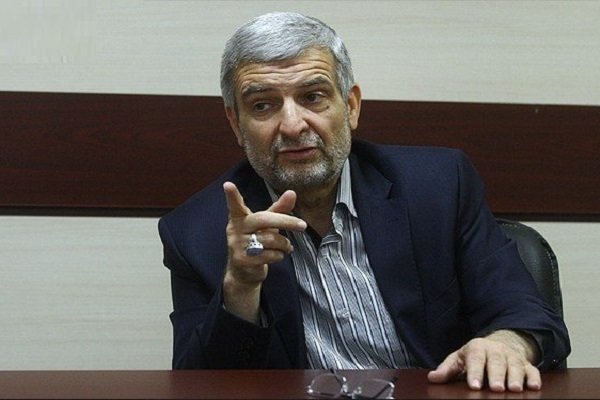
Iran Envoy: Tehran to stand by Afghanistan

Kazemi Qomi was speaking on Wednesday at the inauguration of the Iran-Afghanistan Cooperation Committees in Kabul. 

Kazemi Qomi said the Afghan people are facing numerous hardships today because foreigners have not allowed them to enjoy their natural wealth. 

He added that Iran will stand by Afghanistan in order to rehabilitate the country and make it a prosperous one. Kazemi Qomi said occupiers have fled Afghanistan but their evil impact persists. 

He said officials should avoid actions that could make the Afghan people flee their country. He added, “Let’s trust each other in a brotherly manner, set aside red tape and find common ground.” 

The Iranian envoy noted that necessities will be first raised at the Iran-Afghanistan Cooperation Committees and then the two sides must come up with a roadmap for a 10-year prospect. 

Kazemi Qomi noted that, “We are here to help the Afghan economy thrive and pave the way for Afghan exports”. Kazemi Qomi arrived in Kabul on Monday for a 3-day visit to kick-start the Iran-Afghanistan Cooperation Committees. 

He also held talks with the Taliban officials. 

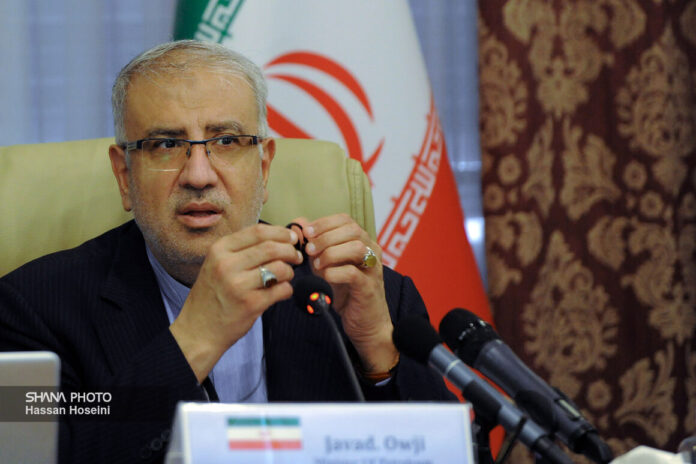
Iran: US sanctions damaging global law and multilateralism

Owji’s address reads as follows:

HE Franklin Moilna Ortiz

Esteemed President of the 23rd Ministerial Meeting of the GECF, and

Bolivian Minister of Hydrocarbons & Energy;

HE Yuri Sentyurin, Esteemed Secretary General of the GECF


Excellencies,

Ladies & Gentlemen

It is a great pleasure for me to participate in the 23rd Ministerial Meeting of the Gas Exporting Countries Forum (GECF), as the Minister of Petroleum of the Islamic Republic of Iran for the first time.

I would like to express my sincere appreciation to our friend Bolivia for the successful holding of this meeting. I hope this Ministerial Meeting could take another step towards materialization of the goals of the Forum via adopting effective and strategic decisions.

In the past two years, as a result of the COVID-19 pandemic, the global economy and consequently the gas market, have suffered significant damages, the effects of which will cause fundamental changes and transformations in the world’s energy production and consumption paradigms, even in the medium term. Despite all the difficulties in the past two years, the GECF member countries have been able to manage the challenges and uncertainties in the gas market by adhering to the principles and goals set out in the Statute of the Forum.

Mr. Chairman,

Excellencies,

Natural gas plays an important and key role in moving toward a low carbon sustainable energy system in the transition period, and due to its environmental and economic advantage, even with the growth of renewables, it could be part of the global green energy strategy to counter the impacts of climate change to promote sustainable energy supply.

Natural gas abundant resources in Islamic Republic of Iran, as well as other parts of the world makes this clean and affordable energy accessible to everyone so that they could achieve the 7th SDG approved by the UN.

I would like to stress that the global community should pay attention to common but differentiated responsibilities (CBDR) of developed countries toward developing countries, and provide them with proper opportunity to go through the energy transition period.

Technology transfer is a 50-year promise which faces numerous hardships, and developing countries especially gas exporting countries are in need of such technologies. Emergence of new policies in order to zero carbon emission, has necessitated reducing carbon volume produced in the natural gas production process, and in long-term the possibility of using new technologies such as CCUS and/or Blue Hydrogen and Methane leakage should be taken into account by developed countries. Otherwise, the attractive speeches of the leaders participating in COP26 in support of the Paris Agreement and the fight against climate change will be merely considered as speeches.

Natural gas security of demand is among important parameters ensuring adequate investment and enhancement of natural gas production capacity in the long-term. In this regard, constructive dialogue as well as cooperation with all the concerned parties including producers and consumers could guarantee natural gas security in supply and demand sides, which would be in favor of the two concerned parties. Hence, I believe promoting cooperation among GECF member countries in various fields: technology, development and gas market stability is pretty essential more than ever.

Dear colleagues,

Natural gas and LNG price unprecedented, significant and abrupt hike in Europe, Asia and America indicates developed countries’ vulnerability vis-a-vis unforeseen volatility in energy development. These developments indicate the necessity of further promotion of the level of cooperation and also depoliticizing energy production process in the world.

In order to overcome challenges of the world energy security; rather than adopting political approaches and imposing unilateral sanctions, a substantial strategy is required to restore economic logic and multilateralism.

Imposition of unilateral sanctions by the US on Islamic Republic of Iran will damage global law and multilateralism, and while targeting livelihood of people, and is in contradiction with principles and regulations of international law. This approach cannot ensure peace and international security and would not contribute to effectively deal with issues such as climate change, investment, technology transfer in energy field, particularly natural gas.

Excellencies,

I am confident you all agree with me that achieving the elevated goals behind establishment of GECF requires further cooperation and coordination among the members. Holding one of the largest natural gas reservoirs and one of the world’s largest distribution networks of natural gas, Islamic Republic of Iran expresses its readiness to pioneer cooperation in all the relevant fields.

Islamic Republic of Iran warmly welcomes any collective or bilateral cooperation with gas producing countries. As minister of petroleum of Islamic Republic of Iran, I would make efforts to secure gas exporting countries interests and to support natural gas market stability. I am confident that promoting the level of cooperation and collaboration among the GECF member countries would enable us to cope with climate change challenges, and bring about a brilliant future for the GECF member countries.

As in the past, the administration of HE Dr. Raeisi the esteemed president of I.R. Iran will keep interacting constructively with the Forum, and will effectively support its objectives in line with securing the member countries’ collective interests.

I would like to conclude by expressing my sincere appreciation to the esteemed Secretary General and the GECF Secretariat staff for their round-the-clock efforts, and once again I would like to express my gratitude to the esteemed minister of hydrocarbons and energy of Bolivia for the excellent arrangement of the Ministerial Meeting.

Thank you for your kind attention!

WSJ: Iran resumes production of advanced centrifuges

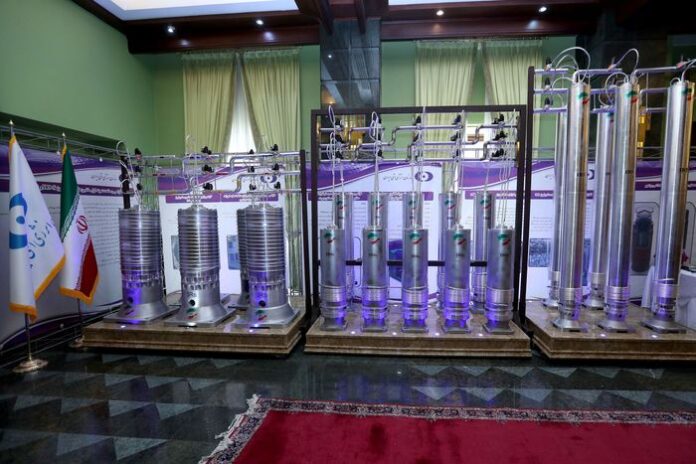
Iran has begun developing centrifuges, which can enrich uranium up to 90 percent purity, at its plant in Karaj, west of Tehran, diplomats told The Wall Street Journal.

The country may have constructed parts to build up to 170 advanced centrifuges, adding to what is believed to be an arsenal of 1,000 centrifuges stored in an underground facility.

Quoting Western sources as saying, the newspaper claimed that the new move will pose a new challenge to the administration of US President Joe Biden who is seeking talks with Joint Comprehensive Plan of Action (JCPOA) parties to return to 2015 nuclear deal.

The Barack Obama-era deal limited Iran’s nuclear programme in return for sanctions relief. But former President Donald Trump pulled out of it in 2018, calling it a “defective” deal and arguing the country would still develop weapons. The Trump administration also reimposed economic sanctions on Iran in November 2018.

Iran and the remaining signatories to the JCPOA known as the P4+1 with the indirect involvement of the United States have held six rounds of talks so far with no results. The Western powers made excessive demands during the negotiations and the talks were halted amid the change in the government in Iran.

Tehran has announced the talks on the removal of Washington sanctions will resume on November 29 in Vienna.

Iran Covid vaccine doses surpass 100 million mark

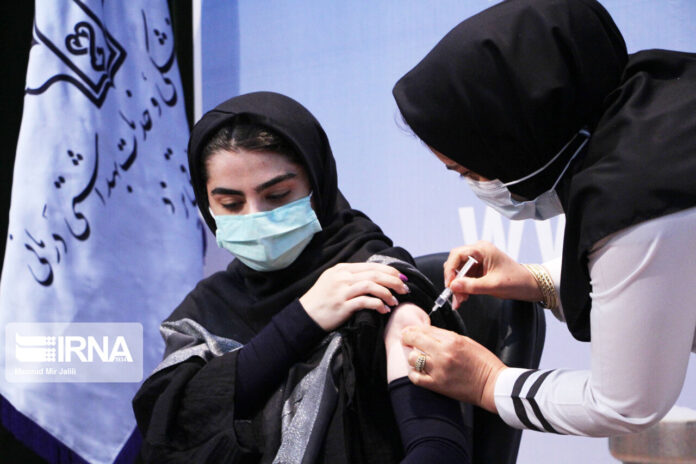
Over 56 million people were given the first dose and more than 43.5 million received the second one. 

These figures show that nearly 83 percent of the population have received the first dose of vaccine while 64 percent have been fully inoculated. 

The Ministry added that 92 percent of the jabs were administered over the past four months. 92 million out of 100 million doses were given thanks to the high rate of vaccination across Iran that came about because vaccine imports speeded up and inoculation centers worked relentlessly round the clock. 

The vaccination campaign coupled with vaccine imports and production inside Iran has brought about a downward trend in Covid deaths, infections and hospitalizations in the past couple of months.

Armenia, Azerbaijan agree ceasefire after deadly border clash

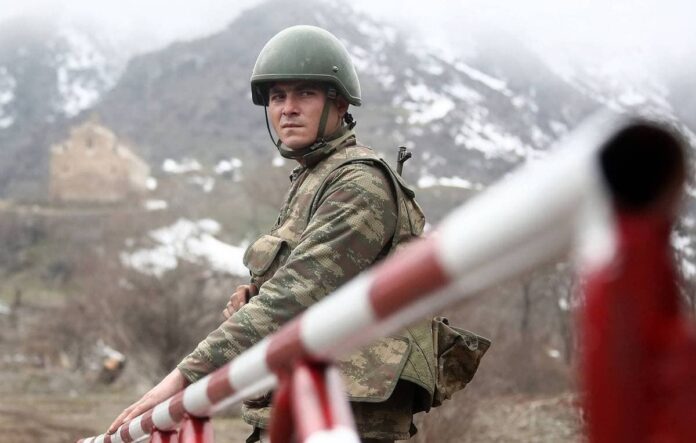
“Under the mediation of the Russian side, an agreement was reached to cease fire at Armenia’s eastern border from 18:30 (14:30 GMT). The situation has relatively stabilized,” the Armenian Defense Ministry announced in a statement.

The Azerbaijan government did not immediately confirm the ceasefire.

Armenia on Tuesday asked Russia to help defend it against Azerbaijan after a border clash in which it claimed 15 of its soldiers had been killed, 12 captured, and two combat positions had been lost.

The Azerbaijani and Armenian defense ministers have taken measures to stabilize the situation at the border after their telephone talks with their Russian counterpart, Sergey Shoigu. The situation near Mount Kilisali has normalized, the Russian Defense Ministry reported on Tuesday.

“Following telephone talks with the Azerbaijani and Armenian defense ministers conducted at the initiative of Russian Defense Minister Sergey Shoigu, the Azerbaijani and Armenian sides took measures to stabilize the situation. Hostilities near Mount Kilisali have been stopped, the situation has normalized and is under control,” it said.

According to earlier reports, Shoigu spoke over the phone with his Armenian and Azerbaijani counterparts and called on them to stop actions that might further escalate the situation.

The United Nations calls on Azerbaijan and Armenia to demonstrate restraint and use peaceful means to settle problems between themselves, Deputy Spokesperson for the Secretary-General Farhan Haq noted on Tuesday.

“We are following with concern the reports of this latest violence. And we’ll need to verify those reports. And at this point we urge all sides to exercise restraint, to act in accordance with the ninth of November and 11th of January trilateral statements and address any related concerns peacefully through dialogue. We want to avoid any return to the sort of escalation we had earlier,” he added.

The situation in Nagorno-Karabakh and the adjacent Syunik region in Armenia deteriorated dramatically in November. The sides regularly report armed incidents, including those entailing human casualties. On November 13, Yerevan and Baku exchanged accusations of shelling each other’s army positions. Apart from that, the situation is tense at the sections of the highway linking Armenia and Iran that came over under Baku’s control under the November 9, 2020, statement by the leaders of Armenia, Azerbaijani and Russia and where a post of Russian border guards was set up to ensure the free movement of people and motor vehicles.

On Tuesday, intensive hostilities sparked in border districts of Armenia’s Syunik Province. Yerevan stated that the Azerbaijani Armed Forces commenced an advance deeper into the republic’s territory, threatening the highway connecting the capital with Armenia’s southern regions and Iran. Baku blamed Yerevan, accusing the Armenian Armed Forces of a provocation. According to the Ministry of Defense of Azerbaijan, Armenian servicemen attacked Azerbaijani outposts.

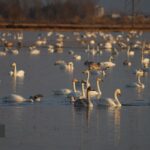
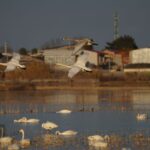
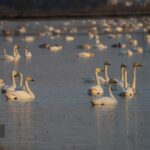
Migrant swans land in Mazandaran wetlands


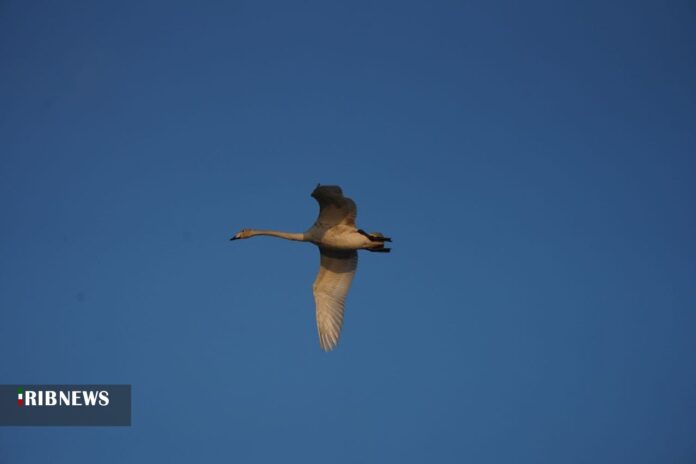
The wetlands of Sorkhrood in Mahmood Abad and Azbaran in Fereydoonkenar are hosing the migratory birds.  

IRIB quoted the head of Wildlife Supervision Office of Mazandaran’s Department General of Environmental Protection as saying each year, with the beginning of the cold season in the northern Caspian Sea and parts of Siberia, migrant swans begin flocking to the lower latitudes in the form of a small population in mid-November.

Kouros Rabiei said the arrival of migrant birds into the wetlands of Mazandaran Province depends on weather conditions. 

Rabiei added that the population of swans includes such species as the screamers (Faryadkesh) and the small ones (Kouchak) while most of the screamers land in the wetlands of Sarkhroodd in Mahmood Abad and Azbaran in Fereydoonkenar. 

He went on to say that most of the swans have entered the wetlands of the province since mid-December and with the gradual increase of temperature from the end of February, after three months of the winter, they will start migrating back to Siberia. 

Rabiei also said increased migration by birds and food shortages force the swans to move to other dams where they risk getting hunted.

WHO: Over 16mn Yemenis engulfed in food insecurity

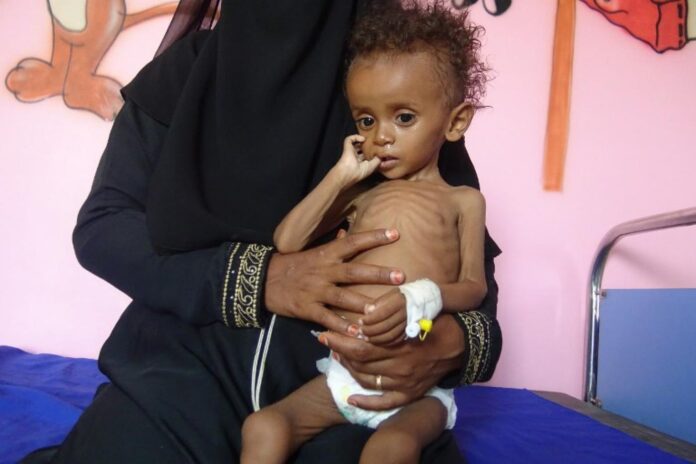
The WHO has warned that 75 percent of Yemeni children suffer from acute malnutrition.

In a post on its Twitter account on Monday, the UN agency responsible for international public health warned that three out of four children in Yemen are “chronically malnourished.”

It also estimated that 16.2 million Yemenis – more than half of the country’s population of 30 million – are food insecure.

Acute malnutrition is responsible for almost one-third of all deaths in children under five years of age. It damages a child’s physical development and causes intellectual or cognitive impairment among those who survive. Malnutrition is largely irreversible, perpetuating illness, poverty, and inequality.

Back in February, four UN agencies, including the WHO, warned that acute malnutrition and severe acute malnutrition have increased by 16 and 22 percent, respectively, among Yemeni children under five years of age from 2020.

The figures are among the highest levels of malnutrition recorded in the country since the Saudi war began in 2015, they added.

“The increasing number of children going hungry in Yemen should shock us all into action,” said UNICEF Executive Director Henrietta Fore at the time.

“More children will die with every day that passes without action. Humanitarian organizations need urgent predictable resources and unhindered access to communities on the ground to be able to save lives,” Fore had noted.

Today, Yemen is one of the most dangerous places in the world for children to grow up, with high rates of communicable diseases, limited access to health services, and inadequate sanitation and hygiene systems.

Last month, the UN Security Council voiced “grave concern for the dire humanitarian situation [in Yemen], including prolonged starvation and the growing risk of large-scale famine, which is compounded by the dire economic situation.”

Saudi Arabia, supported by its regional and Western allies, launched the devastating military aggression against its southern neighbor in March 2015 in collaboration with a number of its allied states and with arms and logistics support from the US and several Western states.

The aim was to return to power the former Riyadh-backed regime and crush the popular Ansarullah movement which has been running state affairs in the absence of an effective government in Yemen.

The war has stopped well shy of all of its goals, despite killing tens of thousands of Yemenis and turning entire Yemen into the scene of the world’s worst humanitarian crisis.

Meanwhile, Yemeni forces have in recent months gone from strength to strength against the Saudi-led invaders and left Riyadh and its allies bogged down in Yemen.

Throughout the course of the war, the United States has supported and armed Saudi Arabia. The Ansarullah movement, which runs the Sana’a government, frequently refers to the war as the “US-Saudi aggression” to underscore Washington’s leading role in the war.

Despite his February promise to end “all American support for offensive operations in the war in Yemen, including relevant arms sales,” US President Joe Biden has recently approved $650 million worth of weapons purchases to Saudi Arabia.