Saturday, December 27, 2025
Home Blog Page 2271

US charges two Iranians with interference in 2020 election

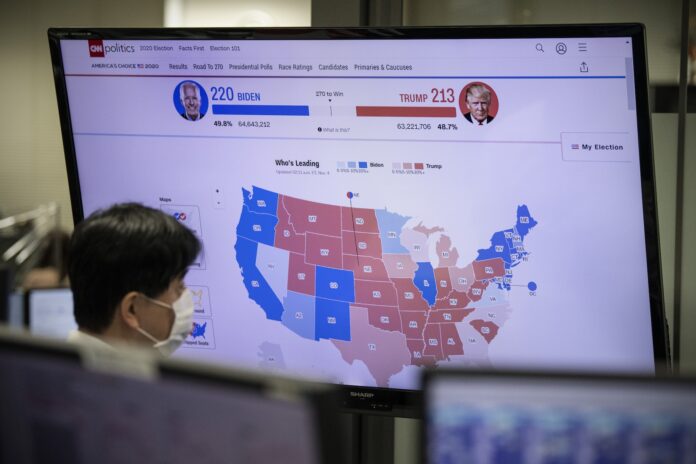
The Justice Department announced charges Thursday against two Iranians who are accused of helping to orchestrate a cyber-enabled campaign to intimidate and influence American voters in the 2020 election.

The campaign, which US intelligence officials first described in October 2020, involved emails to tens of thousands of registered voters purporting to be from the far-right extremist group the Proud Boys. The emails threatened the recipients with physical injury unless they switched parties and voted for President Donald Trump.

The indictment, filed in the Southern District of New York, alleges that the two Iranian defendants tried to compromise voter registration websites in 11 states “to create the appearance that election results could not be trusted” by misrepresenting that the election web sites could accept fraudulent ballots, a senior Justice Department official told reporters on a conference call.

One attempt was successful, prosecutors say, and the pair got information about more than 100,000 voters. The targeted state wasn’t identified.

The defendants were identified as Seyyed Mohammad Hosein Musa Kazemi and Sajjad Kashian. The State Department’s Rewards for Justice Program is offering a reward of up to $10 million for information about their activities, officials added.

The pair is also charged with creating and disseminating a video containing “disinformation about purported election infrastructure vulnerabilities” and with hacking into an unnamed US media company’s computer network, an attack that was thwarted before any false claims could be sent.

The campaign didn’t work — no voter registrations were changed, officials noted.

“This indictment details how two Iran-based actors waged a targeted, coordinated campaign to erode confidence in the integrity of the US electoral system and to sow discord among Americans,” said Matthew G. Olsen, the assistant attorney general for national security.

“The allegations illustrate how foreign disinformation campaigns operate and seek to influence the American public. The department is committed to exposing and disrupting malign foreign influence efforts using all available tools, including criminal charges,” he added.

The Iranians aren’t in custody, but the charges and the sanctions will hamper their travel.

The indictment doesn’t attribute the campaign to the Iranian government, but intelligence officials have done so publicly.

The Justice Department identified Kazemi and Kashian as “experienced Iran-based computer hackers who worked as contractors for an Iran-based company formerly known as Eeleyanet Gostar, and now known as Emennet Pasargad”.

Eeleyanet Gostar is known to have provided services to the Iranian government, the Justice Department announced in a news release.

Kazemi and Kashian are both charged with one count of conspiracy to commit computer fraud and abuse, intimidate voters and transmit interstate threats, which carries a maximum sentence of five years in prison; one count of voter intimidation, which carries a maximum sentence of one year in prison; and one count of transmission of interstate threats, which carries a maximum sentence of five years in prison.

Kazemi is also charged with one count of unauthorized computer intrusion, which carries a maximum sentence of five years in prison, and one count of knowingly damaging a protected computer, which carries a maximum sentence of 10 years in prison.

The Justice Department statement stated the Treasury Department separately imposed sanctions on Emennet Pasargad, Kazemi, Kashian and four other Iranian nationals who lead Emennet Pasargad.

US suspicions about Iranian interference in last year’s election surfaced in October 2020. At the time, Tehran rebuffed the allegations as “repetitive, baseless and false”.

“The Islamic Republic of Iran rejects the hackneyed claims and the fabricated, amateurish and deceitful reports from the US regime’s officials, stressing once again that it makes no difference to Tehran which of the two candidates would reach the White House,” the Iran’s Foreign Ministry wrote on Twitter on October 22, just weeks before the election.

In late September 2019, then-Foreign Minister Mohammad Javad Zarif denied Iran would interfere with the upcoming US presidential election and stressed Tehran doesn’t have a preference in the race.
US senators move to block major arms sale to Saudi Arabia

Three senators on Thursday made a bipartisan push aimed at blocking a proposed $650 million weapons sale to Saudi Arabia.

Sens. Rand Paul (R-Ky.), Mike Lee (R-Utah) and Bernie Sanders (I-Vt.) introduced a joint resolution disapproving of the proposed weapons sale to the Middle Eastern country, pointing to its role in Yemen’s war.

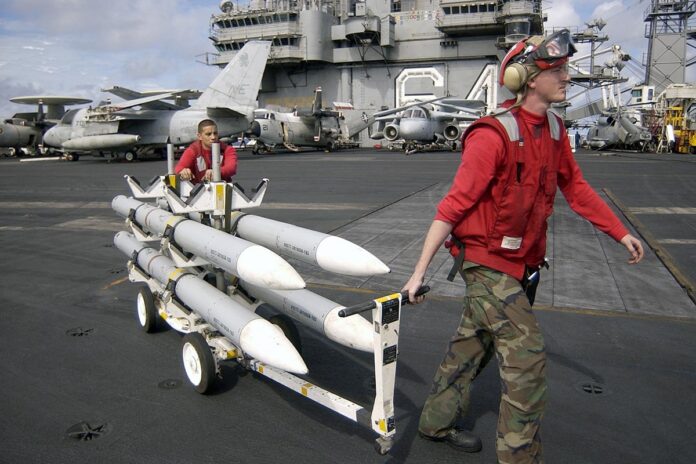
The joint resolution seeks to block the sale of items and services including 280 air-to-air missiles, 596 LAU-128 Missile Rail Launchers, containers, support equipment, spare and repair parts and logistical support services.

“A message needs to be sent to Saudi Arabia that we don’t approve of their war with Yemen,” Paul said in a statement, adding, “By participating in this sale, we would not only be rewarding reprehensible behavior, but also exacerbating a humanitarian crisis in Yemen. I urge Congress and the Biden Administration to consider the possible consequences of this sale that could accelerate an arms race in the Middle East and jeopardize the security of our military technologies.”

“As the Saudi government continues to wage its devastating war in Yemen and repress its own people, we should not be rewarding them with more arms sales,” Sanders stated in a statement.

Last week, Rep. Ilhan Omar (D-Minn.) introduced her own joint resolution aimed at blocking the sale of weapons to Saudi Arabia, citing the same reasoning.

“It is simply unconscionable to sell weapons to Saudi Arabia while they continue to slaughter innocent people and starve millions in Yemen, kill and torture dissidents, and support modern-day slavery,” Omar announced in a statement.

The State Department approved this $650 million weapons sale, the first major arms deal made with Saudi Arabia during Biden’s presidency, earlier this month.

While President Biden cut off Washington support for Saudi-led operations in Yemen’s war, he has been criticized by Democrats and activists for not doing more to punish civil rights abuses in the kingdom, including the 2018 killing of US-based Saudi journalist Jamal Khashoggi.

Senior Iranian cleric Ayatollah Mojtahed Shabestari laid to rest in Qom

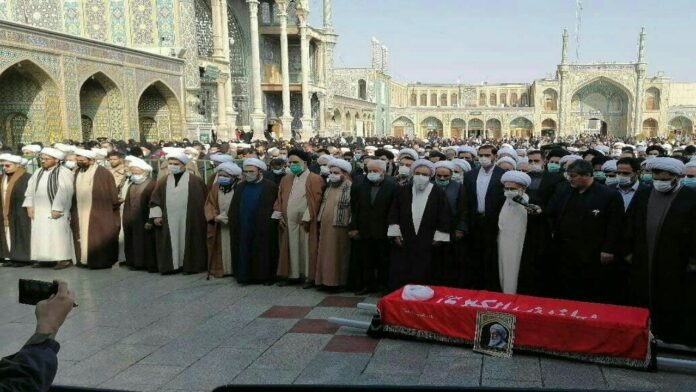
Ayatollah Mojtahed Shabestari’s body was then laid to rest inside the shrine of Hazrat Masoumeh, the sister of Imam Reza (Peace be Upon Him), the 8th Shia Imam. Ayatollah Nouri Hamedani led the prayers for Ayatollah Shabestari’s body.

The office of the Leader of Iran’s Islamic Revolution in Qom is going to hold a mourning ceremony for Ayatollah Mojtahed Shabestari later on Friday inside the Shrine of Hazrat Masoumeh.

Ayatollah Mojtahed Shabestari passed away on Wednesday after being hospitalized due to a heart attack. He was a member of Iran’s Expediency Council.

Iran blasts any interference in IAEA work

FILE PHOTO: The logo of the International Atomic Energy Agency (IAEA) is seen at their headquarters during a board of governors meeting, amid the coronavirus disease (COVID-19) outbreak in Vienna, Austria, June 7, 2021. REUTERS/Leonhard Foeger

The comment was reacted to the recent remark by the spokeswoman for the French Foreign Ministry, Anne-Claire Legendre, through which she had called on the IAEA to send a “strong message” to Iran and urged that Tehran return to its nuclear obligations “without delay”.

Saeed Khatibzadeh, the Spokesman for the Iranian Foreign Ministry, reacted to the baseless remarks of his French counterpart on Friday and reiterated that any stance of officials and political institutions of different countries with the aim of influencing behavior of the IAEA is considered to be tarnishing the technical and professional prestige of the IAEA.

Khatibzadeh stated, “As a responsible member of the International Atomic Energy Agency, Iran has always emphasized that IAEA’s prestige, as a technical and specialized body of the United Nations, must be free from any politically-motivated behavior and action.”

Accordingly, any stance taken by officials and political institutions of different countries with the aim of influencing behavior of the International Atomic Energy Agency is considered to be as tarnishing technical and professional status of IAEA, he said, adding, “Undoubtedly, the trick of instrumentally use of capacity of the International Atomic Energy Agency, rather than benefiting its misusers, will question the international legitimacy of the IAEA’s actions.”

IAEA confirms Grossi visiting Iran within days

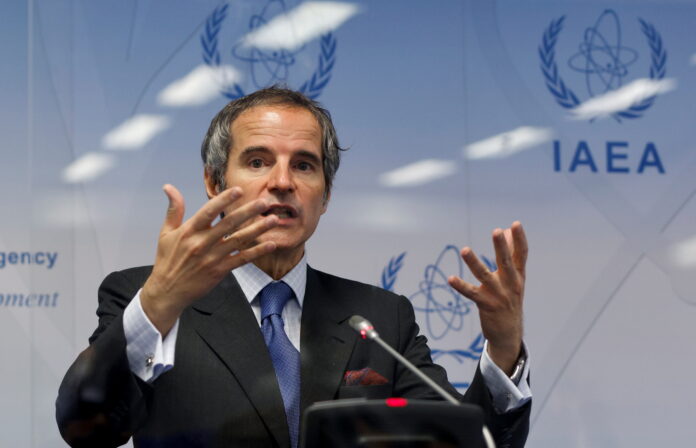
International Atomic Energy Agency (IAEA) Director General Rafael Grossi attends a news conference during a board of governors meeting at the IAEA headquarters in Vienna, Austria, June 7, 2021. REUTERS/Leonhard Foeger

The United Nation nuclear watchdog head will hold meetings with Iranian officials in Tehran on Tuesday, the International Atomic Energy Agency confirmed on Thursday.

Behrouz Kamalvandi, spokesman for the Atomic Energy Organisation of Iran (AEOI), told state media on Wednesday Grossi would meet Foreign Minister Hossein Amir Abdollahian and nuclear energy chief Mohammad Eslami.

The IAEA did not say in its statement whom Grossi would meet.

“We can confirm that Director General Rafael Mariano Grossi will meet with high-level Iranian government officials in Tehran on Tuesday, 23 November,” the IAEA announced.

The visit will be on the eve of a quarterly meeting of the IAEA’s Board of Governors and before indirect talks between Iran and the United States on Nov. 29 on reviving their nuclear deal.

Two IAEA reports to member states on Wednesday detailed a range of conflicts between the agency and Iran, ranging from Tehran’s continued failure to explain the origin of uranium particles found at apparently old but undeclared sites, to its refusal to let the IAEA re-install surveillance cameras at a workshop hit by apparent sabotage in June.

Iran has stopped observing some conditions of the Joint Comprehensive Plan Of Action (JCPOA) in 2019, after the United States withdrew from the plan in 2018 under then President Donald Trump and began imposing sanctions on Tehran.

The head of AEOI has said the IAEA should not turn into a plaything for terrorist groups.

Eslami stated “nuclear terrorism” has levelled accusations against Iran’s nuclear program using “seditious ploys and … undocumented evidence”.

“Such behaviour has become threadbare,” noted Eslami.

He also weighed in on the level of uranium enrichment in Iran, stressing Tehran remains committed to regulations within the framework of the Additional Protocol and lives up to its obligations under the Nuclear Non-Proliferation Treaty (NPT).

“The Islamic Republic of Iran’s nuclear program is peaceful, and uranium is enriched to a level which could be used for peaceful projects,” he added.

Khatibzadeh: US, E3 and Arab statement on Iran not worth response

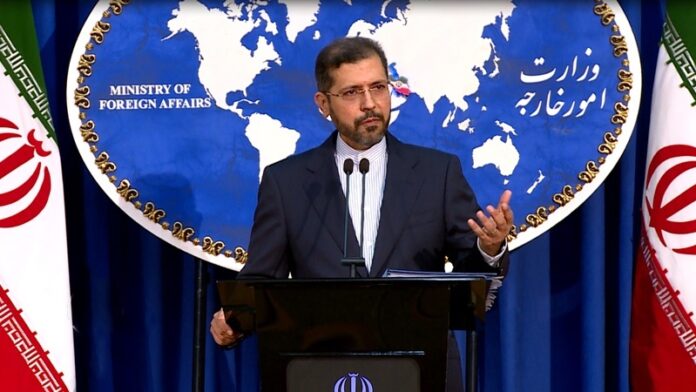
Saeed Khatibzadeh, in response to reporters’ questions about the statement added this meeting and its statement are fabricated, pretentious and illegitimate that they are not worth a response.

Khatibzadeh stated that the U.S. government as the violator of the United Nations Security Council Resolution 2231, on the Iran nuclear deal, and the party that withdrew from the Joint Comprehensive Plan of Action is responsible for the current situation regarding the deal.

He added the US as the only country with a history of using nuclear weapons, with a black record of numerous interventions in the domestic affairs of different countries, and the main seller of weapons and ammunition to different countries of the world, is once again trying to create a crisis and campaign against Iran.

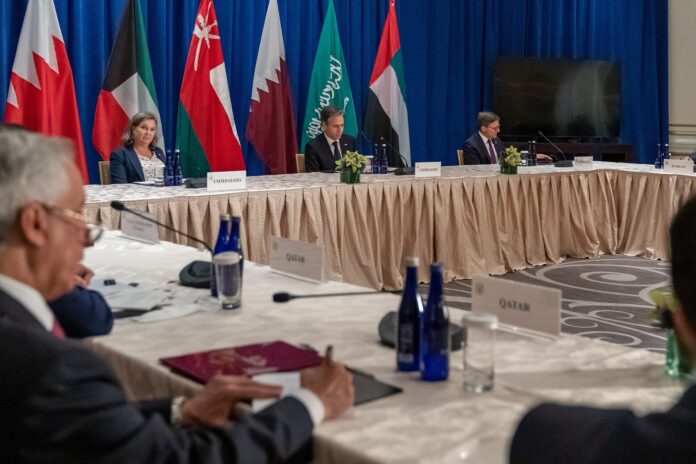
At the end of a meeting in the Saudi capital Riyadh, the US point man on Iran Robert Malley, European envoys, and officials from the Persian Gulf Cooperation Council issued a statement voicing concern about Iran’s nuclear program, its regional influence and also Tehran’s missiles.

The Iranian foreign ministry spokesman also said countries that must be held accountable for their adventures and aggressions in the region, including the seven-year aggression again Yemen, cannot make baseless accusations against others and absolve themselves of responsibility for these crimes and divert public opinion.

Russia welcomes Arab states revised stance on Iran nuclear deal

In a tweet on Wednesday, Russia’s lead negotiator at the Vienna talks Mikhail Ulyanov reacted to the outcome of a recent round of talks between the United States and members of the Persian Gulf Cooperation Council (PGCC) in the Saudi capital, Riyadh, which focused on Iran.

Following the Riyadh talks, Washington and its PGCC allies — Saudi Arabia, Bahrain, Kuwait, Oman, Qatar, and the United Arab Emirates — issued a joint statement revolving around a number of Iran-related topics, including the nuclear deal and the upcoming negotiations in Austria.

The statement said the US and PGCC member states “welcomed” the upcoming seventh round of negotiations in Vienna on the fate of the deal, officially named the Joint Comprehensive Plan of Action (JCPOA), which will center around the removal of the American sanctions and the deal’s revitalization.

The two sides called for “an urgent mutual return to full compliance with the JCPOA, that would help pave the way for inclusive diplomatic efforts to address all issues that are necessary to ensure sustainable safety, security, and prosperity in the region.”

The call was suggestive of a shift in the policy of Saudi Arabia, which was once one of the very few proponents — along with Israel and its vassal Persian Gulf states — of the decision by then-US President Donald Trump to pull Washington out of the JCPOA in 2018.

In his tweet, Ulyanov welcomed the apparent U-turn in the PGCC’s highly-belligerent Iran policy and stated, “We observe very positive progress. Not long ago some of these states were against JCPOA and welcomed the US withdrawal from the nuclear deal.”

“Now they demonstrate the ability to draw lessons and revise their position in the light of experience gained. Deserves respect,” the Russia’s ambassador at the United Nations International Atomic Energy Agency in Vienna added.

The Saudi kingdom severed ties with Iran in January 2016 after angry protests and violence targeted its diplomatic missions in Tehran and Mashhad in the aftermath of Riyadh’s execution of a senior Shia Muslim figure.
With the election of Trump in 2016 and the ensuing rise of ardent Iran hawks to power in Washington, Riyadh under Crown Prince Mohammed bin Salman, Saudi Arabia’s de facto ruler, who had Trump’s firm support, further intensified its hostile rhetoric against the Islamic Republic.

However, with a change of administration in the US, and as Riyadh faced more defeats in its bloody coalition war on Yemen, the kingdom chose to soften its Iran policy. Iran and Saudi Arabia are now involved in a diplomatic process aimed at narrowing down their differences and restoring ties.

Amid widespread reports of intense lobbying and pressure on the part of America’s closest Middle East allies, namely Israel, Saudi Arabia and the UAE, Trump decided to pull the US out of the JCPOA despite Iran’s full compliance with its nuclear undertakings, as repeatedly certified by the UN nuclear agency, a move that triggered international criticism.

The US then unleashed a “maximum pressure” campaign of economic pressure against Iran, which was likewise cheered by the same US allies.

Iran fully honored its nuclear obligations for an entire year, after which it decided to ramp up its nuclear work as a legal “remedial measure” against the US violation of the deal and the abject failure on the part of the other signatories, the E3 in particular, to safeguard its benefits.

Envoys from Iran and the P4+1 — Britain, France, Germany, Russia and China — are expected to hold the seventh round of discussions in Vienna on November 29. The negotiations were paused in June, when Iran held its presidential election. Since then, the new Iranian administration has been reviewing the details of the six rounds of discussions held under the previous administration.

The US administration of Joe Biden has announced it is willing to rejoin the deal, but it has shown an overriding propensity for maintaining some of the sanctions as a tool of pressure. Tehran insists that all sanctions should first be removed in a verifiable manner before it reverses its remedial measures.

Armenia and Azerbaijan accuse each other of breaching ceasefire

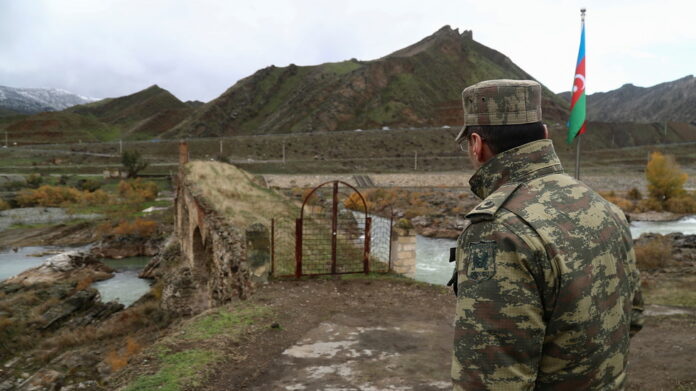
The Azerbaijani Armed Forces opened indiscriminate fire along some parts of the Armenia-Azerbaijan border in the Tavush region late on Wednesday evening, the Armenian Defense Ministry said in a statement on Thursday.

“Late on the evening of November 17, the Azerbaijani armed forces opened indiscriminate fire along some parts of the Armenian-Azerbaijani border in the Tavush region. Enemy fire was suppressed through retaliatory actions. The situation on the Armenian-Azerbaijani border was relatively stable as of 10:00 am on November 18,” the statement added.

According to the Armenian Defense Ministry, search continues for the service members who went missing during clashes in the Syunik region and efforts are underway to repatriate prisoners of war.

The Azerbaijani Defense Ministry said in a statement on Thursday the Armenian Armed Forces opened fire at Azerbaijani positions in the Tovuz border district late on Wednesday night.

“The Armenian Armed Forces shelled Azerbaijani positions in the Munjuglu, Aghbulag, Gosha, Kokhanebi and Asrik Jirdakhan settlements of the Tovuz region, intermittently firing in the direction of the Chinarli and Mughanjig settlements of the Shamshaddin region, between 05:54 and 10:52 pm on November 17. The shelling involved weapons of various calibers,” the statement added.

According to the Azerbaijani Defense Ministry, the attacks were suppressed by return fire.

Intense fighting between the Armenian and Azerbaijani armed forces broke out in the border areas of Armenia’s Syunik region on Tuesday. Yerevan announced that the Azerbaijani armed forces had launched an offensive into Armenia’s territory, which threatened an international highway connecting the Armenian capital with the country’s southern regions and Iran. Baku laid the blame on Yerevan, accusing the Armenian Armed Forces of staging a provocation. According to the Azerbaijani Defense Ministry, Armenian troops attacked Azerbaijani positions. In such a situation, Russian Defense Minister Sergei Shoigu held separate telephone talks with his counterparts from Armenia and Azerbaijan, Suren Papikyan and Zakir Hasanov. The Russian Defense Ministry stated in a statement that following the conversations, the Armenian and Azerbaijani defense chiefs took measures to stabilize the situation on the border.

Later, the Armenian Defense Ministry announced a ceasefire between Yerevan and Baku after recent border clashes is now largely being observed.

The defense ministry also reported on Wednesday communication is lost with 24 Armenian soldiers after recent border clashes with Azerbaijan, and 13 more troops were captured.

“On the Armenian side, one killed, 13 soldiers captured. During the hostilities, communication with 24 servicemen was lost, their fate is currently unknown. Intensive work is underway to find servicemen. Two combat positions came under the control of the enemy,” the ministry announced.

Armenia also claimed that up to 70 Azerbaijani troops were killed or injured during the clash, and Baku lost four armoured personnel carriers, one Sandcat armoured vehicle, and five other vehicles.

“With the mediation of the Russian side, negotiations are underway to resolve the situation and return the captured Armenian servicemen,” the ministry added.

In turn, the Azerbaijani Defense Ministry said seven Azerbaijani soldiers were killed and 10 others got injured during recent border clashes against Armenia.

“Seven Azerbaijani servicemen were killed in the clashes, ten were wounded,” the ministry stated, adding that the situation at the border has stabilized.

UN warns Daesh operative present across Afghanistan

The Taliban has proven unable to prevent the growth of Daesh (ISIL or ISIS) Afghanistan affiliate, the UN envoy for the war-torn nation warned on Wednesday.

Deborah Lyons, Secretary-General Antonio Guterres’ special envoy, told the UN Security Council that the Daesh terrorist group has grown from being in only “a few provinces and Kabul” to now being present “in nearly all” of the country and is “increasingly active”.

She pointed to data that indicated the group has dramatically escalated attacks across the country from mid-August, when the Taliban were increasingly taking territory from the former internationally-recognized government. That includes 13 attacks in the second half of August, 38 in September and 48 the following month.

Daesh Afghanistan affiliate claimed just 60 attacks in 2020.

“The Taliban insist that they are waging a concerted campaign against ISILKP, but this campaign is worrying in that it appears to rely heavily on extra-judicial detentions and killings of suspected ISILKP members,” she said, using an acronym to refer to an alternative name for the group – the Islamic State in Iraq and in Levant, Khorasan Province.

“This is an area deserving more attention from the international community,” added Lyons.

Meanwhile, Afghanistan’s economy has been in freefall following the Taliban’s seizure of power, with about a 40% reduction in GDP since August, and Lyons warned that should the situation deteriorate further, it would “heighten the risk of extremism”.

“The continued deterioration of the formal economy will provide impetus to the informal economy, including illicit drugs, arms flows and human trafficking,” she stated.

“We must focus for the next three or four months on helping the most vulnerable Afghans endure the winter, and we must do so without undermining the institutions and coping mechanisms that are keeping the rest of the population from sliding into greater vulnerability,” she continued.

The envoy said the country is on the brink of “humanitarian catastrophe”, pointing to food scarcity and the country’s crumbling economy, and warned that extremism could arise due to current conditions.

She stated the regional and global community must continue helping Afghanistan as it heads into the winter, where pressing issues could lead to “terrible loss of life”.

“Now is not the time to turn away from the Afghan people. I stressed this to the security council, stressed the need for the regional and the global community to remain engaged in helping the people of Afghanistan as they face this very difficult winter with huge problems of not just food scarcity but a crumbling economy,” Lyons added.

“The Afghan people should not feel abandoned or forgotten by the international community, or any of the regional countries for that matter, due to the Taliban takeover. We must find ways to prevent an imminent humanitarian catastrophe and the terrible loss of life that could happen over the winter, and we can prevent it,” she noted.

A report from the UN’s World Food Program and Food Agriculture Organization published last month found that nearly 19 million Afghans, or 47 percent of the population, were seeing high levels of acute food insecurity between September and October of this year.

The group said the main forces driving the acute food insecurity was “drought and its impacts on crops and livestock, the collapse of public services, a severe economic crisis and increasing food prices”.

Circumstances are expected to worsen in the coming months. Between November 2021 and March of next year, roughly 22.8 million Afghans will be experiencing “high levels of acute food insecurity”, which is equivalent to 55 percent of the total population, the report added.

A lack of international aid has contributed to the worsening conditions in Afghanistan, according to a report.

Lyons on Wednesday said the main driver behind the impending humanitarian catastrophe is financial sanctions imposed on the Taliban, contending that such tolls have “paralyzed the banking system, affecting every aspect of the economy”.

She added additional support from the regional and international community could make a “huge, live-saving difference”, while also calling on “de facto authorities” in Afghanistan to respond to the concerns of individuals in the country.

“It does not have to be this way. We all recognize what is required to prevent the economic and societal collapse. We need now to work to find ways to prevent the millions of Afghans who are suffering and to counter any destabilization in the region,” she continued.

The Taliban, who ruled Afghanistan from 1996 to 2001, took power again on August 15 as the US was in the middle of a troop withdrawal. The group announced the formation of a caretaker government in early September. No country has yet recognized its rule.

Daesh, an ideological foe of the Taliban, initially secured a foothold in eastern and northern Afghanistan, particularly in the eastern province of Nangarhar, which is regarded as its base in the war-torn country.

Soon after the Taliban’s takeover of the country, Suhail Shaheen, a spokesman for the group, noted that during a three-year-long war with Daesh, the Taliban had managed to clear the northern and eastern parts of Afghanistan from the presence of the Takfiri group, stressing that “there is no Daesh in Afghanistan” anymore.

However, the terror group has expanded and increased its deadly attacks since then and killed people, mostly Shia civilians, across Afghanistan, including the capital, Kabul.

The UN envoy has also announced that the UN mission regularly received credible reports of house searches and the “extrajudicial killings” of former security personnel and officials by the Taliban.

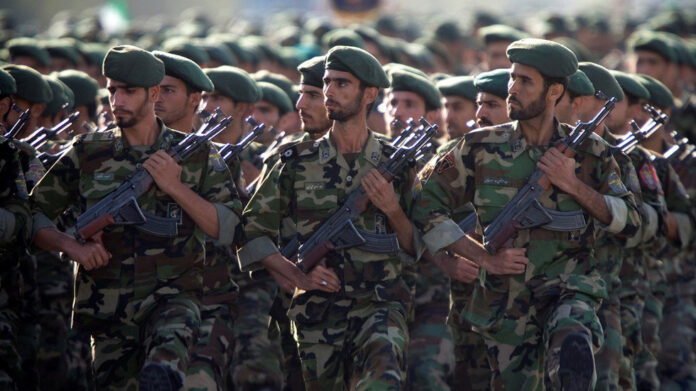
Iran says to give crushing response to any aggression

Despite the enemies’ advantages in economic, scientific and military fields, the Islamic Revolution front has always been victorious over the past decades, Fadavi said in a speech on Wednesday in the northern province of Golestan.

The adversaries thought they could undermine the foundation of the Islamic Revolution via hard war but they have realized that the revolution’s power and capability is beyond what they could imagine, the senior commander added.

He also stated that the enemy cannot even imagine the scope of the Islamic Republic’s deterrent power, warning that the country would respond powerfully to even the slightest act of aggression.

In comments in April, Chief of Staff of the Iranian Armed Forces Major General Mohammad Hossein Baqeri noted all Iranian military forces are ready to give a decisive and crushing response to any threat at any level in such a way that the enemies of Iran would regret taking a hostile action against the Islamic establishment.