Thursday, January 1, 2026
Home Blog Page 2253

Raisi calls for expansion of economic ties with Venezuela

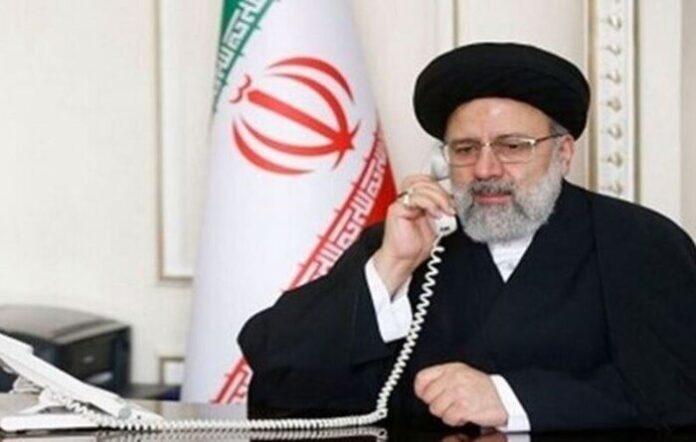
Raisi said the bilateral ties between Tehran and Caracas must be boosted, adding expanding relations, particularly economic ties, is a must.

Raisi referred to the Venezuelan people and government’s desire for independence, justice, opposition to arrogance, saying the reason for the sanctions imposed by arrogant powers including the US on Venezuela is its quest for independence and freedom.

Raisi stated this telephone conversation can be a turning point for the development of relations and increased trade and economic cooperation between Iran and Venezuela. Raisi also congratulated Maduro on the successful holding of elections in Venezuela.

Referring to the position of Iran and Venezuela in OPEC, Raisi said oil cooperation between the two countries should take a new form and both sides need to take greater strides in refining and supplying petrochemical resources.

Meanwhile, Maduro said in the phone call, “Despite threats and attacks on Venezuela by imperialism, we have been able to defend internal peace through efforts of our people”.

He added that Iran and Venezuela can together give a big momentum to bilateral ties, especially in the fields of energy and trade.

Maduro noted that Tehran and Caracas must do something to stabilize OPEC in the oil market. “I am very optimistic that with the help of joint commissions we can sign new agreements,” the Venezuelan president said.

Iran’s top negotiator: I’m optimistic about future of talks

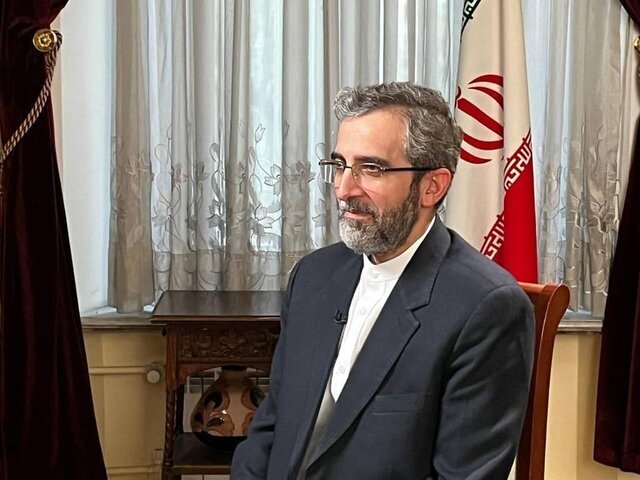
He was speaking in an exclusive interview with Al-Jazeera a day after the end of the talks in Vienna with the 4+1 group of countries.

He reiterated that the sanctions removal and the need for Iran to continue its nuclear program are laid out in the two drafts Tehran presented to the 4+1 group and the issue of verification of the sanctions removal is outlined in a third draft that has yet to be completed and presented to the other parties to the JCPOA.

Bagheri said Iran’s proposals show it is serious about the talks and cannot be rejected because they are in line with the 2015 nuclear deal.

He also referred to the Israeli regime’s effort to disrupt the Vienna talks, saying Tel Aviv’s claim that Iran is enriching uranium to 90 percent purity was refuted by the IAEA’s chief Rafael Gross.

Asked what happens if the Zionist regime attacks Iran’s nuclear facilities, Bagheri said the Zionists should only dream of attacking Iran.

The chief Iranian negotiator added that he is optimistic about the final outcome of the negotiations. He however noted that Iran will not be deceived because it does not trust the other side.

Pentagon: US strike may have killed Syrian civilians

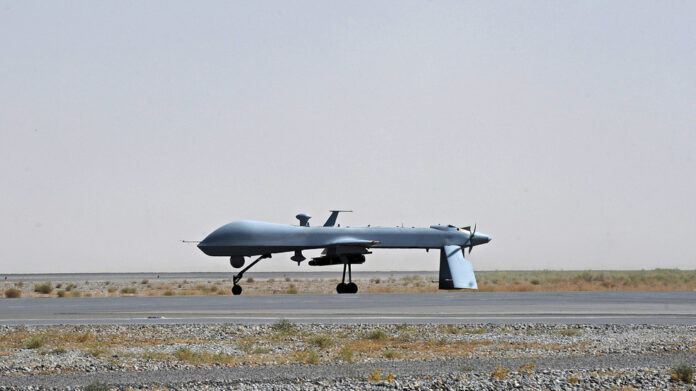
US Central Command (CENTCOM), which oversees military operations across the Middle East, announced the upcoming probe on Friday, hours after an MQ-9 Reaper unmanned aerial vehicle bombed an unspecified location in Idlib province in what  CENTCOM described as a “precision strike”.

“We abhor the loss of innocent life and take all possible measures to prevent them. The possibility of a civilian casualty was immediately self-reported to US Central Command,” spokesman Captain Bill Urban stated in a statement obtained by CNN.

“We are initiating a full investigation of the allegations and will release the results when appropriate,” he added.

Friday’s drone mission follows another strike on Idlib in September, which was alleged to have killed a senior terrorist operative. The military claimed no civilians had been killed in that attack. The use of US air power in Syria has slowed in recent years – at least in terms of what the Pentagon is willing to publicly acknowledge.

Last month, a New York Times investigation suggested an air strike in March 2019 had hit “a large crowd of women and children huddled against a river bank” near the town of Baghuz, and may have resulted in the Pentagon’s largest civilian casualty incident in the country. Following the Times probe, CENTCOM reluctantly admitted it may have killed up to 80 people, including some non-combatants, though it argued the women and children may have been working on behalf of the Islamic State (IS, formerly ISIS or ISIL) terrorist group at the time they perished.

Another high-profile American strike on the Afghan capital Kabul over the summer – among the last US combat operations in its 20-year war in the country – was later found to have killed 10 civilians, including eight children. While the Defense Department initially deemed that strike a success, it later acknowledged these deaths, following a Times investigation.

Iranian soldier praised for defending woman against thief

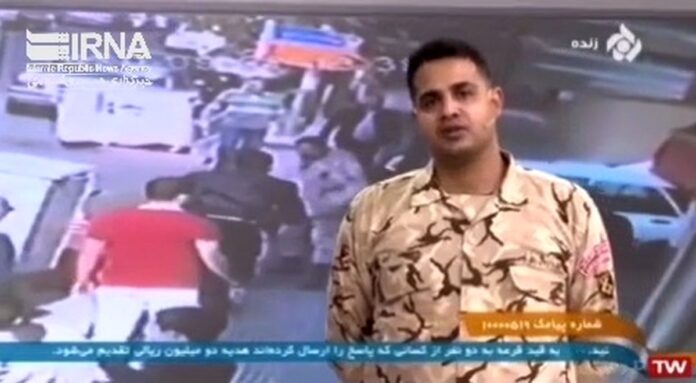
The announcement was made by an official at Imam Hossein University of Iran where the soldier is doing military service.

Earlier, footage went viral on social media showing the soldier hitting the thief with his car while the man was trying to snatch a passing woman’s purse by force.

After hitting the stealer, the soldier got off his car and began fighting him to take back the purse. This gesture drew widespread admiration from people in Iran.

On Saturday, the soldier was invited to a prime time program on the Iranian television where he was praised for defending the woman against the thief.

He said he did not do anything and that “it was God’s act, not mine”.  The soldier also said, “I thought for a second that it was my own mom who fell down on the ground.”


Dimensions of Zionists’ psychological warfare against Iran: Threat or desperation?

Nour News was referring to Israel’s recent threat of military attack on Iran. It said experience shows the Israeli regime has never given an advance warning about an imminent attack against a country in the past and that  Tel Aviv latest threats against Iran more point to desperation and confusion on the part of Israel.

Nour News said Israel stepped up its campaign against Iran after Tehran and the P4+1 group set a date to start their fresh talks aimed at reviving the Iran nuclear deal, JCPOA.

According to this analysis, the anti-Iran campaign was riddled with wrong and misleading information with Iran and its nuclear program. The campaign involved threats by the Israeli regime’s officials and purported leaks by Israeli media about covert plans to hit Iran.

Israeli Prime Minister Naftali Bennet, Minister of Military Affairs Benny Gantz, and Foreign Minister Yair Lapid all spoke of the possibility of an attack on Iran.

Meanwhile, an Israeli news outlet even said Israeli forces have begun rehearsing attacks on Iran, as another news outlet said the assassination of Iranian nuclear scientists did not slow Iran’s nuclear program.

Nour News described Bennet’s policy as preposterous, referring to his pressure on the US to stand up against what he called Iran “nuclear extortion”.

According the news website, all the threats are meant to put pressure on the West to take more concessions from Iran and tie other issues such as Iran’s missile and drone might as well as its regional influence to the nuclear talks in Vienna.

Yemen says France complicit in war crimes

Mohammed Ali al-Houthi, chairman of the Supreme Revolutionary Committee of Yemen, made the criticism in a post on his Twitter account early Saturday, a day after several people were killed and several others injured in Saudi airstrikes on a residential area in Yemen’s southwestern Ta’izz Province.

He made the remarks as Macron started an official two-day tour of the United Arab Emirates (UAE), Qatar and Saudi Arabia on Friday.

“We condemn the move by the French president, who – through his trip to Saudi Arabia – caused the killing of civilians and children in Ta’izz’s Muqbana district,” Houthi stated.

“We remind him that his requests to European countries to continue selling arms to the aggressor Saudi coalition, in which he also participates, amount to war crimes in Yemen,” he added.

The UAE ordered 80 Rafale fighter jets and 12 military helicopters from France as part of the $19 billion deal signed during Macron’s visit.

The deal was announced in a statement from the French presidency following a meeting between Macron and Abu Dhabi Crown Prince Mohammed bin Zayed Al Nahyan on the sidelines of the Dubai Expo 2020.

The French president traveled to Saudi Arabia Saturday, becoming the first major Western leader to visit the country since the murder of Saudi journalist and Washington Post columnist Jamal Khashoggi in 2018.

Macron was to meet the kingdom’s de facto ruler, Crown Prince Mohammed bin Salman who is widely believed to have ordered the murder and has moved to crush any dissent.

Khashoggi’s murder sparked international outrage that continues to reverberate. But Macron stated it was impossible to engage with the region while ignoring Saudi Arabia.

“Who can think for one second that we can help Lebanon and preserve peace and stability in the Middle East if we say: ‘We’re not going to speak to Saudi Arabia, the most populated and most powerful country in the Persian Gulf’?” he said to reporters in Dubai, the first stop of his tour.

“It doesn’t mean that I endorse anything, that I’ve forgotten, that we’re not demanding partners,” he noted, adding that he was acting “for our country and in the interests of the region”.

“Whatever strategic interest France has in Saudi Arabia, nothing can justify their legitimization of a ruler who kills journalists, threatens activists, imprisons women human rights defenders, slaughters Yemeni civilians, and deceives the international community. Macron diminishes himself and his own country as he stoops to partnership with MBS,” stated Agnes Callamard, a French national who serves as Amnesty International’s secretary general.

Saudi Arabia launched the devastating war on its southern neighbor in March 2015 in collaboration with a number of its allied states such as the UAE and with arms and logistics support from the US and several other Western countries.

The aim was to return to power a Riyadh-backed former regime and crush the popular Ansarullah movement, which has been effectively running state affairs in the absence of an effective government in Yemen.

The offensive has failed to achieve its goals, but pushed Yemen to the brink, killed hundreds of thousands of innocent people and destroyed the impoverished country’s infrastructure.

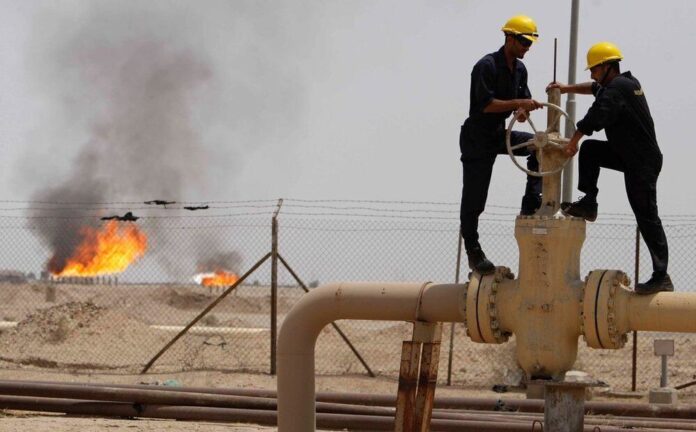
US grants Iraq waiver to import energy supplies from Iran

The latest waiver is granted for 120 days. Iraq has still substantial arrears for its energy imports from Iran. 

Iran’s state-owned gas company NIGC has said Iraq’s debts to the Islamic Republic have risen to more than $6bn. 

Baghdad is unable to pay back its debt due to the US’s oppressive sanctions on Tehran. Western and Iraqi sources told AFP that the US had given Iraq the green light to unlock 2 billion dollars in debts for gas imports through a Swiss bank account. 

Iraq imports two thirds of its energy needs including gas and electricity from the Islamic Republic. 

The Trump administration placed harsh sanctions on Iran’s energy industry in late 2018 as part of its so-called maximum pressure campaign against Tehran. The US however has granted Iraq some waivers to buy energy supplies from Iran.

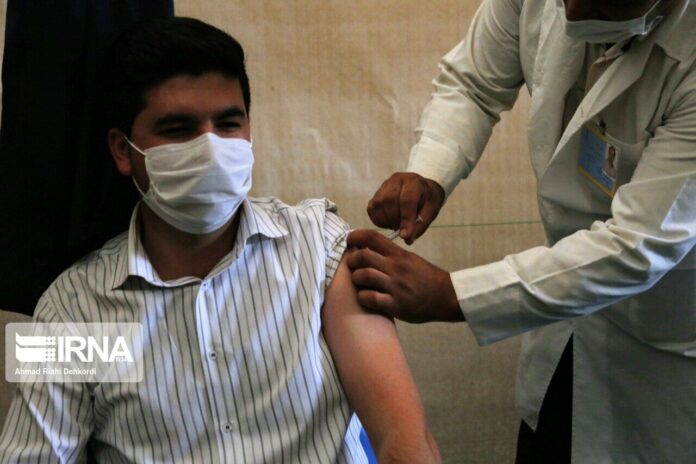
Unvaccinated Iranians to be fined: Official

“In the smart coronavirus control system which will become operational as of December 6, 2021, restrictions and fines will be imposed on unvaccinated individuals entering towns and cities on the orange or red state of COVID-19 alert, and infected people will not even be permitted to travel within towns and cities with their private cars,” said Reza Nafisi, the head of the center charged with drawing up passive defense transportation safety regulations and crisis management affiliated with the Ministry of Housing and Urban Development. 

“If the new strain of the coronavirus spreads across the country, COVID-19 restrictions on domestic trips will definitely change and become stricter,” he added.

“The health protocols already enforced for cities with red, orange, yellow and blue states of coronavirus alert have remained unchanged, but they have become smart and will go into force for unvaccinated and infected individuals in such a way that they will not be allowed to leave home even with their private cars and they must remain in quarantine and they will be fined if seen traveling within or between cities,” the official added. 

“Under such circumstances, people infected with the coronavirus are monitored and will not be allowed to go to work,” he explained.

“If they are seen traveling, it will be regarded as illegally leaving their quarantine and will be fined,” he said.

Iran Covid: Number of daily deaths decreases to 58

Iranian Health Ministry figures announced on Saturday show that 58 people have died of the disease since Friday, nearly 40 percent down compared with the previous day and the lowest death toll in nearly a year. The deaths push to 130,125 the total fatalities in Iran since the start of the pandemic in early 2020. 

Total caseload is 6,131,356, of whom 5,916,196 people recovered. The large decrease in the number of deaths and cases has been attributed to a nationwide vaccination campaign that sped up in summer. 

Since the vaccination drive began, over 100 million doses of vaccine have been administered with nearly 50 million having received two doses of the jab. Over a million people have also been given the third dose, known as the booster shot. 

Currently, there are two red zones in Iran in terms of risk from the disease. The rest of the Iranian cities and towns are either orange, yellow or blue. 

Iran has made the achievements in its healthcare sector at a time when the nation is under the heaviest ever sanctions by the US. Unlike other countries, in Iran, the vast majority of people welcomed the vaccination campaign and in the early months of the process stood in long lines to get their jabs. 

The Iranian government also made massive efforts to push back the Covid outbreak which at its peak killed as many as 800 people daily. 

The Foreign and Health Ministries were instrumental in the fight against Covid with the former helping with vaccine imports and the latter accelerating production of homegrown jabs.

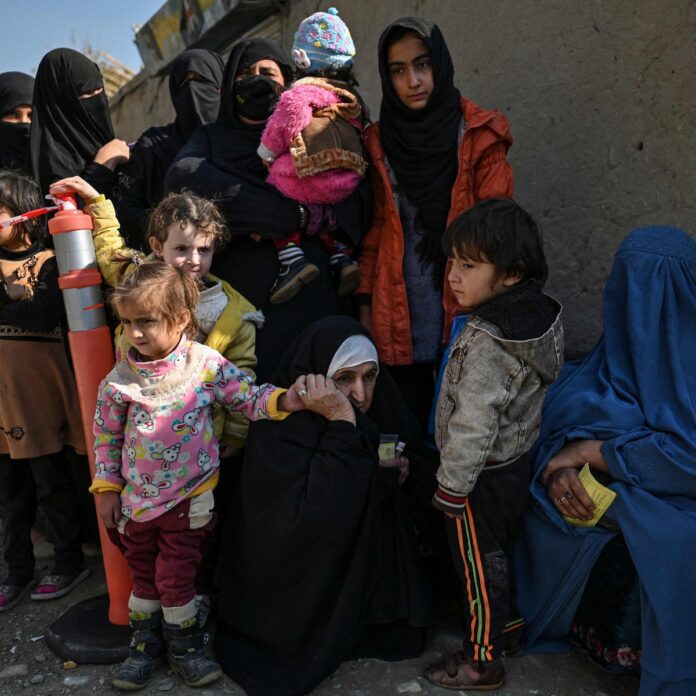
UN: Millions of Afghans starving as winter approaches

UNHCR’s spokesperson in Refugees affairs Babur Baloch noted that displaced families are lacking shelter, warm clothes, and firewoods to heat their houses and added that they also need food, medicines, and other supplies to survive, according to Khaama press news agency.

“Humanitarian crisis is deepening in Afghanistan and starvation is now at its unprecedented level in the country. 23 million Afghans that form 55% population of the country are facing the highest level of poverty and nine million of them are facing starvation.” Baloch continued.

The UN spokesperson who visited Afghanistan said the number of malnourished children is growing, hospitals are nearly overwhelmed with malnourished children and the 3 million of these children are at a critical point.

Baloch added that one million malnourished Afghan children are close to death.

In an interview with the BBC, the former president of Afghanistan underscored the importance of an inclusive government in Afghanistan, among other issues, according to TOLO news.

Former President Hamid Karzai underlined that Afghanistan should form an inclusive government that represents all aspects of society in order for the government to gain international recognition.

He named the Loya Jirga (Great Assembly) as a good option to pave the ground for a legitimate government.

Karzai said he opposes the US mission of over-the-horizon counterterrorism and urged the administration of President Joe Biden to work with the current Afghan government.

“I have had conversations with them on a lot of issues–the return of women to back to work. The schools, the flag of the country, the national flag of the country. And the need for a political process, for a government that belongs to all Afghans, that all Afghans see as theirs–that is inclusive,” he added.

“We really … want them to go back to school–the girls–not only to schools but to universities, but to the workplace. Yes, we have had talks about this with the Taliban. They hear me on this. They understand it and they say that it will happen. We say that it should happen now, immediately,” Karzai noted.

He called on the international community to work for the improvement of Afghanistan.

“They have better come and help the Afghan people. They and their allies and the international community must help Afghanistan rebuild itself, must heal the wounds that have been caused on all sides. Must work with the Taliban- they are the government today. Work towards improvements towards a better Afghanistan,” Karzai suggested.

However, a former Afghan ambassador to Moscow, Sayed Taib Jawad, told a Russian news agency that the “Taliban” government would not be recognized soon by the world.

“Look, they (the Taliban) have not been able to gain recognition by anyone, they have made many promises to their friends, to the international community, to Afghans. They have not delivered on their promises, and it does not look like they are going to be recognized soon, at least by the countries in the region, including Russia,” he told TASS News.

“If the US does not recognize the Taliban, there will be a big challenge to the region that will not be in the interest of any country or anyone,” stated Hamid Aziz Mujadidi, a university instructor.

The Islamic Emirate earlier said that it had fulfilled all the conditions for recognition and that it was seeking positive relations with world countries.